Is It Light Starvation or Lack of Pruning?
| Symptom | Etiolation (Light Starvation) | Unpruned Growth |
|---|---|---|
| Stem Angle | Leaning aggressively toward a window | Growing perfectly straight up |
| Stem Color | Pale, weak, almost translucent green | Darker, sturdy, woody green |
| Leaf Size | Leaves are small and pale | Leaves are large and deep green |
| Internode Length (Space between leaves) | Massive (3-5+ inches) | Normal (1-2 inches), but only growing straight up |
| The Fix | Must add a grow light AND prune heavily | Just prune heavily |
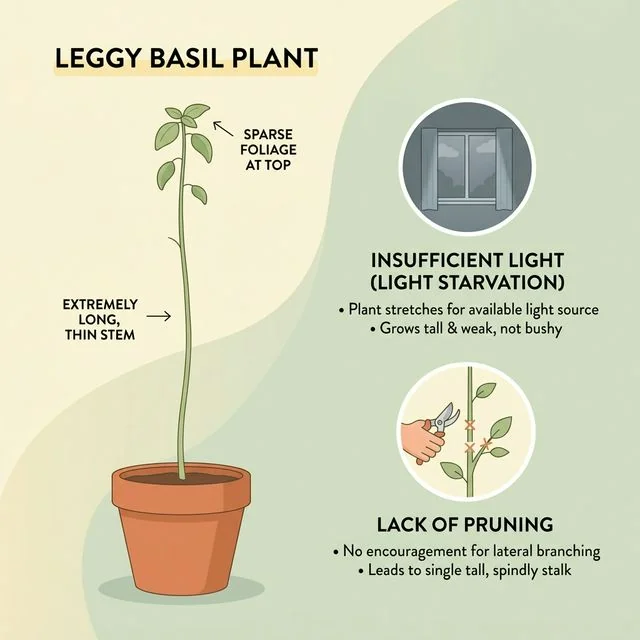
Search any indoor gardening forum, and you will inevitably find a photo of a tragically tall, spindly, ridiculous-looking basil plant. It is usually propped up against a window with a chopstick because the stem is too weak to support its own weight.
In the gardening world, this is called a “leggy” plant. It is characterized by an extremely long, thin main stalk, massive gaps between the leaf joints (called internodes), and a tiny tuft of foliage at the very top.
A leggy basil plant is weak, susceptible to snapping, and yields terrible harvests. Fortunately, it is incredibly easy to diagnose. Leggy indoor herbs are caused by one of two things: a severe lack of light, or a severe lack of pruning.
Diagnosis #1: Light Starvation (Etiolation)
If your basil plant is sitting in a window and it is leggy, light starvation is the culprit 99% of the time.
The botanical term for this is etiolation. As extensively discussed in How Much Light Do Indoor Herbs Really Need?, basil requires 6 to 8 hours of intense direct sunlight to grow into a dense, bushy shrub.
If you put it in a dim room (like a North-Facing Window), the plant enters panic mode. It abandons lateral (sideways) growth and pours every ounce of its energy into stretching vertically as fast as possible to find the sun.
How to Confirm It Is Light Starvation:
- The Lean: The plant is not growing straight up; it is violently leaning at a 45-degree angle toward the only light source in the room.
- The Color: The stem looks pale, weak, and watery, unlike the thick, sturdy green stems of a healthy plant.
- The Gaps: The space between the sets of leaves is massive, sometimes upward of three inches.
The Fix for Light Starvation:
You cannot fix this just by pruning. If you cut the plant back, it will just grow another long, spindly stem. You must fix the environment. Either move the plant to a blazing hot South-facing window, or buy a grow light (refer to Grow Light Distance for Herbs: How Close Should LEDs Sit? for setup). Once the light is fixed, you can prune the plant back down to a compact size.
Diagnosis #2: A Lack of Structural Pruning
What if your basil plant is sitting directly under a powerful, 100-watt LED grow light, the stem is thick and strong, the leaves are massive, but the plant is still just one single, three-foot-tall stalk?
This plant is perfectly happy and receiving optimal light. The problem is you. You have never pruned it.
Left to its own devices, a basil plant’s primary goal is to grow straight up, form a flower, drop seeds, and die. It does this via apical dominance. The topmost bud of the plant produces hormones that physically suppress the growth of lower branches. It tells the plant, “Focus all energy on me, grow tall!”
How to Confirm It Is a Pruning Issue:
- The Posture: The plant stands perfectly straight up.
- The Color: Deep, rich green foliage and a sturdy stem.
- The Structure: It looks like a healthy tree trunk entirely devoid of side branches.
The Fix for Lack of Pruning:
You must break the apical dominance. By cutting the entire top off the plant (a process called “Topping”), you remove the hormone center. The plant immediately redirects that growth energy into the dormant buds lower down the stem.
Where there was once one tall stalk, two new sideways branches will emerge. For an exact visual guide on exactly where to make this cut, review our foundational guide: When to Prune Basil, Mint, Parsley, and Chives for Better Growth.
Do not be afraid to cut your basil plant in half. It feels violent, but it is the only way to force the plant to transform from a spindly, leggy vine into a dense, bushy, high-yielding countertop herb.
Diagnosing other basil problems?
Leggy growth is often accompanied by other stress indicators. Check these guides if your plant is also turning yellow or wilting.
Common questions
Should I bury the bare, leggy stem deeper in the soil?
While this works brilliantly for tomatoes, it is incredibly risky for basil. The buried stem will likely rot before it can grow new roots. You are much better off pruning the top off and letting new branches form lower down.
How far back can I prune a leggy basil plant?
You can cut a basil plant down to just above its lowest two remaining sets of healthy leaves. Leaving at least four total leaves ensures it has enough solar panels left to survive the shock and push new growth.
If I move my leggy plant to better light, will the bare stem grow new leaves?
In most cases, no. Basil rarely pushes new leaf growth from old, hardened, bare stem tissue unless it is forced to by pruning the top canopy away. The only way to fix the shape is to cut it.
Related guides
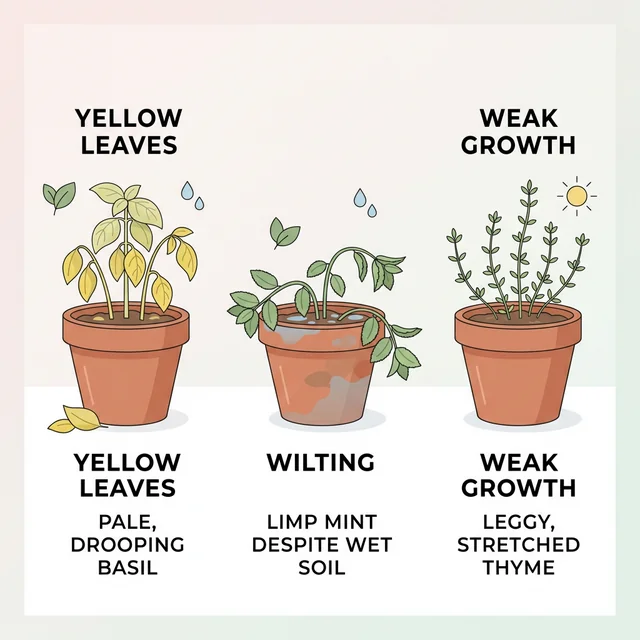
Common Potted Herb Problems: Yellow Leaves, Wilting, and Weak Growth
Common potted herb problems usually show up as yellow leaves, wilting, or weak growth, but the useful diagnosis starts with light, drainage, and root stress.
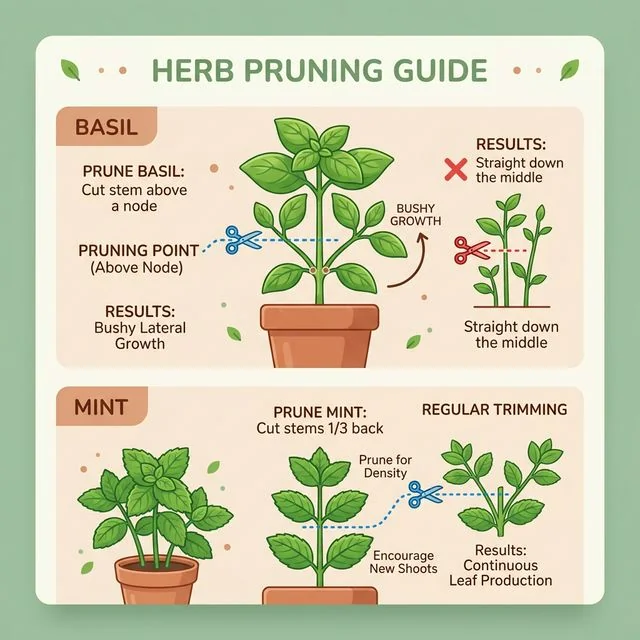
How to Prune Basil, Mint, Parsley, and Chives Without Stunting Growth
Basil and mint should be cut above a node, parsley should be harvested from the outer stems, and chives should be cut like a small patch of grass.
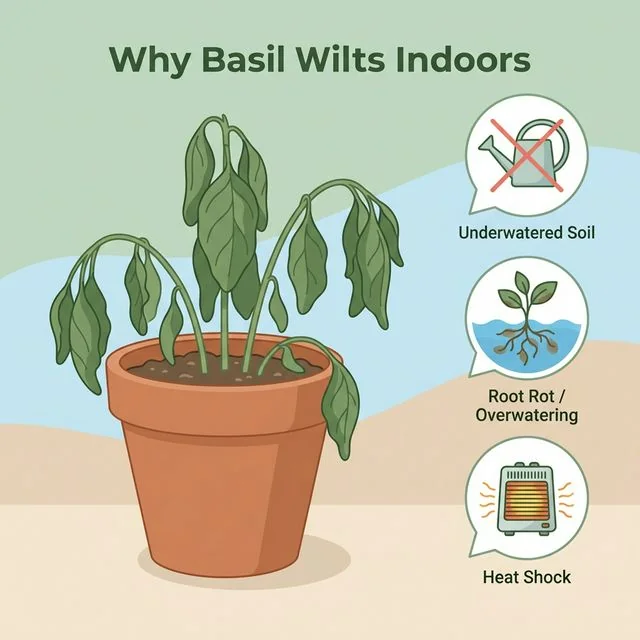
Why Is My Basil Wilting Indoors? Stop the Droop
Basil is famous for being dramatic. If your plant suddenly wilts into a sad green puddle, don't panic. Here is exactly how to diagnose the droop and revive it.