Common potted herb problems: yellow leaves, wilting, and weak growth
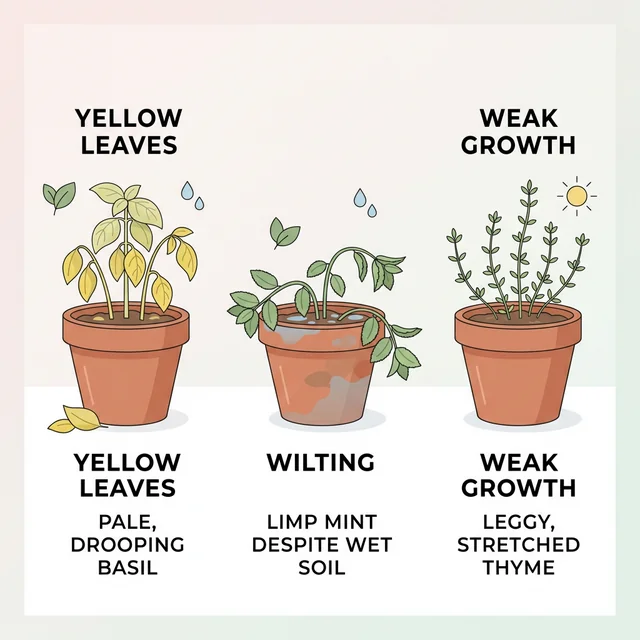
Common potted herb problems usually show up as yellow leaves, wilting, or weak growth, but the useful diagnosis starts with light, drainage, and root stress.
A troubleshooting hub for plant problems in urban gardens, hydroponic setups, and indoor herb systems, focused on diagnosis before quick fixes.
Common potted herb problems usually show up as yellow leaves, wilting, or weak growth, but the useful diagnosis starts with light, drainage, and root stress.
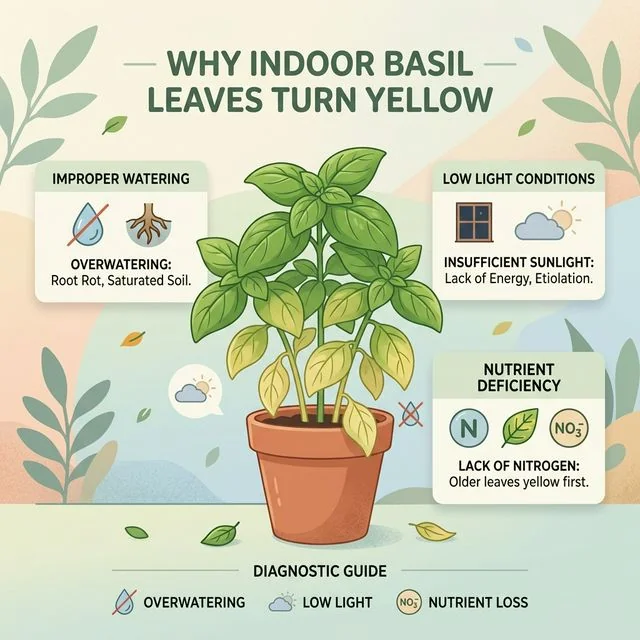
Yellow basil rarely has a single universal cause. The pattern of yellowing, the growing medium, and the recent care routine usually tell the story.
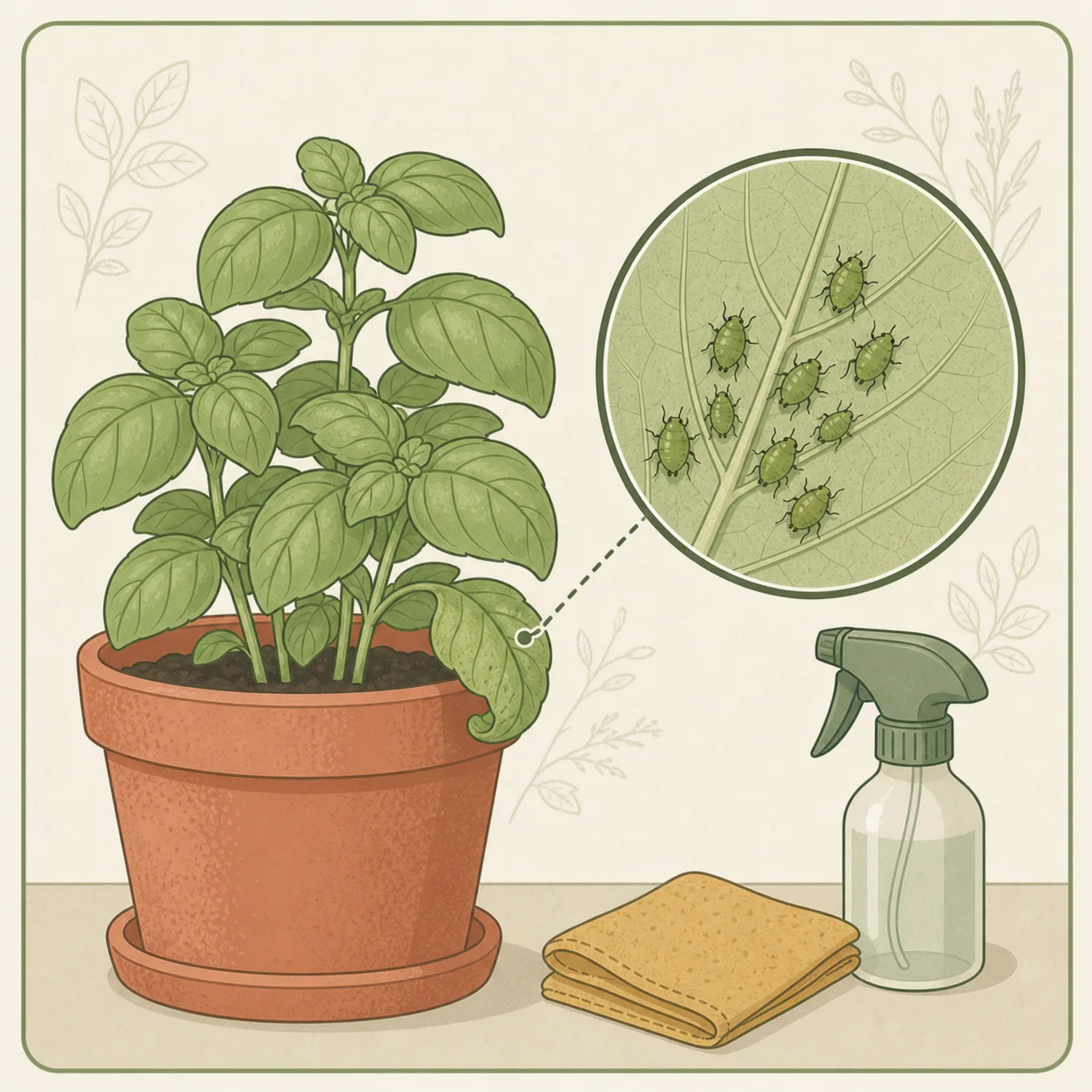
Aphids are manageable when you find the colony, isolate the plant, remove most insects physically, and repeat inspections through the next generation.
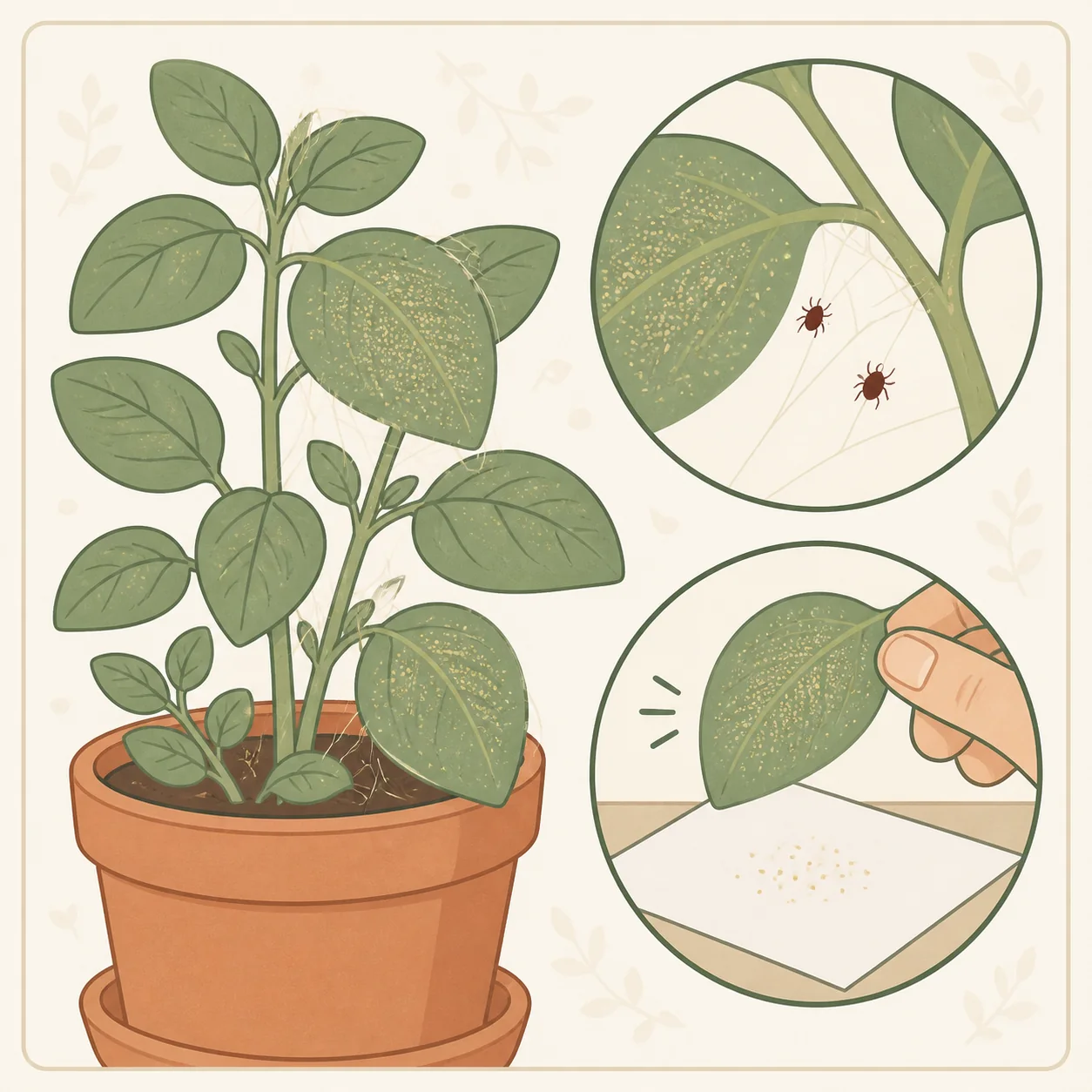
Spider mites are easiest to control before webbing is obvious. Look for fine pale stippling and confirm moving specks over white paper.
Plant problems are easiest to misread when the symptom is dramatic. Yellow leaves, stretch, slow growth, and stalled herbs all feel urgent, so growers tend to jump directly to products or nutrient changes. In small-space systems, that usually creates more noise than clarity.
The most useful troubleshooting pattern is consistent:
That sounds simple, but it is the opposite of how many gardening tips are presented online. Quick-fix advice often skips the diagnosis step entirely.
Urban gardening, hydroponics, and indoor growing look different, but many symptoms come from the same underlying causes: poor light, stressed roots, unstable moisture, overcrowding, or temperature issues. A basil plant in soil and a lettuce plant in hydroponics can both underperform for reasons that trace back to root-zone stability and light management.
That is why this hub links troubleshooting content back to setup content. A diagnosis article should do more than name the problem. It should help you spot the setup choice or habit that keeps causing it.
Use the beginner section to learn how to think diagnostically. Use the setup section if you want to prevent common failures through better media, lighting, or environmental fit. Use the troubleshooting section when a crop is already declining. Use the advanced section when you need to translate symptoms into fixture, nutrient, or container decisions.
The point of this hub is to help you connect symptoms, likely causes, and the next fix worth trying.
These grouped sections keep the hub useful for beginners, active growers, and readers solving a specific problem.
Start with diagnosis-led guides that explain how to read plant symptoms without jumping to conclusions.
Common potted herb problems usually show up as yellow leaves, wilting, or weak growth, but the useful diagnosis starts with light, drainage, and root stress.
Yellow basil rarely has a single universal cause. The pattern of yellowing, the growing medium, and the recent care routine usually tell the story.
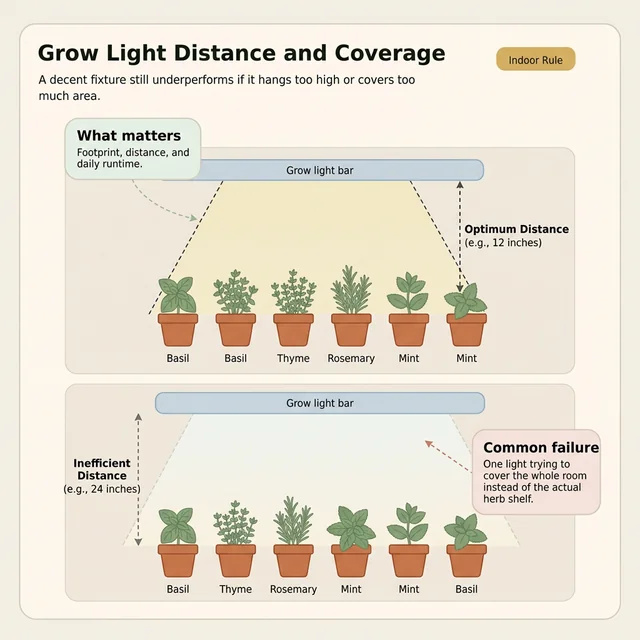
Seedlings usually need grow lights much closer than beginners expect, but the exact distance depends on fixture strength, lens design, and plant response.
Prevention usually starts with the right system choices, not with rescue products.
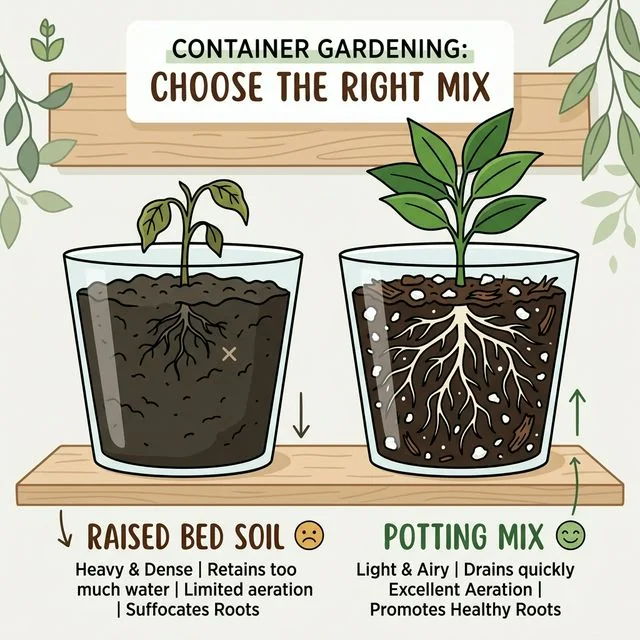
Most container problems start with the wrong medium, not the wrong fertilizer. This guide explains why pots usually need a lighter mix than raised beds.
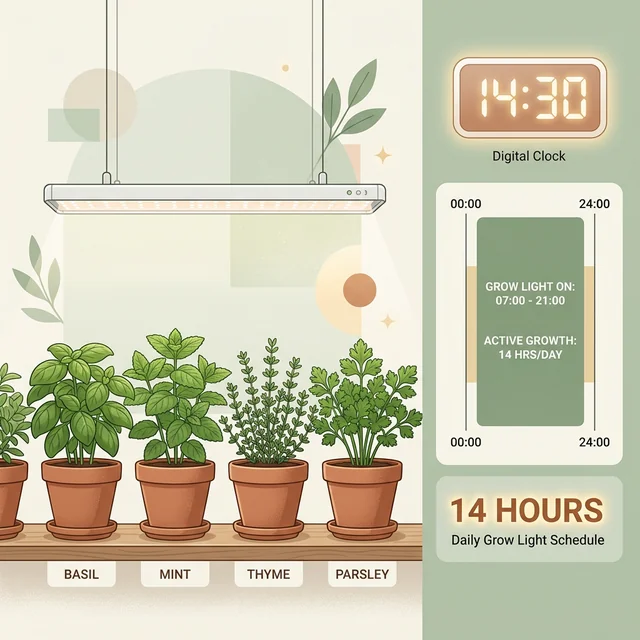
Most herb grow lights should run about 12 to 16 hours per day, but intensity, distance, and a stable dark period matter as much as the timer itself.
Use these when growth has already slowed, yellowed, or stretched and you need an orderly diagnosis path.
Common potted herb problems usually show up as yellow leaves, wilting, or weak growth, but the useful diagnosis starts with light, drainage, and root stress.
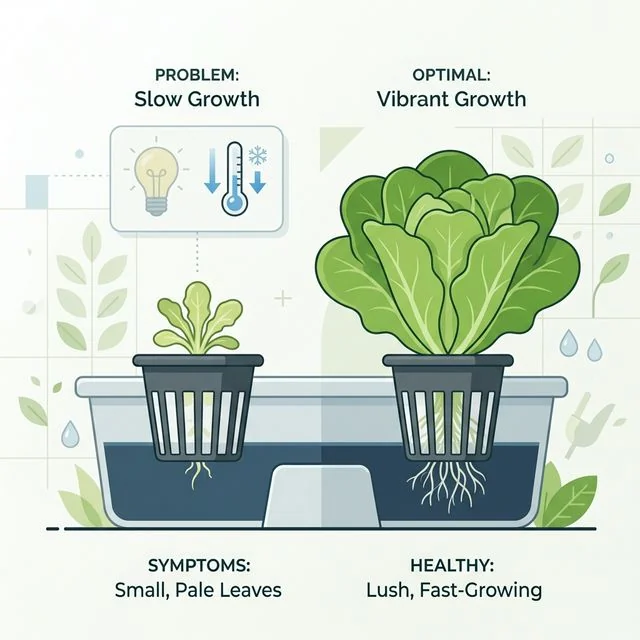
Slow hydroponic lettuce is usually a systems problem, not a mystery deficiency. The goal is to find the bottleneck without overcorrecting five variables at once.
Yellow basil rarely has a single universal cause. The pattern of yellowing, the growing medium, and the recent care routine usually tell the story.
Aphids are manageable when you find the colony, isolate the plant, remove most insects physically, and repeat inspections through the next generation.
Spider mites are easiest to control before webbing is obvious. Look for fine pale stippling and confirm moving specks over white paper.
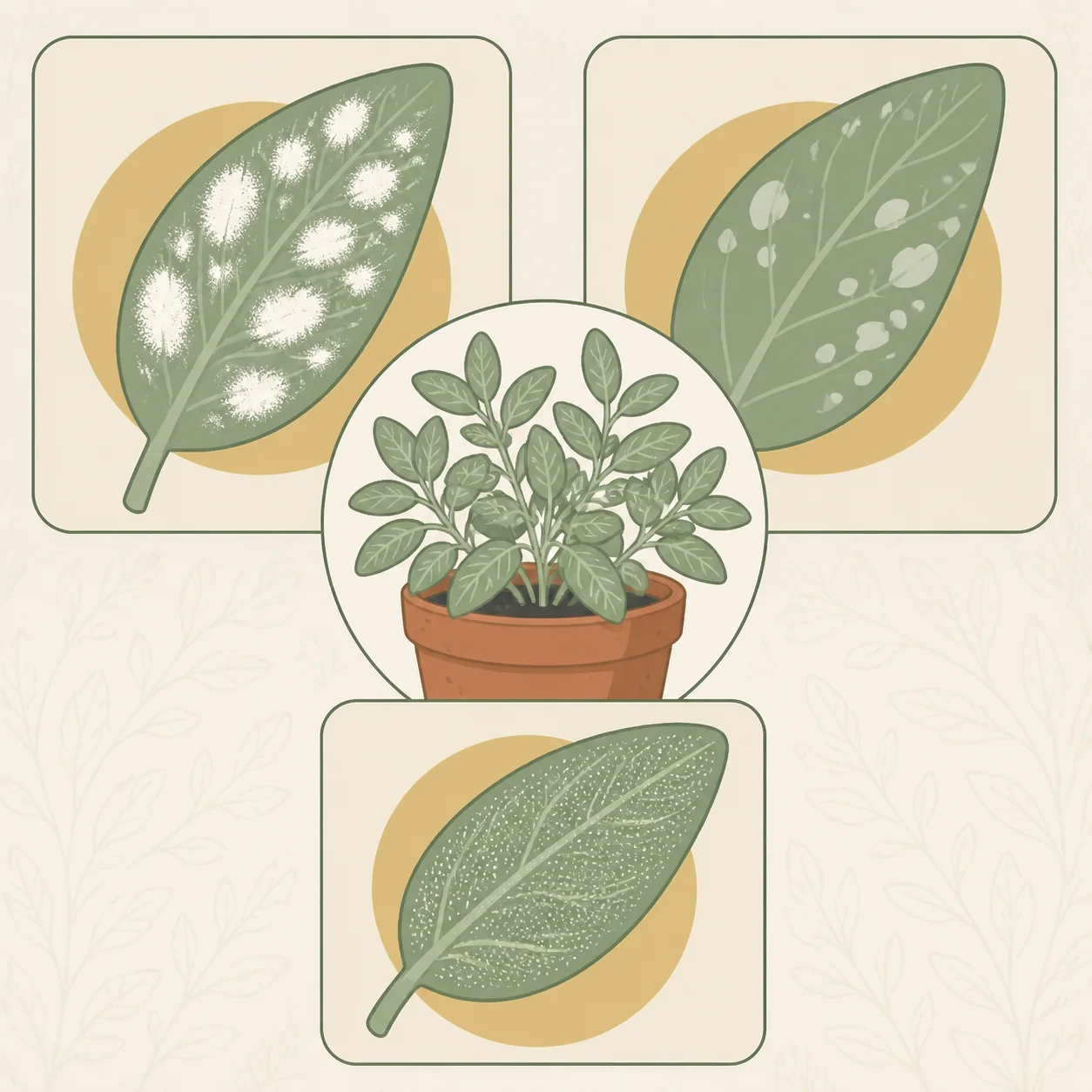
A white mark is not automatically mildew. Confirm whether patches recur and spread on living tissue before changing the entire care routine.
Once you know the symptom pattern, these guides help connect the issue back to nutrients, fixtures, and container strategy.
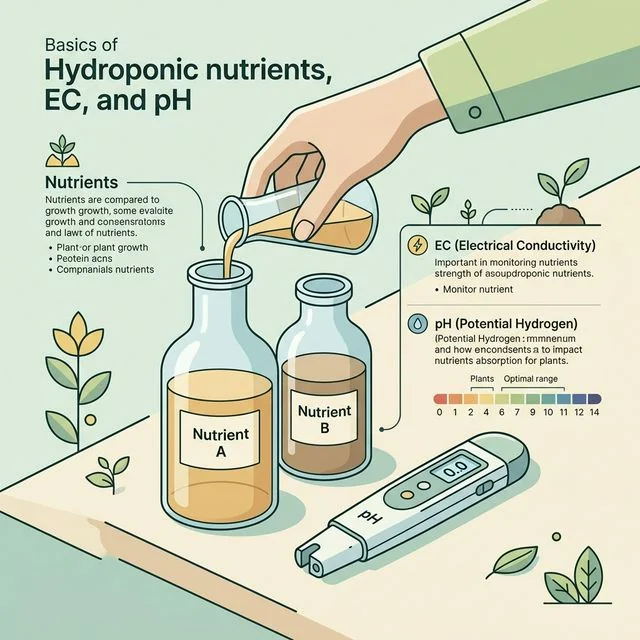
Most hydroponic problems are not mysterious. They come from concentration drift, pH drift, heat, or neglected maintenance. This guide covers the basics clearly.
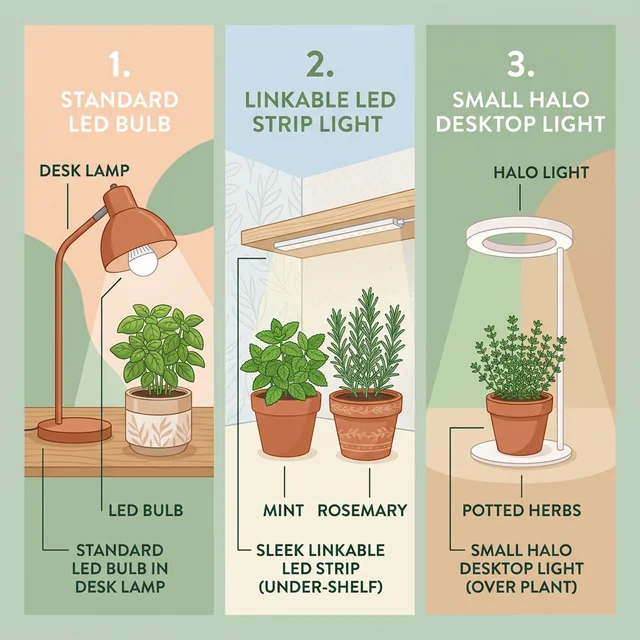
Most indoor herbs don't need a massive, expensive grow tent light. Here is how to choose the right LED bulbs, strips, or halos for your real apartment setup.
This hub keeps the topic curated. If you need a plain utility list instead, use the simplified article archive.
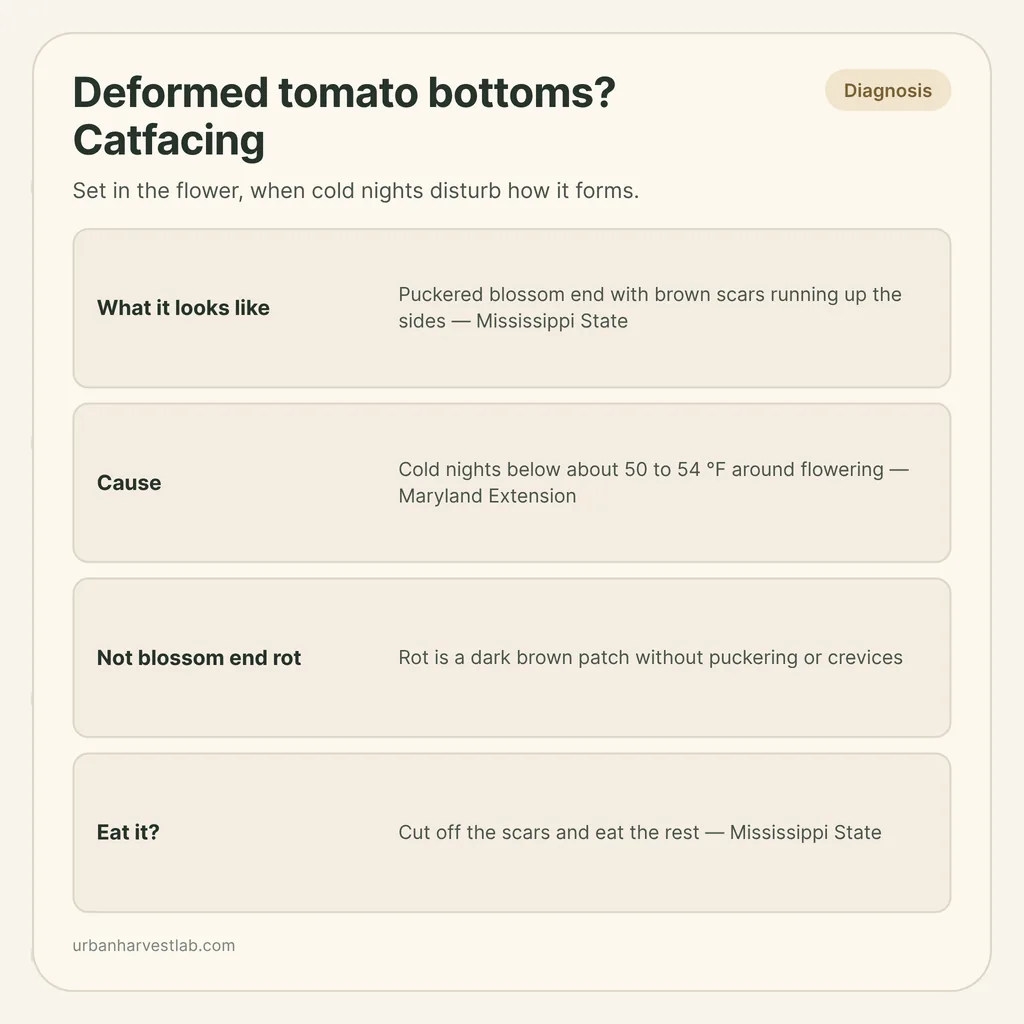
Puckered, scarred, lumpy tomatoes on the first trusses are usually catfacing, a flower-stage problem tied to cold nights. Here is how to confirm it and what to change.
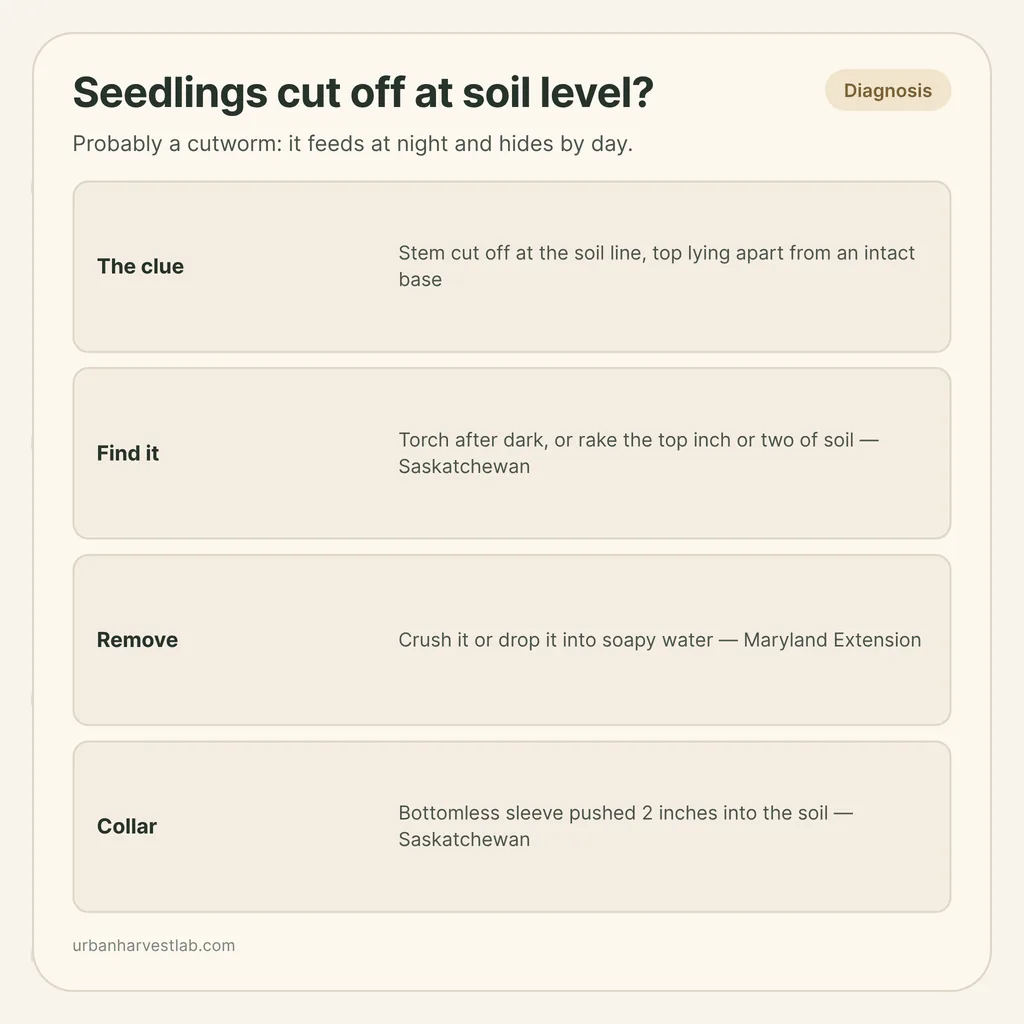
A clean cut at the base, a missing seedling in the morning, nothing in sight. Here is how to confirm cutworms, what to do tonight, and how to stop the next one.
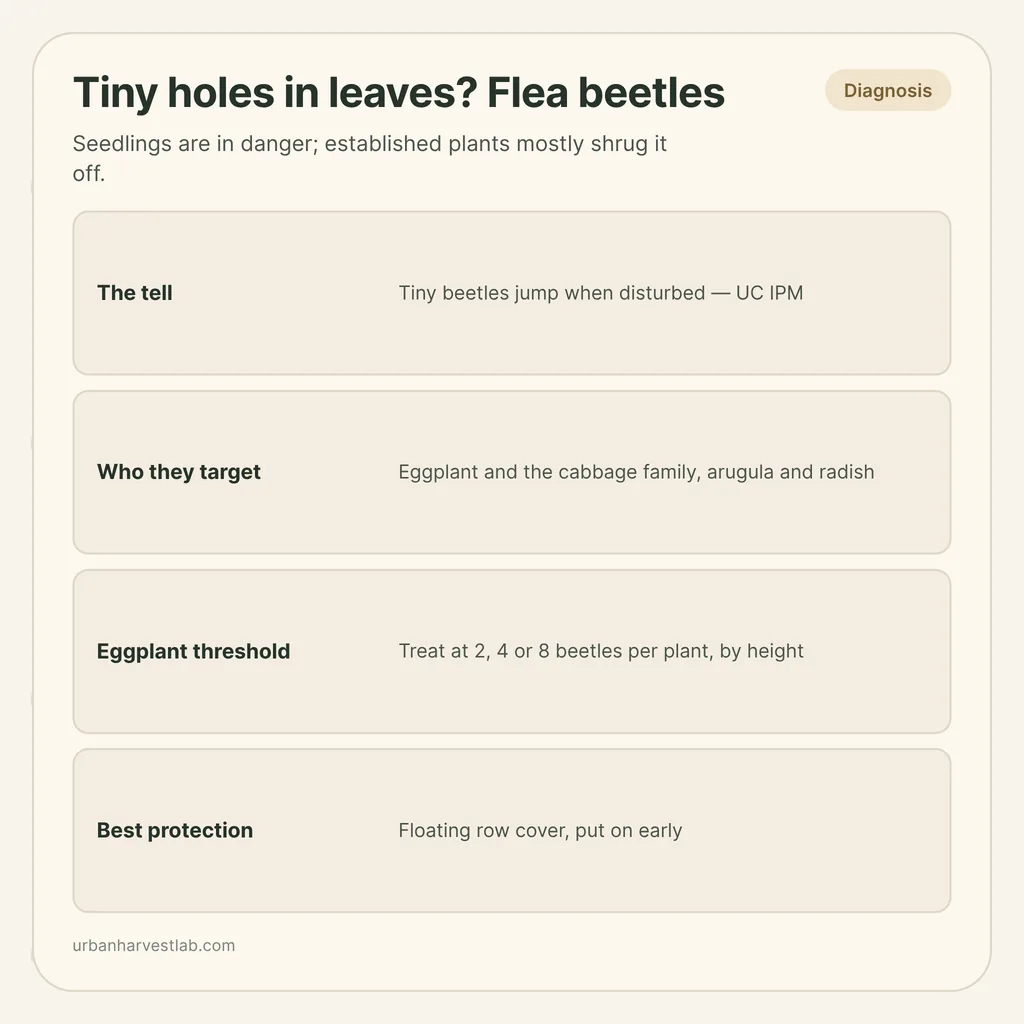
Flea beetles riddle the leaves of eggplant, arugula, radish and kale with tiny holes. Seedlings are at risk; established plants usually outgrow it.
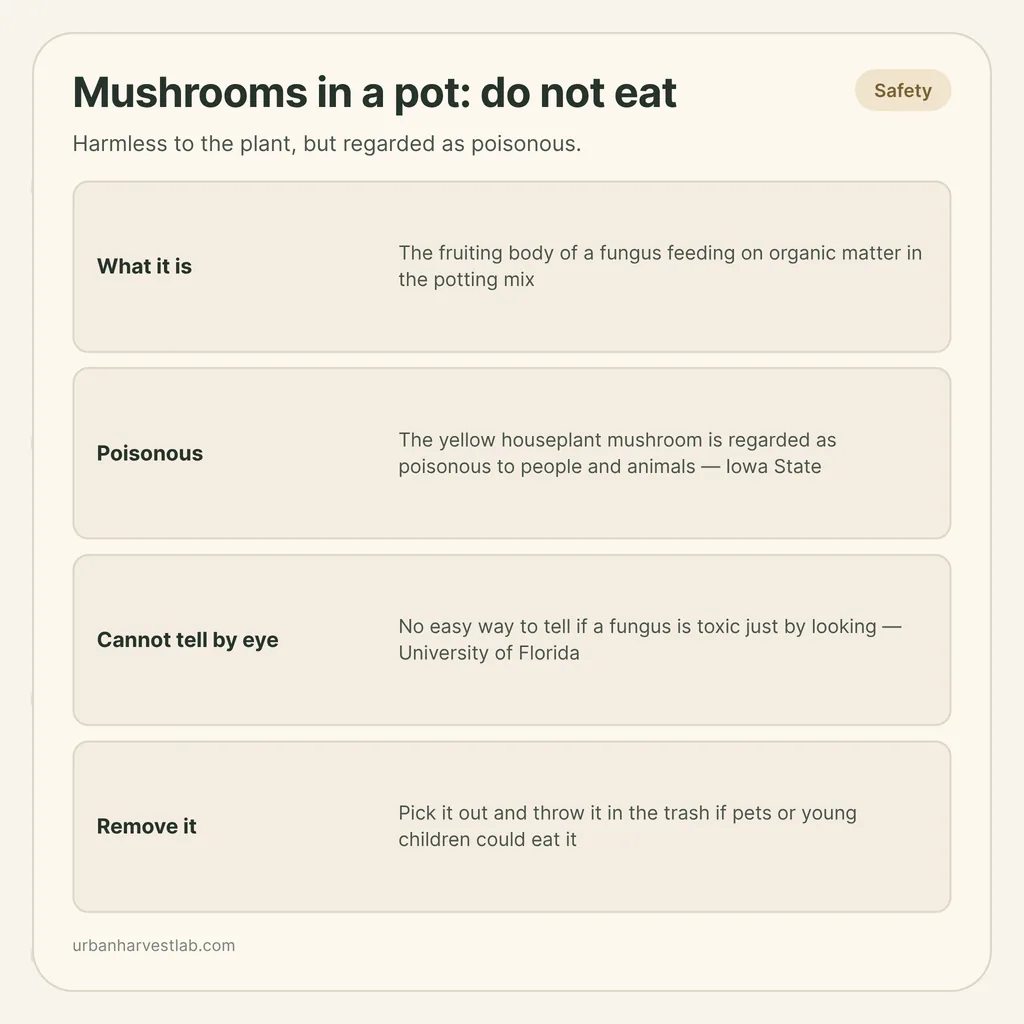
Mushrooms in a pot are the fruiting bodies of a fungus living on the organic matter in your mix. They rarely hurt the plant, but some are poisonous if eaten.
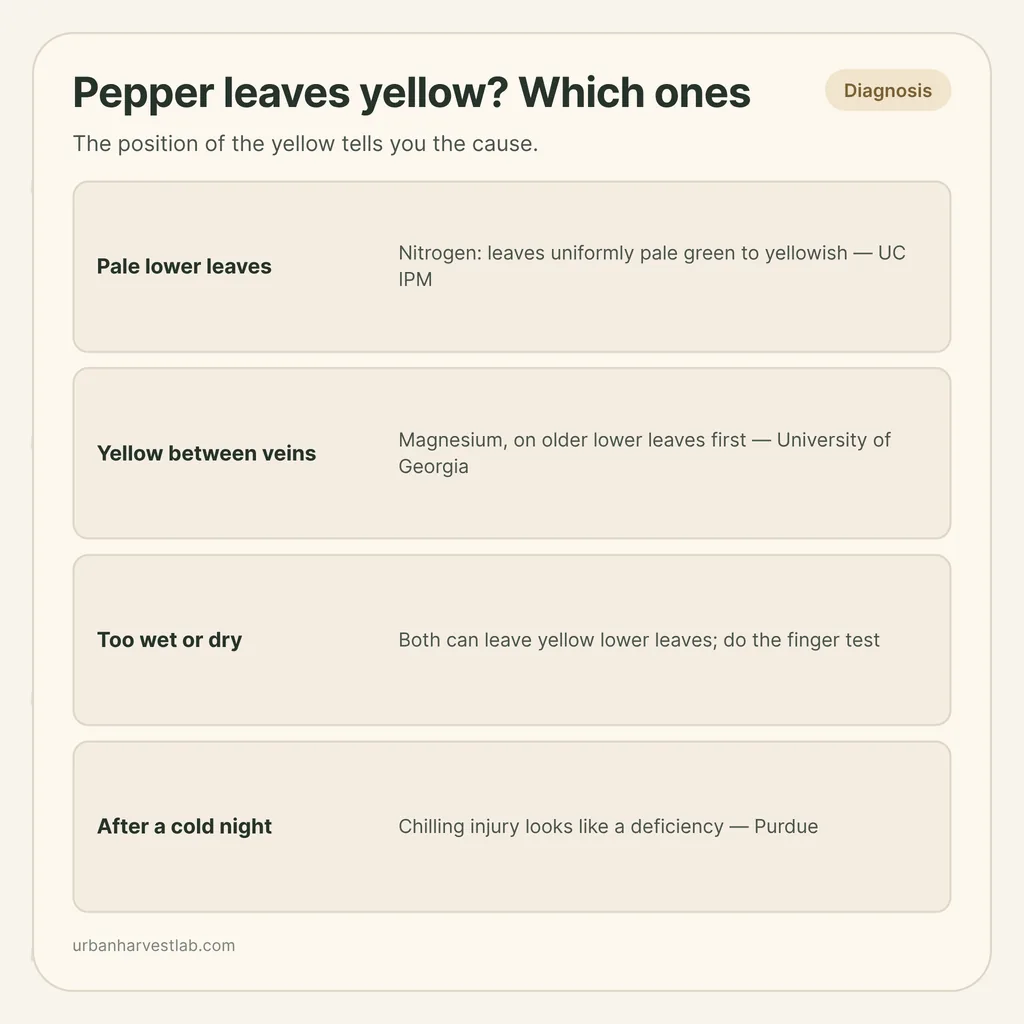
Lower leaves going pale is often hunger, a cold snap or a soggy pot. Spots or yellow new growth point elsewhere. Here is how to sort them.
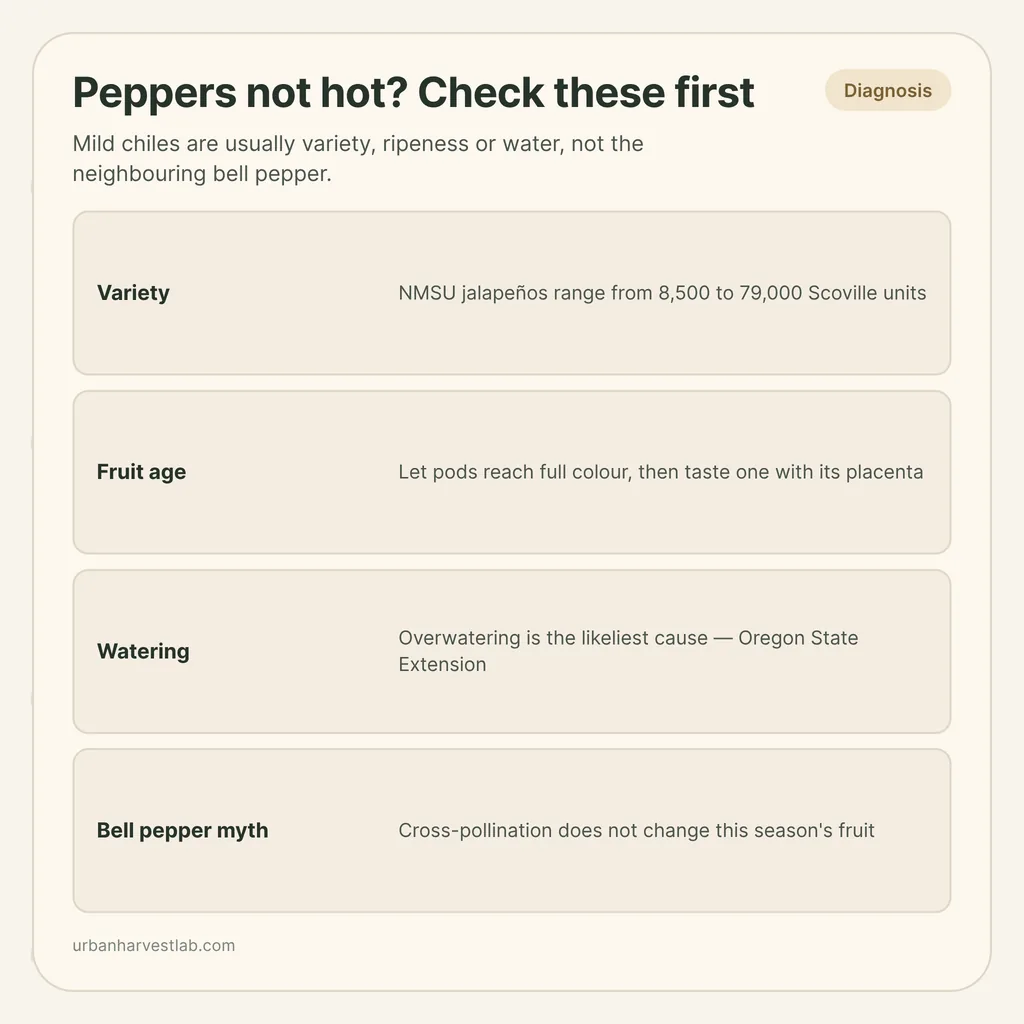
Heat in a chile pepper is set by genetics first, then by weather, growing conditions and fruit age. Cross-pollination from a nearby bell pepper does not change this year's fruit.
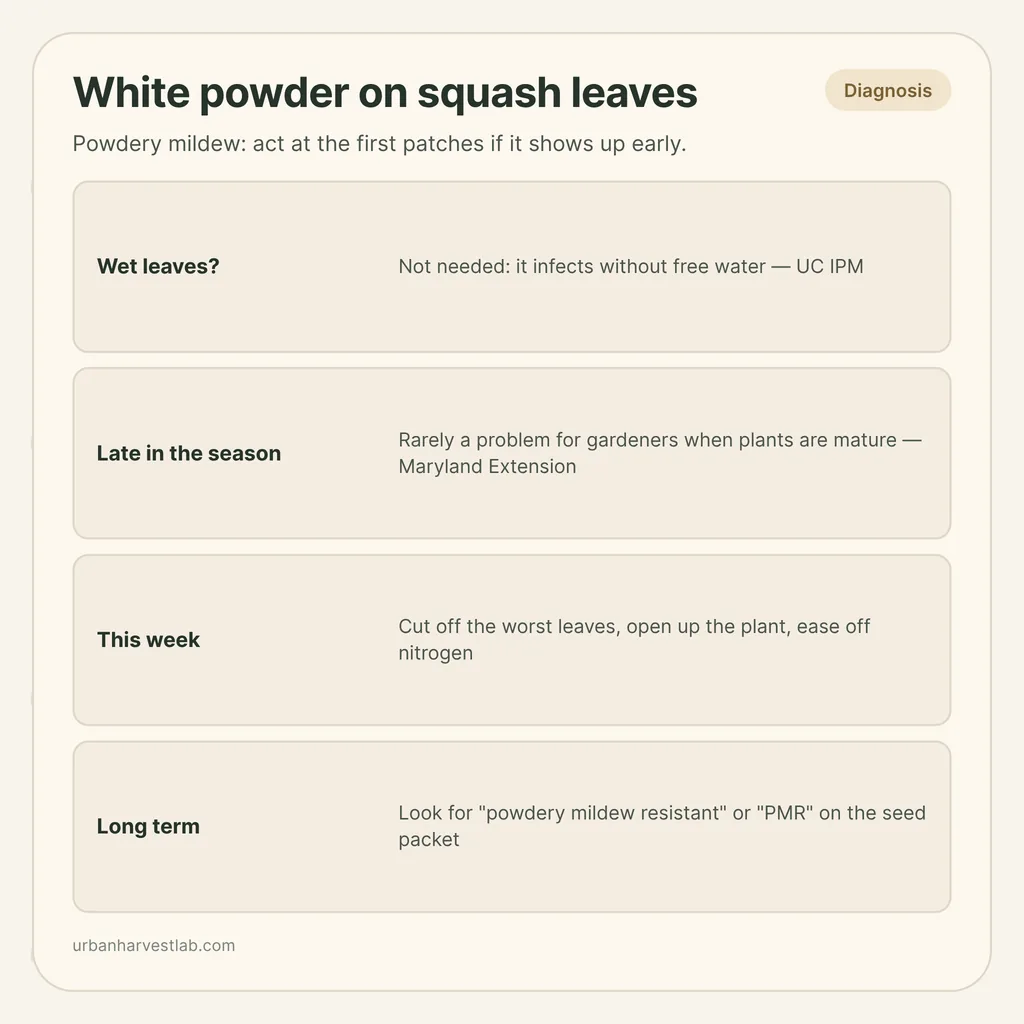
White powder on zucchini and cucumber leaves is usually powdery mildew. Late in the season it is often a nuisance; early on, act before it spreads.
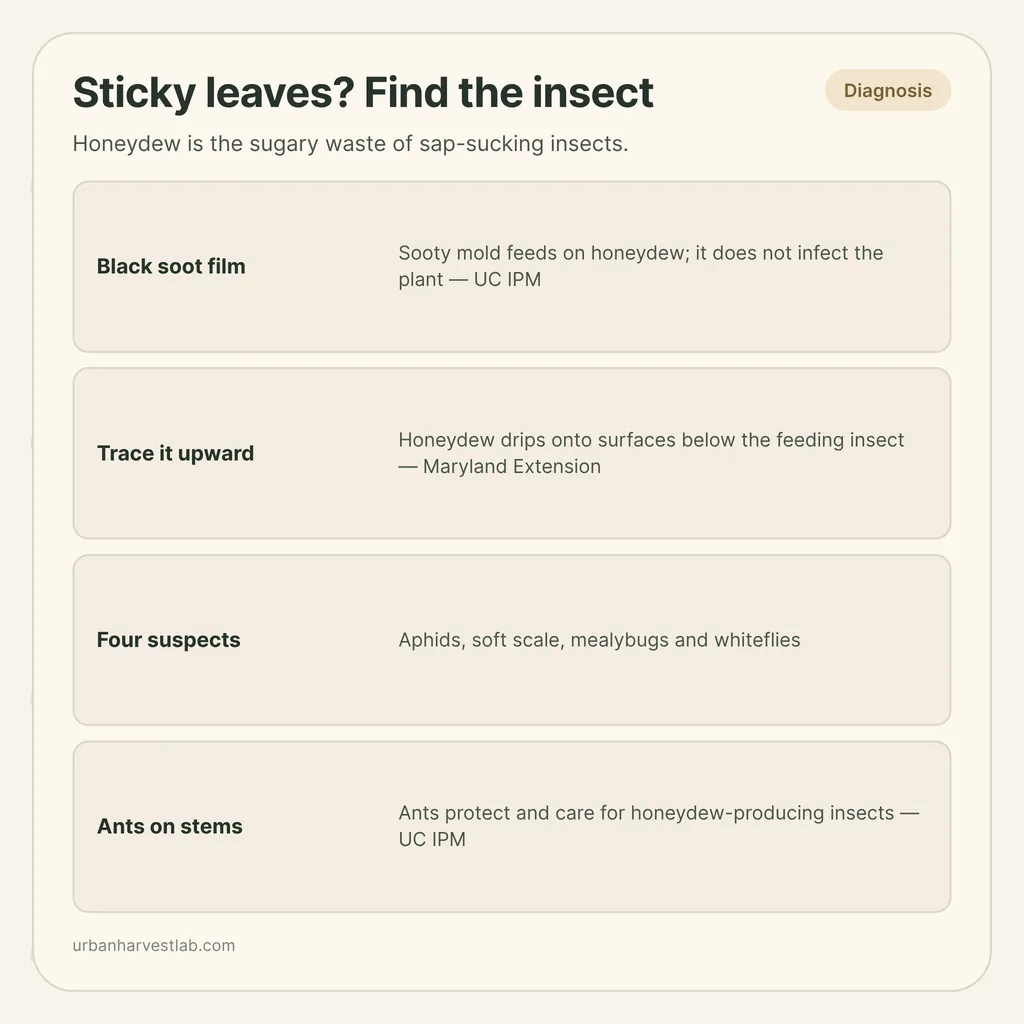
Tacky leaves, a glossy film, or a black soot-like coating all point to honeydew. Here is how to trace it to aphids, soft scale, mealybugs or whiteflies.
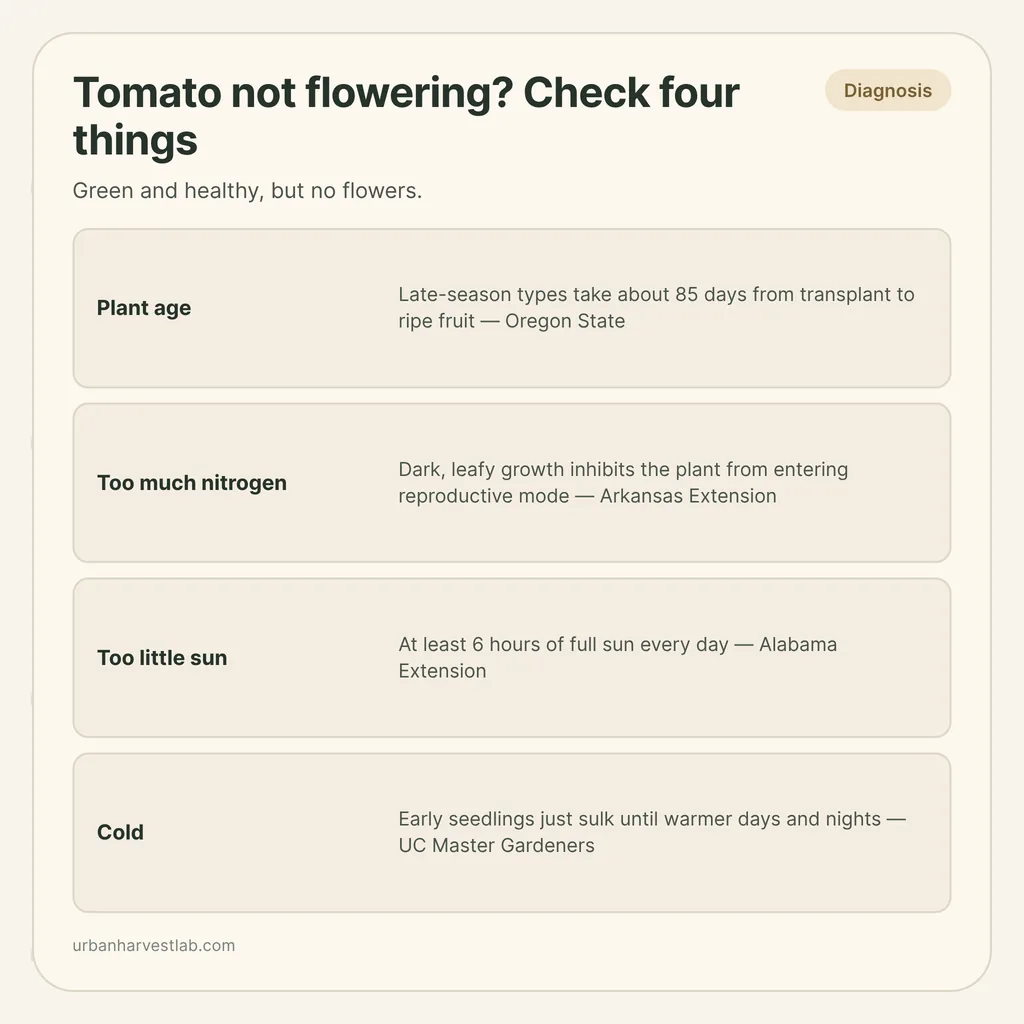
Green, healthy and flowerless: the usual causes are age, light, nitrogen and temperature. Here is how to tell them apart and what to change.
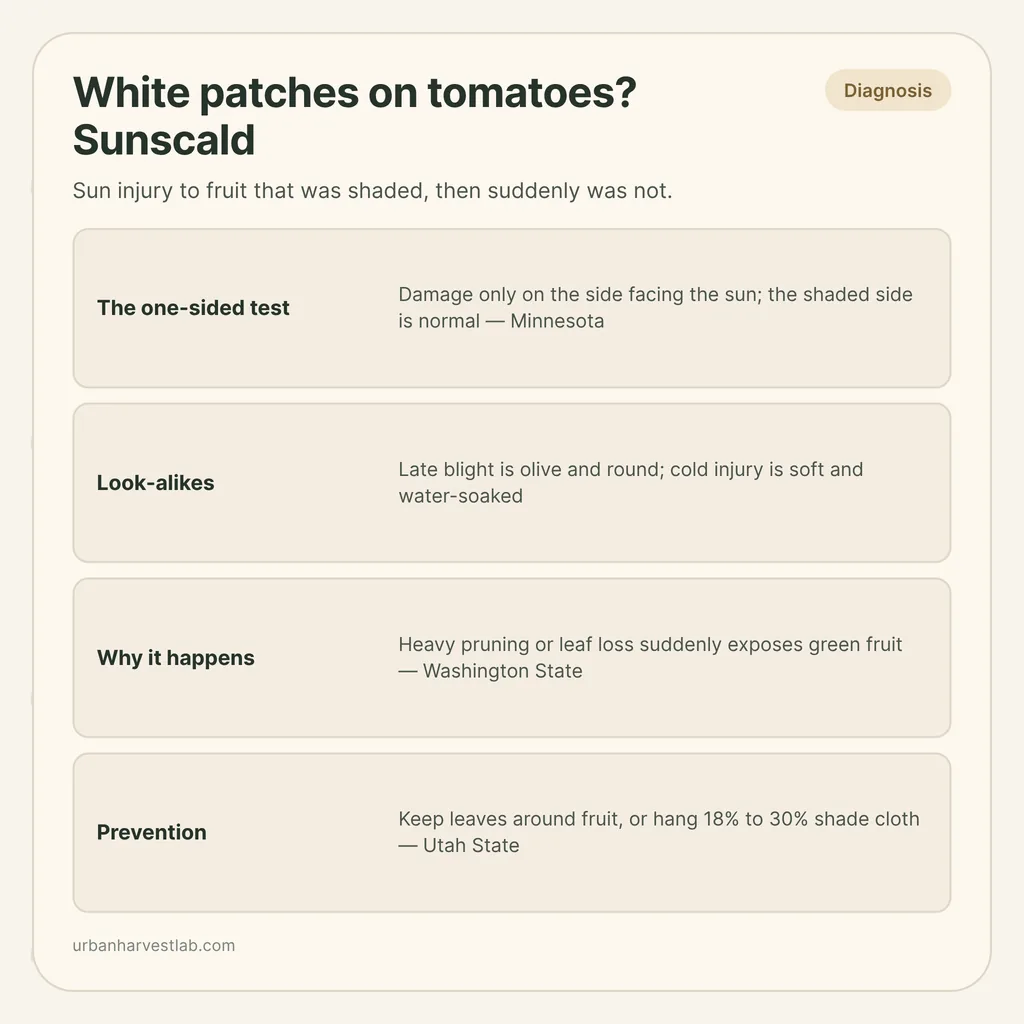
A tomato or pepper that was shaded by leaves and then suddenly was not can bleach on the exposed side. The damage stays on that fruit, but the next ones are avoidable.
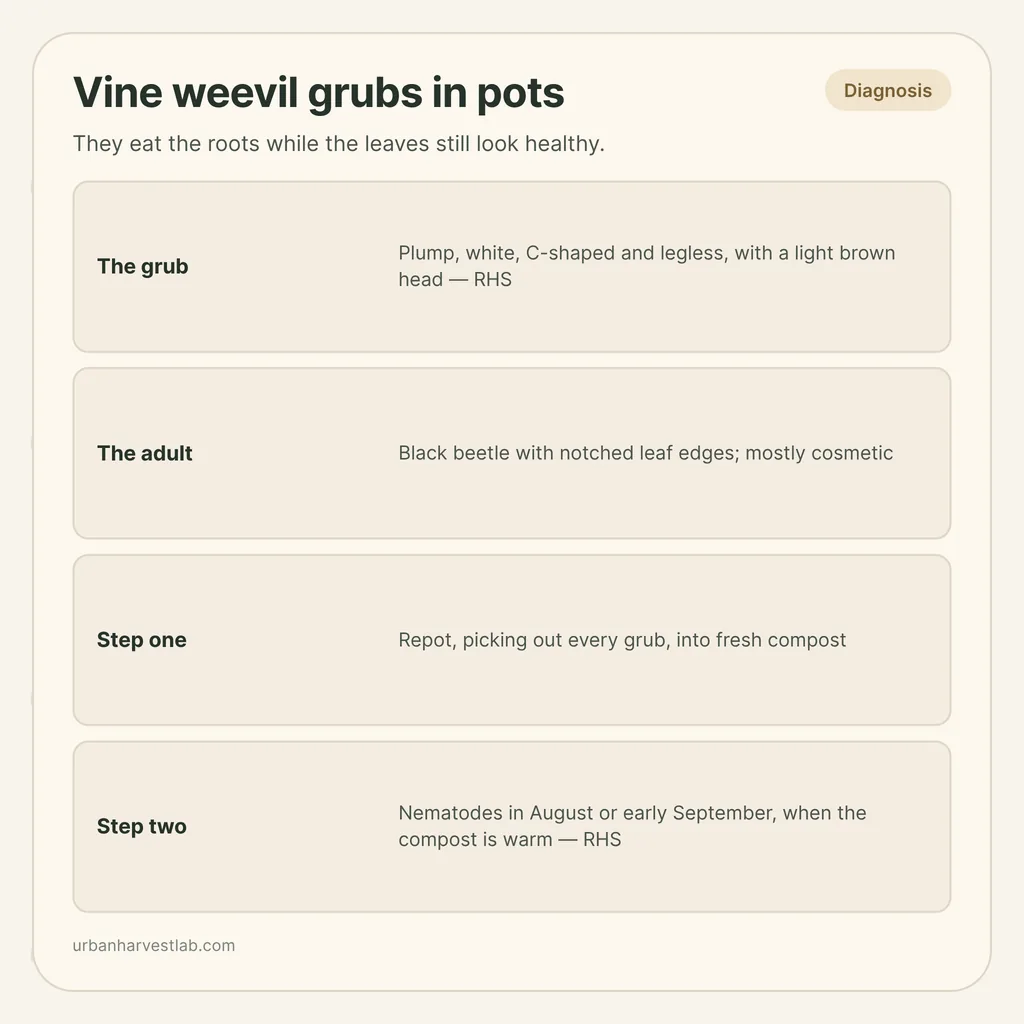
Plump white C-shaped grubs in the root ball, and notched leaf edges above, point to vine weevil. Here is how to confirm it, clear the pot, and use nematodes when the compost is warm enough.
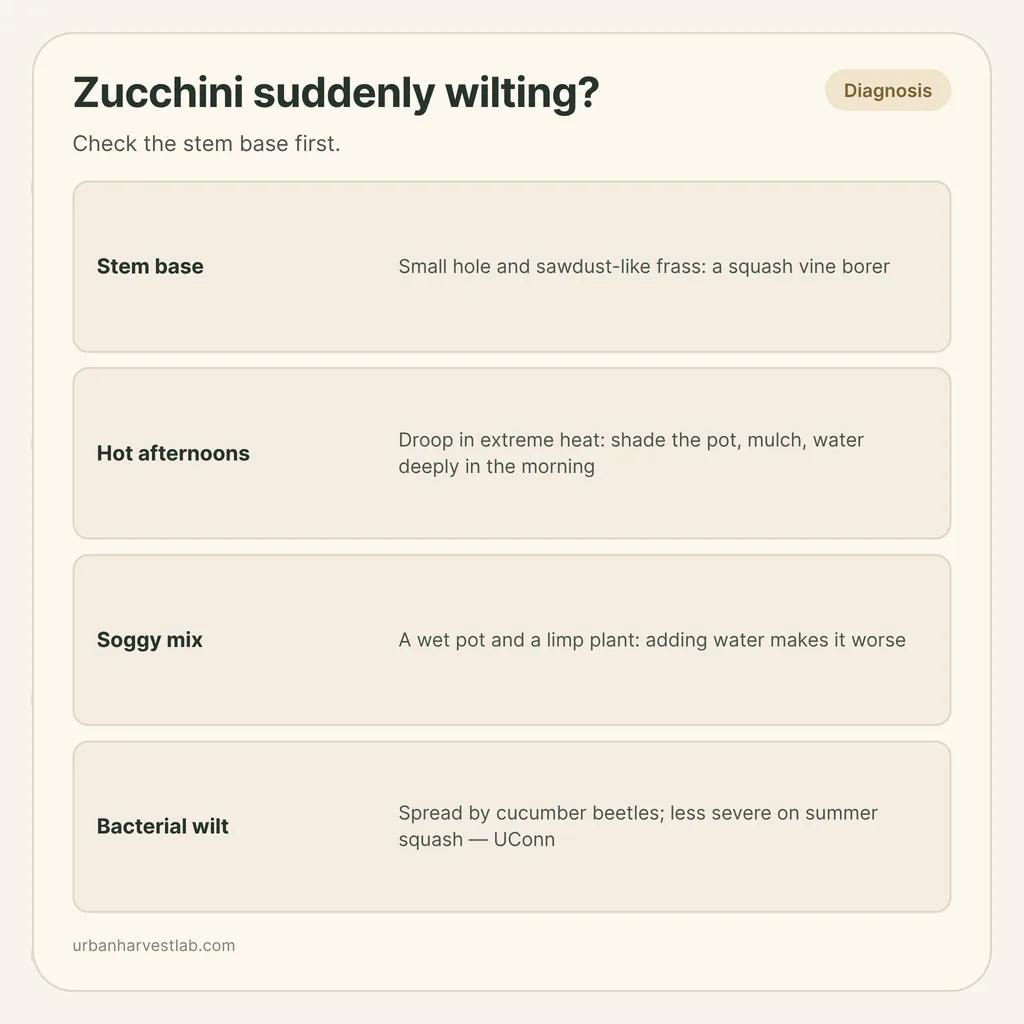
A healthy-looking zucchini that collapses in days often has a borer in the stem. Heat, soggy roots and bacterial wilt are the other suspects, and the stem base tells them apart.

Flower buds on basil are the plant switching from leaves to seed. Pinching them off keeps leaf production going; letting them open trades leaves for pollinator food.

Bitterness comes from cucurbitacin moving into the fruit when the vine is stressed. Learn how to rescue mild cases, keep pot cucumbers sweet, and tell when bitter fruit is not worth eating.

Potted tomatoes swing between soggy and bone dry faster than garden ones, and that swing is what starves the fruit of calcium. Steady watering fixes most cases.

Three common diseases cause brown spots on tomato leaves, and each leaves a different mark. Read the spot, then pick the response that fits.

Three look-alike green caterpillars feed on kale, and a white butterfly fluttering round the pot is the early warning. Here is how to tell them apart and what actually protects a container crop you plan to eat.

Hornworms are green, up to 3 inches long, and nearly invisible among the leaves. The droppings give them away, and hand removal is the first and often only fix a balcony needs.

Where the yellow starts and whether the veins stay green separate nitrogen, iron, magnesium and wet roots on a potted lemon, lime or orange.

Where the yellow starts and what it looks like tells you whether a potted cucumber is hungry, waterlogged, mildewed or infested.

Male-only blooms at the start are the usual cucumber pattern. Learn how to spot the first female flower, what delays it, and when to step in.

Earwigs in a pot are usually sheltering, and they eat aphids. They only earn a trap when you can show they are chewing seedlings, lettuce, or soft fruit.

Raised bumps under the leaves that start clear and turn tan and corky are usually edema, caused by too much water and too little evaporation, not an insect.

Fruit flies breed in fermenting food and drains. Fungus gnats breed in damp potting mix. Where the flies gather tells you which one you have, and the fix for each is different.

A full-size green tomato that refuses to blush is usually waiting on the weather. Heat above the mid-80s and nights below the mid-50s both stall color, and fruit picked at the right stage will finish indoors.

Lavender is built for dry, stony ground, so a pot that holds water kills it faster than neglect does. Work through drainage, winter, light, and pruning in order.

A plant that sheds leaves in the weeks after moving inside is mostly adjusting to much weaker light. Dry winter air, drafts and carried-over watering habits add to it.

A houseplant or seedling that goes straight into outdoor sun can bleach within hours. The damaged leaves will not heal, but the plant usually does.

A tall, thin, floppy seedling is telling you it is short of light, too warm, crowded, or started too early. Find which, fix the setup, and bury the stems that can take it.

Curling pepper leaves are harmless in a heat wave and a warning when they come with distorted new growth. Here is how to tell the two apart.

Flowers that open and fall without setting fruit point to temperature, nitrogen, water, shade or wind. Work through them in order and match each to what you see.

Grey, armoured, roll-into-a-ball creatures in your potting mix are usually decomposers. Here is when they threaten seedlings, how to confirm it after dark, and what actually reduces them.

Sage is a drought-tolerant Mediterranean shrub, so brown leaves in a pot point to drainage first, age second, and disease or pests after that.

Purple stems and leaf undersides on seedlings are a stress response, and cold roots are one of the commonest triggers. Often it is a short-lived stress rather than a mix that needs fertilizer. A few checks separate the harmless cases from the ones that need action.

Craters in the soil, uprooted seedlings and bare roots on the rim usually mean a squirrel or a dust-bathing bird. Cover the soil surface and the digging loses its payoff.

A strawberry pot with leaves and no berries is rarely sick. The variety type, the plant's age, the sun, the heat and an early frost explain most of it.

Flowers that yellow and fall without setting fruit are usually reacting to temperature or stress, not disease. Work out which, then change the one thing that applies.

Most curling tomato leaves are a harmless response to heat or uneven watering. Twisted new growth, bronzing, or stunting points elsewhere.

Which leaves yellow, and in what pattern, tells you whether a potted tomato is hungry, waterlogged, short of magnesium or diseased.

Midday droop that clears by evening is usually heat. Wilt that stays after watering points to rotting roots or a vascular disease, and a cut stem tells you which.

Cracked tomatoes are almost always a water-swing problem. Learn which split you have, whether the fruit is safe to eat, and how to stop it in pots.

Wilting after transplanting is common and usually temporary. Prevention is mostly hardening off and watering; recovery is measured in days to a couple of weeks.

Zucchini rotting from the blossom end has three possible causes, and the fruit itself tells you which. Here is how to read it and what to change in a container.
Once you know which pest you have, the next question is what you can treat it with without compromising the food. The answer is a ladder of methods, and the label on any product you buy sets the legal limits of the top rung.
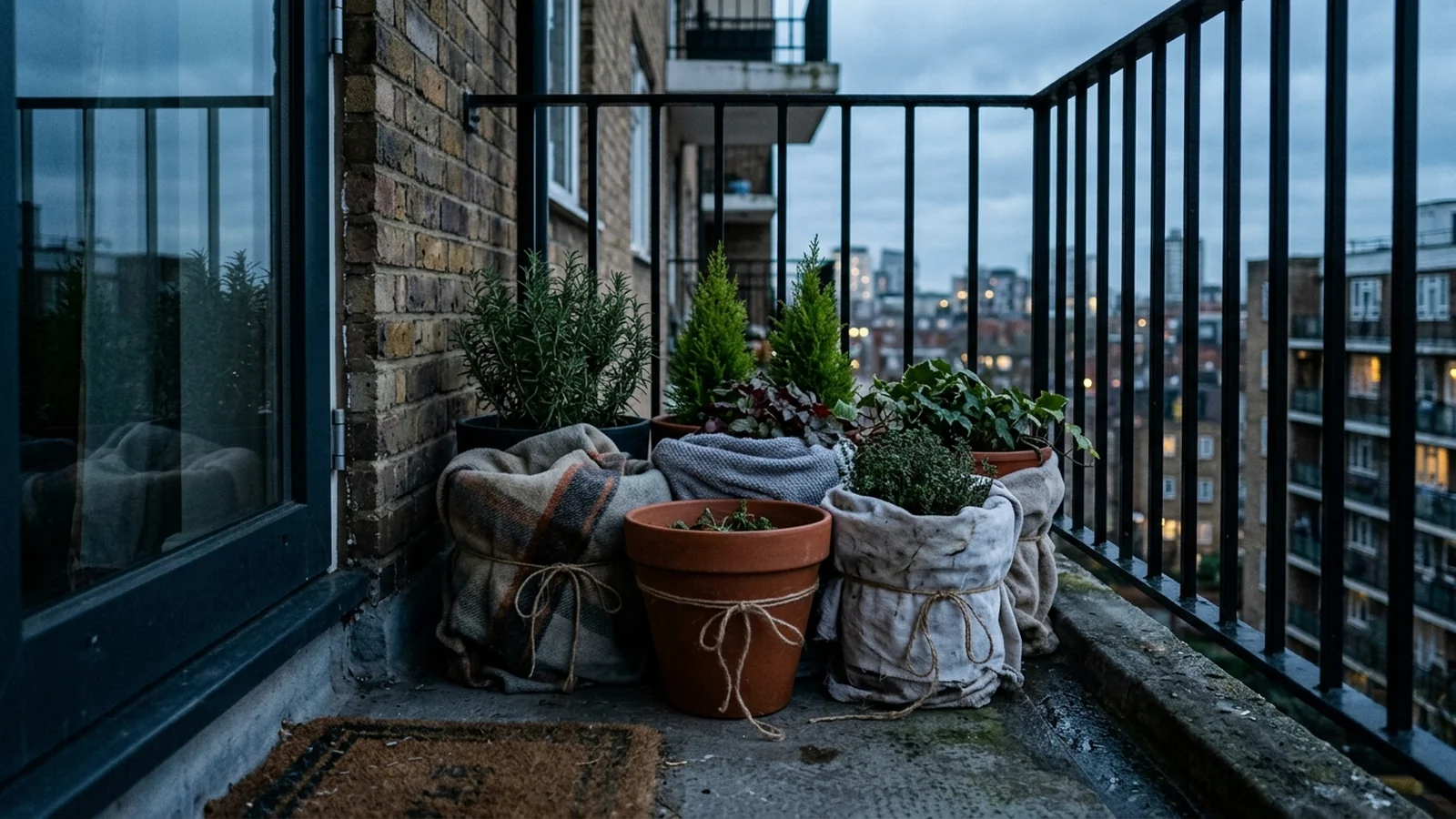
A frost or freeze warning lands differently when the only space you have is a balcony, a windowsill, and a flat with no garage to wheel anything into. Here is the version of this response that assumes that.
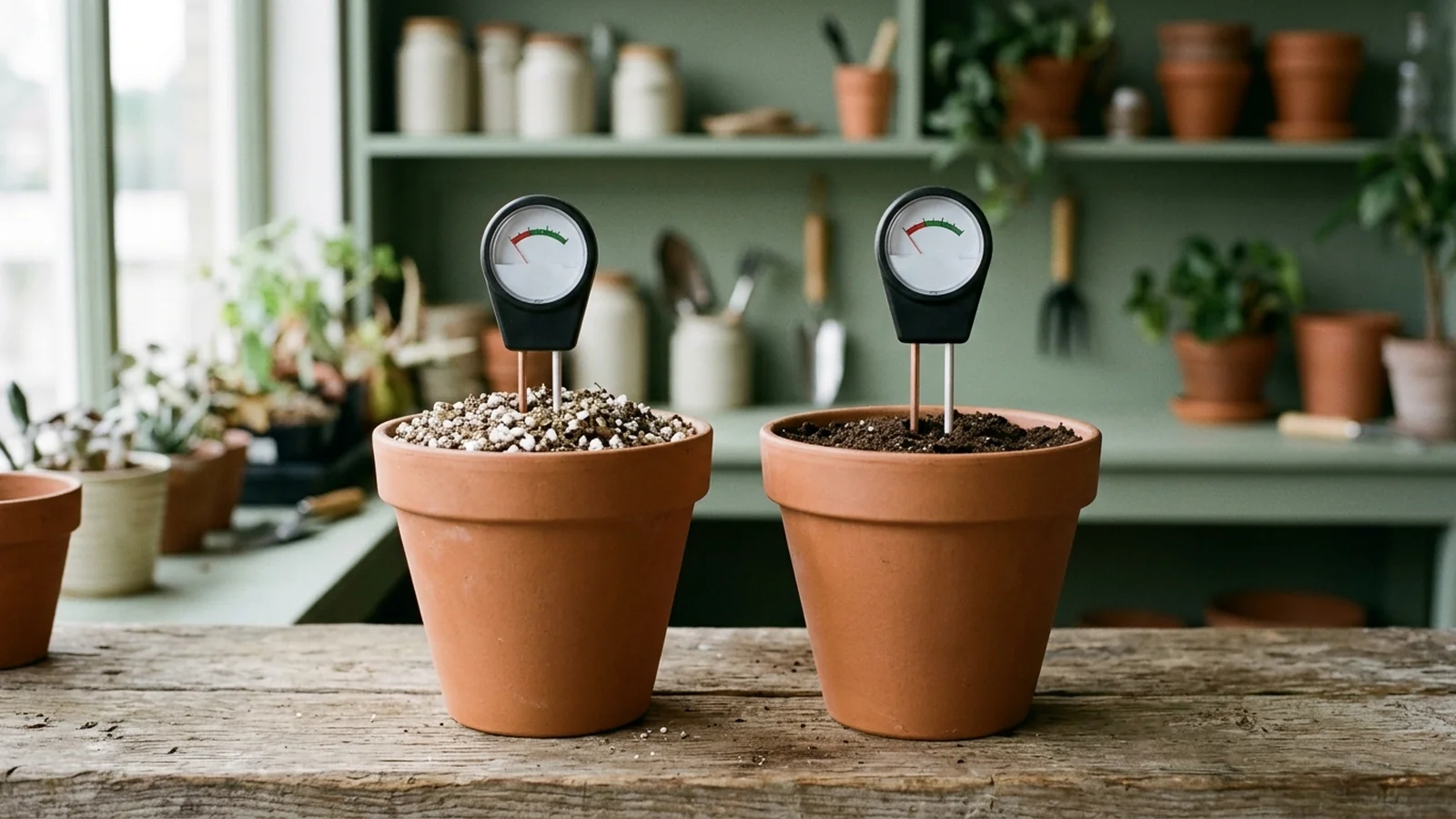
The two-prong dial in most garden centers does not touch water directly. It reads an electrical signal that salts, contact, and depth all distort, and knowing that changes how you should read the dial.
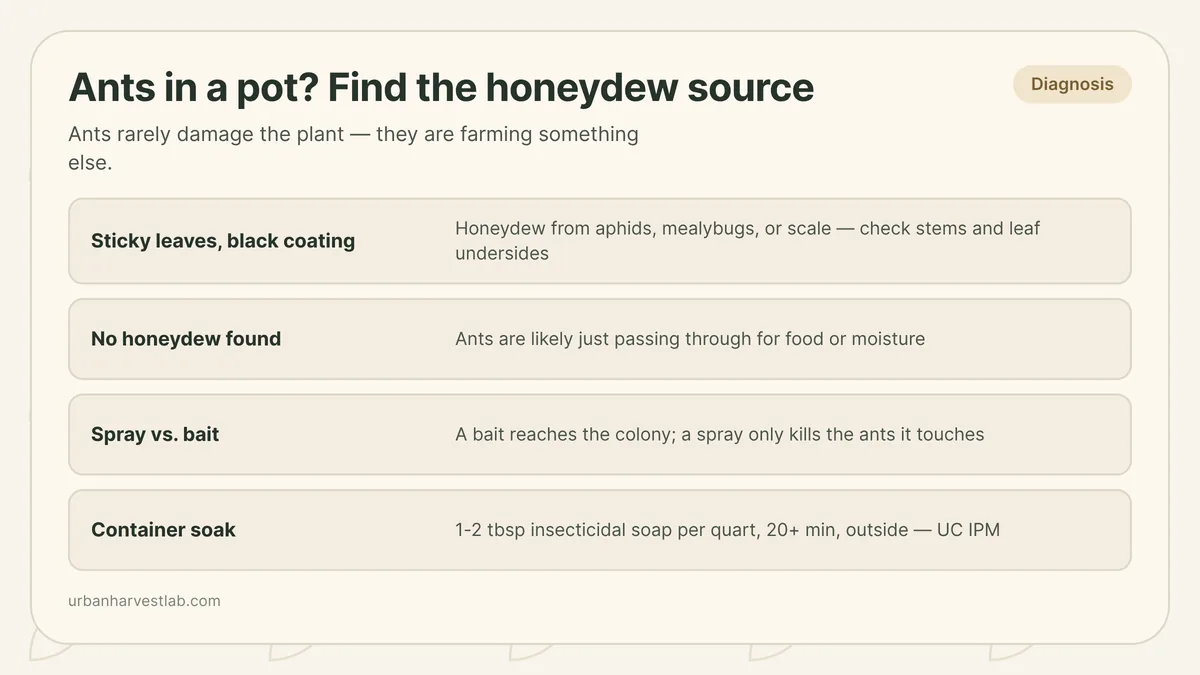
A trail of ants on a potted plant is almost always chasing honeydew from another pest, not damaging the plant itself, so the fix starts with finding that pest.
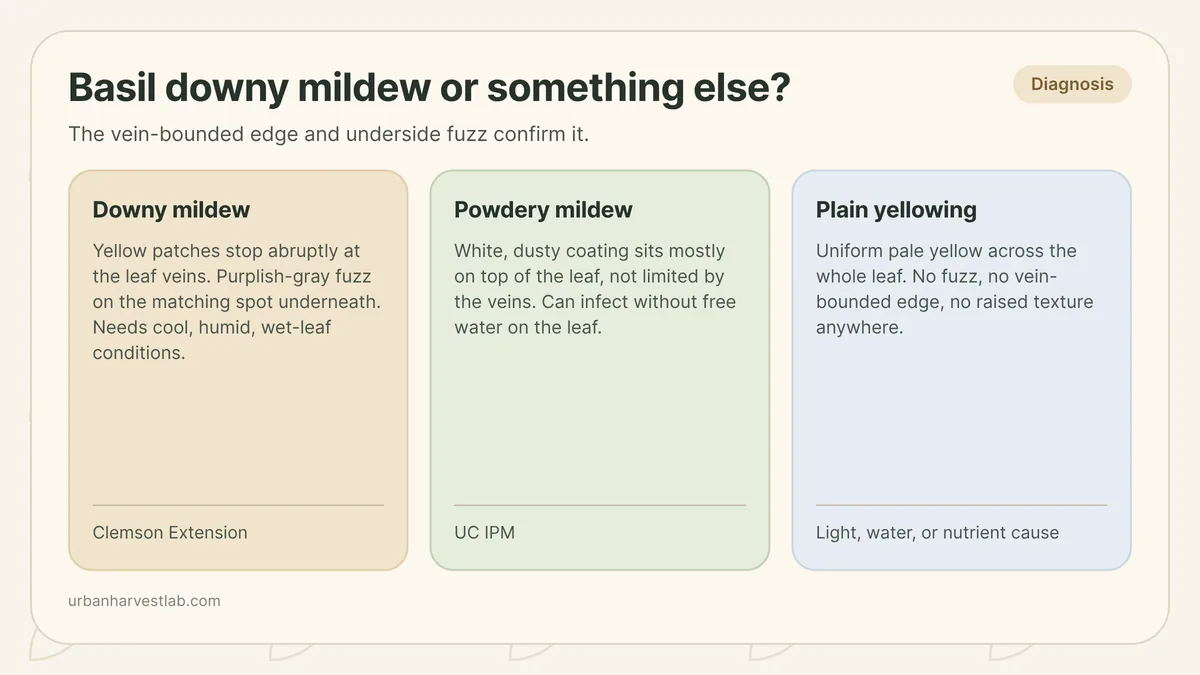
Vein-bounded yellowing on top with purplish-gray fuzz underneath means downy mildew, not a feeding problem and not powdery mildew.
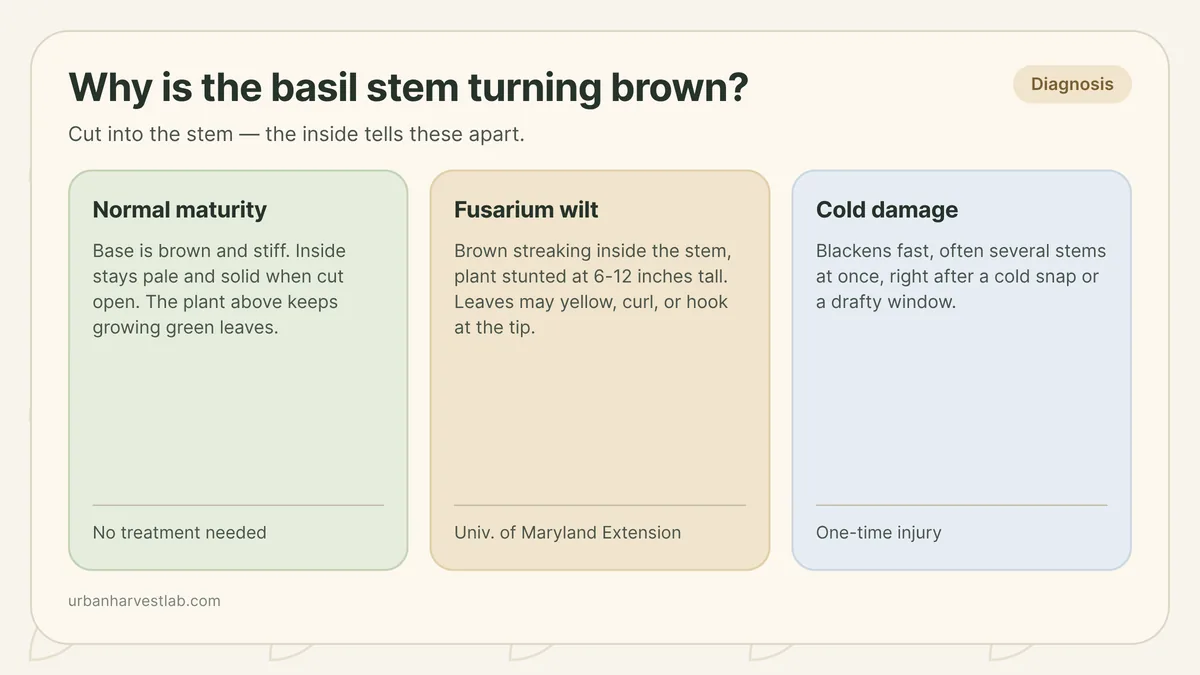
Where the browning starts, what the stem looks like when you cut into it, and how fast it happened are the three details that tell these apart.
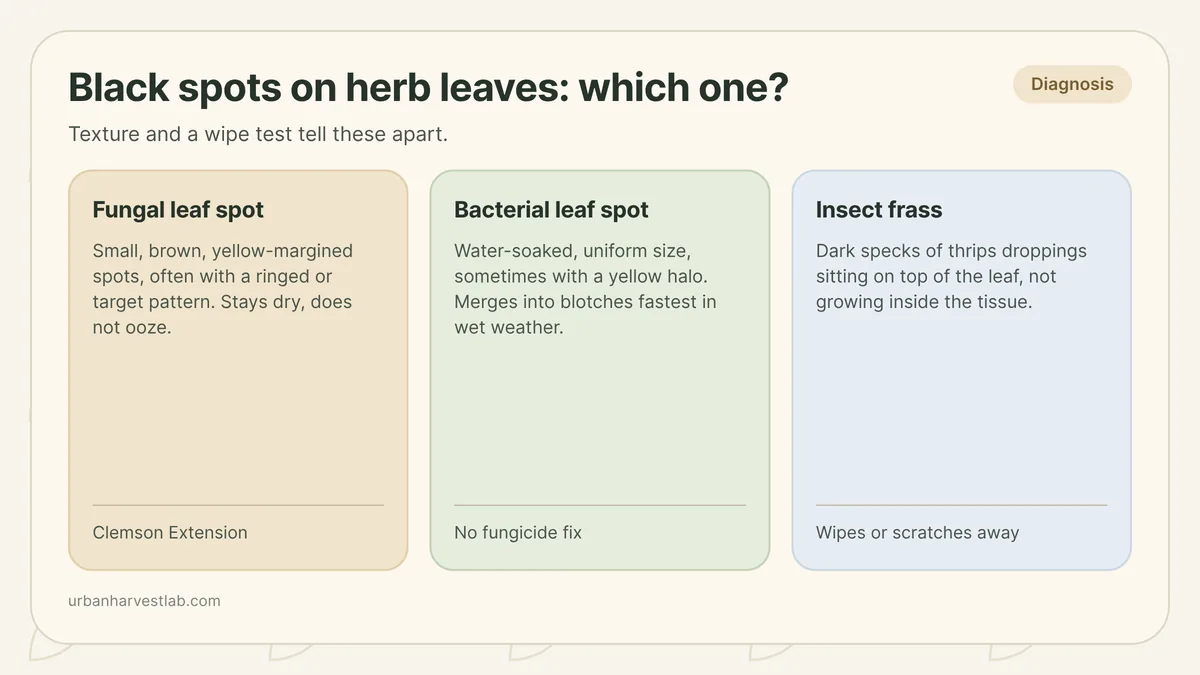
Black spots on herbs can be a fungal disease, a bacterial disease, or just insect droppings sitting on the leaf, and each one calls for something different.
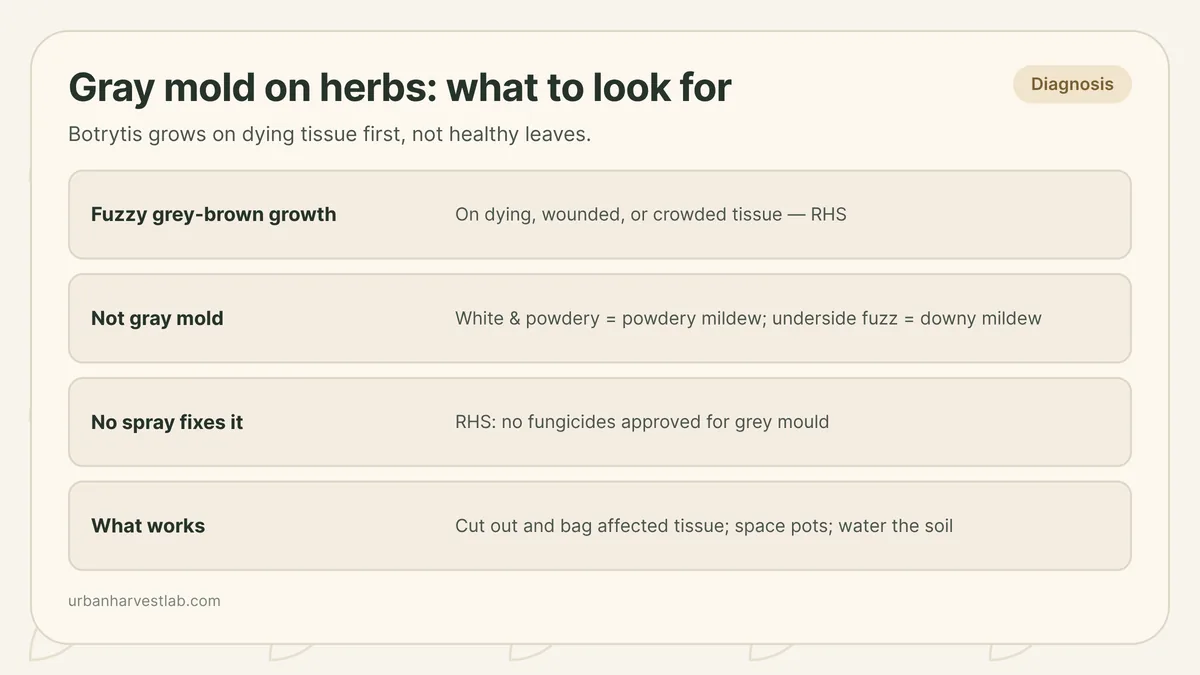
Gray mold grows on dying or wounded tissue first, not healthy leaves. Remove the source, open up the canopy, and stop watering overhead.
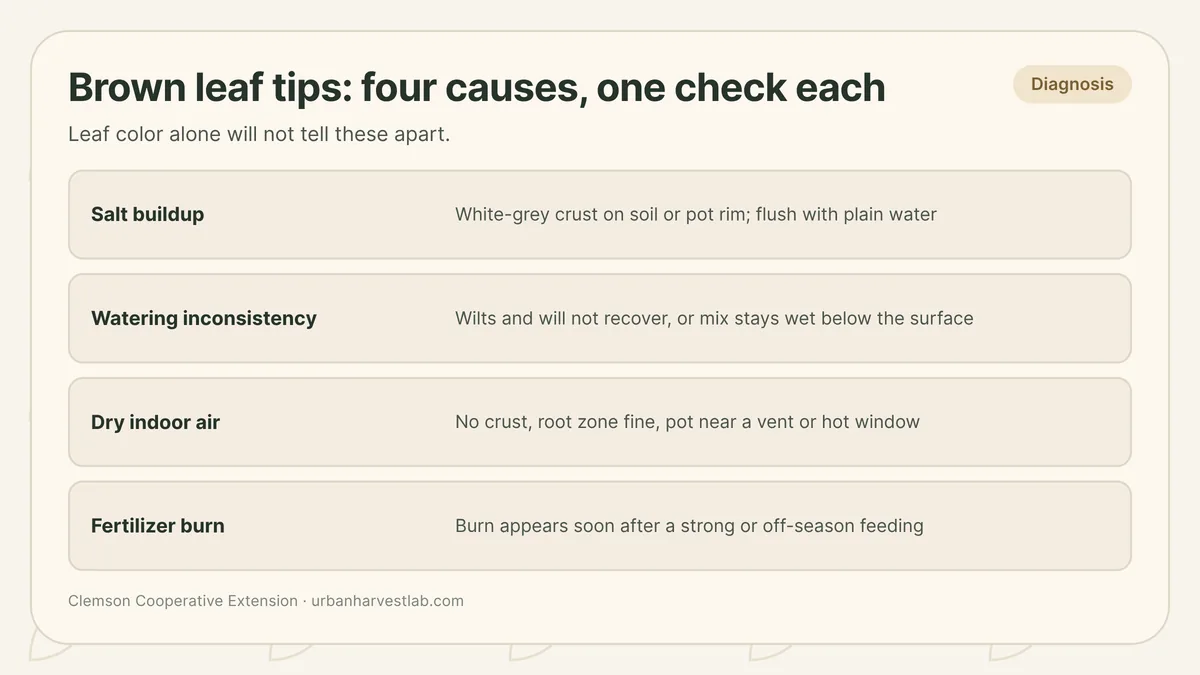
Four different problems produce the same crisped, brown tip. The soil surface, the root zone, and your last feeding date each point at a different one.
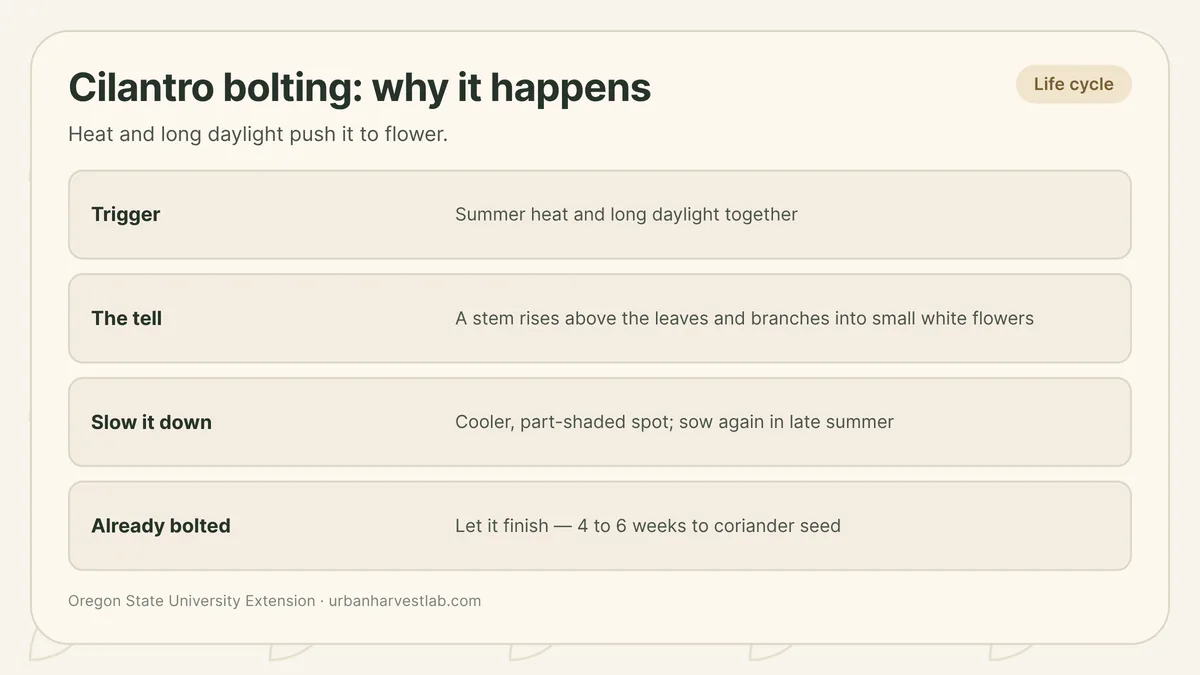
Cilantro is an annual that bolts once heat and long daylight hours push it toward flowering, and cooler placement, sowing timing, and succession sowing are what actually slow it down.
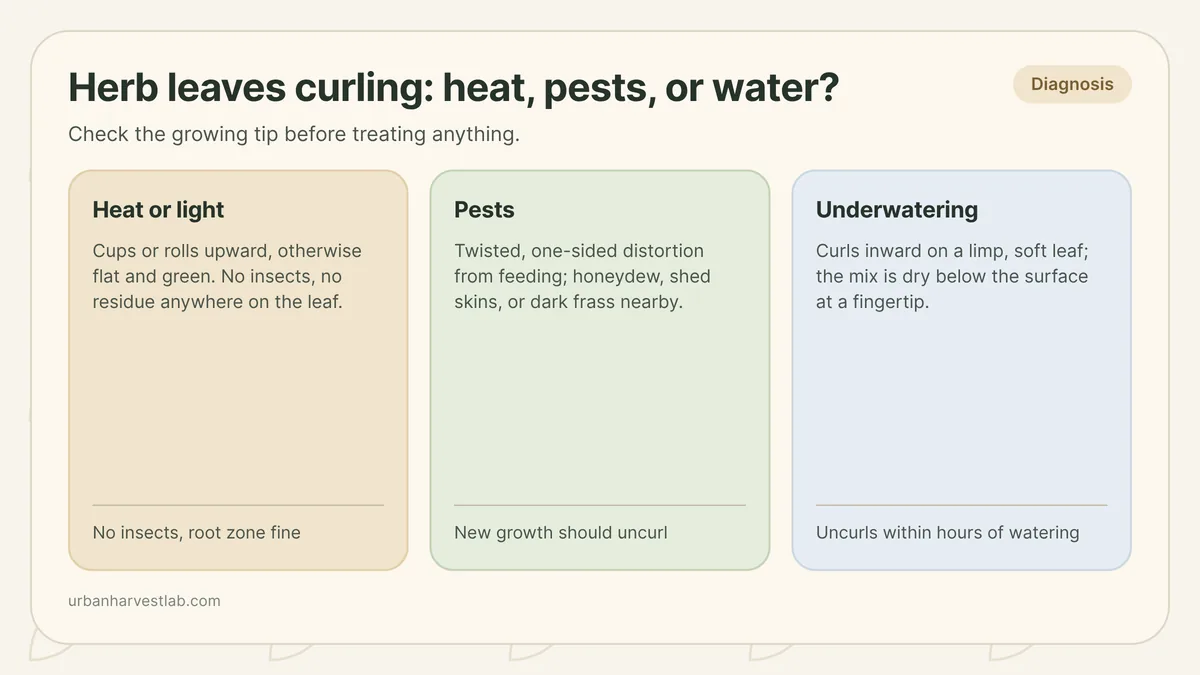
Curling herb leaves usually mean one of three things: heat or bright light, a pest on the growing tip, or a root zone that has gone too dry.
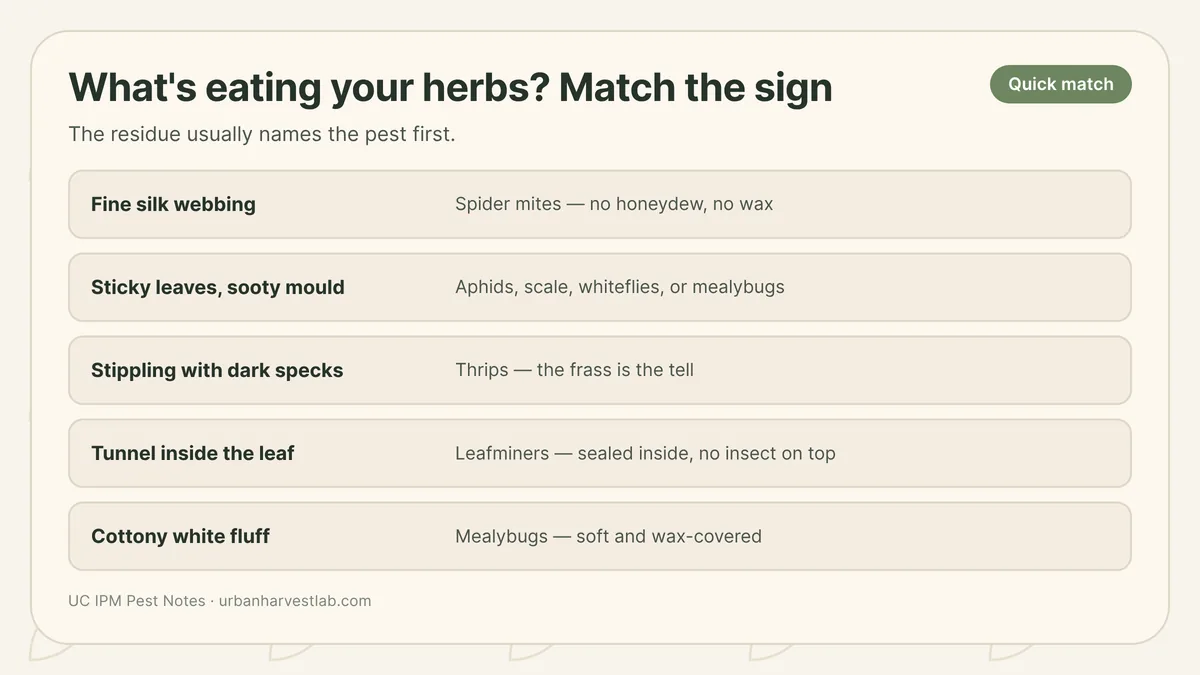
Every common herb pest leaves its own tell before you ever spot the insect itself. Pick out what you are actually seeing, then go straight to the page that treats it.
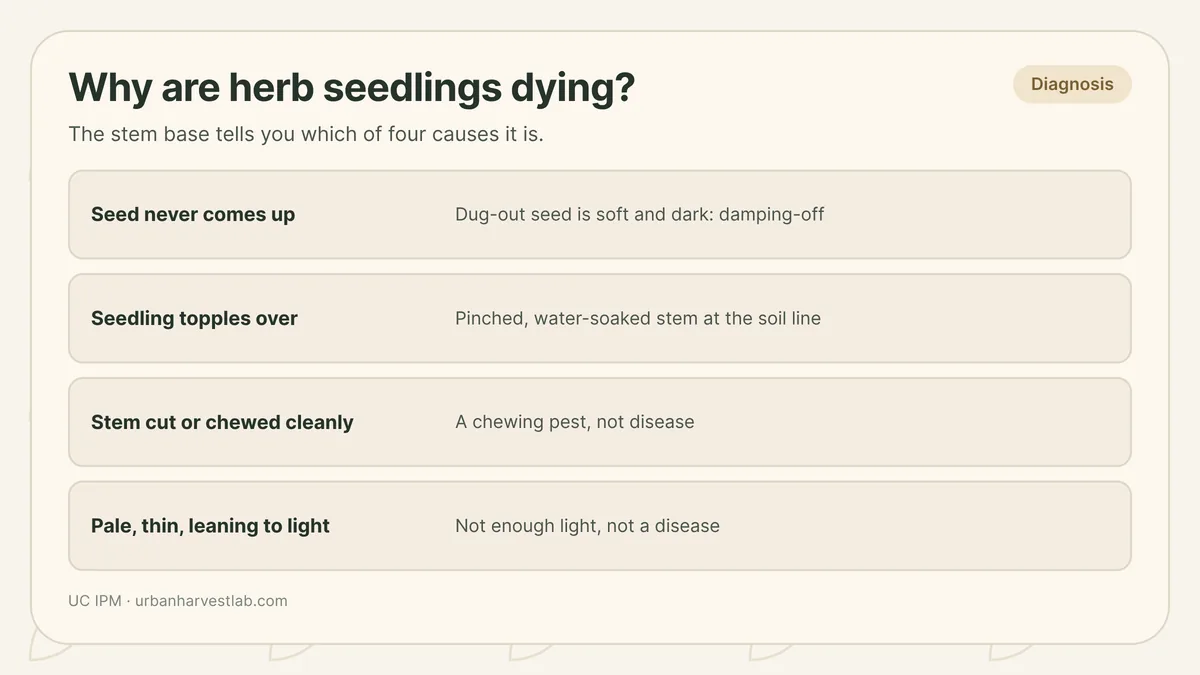
A tray of herb seedlings can fail three or four different ways, and they do not all look the same up close. The stem base and the seed itself tell you which one you have.
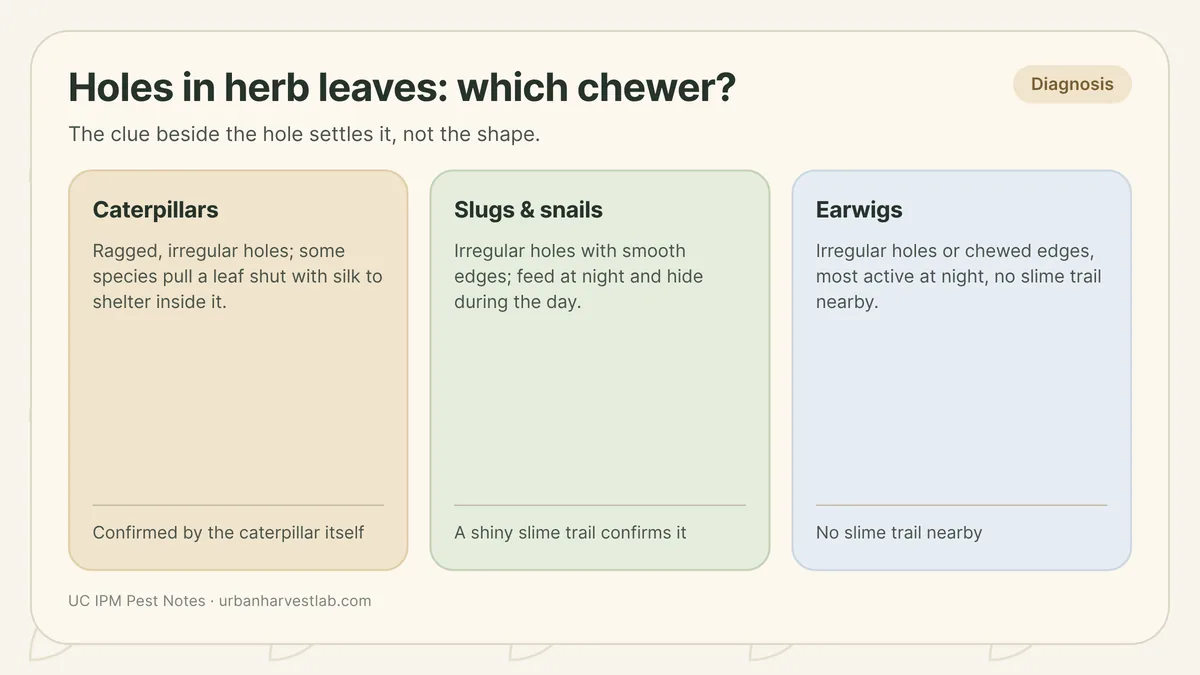
Three insects punch actual holes through a herb leaf: caterpillars, slugs and snails, and earwigs. Each leaves its own clue, and the clue matters more than the shape of the hole.
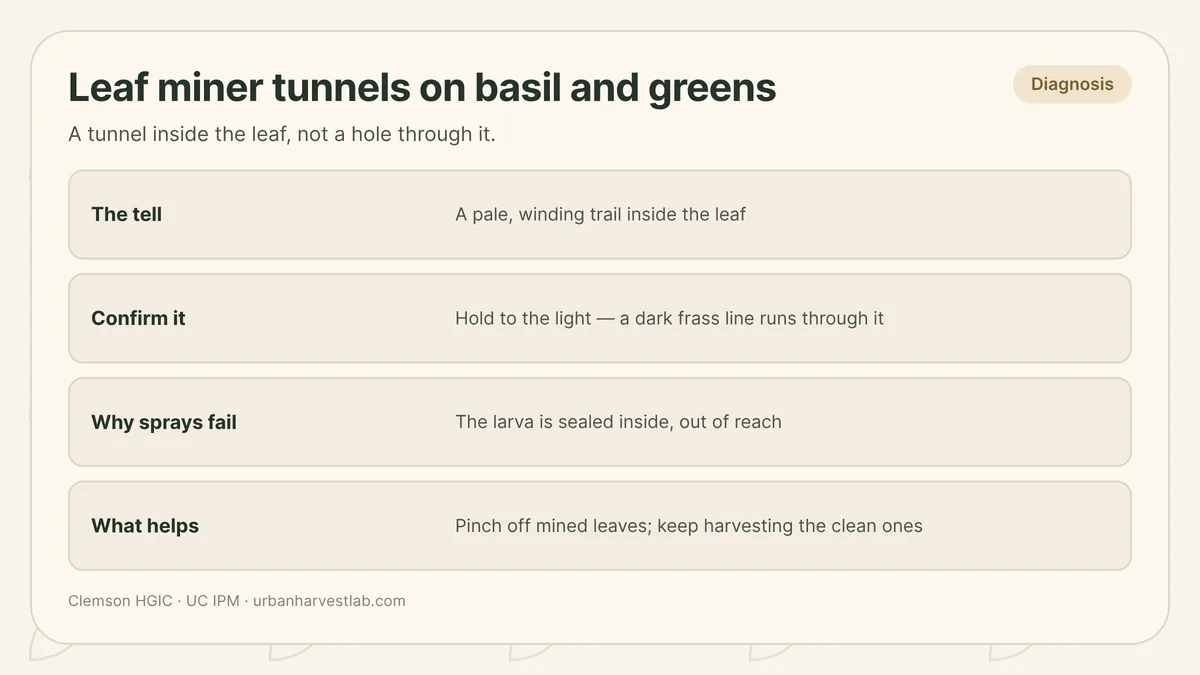
Leaf miner damage on basil and leafy greens shows up as a pale, winding tunnel inside the leaf tissue itself, and most sprays cannot reach the larva causing it.
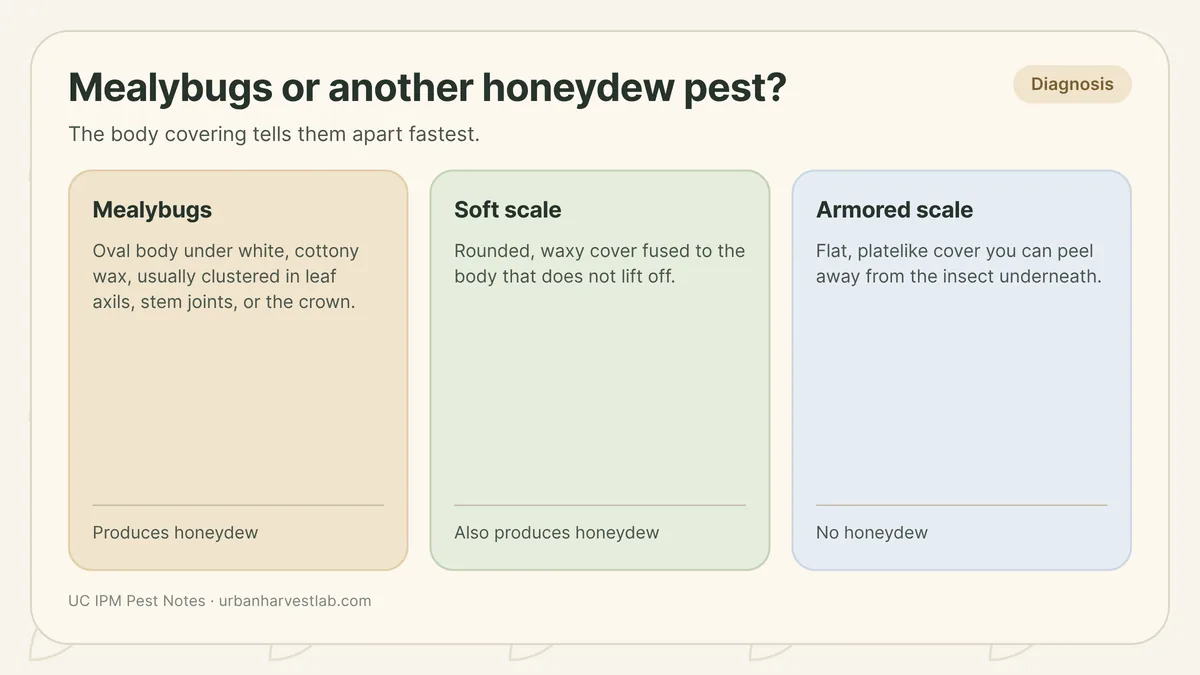
Mealybugs show up as white, cottony masses tucked into leaf axils and stem joints, and they keep coming back until every hiding spot and every generation has been treated.
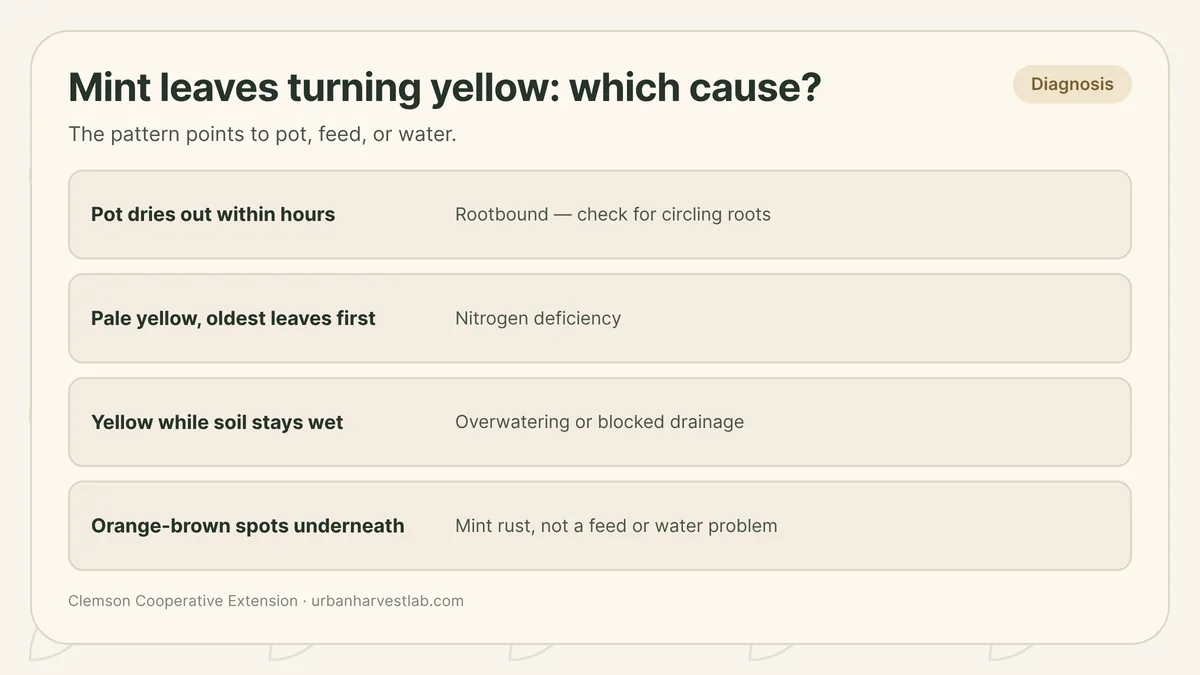
Yellow mint leaves have three usual sources: a pot the roots have outgrown, short nitrogen, or soil that stays too wet. The pattern tells you which.
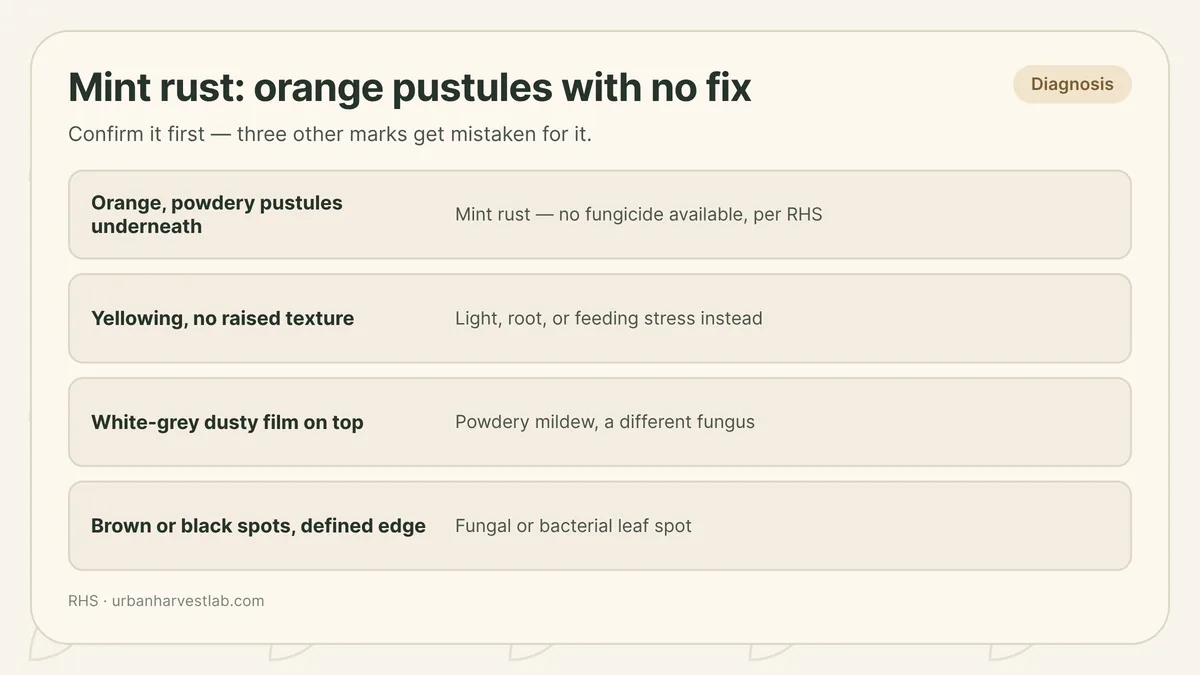
Mint rust cannot be treated away once it is on the leaf. The realistic job is removing infected growth, improving airflow, and knowing when to start over.
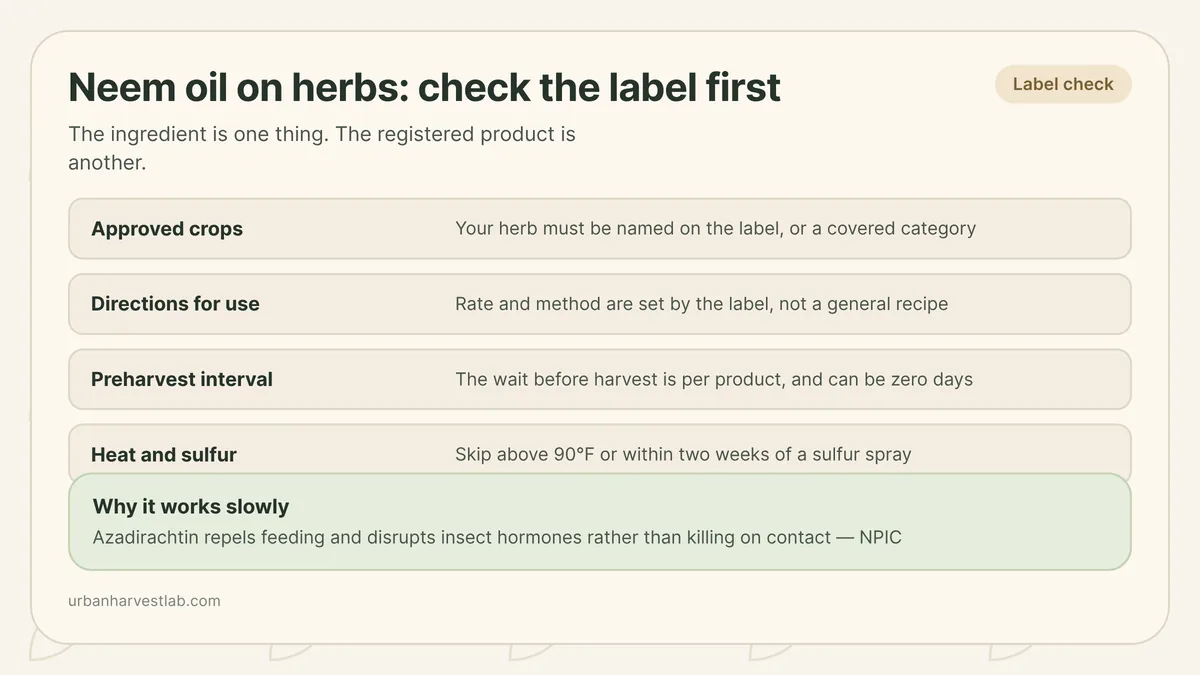
Whether neem oil is safe for a herb depends on the product's label, not on neem oil as an ingredient — and the label also sets the wait time before harvest.
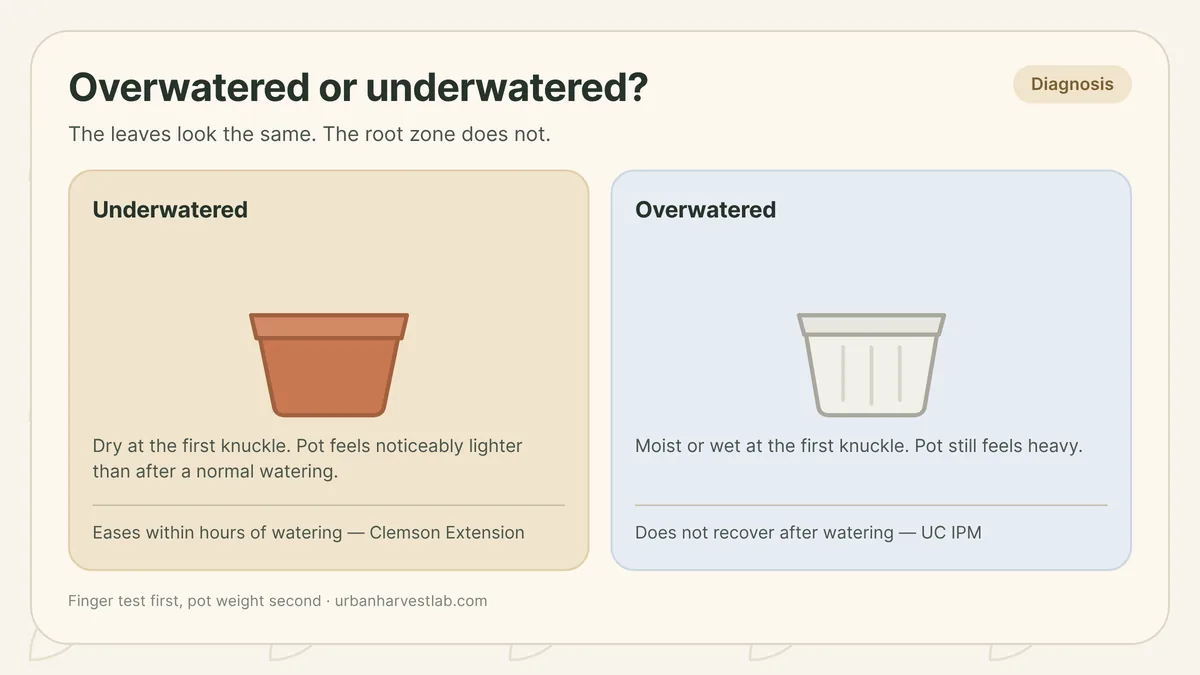
Reading the root zone directly, with a finger test, pot weight, and how the plant responds to being watered, settles what the leaves alone cannot.
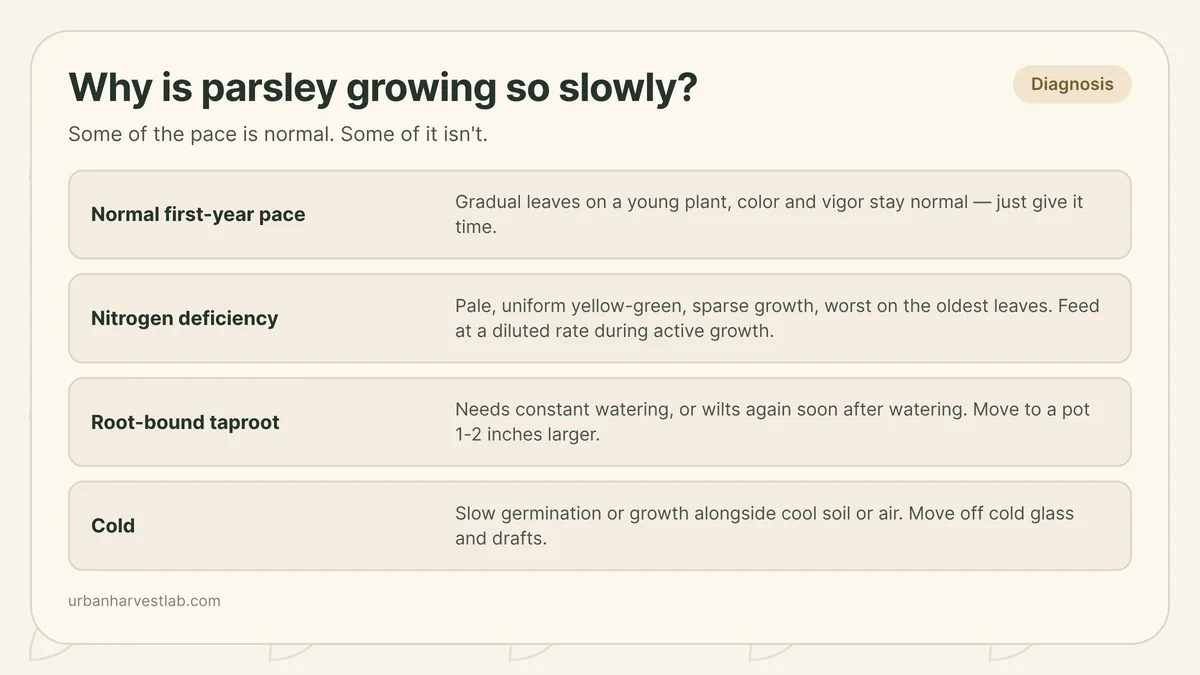
Some of parsley's slow pace is just how the plant works. Here is how to tell normal first-year growth apart from nitrogen deficiency, a cramped taproot, and cold.
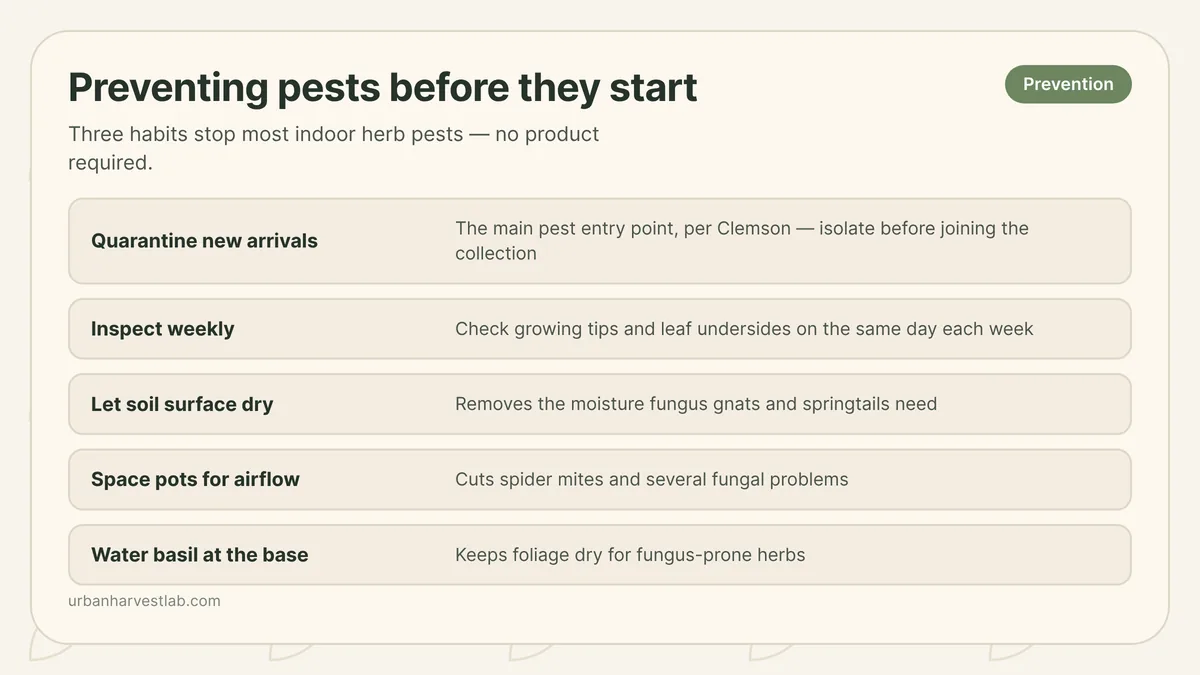
Most indoor herb pests arrive on a new plant or one that spent summer outdoors, and most of them are stopped by isolating that plant, checking it on a schedule, and keeping the soil and air from favoring the pest in the first place.
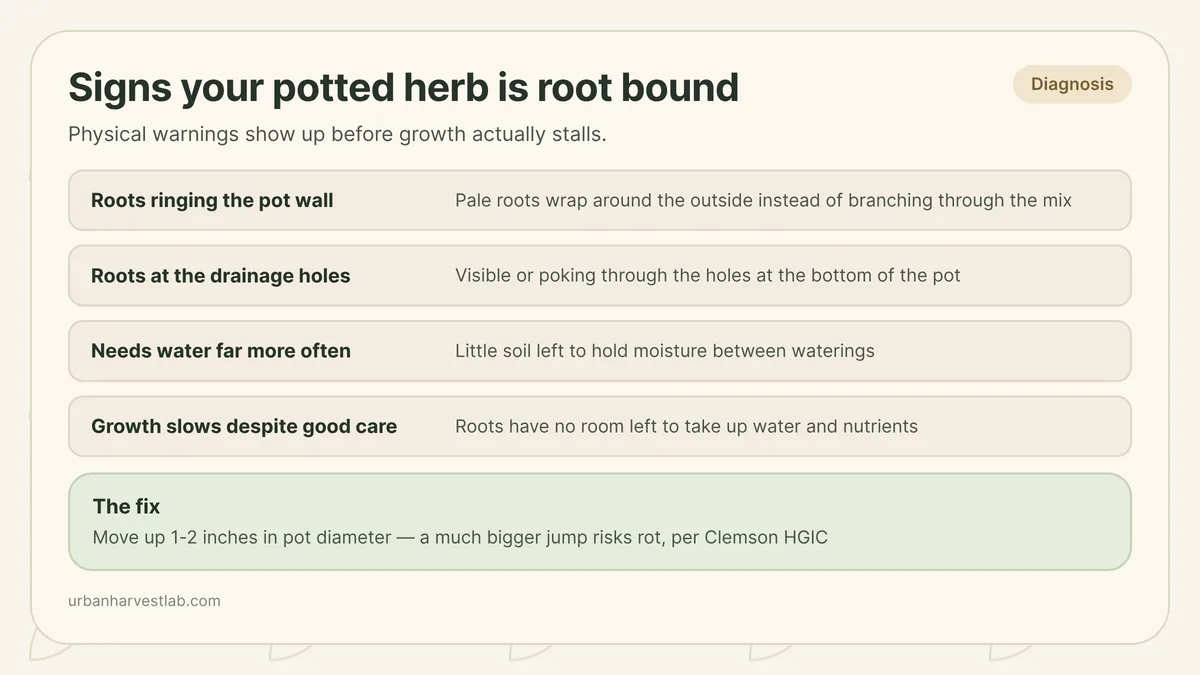
A root bound herb gives off physical warnings before growth actually stalls. Here is what to look for, why the signs show up together, and how to repot without shocking the plant.
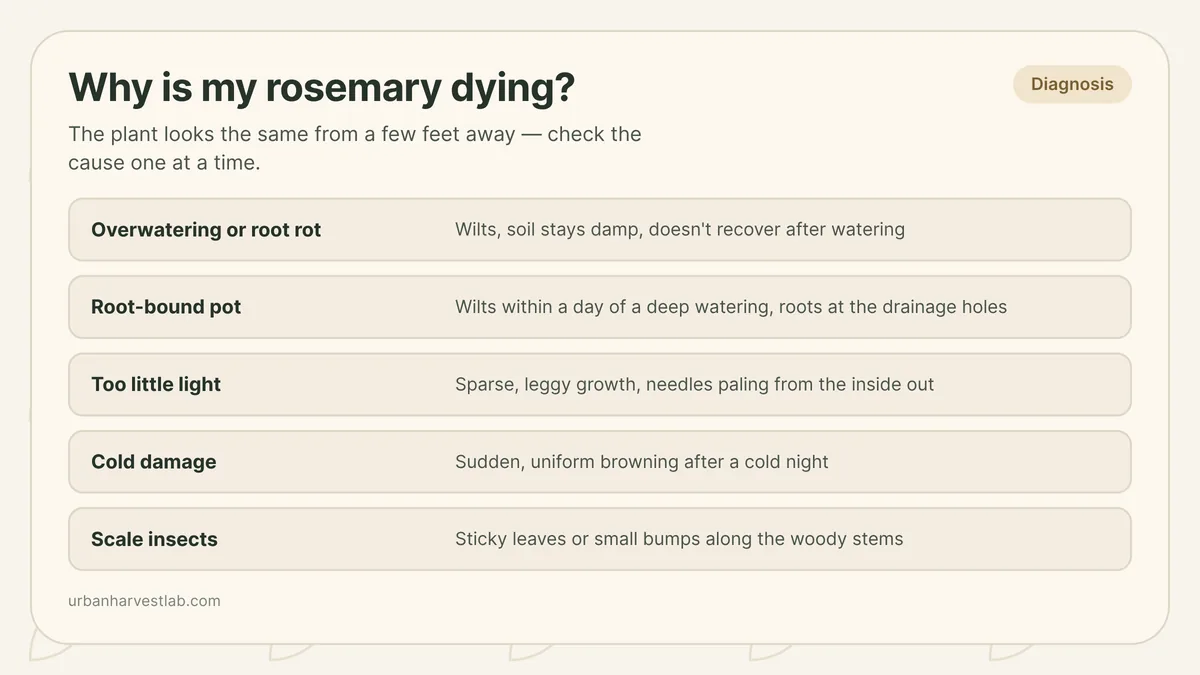
A dying rosemary looks much the same from a few feet away no matter what caused it, so finding the fix means ruling causes in and out one at a time, not guessing.
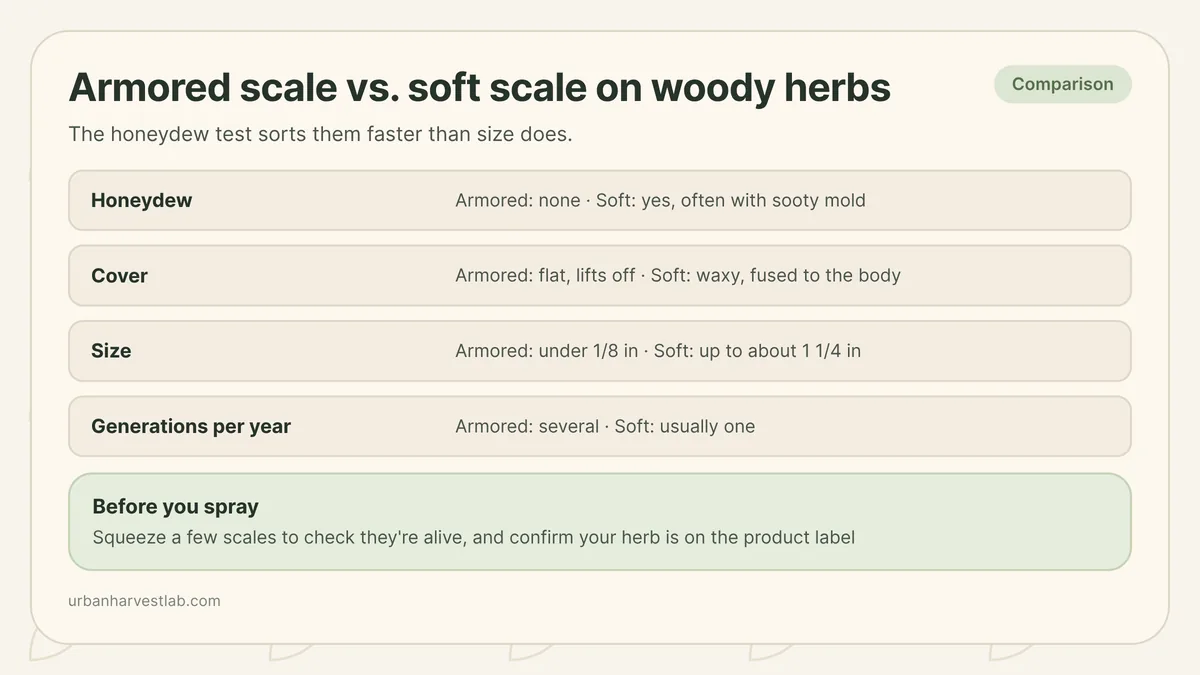
Scale on a woody herb often goes unnoticed until the leaves turn sticky or a stem starts to die back, and the right treatment depends on which kind of scale you have.
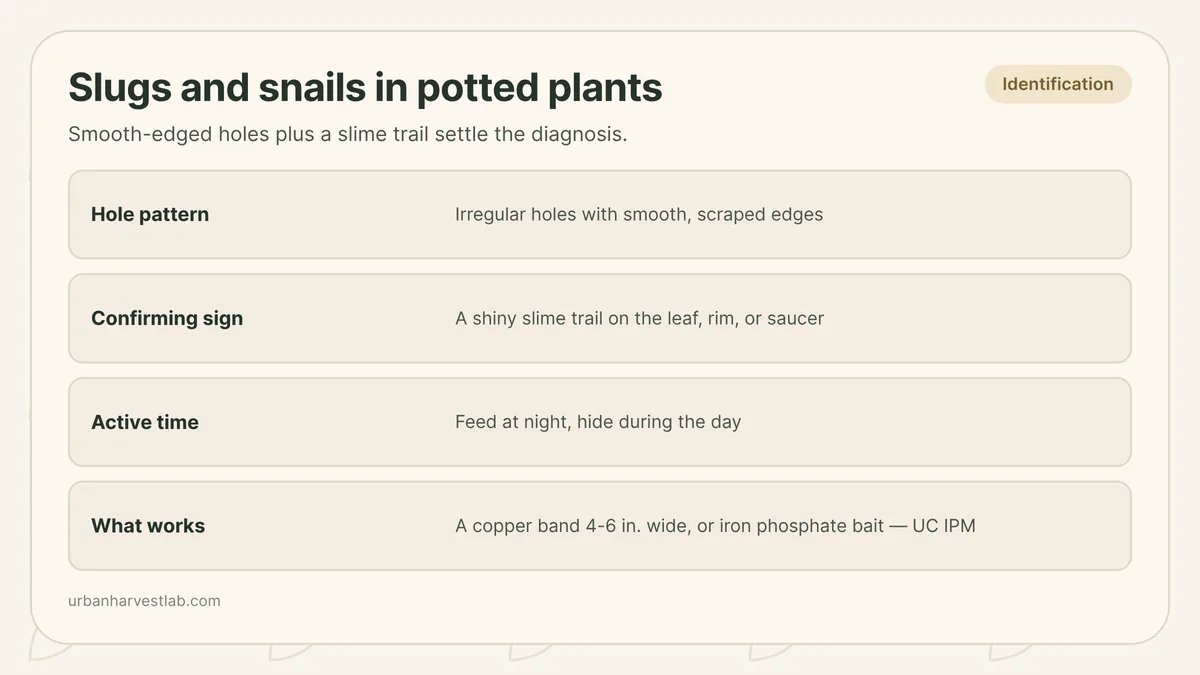
Smooth-edged holes and a shiny trail on a potted herb point to slugs or snails. A copper barrier, iron phosphate bait, and checking after dark are the responses with evidence behind them.
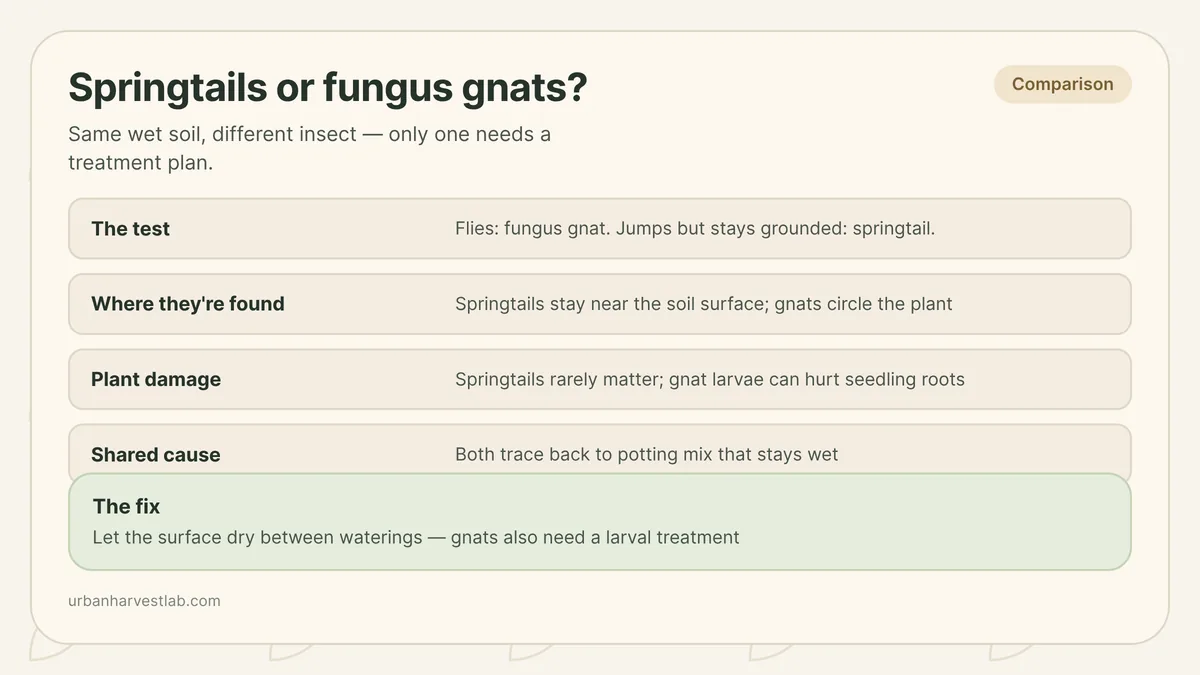
If the bugs in your potting soil jump but stay grounded, they are springtails. If they lift off and buzz around the plant, they are fungus gnats. Both are pointing at the same watering habit.
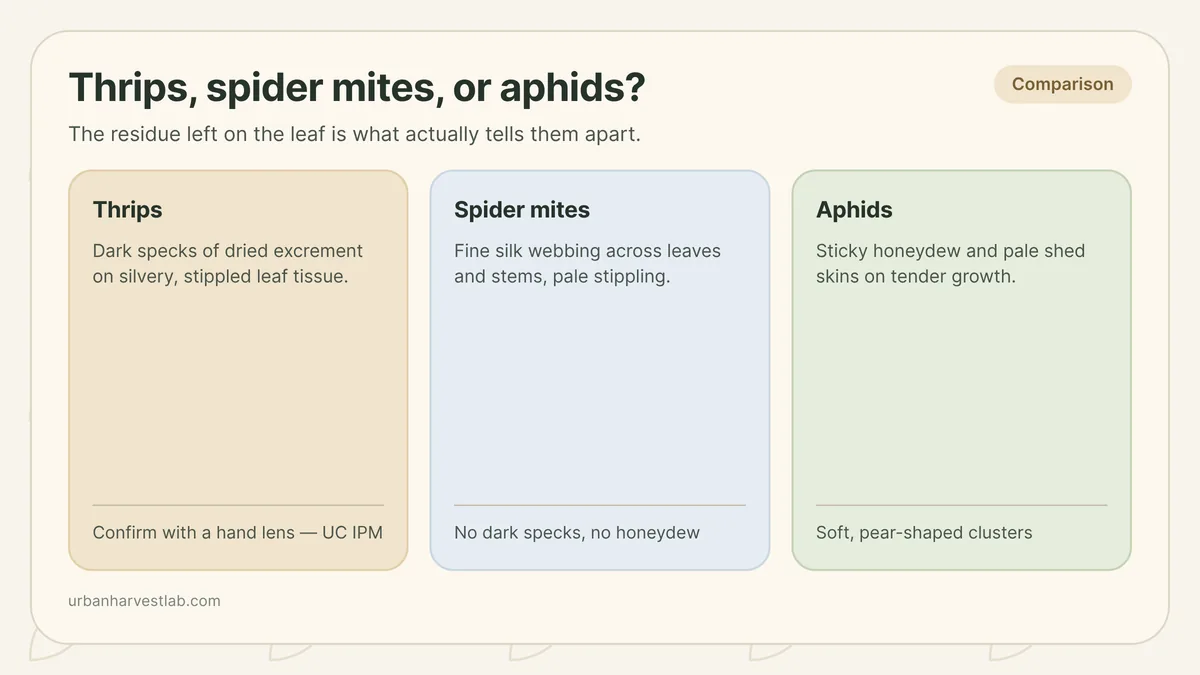
Thrips leave silvery, stippled leaves and dark specks of excrement rather than webbing or honeydew, and confirming the insect matters more than guessing from the damage alone.
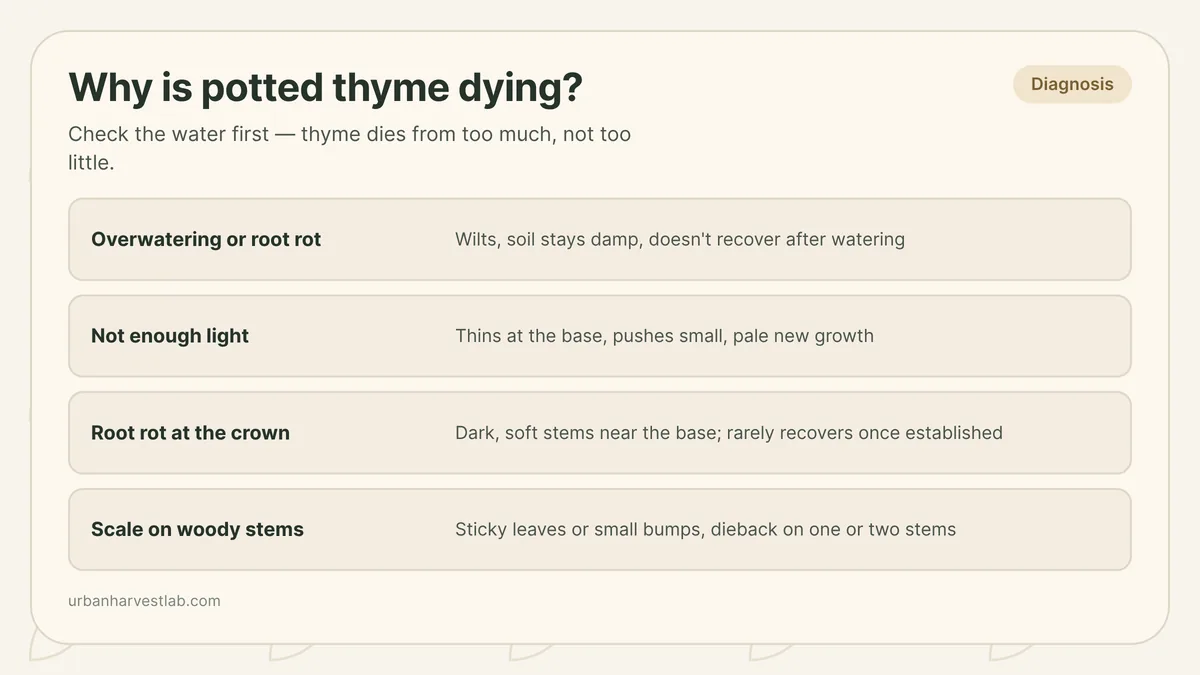
Thyme fails indoors far more often from a soggy pot than a dry one. Check the root zone first, then work through light, rot, and pests in that order.
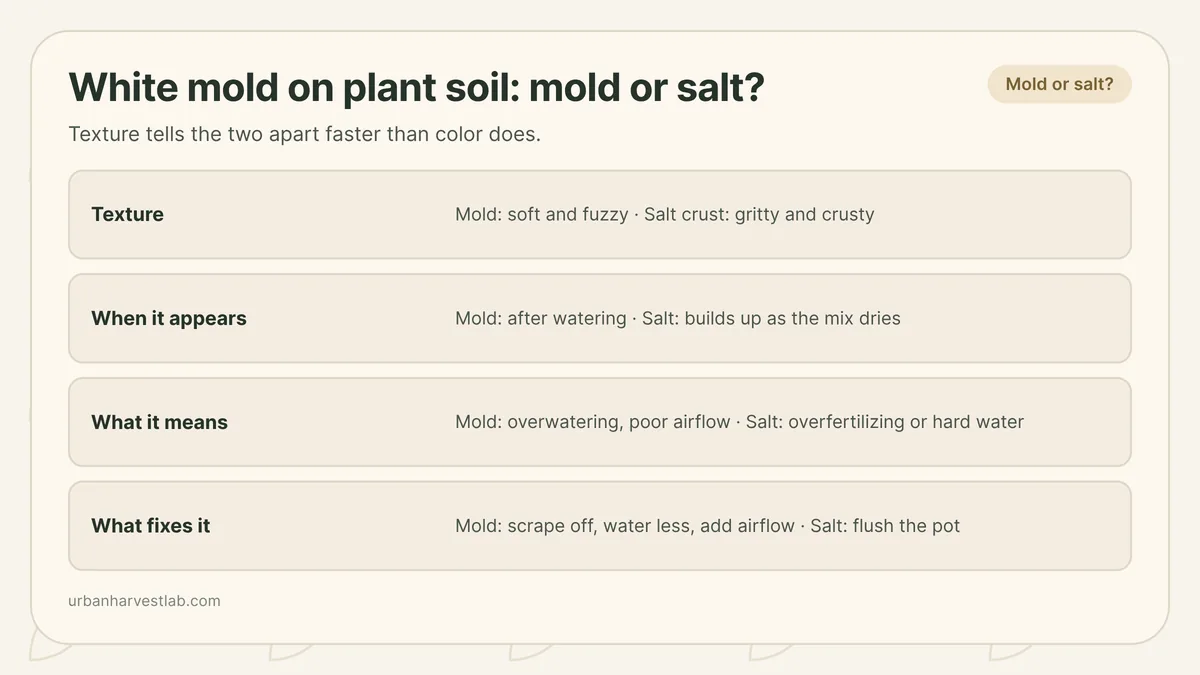
A white, fuzzy patch spreading across the soil surface looks alarming, but it is usually a cosmetic fungus feeding on the mix, not the plant.
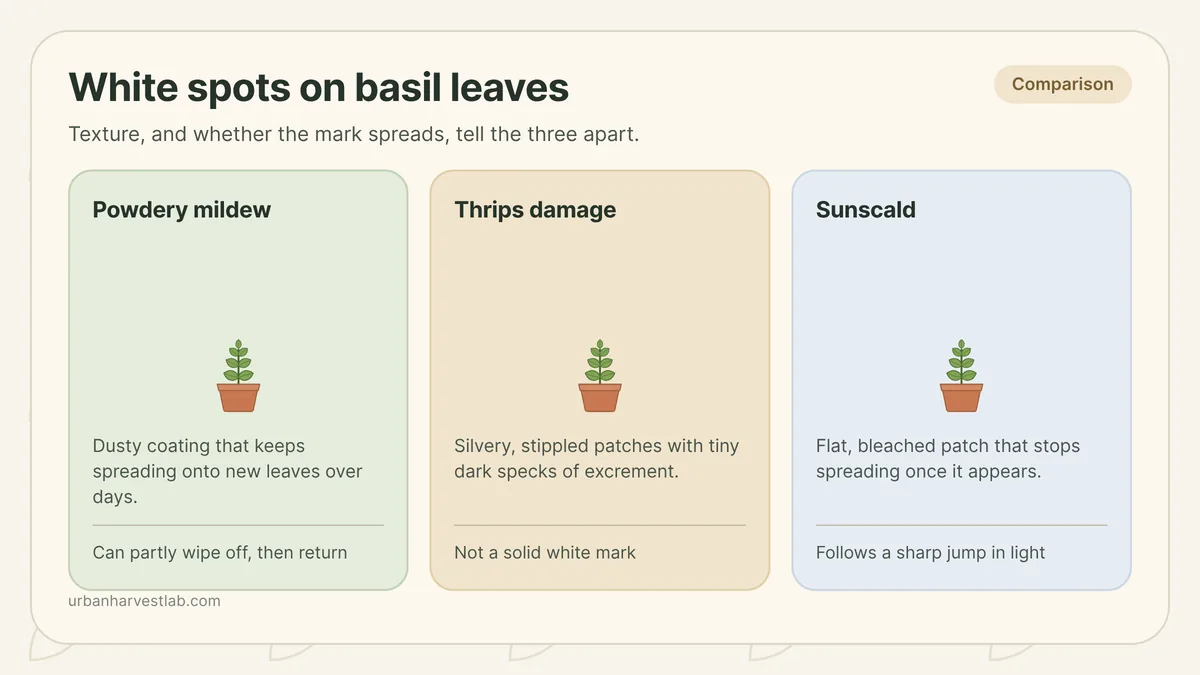
White spots on basil usually come from one of three different causes, and a hand lens plus a few days of watching tells you which.
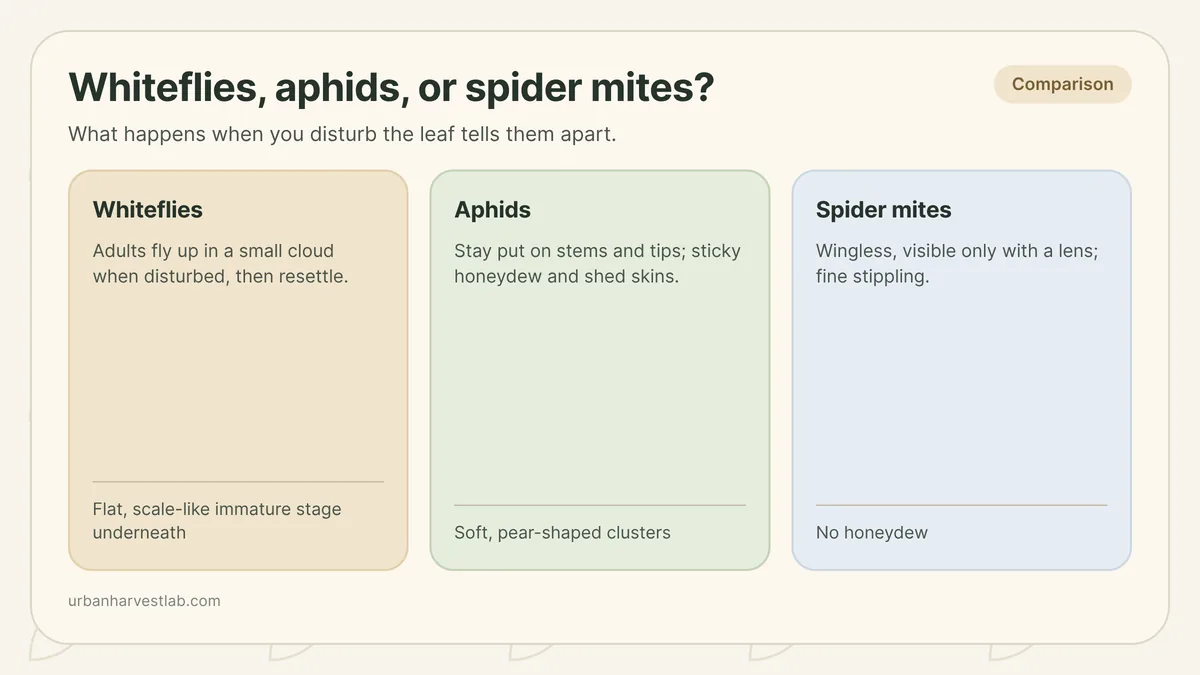
Whiteflies on a balcony vegetable plant are easiest to confirm by disturbing the foliage and watching what flies up, then working the population down with sprays, traps, and repeat checks.
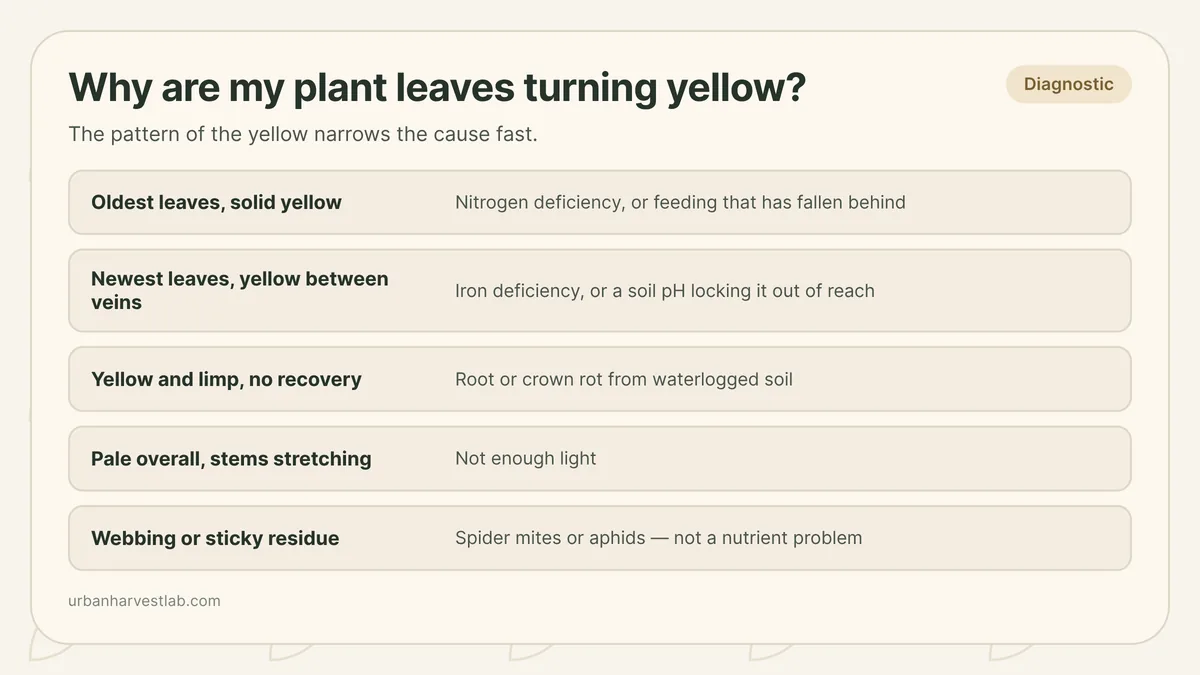
Yellow leaves have a short list of real causes, and the pattern of the yellowing narrows it fast, once you know what to look for.
Aphids are manageable when you find the colony, isolate the plant, remove most insects physically, and repeat inspections through the next generation.
A white mark is not automatically mildew. Confirm whether patches recur and spread on living tissue before changing the entire care routine.
Spider mites are easiest to control before webbing is obvious. Look for fine pale stippling and confirm moving specks over white paper.
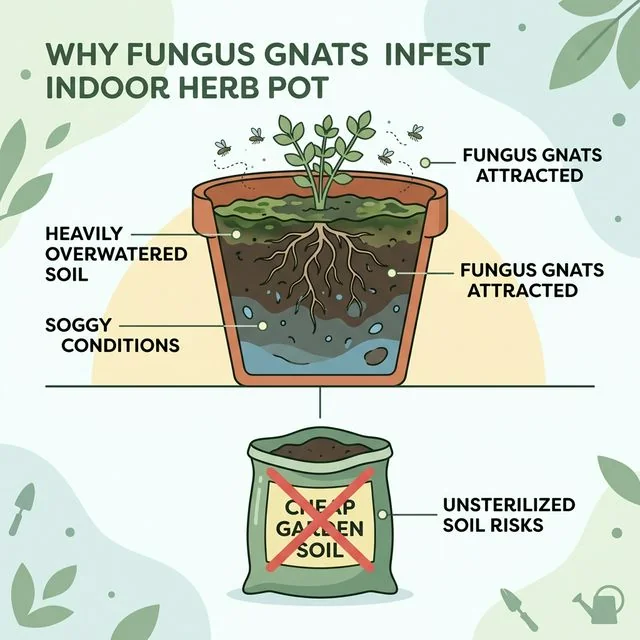
Fungus gnats are the absolute bane of indoor gardeners. If a cloud of tiny black flies eradicates your peace every time you walk past your basil plant, you are treating the symptom, not the cause.
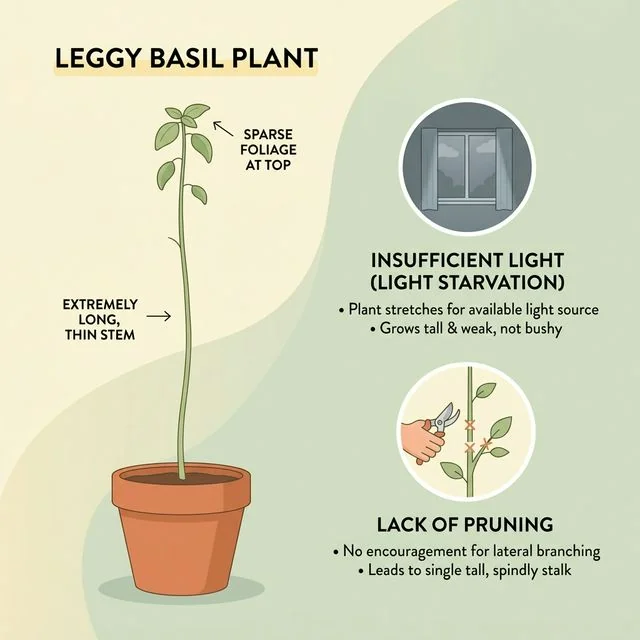
A bushy, compact basil plant is the goal of every gardener. If your plant is growing into a ridiculously tall, flimsy vine with only a few leaves at the top, you have 'leggy' basil. Here is how to diagnose and fix it.
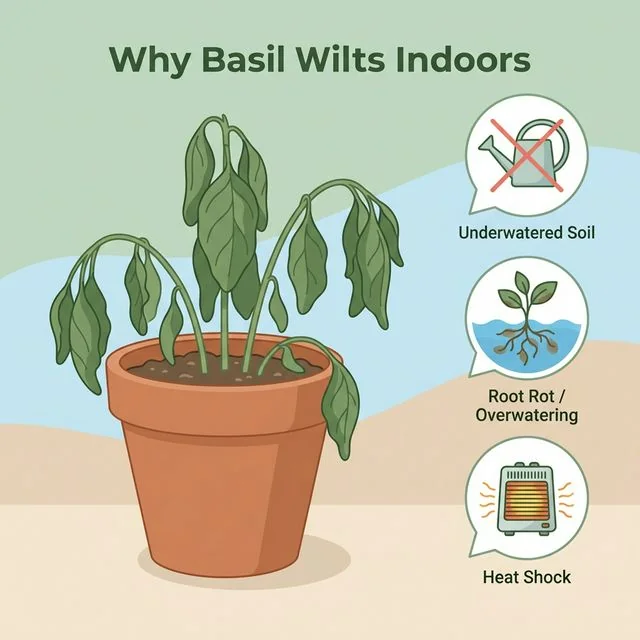
Basil is famous for being dramatic. If your plant suddenly wilts into a sad green puddle, don't panic. Here is exactly how to diagnose the droop and revive it.
Common potted herb problems usually show up as yellow leaves, wilting, or weak growth, but the useful diagnosis starts with light, drainage, and root stress.
Yellow basil rarely has a single universal cause. The pattern of yellowing, the growing medium, and the recent care routine usually tell the story.