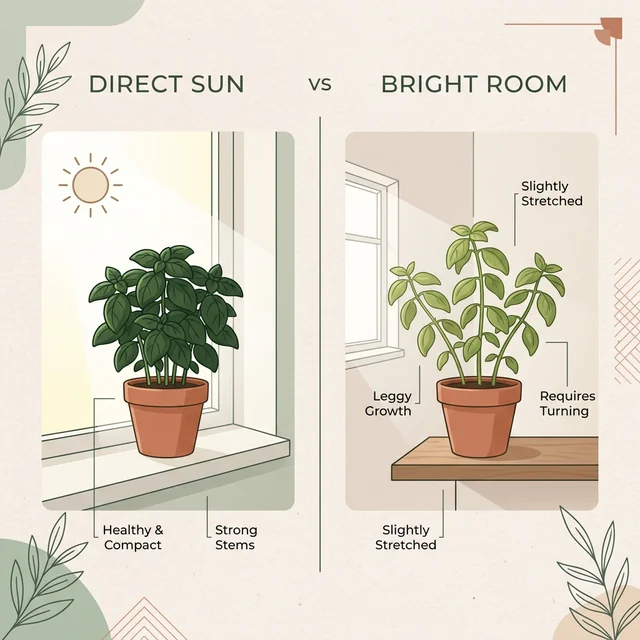
Can herbs grow indoors without direct sunlight? Yes, but bright windows matter
A realistic answer to a common indoor-herb question, with clear expectations for growth, herb choice, and when a grow light becomes the cleaner solution.
A practical grow lights hub covering photoperiod, fixture choice, coverage, distance, and troubleshooting for indoor herbs and seedlings.
A realistic answer to a common indoor-herb question, with clear expectations for growth, herb choice, and when a grow light becomes the cleaner solution.
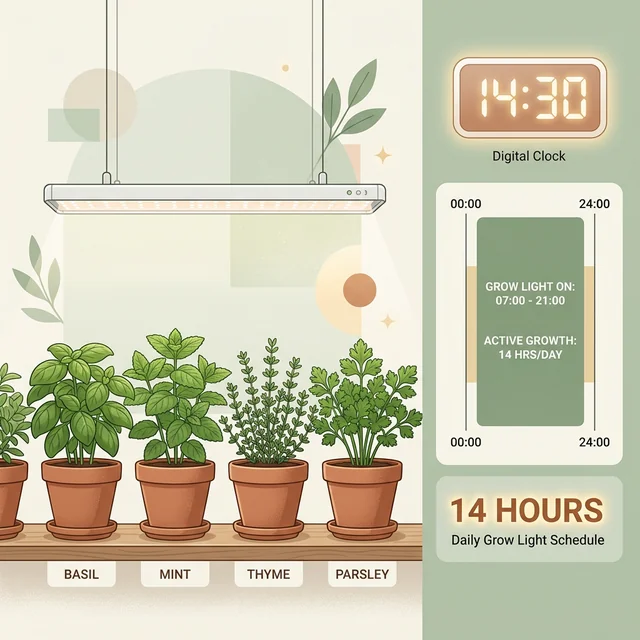
Most herb grow lights should run about 12 to 16 hours per day, but intensity, distance, and a stable dark period matter as much as the timer itself.
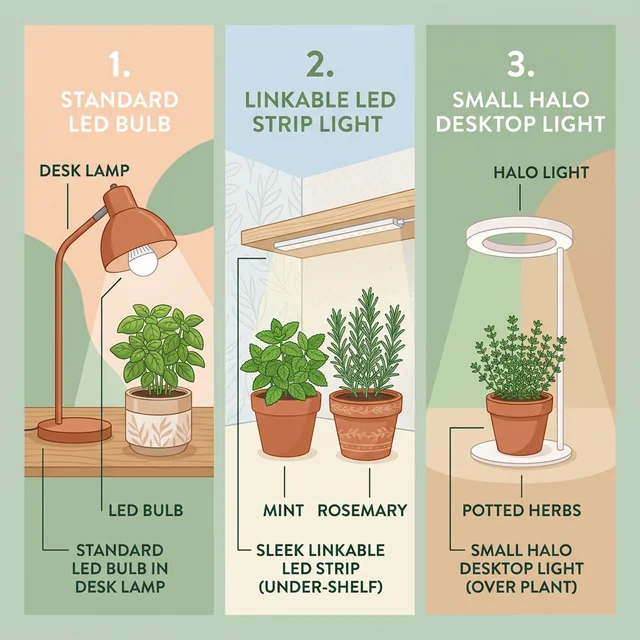
Most indoor herbs don't need a massive, expensive grow tent light. Here is how to choose the right LED bulbs, strips, or halos for your real apartment setup.
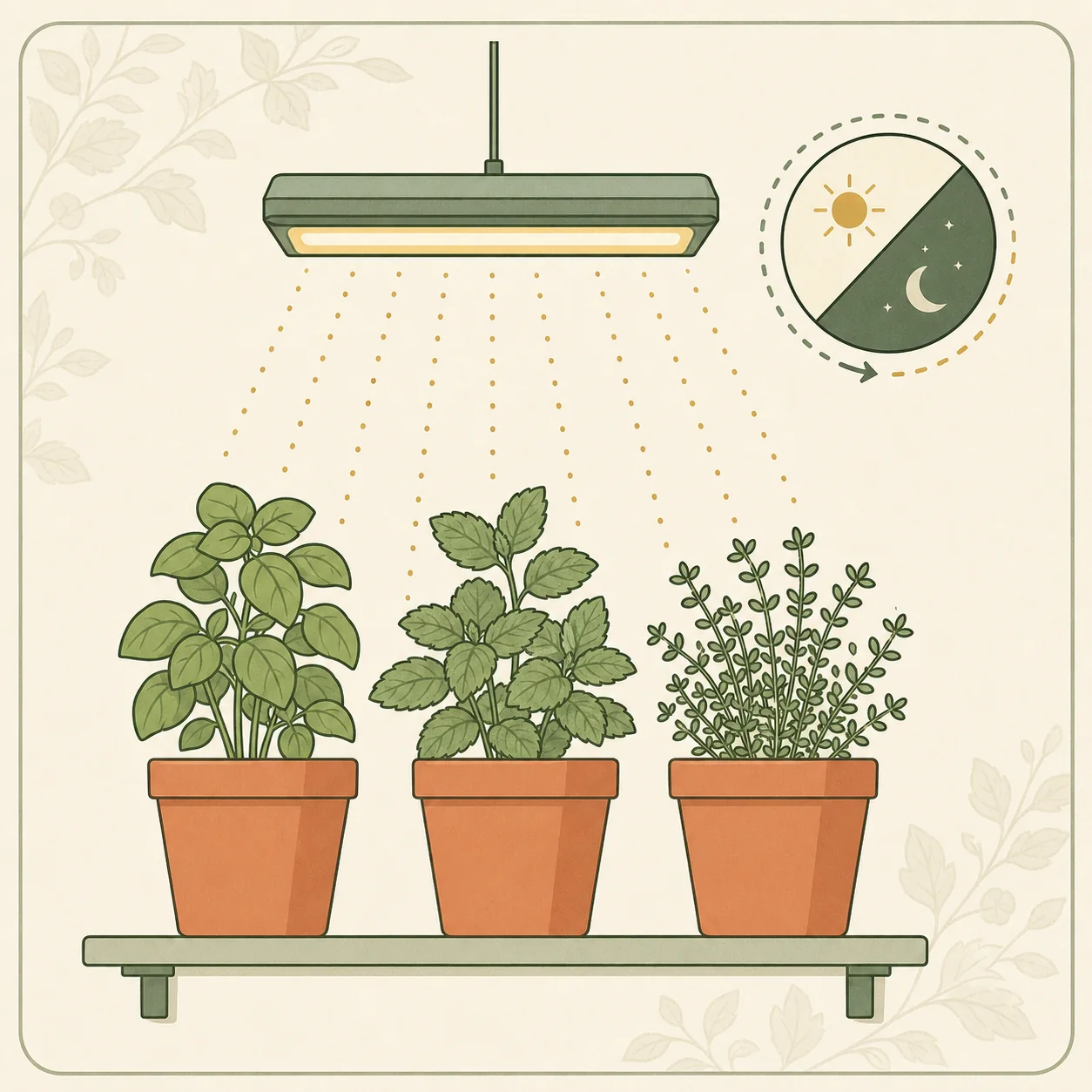
PPFD is a snapshot; DLI is the daily total. Used together, they turn grow-light setup from a distance rule into a measurable map.
Grow lights are one of the most misunderstood parts of small-space gardening because they are often sold through product language instead of plant language. Shoppers see wattage, spectrum, and marketing claims, but what actually matters is simpler: how much usable light reaches the crop over the day, and whether the fixture fits the real footprint.
Most home growers do not need a complicated lighting theory course. They need to know how long to run the fixture, how close to keep it, what type of fixture suits the shelf or counter, and how to recognize stress before it ruins the crop. Those are operational questions, and they are the ones this hub is built around.
Indoor crops underperform when the fixture shape and the growing footprint do not match. A square panel can be wasteful above a narrow shelf. A small clip-on lamp can be fine for two pots and completely inadequate for a crowded herb bench. Distance also matters. A decent fixture placed too high behaves like a weak one.
This is why runtime, distance, and fixture selection should never be treated as separate topics. They interact constantly.
Growers tend to make one of three mistakes:
A measured lighting setup feels boring, and that is usually a good sign. Plants grow evenly, the fixture stays manageable, and you do not need to keep guessing.
Start with the beginner guides if you are learning the relationship between runtime and canopy position. Move to setup guides when you need to buy or rearrange equipment. Use the troubleshooting section when herbs or seedlings are showing stretch, pale growth, or inconsistent development. Use the advanced section when you are ready to increase planting density or coordinate lighting with hydroponic systems.
The role of this hub is to make lighting decisions concrete enough that equipment recommendations remain grounded in crop outcomes, not just specification sheets.
These grouped sections keep the hub useful for beginners, active growers, and readers solving a specific problem.
Start with indoor light reality, runtime, and the relationship between fixture strength and crop response.
A realistic answer to a common indoor-herb question, with clear expectations for growth, herb choice, and when a grow light becomes the cleaner solution.
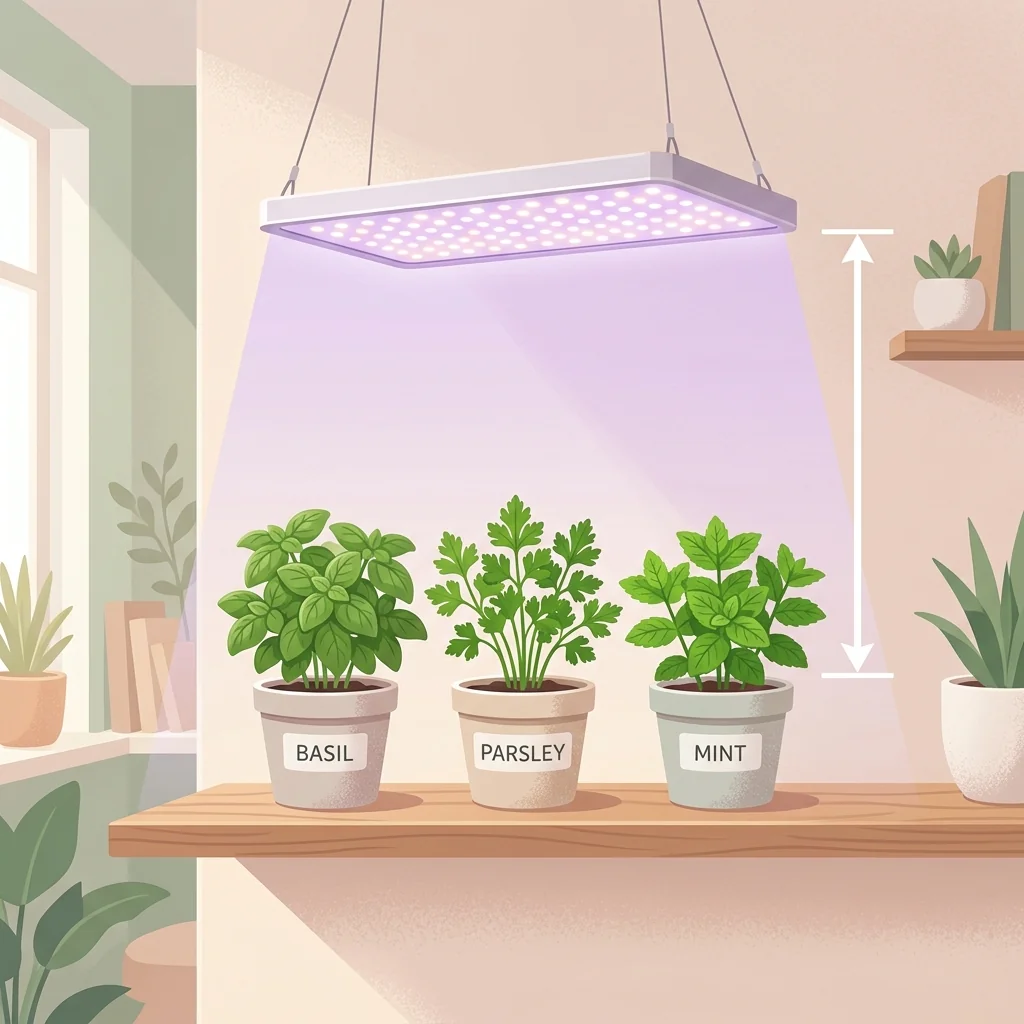
A grow light lets you grow herbs indoors anywhere, even with no sun. Here is the simple end-to-end setup: which light, how high, how long, and how to avoid leggy growth.
Most herb grow lights should run about 12 to 16 hours per day, but intensity, distance, and a stable dark period matter as much as the timer itself.
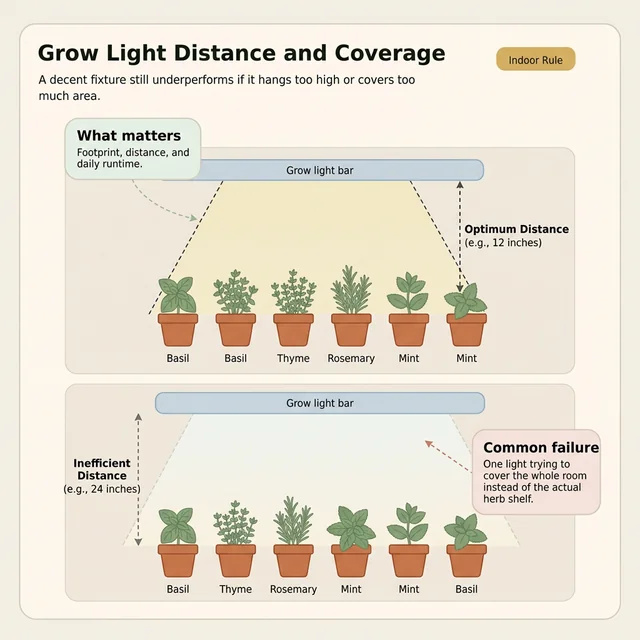
Seedlings usually need grow lights much closer than beginners expect, but the exact distance depends on fixture strength, lens design, and plant response.
These pieces help you choose a fixture and place it sensibly inside a shelf, rack, or countertop setup.
Most indoor herbs don't need a massive, expensive grow tent light. Here is how to choose the right LED bulbs, strips, or halos for your real apartment setup.
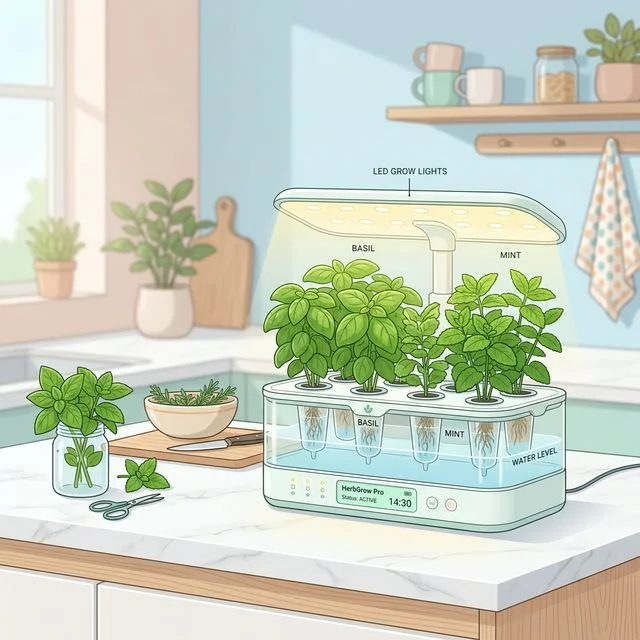
Countertop hydroponic systems can work very well for herbs, but only if you treat them as small growing systems rather than decorative appliances.
Use these when herbs stretch, pale out, or underperform under artificial light.
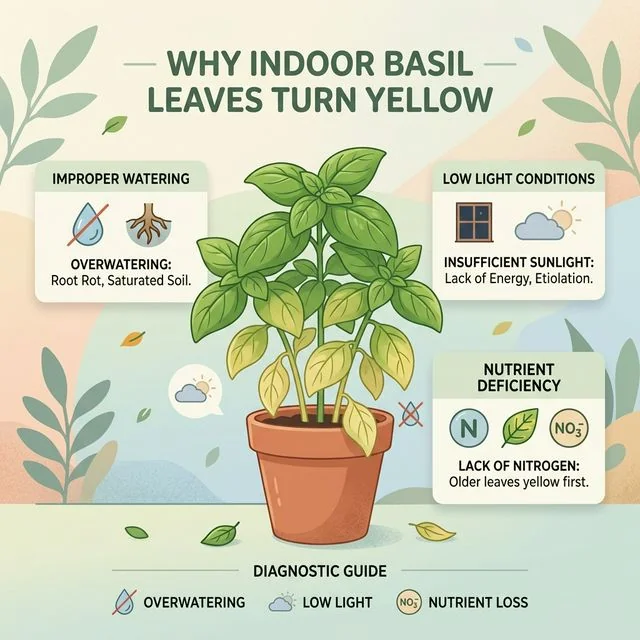
Yellow basil rarely has a single universal cause. The pattern of yellowing, the growing medium, and the recent care routine usually tell the story.
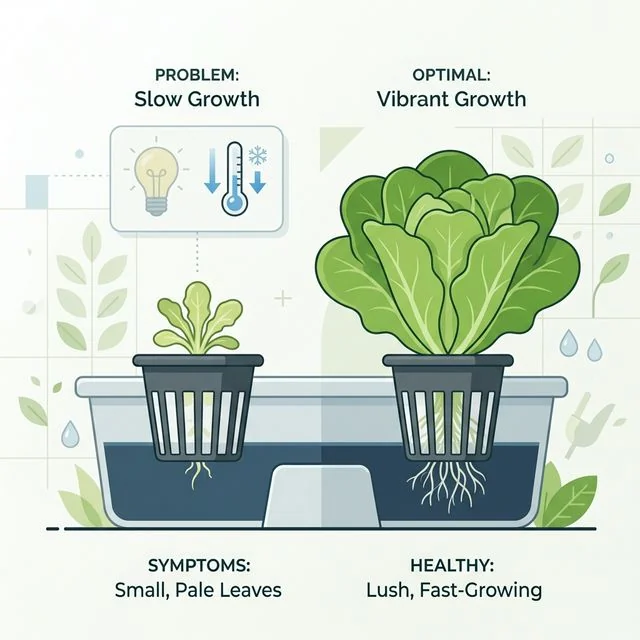
Slow hydroponic lettuce is usually a systems problem, not a mystery deficiency. The goal is to find the bottleneck without overcorrecting five variables at once.
Fixture picks for herbs, seedlings, and small apartment setups.
Most indoor herbs don't need a massive, expensive grow tent light. Here is how to choose the right LED bulbs, strips, or halos for your real apartment setup.
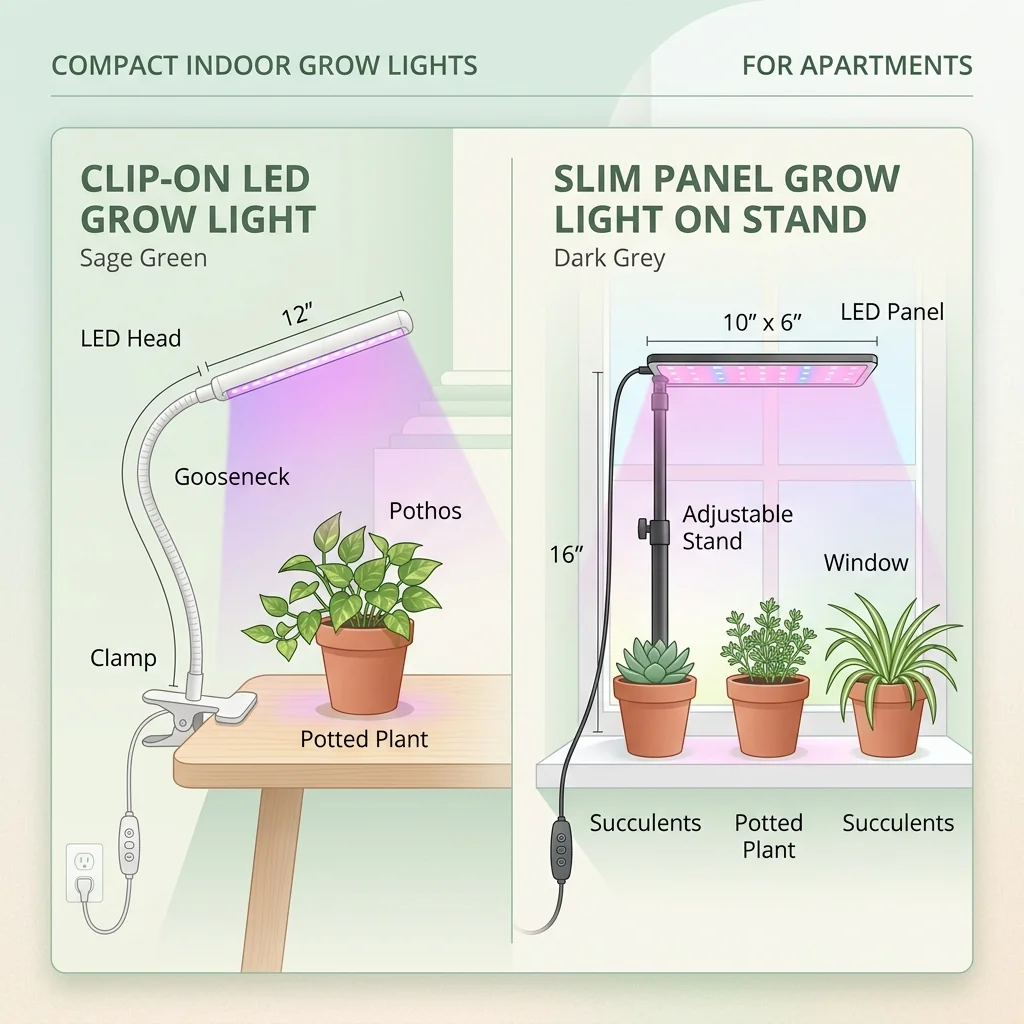
Apartments need grow lights that fit a small space and look acceptable in a living room. Here are the best compact LED types and what to check before buying.
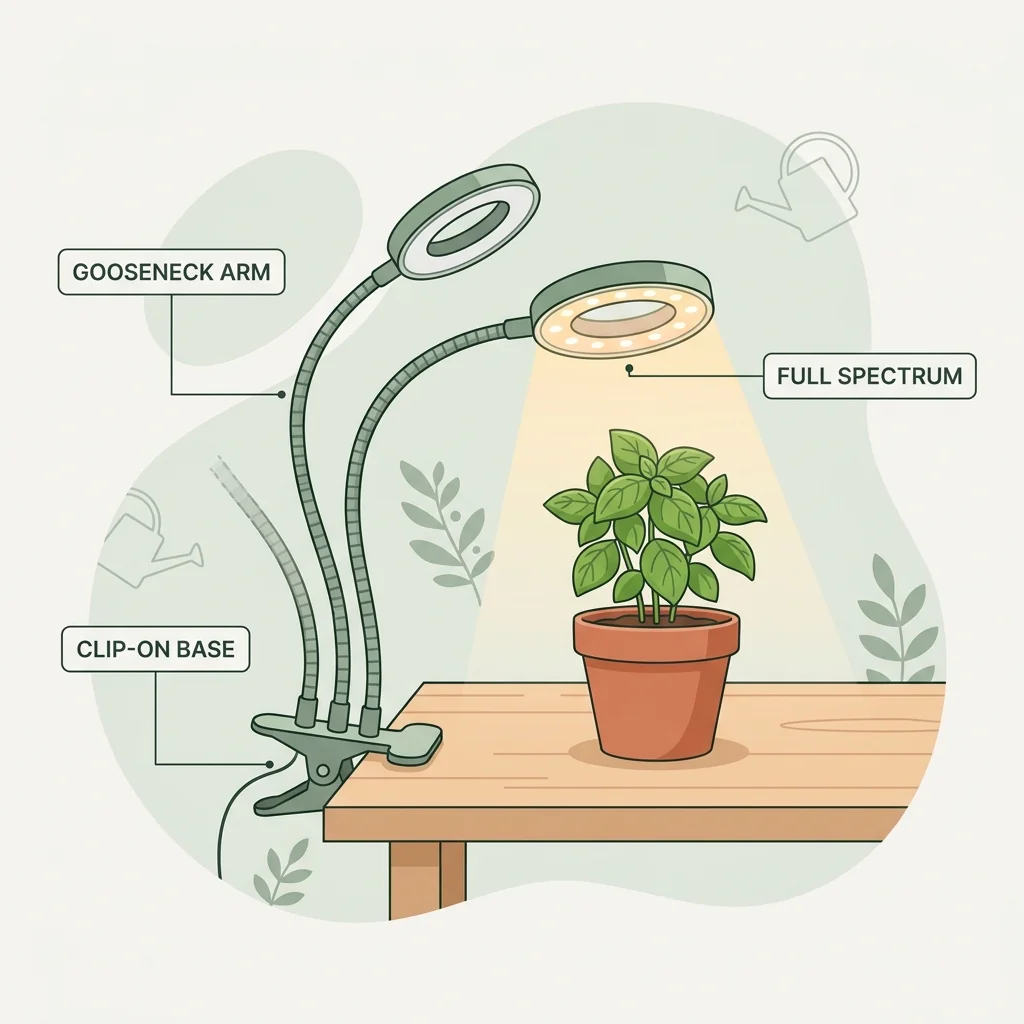
You do not need to install massive ceiling-mounted grow panels or ugly industrial fixtures to keep your indoor herbs alive. With a flexible, clip-on gooseneck LED grow light, you can clamp a soft, full-spectrum light source directly onto your desk or windowsill in seconds. Here are our top-rated options.
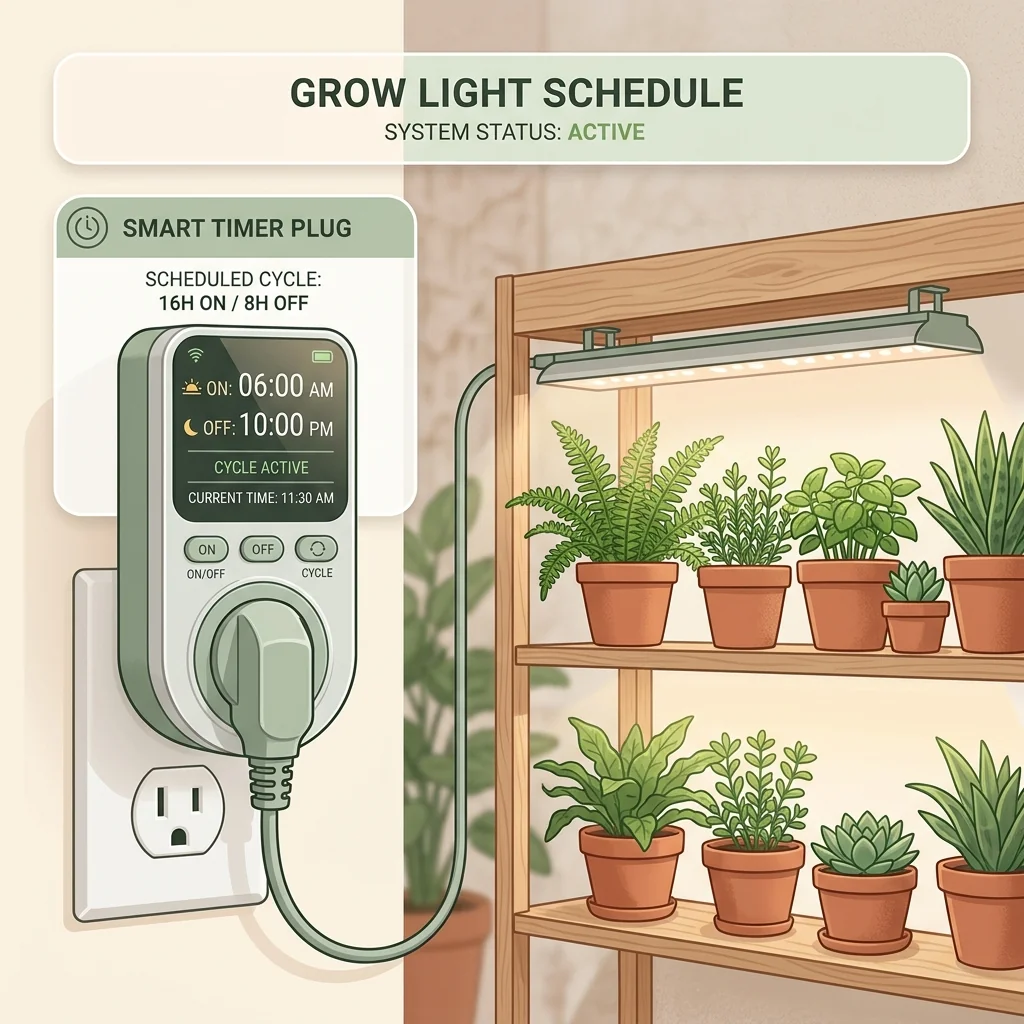
Consistency is everything in indoor horticulture. If you forget to turn your grow lights on, your plants will starve. If you leave them on too long, your greens will stress and bolt. Automating your photoperiod with a reliable outlet timer is the single easiest upgrade you can make. Here are our top picks.
Once the basics are stable, these guides help fine-tune crop density and equipment fit.
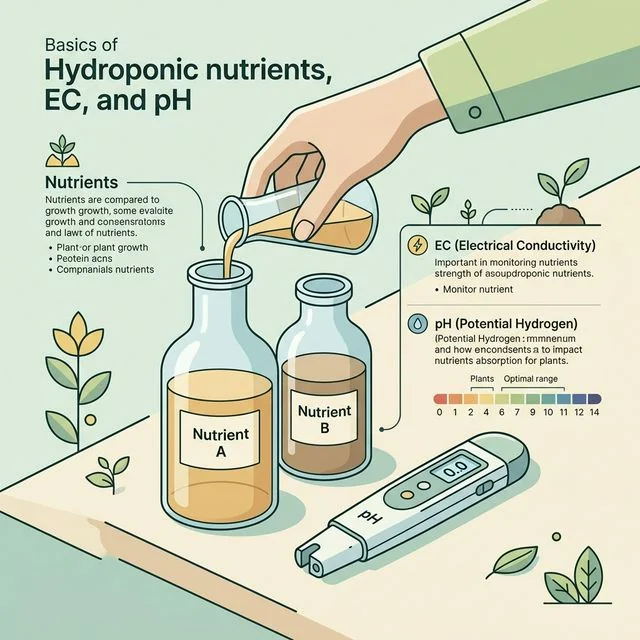
Most hydroponic problems are not mysterious. They come from concentration drift, pH drift, heat, or neglected maintenance. This guide covers the basics clearly.
PPFD is a snapshot; DLI is the daily total. Used together, they turn grow-light setup from a distance rule into a measurable map.
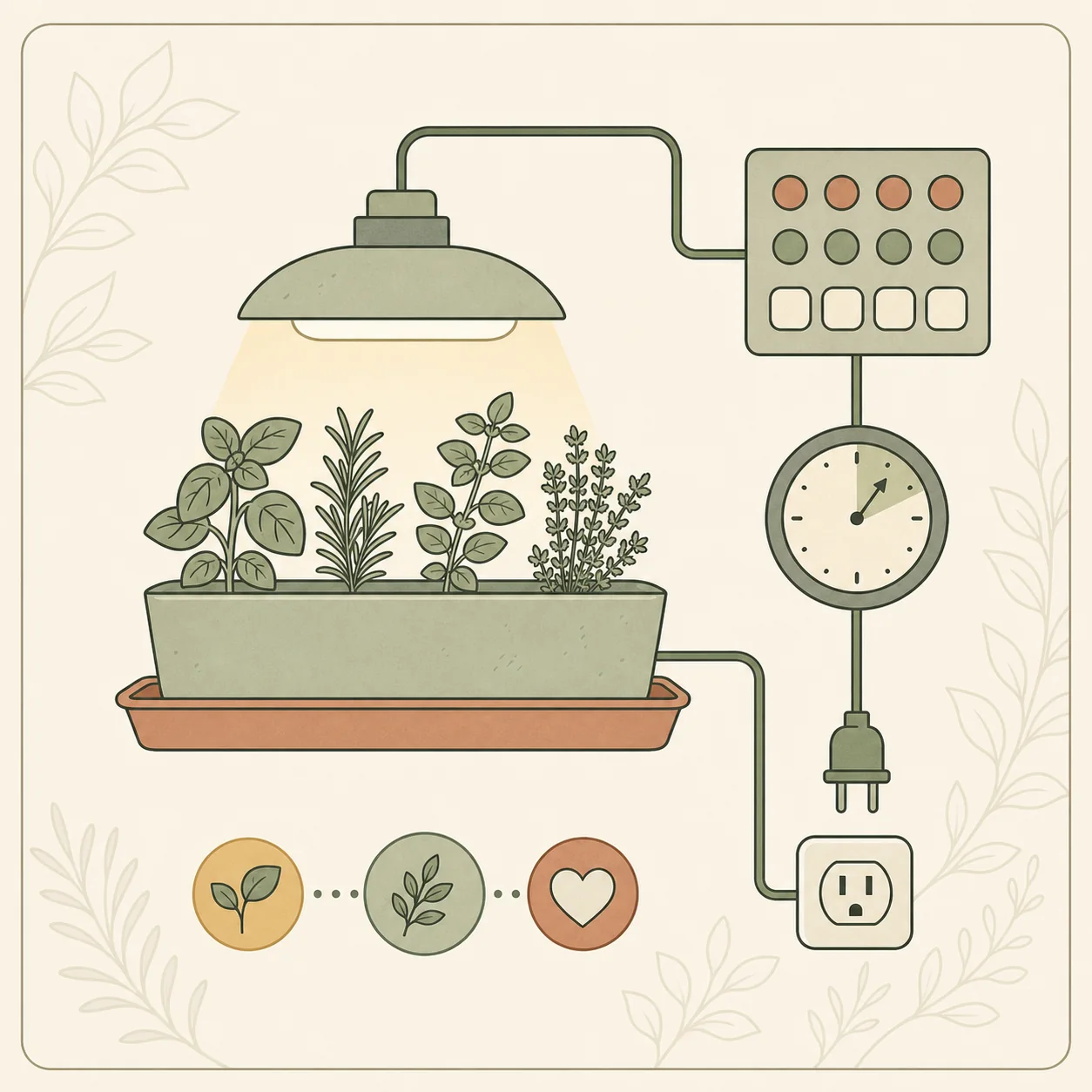
The monthly cost of a grow light is a four-input calculation. Measure wall power when possible, then compare cost per useful growing area—not labels alone.
Most indoor herbs don't need a massive, expensive grow tent light. Here is how to choose the right LED bulbs, strips, or halos for your real apartment setup.
This hub keeps the topic curated. If you need a plain utility list instead, use the simplified article archive.

Fruiting plants are the heaviest light users on an indoor shelf. Extension figures for full-sun plants and a strawberry trial show how much more than herbs, and why hours alone will not close the gap.

Daily light integral is PPFD multiplied by the hours a light runs, converted from a per-second rate into a per-day total. Enter both below to get the number, then check it against a target.

A single DLI number does not fit every herb. Here is the general target for leafy greens, and what published research on basil, sage, and mint actually measured.

There is no watts-per-area figure that describes how far a grow light's coverage reaches. Measure your own shelf with a PAR grid, then turn that reading into a footprint number you can trust.

A warm top shelf is not just a comfort problem. It changes the light your herbs want and wears the fixture down faster, and the fix is usually smaller than a fan.

A grow light is not dangerous equipment. But it does put a driver, a timer and a power strip in the one room where you deliberately add water — and that combination deserves five real minutes of attention.

Most grow light problems trace back to a handful of repeatable mistakes, not a mysterious plant failure — and most of them show up as a visible sign you can check today.

Pick a growth stage and how bright the room already is, and the planner below returns a recommended runtime, the matching on and off times, and the dark period that goes with it.

Full spectrum, blurple, enhanced red — the labels change every season, but for herbs the answer is simpler than any of them.

Wattage alone does not predict how much light reaches a plant, and an equivalent-wattage claim predicts even less. Here is the arithmetic that gets closer to a real answer.

A tray of seedlings under lights needs more than a bulb overhead. It needs the right kind of fixture, a photoperiod on a timer, and a distance that changes every week as the seedlings grow.

Sunlight and a fixture are not competing technologies. They are two ways of delivering the same thing, and the comparison runs on three axes.

The same windowsill that carried a plant in June often cannot carry one in December. That is a delivery problem, and a grow light is usually the smallest fix for it.

An LED that still turns on is not necessarily still doing its job. Here is the arithmetic behind L70, and how to catch a fixture that is quietly falling behind.

The appeal is obvious: a clean glass front instead of exposed pots and cords. What is less obvious is that sealing plants behind glass changes the air around them as much as any light you add.

Light one shelf and you are done. Light four stacked shelves and the decisions start talking to each other: heat moves upward, height budgets shrink, and one crop's best tier is another crop's worst.

Lux measures what a human eye sees; PPFD measures what a plant can use. The gap between the two explains why a bright reading does not guarantee strong growth.
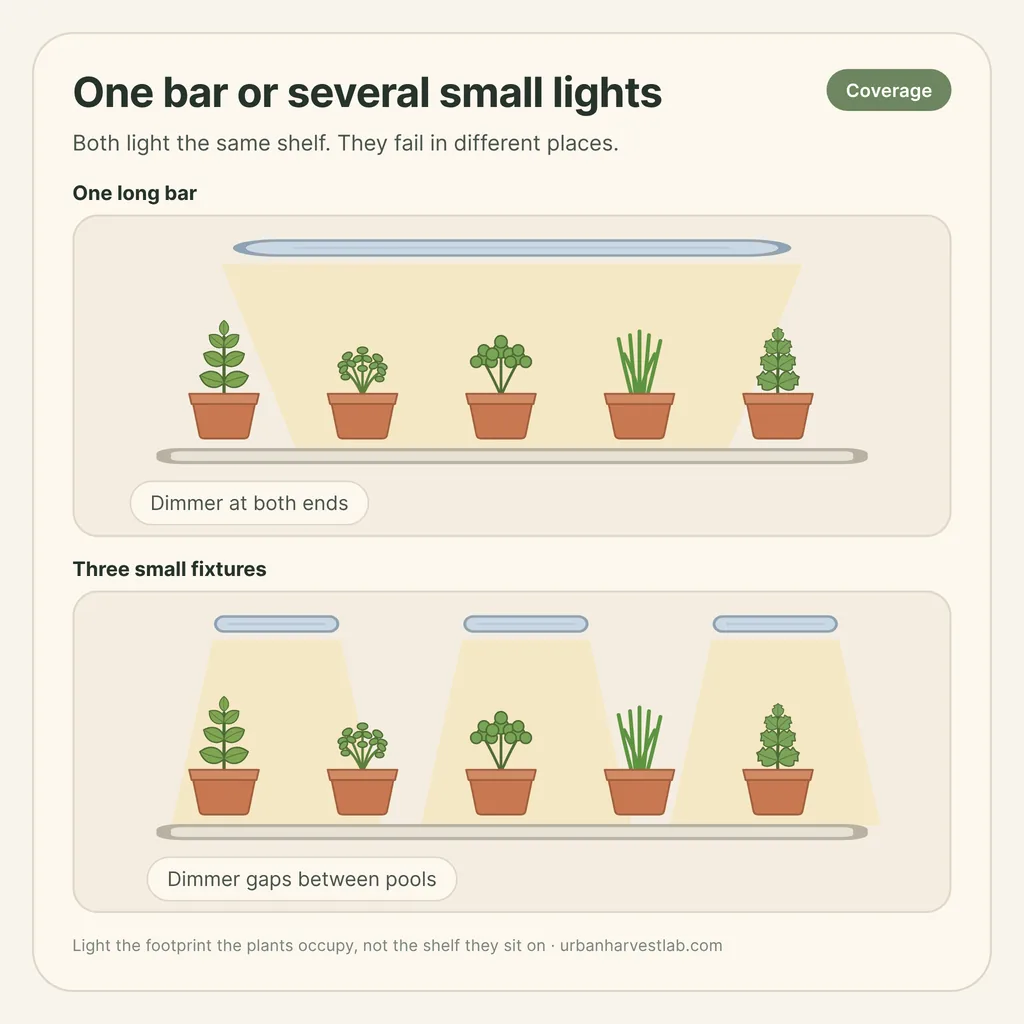
There is no fixed ratio of lights to shelf feet. The count follows from your plants' footprint and their light target, and it changes depending on whether they sit in a row or a cluster.

Foil, mylar, and white paint can return some of the light that would otherwise land on a wall. Whether that is worth doing depends more on your shelf than on the material.

A straight answer for anyone eyeing the bulb already in a lamp: the spectrum is usually fine, and intensity plus daily run time are what actually decide whether it will grow something.

A sealed tent solves problems most herb growers don't have, and creates one they do: heat. Here's when the enclosure earns its place anyway.
The monthly cost of a grow light is a four-input calculation. Measure wall power when possible, then compare cost per useful growing area—not labels alone.
PPFD is a snapshot; DLI is the daily total. Used together, they turn grow-light setup from a distance rule into a measurable map.
Consistency is everything in indoor horticulture. If you forget to turn your grow lights on, your plants will starve. If you leave them on too long, your greens will stress and bolt. Automating your photoperiod with a reliable outlet timer is the single easiest upgrade you can make. Here are our top picks.
You do not need to install massive ceiling-mounted grow panels or ugly industrial fixtures to keep your indoor herbs alive. With a flexible, clip-on gooseneck LED grow light, you can clamp a soft, full-spectrum light source directly onto your desk or windowsill in seconds. Here are our top-rated options.
A grow light lets you grow herbs indoors anywhere, even with no sun. Here is the simple end-to-end setup: which light, how high, how long, and how to avoid leggy growth.
Apartments need grow lights that fit a small space and look acceptable in a living room. Here are the best compact LED types and what to check before buying.
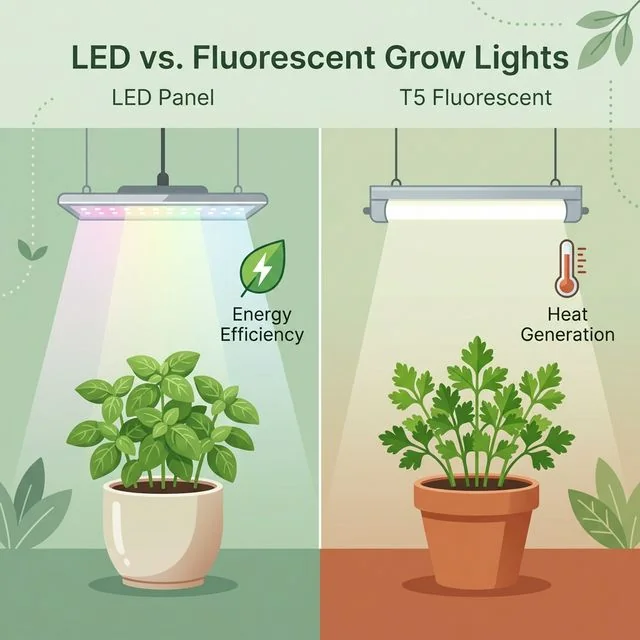
Fluorescent tubes used to be the gold standard for indoor gardeners, but modern LEDs have changed the game. Find out which technology is right for your space and budget.
Most indoor herbs don't need a massive, expensive grow tent light. Here is how to choose the right LED bulbs, strips, or halos for your real apartment setup.
A realistic answer to a common indoor-herb question, with clear expectations for growth, herb choice, and when a grow light becomes the cleaner solution.
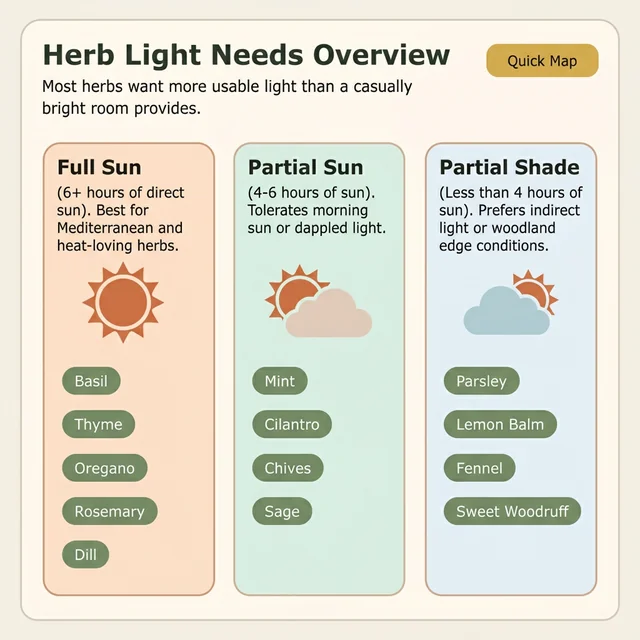
A practical guide to how much light herbs need, including a quick answer for direct sun, indoor windows, and grow light setups that actually support growth.
Most herb grow lights should run about 12 to 16 hours per day, but intensity, distance, and a stable dark period matter as much as the timer itself.
Seedlings usually need grow lights much closer than beginners expect, but the exact distance depends on fixture strength, lens design, and plant response.