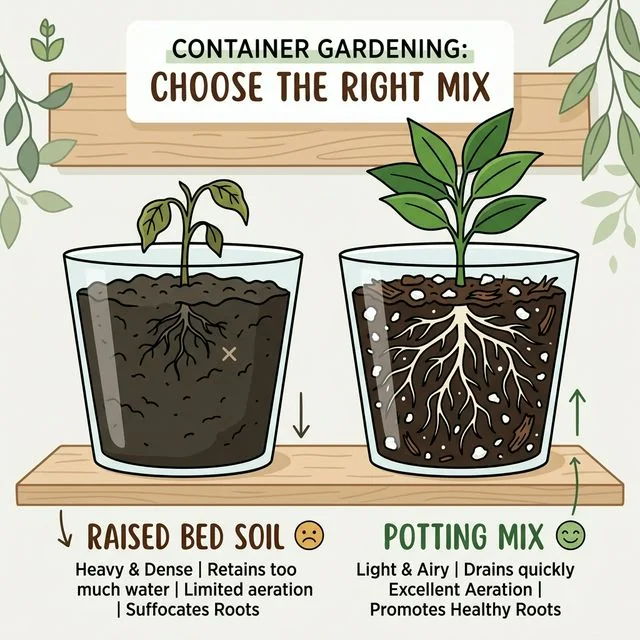
Potting mix vs raised bed soil for containers: what works in pots
Most container problems start with the wrong medium, not the wrong fertilizer. This guide explains why pots usually need a lighter mix than raised beds.
A practical hub for potting mix, container feeding, structure, and nutrient management in small-space edible gardens.
Most container problems start with the wrong medium, not the wrong fertilizer. This guide explains why pots usually need a lighter mix than raised beds.
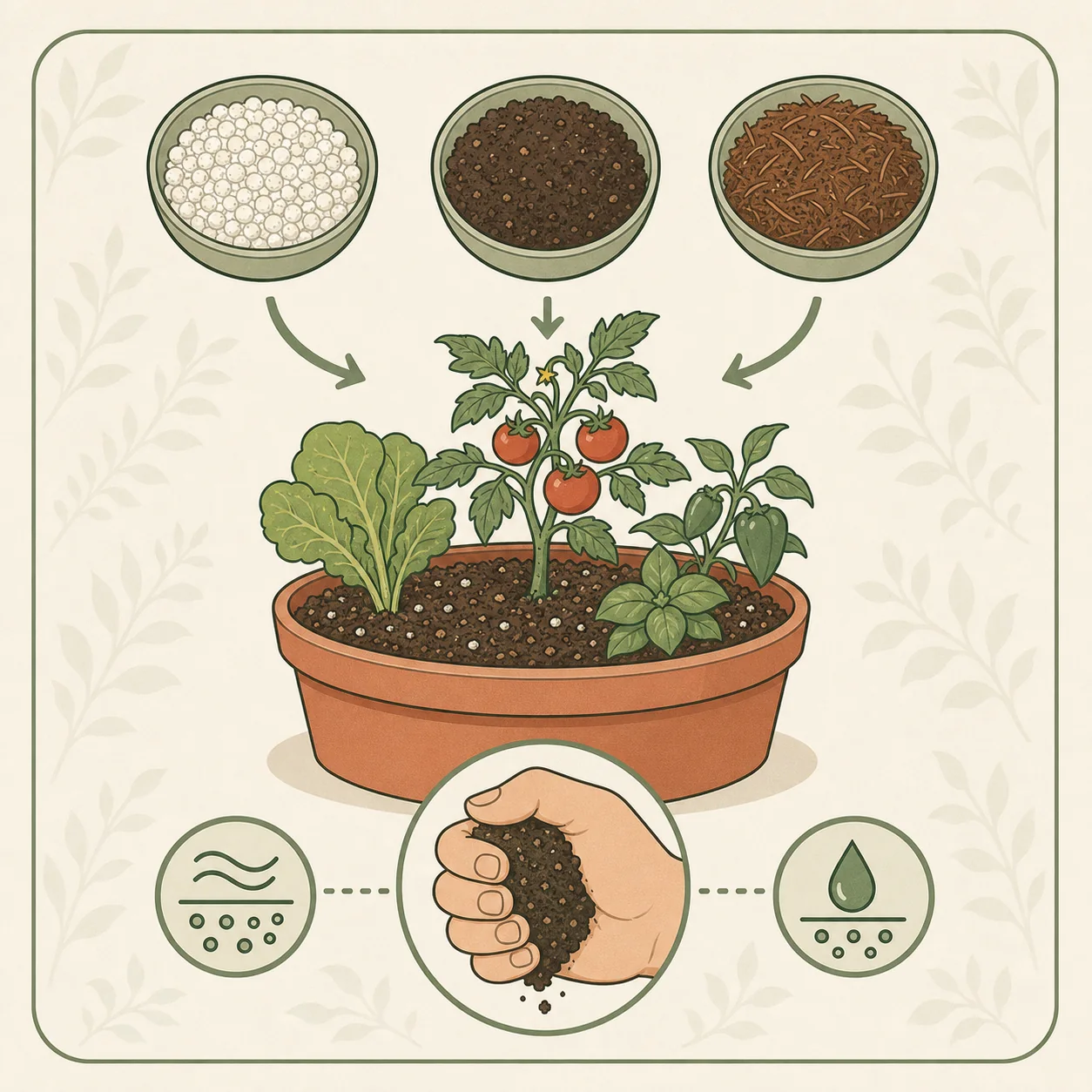
A useful potting mix recipe describes the job of each ingredient and gives you a way to correct the result. The goal is stable air and moisture, not a magic ratio.
Soil and fertilizer questions are often framed too narrowly. Growers ask what fertilizer to buy when the more useful question is whether the root environment allows the plant to use nutrients well in the first place. In containers, structure and management usually matter before product choice.
Container roots live in a small, enclosed volume. That means air space, moisture retention, and drainage all have to coexist in a narrower window than they do in the ground. If the mix is too dense, roots lose oxygen. If it drains too aggressively, watering becomes constant and nutrient delivery becomes unstable.
This is why Urban Harvest Lab treats potting mix as infrastructure rather than background material.
Feeding only works when the root zone is healthy enough to process it. More fertilizer does not fix low light, saturated media, or cramped roots. In fact, stronger feeding often makes a stressed container more difficult to recover because the plant still cannot use the extra input efficiently.
The biggest mistakes are:
Those mistakes are understandable because fertilizer is visible and easy to buy. Root-zone quality is quieter, but usually more important.
Start with beginner guides if you are choosing media or setting up containers. Move to setup guides when you are matching crop size and container structure. Use troubleshooting when leaves yellow, vigor drops, or watering becomes difficult to manage. Use the advanced section when you want to compare container nutrient logic with hydroponic feeding or indoor support systems.
The goal of this hub is to reduce nutrient guesswork by keeping the focus on the whole container environment.
These grouped sections keep the hub useful for beginners, active growers, and readers solving a specific problem.
Start with medium structure and root conditions before trying to optimize any fertilizer plan.
Most container problems start with the wrong medium, not the wrong fertilizer. This guide explains why pots usually need a lighter mix than raised beds.
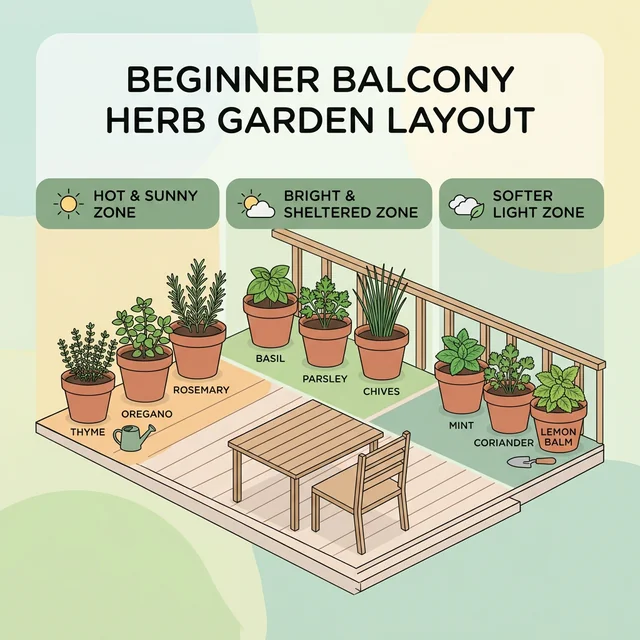
A practical beginner guide to starting a balcony herb garden that stays simple to water, easy to read, and realistic to maintain.
These guides explain how crop size, container depth, and feeding strategy work together.
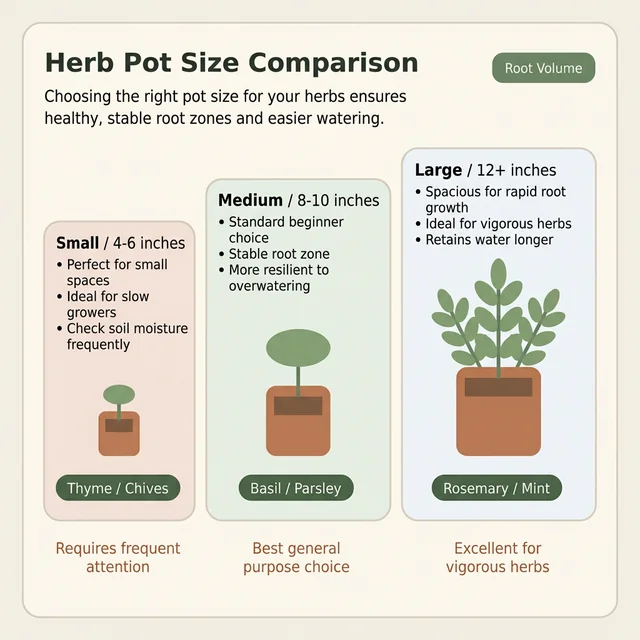
Container size is one of the highest-leverage decisions in small-space gardening. When root volume is too small, every other care task becomes harder.
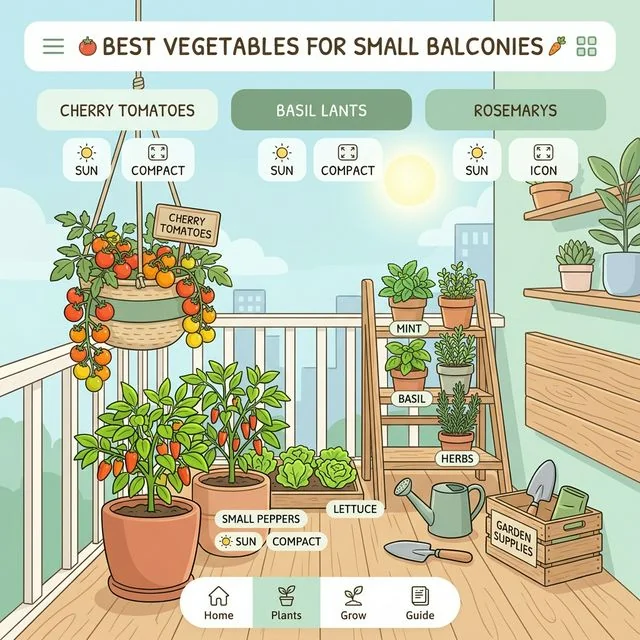
Not every vegetable belongs on a balcony. These are the crops most likely to reward limited square footage without turning watering and support into a daily headache.
A useful potting mix recipe describes the job of each ingredient and gives you a way to correct the result. The goal is stable air and moisture, not a magic ratio.
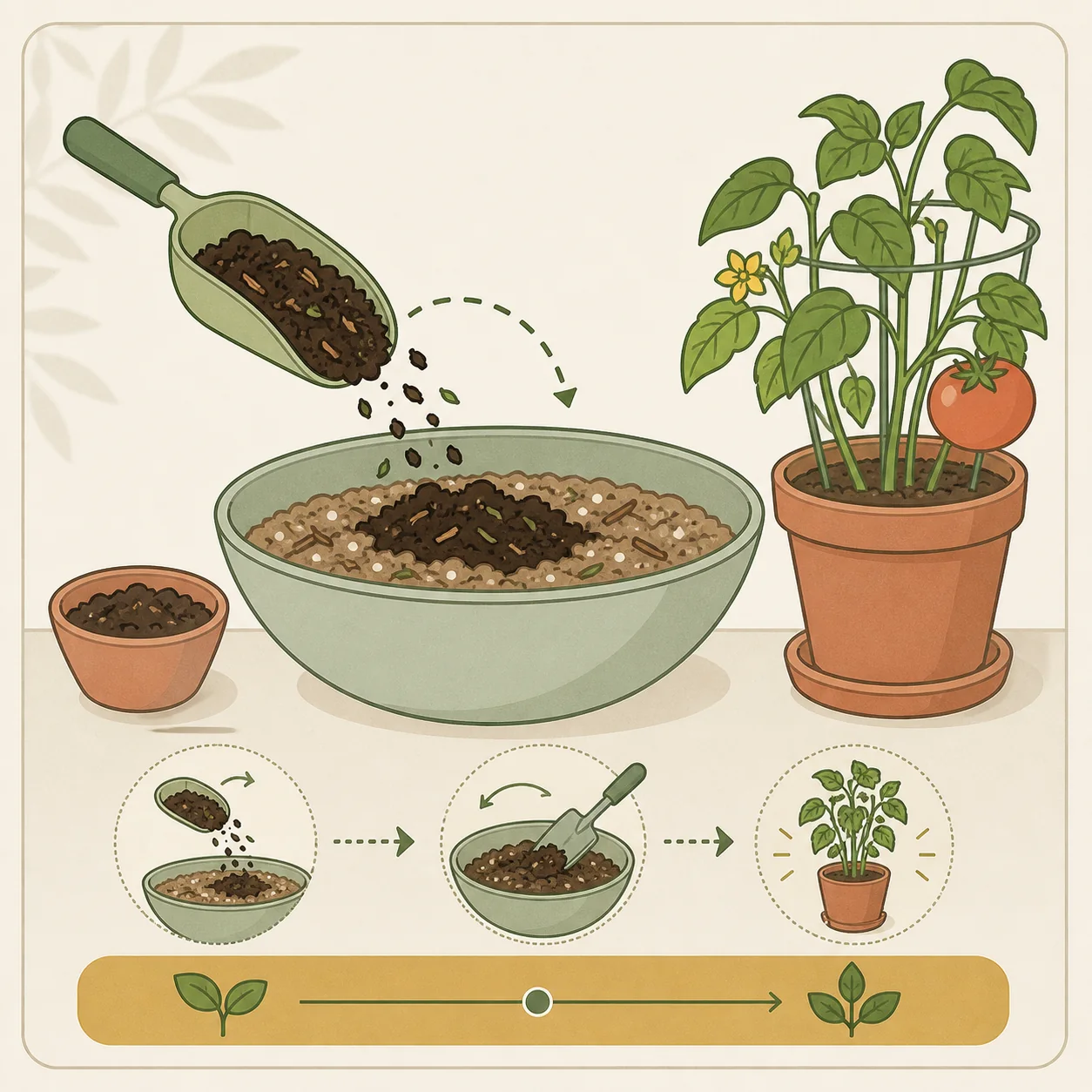
More compost is not automatically better. In a container, compost must share limited space with the coarse particles that preserve air around roots.
Product picks for feeding potted herbs once the mix runs out.
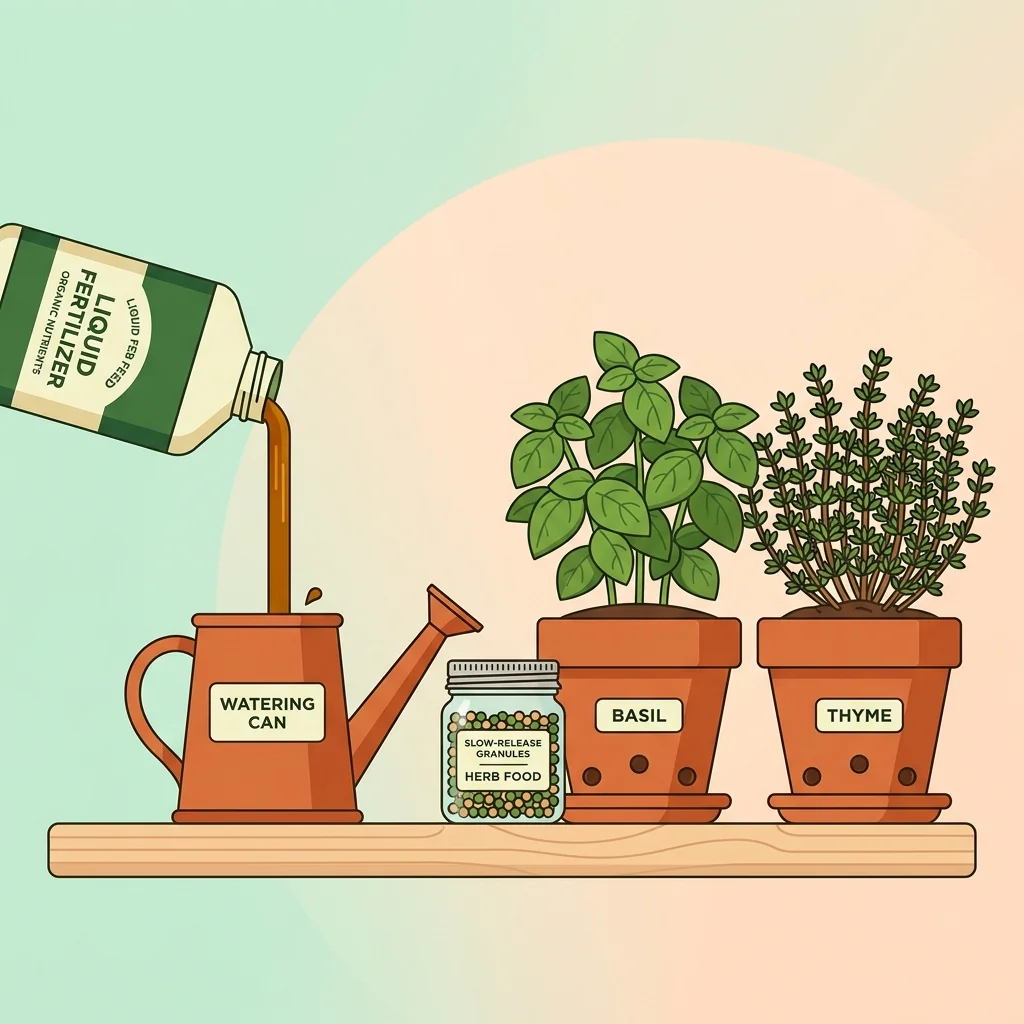
A practical, label-first guide to complete liquid and controlled-release fertilizers for potted herbs, with a decision table and a safer first application.
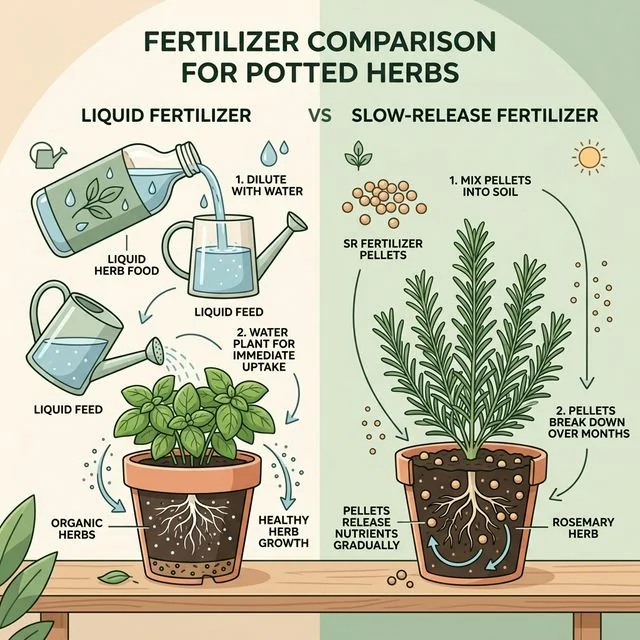
Most potted herbs need fertilizer eventually, but timing matters. This guide explains when to feed, how often to do it, and how to avoid burning stressed roots.
Use these articles when yellowing, stalled growth, or uneven vigor suggest a root-zone problem.
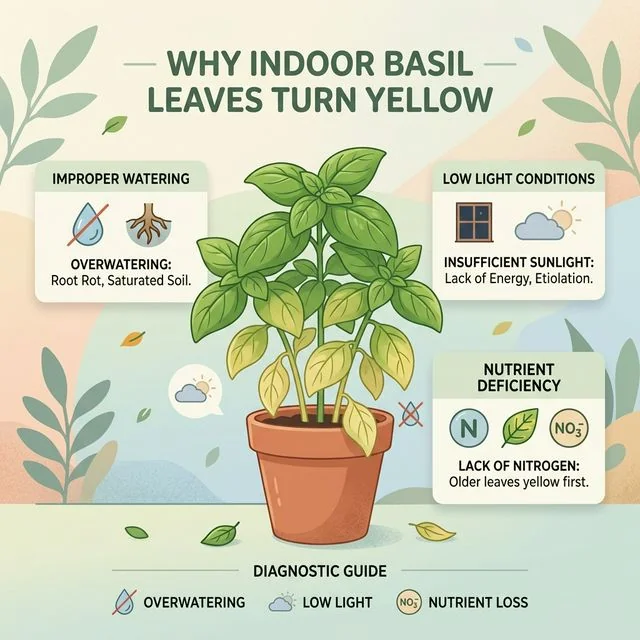
Yellow basil rarely has a single universal cause. The pattern of yellowing, the growing medium, and the recent care routine usually tell the story.
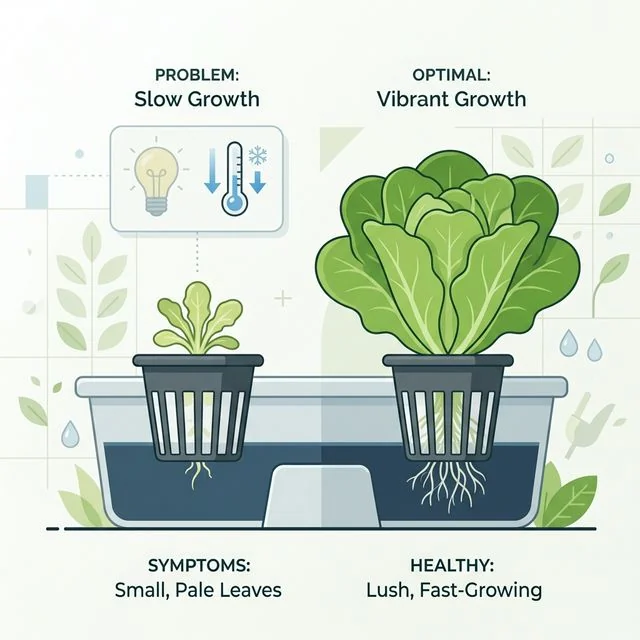
Slow hydroponic lettuce is usually a systems problem, not a mystery deficiency. The goal is to find the bottleneck without overcorrecting five variables at once.
These pieces broaden nutrient thinking into hydroponics and indoor environmental support.
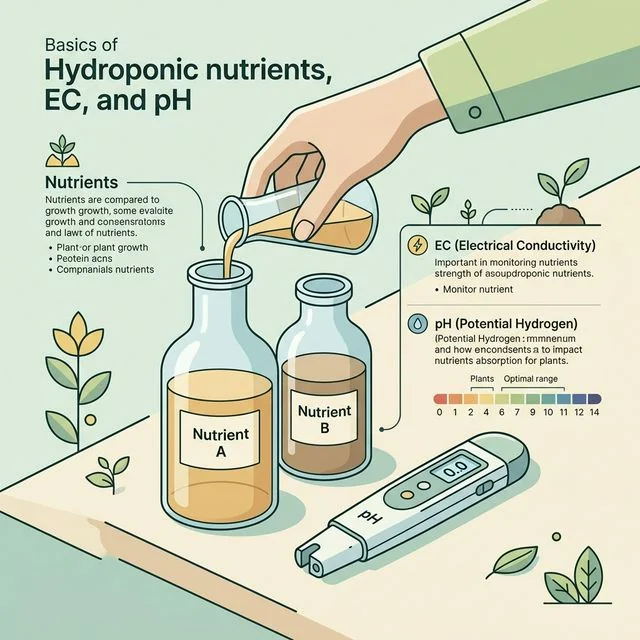
Most hydroponic problems are not mysterious. They come from concentration drift, pH drift, heat, or neglected maintenance. This guide covers the basics clearly.
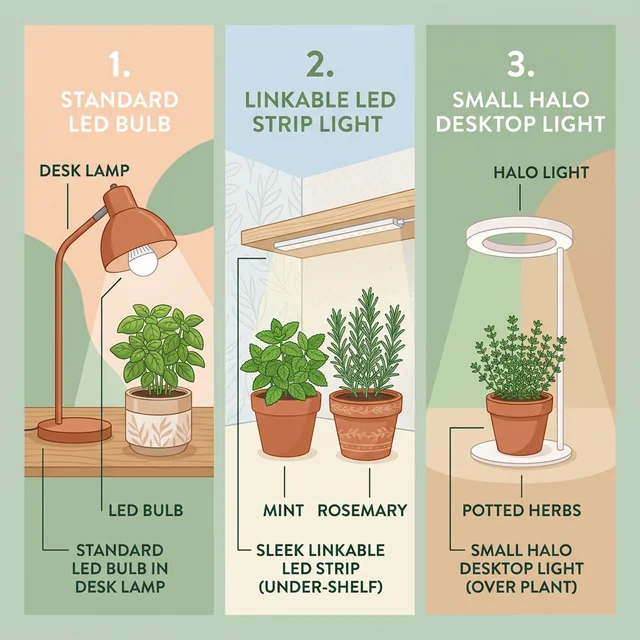
Most indoor herbs don't need a massive, expensive grow tent light. Here is how to choose the right LED bulbs, strips, or halos for your real apartment setup.
This hub keeps the topic curated. If you need a plain utility list instead, use the simplified article archive.
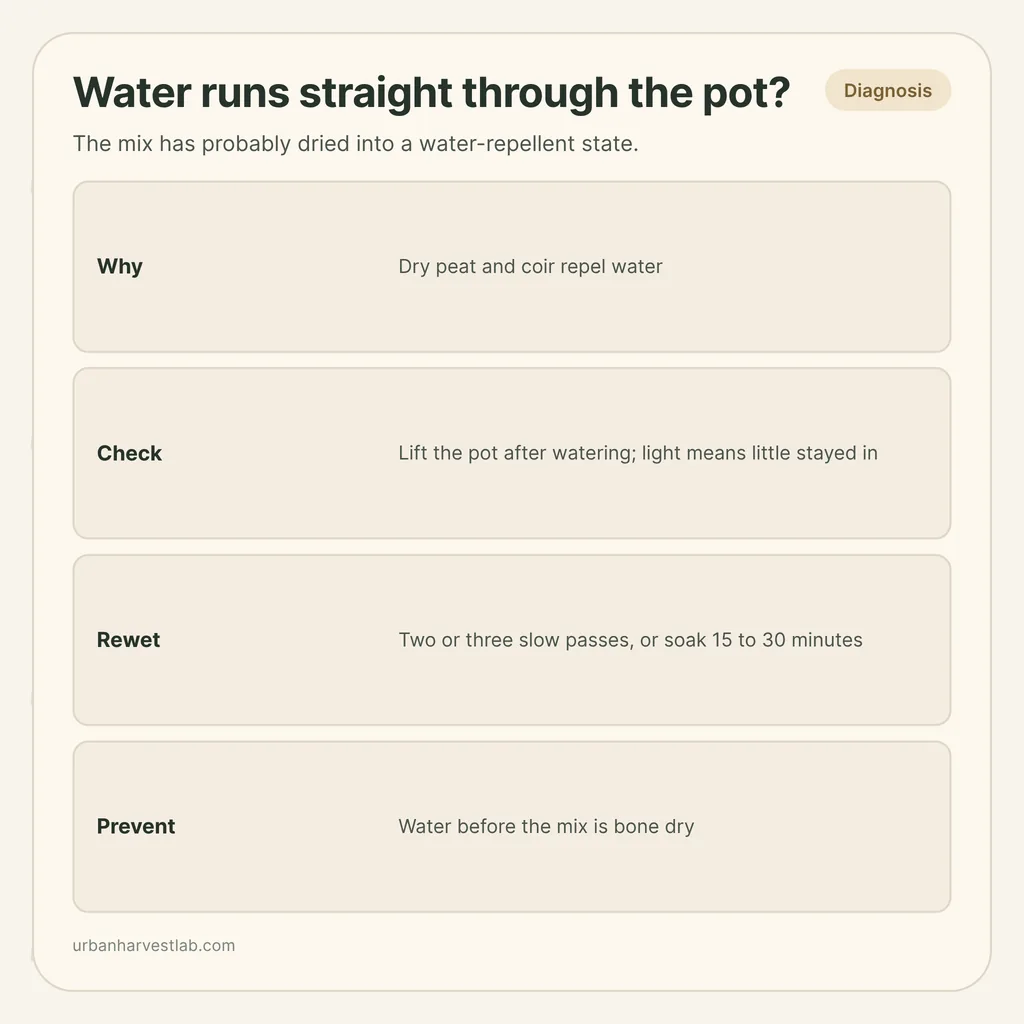
When water runs straight through a pot without wetting the mix, the peat or coir has dried into a water-repellent state. A slow, patient soak fixes it, and a few habits keep it from coming back.

Old water from a freshwater tank is a mild, incomplete feed. What it holds, which tanks to rule out, and how to use it on a pot without adding to salt buildup.

Bone meal is a phosphorus source and blood meal is a nitrogen source, so the choice follows the nutrient your plant is short of. Feather meal is the third option, with its own release-speed puzzle.

Cinnamon dusted on seed trays is a popular fix for damping-off and soil mold. The research behind it is real but narrower than the claim, and sanitation and watering do the actual protecting.

Compost tea promises disease control and a microbe boost, but controlled trials are few and mixed, and additives can grow Salmonella and E. coli. Here is what holds up.

Pouring pharmacy peroxide on roots is a popular rescue for overwatered plants. Here is what USDA and a controlled root-dip trial actually show, and why the oxygen claim falls short.

Rinse water from rice does contain nutrients. A Malaysian field trial matched a full fertilizer rate with daily watering, which is not something a potted herb tolerates.

Fireplace ash raises pH fast and carries salts, and every published rate is for lawns and garden beds. A pot has no room for error, so the safe default is to leave it out.
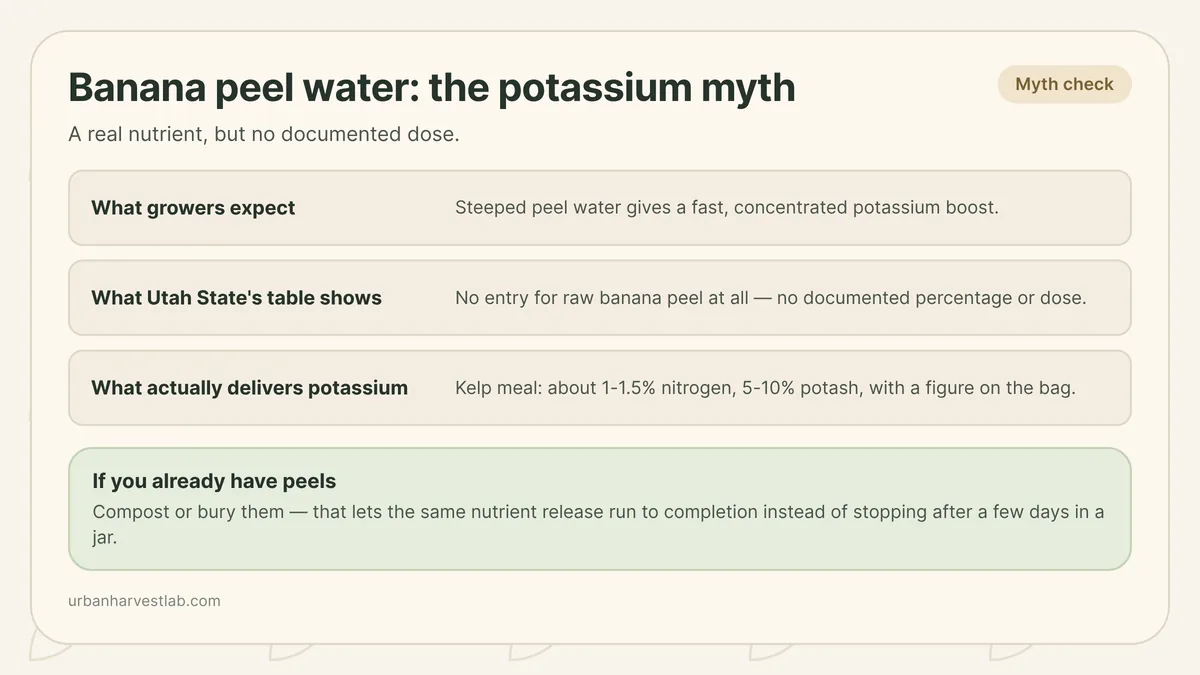
Soaking banana peels in water is a popular DIY feed, but Utah State's organic-fertilizer table has no entry for it, and the mechanism explains why the soak barely helps.
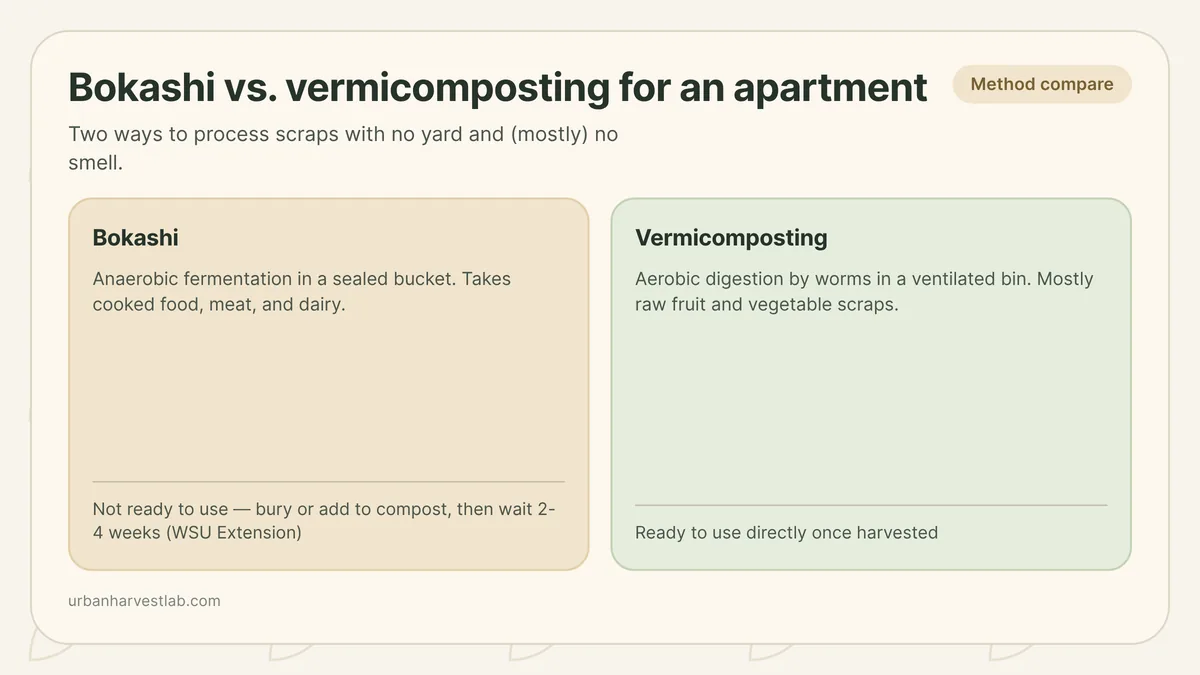
Bokashi ferments food waste in a sealed, airtight bucket instead of decomposing it in the open, which is why it works in an apartment with no yard and no smell. The ferment still has to finish breaking down before it feeds a plant.
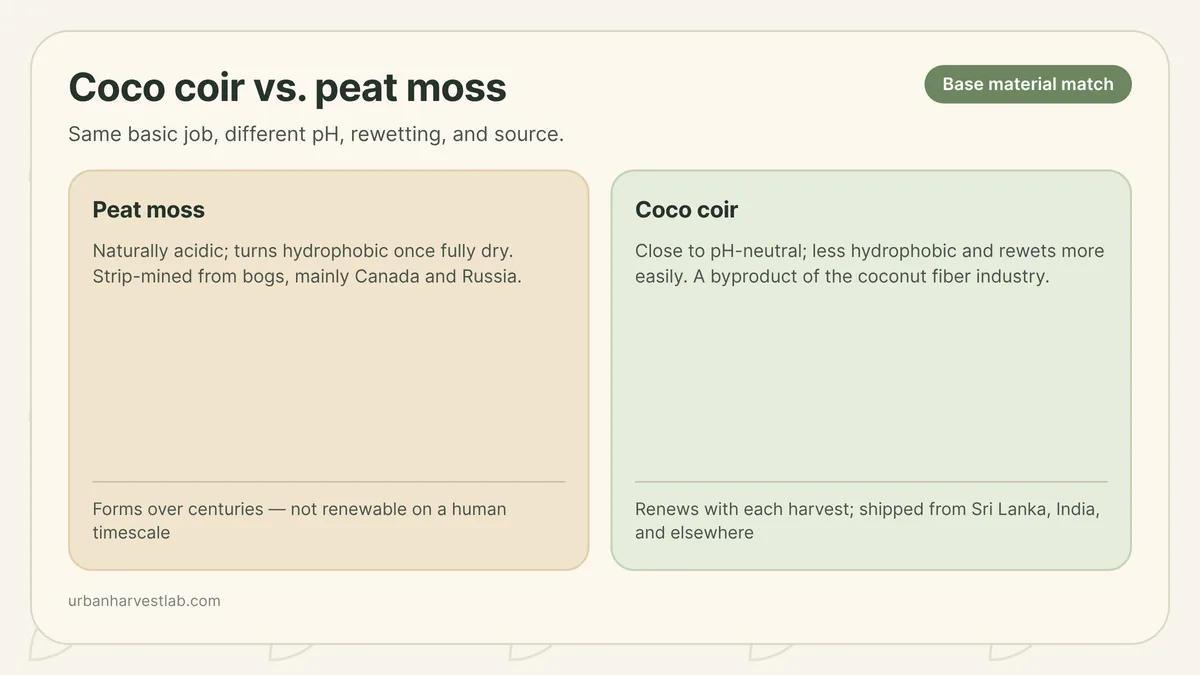
Peat moss and coco coir do the same basic job in a potting mix, but they part ways on pH, on how they behave once they dry out, and on the environmental cost of getting the bag to your shelf.
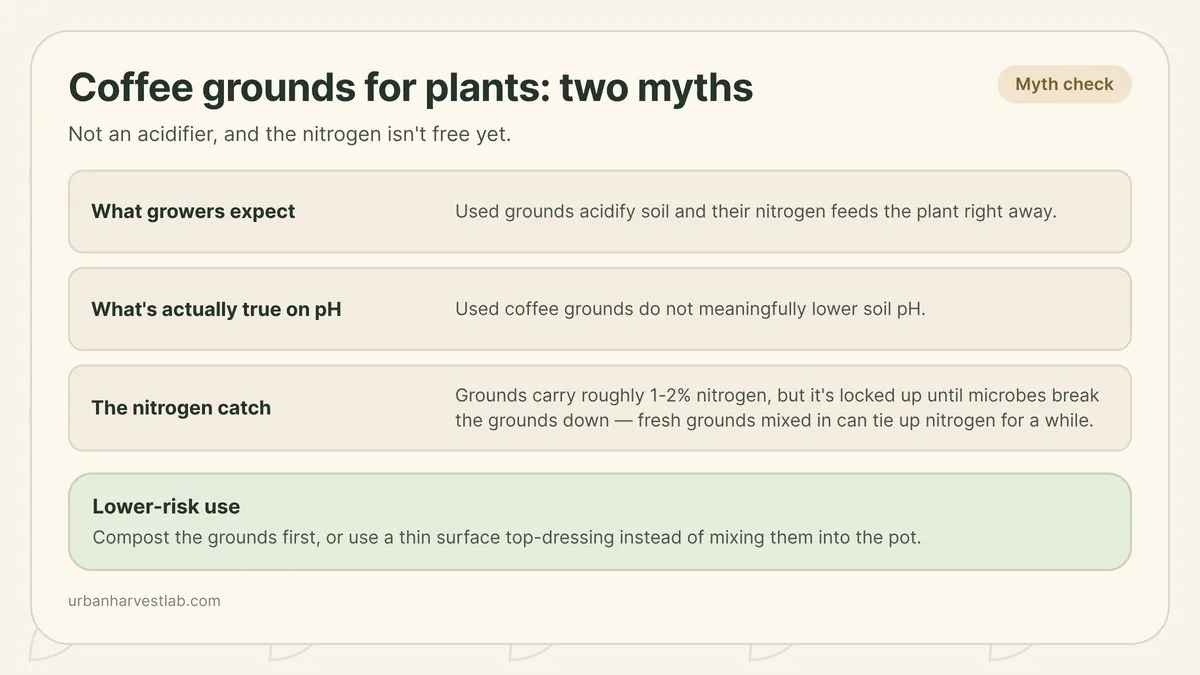
Used coffee grounds do not meaningfully lower soil pH, and the nitrogen inside them stays locked up until soil microbes finish decomposing the grounds.
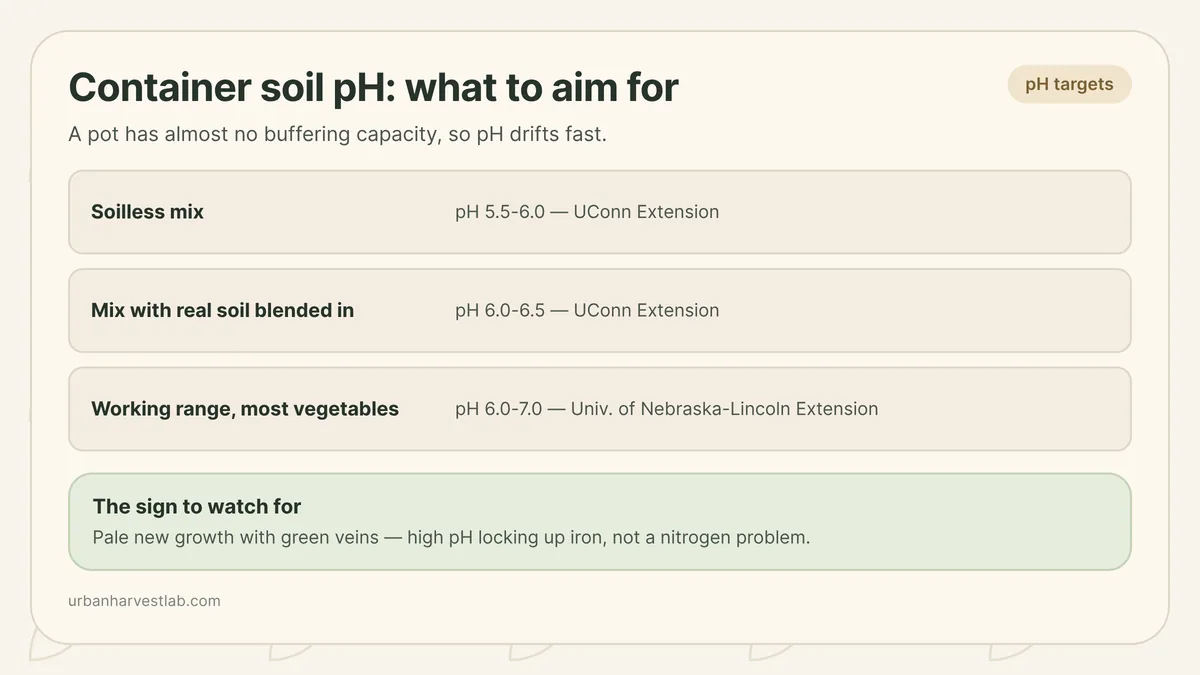
A container's small volume has almost none of the buffering capacity open ground has, so pH drifts faster and matters sooner. Here is when to test, what to aim for, and how to move it.
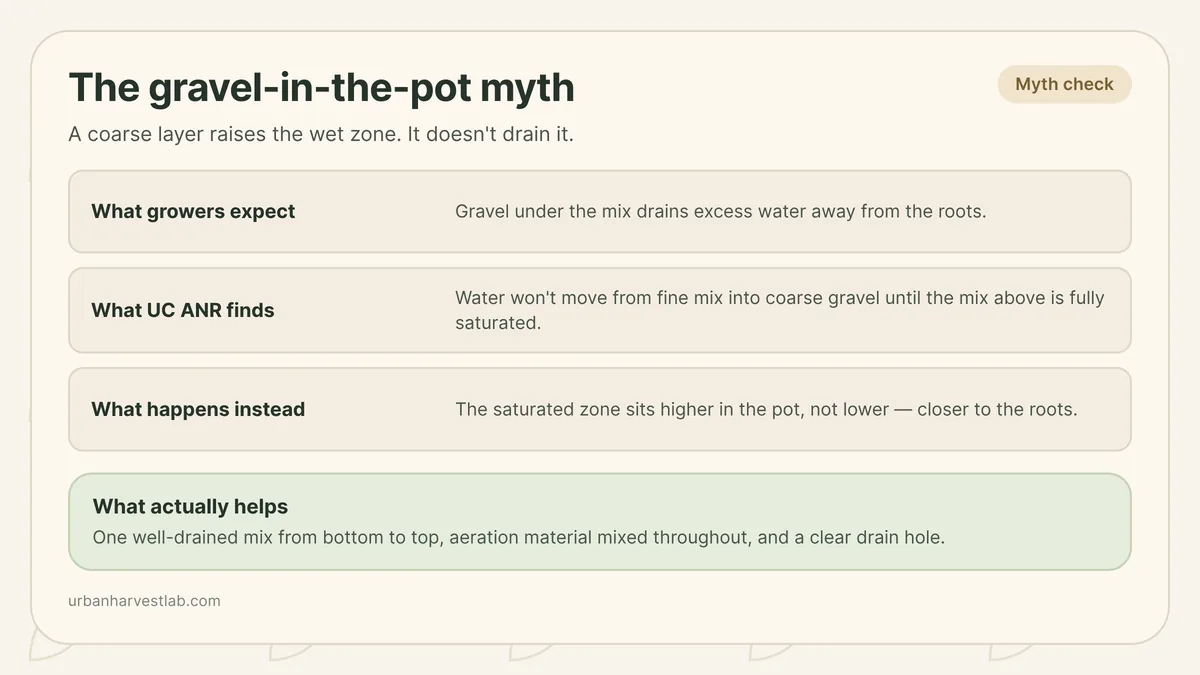
Putting gravel or rocks under potting mix feels like it should help drainage, but it creates a wetter zone right where roots grow, not a drier one.
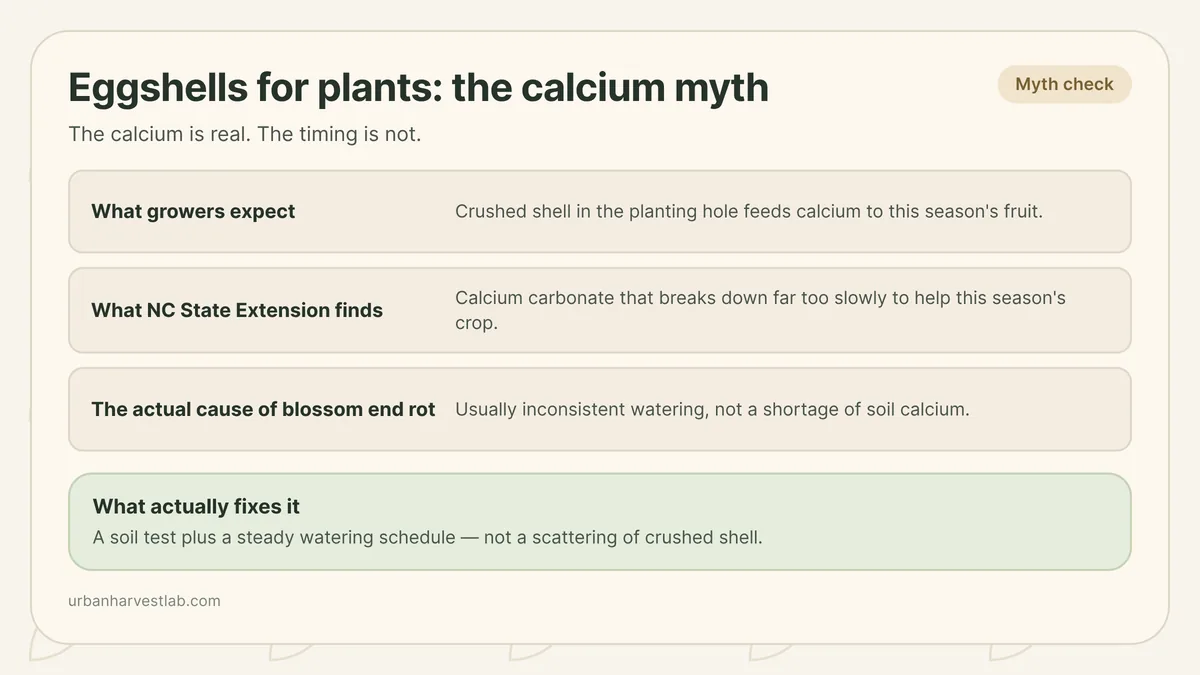
Crushed eggshells in the potting mix feel like free calcium, but the shell breaks down far slower than a growing tomato needs it to.
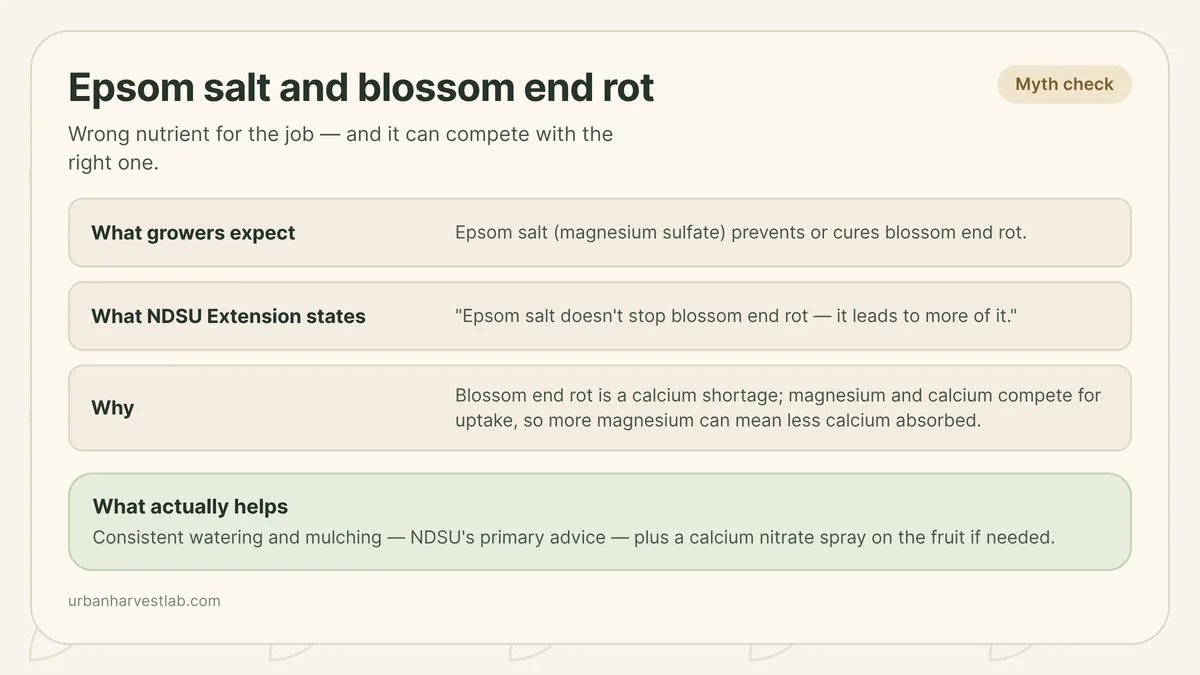
Epsom salt is one of the most repeated garden fixes there is, and North Dakota State University Extension says the opposite of what the jar's reputation claims.
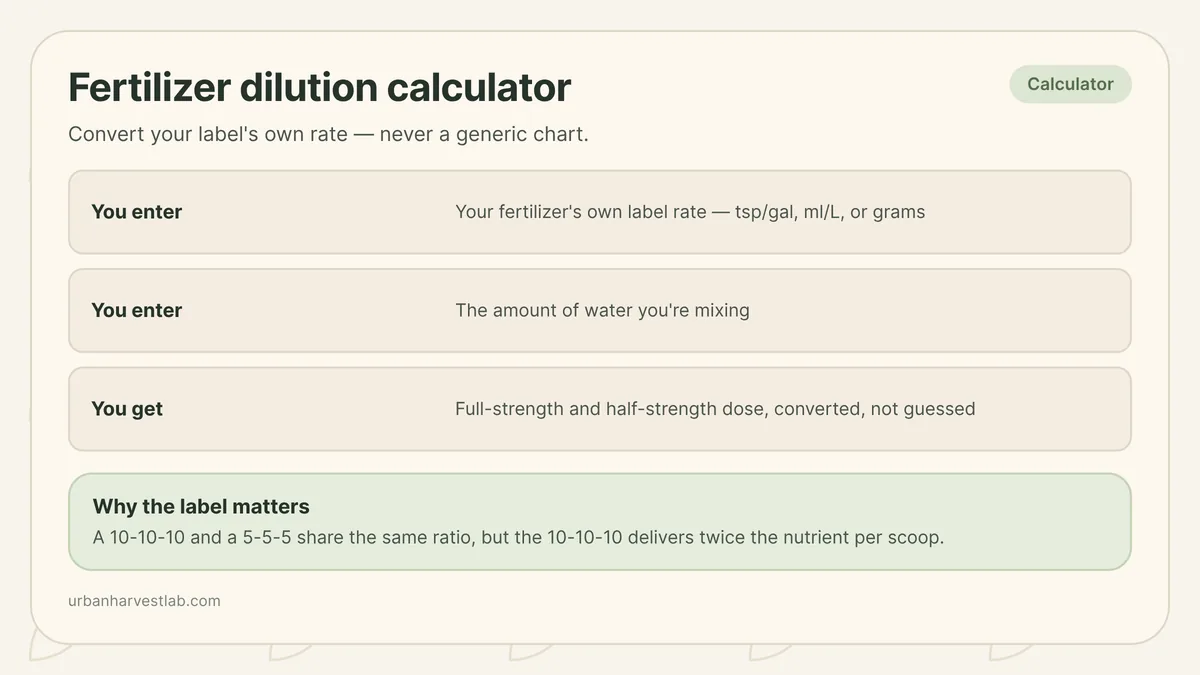
A calculator that converts a fertilizer's own label rate into ml/L, tsp/gal, or a half-strength dose for the water you're mixing, plus the manual conversion if you'd rather check it by hand.
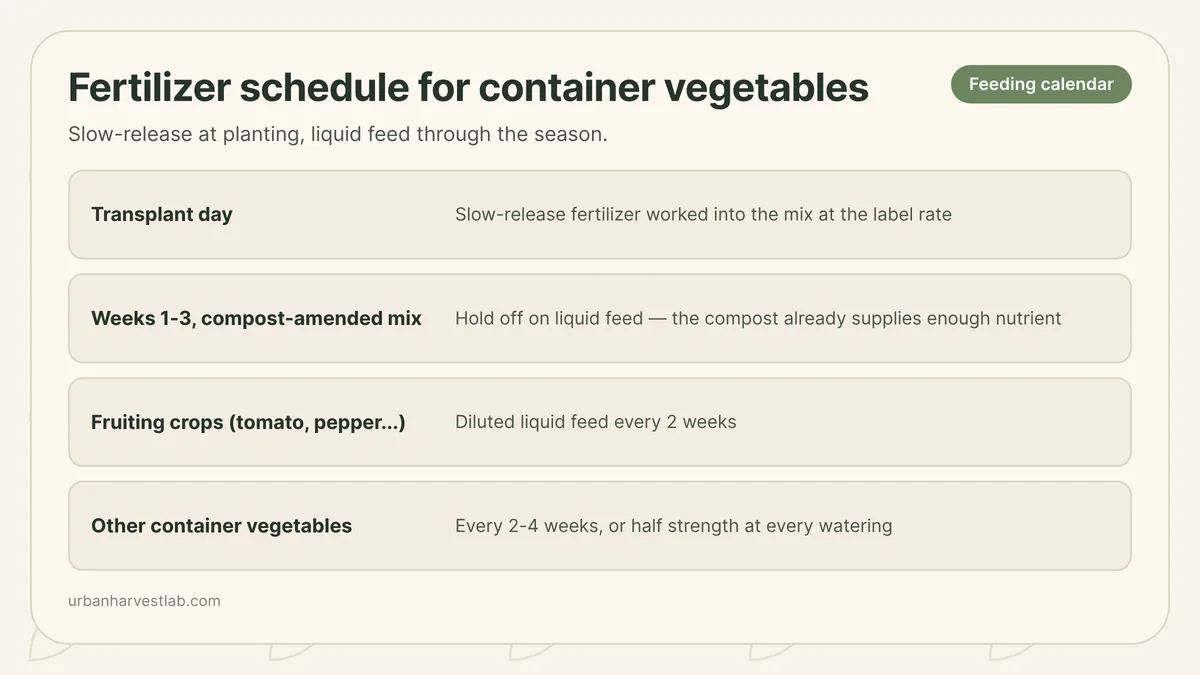
A stage-by-stage feeding calendar for container vegetables, built from extension guidance on slow-release charges, liquid top-ups, and the intervals that keep fruiting crops producing.
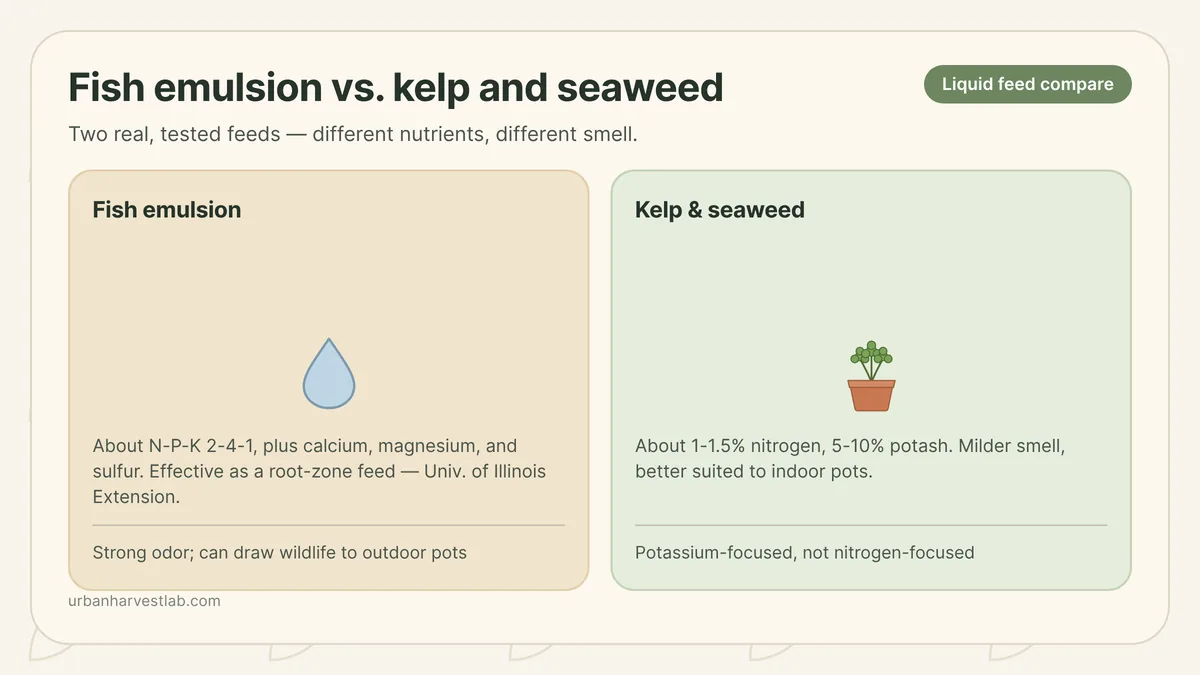
Fish emulsion and seaweed products are genuine fertilizers with a documented N-P-K profile, but two of their most repeated claims do not hold up under testing, and the smell changes where you should use them.
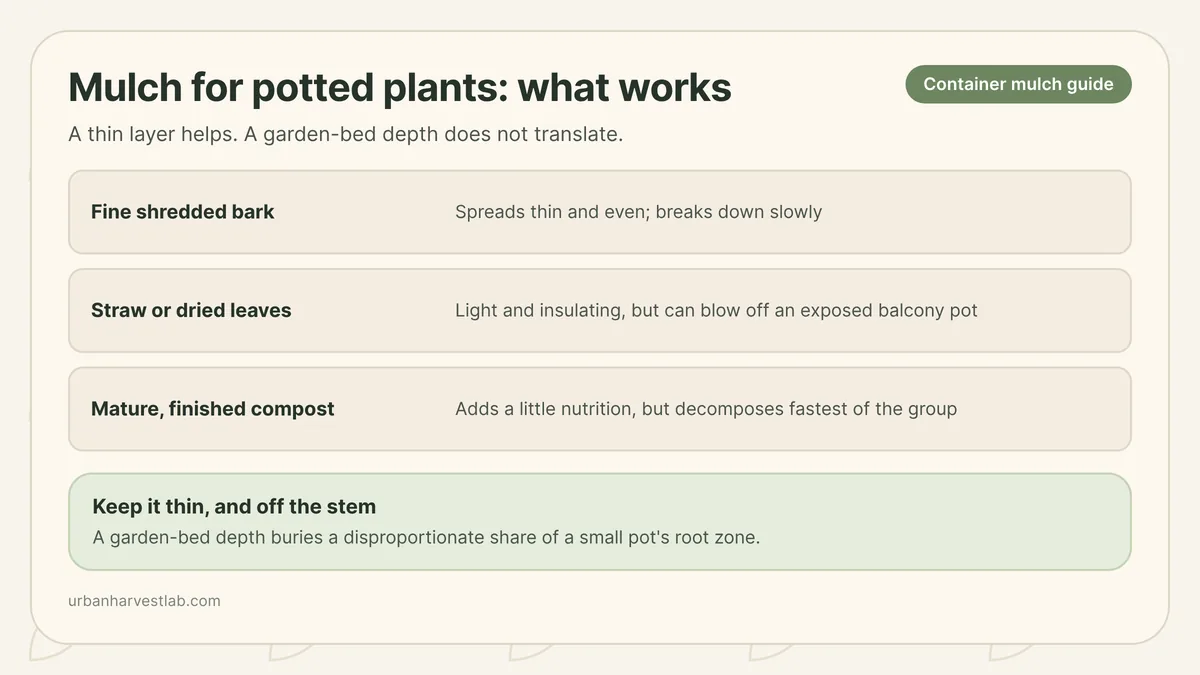
A thin surface layer slows evaporation and softens heat swings in a container, but it does not fix a small pot, a compacted mix, or salt buildup on its own.
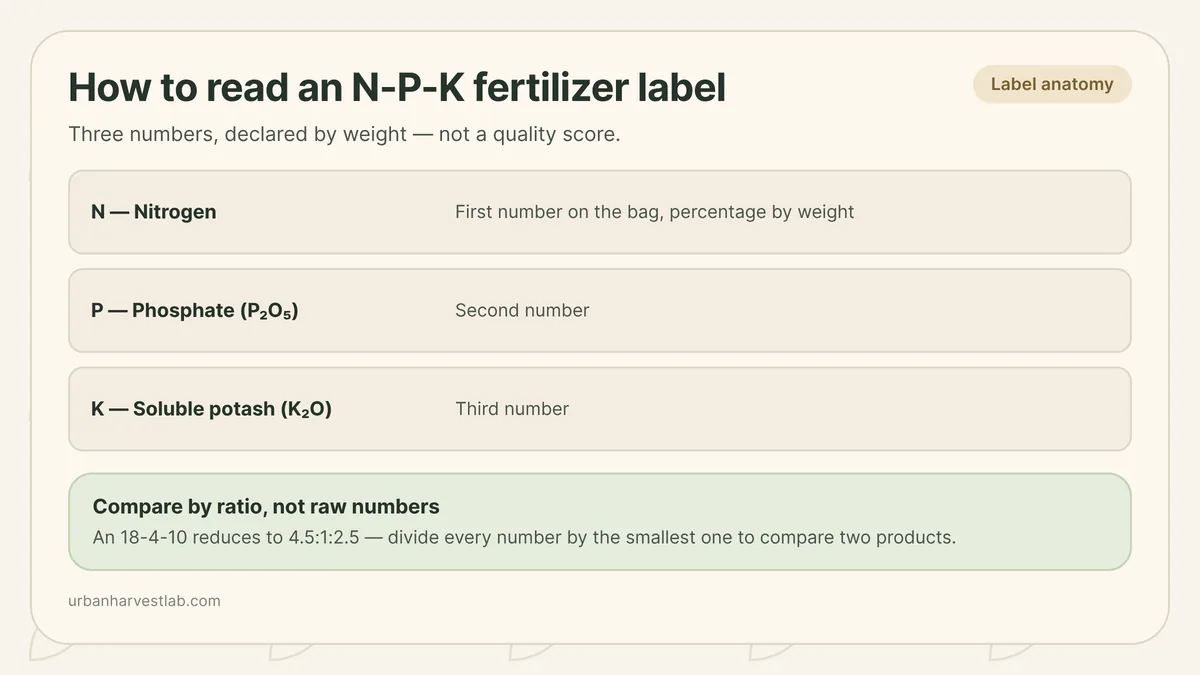
The three numbers on a fertilizer bag tell you exactly what's inside by weight, nothing about whether your herbs need it. Here's how to read them and compare products correctly.
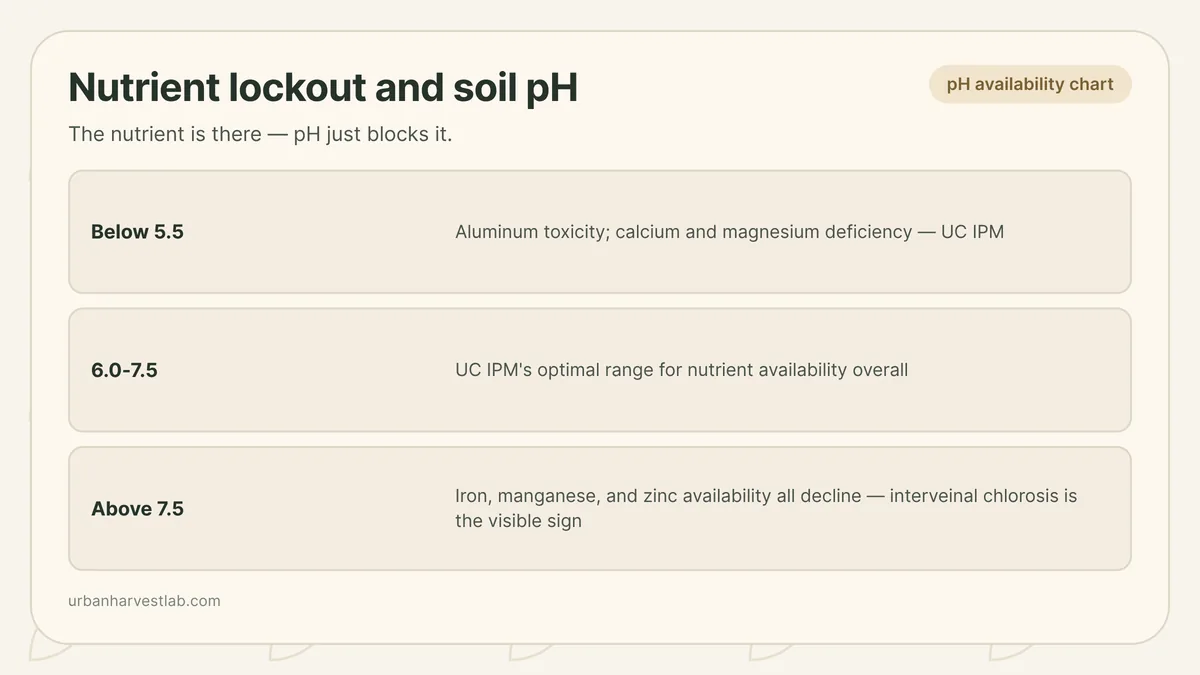
A fertilizer that tests complete on the label can still leave a plant starving if the mix's pH is wrong. Here is what pH does to nutrient availability, zone by zone, and why it isn't a salt problem.
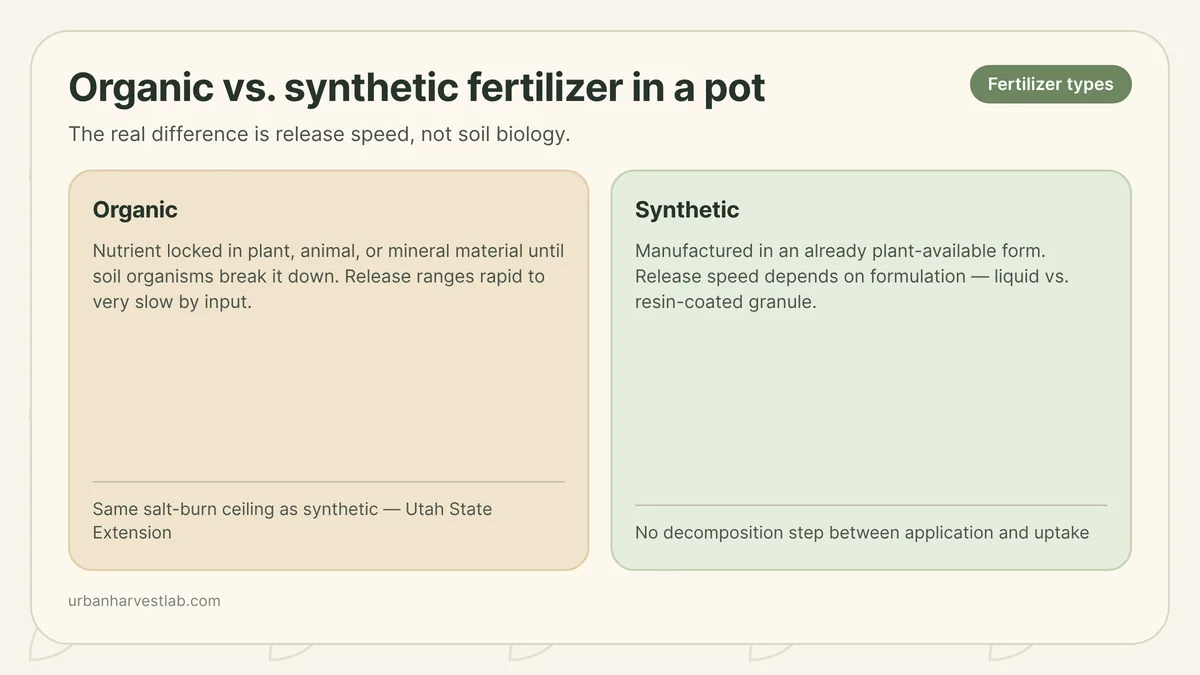
Extension sources sort organic fertilizer by release speed, not by a soil-biology edge over synthetic feed, and the same salt-burn ceiling applies to both.
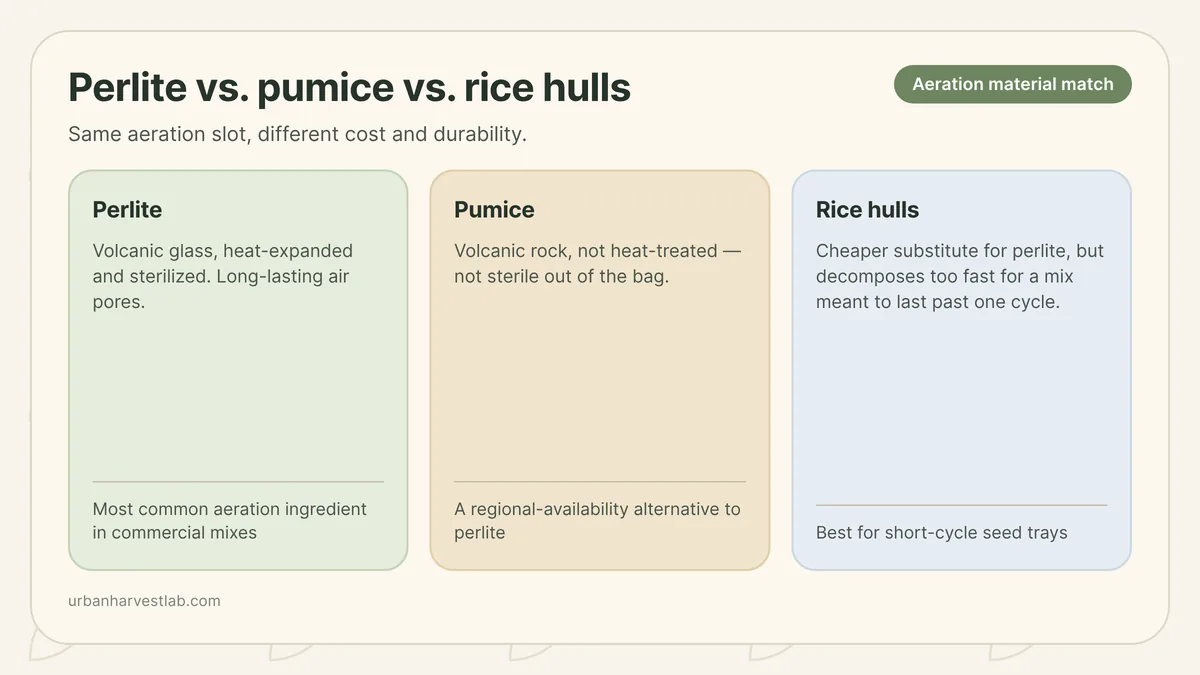
All three fill the same aeration slot in a mix, but they get there differently. Here is what separates them on cost, how long they last, and sterility.
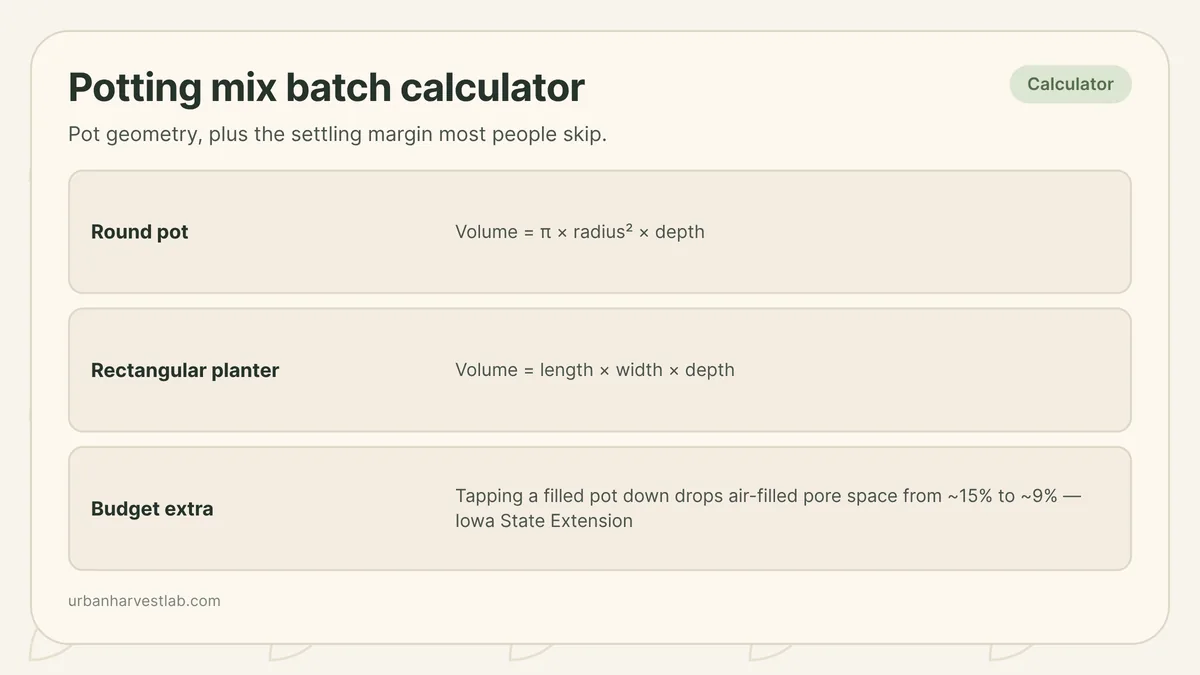
Pot volume is basic geometry, but the mix inside a pot settles more than most people plan for. Get both numbers before you buy or mix a batch.
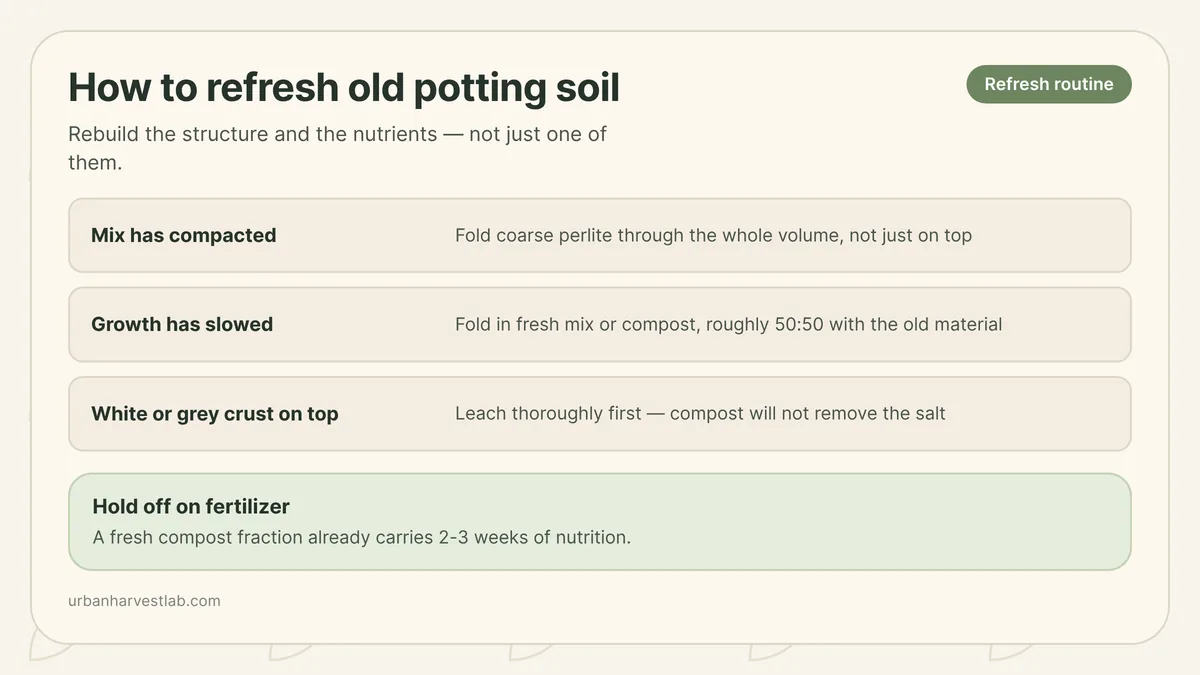
Old potting mix has usually lost two things at once: its air-filled structure and its nutrients. Fixing one without the other is why a refreshed pot still underperforms.
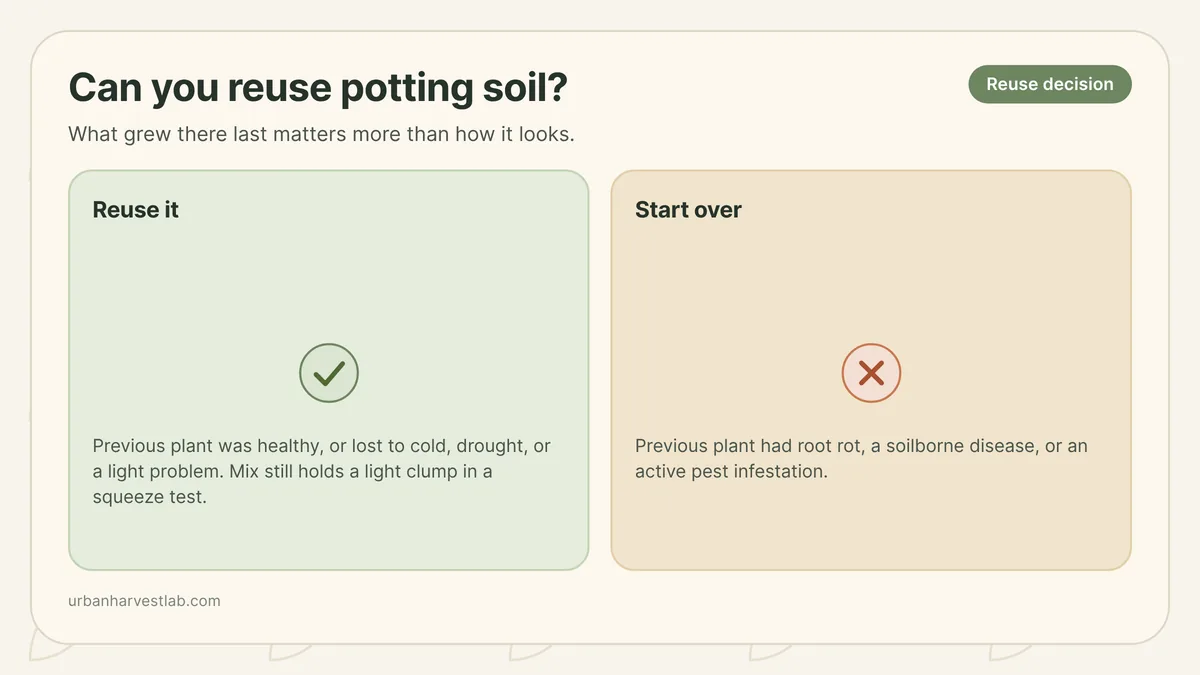
Whether last season's mix belongs back in a pot depends less on how it looks than on what grew in it and why that plant left.
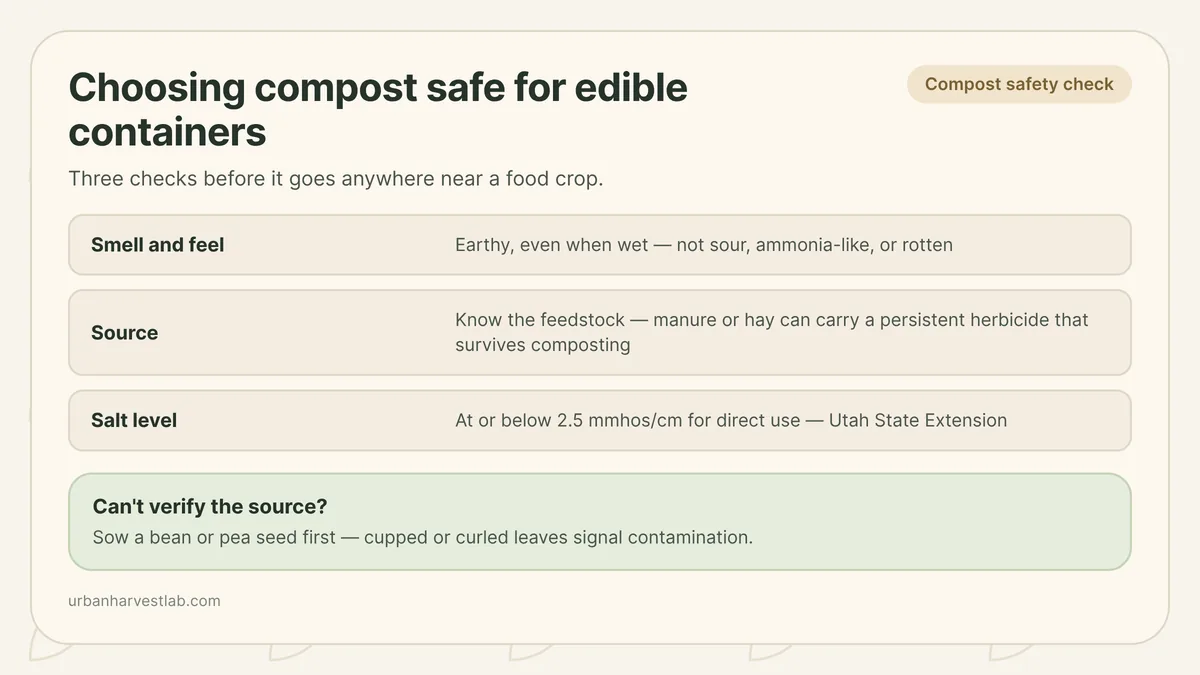
A pile or a bag that looks like good compost can still carry a persistent herbicide or too much salt for a small pot. Three checks catch most of it before you plant.
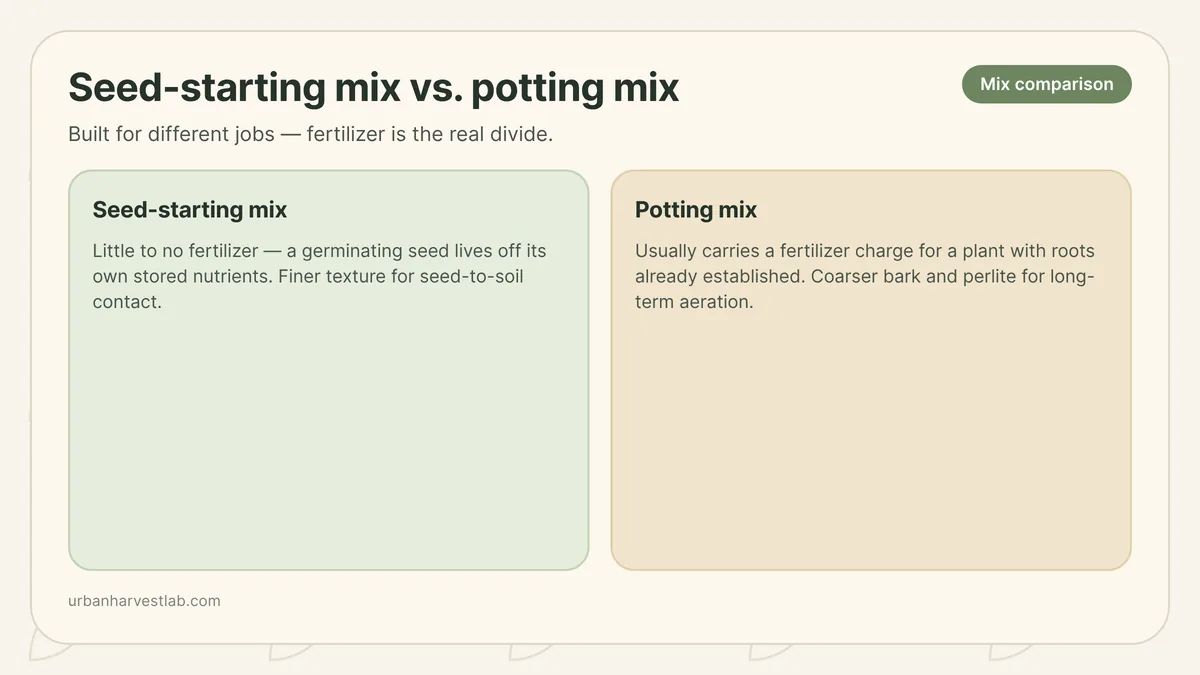
Potting mix is built to feed an established plant; seed-starting mix is built to stay out of a germinating seed's way. The difference is fertilizer content and particle size, and it matters before the first true leaf appears.
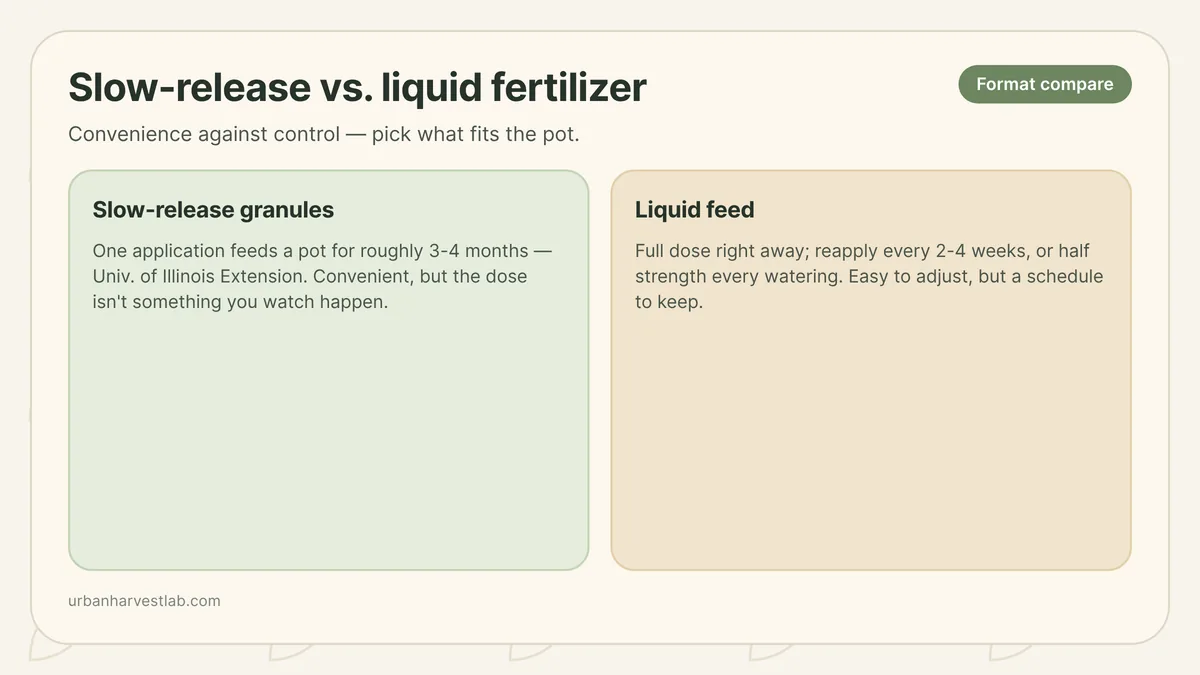
Granular slow-release and liquid fertilizer solve different problems in a pot. Here is how each one actually releases nutrient, and which situation calls for which.
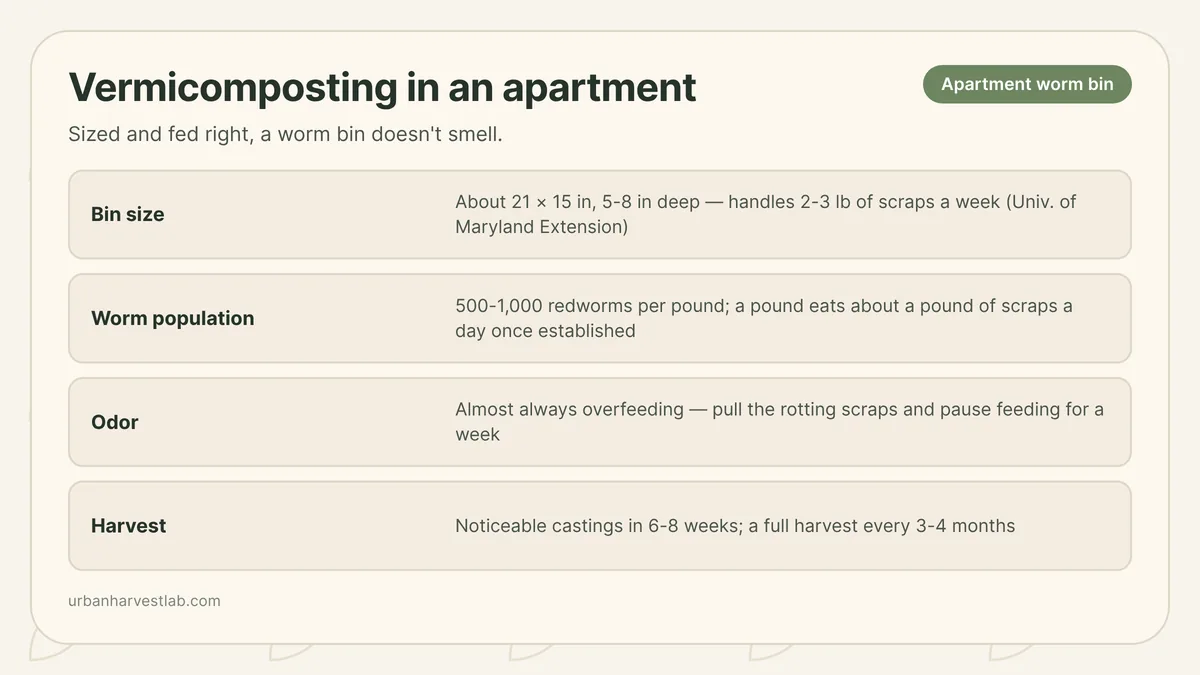
A worm bin sized and fed correctly runs in a closet or under a sink without odor. Here is the setup, the feeding rules, and how to harvest the castings.
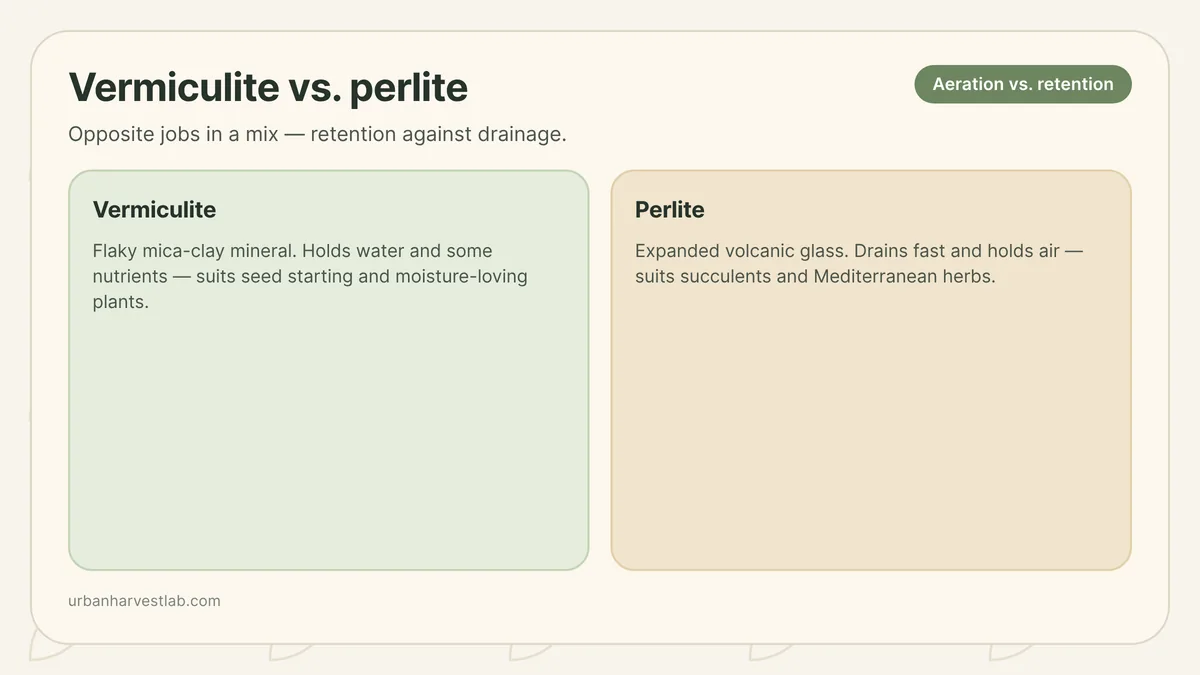
Vermiculite and perlite solve opposite problems in a growing medium. Here is which one your container actually needs, and when the answer is both.
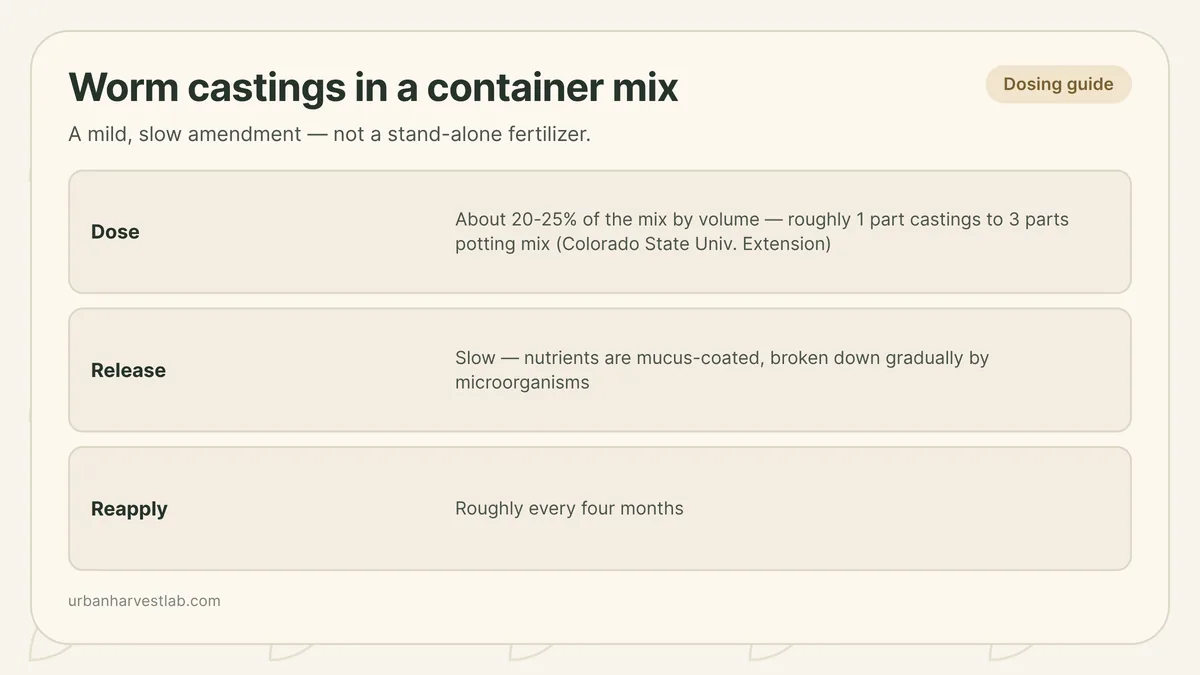
Worm castings are a modest, slow-release amendment, not the cure-all the bag copy suggests. Here is what the extension research actually supports and the ratio to mix them at.
A useful potting mix recipe describes the job of each ingredient and gives you a way to correct the result. The goal is stable air and moisture, not a magic ratio.
More compost is not automatically better. In a container, compost must share limited space with the coarse particles that preserve air around roots.
A practical, label-first guide to complete liquid and controlled-release fertilizers for potted herbs, with a decision table and a safer first application.
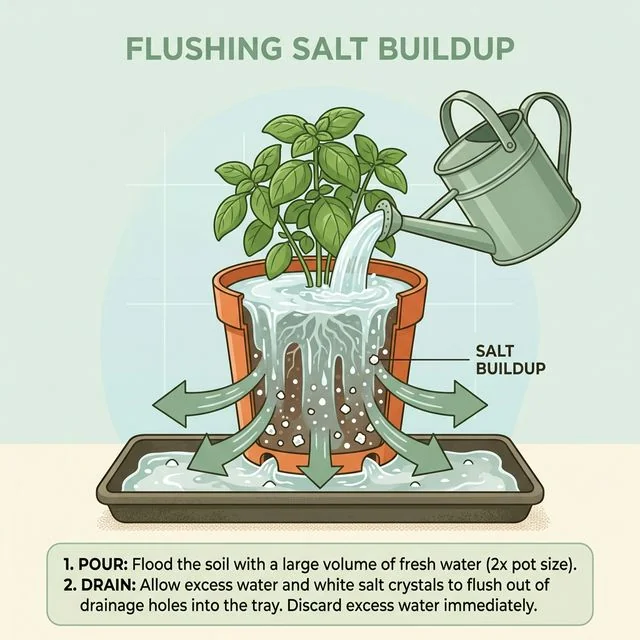
Every time you water your plants with liquid fertilizer, you are leaving heavy chemical salts behind. If you don't periodically wash them out, your herbs will suffer from chemical burn and nutrient lockout.
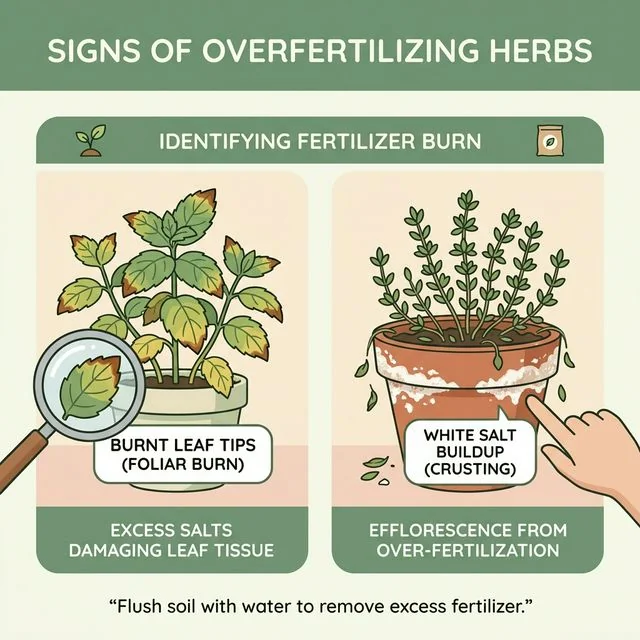
It is incredibly tempting to pour extra fertilizer on a slow-growing herb plant. But unlike humans, plants don't 'eat' fertilizer—they 'eat' sunlight. Forcing excess chemical salts into the soil will burn the roots and kill the plant.
Most potted herbs need fertilizer eventually, but timing matters. This guide explains when to feed, how often to do it, and how to avoid burning stressed roots.
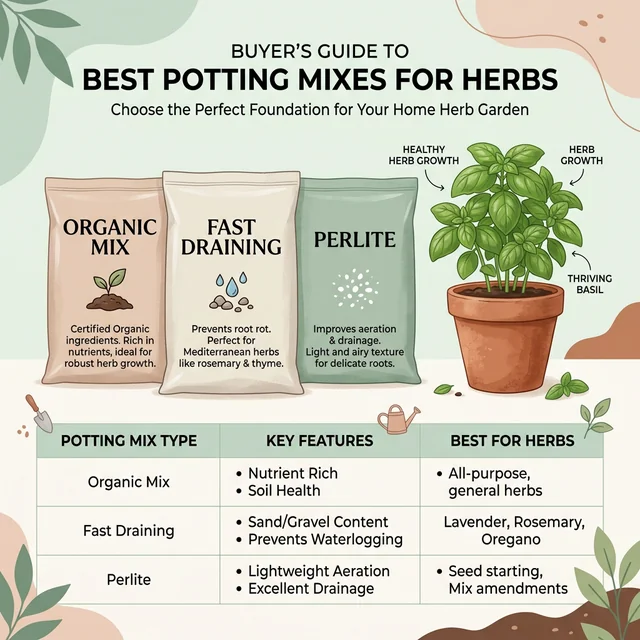
A practical buyer's guide to choosing potting mix for potted herbs, from richer blends for basil and parsley to faster-draining options for rosemary and thyme.
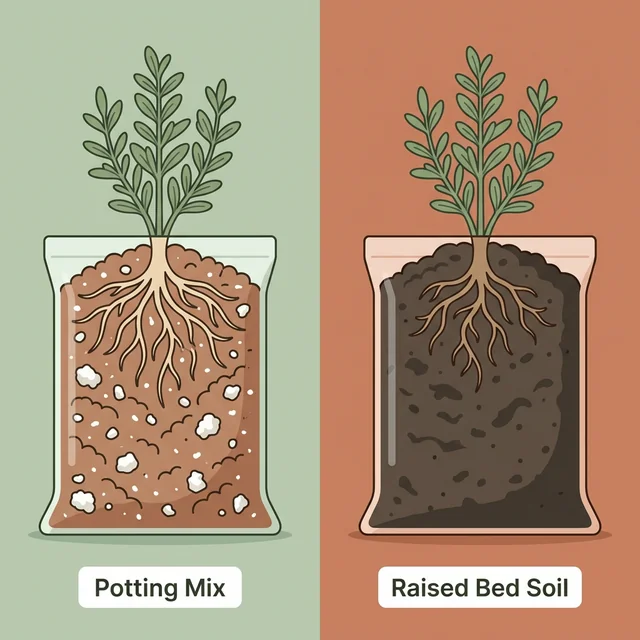
Using the wrong dirt is the fastest way to kill a potted herb. This guide explains the critical difference between indoor potting mix and outdoor raised bed soil.
Most container problems start with the wrong medium, not the wrong fertilizer. This guide explains why pots usually need a lighter mix than raised beds.