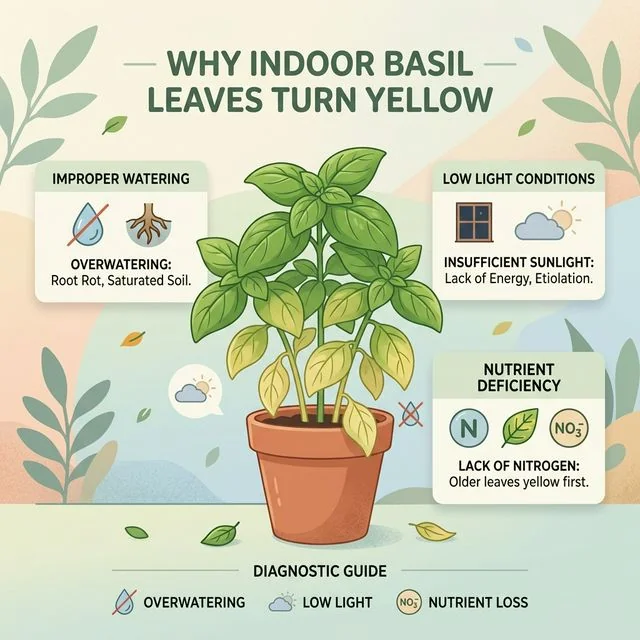
Troubleshoot the system before you change the inputs.
Symptoms
- Leaves fade from healthy green to pale yellow.
- Growth slows while stems stretch or soften.
- Lower leaves decline faster than the plant can replace them.
Possible causes
- Light levels are too low for basil to maintain vigorous growth.
- The root zone is staying wet too long or lacking oxygen.
- Temperature swings and feeding drift are stacking stress signals.
Quick fixes
- Recheck light placement before adding more fertilizer.
- Let the root zone breathe and inspect the medium structure.
- Stabilize temperature and watering for several days before changing anything else.
Yellow basil: pattern, likely cause, and first fix
| Yellowing pattern | Most likely cause | First fix |
|---|---|---|
| Lower, older leaves yellow first while soil stays wet | Overwatering or low root oxygen | Let the mix dry more between waterings and check drainage |
| Whole plant pale and leggy with stretching stems | Too little light | Move to a brighter window or add a grow light |
| New, upper leaves yellow (sometimes with green veins) | Nutrient or pH issue | Feed lightly at half strength and recheck after a week |
| Sudden yellowing after a cold draft or window chill | Temperature stress | Move away from cold glass and AC; keep 65-75°F (18-24°C) |
Yellow basil leaves indoors are usually a signal, not a diagnosis. Basil responds quickly when the system drifts out of balance, so the most useful approach is to check the biggest drivers first. If you want the broader troubleshooting framework for yellowing, wilting, and weak growth across potted herbs, start with Common Problems With Potted Herbs: How to Diagnose Yellow Leaves, Wilting, and Weak Growth.
Step one: check the light honestly
Indoor basil wants strong, sustained light. If the plant is stretching, leaning, or producing weak stems along with yellow leaves, low light is a likely contributor. Review grow light hours for herbs if the plant depends on artificial light.
Step two: inspect the root zone
If the growing medium stays wet for long periods, roots lose oxygen and the plant often starts yellowing from stress. In soil-based containers, heavy mixes make this worse, which is one reason potting mix is usually better than raised bed soil in containers.
In hydroponics, root discoloration, warm solution, or neglected cleaning routines can point to a different version of the same problem: stressed roots.
Step three: look for pattern, not panic
Ask:
- Is the yellowing mostly older leaves or new growth?
- Did watering frequency change recently?
- Has the plant outgrown the container or reservoir?
- Did temperature drop sharply near a window?
The answer is often a combination issue rather than one dramatic deficiency.
Fix the environment before adding products
It is tempting to respond with fertilizer. That can help when the diagnosis is clear, but yellow basil more often improves when light, moisture, and root conditions are corrected first.
Run a seven-day diagnosis instead of changing everything
Make one correction at a time and photograph the same leaves each day. Old yellow tissue will not turn green again, so judge the result by new growth and whether yellowing stops spreading, not by the damaged leaves.
- Day 1: test the root zone. Push a finger or wooden skewer below the surface. If it comes out wet and the pot feels heavy, pause watering and confirm that every drainage hole is open. Empty any saucer after watering.
- Days 1–3: stabilize light and temperature. Keep the plant in its brightest suitable position, away from cold glass, heating vents, and air-conditioning. Do not move it between several locations each day.
- Day 4: inspect, do not guess. Look under leaves for insects and slide the root ball out only if the plant is declining. Healthy roots are generally firm; soft roots and a sour-smelling, saturated mix point to root-zone trouble.
- Days 5–7: reassess new growth. If moisture, drainage, light, and temperature are now reasonable but new leaves remain unusually pale, review the feeding history and product label before applying a dilute, complete fertilizer.
This sequence is deliberately conservative. Several stresses can produce similar yellow leaves, while excess fertilizer can add soluble-salt damage to an already stressed root system.
Soil basil and hydroponic basil need different checks
For a potted plant, drainage, watering frequency, root crowding, and accumulated fertilizer salts are the useful first checks. For hydroponic basil, log solution temperature, pH, electrical conductivity, reservoir level, and root appearance. A meter reading is evidence only when the meter is calibrated and the sample is taken consistently. Do not use a hydroponic correction recipe on potting mix, or diagnose a soil plant from runoff pH alone.
Remove leaves that are fully yellow or decaying, but keep partly green leaves unless they show disease. Clean scissors before and after pruning, and discard plants with widespread soft rot rather than using damaged leaves in food.
Sources
- Penn State Extension: Growing Herbs Indoors
- Utah State University Extension: Basil in the Garden
- University of Minnesota Extension: Fertilizing and Watering Container Plants
Related Guides
If you're troubleshooting indoor herbs, also read
These related guides cover the setup issues that most often sit behind yellow basil, weak herb growth, and inconsistent indoor performance.
- Common potted herb problems: yellow leaves, wilting, and weak growth
- How many hours should grow lights run for herbs? 12-16
- Grow light distance for seedlings: how close is too close?
- Hydroponic nutrient basics: EC, pH, dilution, and reservoir stability
- Potting mix vs raised bed soil for containers: what works in pots
- Balcony herb garden for beginners: easy step-by-step
Common questions
Why is my basil turning yellow?
The most common causes are overwatering, too little light, a nutrient or pH issue, and temperature stress, roughly in that order indoors. Check where the yellowing starts. Lower leaves with wet soil usually means overwatering, a pale and leggy whole plant points to low light, and yellow new leaves often mean a feeding or pH problem.
Can overwatering make basil leaves yellow?
Yes. Saturated media reduces root oxygen, which often shows up as soft yellowing and slowed growth.
Does low light cause yellow basil?
It can. Basil needs strong light to stay compact and richly green, especially indoors.
Related guides
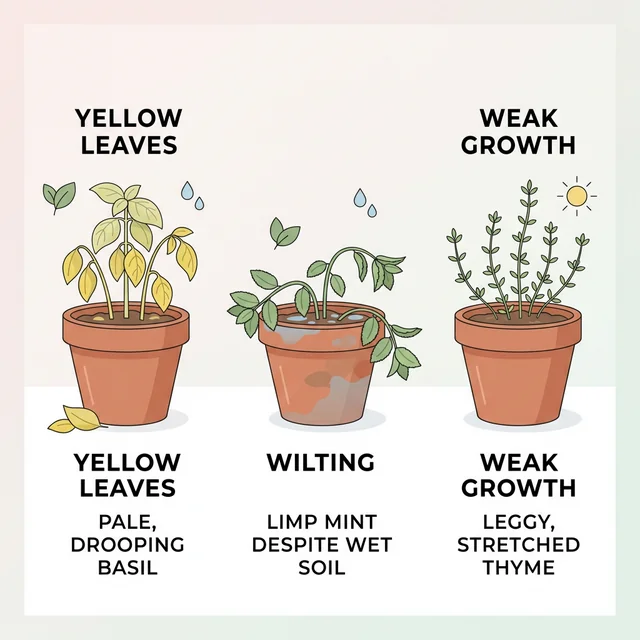
Common potted herb problems: yellow leaves, wilting, and weak growth
Common potted herb problems usually show up as yellow leaves, wilting, or weak growth, but the useful diagnosis starts with light, drainage, and root stress.
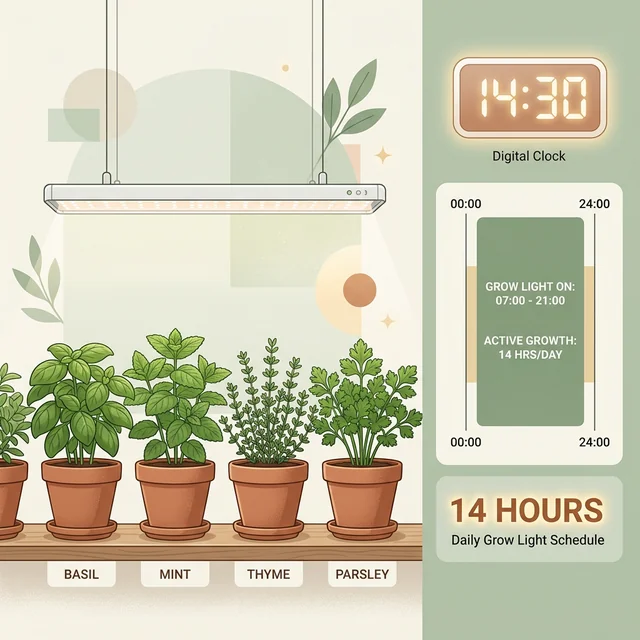
How many hours should grow lights run for herbs? 12-16
Most herb grow lights should run about 12 to 16 hours per day, but intensity, distance, and a stable dark period matter as much as the timer itself.
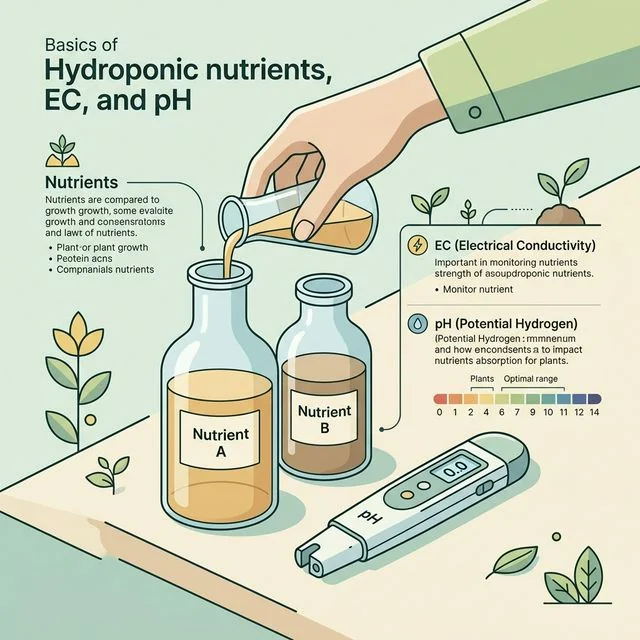
Hydroponic nutrient basics: EC, pH, dilution, and reservoir stability
Most hydroponic problems are not mysterious. They come from concentration drift, pH drift, heat, or neglected maintenance. This guide covers the basics clearly.