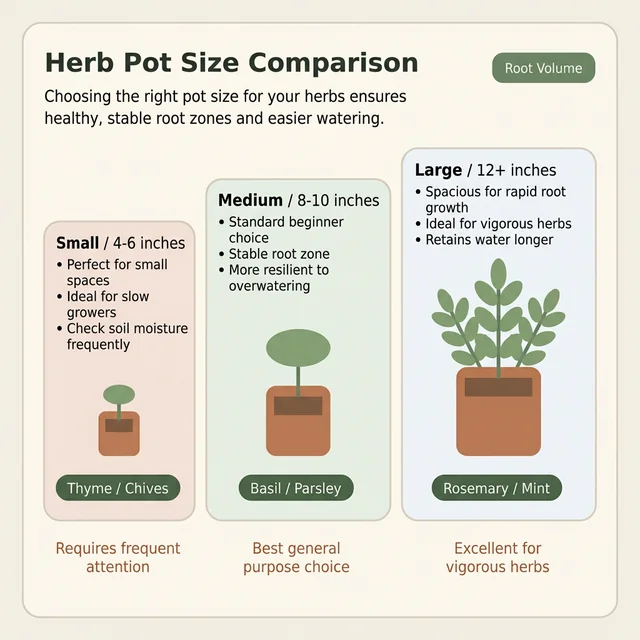
Container depth for tomatoes, peppers, and herbs: how much root space matters
Container size is one of the highest-leverage decisions in small-space gardening. When root volume is too small, every other care task becomes harder.
A topic hub for containers and planters, focused on root volume, drainage, planter choice, and practical container systems for edible crops.
Container size is one of the highest-leverage decisions in small-space gardening. When root volume is too small, every other care task becomes harder.
Containers are often treated like accessories. For edible growing, they are infrastructure. The planter determines how much root space the crop has, how quickly the medium dries, how much thermal stress builds up, and how forgiving the whole system will be during weather swings or busy weeks.
A crop planted in a poorly sized container becomes more difficult in every other way. Watering gets harder to judge. Nutrient swings get sharper. Growth becomes erratic. The same plant in a better-sized container often looks like a different crop altogether because the root environment is more stable.
This is one reason container guidance deserves its own topic hub rather than being treated as a few buying tips inside broader gardening content.
Before choosing a pot or planter, ask:
Those questions lead to better choices than browsing for the “best planter” in the abstract.
Most new growers underestimate root volume and overestimate how helpful shallow decorative containers will be. Small planters are rarely easier over time. They simply dry faster, stress faster, and leave less room for error. For herbs, peppers, and tomatoes, that tradeoff shows up quickly.
If you are planning a container garden from scratch, start with the beginner guides. If you already have a space in mind and need to choose supporting materials, move into setup guides. If plants are declining, use the troubleshooting section. If you are combining containers with indoor support or season extension, the advanced section shows how that decision intersects with lighting and maintenance.
The purpose of this hub is to make container choices feel deliberate rather than decorative.
These grouped sections keep the hub useful for beginners, active growers, and readers solving a specific problem.
Begin with realistic container sizing and the crops that fit compact planters well.
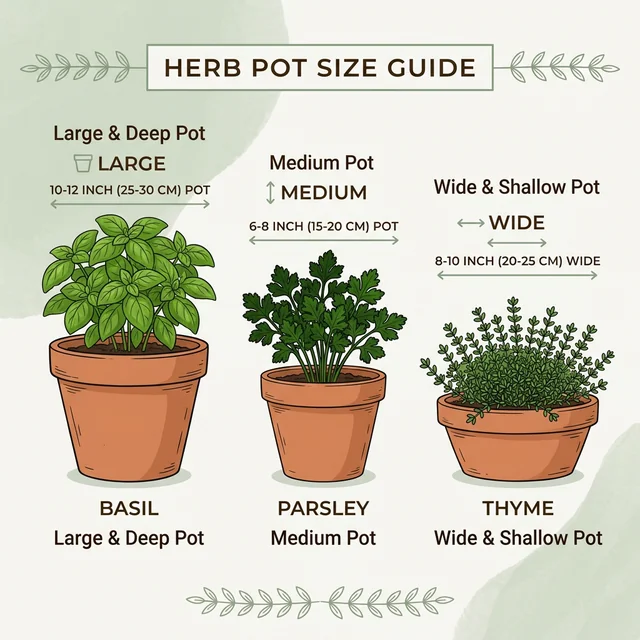
A practical herb pot size guide for the most common kitchen herbs, with simple size ranges that make container growing easier to read and maintain.
Container size is one of the highest-leverage decisions in small-space gardening. When root volume is too small, every other care task becomes harder.
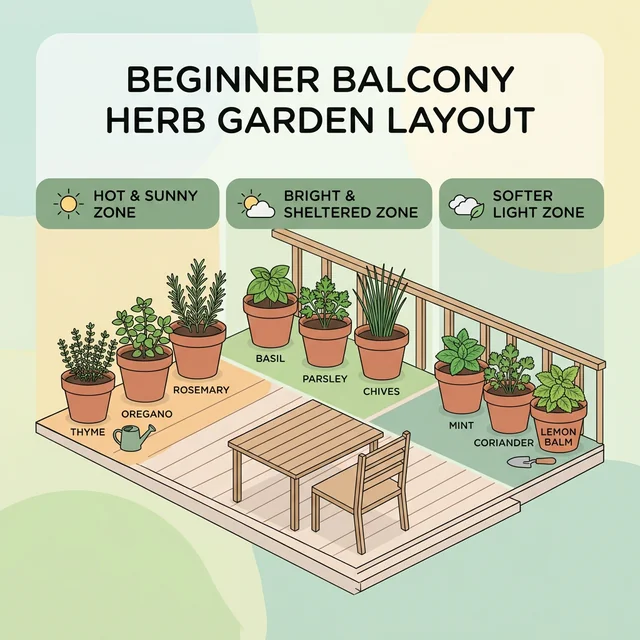
A practical beginner guide to starting a balcony herb garden that stays simple to water, easy to read, and realistic to maintain.
Exact container size, depth, and spacing for the most common kitchen herbs.
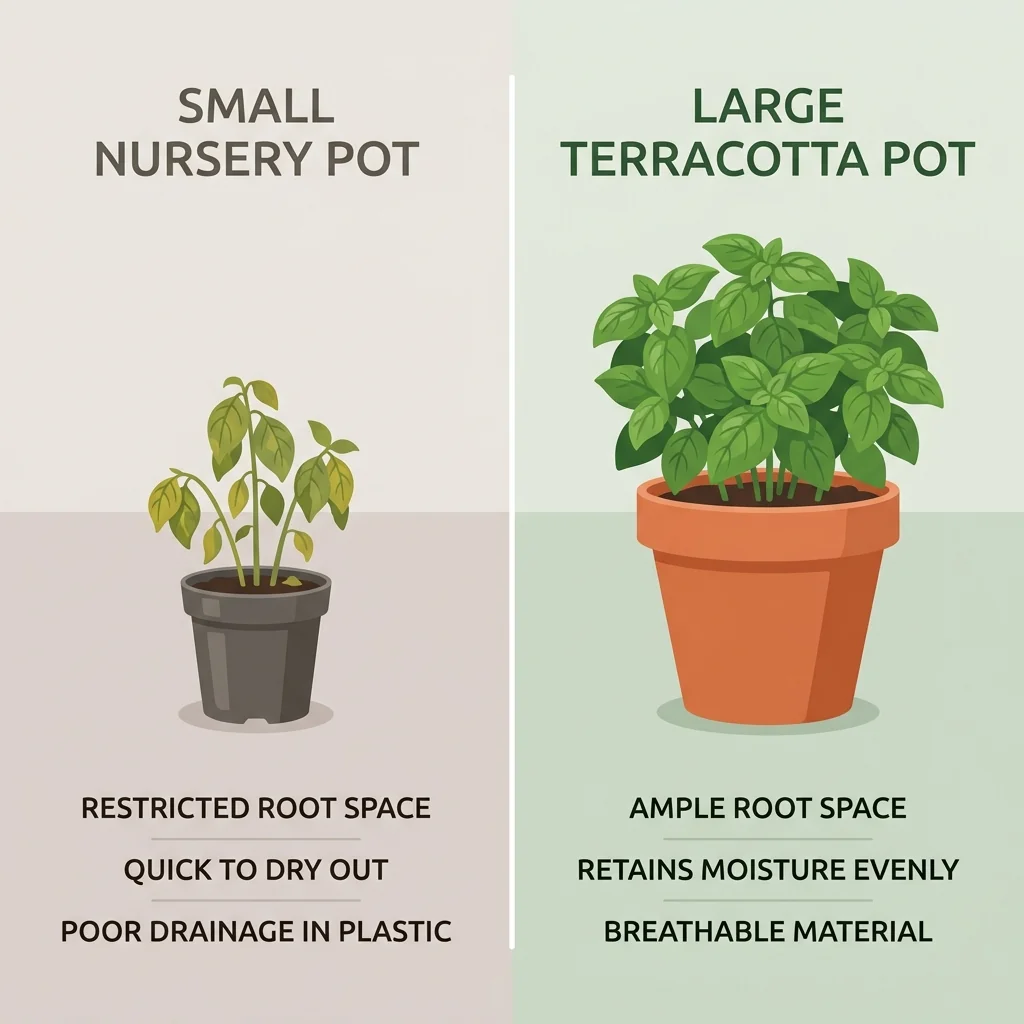
Basil struggles in the small pots it is often sold in. A bigger container holds more water and steadier roots, which is the simplest fix for daily wilting.
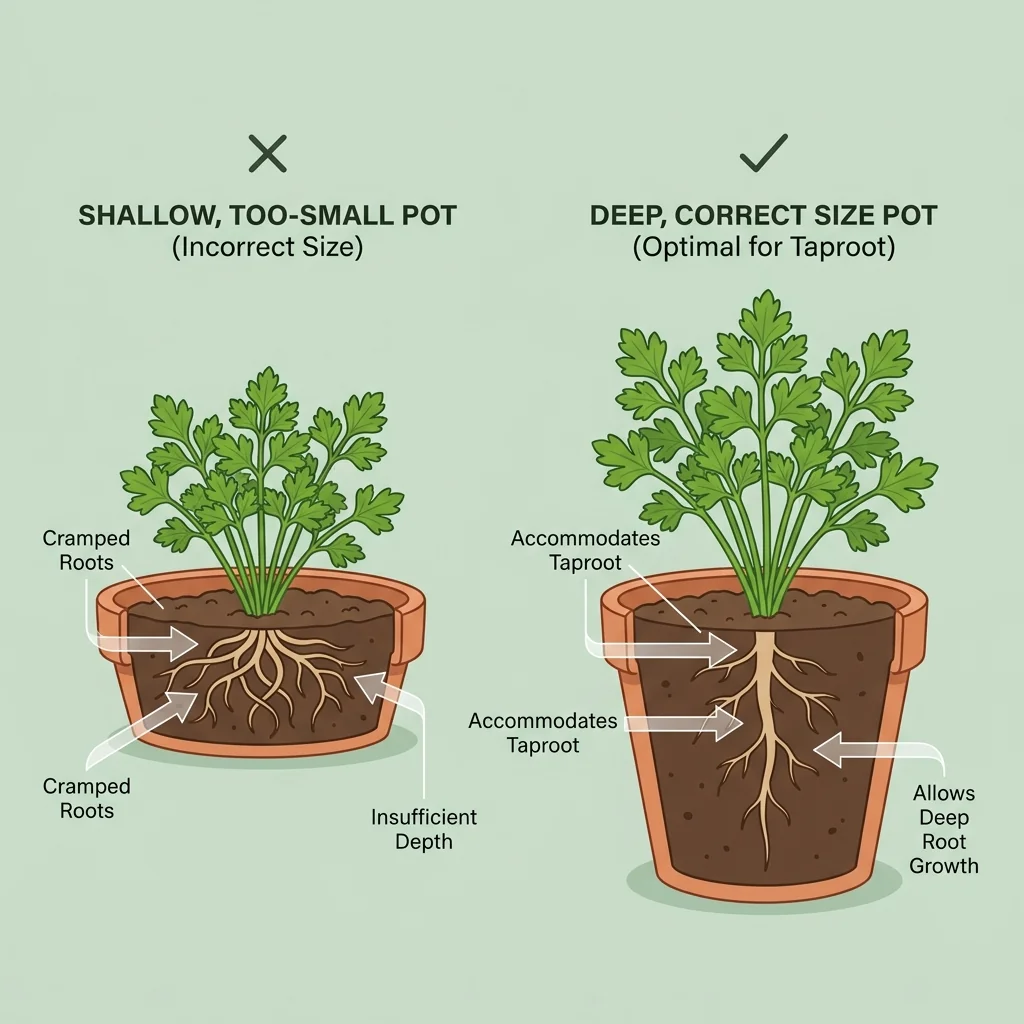
Parsley has a deeper taproot than most kitchen herbs, so pot depth matters more than width. This guide gives the exact size range, spacing, and drainage to get it right.
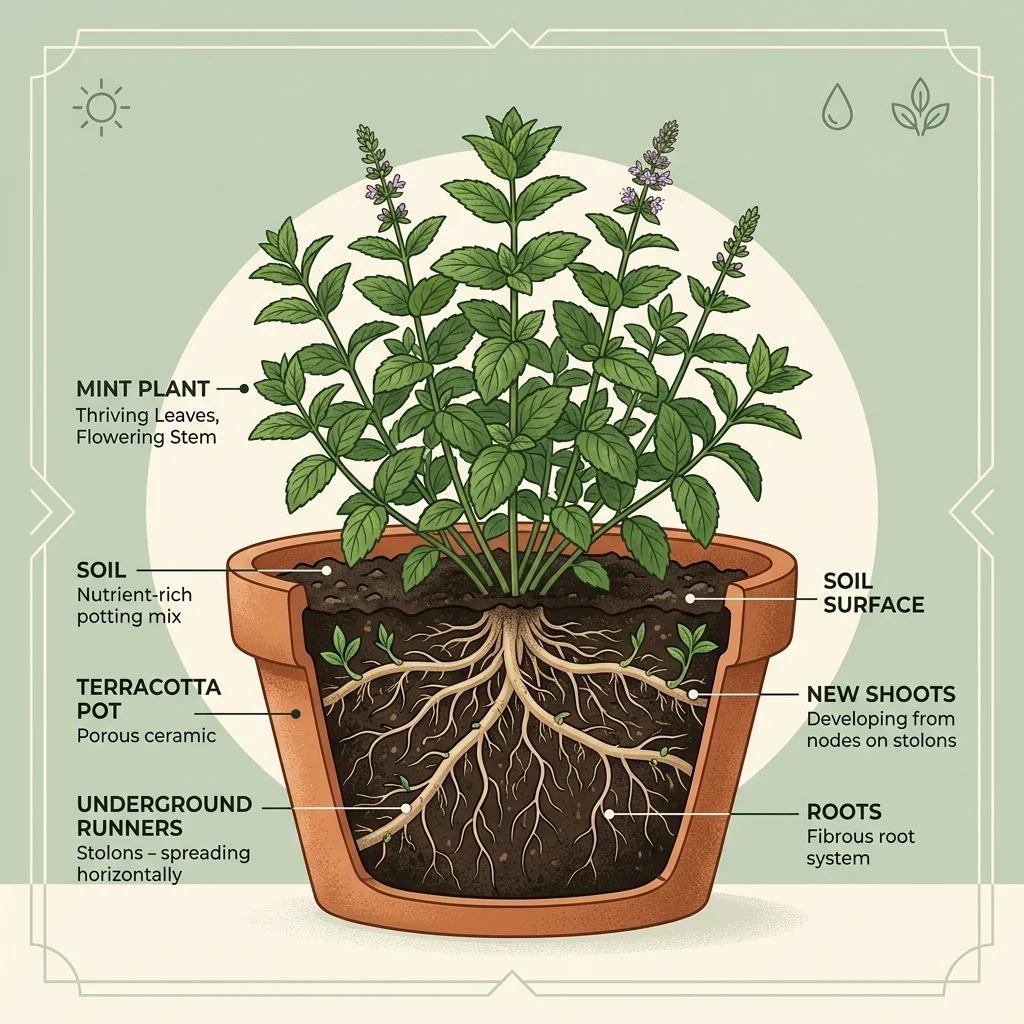
Mint is a vigorous spreader that will crowd out anything it shares a pot with. Give it a roomy container of its own, 8 to 12 inches wide, and you will get years of growth.
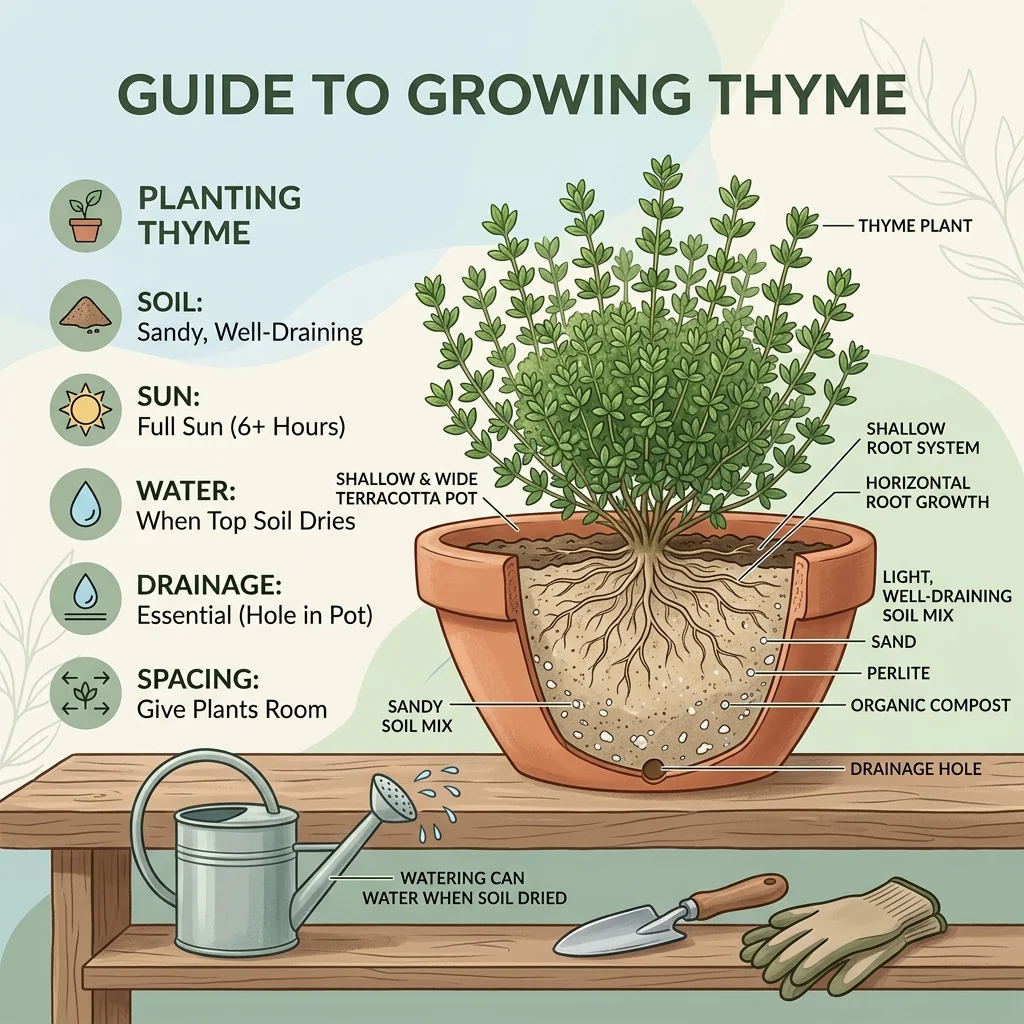
Thyme is the opposite of parsley: its roots spread sideways rather than down, so width and drainage matter more than depth. Here is the right container size.
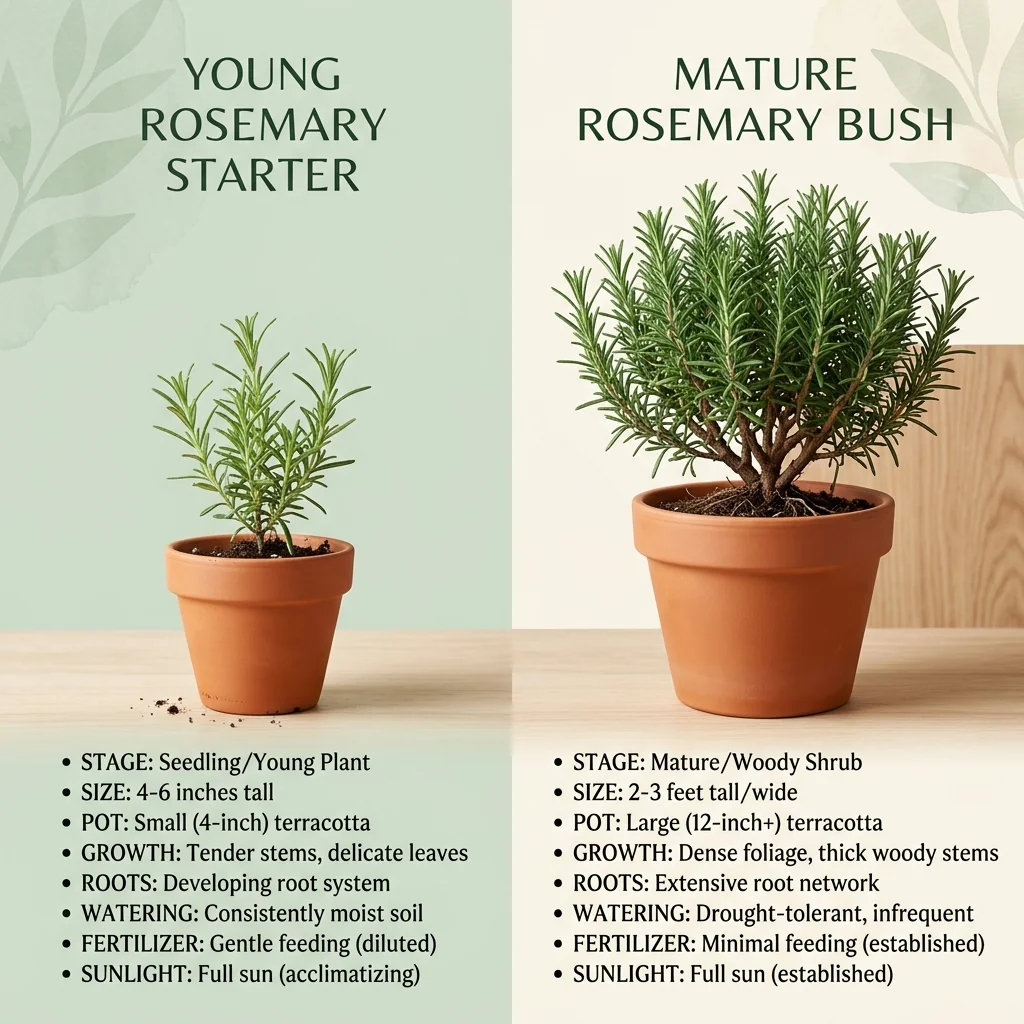
Rosemary is a small shrub in disguise. It starts in a modest pot but needs upsizing as it grows woody, plus the sharp drainage every Mediterranean herb demands.
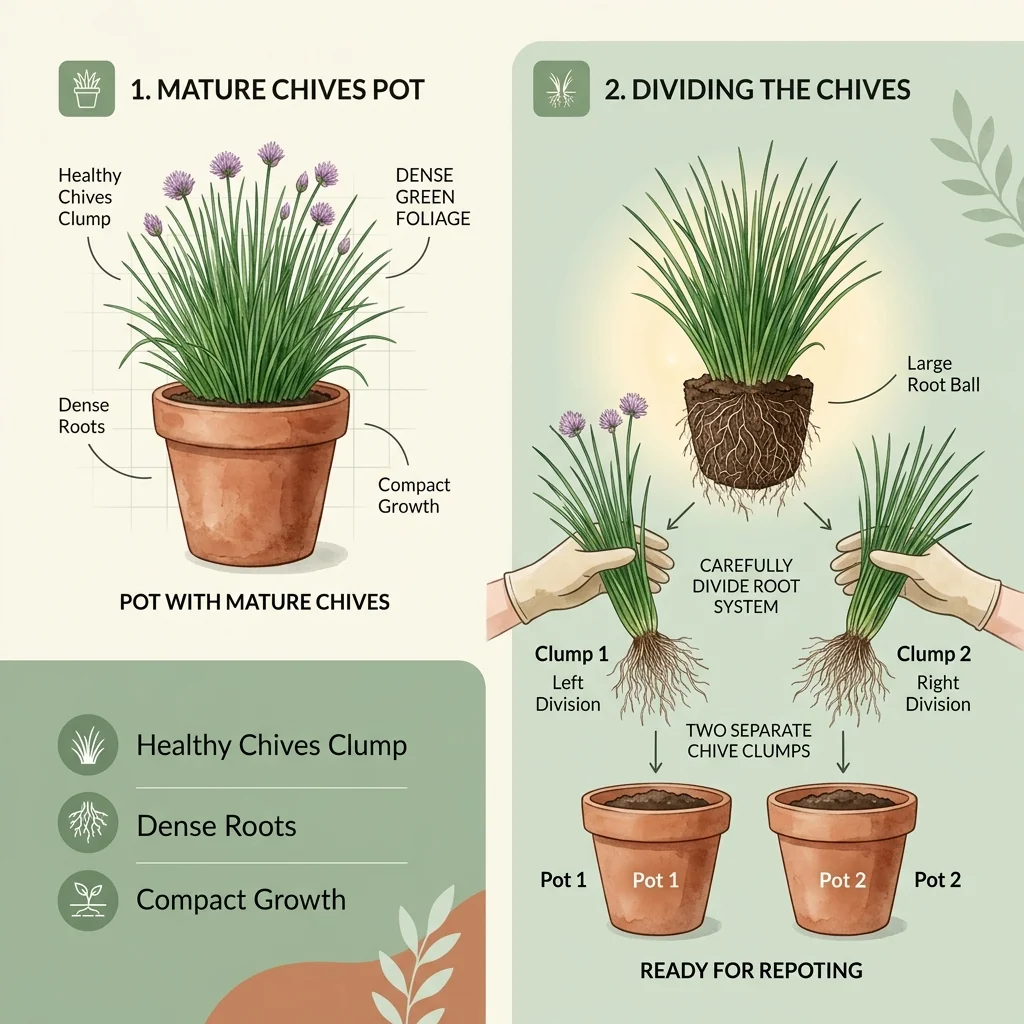
Chives are one of the easiest herbs to pot because their roots stay compact. A 6 inch pot is enough, and dividing the clump gives you free plants over time.
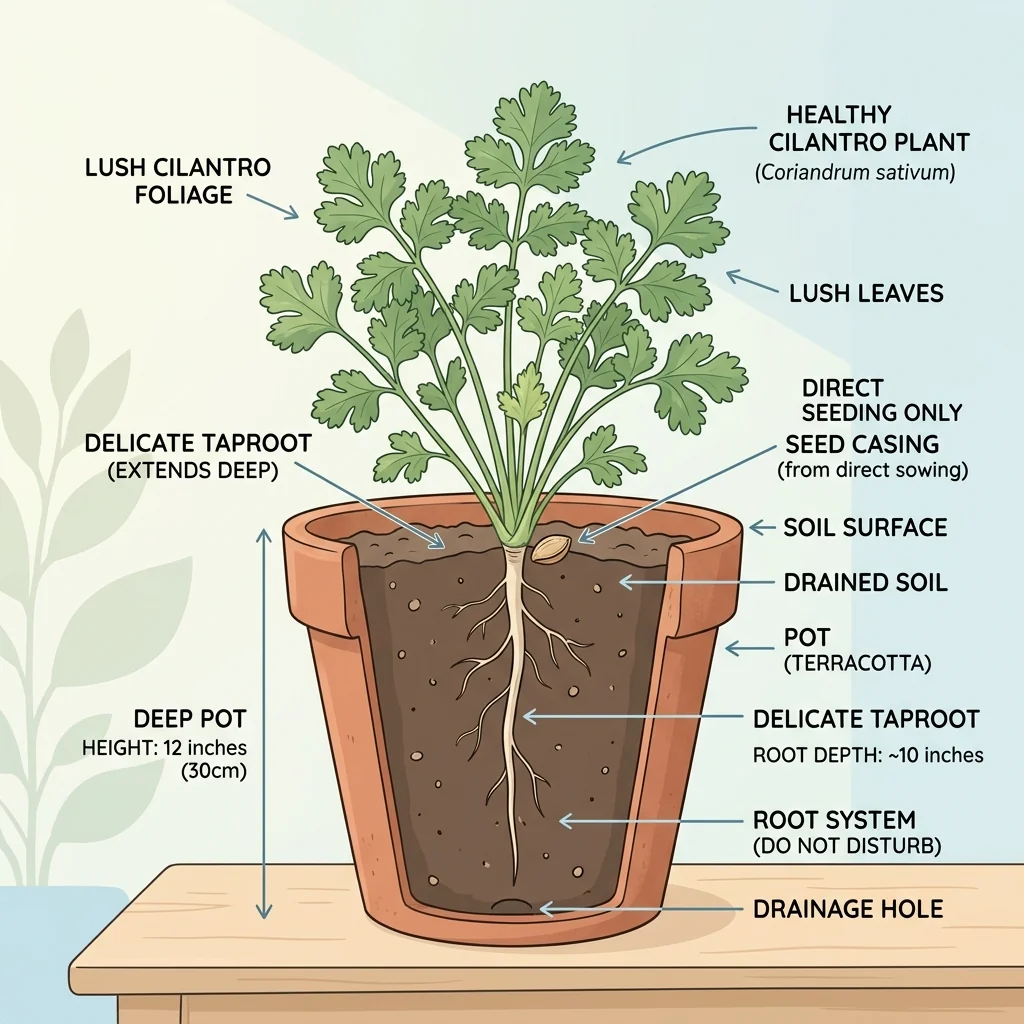
Cilantro grows a taproot and resents being moved, so depth and direct sowing matter more than width. Get the pot right and you can succession-sow for steady leaves.
These guides connect container choices to medium structure, balcony crop plans, and everyday upkeep.
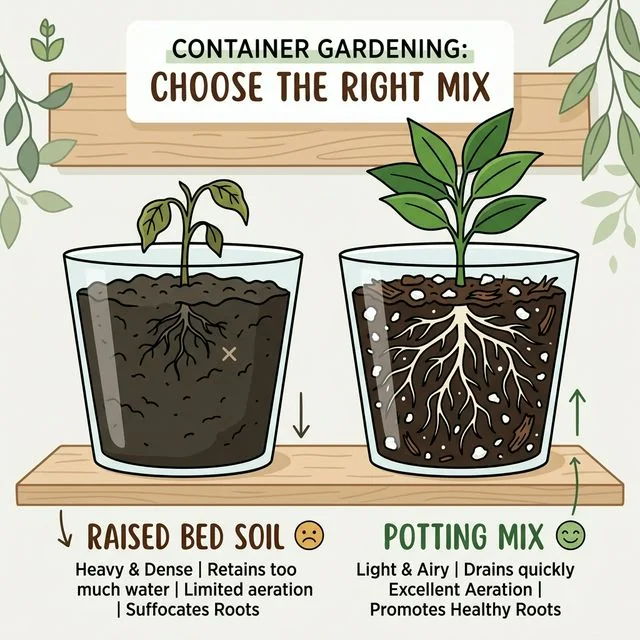
Most container problems start with the wrong medium, not the wrong fertilizer. This guide explains why pots usually need a lighter mix than raised beds.
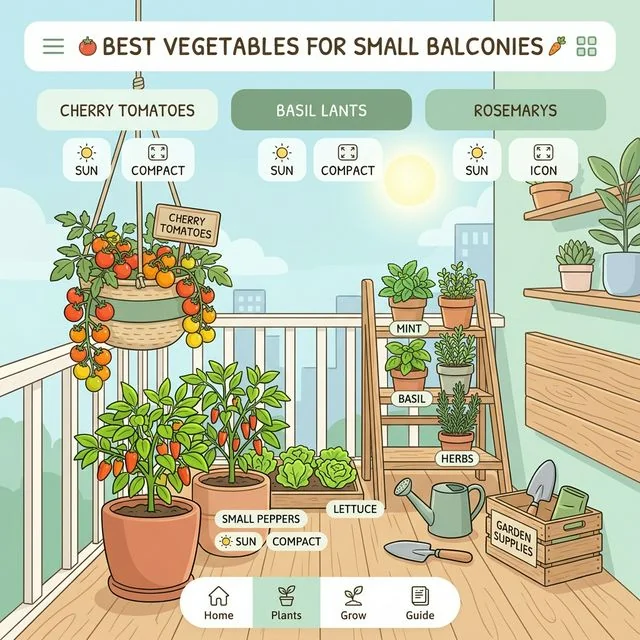
Not every vegetable belongs on a balcony. These are the crops most likely to reward limited square footage without turning watering and support into a daily headache.
Use these pieces when containers are drying unevenly, roots are stressed, or plant vigor starts slipping.
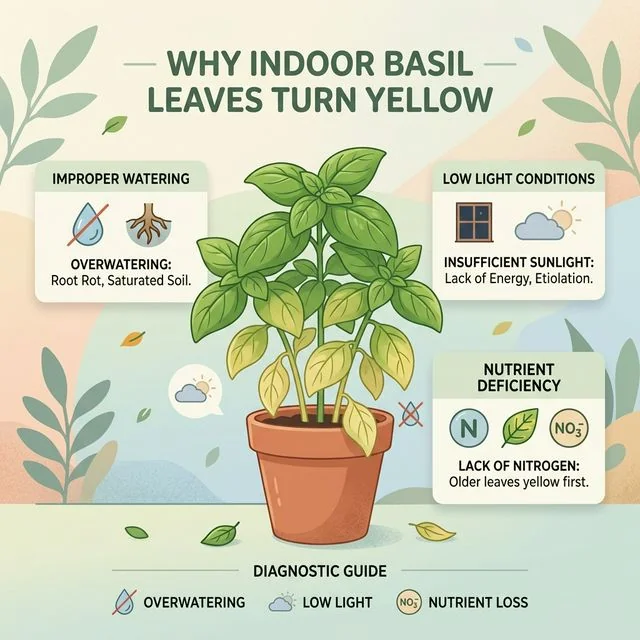
Yellow basil rarely has a single universal cause. The pattern of yellowing, the growing medium, and the recent care routine usually tell the story.
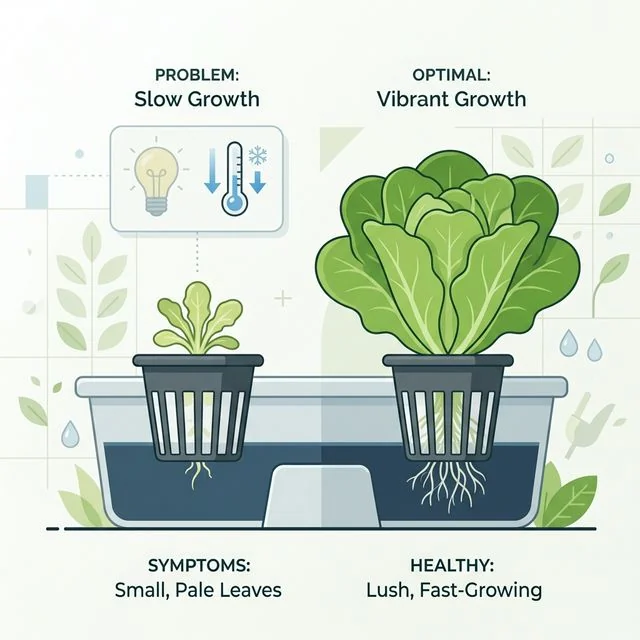
Slow hydroponic lettuce is usually a systems problem, not a mystery deficiency. The goal is to find the bottleneck without overcorrecting five variables at once.
Container and planter picks for herbs and small spaces.
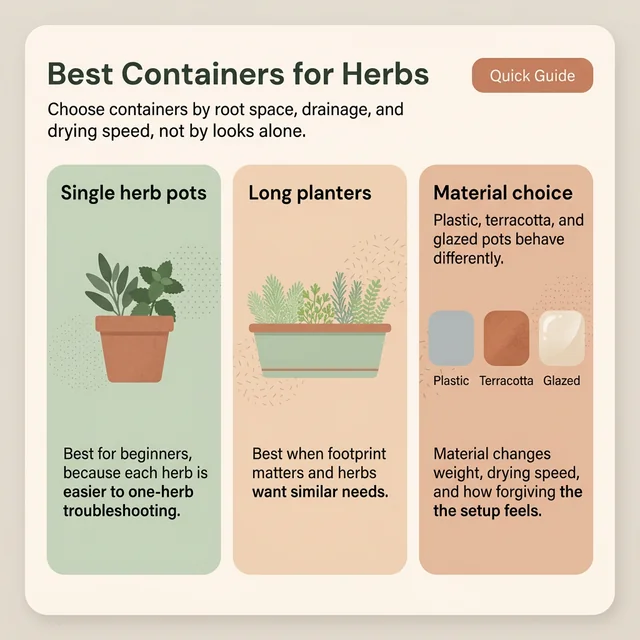
A practical guide to herb containers that explains which pots work best, why drainage matters, and how material changes the way containers dry.
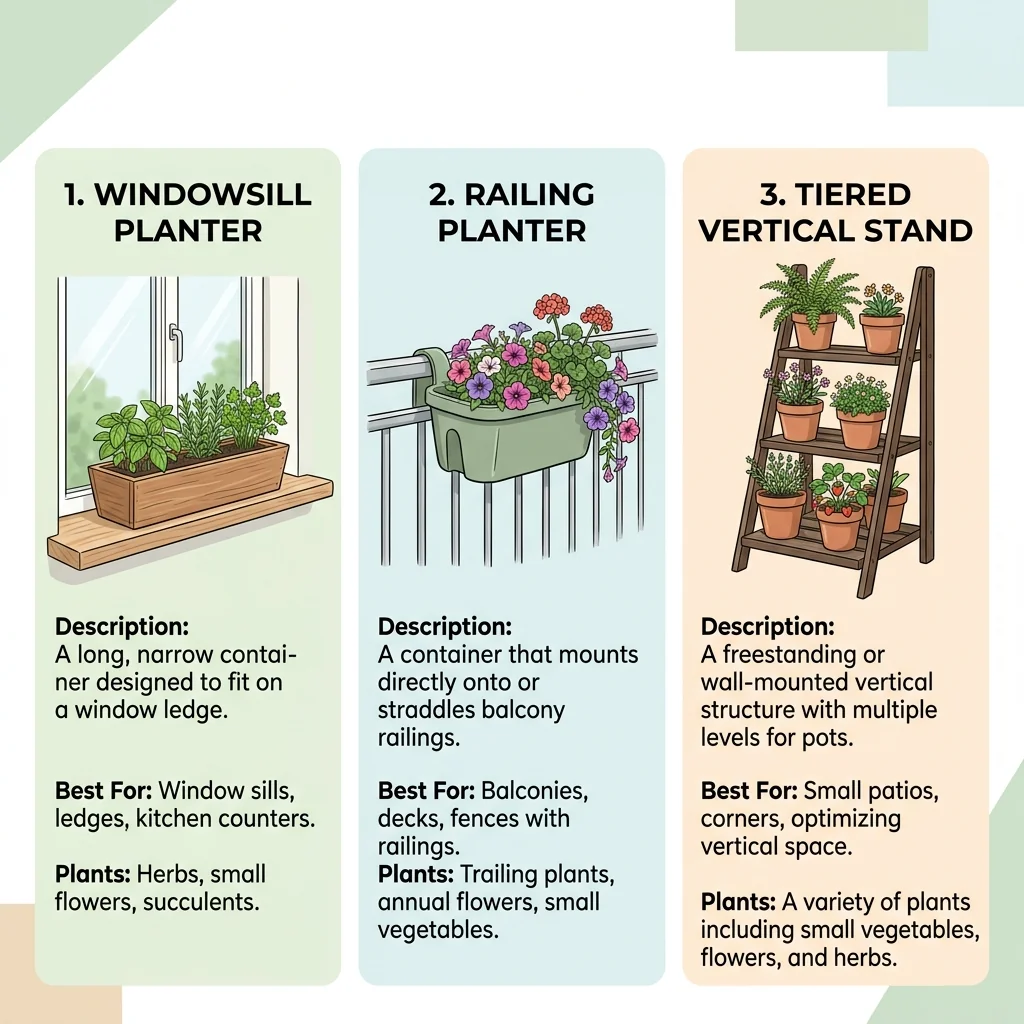
Small spaces reward planters that use vertical room and fit a sill or rail. Here are the best types for windowsills, balconies, and walls, and what to check before buying.
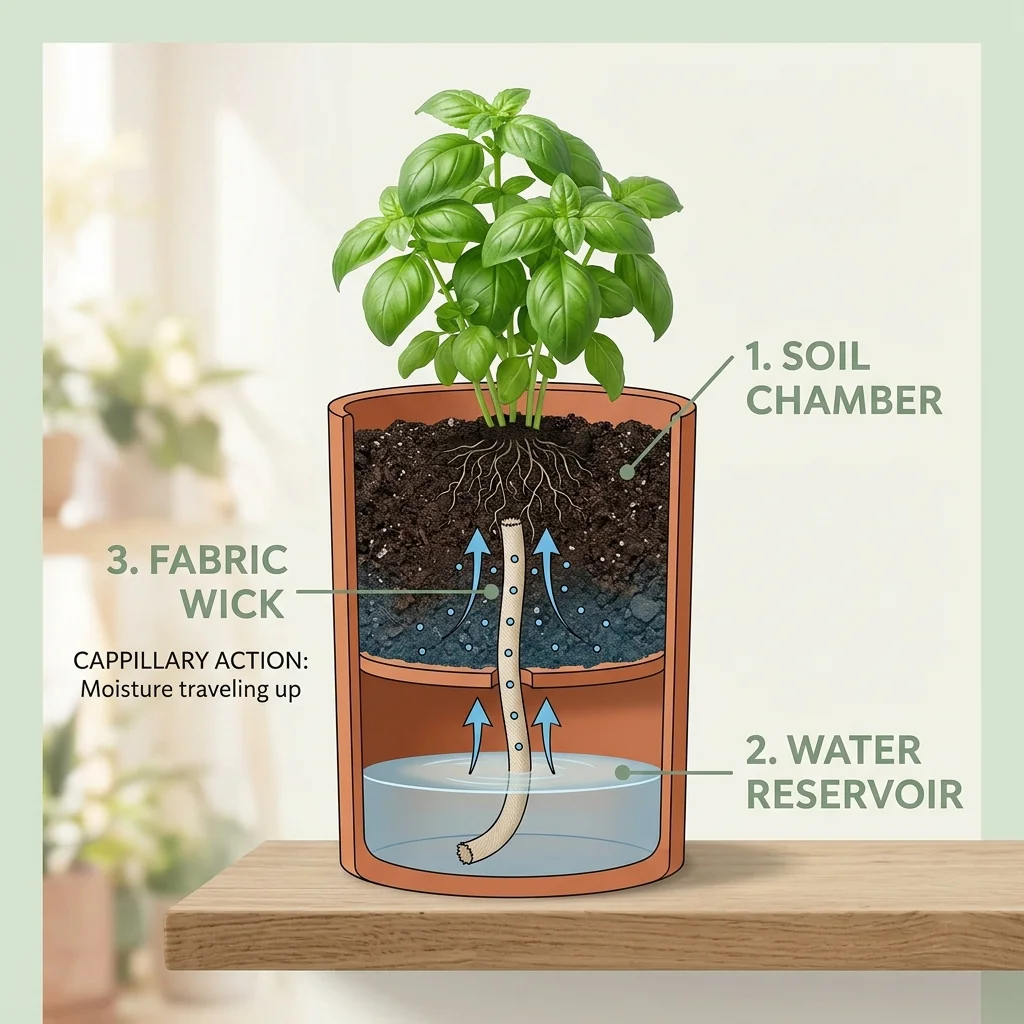
Self-watering pots take the guesswork out of watering thirsty herbs, but they are wrong for Mediterranean herbs. Here is how to choose and who they suit.
These guides help bridge container growing with indoor support systems and tighter environmental control.
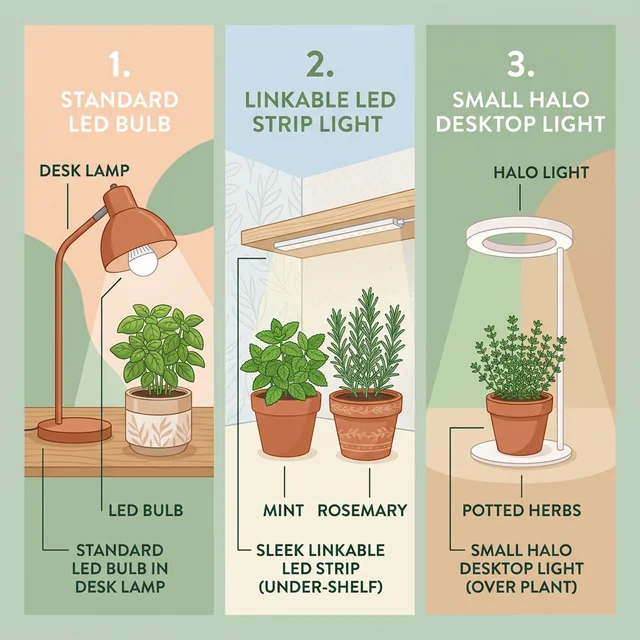
Most indoor herbs don't need a massive, expensive grow tent light. Here is how to choose the right LED bulbs, strips, or halos for your real apartment setup.
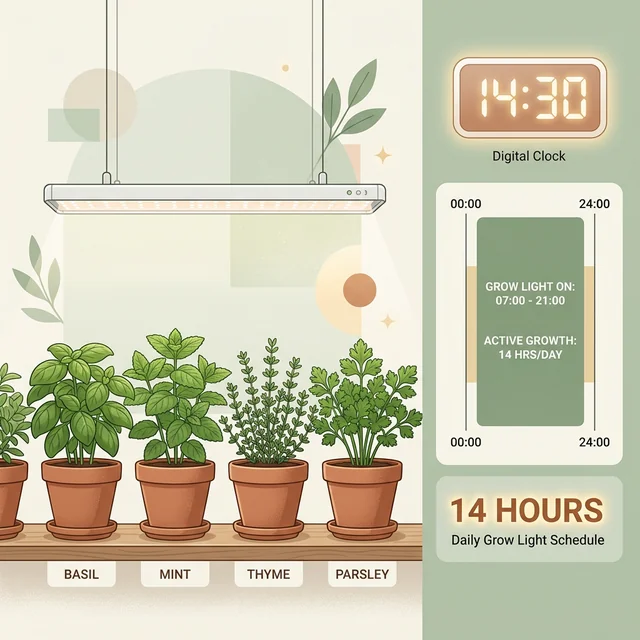
Most herb grow lights should run about 12 to 16 hours per day, but intensity, distance, and a stable dark period matter as much as the timer itself.
This hub keeps the topic curated. If you need a plain utility list instead, use the simplified article archive.
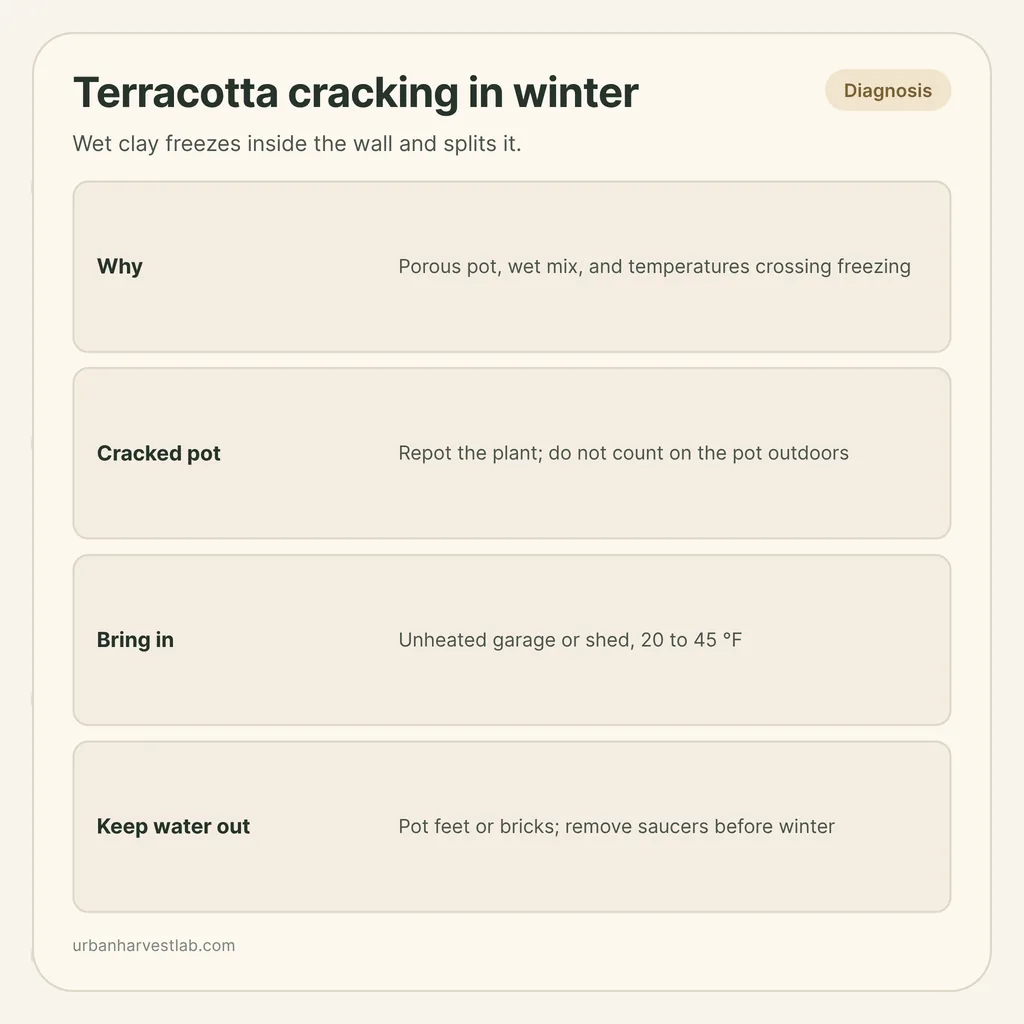
A pot that was fine in October splits in January. The cause is water inside the clay, and the fix is keeping that water out or moving the pot somewhere it cannot freeze.

A bucket, a drilled lid, and one low overflow hole turn a free container into a planter that waters itself from below. Here is the build, the fill, and the upkeep.

A planter box on legs is a depth decision first and a weight decision second. Here is how to size one for what you want to grow and for the floor it will stand on.
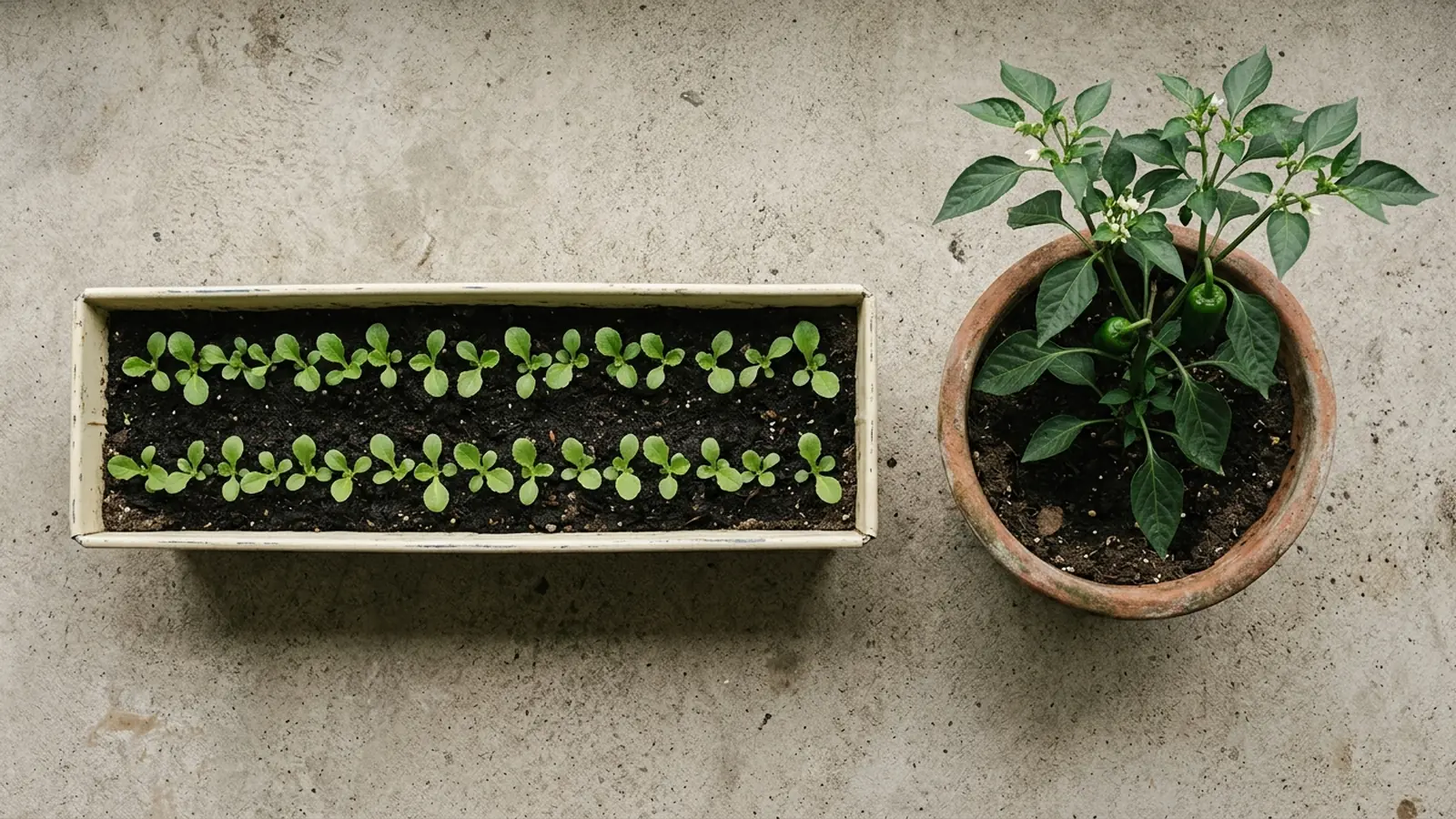
Most container guides answer the opposite question -- one plant, what pot? The one people actually ask standing over an empty window box is how many go in, and it has two answers that have to agree.
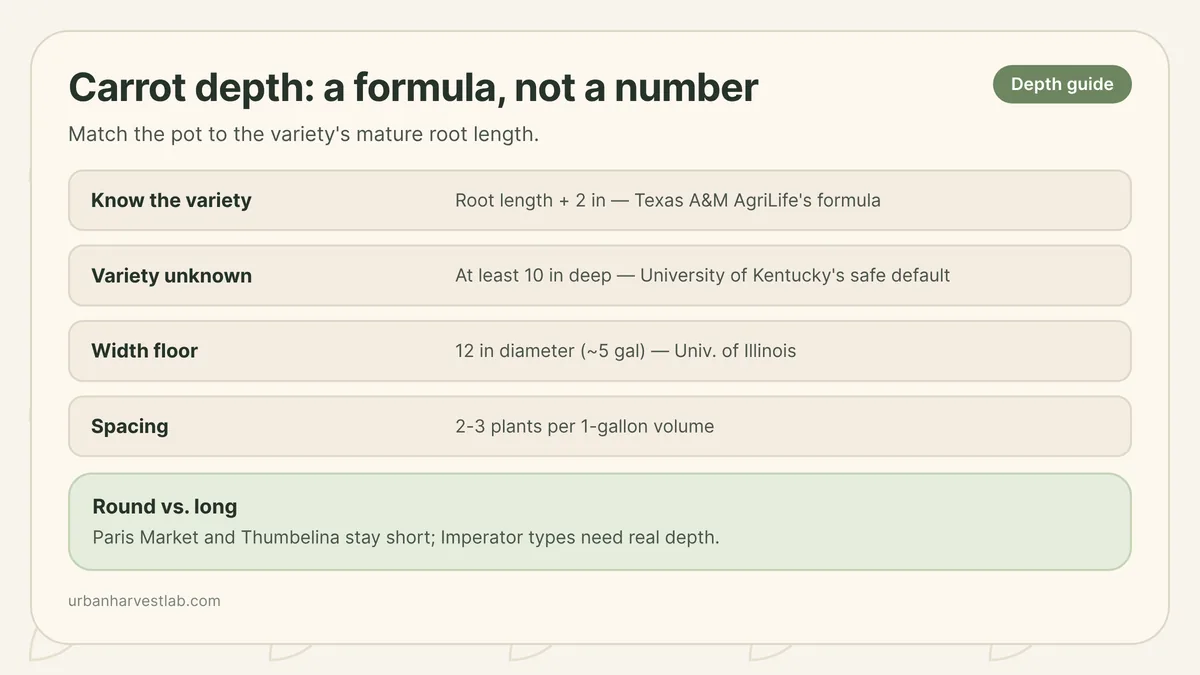
A round baby carrot and a long, tapering Imperator need very different container depths. Match the pot to the variety instead of guessing one number for every carrot.
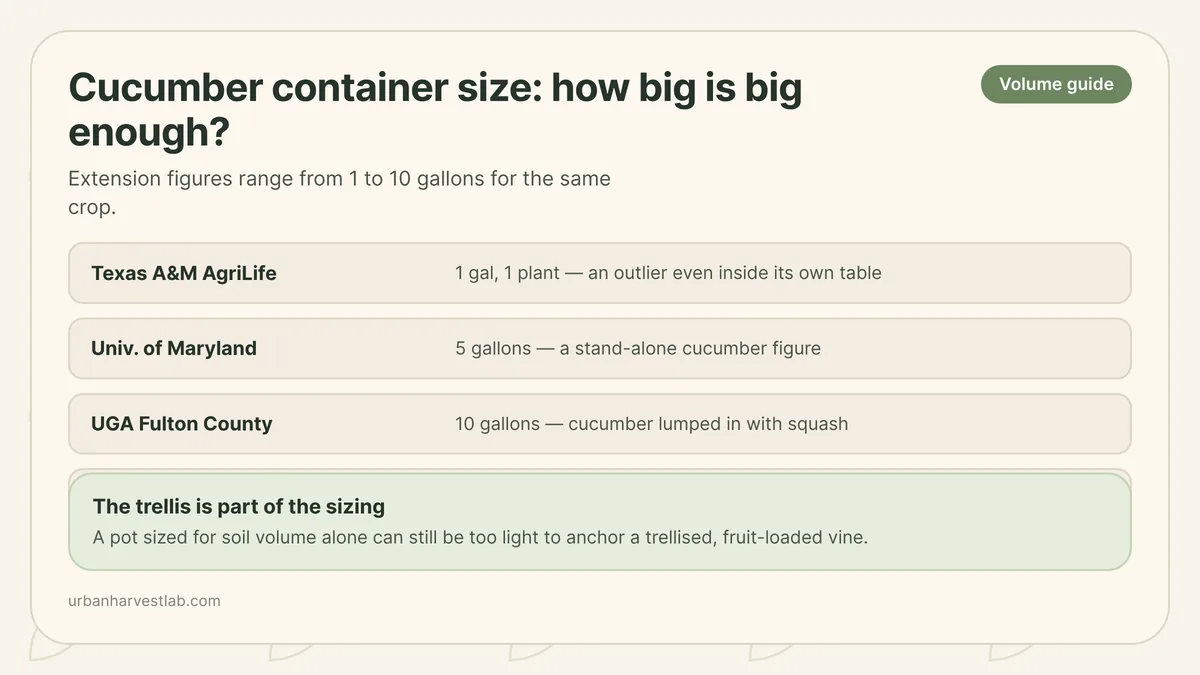
Cucumbers are vines with a fruit load to support, and extension sources disagree sharply on how much container that takes. The safer number is bigger than the smallest one you will find.
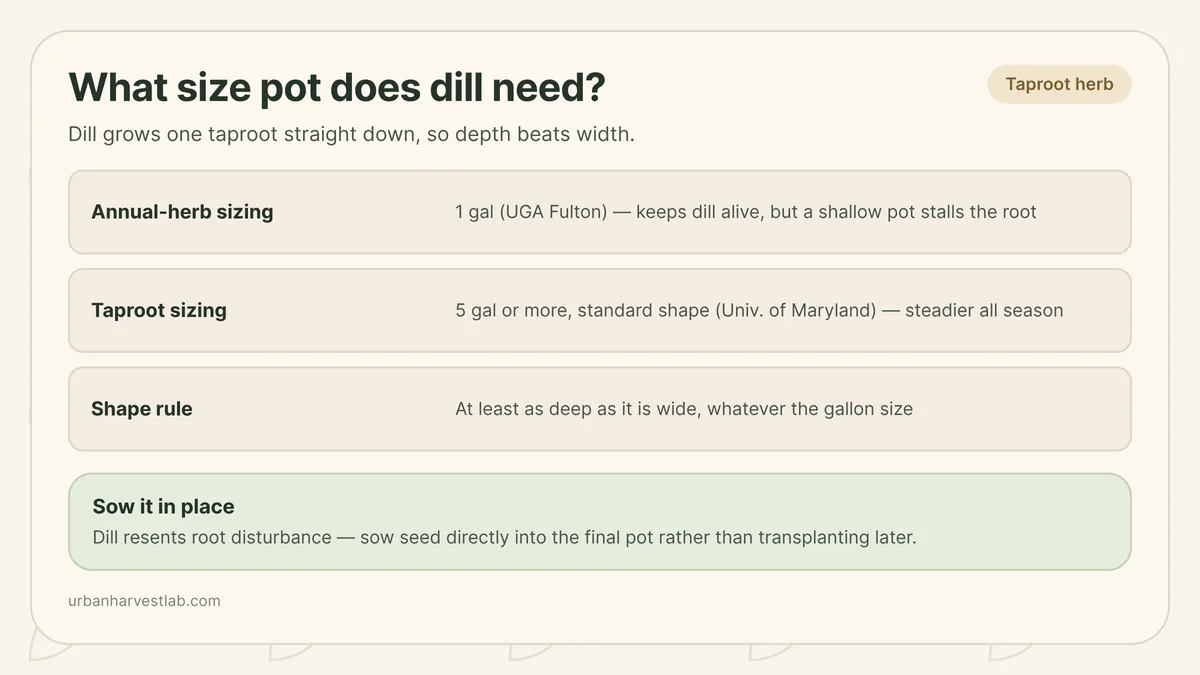
Dill sends a single root straight down, not out, so the usual width-first pot shopping gets this one backwards. Depth is the number that actually matters.
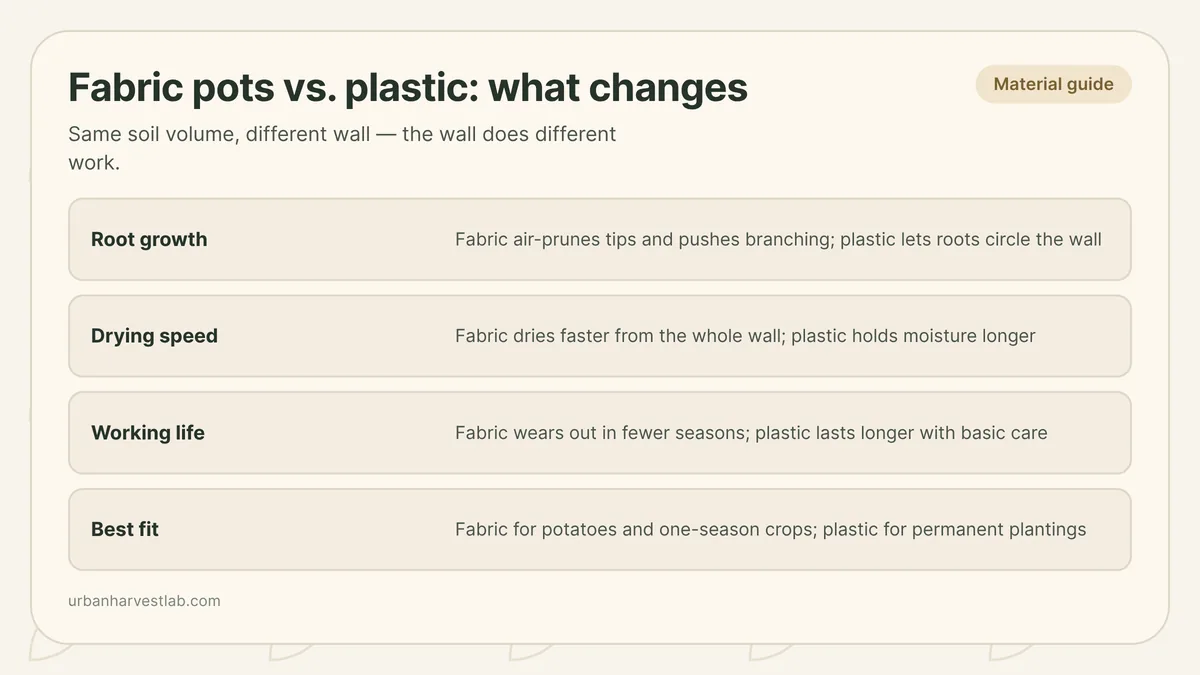
A fabric pot and a plastic pot can hold the same soil volume and still grow different root systems, because the wall itself does different work.
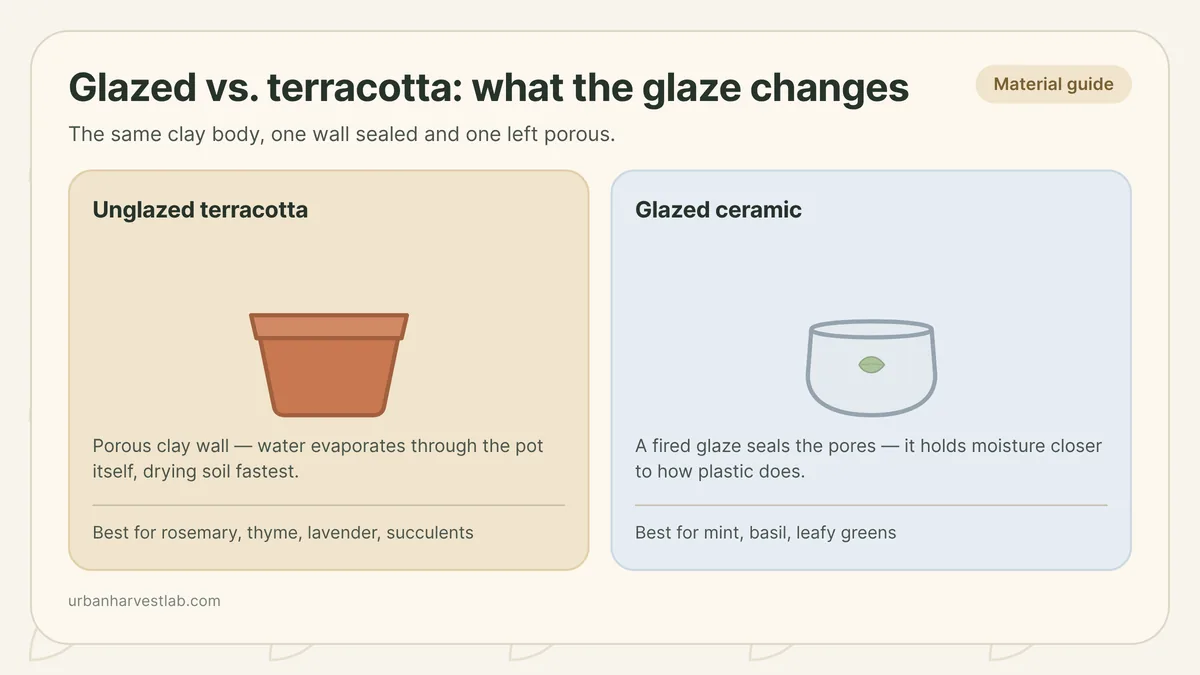
Two pots can look nearly identical and behave completely differently once you fill them with soil. The glaze on one of them is the whole difference, and it changes drying speed, weight, and winter risk all at once.
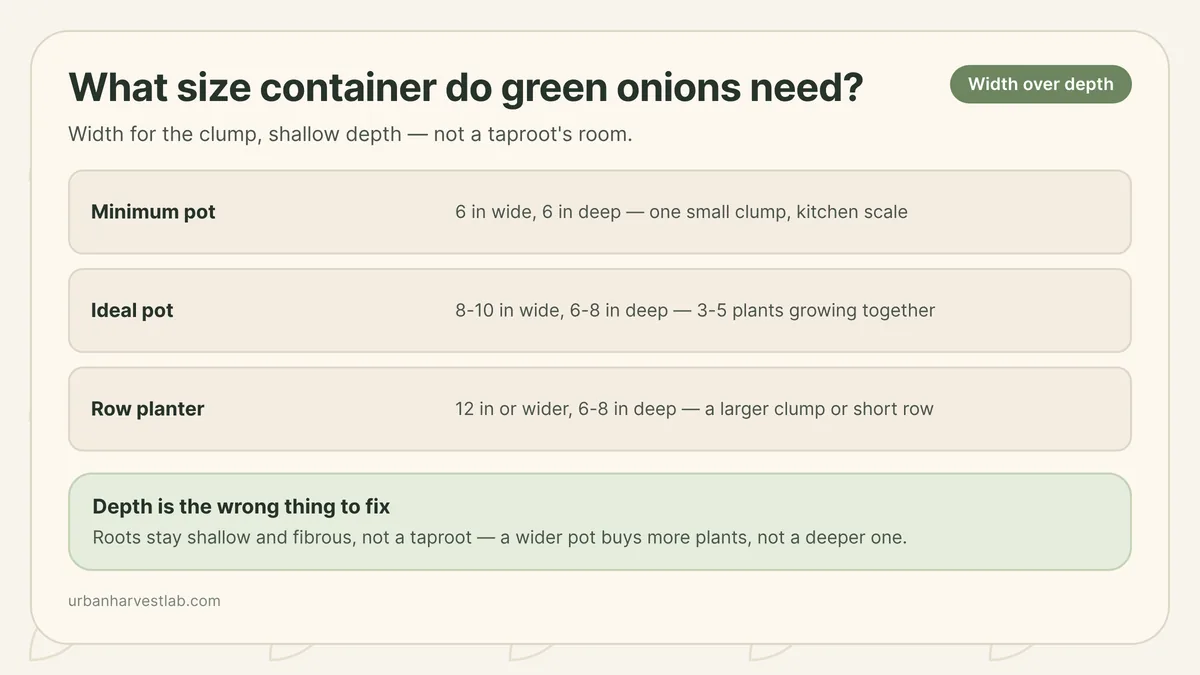
Green onions ask for width and shallow depth, not the deep taproot room parsley or carrots need, so one small container goes further than most growers expect.
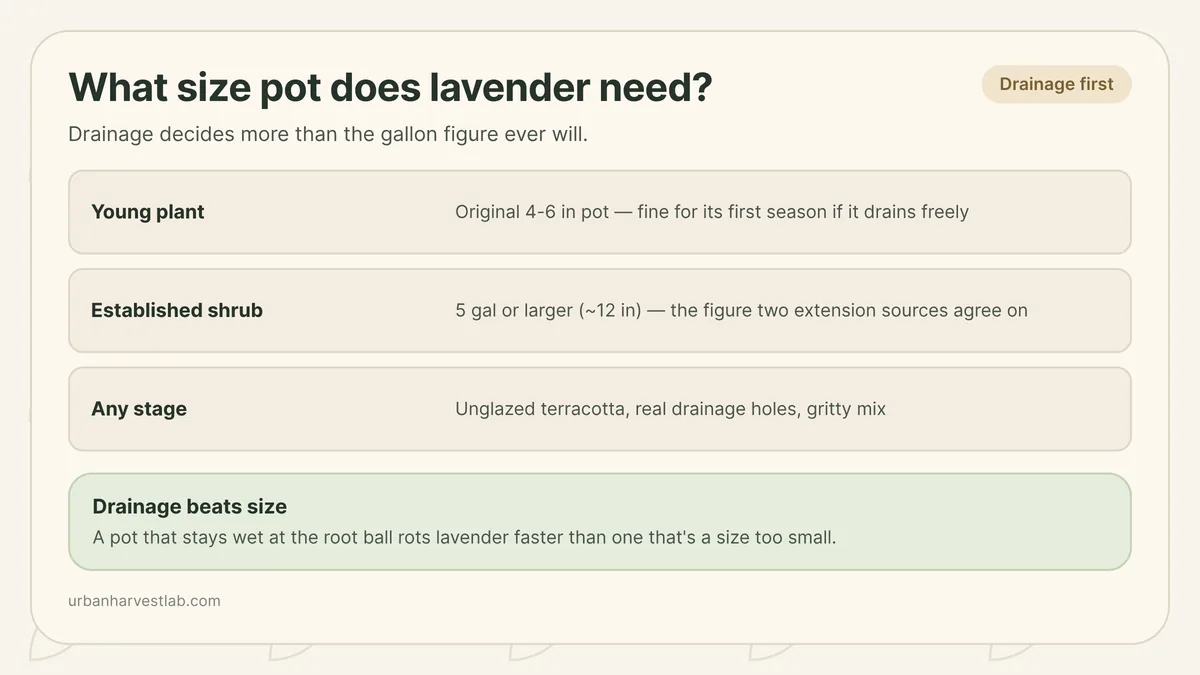
Lavender is Mediterranean and drought-adapted, so the pot that keeps it alive is defined by how fast it drains, not just how big it is.
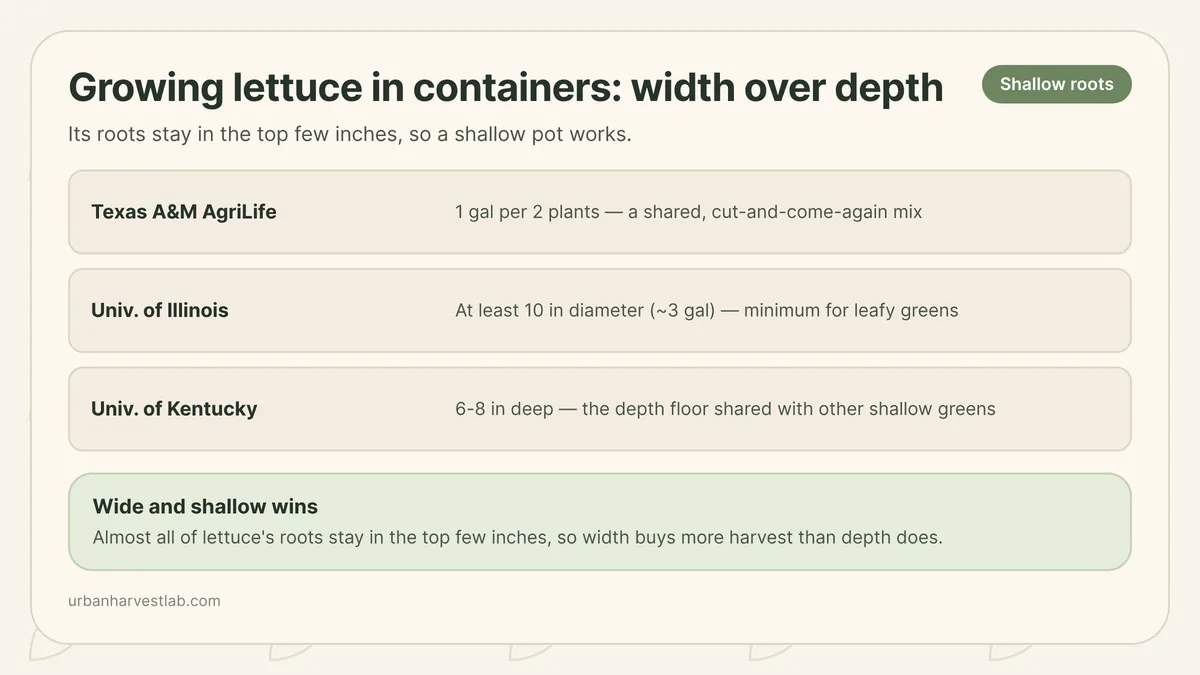
Lettuce keeps its roots in the top few inches of soil, which changes the whole container math. Here is how wide, how deep, and how far apart to space it.
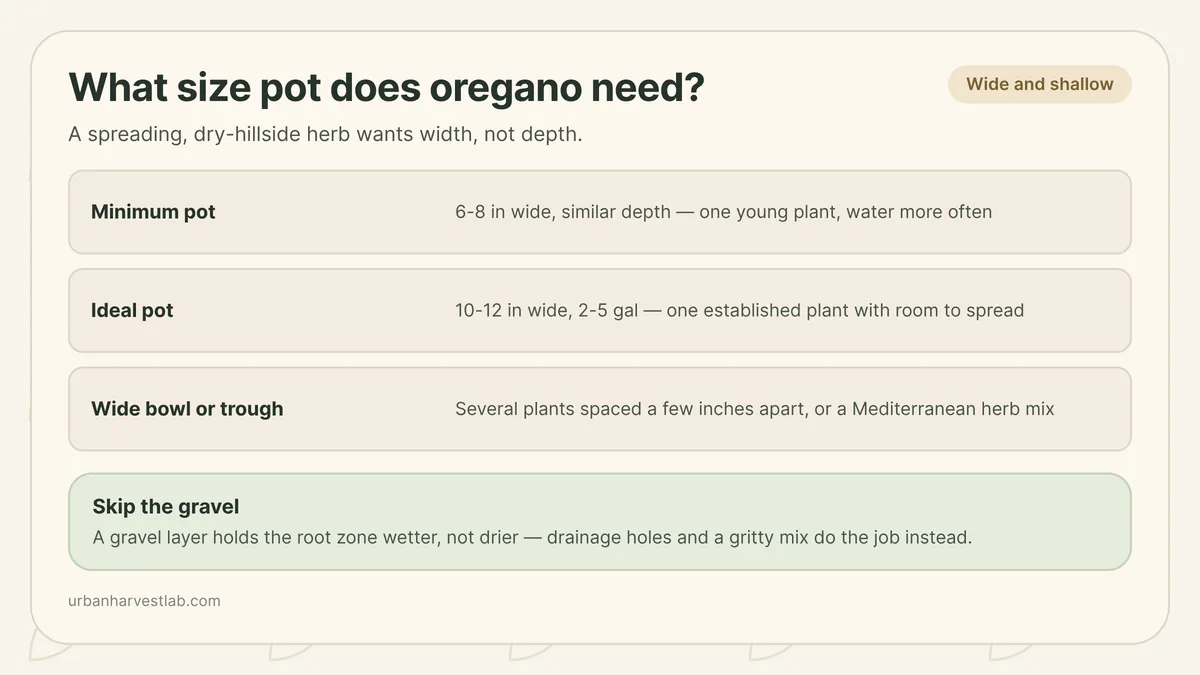
Oregano spreads outward more than it grows downward, so a wide, shallow pot with fast drainage suits it better than a deep, narrow one.
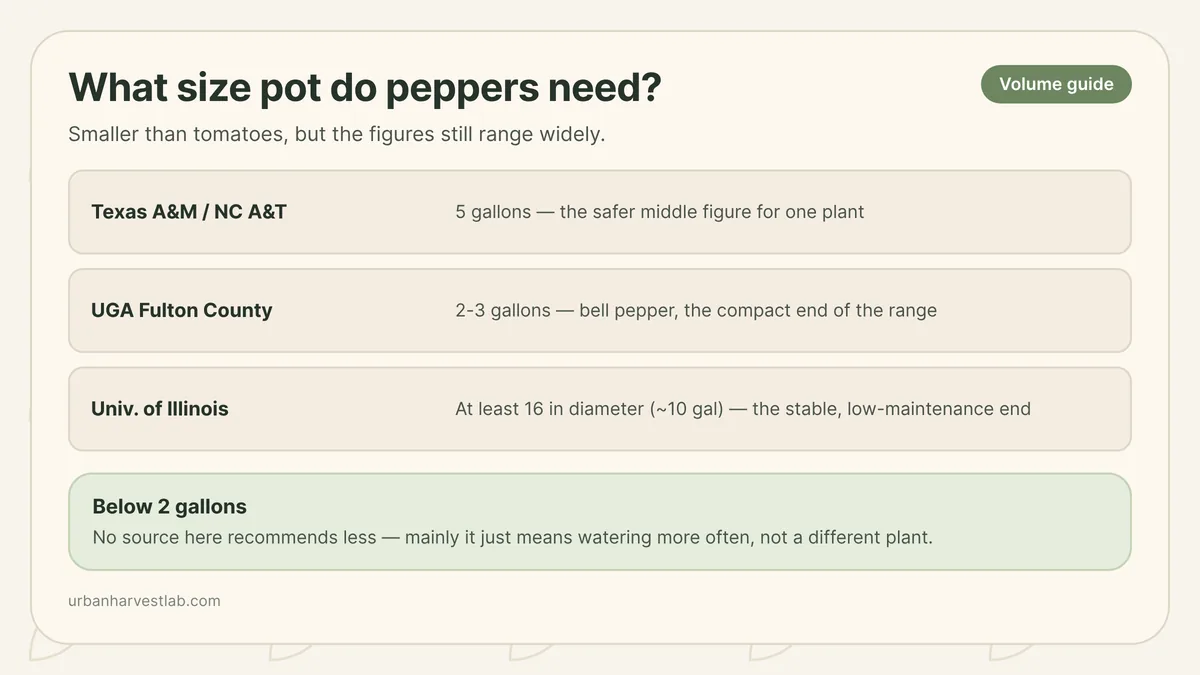
Peppers need less room than tomatoes, but not as little as their compact size suggests. Here is the real range and what moves it.
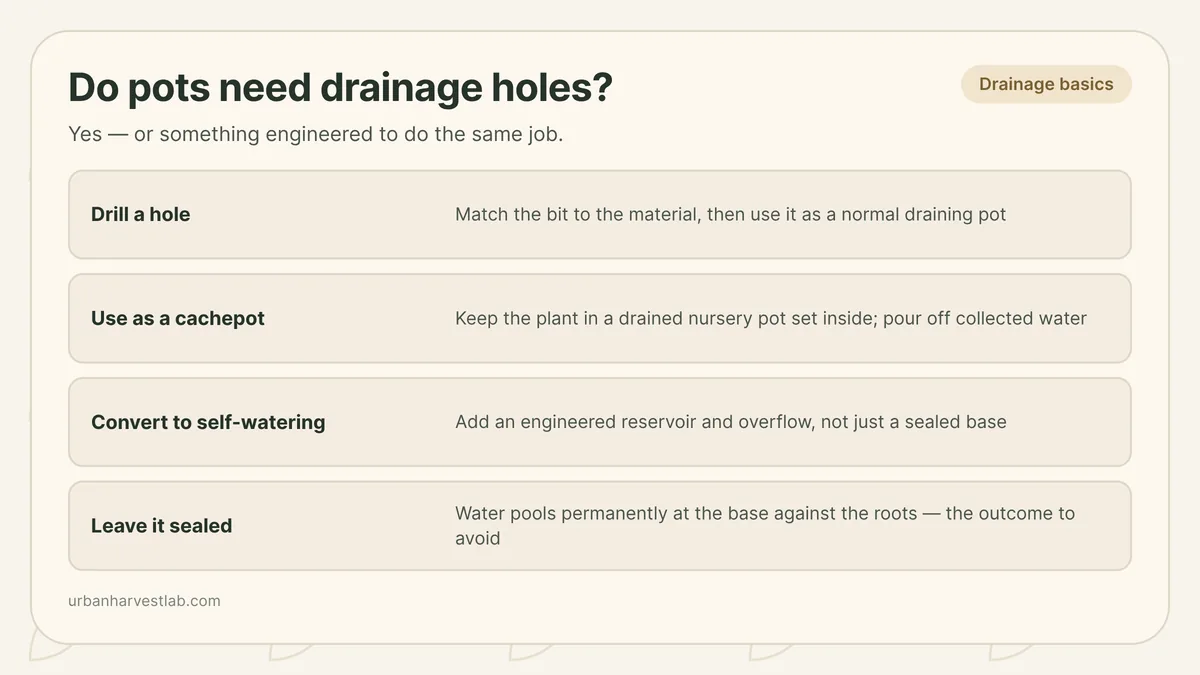
A pot with no drainage hole is not a design quirk you can water around. Here is why that matters, how to drill one safely by material, and how to use a hole-less pot the right way instead.
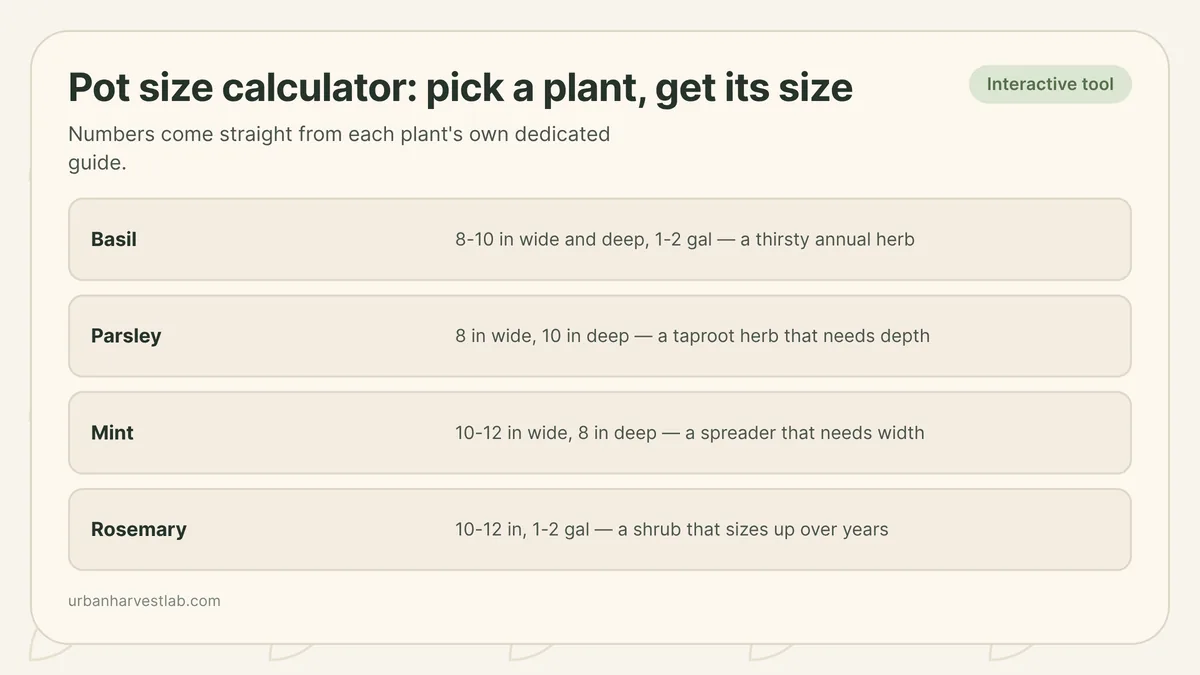
A plant-and-stage picker that pulls its numbers straight from each herb's own dedicated pot-size guide, not a separate estimate.
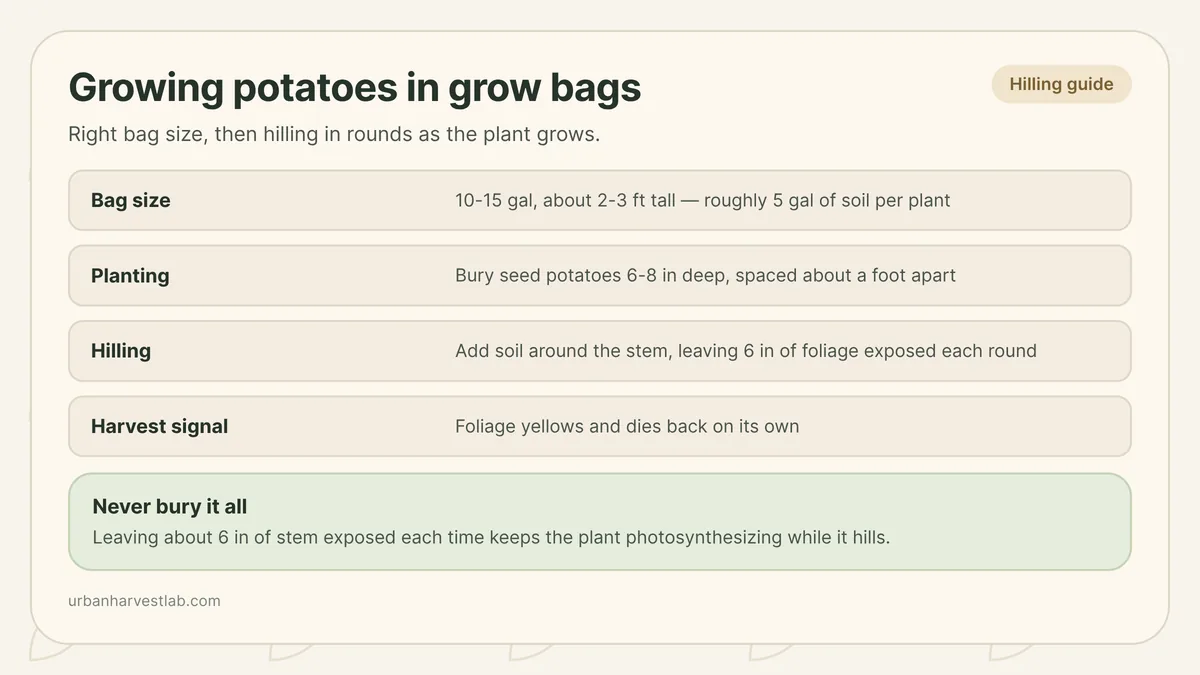
A grow bag turns potato growing into a container job with one extra step: adding soil around the stem as the plant grows so more tubers can form along it.
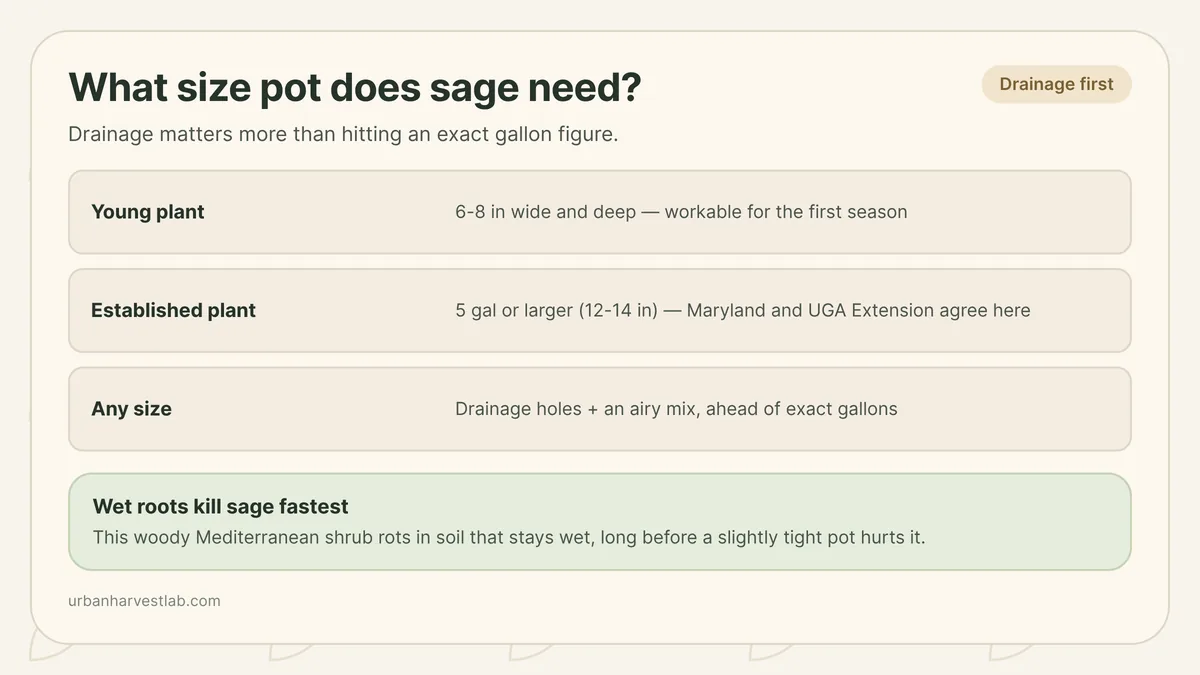
Sage is a woody, drought-tolerant Mediterranean perennial that resents wet feet more than a cramped pot. Here is the container size, material, and drainage that actually keep it alive.
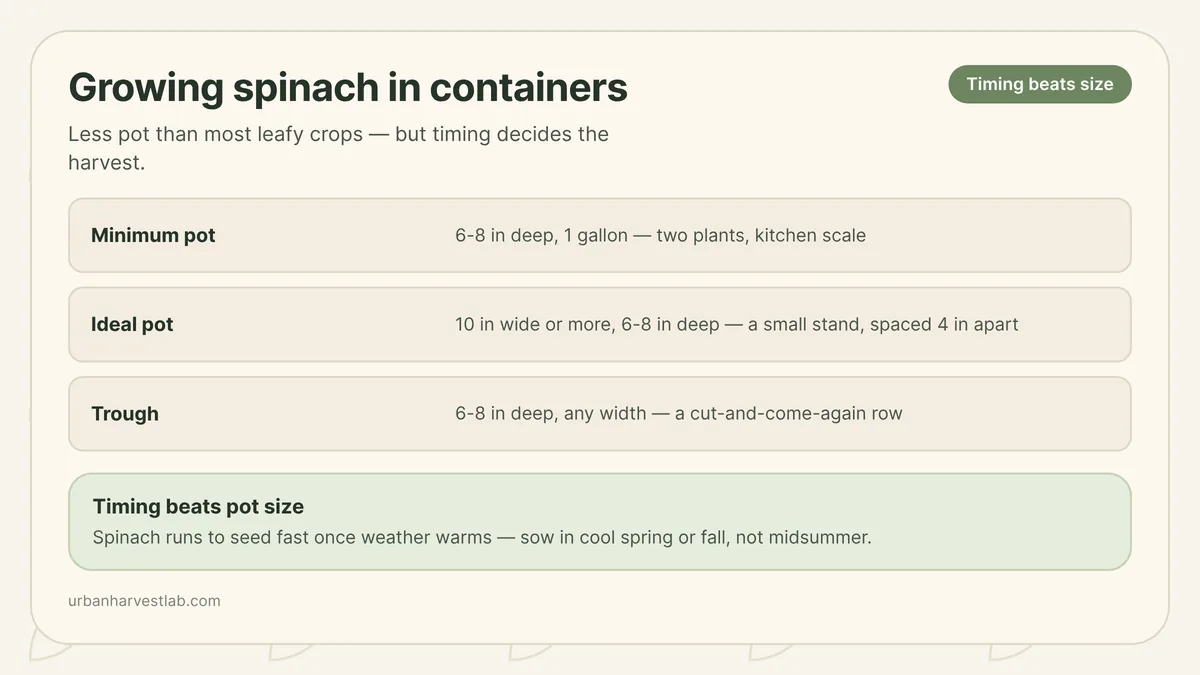
Spinach asks for less pot than most leafy crops, but the container is not the part growers get wrong. Timing it around heat is.
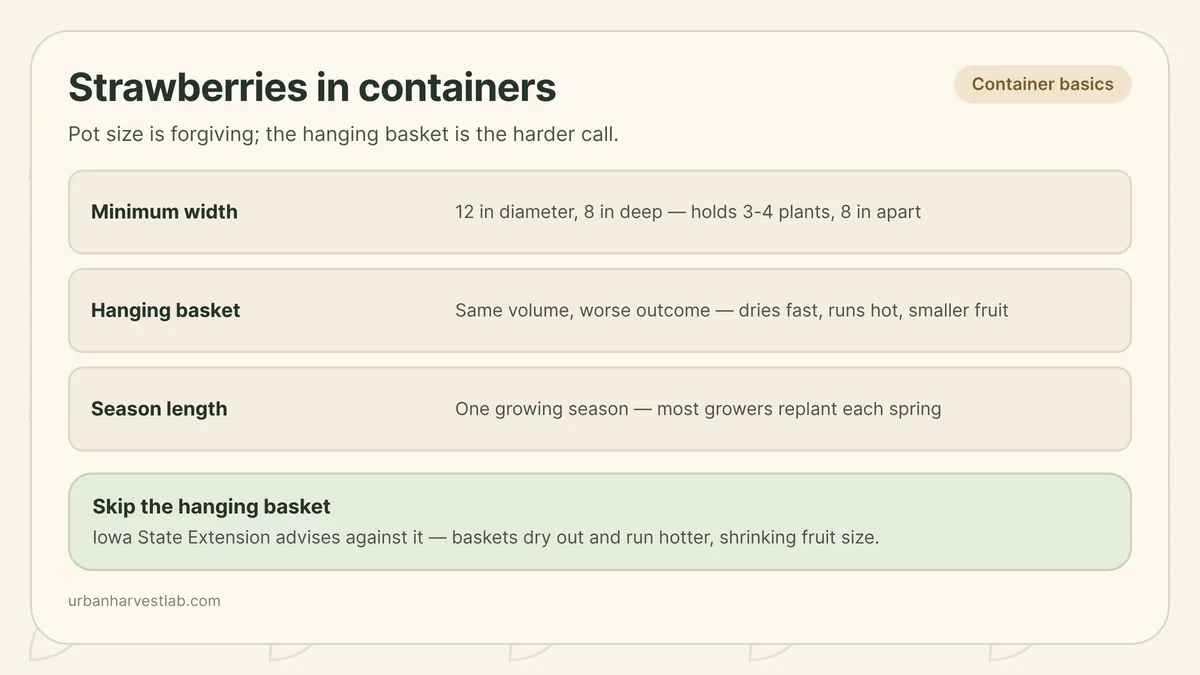
Container strawberries behave differently from garden strawberries: the pot size is forgiving, hanging baskets are the harder option, and most growers treat the planting as a one-season crop.
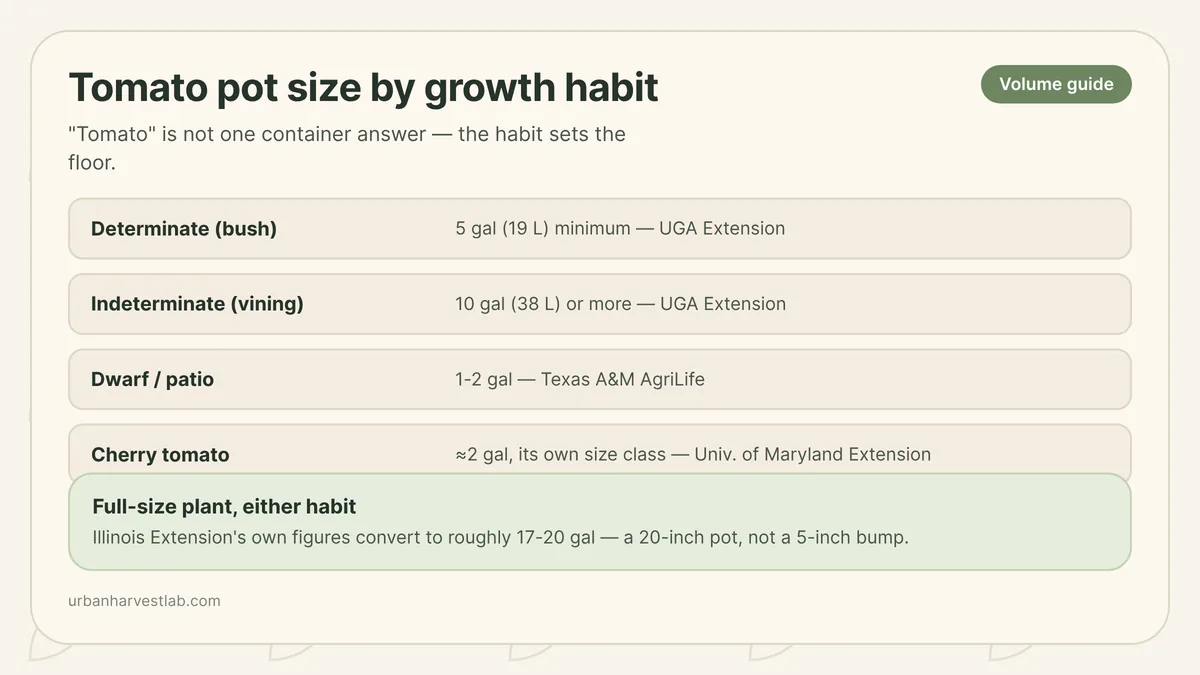
The right container for a tomato depends less on the fruit than on how the plant grows: determinate, indeterminate, or dwarf. Extension figures for the same word vary by more than three times.
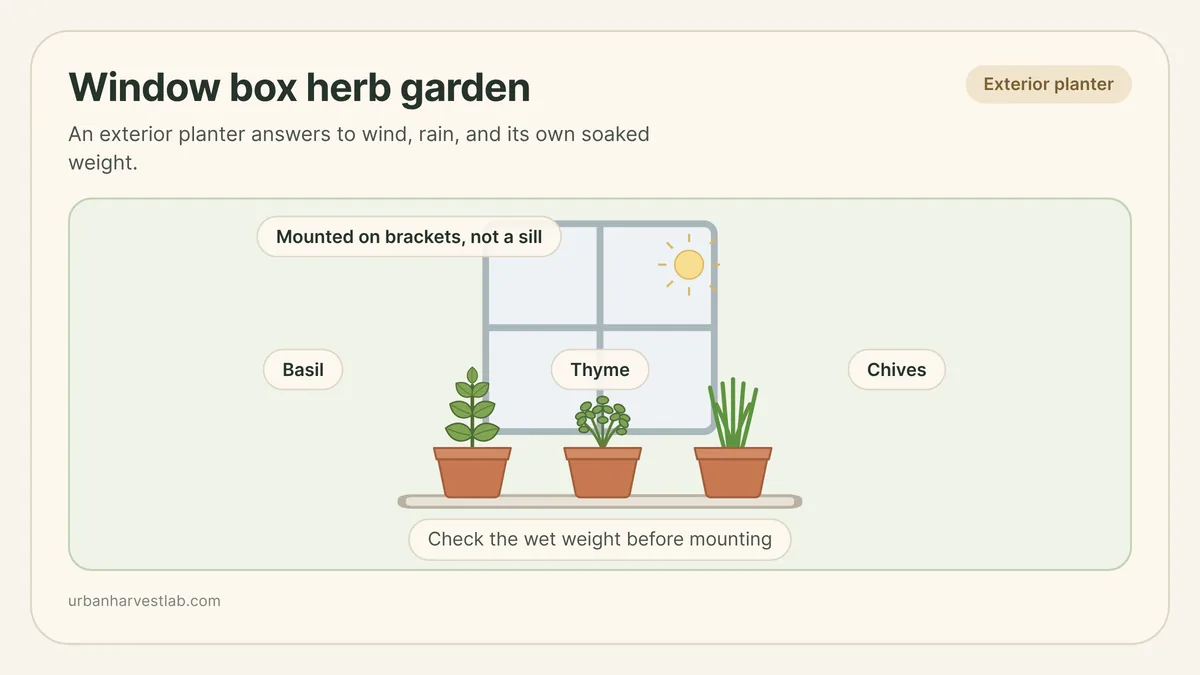
An exterior window box answers to gravity and weather in a way an indoor sill does not. Here is how to size, mount, and plant one without turning it into a hazard.
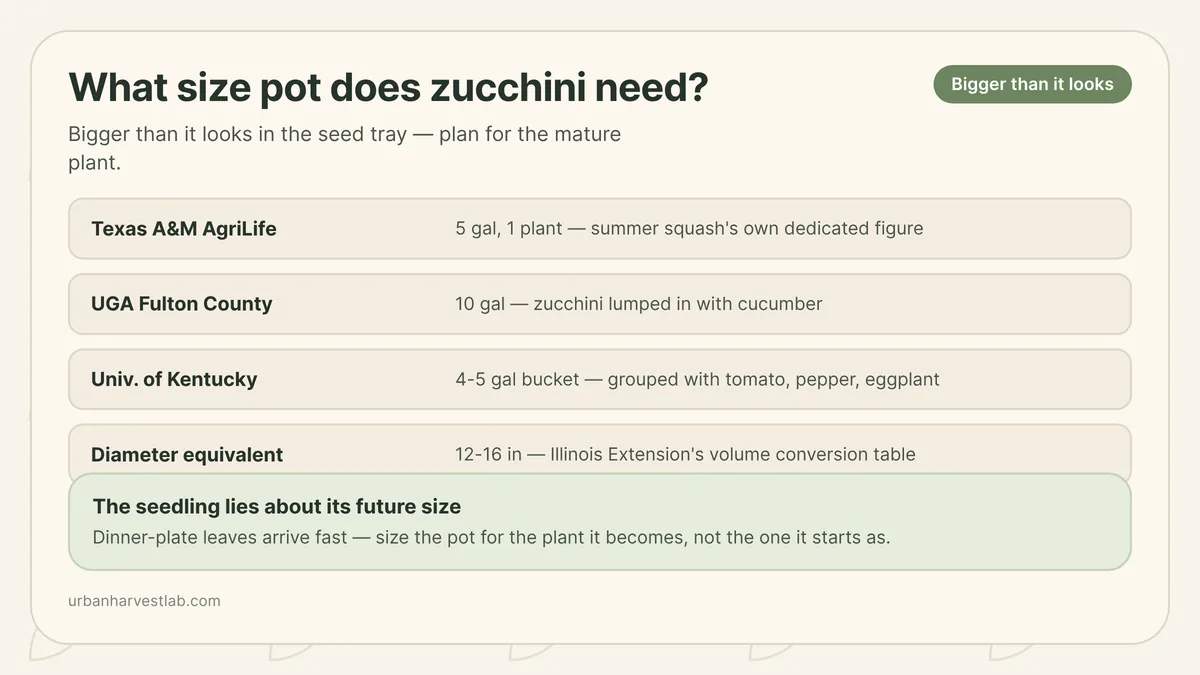
A zucchini seedling looks modest for weeks, then fills a pot almost overnight. The container has to be sized for the plant it becomes, not the one it starts as.
Basil struggles in the small pots it is often sold in. A bigger container holds more water and steadier roots, which is the simplest fix for daily wilting.
Small spaces reward planters that use vertical room and fit a sill or rail. Here are the best types for windowsills, balconies, and walls, and what to check before buying.
Self-watering pots take the guesswork out of watering thirsty herbs, but they are wrong for Mediterranean herbs. Here is how to choose and who they suit.
Chives are one of the easiest herbs to pot because their roots stay compact. A 6 inch pot is enough, and dividing the clump gives you free plants over time.
Cilantro grows a taproot and resents being moved, so depth and direct sowing matter more than width. Get the pot right and you can succession-sow for steady leaves.
Mint is a vigorous spreader that will crowd out anything it shares a pot with. Give it a roomy container of its own, 8 to 12 inches wide, and you will get years of growth.
Parsley has a deeper taproot than most kitchen herbs, so pot depth matters more than width. This guide gives the exact size range, spacing, and drainage to get it right.
Rosemary is a small shrub in disguise. It starts in a modest pot but needs upsizing as it grows woody, plus the sharp drainage every Mediterranean herb demands.
Thyme is the opposite of parsley: its roots spread sideways rather than down, so width and drainage matter more than depth. Here is the right container size.
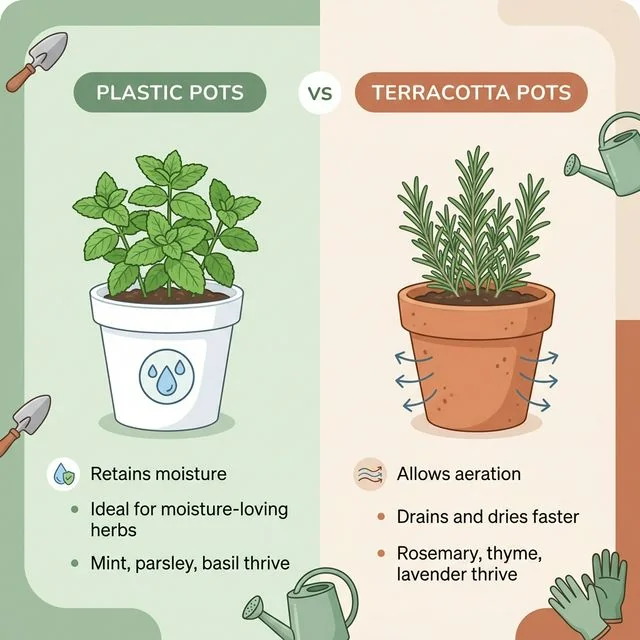
The material of your pot dictates how fast your soil dries out. If you put a thirsty mint plant in unglazed terracotta, you will be watering every single day. If you put rot-prone rosemary in a plastic pot, you must be extremely careful.
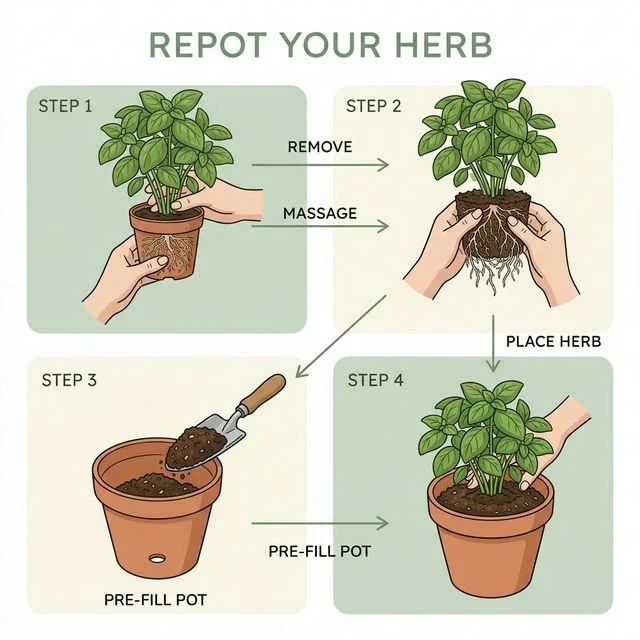
Moving an herb to a bigger pot should trigger a massive growth spurt. If your plants wilt and drop leaves after repotting, you are suffering from transplant shock. Here is how to upgrade your container without stressing the roots.
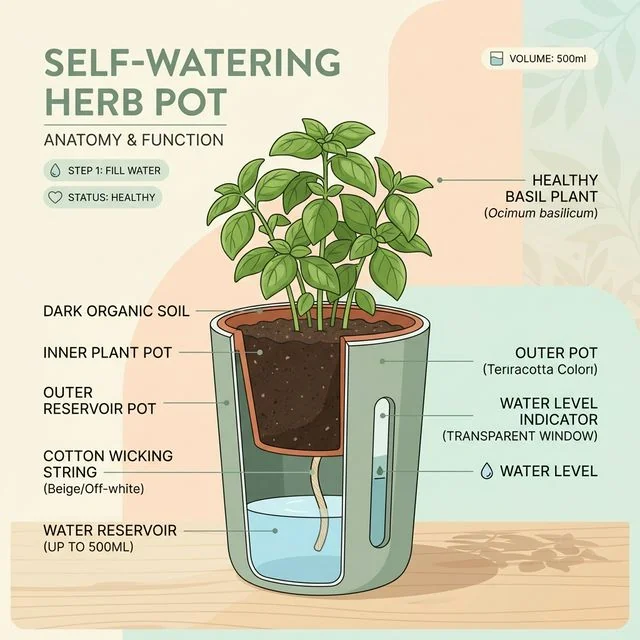
Self-watering pots sound like the holy grail for busy gardeners. While they are fantastic for moisture-loving herbs like mint, they can quickly turn into a swamp of rotting roots for drought-tolerant plants like rosemary.
A practical herb pot size guide for the most common kitchen herbs, with simple size ranges that make container growing easier to read and maintain.
A practical guide to herb containers that explains which pots work best, why drainage matters, and how material changes the way containers dry.
Container size is one of the highest-leverage decisions in small-space gardening. When root volume is too small, every other care task becomes harder.