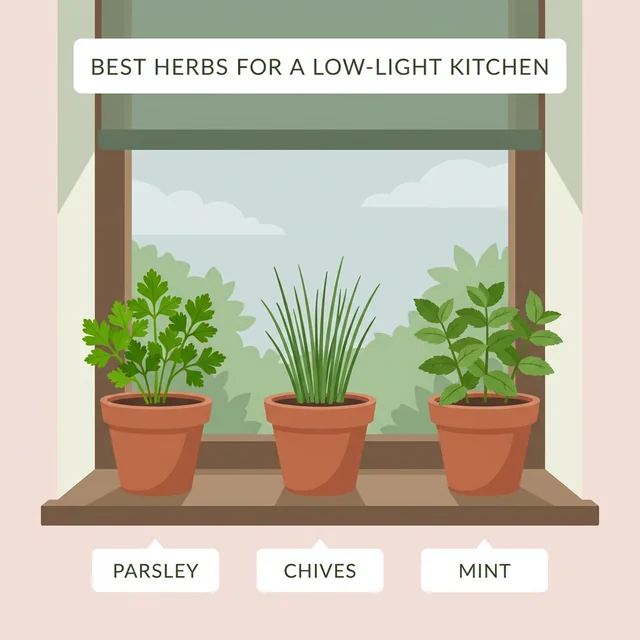
The most reliable herbs for low-light indoor spaces
| Herb | Tolerance for Low Light | Best Kitchen Use | Main Watch-out |
|---|---|---|---|
| Parsley | Excellent | Garnishes, salads, and soups | Taproot needs a slightly deeper pot |
| Chives | Very Good | Eggs, potatoes, and mild onion flavor | Needs regular snipping to encourage new growth |
| Mint | Very Good | Teas, cocktails, and desserts | Grows wildly; must be kept in its own separate pot |
| Lemon Balm | Good | Teas and calming infusions | Can look messy as it stretches towards whatever light exists |
The dream of a lush, overflowing herb garden right on your kitchen counter is deeply embedded in online aesthetics. The reality is often much harder, especially because most kitchens do not receive six to eight hours of direct, unfiltered sunlight. If you have been buying supermarket basil only to watch it collapse a week later on your counter, you do not have a black thumb—you just have the wrong plant for the wrong space.
Before giving up on cooking with fresh herbs, you need to change your roster. Matching the plant to the actual reality of your kitchen is step one. If you want a framework for this, review Small-Space Herb Gardening: Start Here for Apartments, Balconies, and Indoor Setups to see where a low-light station fits into a broader apartment strategy.
Here are the most forgiving, reliable herbs that can tolerate a low-light kitchen or a heavily shaded windowsill.
1. Parsley (Flat-Leaf or Curly)
Parsley is easily the most versatile and durable culinary herb you can grow in a low-light kitchen. Because it naturally grows lower to the ground in its native habitat, it is genetically prepared to deal with partial shade.
- Why it works indoors: While it will grow faster in full sun, it remains perfectly happy and dark green in indirect light. It won’t become excessively “leggy” or stretched like basil does.
- How to manage it: Parsley has a long taproot. Even though the top of the plant might look small, give it a medium-depth container so the roots don’t bind.
2. Chives
Chives are a member of the onion family and are incredibly resilient. They offer a mild, fresh onion/garlic flavor that is perfect for finishing dishes directly on the kitchen counter.
- Why it works indoors: Chives can survive in surprisingly dim spaces. They will produce thinner leaves in low light compared to full sun, but they will stay alive and continue to provide harvests.
- How to manage it: The trick with chives indoors is harvesting. Do not just snip the tips; cut the stems you need about an inch from the soil line. This forces the plant to push up entirely new, healthy growth rather than leaving half-dead tips.
3. Mint
Mint is famous for being an indestructible garden weed. Indoors, that aggressive survival instinct translates into an excellent tolerance for low light.
- Why it works indoors: Mint prefers to spread out rather than grow tall, and it can handle cool, shaded areas far better than Mediterranean herbs.
- How to manage it: Never plant mint in the same pot as your parsley or chives. It will strangle them. Give mint its own dedicated container. Keep the soil evenly moist but never soggy.
What “Low Light” Actually Means for Herbs
It is important to define our terms. If a room is so dark that you need to turn on the overhead lights to read a book at noon, it is too dark for any herb to survive long-term.
For herbs, “low light” means finding a spot directly next to a north-facing window, or placing the plant a few feet away from a brighter, sunnier window. If you are unsure exactly what your window provides, definitely read Can Herbs Grow Indoors Without Direct Sunlight? What to Expect in Real Homes.
Likewise, if you are attempting to build an entire station on a single soft-lit ledge, Windowsill Herb Garden Guide for Low-Light Homes explains the exact container and layout logic you need.
What NOT to Grow in a Low-Light Kitchen
Refusing to grow high-sun herbs in a dark kitchen is the fastest way to become a better indoor gardener. Best Herbs for Small Spaces: What Grows Well in Apartments, Balconies, and Windowsills categorizes these broadly, but here are the specific herbs that will break your heart on a dark counter:
- Basil: It needs blazing heat and direct sun. In low light, it stretches wildly, turns pale yellow, and is quickly attacked by pests.
- Rosemary and Thyme: These Mediterranean natives require blast-furnace sunlight to dry out their soil and keep their leaves thick. Indoors, in dim light, they often succumb to root rot or powdery mildew.
When to Stop Guessing and Use a Grow Light
If your kitchen is simply too dark to keep even parsley alive, you do not have to give up. You just need to change the environment.
A simple under-cabinet LED strip changes everything. Modern LEDs are incredibly cheap, look like normal kitchen lighting, and allow you to grow absolutely whatever you want—even basil. If you are tired of watching plants die in the dark, check out the Best Grow Lights for Herbs: What Actually Matters Before You Buy to see which sleek, low-profile lights hide perfectly under kitchen cabinets.
If your kitchen lacks sun, also read
These guides will help you decide if you can manage with natural light or if it is time to upgrade to a simple grow light.
- Windowsill Herb Garden Guide for Low-Light Homes
- Can Herbs Grow Indoors Without Direct Sunlight? What to Expect in Real Homes
- Best Herbs for Small Spaces: What Grows Well in Apartments, Balconies, and Windowsills
- Best Grow Lights for Herbs: What Actually Matters Before You Buy
- Small-Space Herb Gardening: Start Here for Apartments, Balconies, and Indoor Setups
Common questions
Is it possible to grow basil in a room with no direct sunlight?
It is very difficult. Basil will survive for a few weeks but will become tall, weak, and pale. Without direct sun, you need a grow light for a good basil harvest.
Why are my kitchen herbs dying when the room seems bright to me?
Human eyes automatically adjust to low light, but plants do not. What feels like a "bright" kitchen to you is often deep shade for a sun-loving plant.
Should I water my low-light herbs more often?
No, actually the opposite. In low light, herbs grow slower and use less water. Overwatering is the most common killer of indoor herbs in dim rooms.
Related guides
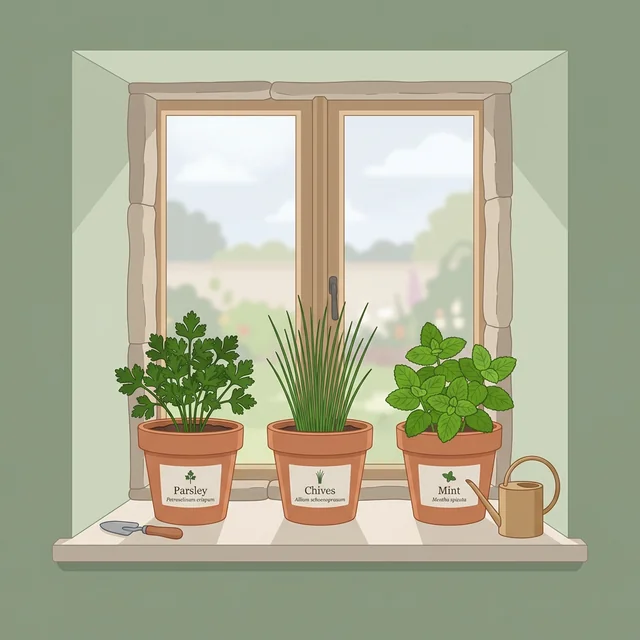
Windowsill Herb Garden Guide for Low-Light Homes
A practical windowsill herb guide for homes that feel bright enough to people but still struggle to keep basil and other herbs compact without extra help.
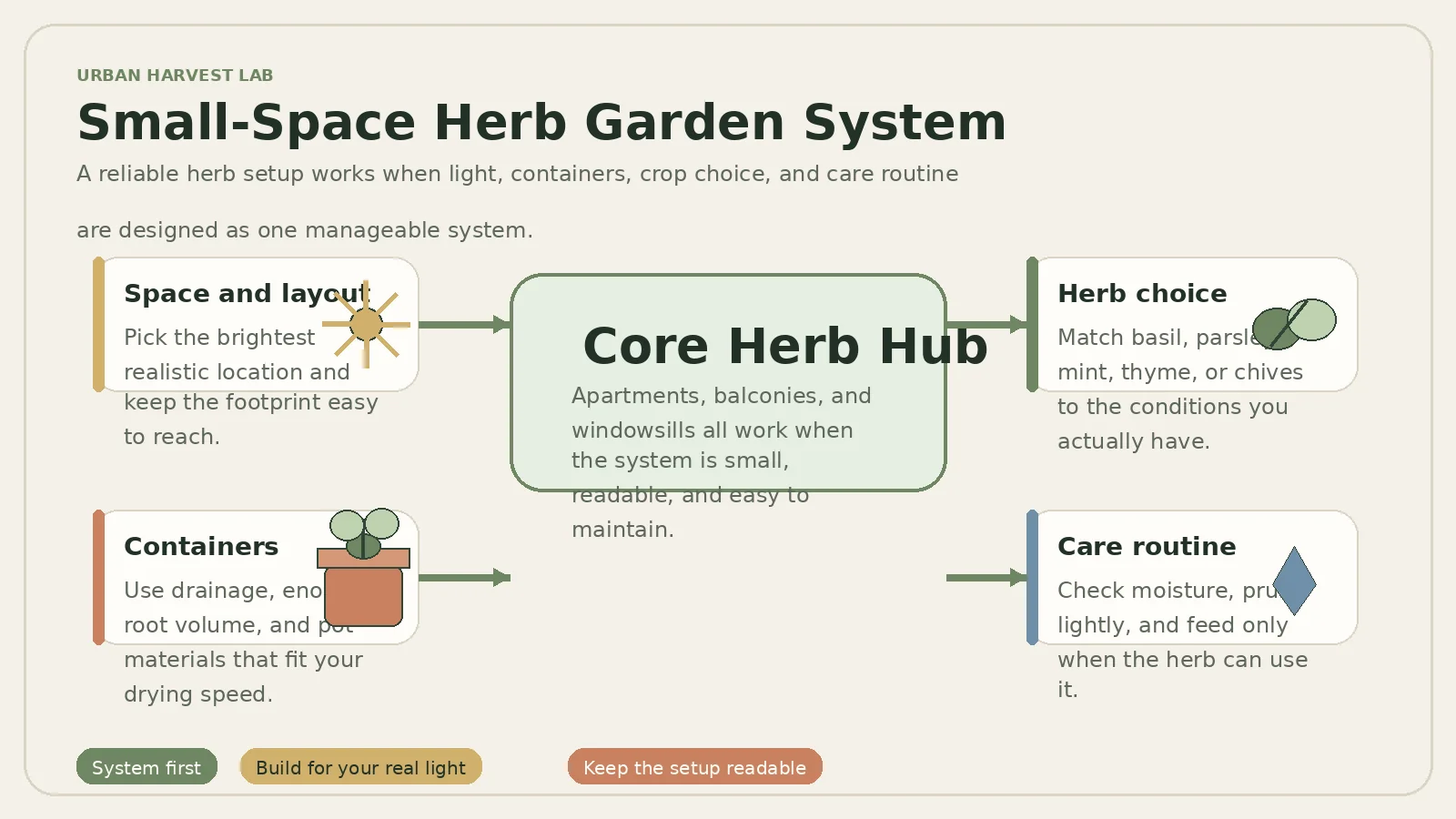
Small-Space Herb Gardening: Start Here for Apartments, Balconies, and Indoor Setups
A navigation hub for apartment, balcony, and indoor herb gardening that connects the core setup, herb selection, light, container, and care guides in the right order.
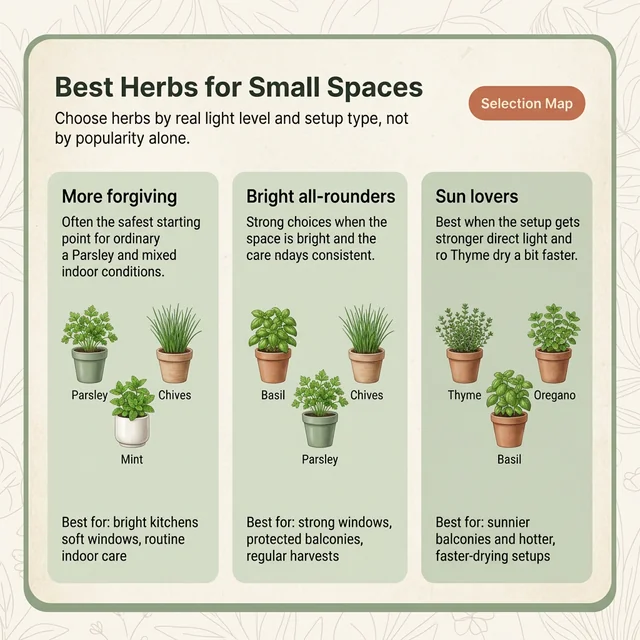
Best Herbs for Small Spaces: What Grows Well in Apartments, Balconies, and Windowsills
A practical guide to the herbs that actually perform well in compact homes, with selection logic for bright windows, balconies, and more forgiving low-space setups.