Troubleshoot the system before you change the inputs.
Symptoms
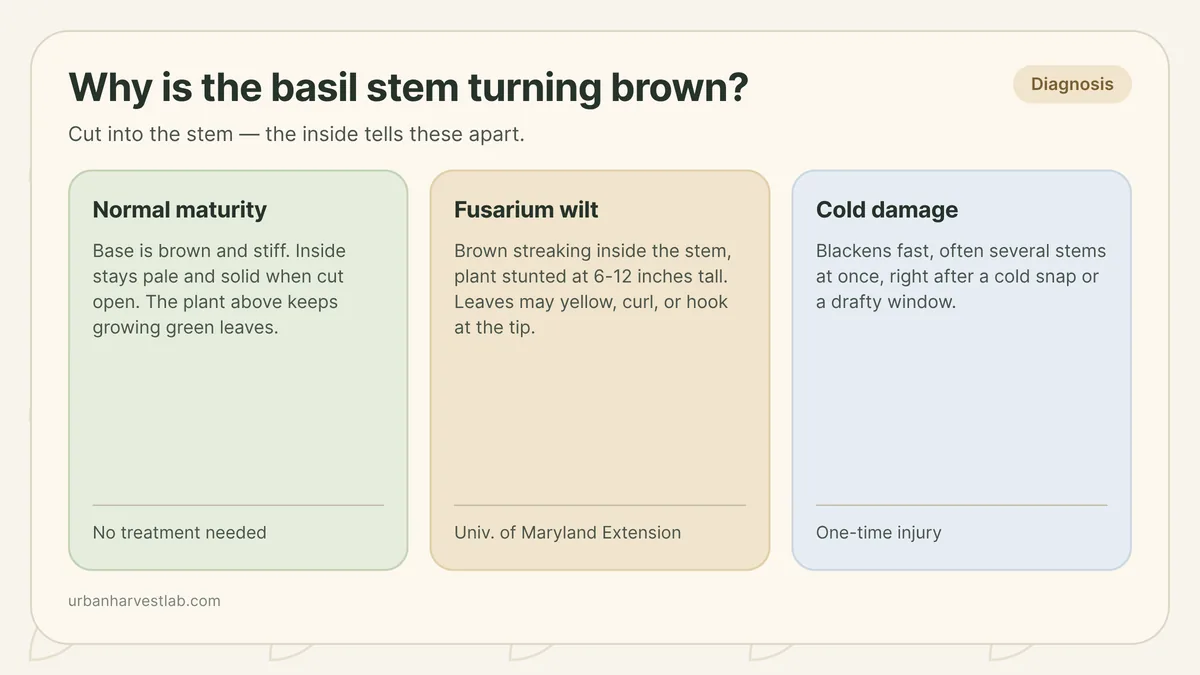
- The base of the main stem is brown or tan and feels stiff or bark-like, while the plant above it keeps producing healthy green leaves.
- A stem section is browning together with stunted growth, yellowing, curling, or a hooked bend near the growing tip.
- A stem, or the whole plant, blackened or went limp right after a cold snap or a drafty window.
Possible causes
- Normal age-related lignification at the base of an established, regularly harvested basil plant.
- Fusarium wilt, which typically appears once the plant is roughly six to twelve inches tall.
- Chilling injury from sudden cold exposure, such as cold glass, a draft, or a temperature drop outdoors.
Quick fixes
- If only the base is woody and growth above it is green and vigorous, keep harvesting as usual; nothing needs treating.
- Slice into the stem where the browning starts. Internal brown streaking, not just surface color, is the sign to treat it as fusarium wilt and remove the plant along with its soil.
- Move basil away from cold windowpanes and drafts. Already-blackened tissue from a cold snap will not recover, but the rest of the plant can if it is kept warmer.
A basil stem that is brown and stiff only at the base, under leaves that are still green and growing, is usually just an older, woodier plant. A stem browning higher up, especially alongside stunted growth or curling leaves, is more likely fusarium wilt, and the way to confirm it is cutting into the stem and looking for streaking inside, not just discoloration on the surface. A stem or whole plant that blackens right after a cold event, usually a cold snap, is a third and separate thing. If the main symptom you are actually seeing is leaves going limp rather than a section of stem changing color, why is my basil wilting indoors? covers that on its own.
If several things seem off with the plant at once, start with the broader common potted herb problems guide before narrowing in on the stem itself.
Just an older, woodier basil plant
The least alarming explanation is also the most common one for a stem that is brown and firm only near the base, while the plant above keeps putting out normal green leaves. As a basil plant ages and gets harvested from repeatedly over a season, the lower part of the main stem thickens and shifts from green to tan or brown, taking on a stiffer, bark-like texture. This is ordinary lignification, the same hardening process that turns a young green shoot on any woody plant into a firmer stem over time, and it is not a disease or a sign that the plant is struggling.
The plant’s behavior above the woody section is the giveaway. If new leaves keep coming, growth stays reasonably full, and nothing about the stem looks streaked or off-color when you nick it, there is nothing to treat. Harvesting basil regularly and cutting just above a leaf node, rather than letting the plant run tall and flower, keeps more of it in soft, actively growing tissue and slows how much of the stem turns woody over a season; leggy basil indoors: is it a light problem or a pruning problem? covers that harvesting habit in more depth.
Cut the stem open: the fusarium discriminator
Basil affected by fusarium wilt grows normally at first, which is exactly why it gets confused with a plant that is simply getting older. University of Maryland Extension found that infected sweet basil plants “usually grow without any symptoms until they are about 8-12 inches tall, at which point they become stunted and begin to wilt.” Clemson HGIC gives a slightly lower range for the same disease, describing plants that reach “six to twelve inches tall, then become stunted and exhibit browning of terminal growth.” Either figure describes a young, actively growing plant that stalls out — not one that has spent months quietly getting woody at the base.
The detail that actually separates fusarium from a plant that is naturally lignifying, dry, or root-rotted is inside the stem, not on its surface. Slice into the lower stem with a clean blade near where the discoloration starts. University of Maryland Extension describes “brown streaks starting on the lower areas of stems and discoloration of the internal stem tissue.” Ordinary woody tissue at the base of an older basil plant does not show that internal streaking; cut into it and the inside stays pale and solid, just firmer than the green stem higher up.
The leaves add a second layer of confirmation. On a fusarium-infected plant, foliage may yellow, malform, and curl, and University of Maryland Extension notes the plant may develop “a shepherd’s crook” — a hooked bend near the growing tip — or drop leaves suddenly. If yellowing is the main thing you are seeing and the stem itself looks otherwise normal, why are basil leaves turning yellow indoors? walks through the other common causes of that on its own.
Only sweet basil is vulnerable to this particular fungus. University of Maryland Extension notes that some specialty basils, including lemon and purple basil, show resistance, so a lemon basil plant growing next to an affected sweet basil is not automatically at the same risk.
Fusarium wilt matters for the pot, not just the plant. University of Maryland Extension states that the fungus’s infective propagules “may persist in the soil for 8-12 years,” which is why a plant with confirmed internal stem streaking is generally not one to try to save. Discard the plant and its growing medium together rather than composting either back into other containers. University of Maryland Extension also notes the fungus is seed-transmitted, so clean growing mix alone is not a guarantee against a repeat; UMD describes a hot-water seed treatment (20 minutes at 133-136°F after a cold-water soak) that reduces the risk but also lowers germination, which is why planting a resistant cultivar is the simpler route for a home grower. If you replant sweet basil in a spot that has hosted an infected plant, resistant cultivars exist — University of Maryland Extension names Aroma-2, Prospera, and Obsession.
A cold snap blackens fast, and more than one stem
Basil is a warm-season annual with very little cold tolerance, and the damage it shows from a cold event looks different from either cause above. Clemson HGIC lists basil among the annual herbs “killed by the first fall frost.” Penn State Extension gives a more specific threshold before that: basil shows leaf discoloration below 40°F.
Speed and scope are what set cold damage apart from the other two. A stem that has been slowly turning woody took weeks or months to get there, and fusarium’s stunting and internal browning build up over days to weeks on a plant that is otherwise still growing. Cold damage happens fast, and it usually hits more than a single stem: a basil plant pressed against a cold windowpane overnight, sitting in a draft from an exterior door, or caught by a sharp temperature drop outdoors can blacken across most of its exposed stems and leaves right after the event. If the plant looked completely normal yesterday and an entire section — top growth included — has gone dark and limp today, cold is the more likely explanation, not a stem-specific disease.
There is no internal streaking to look for with cold damage the way there is with fusarium: the extension sources cited here describe fusarium’s internal browning in detail and publish no cut-stem picture for chilling injury at all, so the cut test rules fusarium in rather than ruling cold in. And because the injury is a one-time event rather than an ongoing infection, moving the plant somewhere warmer stops further damage, even though the tissue that already blackened will not turn green again.
Telling the three apart
| Sign | Normal maturity | Fusarium wilt | Cold damage |
|---|---|---|---|
| Where it starts | Base of the main stem, near the soil | Lower stem, spreading upward as the plant stunts | Anywhere exposed to the cold, often several stems at once |
| Cut the stem open | Pale, solid tissue inside | Brown streaking inside the stem | No distinct brown streak against healthy tissue |
| Plant stage | Any age, more common on plants grown for months | Usually 6-12 inches tall and just starting to stunt | Any size; tied to a specific cold event |
| Leaves elsewhere | Green and productive above the woody section | Yellowing, malformed, curling, or a shepherd’s crook bend | Blacken or go limp alongside the stem |
| Speed | Gradual, over weeks to months | Gradual stunting over days to weeks | Sudden; tied to a specific cold event |
Common mistakes
- Assuming any brown stem is disease and pulling a plant that only has a normal woody base.
- Judging fusarium by outside color alone instead of cutting the stem open to check for internal streaking.
- Reusing soil from a plant with confirmed internal stem browning in another pot.
- Waiting to see if a cold-blackened stem “comes back,” instead of moving the plant and letting new growth take over.
- Treating a fusarium-stunted plant with more water or fertilizer, which does not address a soil-borne fungal infection.
Sources
Diagnosing a different basil symptom?
The stem is the focus here. These guides cover the leaves, growth habit, and general troubleshooting.
Common questions
Why is my basil stem turning brown and woody?
Most often it is just age. As a basil plant grows and gets harvested repeatedly, the lower part of its main stem thickens and turns from green to tan or brown, developing a firmer, bark-like texture. That is normal for the species and is not something to treat, as long as the plant above the woody section is still producing healthy green leaves.
How do I know if a brown basil stem is fusarium wilt instead of just ageing?
Cut into the stem near where the browning starts. Ordinary woody tissue is pale and solid inside. Fusarium wilt shows brown streaks in the internal stem tissue, usually alongside a plant that stopped growing normally and started wilting once it reached roughly six to twelve inches tall, rather than a plant that has simply gotten older over months.
Can I save a basil plant with fusarium wilt?
No. Once internal stem streaking is confirmed, discard the plant rather than trying to treat it. The fungus behind it can persist in soil for years, so the growing medium should go with the plant rather than being reused or added to other containers.
My basil stem turned black overnight. Is that fusarium?
Probably not. Fusarium wilt develops gradually over days to weeks on a growing plant. A stem or whole plant that blackens right after a cold event, especially a cold snap, a drafty window, or contact with cold glass, points to chilling injury instead, which is a one-time event rather than an ongoing infection.
Related guides
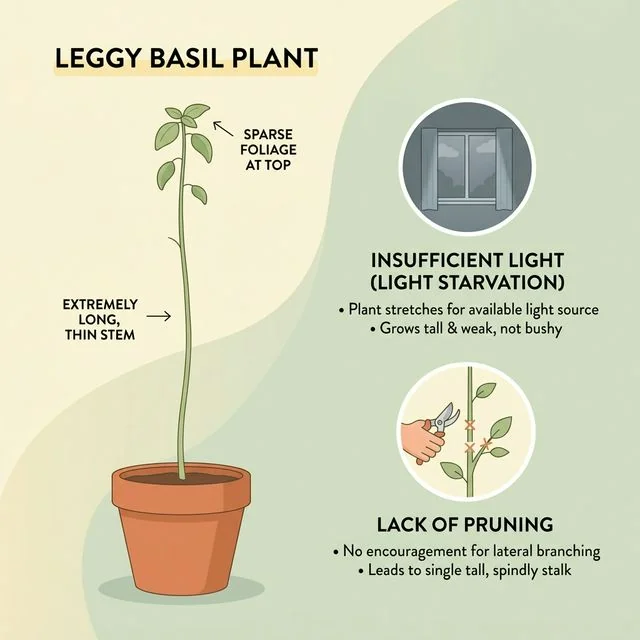
Leggy basil indoors: light problem or pruning problem?
A bushy, compact basil plant is the goal of every gardener. If your plant is growing into a ridiculously tall, flimsy vine with only a few leaves at the top, you have 'leggy' basil. Here is how to diagnose and fix it.
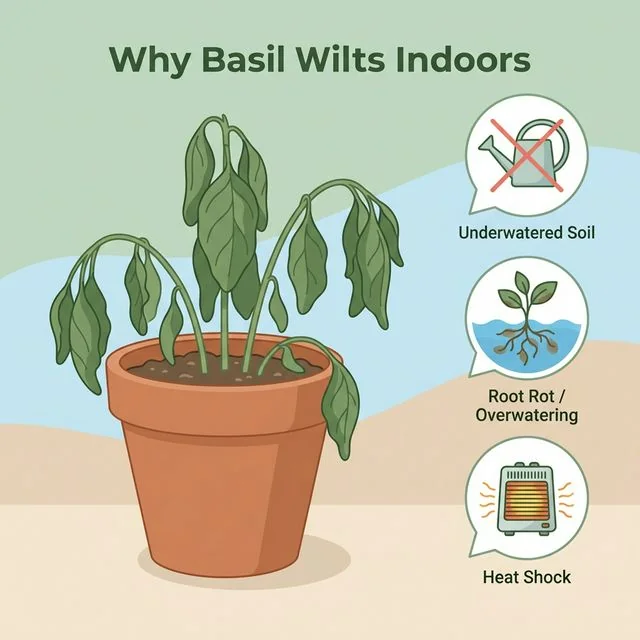
Why is my basil wilting indoors? Stop the droop
Basil is famous for being dramatic. If your plant suddenly wilts into a sad green puddle, don't panic. Here is exactly how to diagnose the droop and revive it.
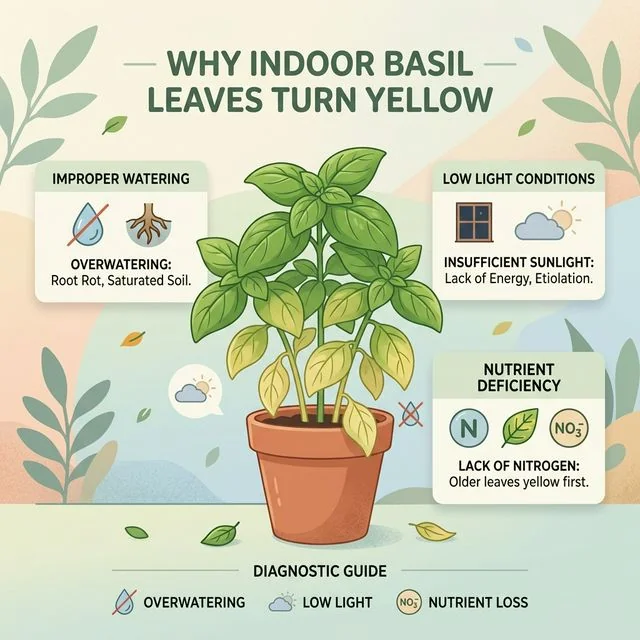
Why are basil leaves turning yellow indoors?
Yellow basil rarely has a single universal cause. The pattern of yellowing, the growing medium, and the recent care routine usually tell the story.