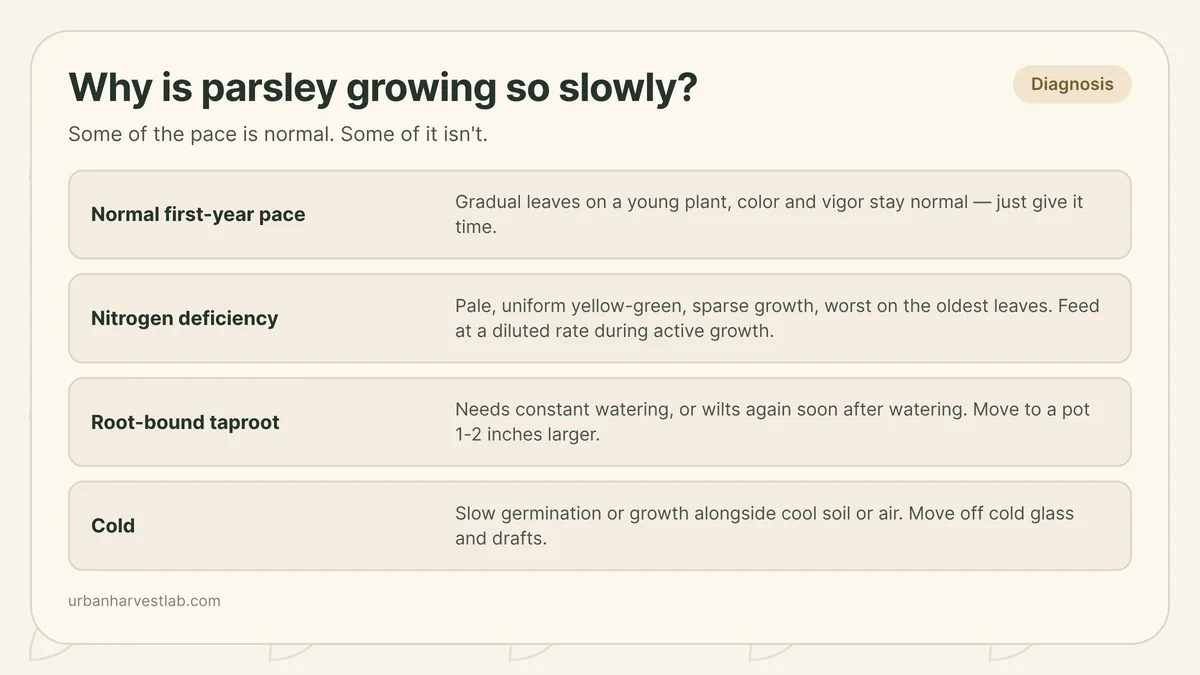
Troubleshoot the system before you change the inputs.
Symptoms
- New leaves come in gradually on a young plant, without pale color or wilting.
- Leaves are pale, uniformly yellow-green, and undersized, with the oldest leaves affected first.
- The plant needs watering constantly or wilts again soon after being watered, and growth has stalled since it was potted.
Possible causes
- Parsley is a biennial with naturally slow seed germination and a gradual first-year growth habit, not a fault.
- Nitrogen deficiency is limiting new leaf production, and it shows up on the oldest leaves first because nitrogen moves to new growth.
- The taproot has filled a pot that is too shallow and become root-bound.
- Cold soil or cold air is slowing germination and everyday growth.
Quick fixes
- Check the plant's age and sowing date against parsley's normal first-year pace before changing anything.
- Slide the rootball out to check for a solid mass of roots, and move up to a deeper pot if the taproot is cramped, before assuming it needs feeding.
- If the roots check out and the pattern still matches nitrogen, feed at a diluted rate during the growing season and judge success by the next flush of new growth.
- Move the plant off a cold windowsill or unheated balcony and keep the soil out of cold drafts.
Parsley growing slowly: what to check
| Cause | What you will see | What to do |
|---|---|---|
| Normal first-year pace | Gradual leaf growth on a young plant; color and vigor otherwise normal | Give it time; compare against parsley's biennial schedule |
| Nitrogen deficiency | Pale, uniform yellow-green, sparse new growth, oldest leaves worst | Feed at a diluted rate during active growth |
| Root-bound taproot | Needs constant watering, wilts soon after watering, growth stalled since potting | Check the rootball, move to a deeper pot |
| Cold | Slow germination or slow growth alongside cool soil or air | Move somewhere warmer, off cold glass or drafts |
Parsley is naturally one of the slower kitchen herbs: it is a biennial that grows leaves gradually in its first year, and its seed is slow to germinate to begin with. That baseline pace is not a problem, but growth that has stalled well past what a young plant should be doing usually comes down to one of three things: nitrogen deficiency, a taproot that has outgrown a too-shallow pot, or cold. Working through them in that order settles which one applies before you spend time or fertilizer on the wrong fix.
If parsley is also yellowing, wilting, or showing other symptoms at the same time as growing slowly, the common potted herb problems guide walks through light, root stress, and container issues in a fixed order that is worth running through alongside the causes below.
Some of this is just how parsley grows
Clemson Cooperative Extension describes parsley as a biennial, “producing leaves the first year and flowers the next,” and notes that its seed “is slow to germinate” compared with most other kitchen herbs. Put those two facts together and a young parsley plant is supposed to look unhurried: modest leaf output in its first months, with the visible burst of growth arriving later, not right after sowing or transplanting.
This matters because it is easy to mistake ordinary first-year pace for a stalled plant and start changing things that were not wrong. Before treating slow growth as a symptom, check what stage the plant is actually at. A parsley plant a few weeks past germination that is small but healthy-colored, with no wilting and no pale new growth, is very likely on schedule rather than in trouble. Clemson also lists parsley’s preference as light shade with rich, moist soil, a gentler light requirement than the “sunny for at least six hours each day” that Clemson gives as the general rule for most herbs — so a spot that would leave basil leggy can still suit parsley fine.
Nitrogen deficiency: pale, sparse, and worst on old leaves
Once a plant is past the point where slow first-year growth is a reasonable explanation, nitrogen deficiency is the next thing to rule out — but check the roots before reaching for fertilizer. UC Integrated Pest Management’s caveat on nutrient symptoms is direct: “Deficiency symptoms commonly result from adverse soil conditions and anything that makes roots unhealthy,” so a root-bound or waterlogged parsley plant can show every sign of hunger without actually being short on nitrogen. Slide the rootball out first (the root-bound section below covers what to look for); if it comes out fine, the deficiency picture UC IPM describes is foliage that turns “uniformly pale green to yellowish” and stays undersized on new growth, worst on parsley’s oldest leaves since nitrogen moves within the plant toward whatever is growing.
If the pattern matches and the roots check out, Clemson Cooperative Extension’s houseplant guidance gives three workable feeding rhythms: label rate every two to three months, about one-tenth the recommended rate at every watering through the growing season, or a full dose every seventh watering — and no fertilizer at all while the plant is dormant in winter. Clemson’s caution runs the other way too: very fertile soil tends to produce lush leaves that lack flavor, so more fertilizer than parsley needs is its own kind of mistake, not a safety margin.
Root-bound in a pot that is too shallow
Parsley’s taproot needs more depth than most people give it credit for, and a plant whose roots have filled a shallow pot slows down for a reason that looks nothing like a nutrient problem. The two signs that matter most for a deep-rooted plant like parsley are a plant that “requires frequent watering or wilts shortly after watering,” per Clemson Cooperative Extension, even in a pot that should hold moisture for days — the full list of root-bound signs, including what the roots themselves look like once you slide the plant out, is in signs your potted herb is root bound.
If those signs match, the fix is a deeper container rather than a feeding schedule. Parsley’s pot size guide covers the depth and diameter parsley’s taproot actually needs, and repotting herbs without shock covers how to move a rootbound plant up a size during its active growing season without stalling it further — Clemson’s guidance is to repot “only as needed during spring and summer while the plant is actively growing,” not a plant that is dormant or about to flower. If watering itself feels unpredictable once the plant is in the right pot, how often to water parsley covers the evenly-moist routine parsley’s taproot wants.
Cold slows it down at every stage
Cold matters most while parsley is still germinating. UC IPM’s damping-off guidance describes seedlings growing slowly in cold, wet soil, and puts 65-70°F as the range most seeds need to germinate promptly — a windowsill that gets genuinely cold at night, or a pot sitting against cold glass or in a drafty spot, keeps the soil well below that and can leave a parsley seedling idling even when light and feeding are otherwise fine. If a parsley plant is sluggish specifically through a cold spell, or was sown outdoors early in the season, warmth is worth checking before anything else on this list — move the pot away from cold glass and drafts, and give it time once conditions warm up rather than assuming something else has gone wrong.
Common mistakes
Feeding a plant that is simply young. If growth is gradual but the color is even and healthy, more fertilizer will not speed up a biennial’s first-year pace, and overdoing it pushes soft, less flavorful leaves instead.
Blaming the pot before checking the roots. A pot can look like the right size from the outside while the taproot underneath is already circling the bottom; slide the rootball out and look rather than guessing from the container’s dimensions.
Treating every yellowing leaf as the same problem. Nitrogen deficiency, overwatering, and normal aging can all leave older parsley leaves looking tired, and the pattern across the whole plant, not one leaf, is what tells them apart.
Judging a feeding fix by whether the already-pale leaves green back up. Old, nitrogen-starved tissue does not usually recover; the next flush of new growth is what actually answers whether the feeding worked.
Reacting to the second year as though something has gone wrong. Once a parsley plant flowers in its second year, leaf production tapers off for good, not because of a mistake made along the way but because that is what Clemson’s own description of the biennial cycle predicts. At that point, starting a fresh batch of seed usually gets leaves back faster than trying to nurse the old plant along.
Sources
Get parsley's setup right
These guides cover the pot size and watering routine that keep parsley's taproot and moisture level in the range it actually needs.
Common questions
Why is my parsley growing so slowly?
Some of it is normal. Parsley is a biennial that grows leaves gradually in its first year and its seed germinates slowly, so a young plant that seems to inch along may simply be on schedule. Beyond that baseline pace, the usual causes are nitrogen deficiency, a taproot that has outgrown a shallow pot, or cold soil and air.
How long does parsley take to grow from seed?
Clemson Cooperative Extension describes parsley seed as slow to germinate compared with most other kitchen herbs, and cold, wet starting mix slows a germinating seedling down further. Expect the first weeks after sowing to look like very little is happening even when the seed is viable.
Does parsley need fertilizer to grow faster?
Only if new leaves are pale and undersized in a uniform way, worst on the oldest leaves, which points to nitrogen deficiency. If growth is simply gradual rather than pale, feeding will not speed it up, and very rich soil tends to push lush, watery leaves with less flavor.
Can a small pot stunt parsley?
Yes. Parsley grows a long taproot, and a pot that is too shallow forces it to circle or jam against the bottom. Signs include a plant that needs frequent watering or wilts soon after you water it; moving it into a deeper pot removes the constraint, and new growth is what tells you it worked.
Related guides
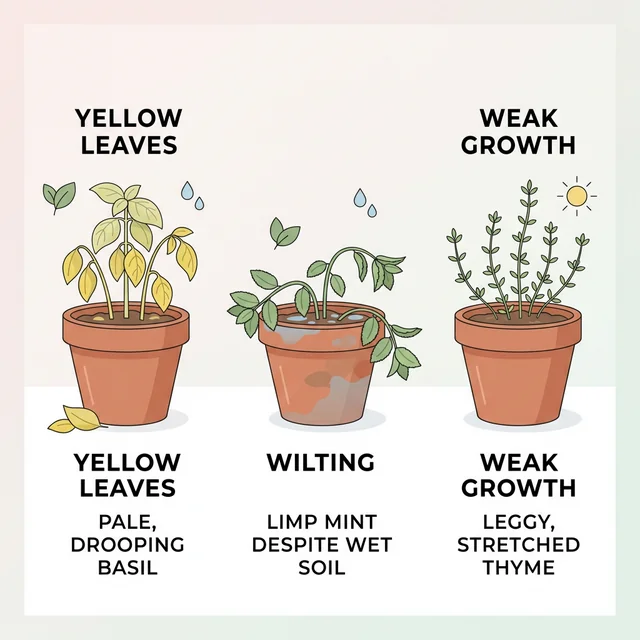
Common potted herb problems: yellow leaves, wilting, and weak growth
Common potted herb problems usually show up as yellow leaves, wilting, or weak growth, but the useful diagnosis starts with light, drainage, and root stress.
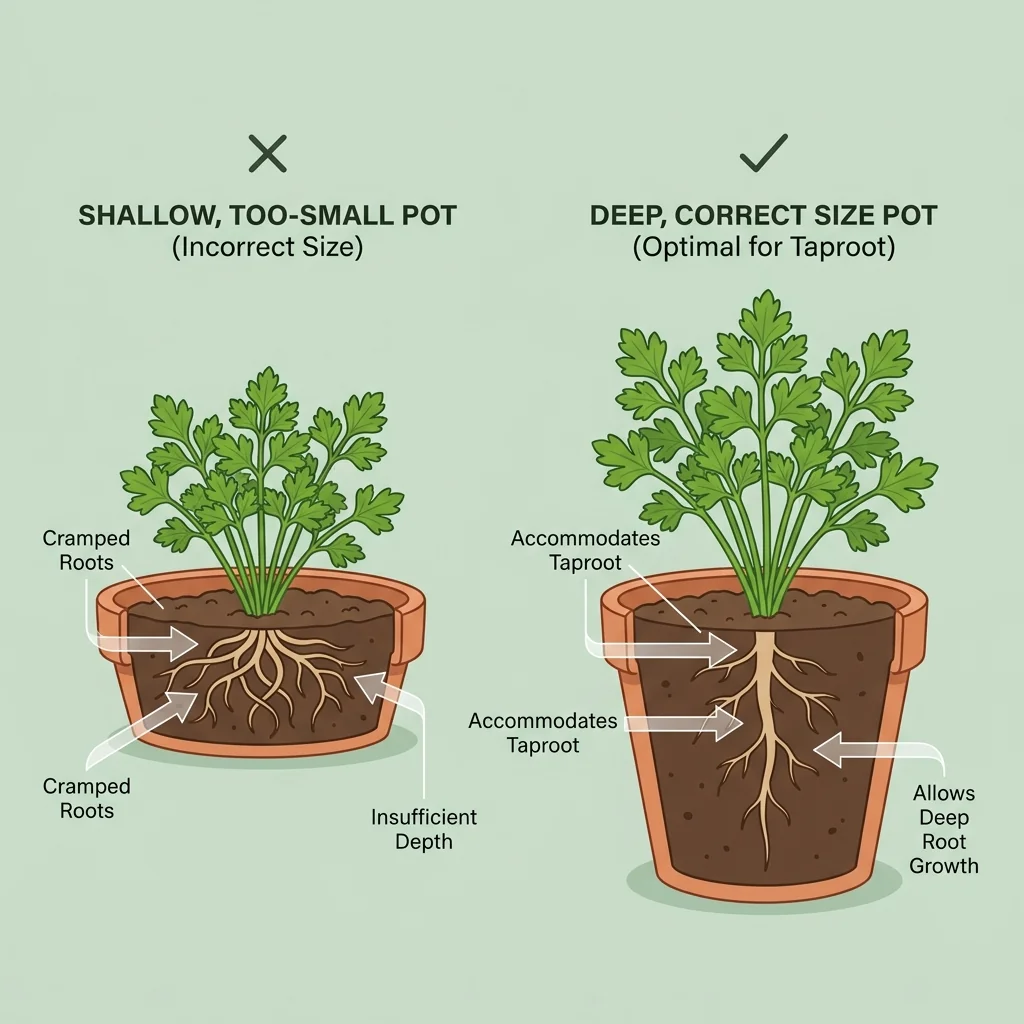
What size pot does parsley need? Depth and diameter guide
Parsley has a deeper taproot than most kitchen herbs, so pot depth matters more than width. This guide gives the exact size range, spacing, and drainage to get it right.
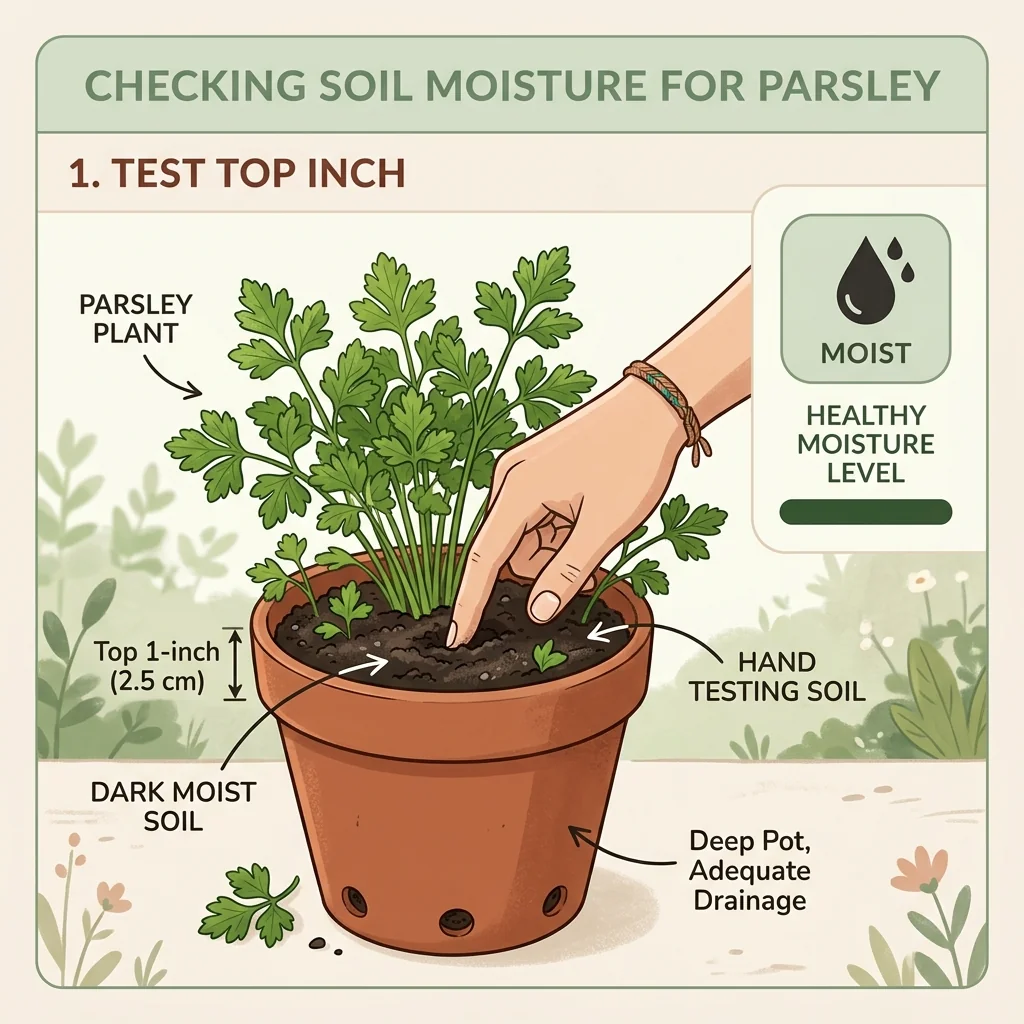
How often should you water parsley? Even moisture
Parsley sits in the middle of the watering scale: it wants steady moisture for its taproot but not soggy soil. Water when the top inch dries and it stays lush.