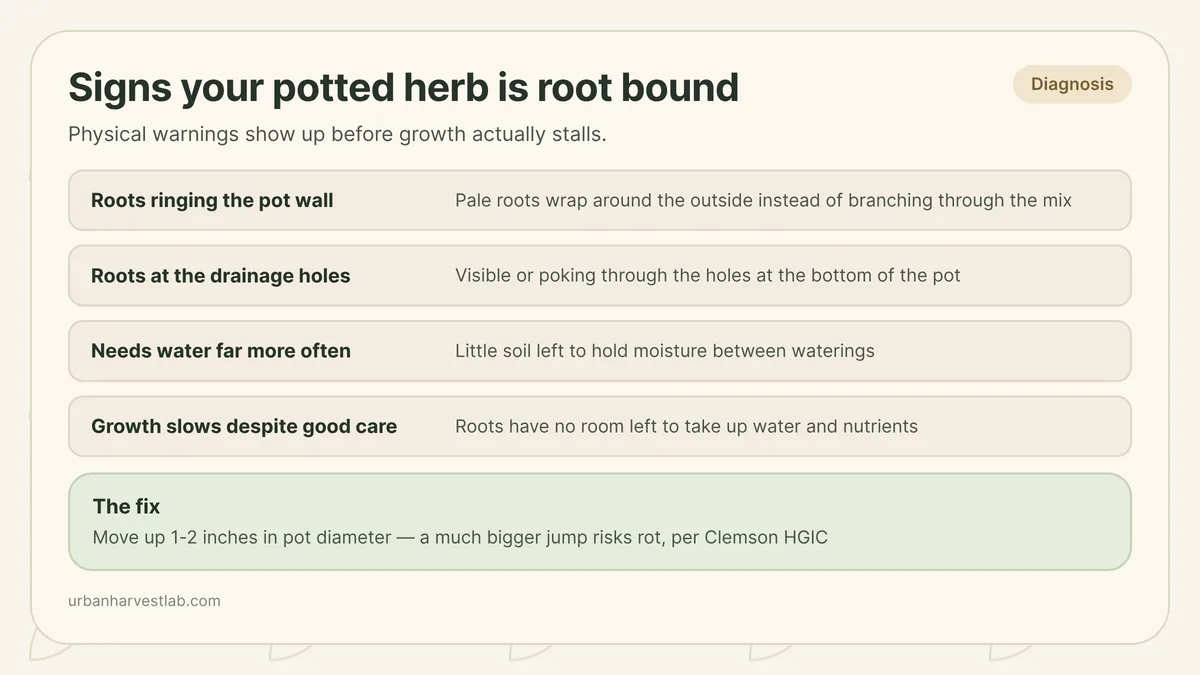
What each sign of a root bound herb actually means
| Sign | What you are seeing | What it tells you |
|---|---|---|
| Roots ringing the pot wall | Slide the rootball out; pale roots wrap around the outside instead of branching through the mix | The roots ran out of soil to grow into and turned along the container instead |
| Roots at the drainage holes | Roots visible or poking through the holes in the bottom of the pot | The rootball has reached the edge of the container in every direction |
| Needs water far more often | The pot dries out and needs watering much more often than it used to, or the plant wilts again shortly after a thorough watering | Little soil mass is left to absorb and hold moisture between waterings |
| Growth slows despite good care | Light and feeding are unchanged but new growth is thin or stalled | Roots have no room left to take up enough water and nutrients to support new leaves |
A root bound herb gives physical warnings before its growth actually stalls: roots circling the inside wall of the pot instead of branching outward, roots emerging from the drainage holes, and watering needs that change — the pot drying out and needing water far more often than it used to, or the plant wilting again shortly after a thorough watering. Once you can read those signs, the fix is a modest pot upgrade, not a full replant. If wilting or yellowing seems to have a different cause entirely, Common Potted Herb Problems walks through the wider diagnosis first.
Sign 1: roots circling the inside of the pot
Slide the plant out of its container by turning the pot on its side and easing the rootball free rather than pulling on the stem. A healthy root system branches loosely through the potting mix and looks mostly like soil with roots running through it. A root bound one looks like roots with soil left over.
Clemson HGIC’s repotting guidance names this directly: repot once “roots are in a solid mass around the rootball.” That solid mass is the tell. Individual white or pale roots tracing a ring around the outside of the rootball, rather than spreading into the mix, means the roots hit the wall of the pot some time ago and have been circling it since, because there was nowhere else to go.
Sign 2: roots growing out of the drainage holes
The second sign does not require pulling the plant out at all. Tip the pot and look at the bottom. Clemson lists this as its own criterion: repot when “roots are growing out of the drainage hole.” If you can see roots at or through the holes, the rootball has already filled the container from the inside out in every direction, including down.
This sign is worth checking on its own even if the top of the mix still looks fine, because the crowding at the bottom of the pot happens before it becomes obvious near the surface.
Sign 3: it needs water far more often, or wilts soon after watering
The clearest behavioral sign is what happens between waterings, not at the moment of watering itself. Clemson HGIC’s third repotting criterion is this behaviour directly: repot when “the plant requires frequent watering or wilts shortly after watering.” A pot that used to go two or three days between waterings and now needs it daily, or a plant that wilts again within hours of being thoroughly watered, is showing this sign.
The mechanism is straightforward once you have confirmed sign 1 or sign 2. A pot that is mostly root and only partly soil has less material left to absorb and hold moisture, so the same amount of water passes through faster and buffers less time between waterings. That is a different problem from underwatering, and it will not resolve by watering more; there simply is not much soil left to hold what you add.
Sign 4: growth slows even though light and feeding have not changed
The fourth sign is the easiest to misread, because slowed or stunted growth with pale or yellowing leaves is also a textbook overwatering symptom. The Missouri Botanical Garden lists “stunted slow growth with yellowing leaves” among the symptoms of overwatering, so a struggling herb that is not showing the circling roots or drainage-hole roots above should not be assumed root bound on stunted growth alone.
The way to tell the two apart is the same finger-and-weight check Clemson recommends for watering generally: push a finger into the mix up to the first joint, and note the weight of the pot. A root bound plant that is otherwise being watered on schedule will usually test dry, because there is too little soil to hold water for long; an overwatered plant will test wet and heavy. If the mix tests wet and the plant is still stunted, look at drainage and watering frequency before assuming the roots have run out of room.
Once roots have filled the available soil, they also have less room to take up the water and nutrients the plant needs to push new growth, even when the light and feeding routine have not changed. That is why a root bound herb can stall out even in a spot where it was growing well a few months earlier.
Why fast-growing herbs show this sooner
Some herbs fill a pot’s root space faster than others simply because they grow faster. Clemson’s herb reference describes mint as vigorous enough to “become invasive if not confined,” which is the same trait that fills a container quickly, and basil is grown as a fast annual that is harvested and cut back repeatedly through a single season. Rosemary and thyme are perennials that Clemson HGIC describes as needing dry, very well-drained soil; the same reasoning suggests a slower-growing woody perennial takes longer to fill the same pot, though Clemson does not compare growth rates directly. A fast grower in a small pot is worth checking for these signs sooner than a slow one in the same size container.
Fixing it without shocking the plant
Once two or more of the signs above are present, the fix is a modest container upgrade, not a full soil change or a much larger pot. Clemson HGIC’s own guidance is specific about the size increase: “Select a pot that is 1 or 2 inches larger in diameter than the current pot.” A far bigger jump leaves wet soil outside the reach of the existing roots, which raises the risk of rot rather than solving the crowding. For exact target sizes by herb, Herb Pot Size Guide has the diameter and depth ranges to aim for.
Timing matters as much as sizing. Clemson recommends repotting “only as needed during spring and summer while the plant is actively growing,” and specifically advises against repotting “ailing or dormant plants or those beginning to flower.” A herb that is already stressed by cold, low light, or pests is not a good repotting candidate until it recovers.
For a rootball that has become a tight ring, Clemson’s guidance is to score it lightly with a knife to loosen the circling roots before setting it into the new pot, and not to bury the rootball any deeper than it was sitting before. The full step-by-step method for making that move without triggering transplant shock, including how to handle the root mass and settle the new soil, is covered in How to Repot Herbs Without Slowing Growth.
After repotting
New growth typically resumes once the roots have room to spread into fresh soil, though a stressed plant may pause briefly while it recovers from the move itself. If wilting continues well beyond that, the cause is more likely to be transplant handling or watering than the pot size; Why Is My Basil Wilting Indoors? covers the other common causes of wilting in potted herbs.
FAQ
What does a root bound herb look like when you take it out of the pot?
Clemson HGIC describes the sign to look for as roots forming a solid mass around the outside of the rootball, instead of branching loosely through the mix, with roots sometimes visible through the drainage holes as well.
How much bigger should the new pot be?
Clemson HGIC recommends a pot one or two inches larger in diameter than the current pot. A much bigger jump leaves wet soil the roots cannot reach.
Is it normal for a root bound herb to wilt right after watering?
Yes. Needing water more often, or wilting again soon after a thorough watering, is one of the signs Clemson HGIC lists for a plant that has outgrown its container.
Can pruning the top growth fix a root bound herb without repotting?
No. Cutting back leaves reduces water loss and can mask wilting for a while, but it does not give the roots more space. A solid rootball needs a larger pot.
Sources
Fixing a crowded pot
Once you have confirmed the plant is root bound, these guides cover the repotting technique and the pot size to move into.
Common questions
What does a root bound herb look like when you take it out of the pot?
Clemson HGIC describes the sign to look for as roots forming a solid mass around the outside of the rootball, rather than branching loosely through the mix. Roots may also have started growing out through the drainage holes.
How much bigger should the new pot be?
Clemson HGIC recommends a pot that is 1 or 2 inches larger in diameter than the current one. A much bigger jump leaves wet soil outside the reach of the roots, which invites rot instead of solving the crowding.
Is it normal for a root bound herb to wilt right after watering?
Yes. Needing water more often, or wilting again within hours of a thorough watering, is one of the signs Clemson HGIC lists for a plant that has outgrown its pot, because there is little soil left to buffer moisture between waterings.
Can pruning the top growth fix a root bound herb without repotting?
No. Cutting back leaves reduces how much water the plant loses, which can mask wilting for a while, but it does not give the roots more room. A rootball that has become a solid mass needs a larger pot to resolve.
Related guides
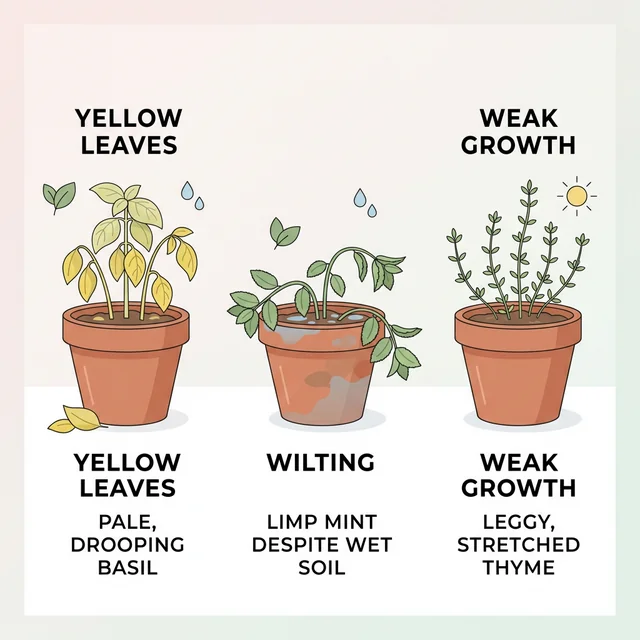
Common potted herb problems: yellow leaves, wilting, and weak growth
Common potted herb problems usually show up as yellow leaves, wilting, or weak growth, but the useful diagnosis starts with light, drainage, and root stress.
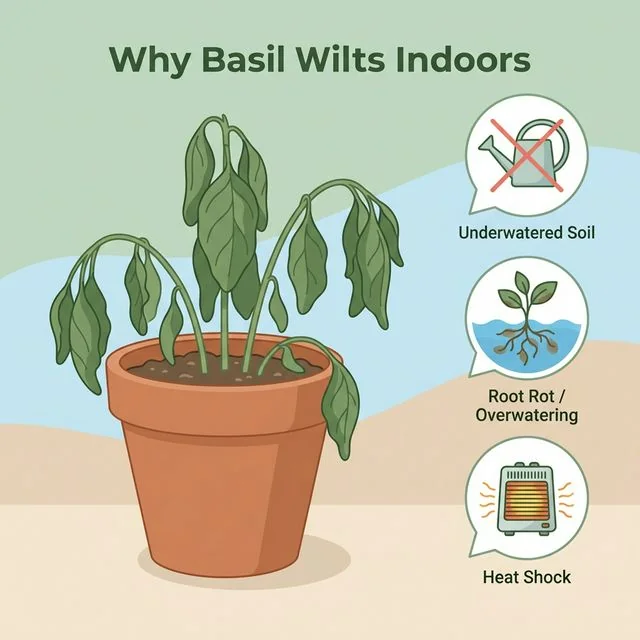
Why is my basil wilting indoors? Stop the droop
Basil is famous for being dramatic. If your plant suddenly wilts into a sad green puddle, don't panic. Here is exactly how to diagnose the droop and revive it.
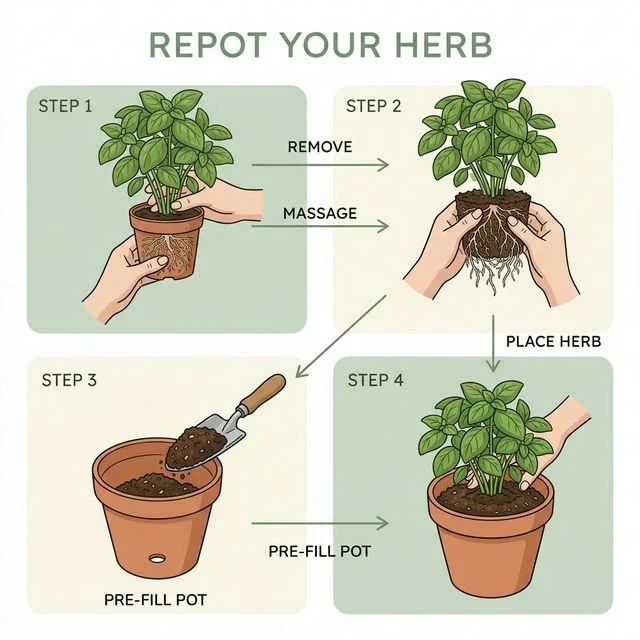
How to repot herbs without slowing growth
Moving an herb to a bigger pot should trigger a massive growth spurt. If your plants wilt and drop leaves after repotting, you are suffering from transplant shock. Here is how to upgrade your container without stressing the roots.