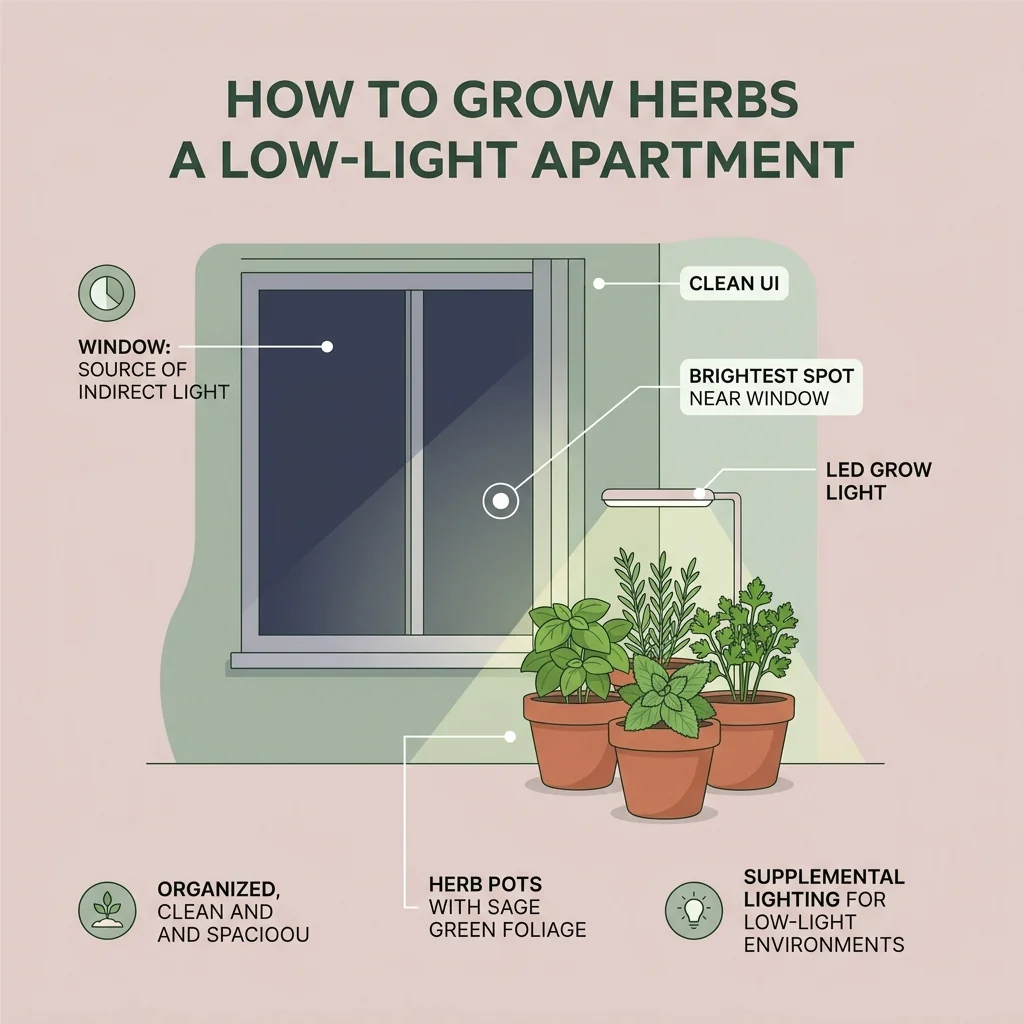
Reading the light in a low-light apartment
| Spot | What to expect | Action |
|---|---|---|
| South-facing window | Best natural light; many herbs work | Use it for sun-lovers like basil |
| East / west window | Moderate; forgiving herbs do well | Choose parsley, chives, mint |
| North-facing window | Weak for herbs | Forgiving herbs only, or add light |
| Away from any window | Too dark for herbs | A grow light is essentially required |
A dark apartment does not rule out herbs, but it changes the approach. As a quick answer: in a low-light apartment, placement and the grow-light decision matter more than which herb you choose. For the specific list of which herbs tolerate low light, see best herbs for low-light kitchens and windowsills.
Step one: find the brightest usable spot
Most apartments have one or two spots that are far brighter than the rest, and they are almost always right at a window. A bright-feeling room is not the same as a bright window; usable light for plants drops off fast as you move away from the glass. Before buying anything, identify your brightest window and plan to grow there, as close to the glass as space allows. The difference between a bright window and a bright room is explained in can herbs grow indoors without direct sunlight?.
Step two: set realistic expectations
In weaker light, herbs grow more slowly, stretch toward the window, and regrow less vigorously after cutting. That is normal, not a watering fault. In fact, herbs in low light use less water, so the soil stays wet longer; resist the urge to “fix” slow growth by feeding or watering more.
Step three: read your windows
Use the table above to match your situation to an action. North-facing windows are the classic apartment challenge; the realistic options for them are covered in north-facing window herbs.
Step four: decide on a grow light
This is the decision that low-light apartments usually come down to. If your best natural spot still leaves herbs leggy, pale, and slow after a few weeks, a small grow light is the clean fix. It is not an admission of failure; it simply replaces the light the apartment cannot provide, and it widens the herbs you can grow. For how much light herbs actually need before that point, see how much light do herbs need?.
The short version
- Grow at your brightest window, close to the glass.
- Choose forgiving herbs (parsley, chives, mint) for weaker light.
- Expect slower growth and water less, not more.
- Add a small grow light when the best natural spot is still not enough.
Measure the apartment before buying more plants
Window direction is a starting clue, not a guarantee. Buildings, trees, overhangs, season, latitude, and dirty glass can change the usable light. For three clear or typical days, record when direct sun reaches the leaves and when it disappears. Check the spot in the morning, at midday, and late afternoon. A phone light-meter app can compare locations, but it is not a calibrated plant-light instrument; use it to find the brighter spot rather than to promise a precise harvest.
Then run a two-week trial with one inexpensive parsley or chive plant. Mark the pot so you return it to the same position, rotate it a quarter turn every few days, and record watering and new growth. Stretching stems, smaller pale leaves, and consistently slow regrowth are stronger signals than a room that merely looks bright to you.
Set up the window safely
Keep foliage from touching very cold or very hot glass. Protect the sill from drainage and condensation, and never let a nursery pot stand in runoff. If you add a lamp, use a stable fixture and timer rated for the location, keep cords and plugs away from water, and follow the fixture manufacturer’s clearance and ventilation instructions. The correct lamp distance comes from plant response and the manufacturer’s coverage data, not one universal number.
Low light also means slower water use. Check the mix below the surface before watering and compare pot weight; do not compensate for slow growth with permanently wet soil. Harvest lightly until the plant is producing new leaves faster than you remove them.
What success should look like
The realistic target is a small, repeatable kitchen harvest, not supermarket-scale production. If one or two plants produce clean new leaves without stretching and the root zone dries at a manageable pace, duplicate that setup. If they decline despite stable care, improve the light before adding fertilizer or more pots.
Sources
If your apartment is short on light, also read
These guides cover which herbs to choose, what indirect light can support, and how grow lights change the answer.
Common questions
Can you grow herbs in a dark apartment?
Some herbs, yes, but only if you use the brightest spot you have and accept slower growth. In a genuinely dark apartment, a small grow light is usually needed for steady, useful harvests.
Where should I put herbs in a low-light apartment?
At the brightest usable window, as close to the glass as possible. A south-facing window is best; an east or west window is workable; a north-facing window or a spot away from the glass usually needs a grow light.
Do I need a grow light for herbs in a low-light apartment?
Often yes. If your best natural spot still leaves herbs stretched, pale, and slow, a small grow light is the cleanest fix and widens the herbs you can grow.
Which herbs cope best with low apartment light?
Parsley, chives, and mint tolerate weaker light better than basil, thyme, or oregano. For the full selection list, see the guide on the best herbs for low-light kitchens and windowsills.
Related guides
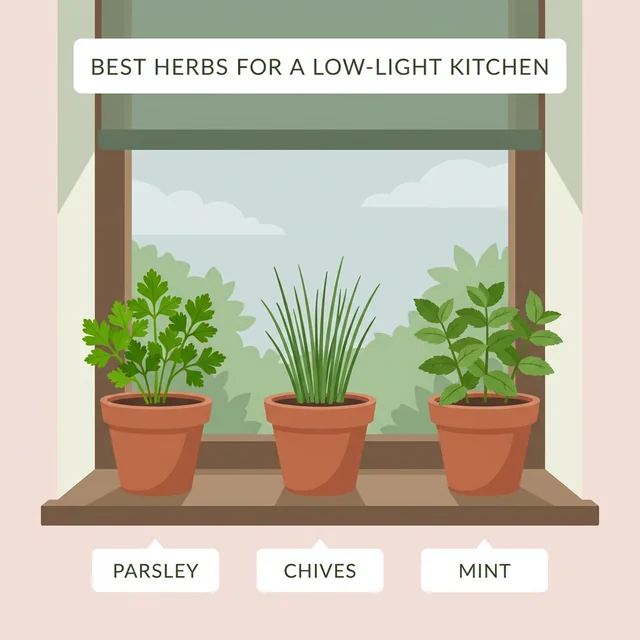
Best herbs for low light: what actually grows on a windowsill
Stop trying to force basil to grow in the dark. If your kitchen gets limited indirect light, stick to these forgiving herbs like parsley, chives, and mint.
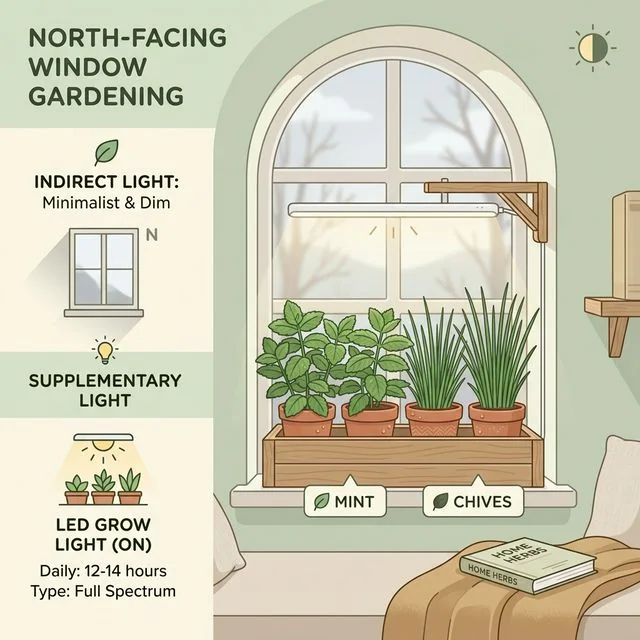
North-facing window herbs: what actually works and when you need a grow light
A north-facing window is widely considered the death sentence of an indoor garden. But with the right selection of shade-tolerant herbs and strategic placement, you can still harvest fresh greens year-round.
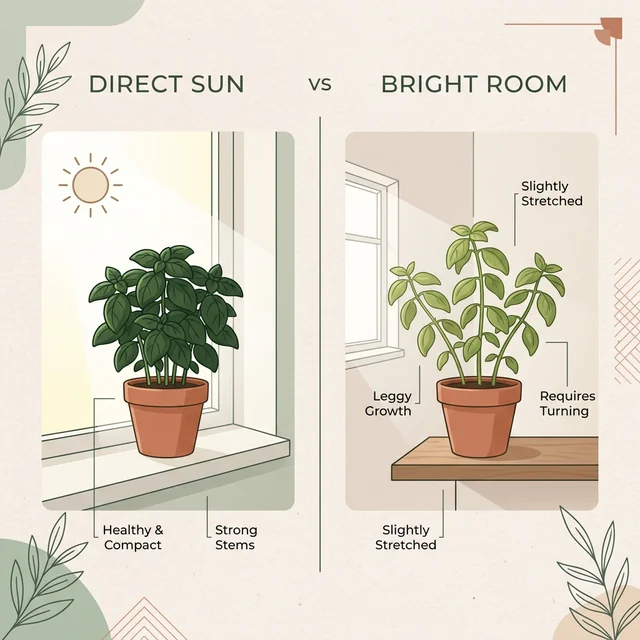
Can herbs grow indoors without direct sunlight? Yes, but bright windows matter
A realistic answer to a common indoor-herb question, with clear expectations for growth, herb choice, and when a grow light becomes the cleaner solution.