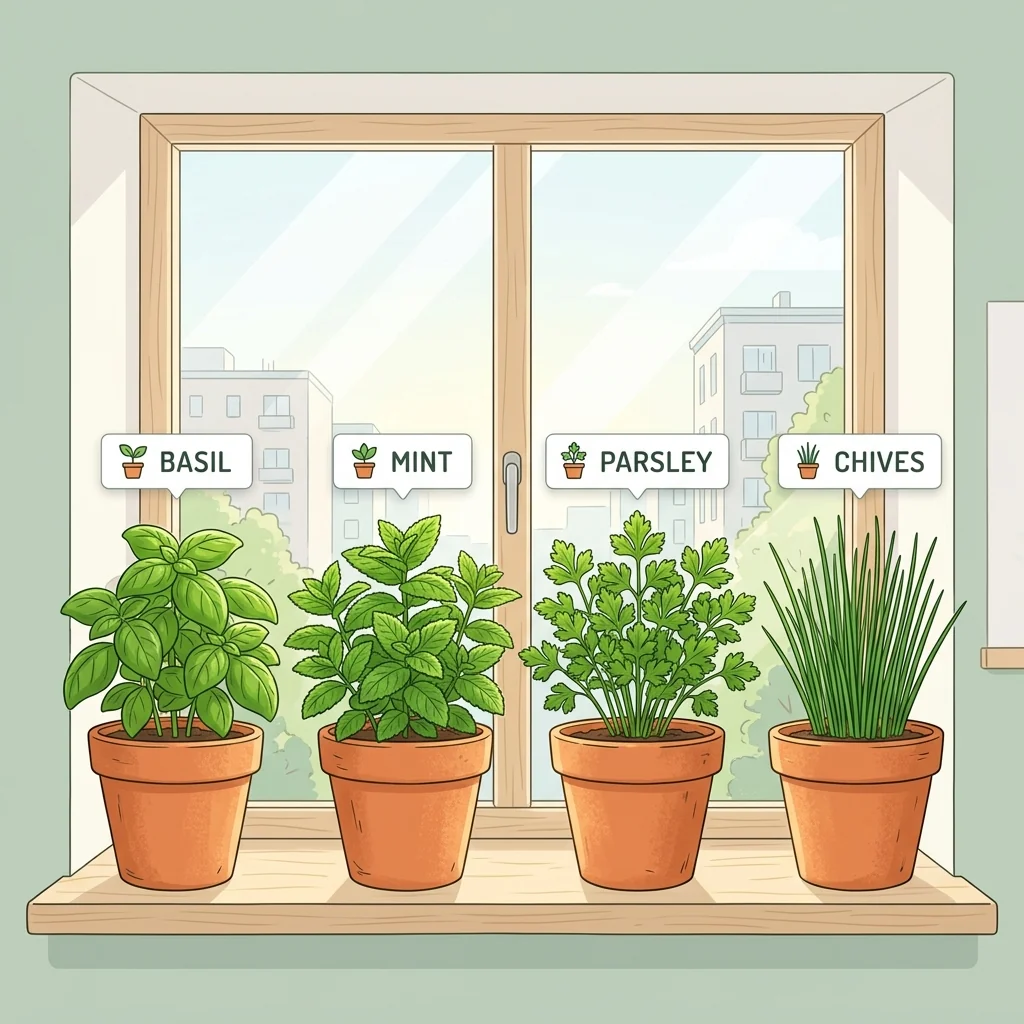
Best apartment herbs by light level
| Herb | Light needed | Why it suits apartments |
|---|---|---|
| Mint | Bright to moderate | Vigorous and very forgiving; keep in its own pot |
| Parsley | Bright to moderate | Steady, tolerant, useful in the kitchen |
| Chives | Bright to moderate | Compact and easy on a windowsill |
| Basil | Bright, sunny | Productive but needs strong light |
| Thyme / oregano | Bright, sunny | Compact Mediterranean herbs for a sunny sill |
You do not need a yard, a garden, or even a balcony to grow herbs. As a quick answer: the best herbs for an apartment are basil, mint, parsley, and chives, with thyme and oregano added if you have a bright, sunny window. The trick is matching the herb to the light you actually have. Once you have chosen, the apartment herb garden setup guide covers how to arrange and maintain them.
Match the herb to your light first
The single biggest factor in apartment herb success is light, not the herb itself. Be honest about your brightest window before choosing:
- Bright, sunny window (4+ hours direct sun): you can grow almost any herb, including basil, thyme, and oregano.
- Bright but indirect: parsley, chives, and mint do well; basil may stretch.
- Genuinely dim: stick to the most forgiving herbs or add a grow light. The full low-light list is in best herbs for low-light kitchens and windowsills.
If you are not sure how much light your herbs need, how much light do herbs need? sets realistic expectations.
The most reliable apartment herbs
- Mint — almost impossible to kill, vigorous, and happy indoors. Keep it in its own pot so it does not take over.
- Parsley — steady and tolerant, with a deep enough pot for its taproot.
- Chives — compact, easy, and quick to regrow after cutting.
- Basil — the most productive culinary herb, but it needs a genuinely bright, sunny window or a grow light.
- Thyme and oregano — compact Mediterranean herbs that thrive on a hot, sunny sill and tolerate being under-watered.
Start small
Begin with three or four herbs rather than a crowded row. A smaller collection teaches you the apartment’s light and watering rhythm faster, and it is easier to keep healthy. You can always expand once you know which spots actually work. For the broader small-space picture beyond apartments, see best herbs for small spaces.
When to add a grow light
If your brightest window still leaves basil leggy and pale, a small grow light is the cleanest fix. It widens the herb list and steadies growth year-round, which matters most in apartments with limited or north-facing windows.
Choose by use, light, and replacement cost
The best first herb is one you cook with weekly and can keep within its preferred conditions. Score each candidate from zero to two on four questions: do you use it often, does your brightest spot suit it, can its mature roots fit the available pot, and can you replace it cheaply if the trial fails? Start with the highest score rather than buying a preselected collection whose plants want different care.
Mint is vigorous, but “forgiving” does not mean indestructible: low light and saturated mix can still weaken it. Basil is productive only when warmth and light are adequate. Parsley germinates slowly and benefits from a deeper container. Thyme and oregano prefer bright conditions and a mix that drains freely. These differences are why separate nursery pots are usually easier than one mixed indoor planter.
Run a two-week placement test
Record direct-sun hours at leaf level for three representative days, then place one plant in the proposed spot for two weeks. Note watering dates, new leaves, stem spacing, and harvest weight. Keep care stable; changing light, fertilizer, and watering together hides the cause of any improvement.
Healthy progress means compact new growth and usable regrowth after a modest cut. Long gaps between leaves, leaning, paler new foliage, or a pot that remains wet for many days justify better light and a drainage check. They do not automatically prove a nutrient deficiency.
Avoid the supermarket-herb trap
Dense supermarket pots often contain many seedlings competing in a small root ball. Treat them as a short-term harvest or divide and repot them gradually; do not assume the failure of one crowded pot means the species cannot grow in your apartment. Quarantine new plants briefly and inspect leaf undersides before placing them beside an established collection.
Use clean scissors, remove only a portion of active growth at each harvest, and wait for regrowth before cutting again. Your useful output is the herb you actually harvest, not the number of pots on the sill.
Sources
If you are choosing herbs for an apartment, also read
These guides connect herb choice to your apartment setup, light level, and the wider small-space workflow.
Common questions
What are the best herbs to grow in an apartment?
Basil, mint, parsley, and chives are the most reliable apartment herbs, with thyme and oregano added if you have a bright, sunny window. They are compact, forgiving, and productive indoors.
Can you grow herbs in an apartment without a balcony?
Yes. A bright windowsill or a small counter with a grow light is enough for most herbs. You do not need any outdoor space; you just need to match the herb to the light you have.
What herbs grow best in low apartment light?
Parsley, chives, and mint cope best with weaker light, while basil, thyme, and oregano need a bright window or a grow light. For a full low-light list, see the dedicated guide on low-light kitchen and windowsill herbs.
How many herbs should a beginner start with in an apartment?
Three to four. That is enough to learn your apartment's light and watering pattern without turning a windowsill into a crowded, hard-to-manage row of pots.
Related guides

Indoor herb garden setup for apartments without outdoor space
A practical apartment herb guide for people growing entirely indoors, with realistic advice on light, layout, containers, and everyday maintenance.
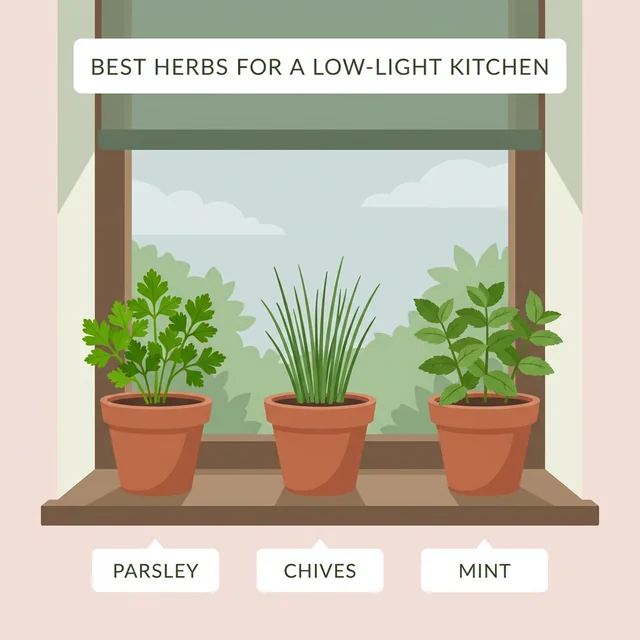
Best herbs for low light: what actually grows on a windowsill
Stop trying to force basil to grow in the dark. If your kitchen gets limited indirect light, stick to these forgiving herbs like parsley, chives, and mint.
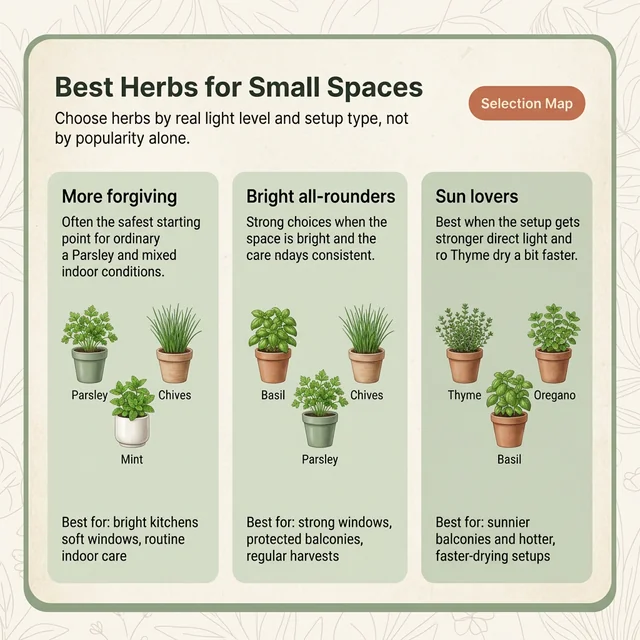
Best herbs for small spaces: what grows well in apartments, balconies, and windowsills
A practical guide to the herbs that actually perform well in compact homes, with selection logic for bright windows, balconies, and more forgiving low-space setups.