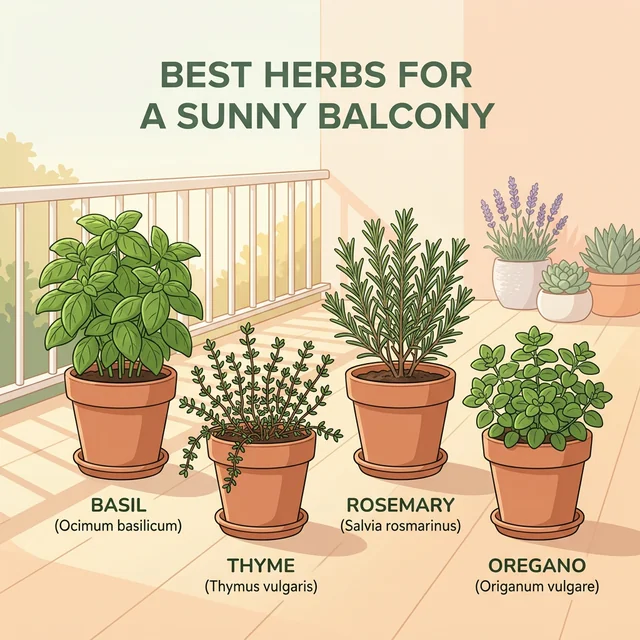
Top choices for a sunny balcony based on heat tolerance
| Herb | Heat Tolerance | Water Needs | Container Tip |
|---|---|---|---|
| Rosemary | Excellent | Low to Moderate | Needs excellent drainage; do not let the roots sit in water |
| Thyme | Excellent | Low | Perfect for shallow or wide pots; tolerates dry spells well |
| Oregano | Very Good | Moderate | Can trail over the edges of a pot; resilient in wind |
| Basil | Good | High | Needs the largest pot possible to maintain steady moisture |
A sunny balcony is often viewed as the holy grail for a beginner herb garden. Plentiful direct sunlight solves the biggest problem faced by indoor growers: leggy, weak plants. If you have full, unshaded sun for six to eight hours a day, the potential for a thriving, productive herb station is massive.
However, a sunny balcony is also an extreme environment. The combination of intense afternoon heat, radiated warmth from concrete floors, and drying winds quickly exposes weak setups. Choosing the right herbs is the difference between daily maintenance stress and a resilient summer garden.
If you are just starting and haven’t fully organized your space yet, review Balcony Herb Garden for Beginners: A Simple Container Setup That Actually Works and Small-Space Herb Gardening: Start Here for Apartments, Balconies, and Indoor Setups to establish a reliable foundation before deciding what to plant.
Here are the best, most reliable herbs for a hot, sun-drenched balcony.
1. The Mediterranean Anchors: Rosemary, Thyme, and Oregano
If your balcony feels like an oven in July, you need plants that evolved to thrive in rocky, hot, and exposed climates. The Mediterranean herbs are the absolute safest choices for full sun.
Rosemary
Rosemary is almost indestructible on a sunny balcony once established. Its needle-like leaves are highly efficient at retaining moisture, meaning it will survive the days you accidentally forget to water it.
- The balcony advantage: Rosemary actually develops better, more concentrated flavor oils when the soil is kept slightly on the dry side and it receives blasting sun.
- The rule: It absolutely demands good drainage. Check Best Containers for Herbs: Pot Size, Drainage, and Material Guide to ensure your pots won’t suffocate its roots after a summer rainstorm.
Thyme
Thyme is a low-growing, spreading herb that essentially uses the same playbook as rosemary. It is highly drought-tolerant and ignores high temperatures.
- The balcony advantage: Because it creeps horizontally, thyme is exceptional at trailing over the edges of large pots. It acts as a “living mulch,” shading the soil block and reducing evaporation for any plant sharing its container.
- The rule: Do not overwater it. Thyme prefers the top inch of soil to dry out completely between waterings.
Oregano
Oregano splits the difference between the woody structure of rosemary and the softer growth of other herbs. It is robust, handles wind extremely well, and will aggressively fill whatever pot you give it.
- The balcony advantage: It bounces back quickly if it wilts and requires almost zero maintenance beyond harvesting.
- The rule: Like thyme, it benefits from excellent drainage.
2. The Heavy Drinker: Basil
Basil is the crop almost everyone envisions when starting a balcony garden. It craves heat and demands full sun to produce large, fragrant leaves. However, it requires a completely different management strategy than the Mediterranean herbs.
- The balcony challenge: Basil has large, soft leaves that transpire (sweat) heavily in direct sun and wind. In a tiny pot on a hot balcony, a basil plant will drink all available water by 1:00 PM and collapse into a wilted heap by 4:00 PM.
- The solution: To grow basil successfully on a sun-drenched balcony, you must decouple it from small containers. Use the largest pot you can fit in your space, ensuring the soil reservoir is immense enough to hold a multi-day moisture supply.
- The workflow: Read Best Herbs for Small Spaces: What Grows Well in Apartments, Balconies, and Windowsills to understand how to categorize high-water herbs separately from your drought-tolerant ones to avoid watering conflicts.
3. The Bright but Cool Selections: Sage and Chives
If your balcony receives strong morning sun but is shielded from the most brutal mid-afternoon heat, you can expand your list.
Sage
Sage is tough, fuzzy, and highly tolerant of typical balcony conditions. Its thick leaves protect it from wind burn, and it is generally quite resilient to missed waterings. It prefers full sun but appreciates a break from the absolute peak heat of late afternoon if possible.
Chives
Chives are a grass-like allium that grow like weeds in a sunny spot. They will produce beautiful, edible purple flowers in the spring.
- The balcony advantage: They have a tiny footprint and can be tucked into the corners of almost any setup.
- The rule: They need more consistent moisture than thyme or rosemary, so place them in a larger pot or alongside basil rather than in a tiny, fast-drying terracotta cup.
What to Avoid on a Hot Balcony
Not all herbs appreciate a blazing summer balcony. The biggest beginner mistake is planting cool-weather or moisture-loving crops in full sun and wondering why they fail.
- Cilantro (Coriander): Cilantro hates heat. When exposed to hot summer sun, it assumes it is dying and immediately “bolts” (goes to seed), turning the leaves bitter and halting new growth. Save cilantro for the cooler spring or autumn seasons.
- Mint: Mint is an invasive survivor, but it looks terrible when baked in dry heat. Its leaves will crisp at the edges, and it requires exhausting amounts of water to stay lush in full sun. Mint is best placed in the shaded corners of your balcony.
The Secret to Balcony Success is the Container
The herbs listed above will only survive if the infrastructure supports them. On a sunny balcony, the container is the infrastructure.
A tiny, 4-inch nursery pot placed on a sun-baked concrete floor will reach lethal soil temperatures in hours. To succeed, you must use larger pots with proper drainage. Larger soil volumes buffer against heat spikes and hold moisture long enough for you to go to work and come home without returning to a graveyard of wilted plants.
If you are struggling with the transition from choosing herbs to actually planting them, review Small-Space Herb Gardening: Start Here for Apartments, Balconies, and Indoor Setups and integrate the container rules from Best Containers for Herbs: Pot Size, Drainage, and Material Guide. Choose your resilient herbs, give them enough soil to survive the heat, and let the summer sun do the rest of the work.
If you are setting up a sunny balcony, also read
These guides will help you match your sunny location with the right setup and containers to avoid dried-out pots.
- Small-Space Herb Gardening: Start Here for Apartments, Balconies, and Indoor Setups
- Best Herbs for Small Spaces: What Grows Well in Apartments, Balconies, and Windowsills
- Balcony Herb Garden for Beginners: A Simple Container Setup That Actually Works
- Best Containers for Herbs: Pot Size, Drainage, and Material Guide
Common questions
Is full sun too much for herbs in pots?
Not for Mediterranean herbs like rosemary, thyme, or oregano, provided their pots are large enough to hold moisture through the afternoon heat.
Why is my basil wilting on a sunny balcony?
Basil loves sun, but it has large leaves that lose water rapidly. If it wilts in the sun, the pot is likely too small or the soil is drying out completely before your next watering.
Can I grow mint on a hot balcony?
Mint can survive, but it strongly prefers afternoon shade or more consistent moisture. If placed in full baking sun, it will require aggressive watering to prevent the leaves from crisping.
Related guides
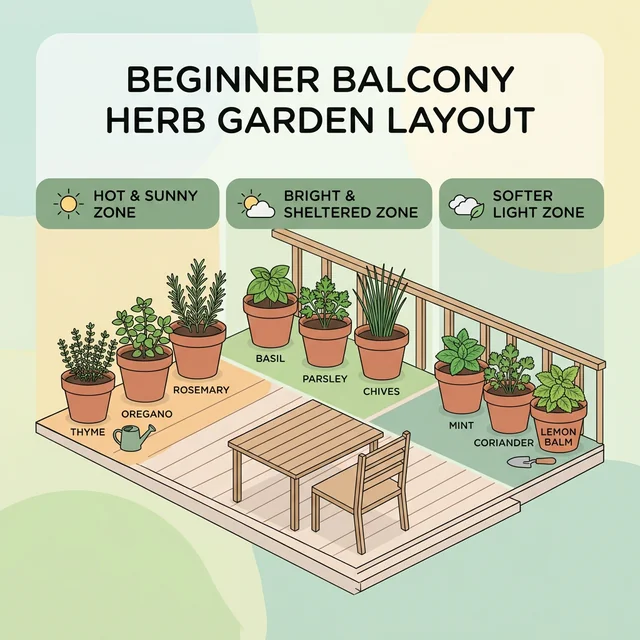
Balcony Herb Garden for Beginners: A Simple Container Setup That Actually Works
A practical beginner plan for turning a balcony into a manageable herb setup that stays readable, productive, and realistic to maintain.
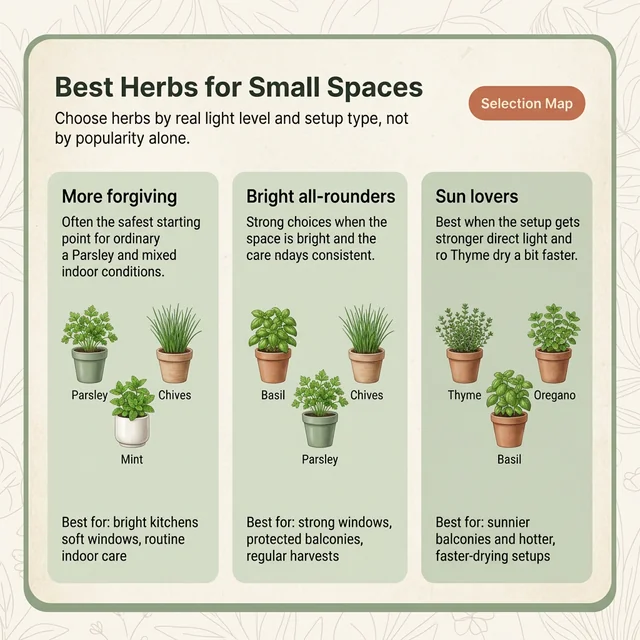
Best Herbs for Small Spaces: What Grows Well in Apartments, Balconies, and Windowsills
A practical guide to the herbs that actually perform well in compact homes, with selection logic for bright windows, balconies, and more forgiving low-space setups.
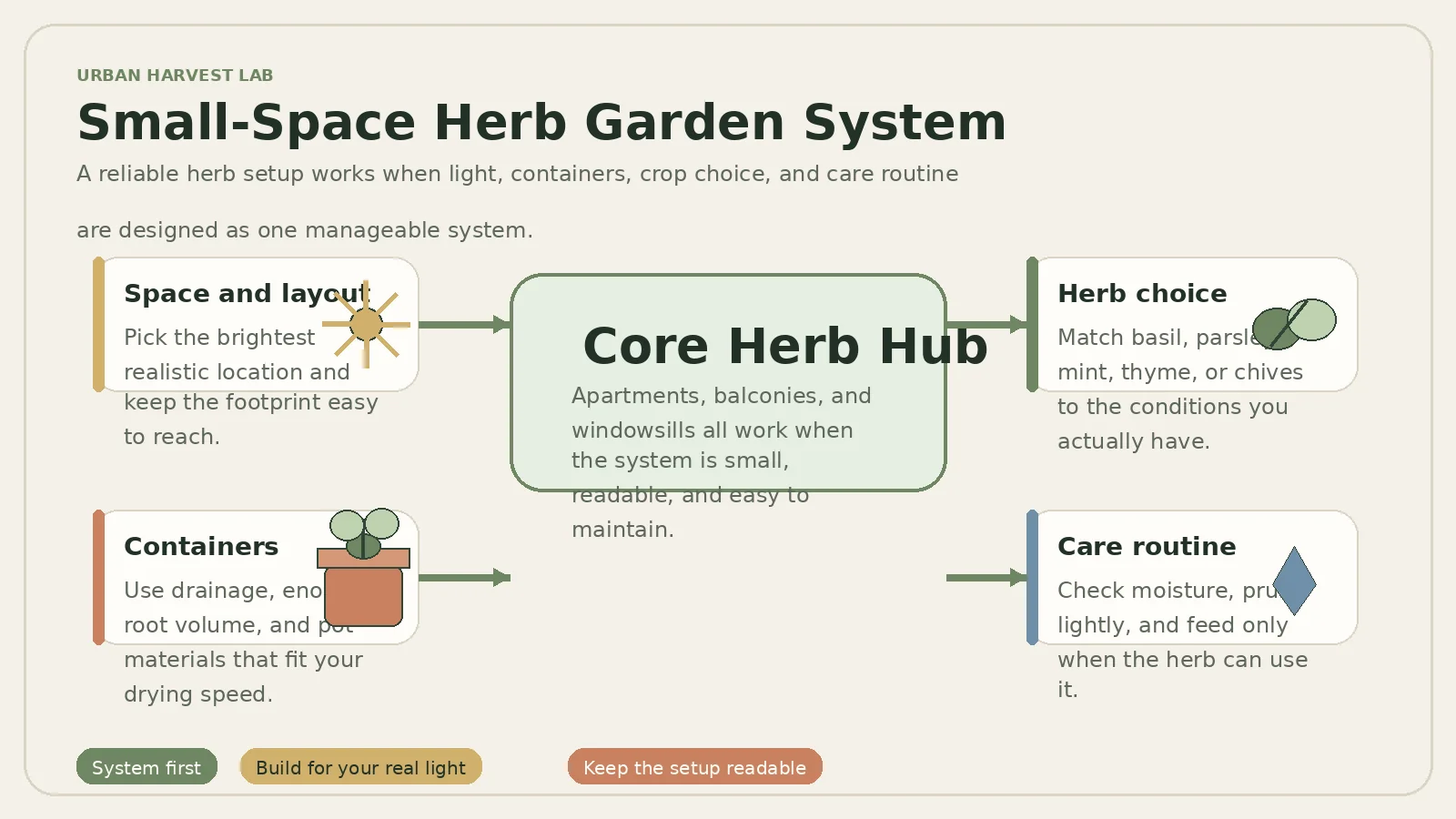
Small-Space Herb Gardening: Start Here for Apartments, Balconies, and Indoor Setups
A navigation hub for apartment, balcony, and indoor herb gardening that connects the core setup, herb selection, light, container, and care guides in the right order.