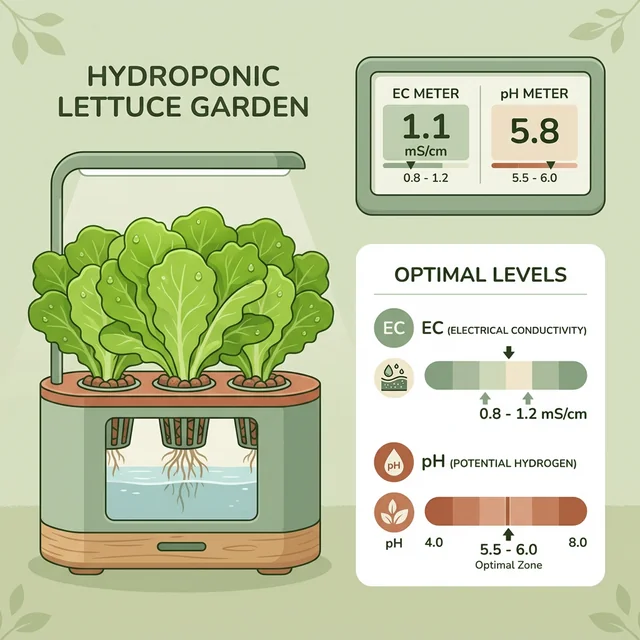
The Hydroponic Lettuce Chemistry Chart
| Stage of Growth | Optimal pH Range | Target EC (mS/cm) | PPM (500 scale) |
|---|---|---|---|
| Seedling / Sprout | 5.5 - 6.0 | 0.5 - 0.7 | 250 - 350 ppm |
| Early Vegetative | 5.5 - 6.0 | 0.8 - 1.0 | 400 - 500 ppm |
| Mature / Harvesting | 5.5 - 6.0 | 1.0 - 1.2 | 500 - 600 ppm |
| Late Summer / High Heat | 5.5 - 6.0 | 0.8 - 0.9 (Lower is safer) | 400 - 450 ppm |
Lettuce is universally considered the gateway crop into indoor hydroponics. It grows exceptionally fast, requires very little light compared to fruiting vegetables, and thrives in simple, passive setups like the ones outlined in Countertop Hydroponic Herbs and Greens for Beginners.
However, because hydroponics removes soil from the equation entirely, there is no “buffer” to protect the plant from your mistakes. The water you provide acts as the soil, the fertilizer, and the life support system. If the chemistry of that water is wrong, the lettuce will let you know within 24 hours.
If you are brand new to measuring water chemistry, you must first read Hydroponic Nutrients, EC, and pH Basics. That guide explains how to use your meters. This guide provides the exact numbers you need to hit for a perfect lettuce harvest.
The Magic Numbers: Lettuce EC and pH
Unlike tomatoes or peppers, which are “heavy feeders” requiring massive amounts of fertilizer to produce fruit, lettuce is a light feeder. It only needs to produce leaves. Overfeeding lettuce is the most common beginner mistake.
The pH Range: 5.5 to 6.0
The pH scale measures how acidic or alkaline your water is. For hydroponic lettuce, the absolute sweet spot is 5.5 to 6.0, leaning slightly acidic.
- What happens if it goes too high (above 6.5)? The plant experiences “nutrient lockout.” Even if the water is full of fertilizer, the roots physically cannot absorb iron and manganese at high pH levels. The new leaves will turn pale yellow, a symptom commonly misdiagnosed as needing more fertilizer.
- What happens if it goes too low (below 5.0)? The roots begin to burn, and the plant will take up toxic levels of heavy metals.
The EC Range: 0.8 to 1.2
Electrical Conductivity (EC) measures the total amount of fertilizer salts dissolved in your water. Because lettuce is a light feeder, its EC requirements are wonderfully low.
- Seedlings (0.5 - 0.7 EC): When your lettuce has just sprouted its first true leaves, the roots are delicate. Keep the nutrient concentration very low.
- Mature Plants (0.8 - 1.2 EC): As the lettuce forms a head or dense rosette, it needs more food to power that rapid growth.
- The Heat Exception: If your indoor space is very warm (above 75°F / 24°C), the plant will drink more water to cool itself down. If the EC is high when it drinks heavily, it will accidentally consume too much fertilizer. Always lower your EC slightly in hot conditions.
Diagnosing Lettuce Nutrient Problems
Because lettuce grows so quickly, chemical imbalances show up on the leaves almost immediately. If you are dealing with stunted plants, you should cross-reference this data with Why Is My Hydroponic Lettuce Growing So Slowly?.
Problem 1: Tip Burn (Brown, crispy edges)
If the very edges of your inner lettuce leaves are turning black or crispy brown, you are experiencing tip burn.
- The Cause: This is a calcium deficiency at the edge of the leaf. However, it is rarely caused by a lack of calcium in the water. Instead, it is caused by an EC that is too high or a lack of airflow. High EC prevents water from flowing smoothly into the extremities of the plant.
- The Fix: Lower your EC by adding fresh, plain pH-balanced water to your reservoir, and point a small fan directly at the plants to encourage transpiration.
Problem 2: Yellowing New Leaves
If the oldest, outer leaves are green, but the brand-new leaves emerging from the center are pale yellow or white, you have an iron deficiency.
- The Cause: Your pH has drifted too high (above 6.5). The iron is in the water, but the high pH has made it unavailable to the roots.
- The Fix: Use “pH Down” solution to gently bring the reservoir back down to 5.8. Do not add more fertilizer; the plant just needs access to what is already there.
Problem 3: Wilting and Slime
If your lettuce looks thirsty despite its roots hanging directly in water, pull the plant up and inspect the roots. If they are brown, slimy, and smell foul, you have root rot.
- The Cause: Root rot is a fungal infection usually triggered by warm water and a lack of dissolved oxygen. High EC and poor pH can stress the plant, making it more susceptible.
- The Fix: Prevention is the best cure. Keep your water moving and cool.
How Often to Test
When you mix a fresh batch of hydroponic nutrients, the chemistry will naturally drift as the plant consumes water and fertilizer at different rates.
- Check pH twice a week: Lettuce naturally pushes the pH up as it eats nitrogen. You will routinely need to add a few drops of pH Down to keep it in the 5.5 - 6.0 range.
- Check EC once a week: If the EC is rising, the plant is drinking more water than fertilizer. Add plain water. If the EC is falling fast, the plant is eating heavily. Add a slight boost of nutrient solution.
By strictly adhering to the 0.8 - 1.2 EC range and the 5.5 - 6.0 pH pocket, you eliminate 90% of the problems indoor hydroponic gardeners face. Keep the water clean, keep the lights close, and your lettuce will be ready for harvest in under 40 days.
Troubleshooting your hydroponic greens? Read these
If your lettuce looks pale, is growing too slowly, or has crispy edges, these guides will help you diagnose the water chemistry.
Common questions
What should the EC be for hydroponic lettuce?
The optimal Electrical Conductivity (EC) for hydroponic lettuce is between 0.8 and 1.2 mS/cm. Seedlings should start lower (around 0.5), and mature plants can handle up to 1.2.
Why are the edges of my hydroponic lettuce turning brown?
This is called "tip burn," and it is almost always caused by an EC that is too high, inadequate airflow, or a lack of calcium reaching the leaf edges.
How often should I test the pH in a countertop hydroponic system?
You should check the pH at least twice a week. Plants naturally alter the pH of the water as they consume different nutrients.
Related guides
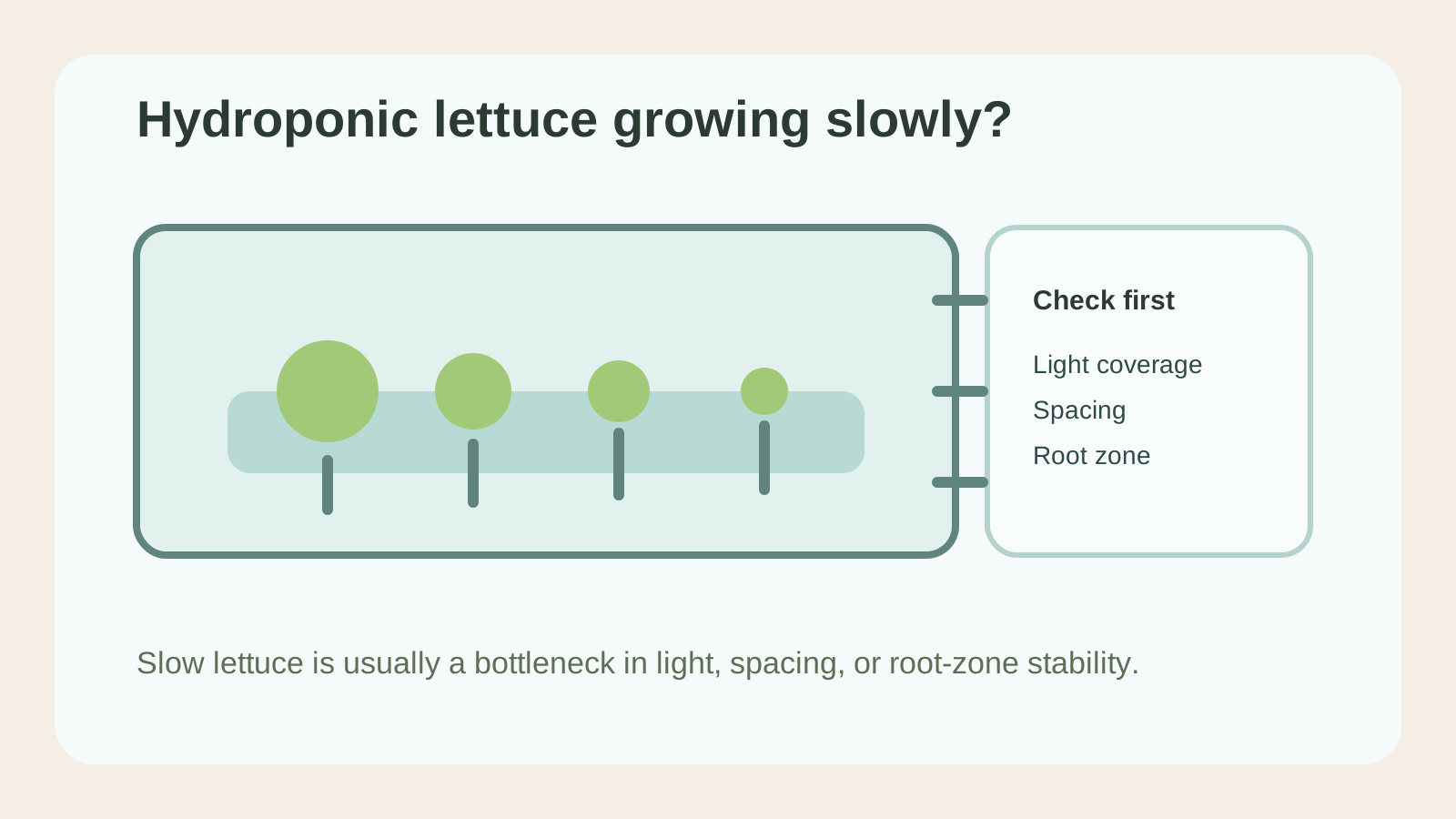
Hydroponic Lettuce Growing Slowly? How to Diagnose the Real Bottleneck
Slow hydroponic lettuce is usually a systems problem, not a mystery deficiency. The goal is to find the bottleneck without overcorrecting five variables at once.
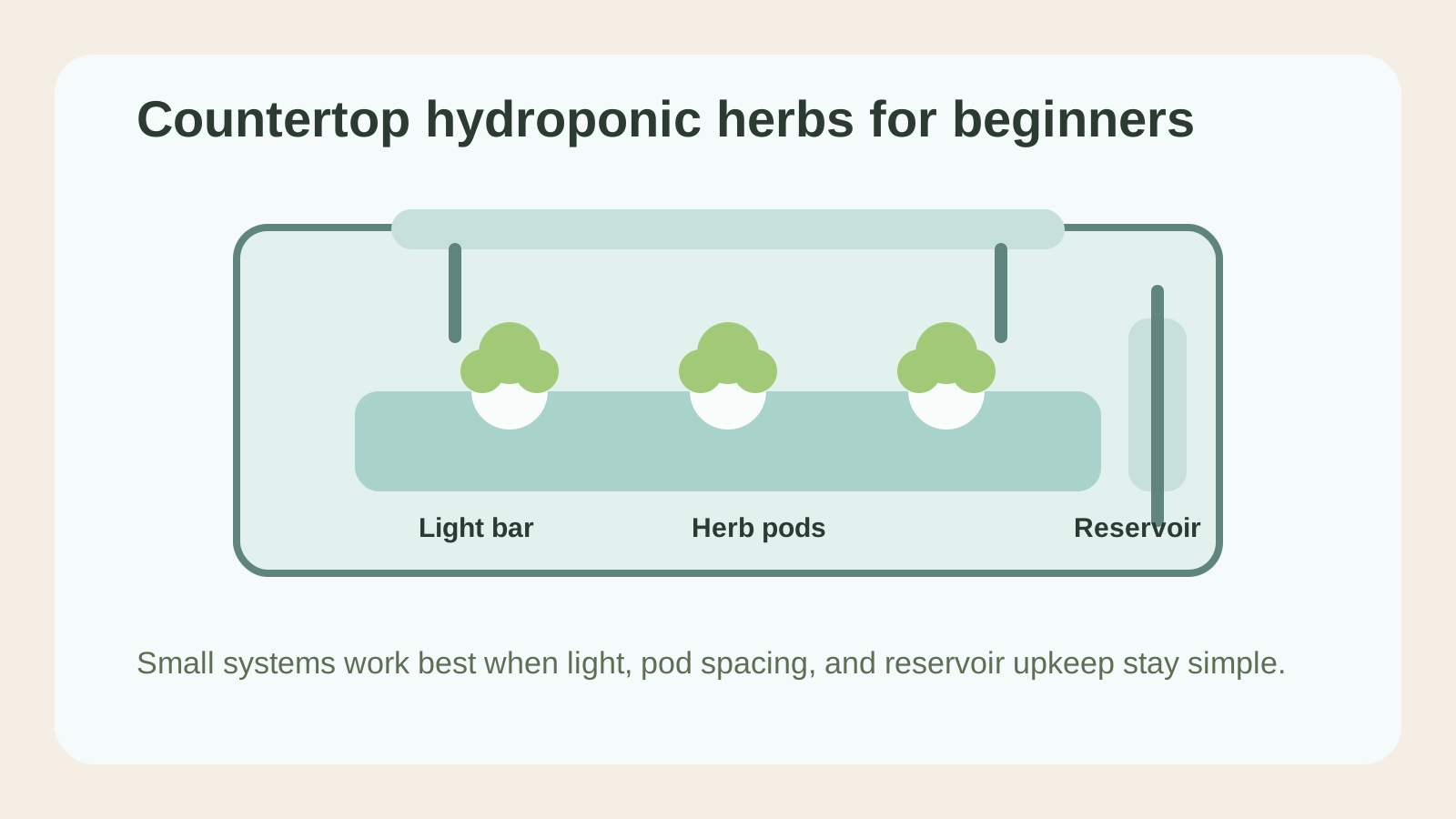
Countertop Hydroponic Herbs for Beginners: What to Buy and What to Ignore
Countertop hydroponic systems can work very well for herbs, but only if you treat them as small growing systems rather than decorative appliances.
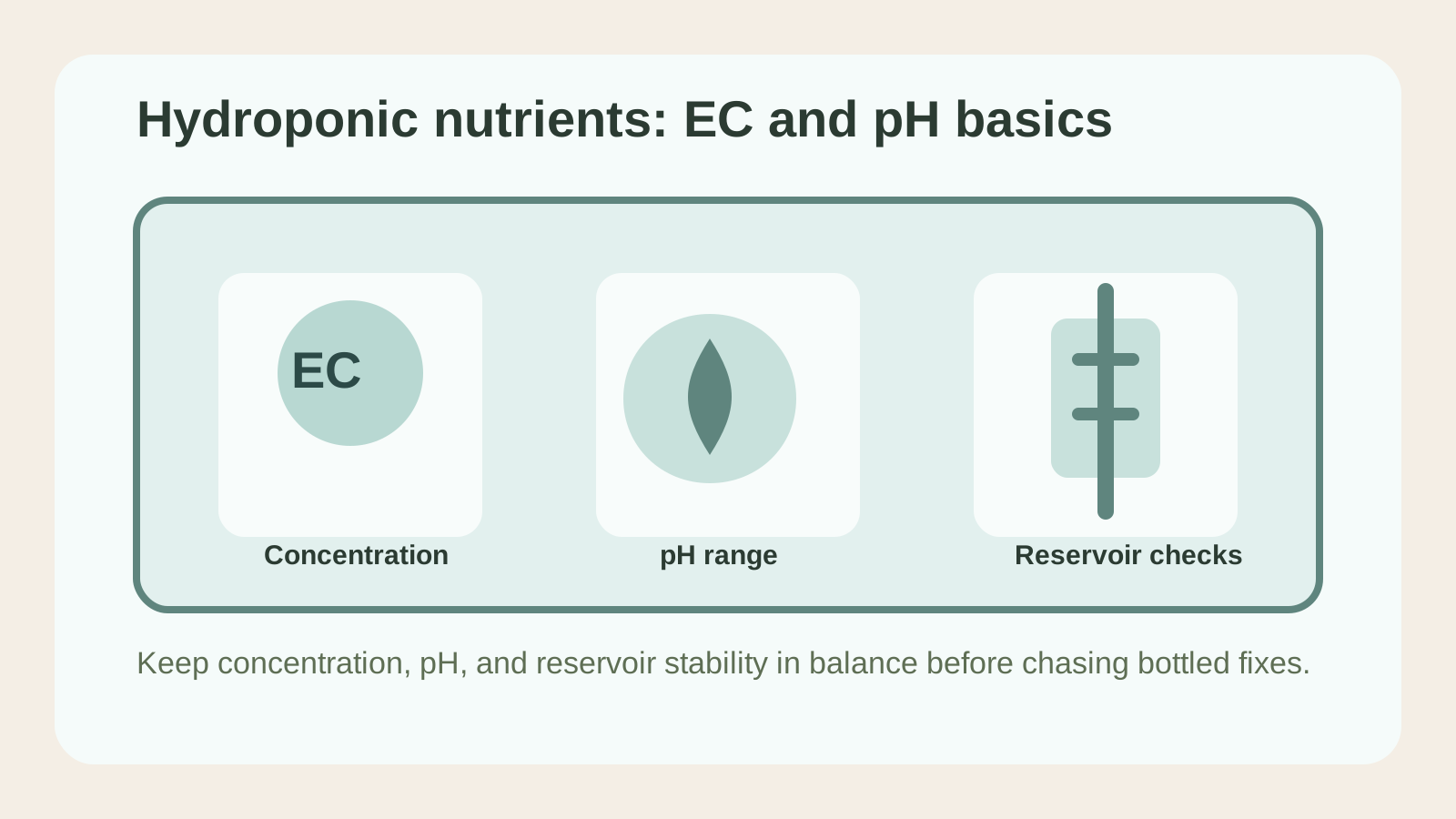
Hydroponic Nutrients for Beginners: EC and pH Without the Confusion
Most hydroponic problems are not mysterious. They come from concentration drift, pH drift, heat, or neglected maintenance. This guide covers the basics clearly.