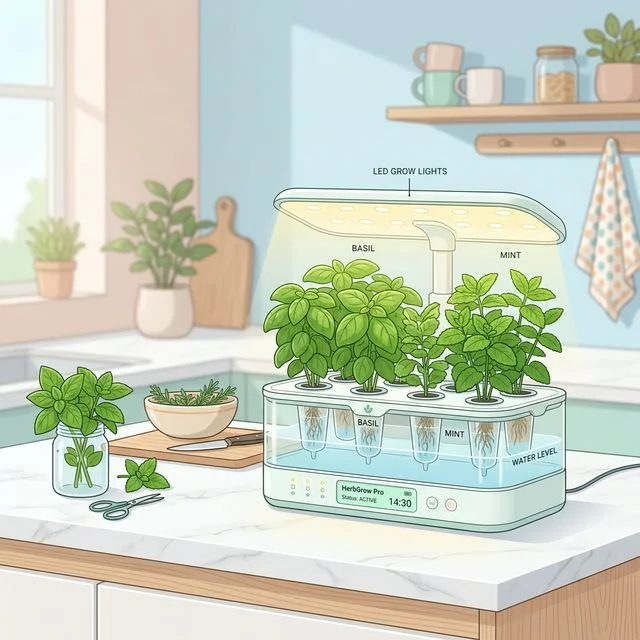
Countertop hydroponic systems are often marketed as effortless. They are not effortless, but they can be extremely convenient if you keep the crop list sensible and maintain the reservoir consistently.
The right crops for countertop hydro
Think herbs, lettuces, baby greens, and compact leafy plants. Basil, dill, parsley, chives, lettuce, and arugula are good fits. Large tomatoes or peppers are usually the wrong assignment for a small countertop unit.
The issue is not just plant height. It is root mass, shading, airflow, and how quickly a small water volume can drift out of balance.
Ignore the smart features at first
Many kits emphasize screens, reminders, and app connectivity. Those features are secondary. The important questions are:
- How strong is the light?
- How much growing height is available?
- How easy is the reservoir to clean?
- How many pods can actually mature without overcrowding?
If a system is easy to maintain, you are more likely to keep it productive. For specific kits that score well on these questions, see Best hydroponic systems for beginners.
Prune for space, not just harvest
Basil especially benefits from early pruning. If you let a countertop system become dense, the center of the canopy loses airflow and the lower leaves start declining. Regular trimming keeps the whole planting more usable.
Nutrients still need attention
Even beginner-friendly kits do not remove the need for nutrient discipline. Overconcentrated solution, dirty reservoirs, and skipped water top-ups are common reasons performance falls off after the first few weeks.
If you want the core principles in plain English, continue with hydroponic nutrients for beginners: EC and pH basics.
Commission a new countertop unit
Do not fill every pod on day one. Start with two or three compatible crops so you can reach the reservoir and separate normal ageing from overcrowding.
- Wash food-contact parts according to the manufacturer.
- Fill with a measured water volume and record source-water EC if available.
- Add the labelled nutrient dose in the specified order.
- Confirm the pump moves or aerates water at every planted position.
- Set a repeatable light schedule and measure fixture-to-canopy distance.
- Label sowing date and cultivar for each pod.
A reminder cannot see a dry plug, trapped seed coat, blocked pump, or seedling shaded by older basil. Inspect daily during establishment.
Plan the canopy, not the pod count
Commercial systems often advertise every opening, but mature basil or dill can occupy several positions. Alternate vigorous and compact plants, leave empty holes covered to block light, and prune before foliage touches the lamp. Use separate sowing dates for fast lettuce and slower parsley.
Keep a reservoir service log
Record top-up volume, nutrient additions, cleaning dates, symptoms, and pump noise. Do not add a full nutrient dose every time water drops unless the manufacturer’s program calculates it that way; plants remove water and ions at different rates.
At each service, inspect the impeller, intake, tubing, deck underside, and roots. Healthy roots may be stained by nutrients, so use texture, odour, oxygen, and plant performance rather than colour alone.
Know when the kit is limiting growth
Move or retire a plant when it exceeds light height, roots block circulation, or one canopy shades the rest. Large fruiting plants usually need independent support, greater root volume, stronger mapped light, and deliberate pollination.
Related Guides
Sources and further reading
If you're growing herbs indoors, also read
These supporting guides connect beginner hydroponics with lighting choices, nutrients, and common performance issues.
- Hydroponic nutrient basics: EC, pH, dilution, and reservoir stability
- How many hours should grow lights run for herbs? 12-16
- Best grow lights for herbs: what actually matters before you buy
- Hydroponic lettuce growing slowly? Check light, roots, and EC in order
- Why are basil leaves turning yellow indoors?
Common questions
Are countertop hydroponic kits good for beginners?
Yes, if expectations are realistic and the kit is used for herbs or greens instead of large vegetables.
Do countertop hydro systems replace sunlight completely?
Many kits can replace sunlight for herbs because they include integrated grow lights, but coverage and intensity still vary by model.
Related guides
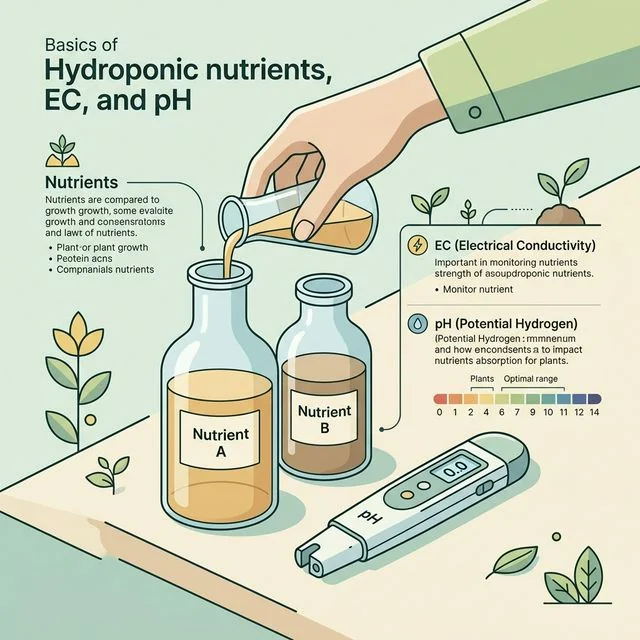
Hydroponic nutrient basics: EC, pH, dilution, and reservoir stability
Most hydroponic problems are not mysterious. They come from concentration drift, pH drift, heat, or neglected maintenance. This guide covers the basics clearly.
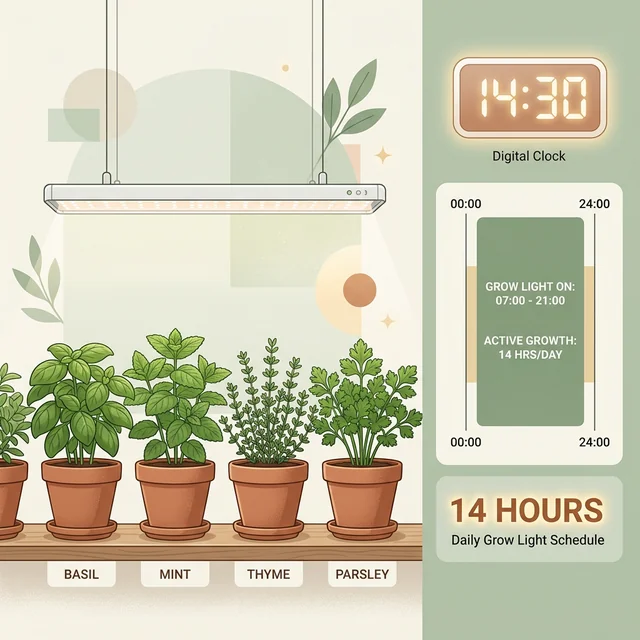
How many hours should grow lights run for herbs? 12-16
Most herb grow lights should run about 12 to 16 hours per day, but intensity, distance, and a stable dark period matter as much as the timer itself.
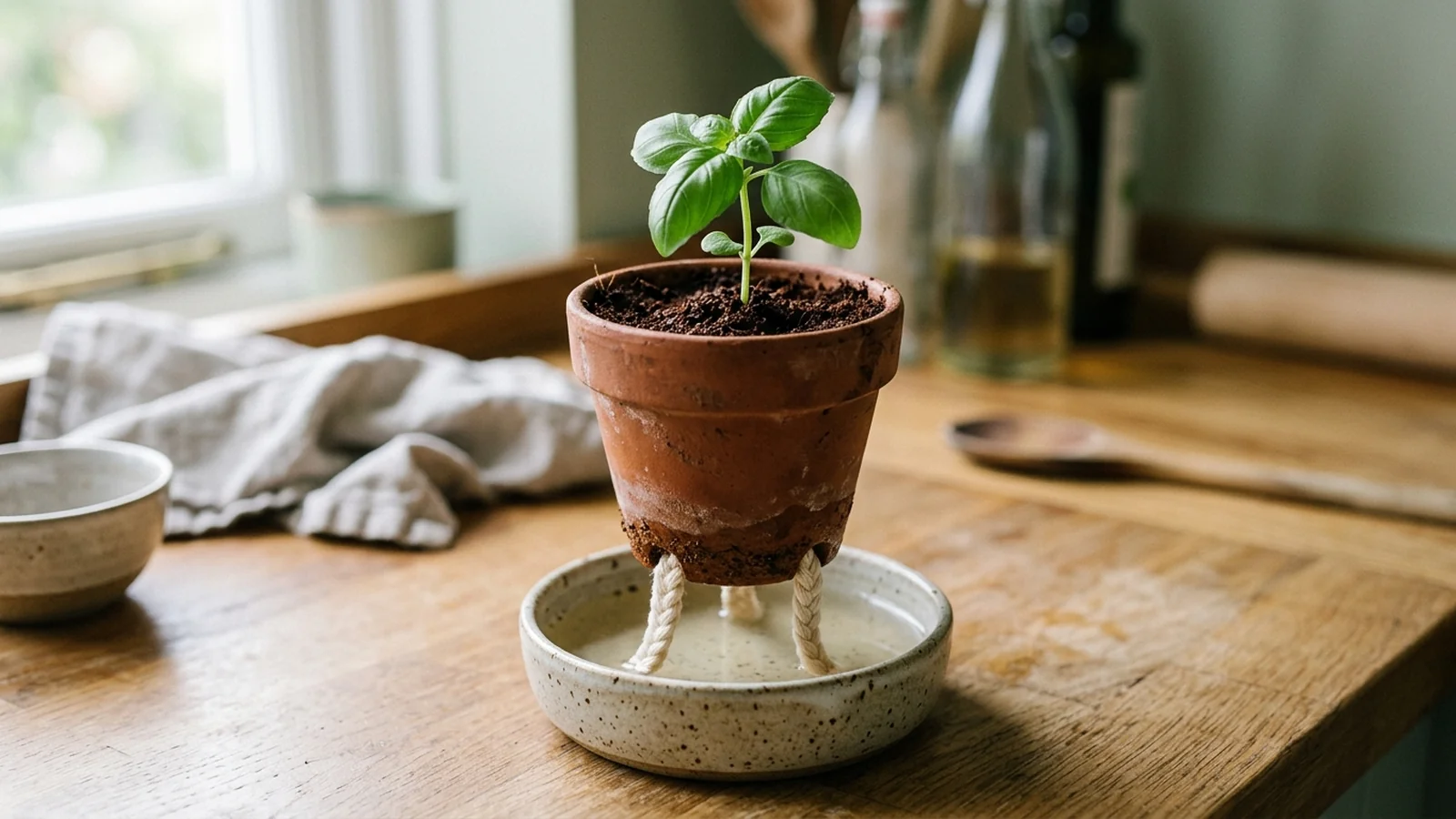
Wick hydroponic systems: what they grow well, and what they can't
A wick hydroponic system has no pump, no air stone, and no moving parts at all; a wick just pulls nutrient solution up into the growing medium. That simplicity is also its ceiling.