Troubleshoot the system before you change the inputs.
Symptoms
- A single stem rises above the surrounding leaves and branches into small white flowers.
- Leaf production slows or stops while the flowering stem keeps developing.
- Round seed heads form on the flowering stem within a few weeks of the first blooms.
Possible causes
- Warm temperatures have arrived, which Clemson Cooperative Extension names as the trigger for cilantro to bolt quickly once summer heat sets in.
- Long summer daylight is acting alongside the heat; Oregon State University Extension describes temperature and day length together as what controls when cilantro bolts.
- The plant was sown late enough in spring that it is maturing into the hottest, longest days of summer instead of the cooler weeks before them.
Quick fixes
- Move the planting to a cooler, part-shaded spot for the rest of the season instead of leaving it in full afternoon sun.
- Start a new succession sowing now rather than waiting on the bolting plant to produce more leaves.
- Let a bolted plant finish flowering and harvest the resulting seed as coriander instead of pulling it out right away.
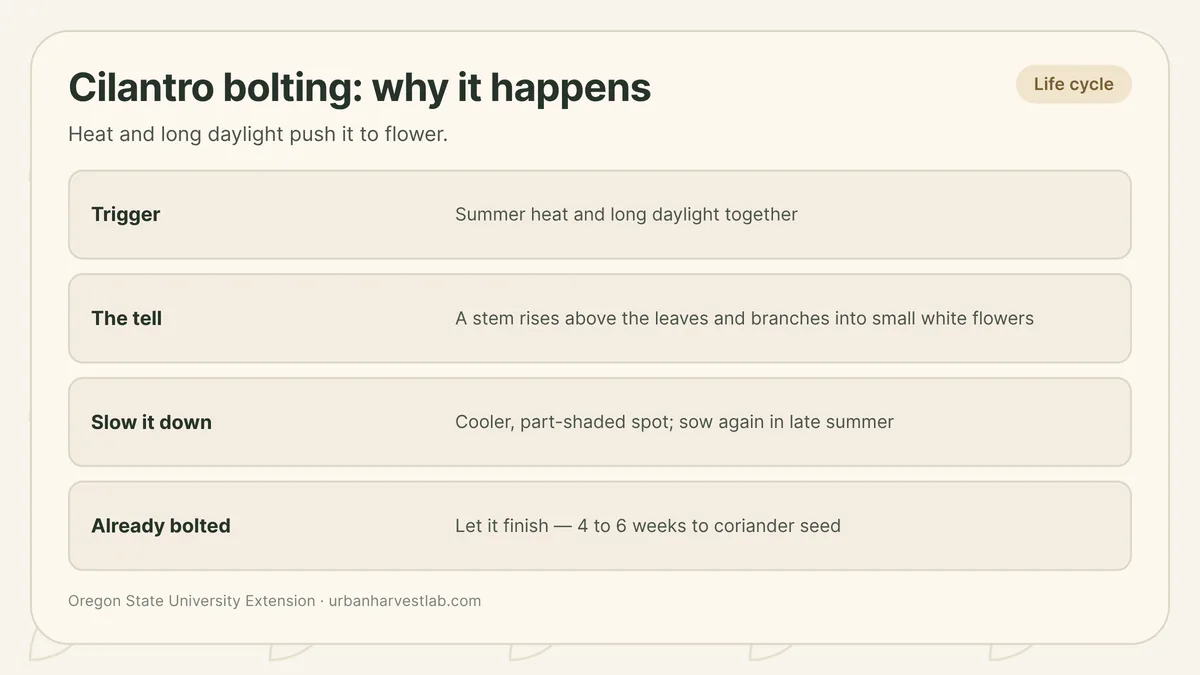
Cilantro bolts when it shifts from making leaves to making flowers and seed, and the trigger is summer heat and long daylight hours together, not something you did wrong. Once a plant commits to that shift, no product or technique reverses it. The realistic goal is to slow the timing, keep a new planting coming along behind the one that is bolting, and get something useful out of the plant once it goes.
If cilantro is only one of several things going wrong on a shelf of potted herbs — pale color, slow growth, a container that stays wet for days — the common potted herb problems guide works through light, root stress, and container issues in order before you narrow down to bolting specifically.
Why heat and daylight push cilantro to flower
Cilantro is an annual, and Clemson Cooperative Extension puts the trigger plainly: the onset of summer heat causes it to bolt quickly. Oregon State University Extension adds the second half of the mechanism — both temperature and day length influence flowering and seed set. A planting sown in late June or early July flowers, or bolts, during the long, hot days of summer, while one started in the cooler, shorter days of spring or fall grows leaves for several weeks or months before it turns to flowering at all.
Once bolting starts, the timeline moves fast. Oregon State’s figures for a mid-summer planting: cilantro typically bolts into small white flowers and produces seed within four to six weeks. Neither source gives a single temperature at which bolting begins — Clemson names the season, Oregon State names heat and day length together, and neither attaches one number to watch for. Treat the trigger as a season and a location rather than a thermostat setting.
Confirm it is bolting, not something else
A tall, branching stem rising out of the center of the plant and ending in clusters of small white flowers is bolting. If the plant is instead yellowing from the base while the soil stays damp, or wilting flat across the top with no stem shooting upward, that points to a root or watering problem instead — how often to water cilantro covers the schedule and the finger test that settles which one you have.
Leaf output does not stop the instant flowering begins. Younger leaves lower on the plant can keep going for a while even as the central stem races upward, so pick from those before the stem takes over most of the plant’s energy.
Slow it down with cooler placement and sowing timing
Oregon State’s advice for delaying bolting is placement and timing rather than a product: grow cilantro in a cooler or semi-shaded spot, and sow it in early spring and again in late summer as temperatures cool and day length shortens, instead of sowing once in the middle of the hottest stretch of the year. Seeds germinate at soil temperatures of 55 to 68°F, which lines up with spring and early fall better than with midsummer.
A part-shaded spot costs less light than it sounds like it would. Penn State Extension lists cilantro among the herbs that tolerate as little as 2 to 6 hours of direct light a day, so moving it out of the brightest, hottest part of a balcony or windowsill for the summer is unlikely to leave it starved for light — the herb sunlight chart shows how that compares with sun-hungry herbs like basil. Depth matters too: the usual growing advice is to sow cilantro direct rather than move seedlings (the sources here cover heat and day length, not root disturbance, so this is general practice rather than a sourced trait), and a deep enough container is one less thing to work against once the heat sets in — the cilantro pot size guide covers the dimensions that suit it.
Keep leaves coming with succession sowing
Because a single planting eventually bolts no matter where you put it, the more reliable fix for a steady supply is starting a new batch before the old one stops producing. Oregon State’s recommendation is to sow in succession every few weeks rather than relying on one planting to carry the whole season.
Oregon State’s sowing figures for each new batch: plant 10 to 15 seeds per foot of row, cover with ½ inch of soil, thin plants to 8 inches apart, and space rows 18 to 24 inches apart. Those are field-row figures; in a pot the transferable parts are the ½-inch covering depth and the 8-inch thinning distance, and a wide trough can take two or three staggered bands instead of rows. The general timing and spacing principles for staggering plantings of any container crop, not only cilantro, are covered in succession sowing for containers.
Harvest technique that extends a plant’s useful life
How you cut cilantro also affects how long it keeps producing before bolting takes over. University of Georgia Extension’s general instruction for herbs is to cut stems individually, about 6 inches below the flower buds, rather than shearing the whole top of the plant at once. Essential-oil concentration, and with it flavor, peaks just before a plant starts to bloom, according to both Clemson and UGA, so harvesting while the plant is still purely vegetative gets the best of it ahead of bolting.
Timing within the day matters too. Illinois Extension recommends harvesting herbs early in the day after they have dried off and before it gets hot, and the National Center for Home Food Preservation gives the same window as early morning after the dew has evaporated. Cutting in the cool part of the day works with the heat that is already pushing the plant toward bolting instead of adding to it.
Already bolted? Let it finish as coriander
A bolted plant is not automatically a wasted one. Oregon State’s guidance covers cilantro grown for leaves or for coriander seed, and once a plant has committed to flowering, seed is the realistic output left to collect — figure four to six weeks from the first flowers to seed under mid-summer conditions. Leave the stem standing, let the seed heads dry on the plant or on a tray indoors, and treat the harvest as coriander rather than trying to force the plant back into leaf production.
Pull the spent plant once seed collection is done and start the next succession sowing in its place rather than nursing a plant that has already moved on.
Common mistakes
- Sowing only once in late spring and expecting leaves through the whole summer.
- Treating a rising central stem as a pest or nutrient problem instead of confirming bolting first.
- Shearing the whole top of the plant instead of cutting stems individually, which removes the youngest growth along with the oldest.
- Pulling a bolted plant immediately instead of letting it finish into coriander seed.
- Expecting a change of watering routine to stop bolting — even, adequate moisture and unrestricted root room reduce stress, but Oregon State names heat and day length as what drives the switch to flowering, so neither one holds a summer planting back.
Sources
- Clemson Cooperative Extension: Herbs
- Oregon State University Extension: How to grow cilantro for leaves — or coriander seeds
- Penn State Extension: Growing Herbs Indoors
- University of Georgia Extension Bulletin 1170: Herbs in Southern Gardens
- University of Illinois Extension: Harvesting (Herbs)
- National Center for Home Food Preservation: Drying Herbs
Keep cilantro producing longer
These guides cover the pot, watering, and succession-sowing decisions that work alongside placement and timing to slow bolting.
Common questions
What does bolting look like in cilantro?
A single stem rises taller than the surrounding leaves and branches into small white flowers, followed by round seed heads. Leaf production slows as the plant puts its energy into flowering and seed instead of new growth.
Can you stop cilantro from bolting completely?
Not for the whole season. Cilantro is an annual that flowers once heat and long daylight hours arrive, and a cooler spot, earlier sowing, or a later sowing date delays that shift rather than cancels it.
Is bolted cilantro still useful?
Yes. Left on the plant, Oregon State University Extension gives four to six weeks from the first flowers to seed in mid-summer conditions, and that seed is coriander, the same plant's second crop.
How is bolting different from a watering problem?
Bolting shows up as a stem rising out of the center of the plant with flowers on it, while leaf growth elsewhere may still be active. A plant that is simply too dry wilts flat across the whole top, with no stem shooting upward, and improves once it is watered.
Related guides
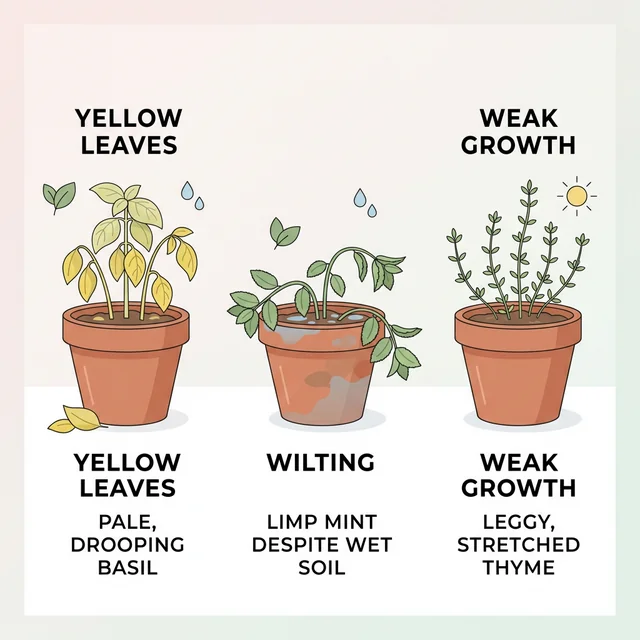
Common potted herb problems: yellow leaves, wilting, and weak growth
Common potted herb problems usually show up as yellow leaves, wilting, or weak growth, but the useful diagnosis starts with light, drainage, and root stress.
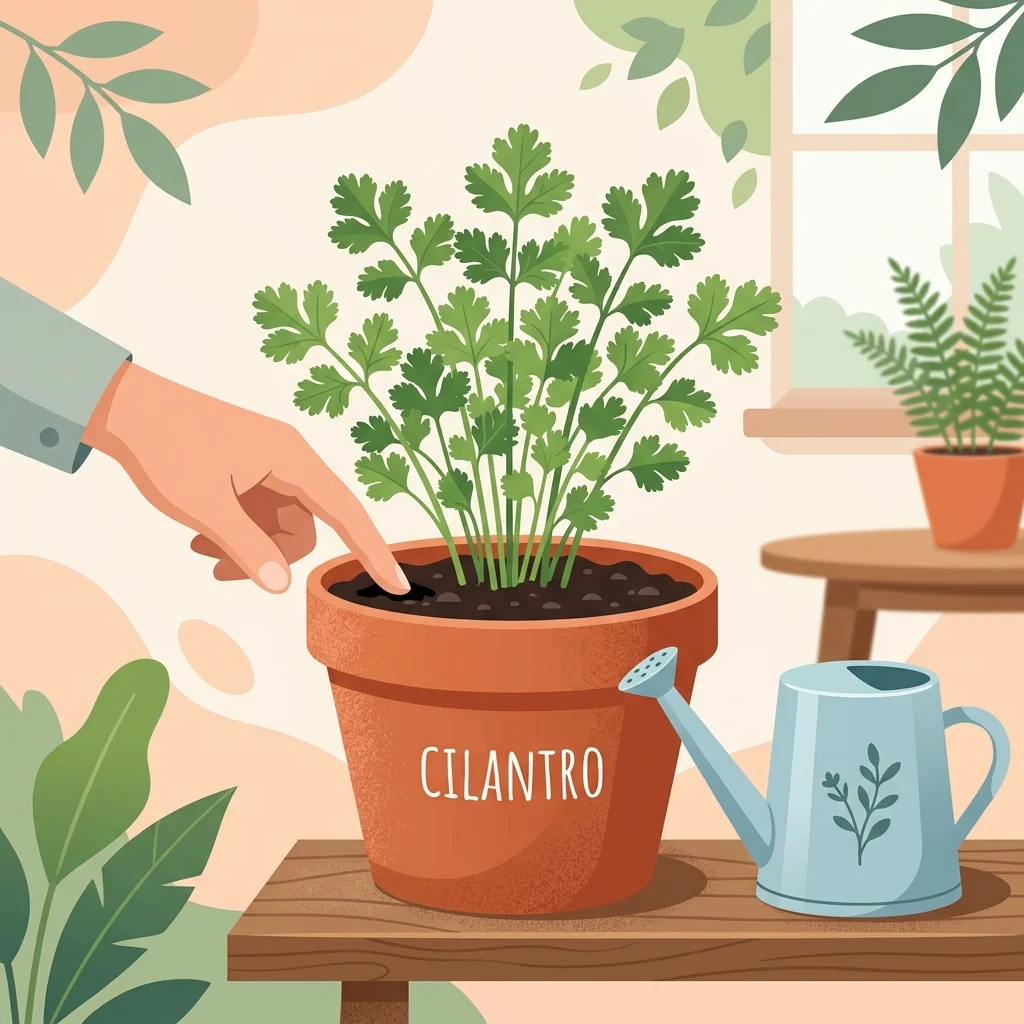
How often to water cilantro: every 2 to 4 days in a pot
Cilantro wants even moisture and cool conditions, and it bolts when stressed. Water when the top inch dries, and use a deep pot to keep the rhythm steady.
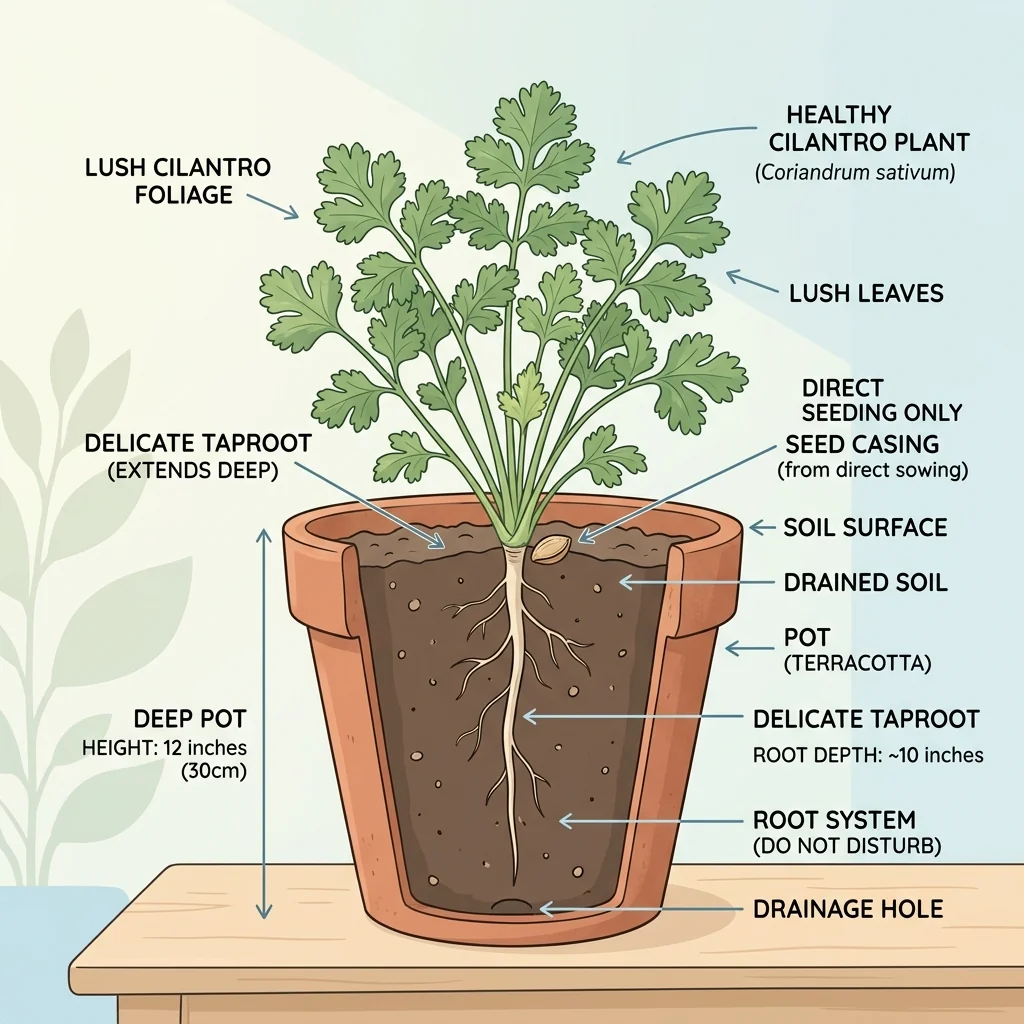
Cilantro pot size: how deep it needs to be for the taproot
Cilantro grows a taproot and resents being moved, so depth and direct sowing matter more than width. Get the pot right and you can succession-sow for steady leaves.