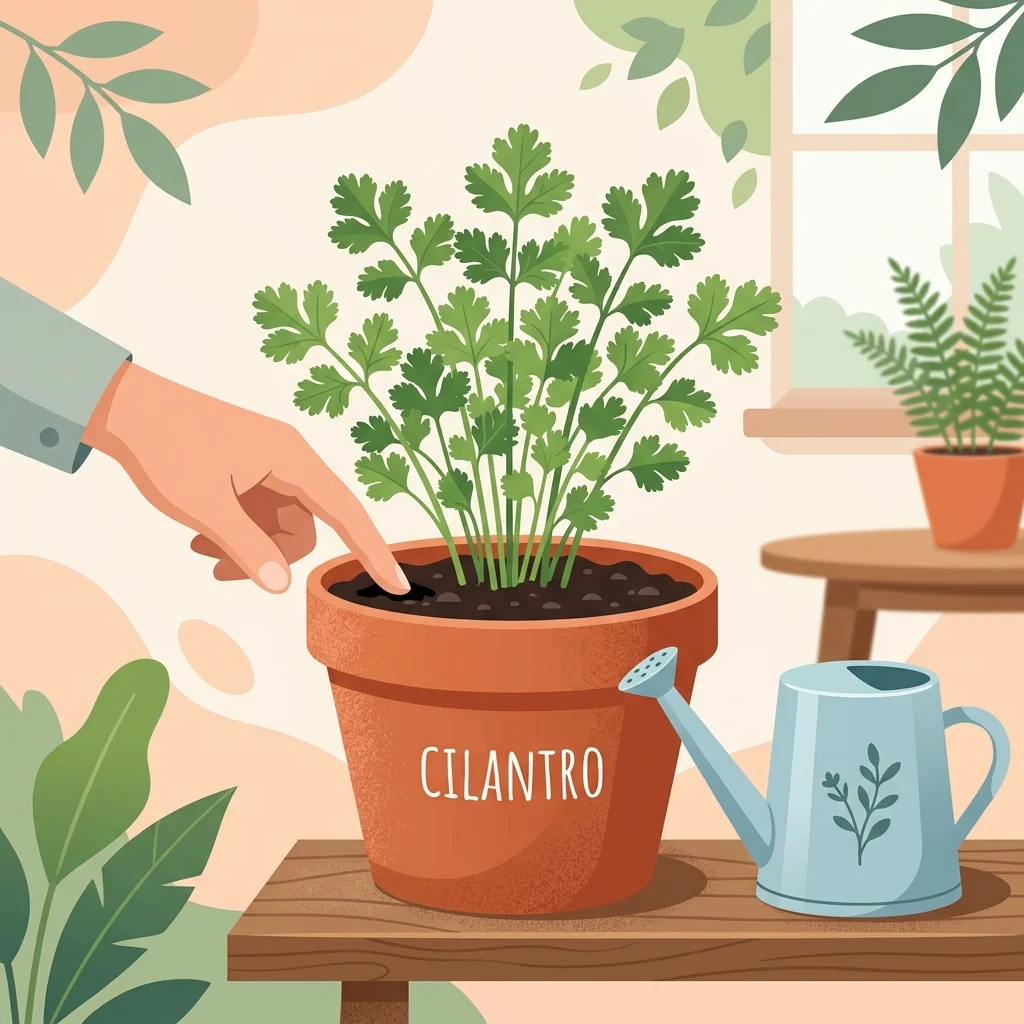
Watering cilantro by condition
| Condition | Rough frequency | Check first |
|---|---|---|
| Warm spot or summer | Every 1-2 days | Top inch dry; bolting risk if drier |
| Medium pot, indoors | Every 2-4 days | Top inch dry |
| Cool season, deep pot | Every 3-5 days | Top inch dry; avoid sogginess |
Watering cilantro is really bolt prevention by other means. Every stretch of dry soil is a signal to this fast-living annual that the season is ending — and its response is to stop making leaves and start making flowers. So the target is steady, even moisture: water when the top inch of soil is dry, typically every 2 to 4 days in a pot and closer to daily in heat, and treat a fully dried-out pot as a real setback rather than a near miss. Cilantro sits with the thirsty herbs on the herb watering chart; the finger-test method underneath it all is in how often to water potted herbs.
Drought is a countdown, not just a wilt
Most herbs recover from a dry spell and carry on. Cilantro recovers and takes notes. Its physiology is built around one season: germinate, leaf out, flower, seed, die — and stress accelerates the programme. A soft-leaved plant with a taproot that resents disturbance, it reads bone-dry soil, heat, and cramped roots all as the same message: time’s up. Once bolting starts, the leaves thin, the flavour turns soapy-bitter, and no watering rewinds it. That is why cilantro’s watering rule is phrased differently from its neighbours’: not “water when dry” but “never let it fully dry.”
Watering a stand is different from watering a plant
Leaf cilantro is grown as a dense patch — dozens of seedlings an inch or two apart — not as a single specimen (the sowing pattern is in what size pot does cilantro need). That changes the technique: pour gently across the whole surface with a rose or shower head, not a stream at one point. A hard pour flattens seedlings and carves channels; watering only one side leaves the far side of the stand dry, which shows up within days as a yellowing patch. Check moisture in two or three spots of the patch, not just the middle.
From seed packet to first cut
Cilantro’s watering needs shift across its short life. Germination (days 0–14): the surface must stay continuously damp — mist or shower gently, daily if needed; seeds that dry out mid-germination are gone, and cilantro is already a slow, patchy germinator. Seedlings (weeks 2–4): shift to the top-inch rule, still gentle. Cutting stage (week 4 on): full thorough waterings until it drains, every 2 to 4 days by the finger test. Each harvest removes leaf area, so a freshly cut stand drinks a little less for a few days — one of the few times cilantro’s interval stretches on its own.
The April pot and the July pot
The same trough, sown twice, shows what watering can and cannot do. An April sowing, kept evenly moist through mild weeks, gives five or six weeks of cutting before the first flower stalks. The July sowing gets more attention — checked daily, never once dry — and still starts bolting inside three weeks, because root-zone heat is a bolting trigger that water cannot switch off. The lesson runs both ways: in spring, watering discipline genuinely buys weeks of harvest; in summer, even perfect watering only buys days, so keep the pot out of afternoon sun, shade the soil, and lean on succession sowing — a fresh batch every 2 to 3 weeks — rather than fighting for the old one.
Reading a struggling pot
Three cilantro symptoms, three different verdicts. Limp, dull leaves with dry soil — thirst; a thorough soak brings a young stand back within hours. Yellowing lower leaves with damp soil — too much water or poor drainage, and the taproot is starting to suffer; let the top inch dry properly and check the holes. A sudden vertical stalk with feathery new leaves — bolting; not a watering problem at all, and the only response is to harvest hard and sow the next round. Its relative parsley shares the taproot and the even-moisture preference but bolts far more patiently — see how often to water parsley.
Cilantro's other survival guides
These guides connect cilantro's watering to its pot size, the by-herb chart, and the summer conditions that make it bolt.
Common questions
How often should you water cilantro?
Water cilantro when the top inch of soil is dry, which in a pot is often every 2 to 4 days, and more often in heat. Cilantro likes steady, even moisture and reacts badly to drying out completely.
Can you overwater cilantro?
Yes. Constantly soggy soil rots cilantro's taproot and yellows the plant. Aim for evenly moist, never waterlogged, and make sure the pot drains freely.
Does underwatering make cilantro bolt?
It is one of the main triggers. Drought stress, heat, and cramped roots all push cilantro to flower and go to seed early. Steady moisture and a cool spot are the best ways to delay bolting.
How do I know when cilantro needs water?
Feel the top inch of soil and lift the pot. Dry soil and a light pot mean it is time to water thoroughly until it drains. In hot weather check daily, because cilantro dries faster than its soft leaves suggest.
How should I water cilantro seeds before they germinate?
Keep the surface consistently damp with a gentle shower or mister until seedlings are up, usually 7 to 14 days. Cilantro seeds are slow starters, and a surface that dries out mid-germination kills the batch, while a hard pour washes the seeds together into clumps.
Should I water a cilantro stand differently from a single plant?
Yes, slightly. Leaf cilantro grows as a dense patch of seedlings, so water the whole surface evenly rather than at one stem, using a gentle rose or shower head. Uneven watering shows up fast in a stand as dry, yellowing patches on one side of the pot.
Why is my cilantro yellowing at the base?
Lower-leaf yellowing with damp soil usually means overwatering or poor drainage rotting the taproot. Yellowing plus a sudden central stalk means bolting, not a watering problem. Check which one you have before changing the routine.
Related guides
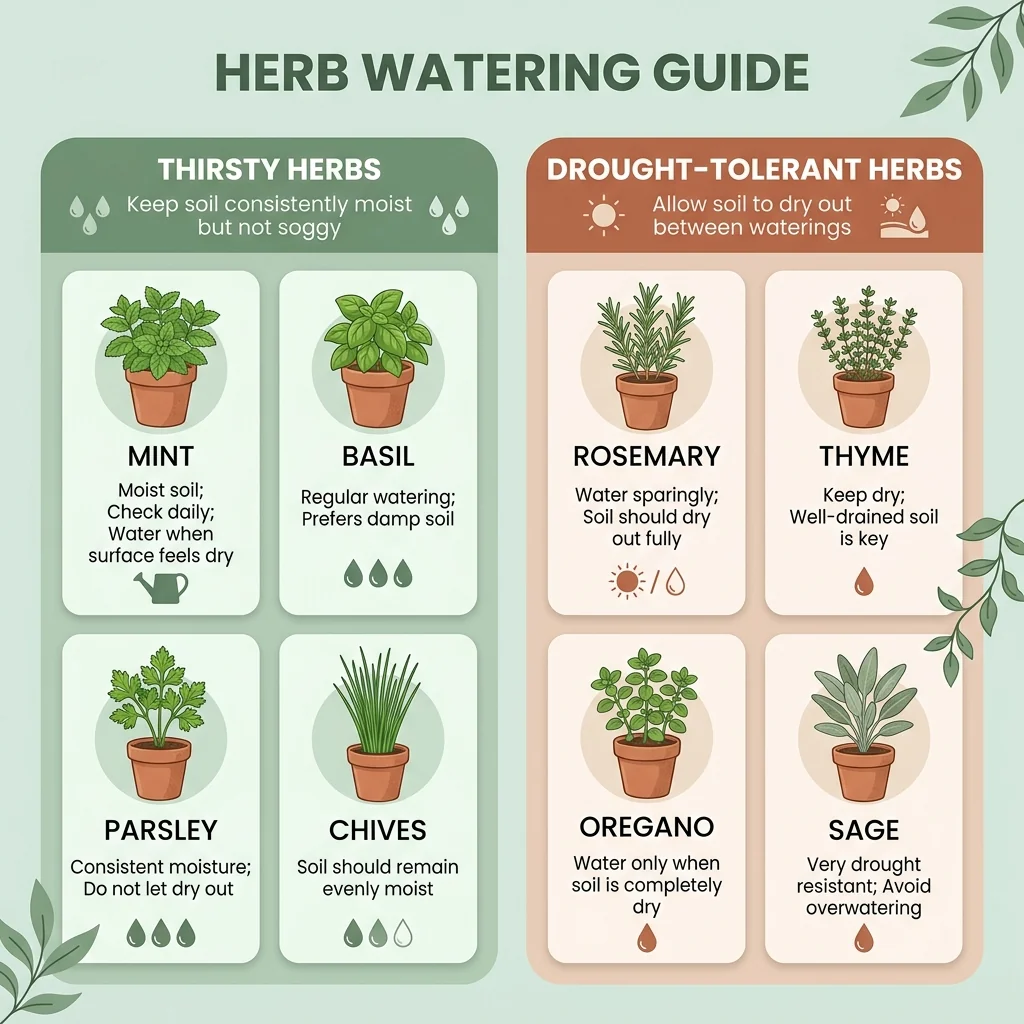
Herb watering chart: how often to water each herb
One simple chart for how often to water the most common herbs, split into thirsty herbs and drought-tolerant herbs, with links to a full guide for each.
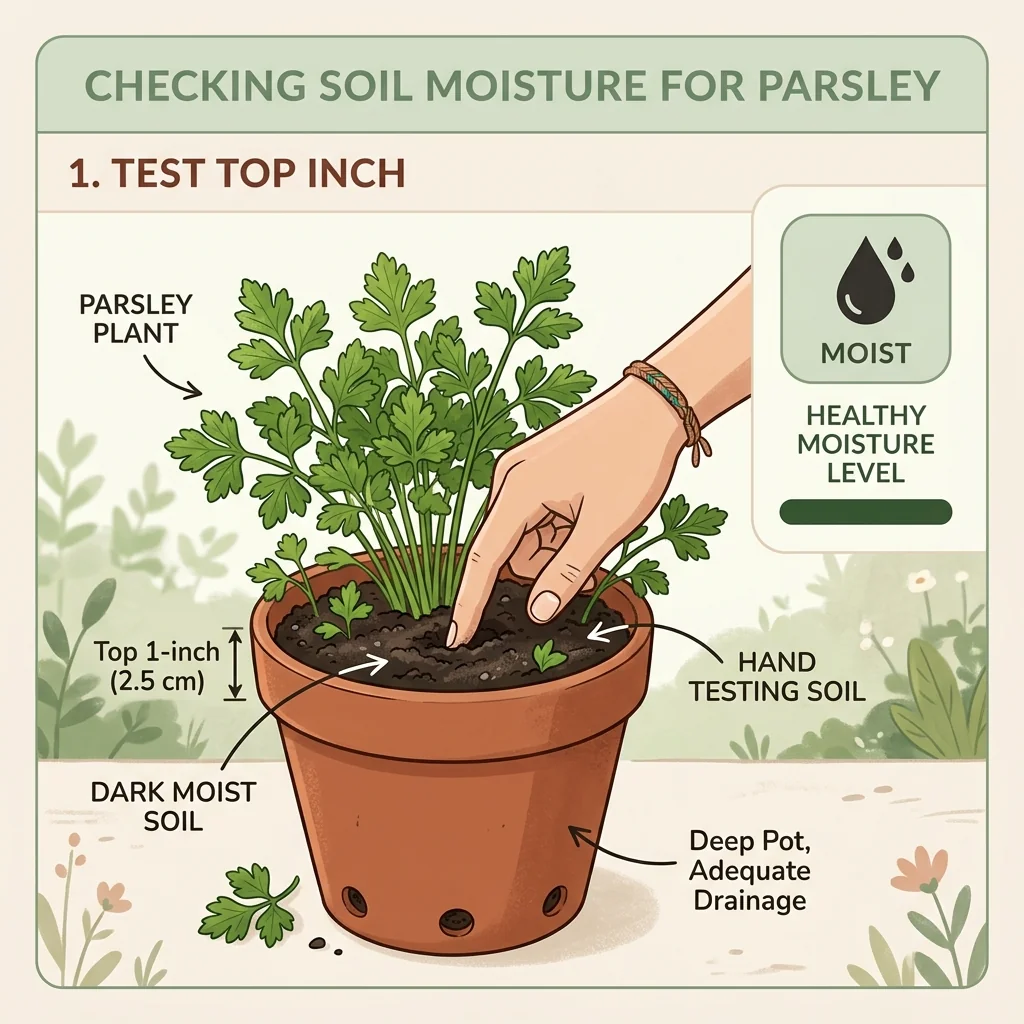
How often should you water parsley? Even moisture
Parsley sits in the middle of the watering scale: it wants steady moisture for its taproot but not soggy soil. Water when the top inch dries and it stays lush.
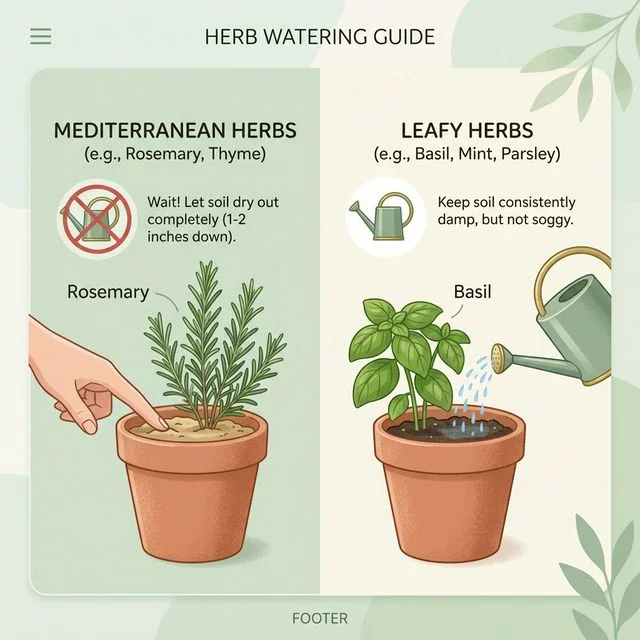
How often to water potted herbs: a by-herb chart
Most potted herbs should be checked often but watered only when the root zone is actually drying. Judge the pot instead of following a rigid calendar.