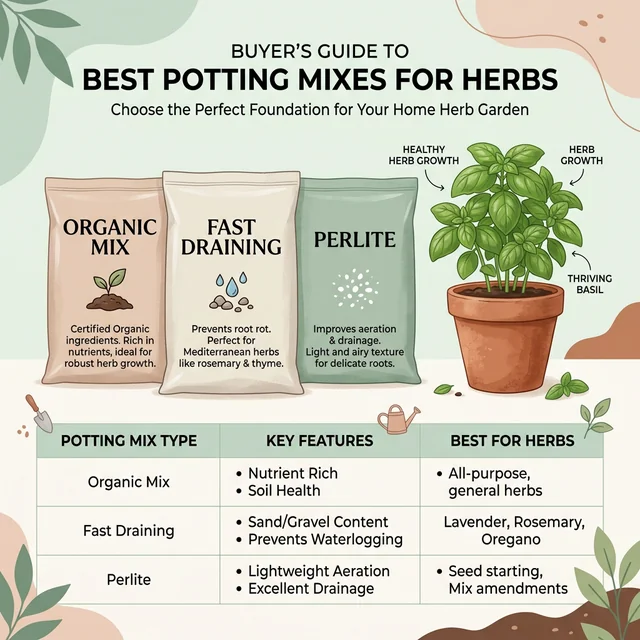
The top potting mix solutions for different herb types
| Best For | Top Recommendation | Key Ingredient Advantage | Ideal Herb Match |
|---|---|---|---|
| Overall Vigor & Yield | FoxFarm Ocean Forest | Earthworm castings & bat guano | Basil, Parsley, Mint |
| Organic Kitchen Gardens | Espoma Organic Potting Mix | Myco-tone mycorrhizae for root health | Chives, Cilantro, Lemon Balm |
| Drought-Tolerant Herbs | Miracle-Gro Cactus & Citrus | Heavy sand and perlite ratio | Rosemary, Thyme, Oregano |
Disclaimer: As an Amazon Associate, Urban Harvest Lab earns from qualifying purchases made through the links on this page. We only recommend farming products we trust and use in our own setups.
The soil you put in your herb pots is the permanent foundation of your indoor garden. If you buy the wrong bag, your plants will fight an uphill battle against suffocation, root rot, and nutrient lock-out every single day.
If you haven’t already, it is absolutely vital to read Potting Mix vs. Raised Bed Soil for Herb Containers before pulling out your credit card. Heavy garden soil will kill container plants. You must buy a product explicitly labeled as “Potting Mix” or “Potting Soil for Containers.”
Once you understand why drainage is non-negotiable—and how it connects to your overall apartment layout as detailed in Small-Space Herb Gardening: Start Here for Apartments, Balconies, and Indoor Setups—you are ready to shop.
Here are the best, most reliable commercial potting mixes available for indoor and balcony herbs.
1. Best Overall for Heavy Feeders: FoxFarm Ocean Forest
If you want massive, explosive growth from high-demand herbs like basil and mint, FoxFarm Ocean Forest is considered the gold standard in the indoor growing community.
Check FoxFarm Ocean Forest on Amazon
- Why it is great for herbs: This is a powerhouse, premium organic blend. It is packed with earthworm castings, bat guano, fish emulsion, and crab meal. This means it is “hot” (nutrient-rich) right out of the bag. You will not need to add any supplemental fertilizer for the first month.
- The texture: It has a beautifully light, aerated texture out of the bag, providing excellent oxygen flow to the root zone.
- Best herbs to plant in it: This is the ultimate soil for herbs that love rich environments and lots of water: Basil, Mint, Parsley, and Cilantro.
2. Best for Organic Kitchen Counters: Espoma Organic Potting Mix
If you are growing herbs directly on your kitchen counter to snip into your dinner, you likely want an organic-certified product that is safe, clean, and reliable. Espoma has an incredible reputation for high-quality organic amendments.
Check Espoma Organic Potting Mix on Amazon
- Why it is great for herbs: Espoma’s secret weapon is their proprietary Myco-tone® mycorrhizae blend. Mycorrhizae are beneficial fungi that attach to the plant’s roots and help them absorb water and nutrients far more efficiently. This helps mitigate the “transplant shock” herbs often experience when you move them from a cheap nursery pot into a permanent container.
- The aesthetic: It is a very clean, dark, rich soil without excessive chunks of raw wood that you often find in cheaper generic brands.
- Best herbs to plant in it: Excellent for a mixed kitchen counter setup including Chives, Parsley, Lemon Balm, and smaller Basil plants.
3. Best for Mediterranean Herbs: Miracle-Gro Cactus, Palm & Citrus
This might seem counterintuitive. Why buy cactus soil for an Italian herb? Because herbs like rosemary, thyme, and oregano originate in rocky, dry, fast-draining Mediterranean environments. Regular potting mix often holds too much moisture for them, leading to the exact rot issues diagnosed in Common Problems With Potted Herbs: How to Diagnose Yellow Leaves, Wilting, and Weak Growth.
Check Miracle-Gro Cactus & Citrus Mix on Amazon
- Why it is great for herbs: This mix is specifically formulated to dry out rapidly. It contains a higher ratio of sand and perlite than standard mixes. This prevents the “wet feet” that notoriously kill container-grown rosemary.
- The workflow: Because it drains so fast, it is incredibly forgiving if you have a tendency to overwater your plants. For a complete guide on how to water different herb types, read Potted Herb Care: Watering, Feeding, and Pruning Without Guesswork.
- Best herbs to plant in it: The drought-tolerant survivors: Rosemary, Thyme, Oregano, and Sage.
The Mandatory Add-On: Horticultural Perlite
No matter how premium a potting mix is, it will eventually begin to compact in a container after months of watering. The single best investment you can make for your indoor garden is a standalone bag of perlite.
Check Hoffman Horticultural Perlite on Amazon
Perlite consists of those little white, porous rocks you see in commercial soil. They are volcanic glass puffed up like popcorn. Perlite doesn’t absorb water; instead, it holds open physical air pockets in the soil so your roots can breathe.
- The pro tip: When potting your herbs (especially if using the containers described in Best Containers for Herbs: Pot Size, Drainage, and Material Guide), mix a handful or two of extra perlite into any soil you buy. It is the cheapest insurance policy against root rot on the market.
How to Handle Fresh Soil
When you buy a premium bag of soil, resist the urge to immediately drench it with liquid fertilizer. FoxFarm and Espoma are already loaded with nutrients. If you add heavy synthetic fertilizer on day one, you will “burn” the roots of your herbs, causing the leaf tips to turn brown and crispy. Let the plant settle into its new home for at least four weeks before considering additional feeding.
Select the soil that matches your herb’s natural environment, add a bit of perlite for safety, and watch your apartment garden finally stop dying and start thriving.
Read these to keep your soil ecosystem healthy
Once you buy the right soil, these guides show you how to water and maintain it to prevent root rot or compaction.
- Potting Mix vs. Raised Bed Soil for Herb Containers
- Potted Herb Care: Watering, Feeding, and Pruning Without Guesswork
- Common Problems With Potted Herbs: How to Diagnose Yellow Leaves, Wilting, and Weak Growth
- Best Containers for Herbs: Pot Size, Drainage, and Material Guide
- Small-Space Herb Gardening: Start Here for Apartments, Balconies, and Indoor Setups
Common questions
Does the brand of potting mix really matter?
Yes. Cheap, generic potting soils usually contain too much peat moss and wood chips, leading to compaction and poor drainage. Premium brands provide a much better balance of aeration and nutrients.
Should I add fertilizer to fresh potting mix?
Generally, no. Most high-quality mixes (especially organic ones like FoxFarm) come pre-loaded with enough nutrients to feed your herbs for the first 4 to 6 weeks.
Why use cactus mix for herbs?
Mediterranean herbs (rosemary, thyme, oregano) hate sitting in continuously wet soil. Cactus mix is engineered with extra sand and perlite to drain rapidly, mimicking their native dry, rocky environments.
Related guides
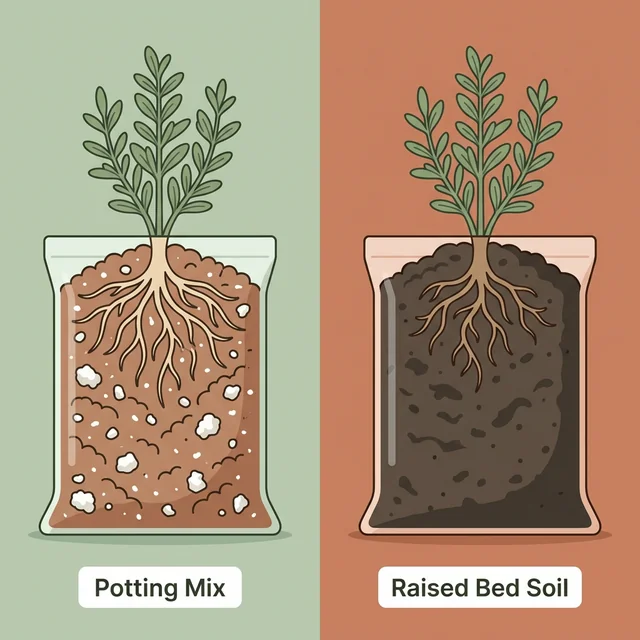
Potting Mix vs. Raised Bed Soil for Herb Containers
Using the wrong dirt is the fastest way to kill a potted herb. This guide explains the critical difference between indoor potting mix and outdoor raised bed soil.
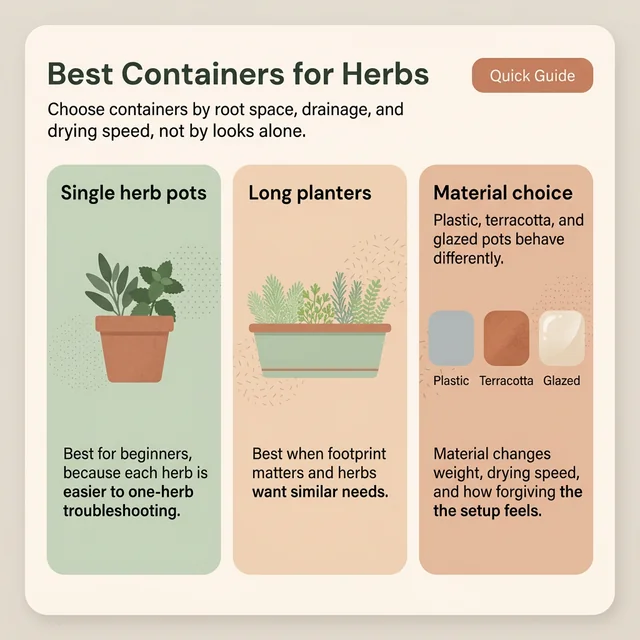
Best Containers for Herbs: Pot Size, Drainage, and Material Guide
A practical guide to selecting herb containers that make watering easier, reduce root problems, and actually suit apartments, balconies, and windowsills.
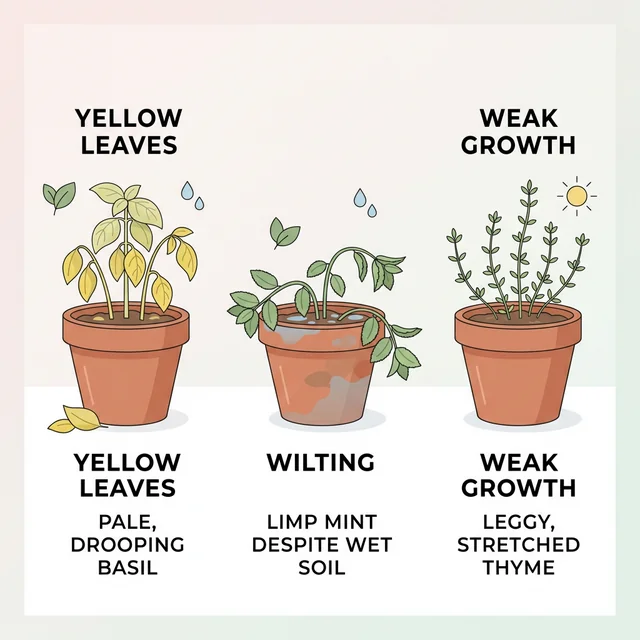
Common Problems With Potted Herbs: How to Diagnose Yellow Leaves, Wilting, and Weak Growth
Most potted herb problems are not isolated mysteries. Yellow leaves, wilting, and weak growth usually trace back to light, drainage, containers, or routine drift.