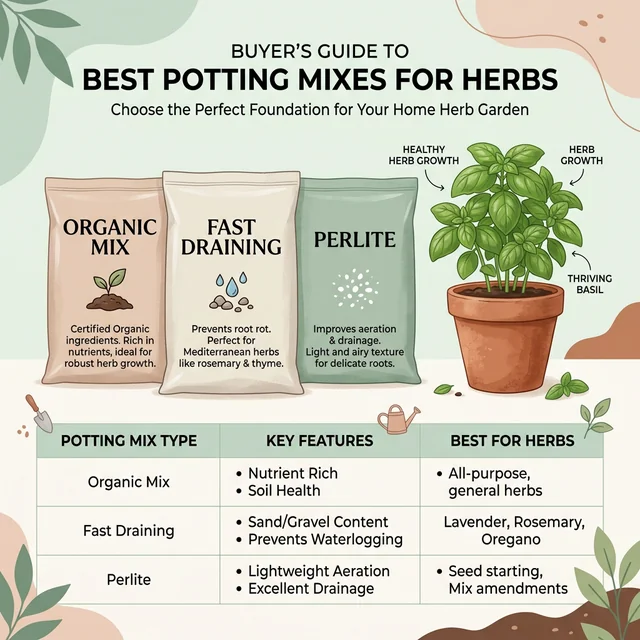
The top potting mix solutions for different herb types
| Best For | Top Recommendation | Key Ingredient Advantage | Ideal Herb Match |
|---|---|---|---|
| Overall Vigor & Yield | FoxFarm Ocean Forest | Earthworm castings & bat guano | Basil, Parsley, Mint |
| Organic Kitchen Gardens | Espoma Organic Potting Mix | Myco-tone mycorrhizae for root health | Chives, Cilantro, Lemon Balm |
| Drought-Tolerant Herbs | Miracle-Gro Cactus & Citrus | Heavy sand and perlite ratio | Rosemary, Thyme, Oregano |
Editorial note: Retailer links are untracked shopping references; Urban Harvest Lab does not currently receive a commission from them. The linked mixes are examples based on listed composition and intended use, not documented hands-on trials. Regional formulas can vary, so check the current label before purchase.
The potting mix you put in a herb container shapes almost everything that happens next. It affects drainage, root oxygen, watering rhythm, and how forgiving the setup feels from week to week. If the mix is too dense, even a good container and a careful routine become harder to manage.
Before comparing brands, read Potting Mix vs. Raised Bed Soil for Herb Containers if you are still unsure what belongs in a pot at all. Heavy garden soil and raised bed mixes create a different problem from buying the wrong potting blend.
Once that foundation is clear, match the mix to the herb and to the rest of the system. Potted Herb Care: Watering, Feeding, and Pruning Without Guesswork explains how soil choice changes the care routine, and Best Containers for Herbs: Pot Size, Drainage, and Material Guide helps you avoid pairing a fast-drying mix with an equally unforgiving pot.
The options below are useful starting points for indoor shelves, windowsills, and balcony pots. The goal is not to find one miracle bag for every herb. It is to choose a mix whose drainage and nutrient profile make sense for what you are actually growing.
1. Richer-Mix Example: FoxFarm Ocean Forest
If you grow hungry, leafy herbs such as basil and mint, a richer all-purpose mix like FoxFarm Ocean Forest is a common starting point because it combines decent aeration with a higher nutrient charge.
Check FoxFarm Ocean Forest on Amazon
- Why it is useful for herbs: It is a richer organic blend with enough structure to stay workable in containers while still supplying more initial nutrition than a plain base mix. In many home setups, that means less pressure to fertilize immediately.
- What to verify: Current ingredients, fertilizer charge, regional formulation, bag condition and whether the texture stays suitably porous in your pot.
- Possible fit: Basil, mint, parsley, or cilantro when the label and watering system suit them; it is not an “ultimate” universal soil.
2. Organic-Labeled Example: Espoma Organic Potting Mix
If you are growing herbs on a kitchen counter or windowsill and want an organic-leaning option with a calmer texture, Espoma Organic Potting Mix is often easier to work with than cheaper generic blends.
Check Espoma Organic Potting Mix on Amazon
- Why it may be useful: It is sold as a container mix and may suit a small setup that needs moderate moisture retention.
- What to verify: Current certification and label, ingredient texture, drainage after watering, included fertilizer and fungus-gnat or storage issues in the actual bag.
- Possible fit: Chives, parsley, lemon balm, and smaller basil plants after confirming light and container conditions.
3. Faster-Draining Example: Miracle-Gro Cactus, Palm & Citrus
This can look counterintuitive at first. Why buy cactus mix for an herb? Because rosemary, thyme, and oregano often decline in mixes that stay moist too long. In containers, that slower dry-down can look like a watering problem when the real issue is that the root zone never gets enough air, which is also why Common Problems With Potted Herbs: How to Diagnose Yellow Leaves, Wilting, and Weak Growth so often traces back to soil and drainage.
Check Miracle-Gro Cactus & Citrus Mix on Amazon
- Why it is useful for herbs: It dries faster than standard indoor mixes and can give Mediterranean herbs the extra airflow they need when a regular all-purpose blend stays wet for too long.
- The workflow: A faster-draining mix may reduce slow dry-down, but it cannot make repeated overwatering harmless. For a complete guide, read Potted Herb Care: Watering, Feeding, and Pruning Without Guesswork.
- Best herbs to plant in it: The drought-tolerant survivors: Rosemary, Thyme, Oregano, and Sage.
Optional Amendment: Horticultural Perlite
Some mixes benefit from additional coarse material; others already have suitable structure and wicking behavior. Perlite is an option, not a mandatory purchase.
Check Hoffman Horticultural Perlite on Amazon
Perlite is expanded volcanic glass used to change physical structure and air-filled pore space. It can also float, create dust, and reduce water-holding capacity when overused. Wear appropriate protection and dampen dusty material as the label directs.
- Use it conditionally: Run a drainage, squeeze and dry-down test before amending. Measure a repeatable proportion rather than adding an undefined handful to every mix, especially in self-watering systems whose wicking depends on the recipe.
How to Handle Fresh Soil
When you buy a richer bag of mix, resist the urge to immediately add more fertilizer. Many premium blends already contain enough starter nutrition for the transplant period, and extra feed on day one can make root stress harder to interpret. Let the plant settle first, then judge feeding based on growth and leaf color.
Choose the mix that matches the herb, use extra perlite only when the container system needs more air, and keep the care routine simple enough that you can read the plant clearly.
Related Guides
- Potting Mix vs. Raised Bed Soil for Herb Containers
- Potted Herb Care: Watering, Feeding, and Pruning Without Guesswork
- Common Problems With Potted Herbs: How to Diagnose Yellow Leaves, Wilting, and Weak Growth
- Best Containers for Herbs: Pot Size, Drainage, and Material Guide
Sources
The products illustrate richer, organic-labeled and faster-draining retail categories. They were not ranked through controlled plant growth, drainage, nutrient or contamination tests. Formulations, bag storage and availability can change. Compare the current label, price per usable volume, ingredients, fertilizer charge and return policy, then record dry-down and plant response in your own container.
Read these to keep your soil ecosystem healthy
Once you buy the right soil, these guides show you how to water and maintain it to prevent root rot or compaction.
- Potting mix vs. raised bed soil for herb containers
- Potted herb care: watering, feeding, and pruning without guesswork
- Common potted herb problems: yellow leaves, wilting, and weak growth
- Best containers for herbs: drainage, pot size, and materials that work
- Small-space herb gardening: start here for apartments, balconies, and indoor setups
- How to make potting mix for container vegetables
- How much compost should you add to potting mix?
Common questions
What is the best soil for herbs in pots?
Use a real container potting soil (also sold as potting mix), never heavy garden or raised-bed soil. Pick a richer, moisture-balanced blend for basil, parsley, and mint, and a faster-draining cactus-style mix for rosemary, thyme, and oregano. Adding a handful of perlite makes most bagged mixes easier to manage in pots.
Does the brand of potting mix really matter?
Yes, because texture and drainage vary more than the bag labels suggest. A mix that stays airy and drains predictably is usually easier to manage than a dense bargain blend that compacts quickly.
Should I add fertilizer to fresh potting mix?
Usually not right away. Many quality mixes already contain enough starter nutrition for the first few weeks, and adding fertilizer immediately can make a fresh transplant harder to manage.
Why use cactus mix for herbs?
Mediterranean herbs such as rosemary, thyme, and oregano usually prefer a quicker dry-down than basil or parsley. A cactus-style mix can work well because it drains faster and leaves more air around the roots.
Is one potting mix good for every herb?
Not always. Basil and parsley usually like more moisture retention than rosemary or thyme, so the best choice depends on the herb, the container, and how quickly your site dries.
Related guides
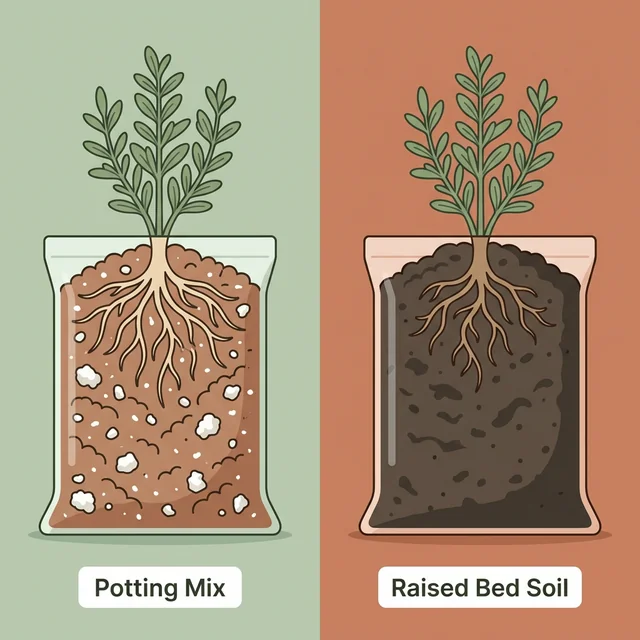
Potting mix vs. raised bed soil for herb containers
Using the wrong dirt is the fastest way to kill a potted herb. This guide explains the critical difference between indoor potting mix and outdoor raised bed soil.
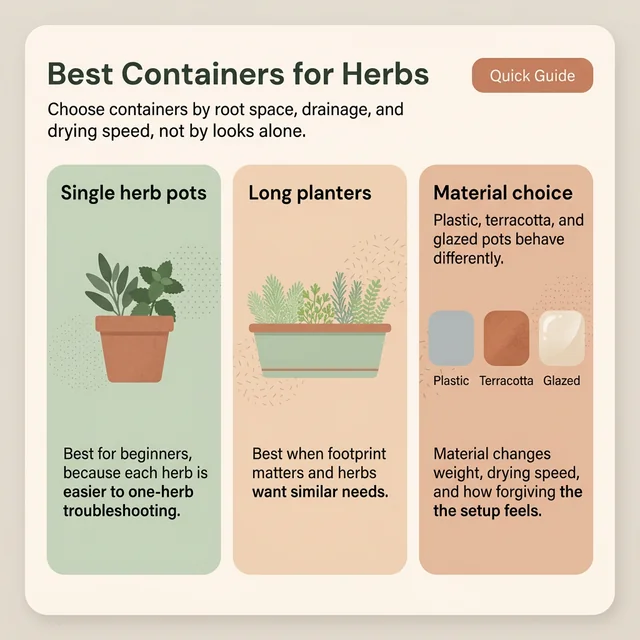
Best containers for herbs: drainage, pot size, and materials that work
A practical guide to herb containers that explains which pots work best, why drainage matters, and how material changes the way containers dry.
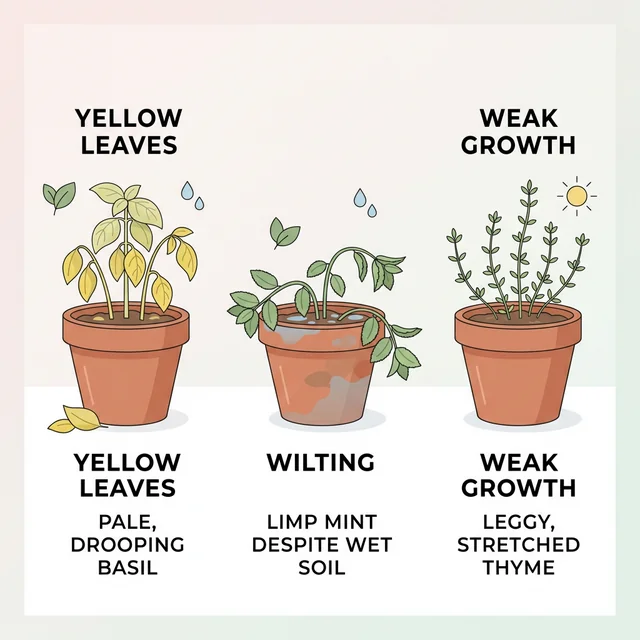
Common potted herb problems: yellow leaves, wilting, and weak growth
Common potted herb problems usually show up as yellow leaves, wilting, or weak growth, but the useful diagnosis starts with light, drainage, and root stress.