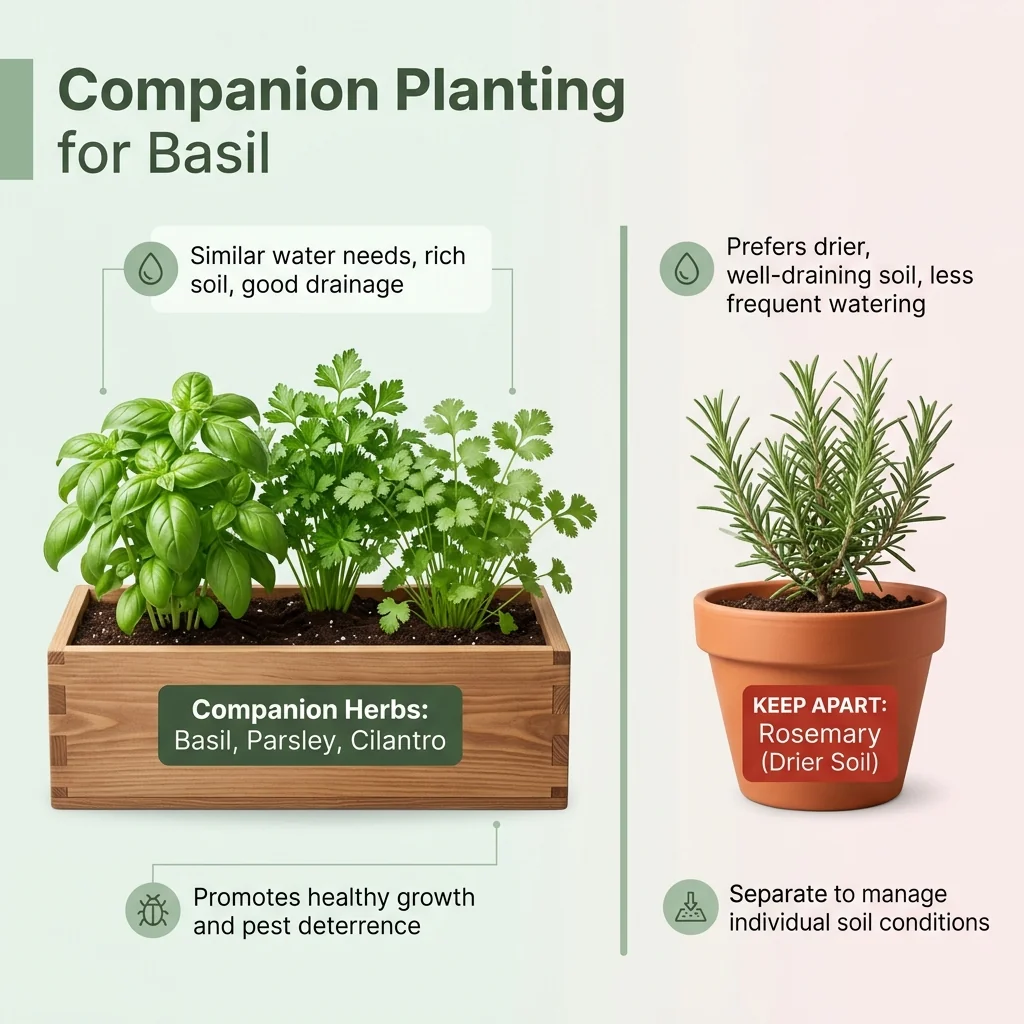
What to plant with basil
| Herb | Shares basil's needs? | Verdict |
|---|---|---|
| Parsley | Yes, thirsty and sun-loving | Good companion |
| Cilantro | Mostly, but bolts in heat | Good for a season |
| Chives | Yes, steady moisture | Good companion |
| Dill | Yes, use a deep pot | Good companion |
| Rosemary / thyme / oregano / sage | No, they want to dry out | Keep separate |
| Mint | No, it spreads and takes over | Keep separate |
Yes, basil can share a pot with other herbs when their light, moisture, root space, temperature, and harvest timing are compatible. Parsley, cilantro, chives, and dill are possible partners, not guaranteed companions. Separate pots give you more control and are usually the safer choice for a small setup. The same compatibility logic scales to other herbs in the broader which herbs can you plant together chart.
Why these herbs work with basil
Basil is a thirsty, fast grower that likes evenly moist soil and plenty of light. Parsley, cilantro, chives, and dill share that profile, so a single watering routine keeps the whole pot happy. They also tolerate being cut back regularly, which suits a kitchen herb pot you harvest from often.
- Basil + parsley: the easiest pairing; both thirsty, both sun-loving.
- Basil + cilantro: works well, but cilantro bolts in heat and may finish before the basil slows down.
- Basil + dill: fine if you use a deep pot for dill’s taproot and keep it from shading the basil. See cilantro pot size for the same deep-pot, taproot logic.
- Basil + chives: chives are forgiving and stay compact, so they rarely compete with basil.
What not to plant with basil
Mediterranean herbs such as rosemary and thyme generally tolerate a drier root zone than basil. A mixed container can therefore force an awkward compromise, especially in cool or humid conditions. Mint can also compete strongly within a shared container. These are management conflicts rather than mysterious companion-plant effects.
Give basil room and depth
Even with good companions, basil resents crowding. It has a large, thirsty root system, so a shared pot needs to be wide and deep enough for everyone, and basil itself wants the lion’s share. The right container size is covered in basil pot size, and the watering rhythm that keeps a mixed thirsty-herb pot happy is in how often should you water basil.
Use a five-part compatibility check
Before combining plants, answer these questions for every herb:
- Light: can every plant receive suitable light without the tallest one shading the rest?
- Moisture: will the same root-zone moisture suit them between waterings?
- Root space: can the container hold each plant near mature size, not just at transplant size?
- Season: do they prefer similar temperatures? Cilantro may bolt as basil begins to thrive in summer heat.
- Lifecycle: will one finish or become woody while the others still need the space?
One mismatch does not make a combination impossible, but it makes separate nursery pots inside one decorative trough more practical. That arrangement looks unified while each root zone remains independently manageable.
Build and evaluate a mixed planter
Use a container with unobstructed drainage and fresh potting mix. Space plants according to their expected mature spread rather than packing them for an instant full appearance. Put taller dill where it is least likely to shade basil, and pinch or harvest before either plant dominates.
For two weeks, log pot weight or subsurface moisture before watering, new growth, wilting, and shading. If one herb repeatedly wilts while another’s root zone remains wet, split the planting instead of chasing both with extra fertilizer. Check leaf undersides when symptoms appear so pest damage is not misread as incompatibility.
Companion planting in a pot does not reliably repel pests or increase flavor. The defensible benefit is efficient use of space when the plants’ care requirements genuinely overlap.
Sources
If you are planting basil with others, also read
These guides cover basil's pot size, watering, and the broader companion chart that decides what shares its pot.
Common questions
Can you plant basil and parsley in the same pot?
Yes. Basil and parsley both want full sun and steady moisture, so they make good pot companions. Give them a wide, deep container and water when the top inch of soil is dry.
Can you plant basil and cilantro together?
Yes, with one caveat. Both like steady moisture and sun, but cilantro prefers cooler conditions and bolts in heat, so it may finish sooner than the basil. They still share a pot fine for a season.
Can you plant basil and dill in the same pot?
Yes. Basil and dill have similar water and light needs. Dill grows tall with a deep taproot, so use a deep pot and place dill where it will not shade the basil.
Can you plant basil and thyme in the same pot?
It is not ideal. Basil wants steady moisture while thyme is drought-tolerant and wants to dry out, so one of them is always watered wrong. Keep thyme with other Mediterranean herbs instead.
Related guides
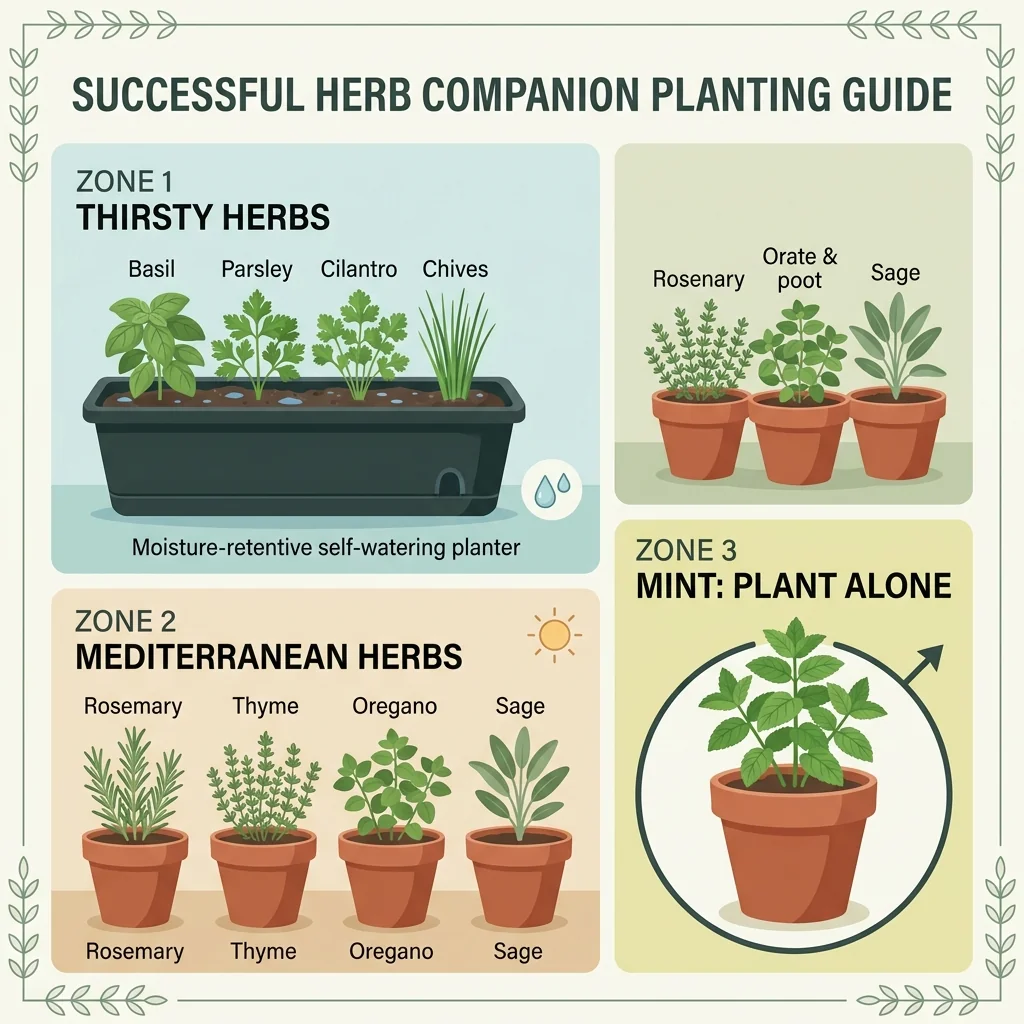
Which herbs can you plant together in one pot?
The simple rule for planting herbs together is to match their water and light needs. This chart shows which herbs share a pot happily and which ones to keep apart.
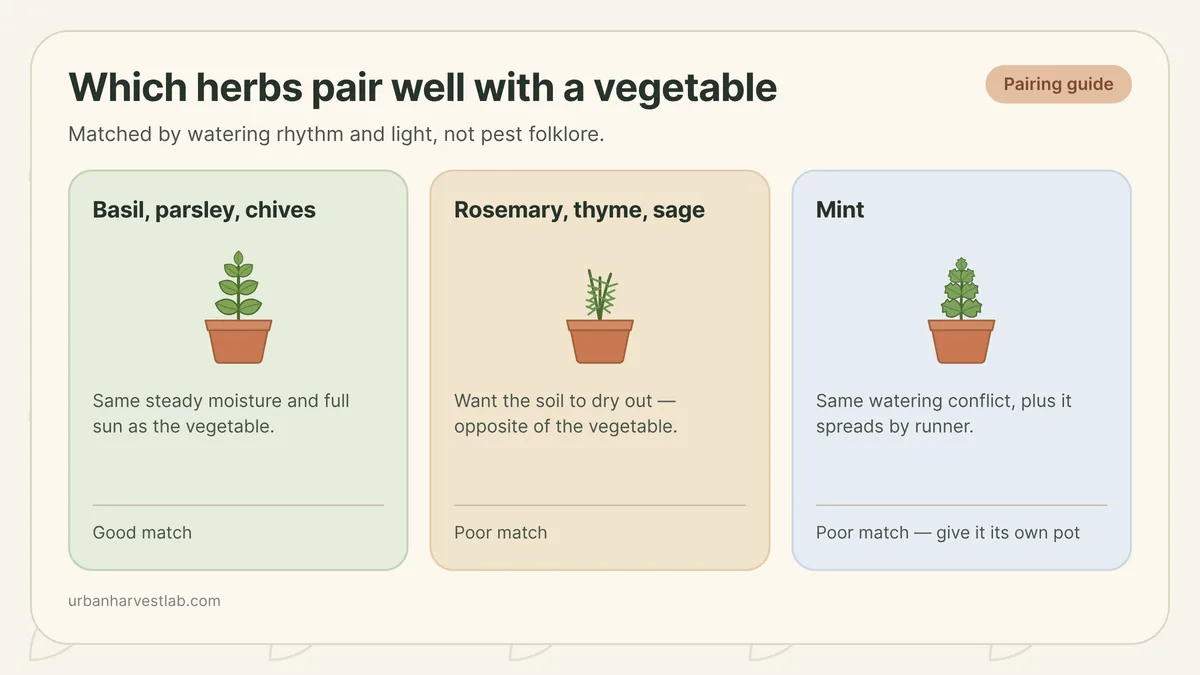
Companion planting in containers: what to grow with a tomato or pepper
A tomato or pepper can share a large pot with certain herbs, but the deciding factors are water, light, and root space, not the pest-repellent pairings companion-planting charts repeat.
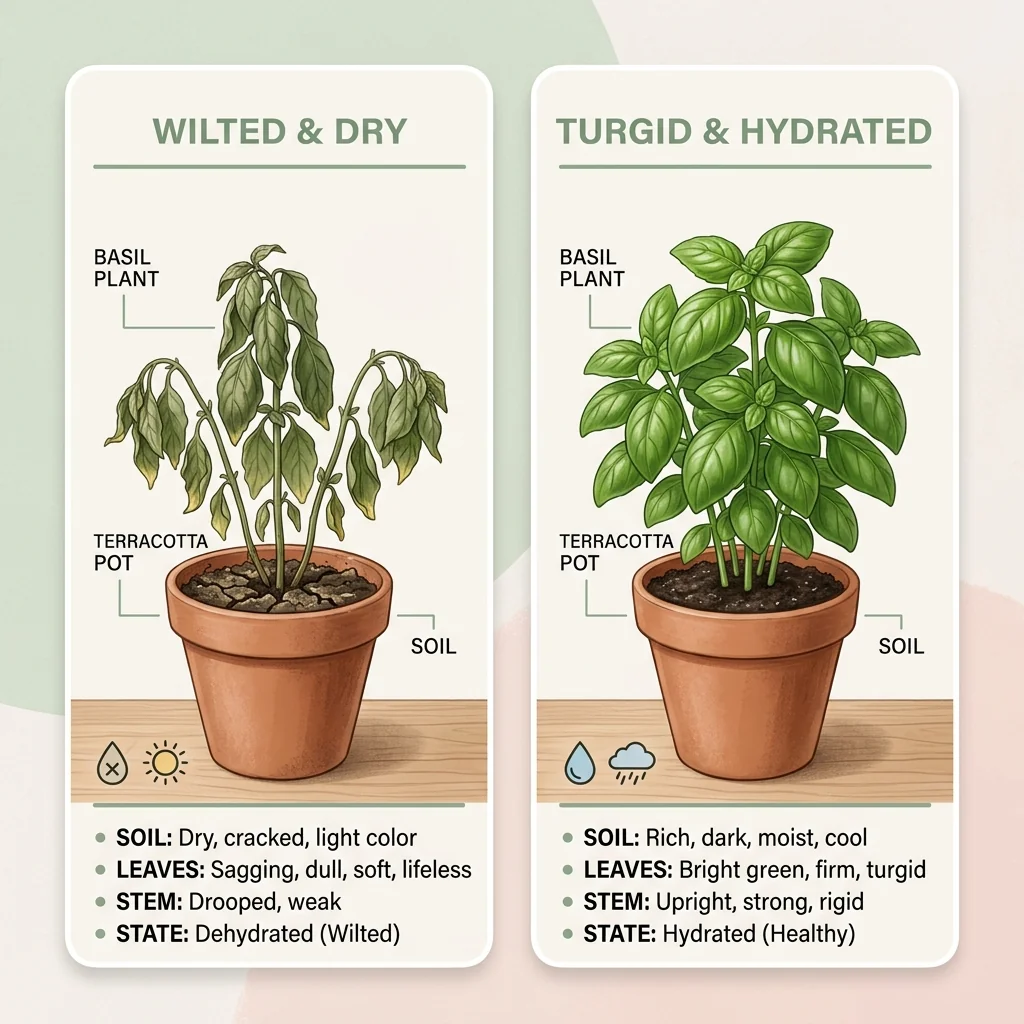
How often to water basil in pots: a 1–3 day check
Potted basil often needs water every one to three days, but the reliable trigger is a drying upper root zone plus a lighter pot—not a repeating alarm.