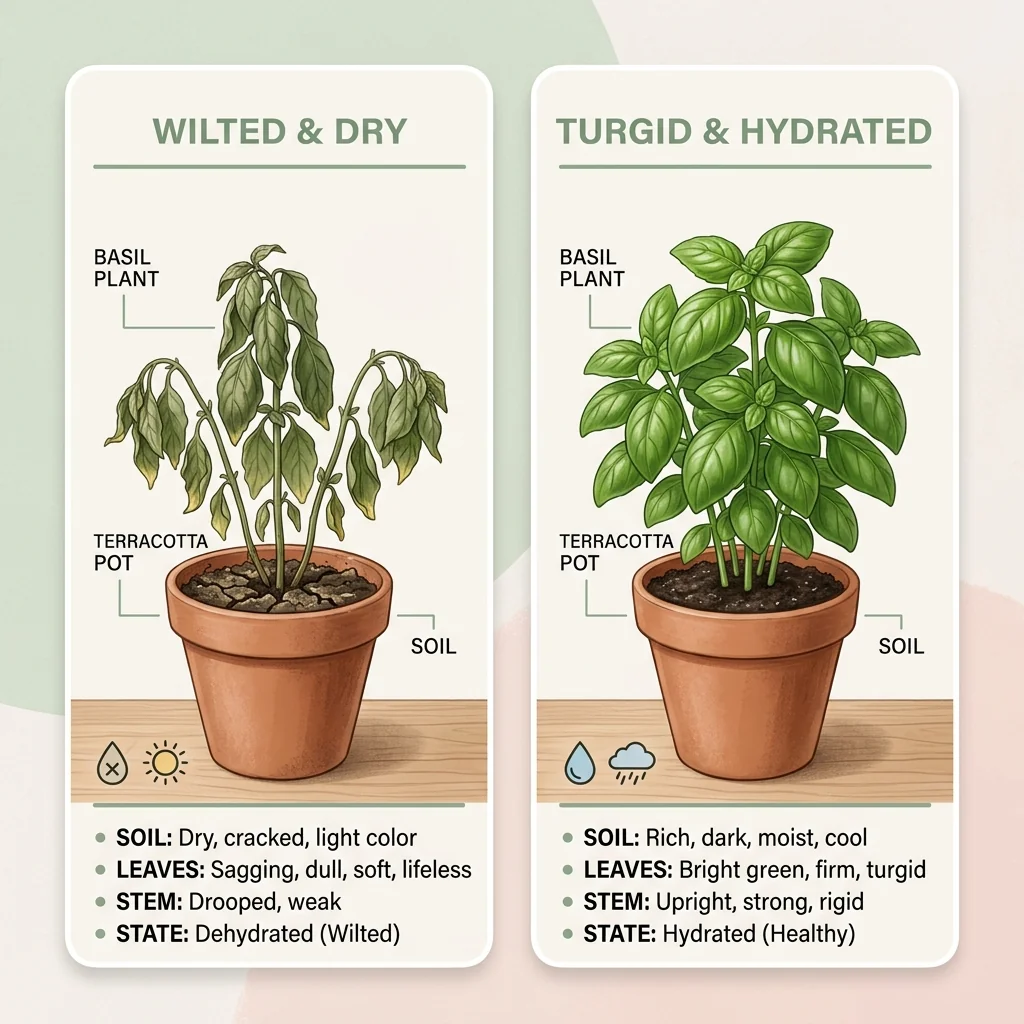
Watering basil by condition
| Condition | Rough frequency | Check first |
|---|---|---|
| Small pot, hot balcony | Daily | Top inch dry; pot light |
| Medium pot, indoors | Every 2-3 days | Top inch dry |
| Large pot, cool room | Every 3-5 days | Top inch dry; avoid sogginess |
Check potted basil daily in warm, bright weather, but water only when the upper inch of mix is drying and the pot feels lighter than it did after watering. That often produces an interval of one to three days. A small terracotta pot on a hot balcony may need water daily; a larger plastic pot indoors may remain moist for several days.
The interval is an observation, not a prescription, and it is specific to basil. The general method is in how often to water potted herbs, and the herb watering chart compares different moisture preferences at a glance.
Trust the soil, not the drama
Because basil wilts so visibly, the temptation is to use the plant itself as the moisture gauge. Do not — a droop can mean dry soil, heat, or drowning roots, three problems with opposite fixes. The reliable check is physical: press a finger into the top inch of soil, and lift the pot to feel its weight. Dry inch plus a light pot means water thoroughly until it runs from the drainage holes. Damp soil means the droop is something else, and adding water makes it worse.
The afternoon wilt that fools everyone
The classic scenario: a July basil on a sunny sill, watered that same morning, flat on its face by 4 p.m. — soil still damp. That is heat wilt: on hot afternoons the leaves lose water faster than even wet roots can pump it up, and the plant droops as a protective response, recovering by evening as temperatures fall. Watering into that damp soil “just in case” is how well-loved basil ends up with root rot. Check the top inch first; if it is damp, let the plant sweat it out. Persistent wilting in moist soil is a different, real problem — covered in why is my basil wilting indoors?.
Why basil drinks so much in the first place
Basil grows fast, carries a big canopy of soft, thin leaves, and transpires heavily through them — a design built for steady moisture, not drought cycles. Unlike Mediterranean herbs it has no drought adaptations to fall back on: let it dry completely and it wilts hard; do it repeatedly and the stress shows in yellowing and stalled growth. Evenly moist, never soggy, is the whole game.
Wilting daily? The pot is the problem
If basil needs water every day just to stay upright, container volume is one of the first things to check. A larger pot holds a bigger reserve and usually swings less sharply between wet and dry. Hot sun, wind, terracotta, a root-bound plant, and a mix with very coarse particles can also shorten the interval. Use the measurements in basil pot size before repotting.
Water the base, in the morning, lukewarm
Apply water to the mix, below the foliage, and continue until the entire root ball is moist and some water reaches the drainage holes. Empty persistent water from an ordinary saucer. Morning watering makes it easier to inspect the plant and lets accidental leaf splashes dry during the day.
One fast pour can run down a dry gap beside the pot without wetting the center. If a neglected mix has pulled from the sides, apply water slowly in two or three passes and check the center afterward. Room-temperature water is comfortable to handle, but complete, even rewetting matters more than chasing an exact water temperature.
Harvesting raises the water bill
Every pinch and harvest pushes basil to regrow, and a bushier plant drinks more. A basil being cropped weekly in midsummer can need noticeably more water than the same plant a month earlier, so expect the interval to shorten as the plant fills out and stretch again when growth slows in autumn.
The hardest herb to leave for a week
Among common herbs, basil is the worst traveller: a small pot in summer can go from moist to wilted in a day and a half. Before a trip, move it out of direct sun and heat and set up one of the methods in how to water potted herbs while on vacation — for basil specifically, a wick or self-watering setup beats hoping.
A 30-second basil watering decision
Use the same check each time so the result can be compared:
- Press a finger into the upper inch of mix, away from the stem.
- Lift or tilt the pot and compare it with its known watered weight.
- Look at the drainage path and confirm the saucer is not already holding water.
- If the upper layer is drying and the pot is light, water the full root ball.
- If the mix is damp, do not water because the clock says so. Check heat, roots, and light instead.
For a deep container, a dry surface can sit above a wet center. Push a wooden skewer farther into the root zone or learn the pot’s weight rather than repeatedly wetting only the top.
How the interval changes
| Condition | What usually happens | Adjustment |
|---|---|---|
| Small or root-bound pot | Water reserve disappears quickly | Repot one practical size up |
| Terracotta or fabric | More evaporation through the container | Check earlier; do not compensate with shallow sips |
| Plastic or glazed ceramic | Moisture remains longer | Wait for the root-zone check |
| Hot sun and wind | Leaves and mix lose water faster | Check morning and late afternoon during extremes |
| Indoor low light | Plant uses water slowly | Increase the interval and investigate weak light |
| Large canopy after repeated harvest | Transpiration rises | Relearn the watered and ready-to-water weights |
Rain does not guarantee an outdoor pot is wet. Dense basil leaves can shed water beyond the rim, and balconies under an overhang may receive almost none. Check the mix after rain rather than counting the weather event as irrigation.
Dry wilt, heat wilt, or wet-root wilt?
Dry wilt comes with a light pot and dry mix. Water thoroughly, then give the plant time to recover out of extreme heat. Heat wilt appears during the hottest part of the day while the mix is still moist and often eases as conditions cool. Do not add water to an already wet pot.
Wilt in persistently damp mix is the warning pattern. Check drainage, smell the root zone, and look for dark or soft roots. Do not assume the next dose of water will revive damaged roots. Use why basil is wilting indoors to separate root stress, light, temperature, and pests.
After one severe dry-down, rehydrate the whole root ball and remove only tissue that is clearly dead. Do not fertilize immediately as a rescue. Watch whether new growth remains upright across the next normal drying cycle.
Sources and further reading
- Penn State Extension: Basil, a Summer Favorite recommends keeping basil soil moist and watering the soil rather than the leaves.
- Iowa State University Extension: Care of Plants Growing in Containers explains how container size and weather can shift watering from more than daily to weekly and recommends watering the full root zone.
- Virginia Cooperative Extension: Properly Watering Container Houseplants covers container material, seasonal drying, and checking whether the entire root ball was rewetted.
Watering basil? These solve the rest
These guides connect basil's watering to pot size and the wilting problems that watering alone cannot fix.
Common questions
How often should you water basil?
Water basil when the top inch of soil is dry, which is often every 1 to 3 days in a pot and sometimes daily for small pots in hot weather. Basil likes steady moisture and dislikes drying out fully.
Should I water basil every day?
Sometimes, but not by default. Small pots on a hot balcony may need daily water, while a larger pot indoors may only need it every few days. Always check the top inch of soil first.
Why does my basil wilt even after watering?
Check the mix before adding more water. A small dry pot, afternoon heat, root damage in wet mix, transplant shock, or disease can all cause wilt. The right response depends on whether the root zone is dry or damp.
Is it better to underwater or overwater basil?
Neither extreme. Basil bounces back from a single wilt after a soak, but repeated drying stresses it and constant sogginess rots the roots. Aim for evenly moist, never bone dry or waterlogged.
Should I water basil from the top or the bottom?
Water at the base of the plant and keep the leaves dry. Wet basil foliage in still, humid air invites downy mildew and grey mould. Watering the soil in the morning lets any splashes dry off quickly.
My basil wilts every afternoon but the soil is damp, why?
That is heat wilt, not thirst. On hot afternoons basil loses water through its leaves faster than the roots can supply it, even in moist soil, and recovers as it cools. Only water if the top inch is actually dry; watering damp soil just risks root rot.
Related guides
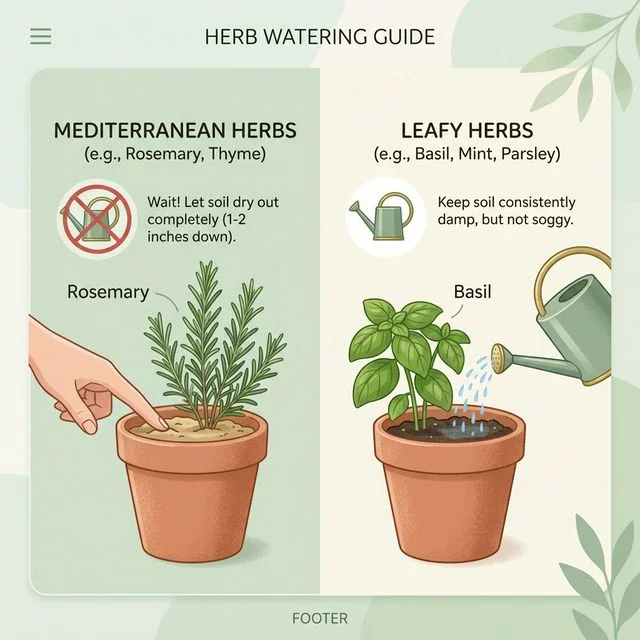
How often to water potted herbs: a by-herb chart
Most potted herbs should be checked often but watered only when the root zone is actually drying. Judge the pot instead of following a rigid calendar.
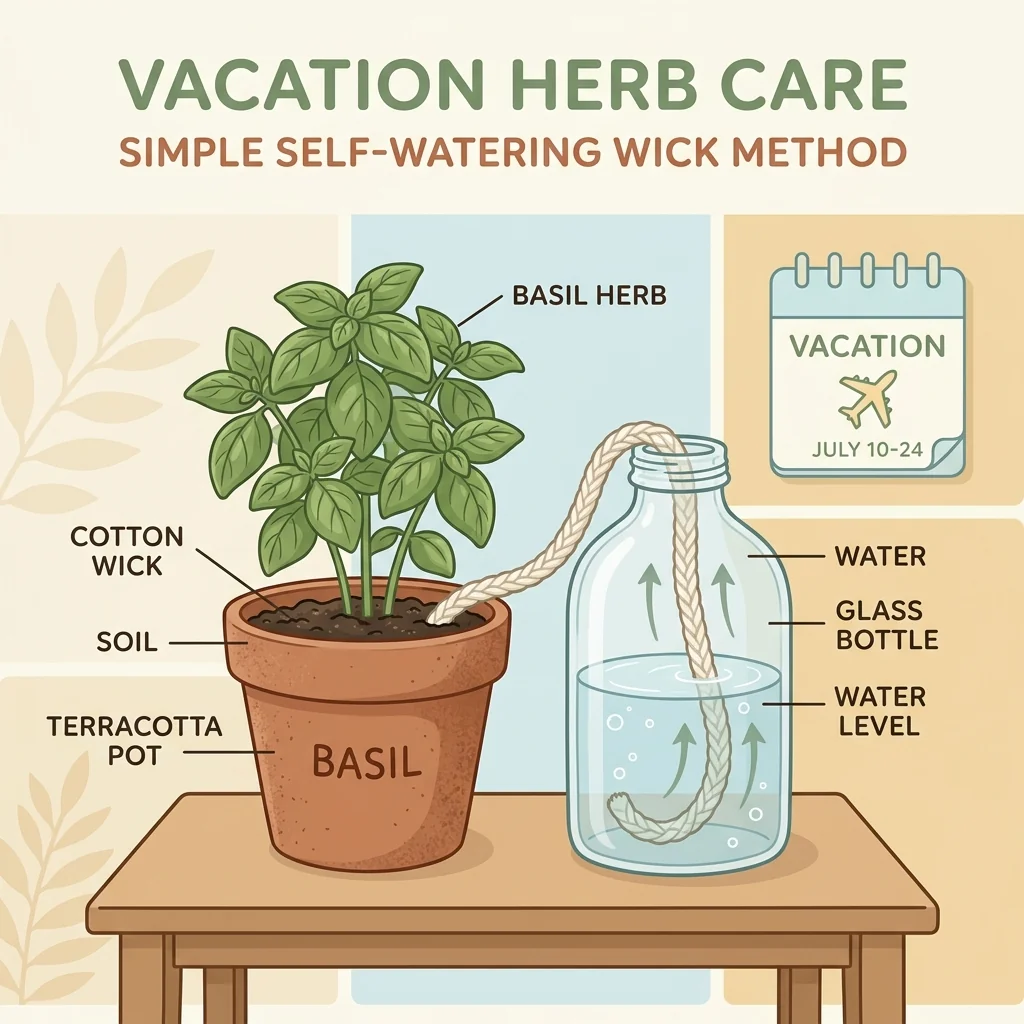
How to water potted herbs while on vacation: 5 foolproof methods
Potted herbs are notoriously sensitive to drying out. If you leave your apartment for a week without a plan, you will return to a graveyard of crispy, brown basil and dead mint. Here are five simple, passive self-watering systems you can build in minutes.
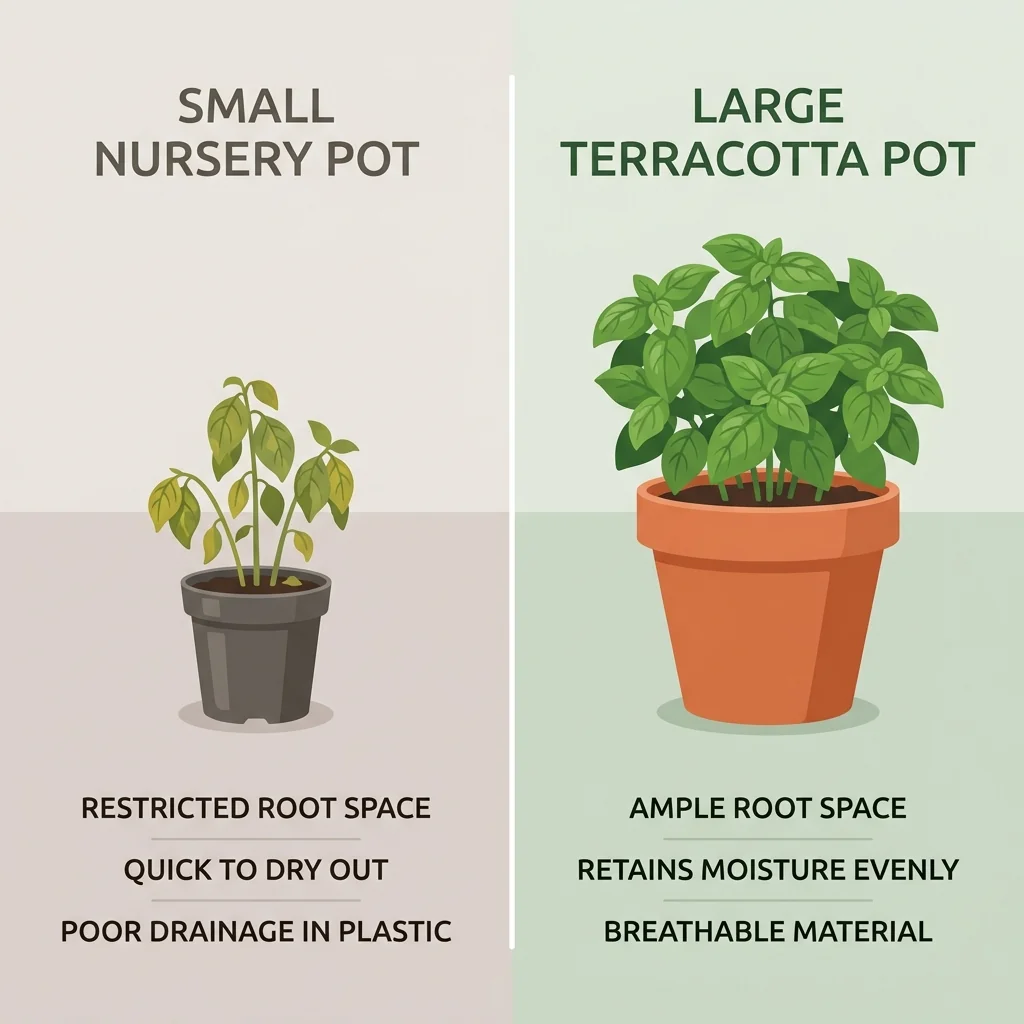
What size pot does basil need? Bigger than you think
Basil struggles in the small pots it is often sold in. A bigger container holds more water and steadier roots, which is the simplest fix for daily wilting.