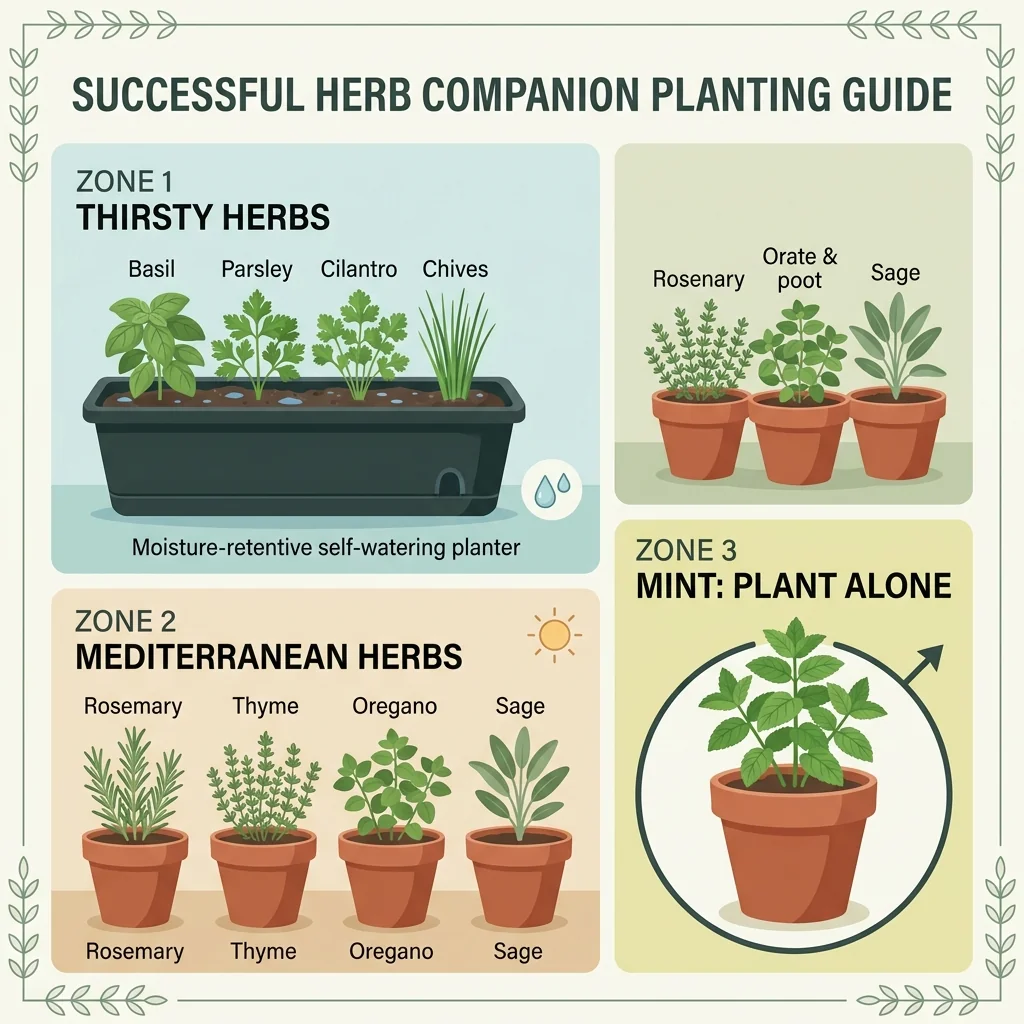
Which herbs to plant together by group
| Group | Herbs | Shared needs | Plant together? |
|---|---|---|---|
| Thirsty herbs | Basil, parsley, cilantro, chives | Full sun, steady moisture | Yes, with each other |
| Mediterranean herbs | Rosemary, thyme, oregano, sage | Full sun, dry between waterings | Yes, with each other |
| Thirsty + Mediterranean | e.g. basil + rosemary | Conflicting watering | No, watering clashes |
| Spreaders | Mint, lemon balm, oregano | Aggressive runners | No, give them their own pot |
Herbs do not need to “like” each other to share a pot; they need compatible moisture, light, root space, temperature, and timing. The familiar thirsty-herb and Mediterranean-herb groups are useful starting points, but they are not universal planting rules. Mint and other vigorous spreaders are normally easier to manage separately.
The one rule that matters: match water needs
Light and watering are both common failure points. Some herbs want more consistent moisture and others tolerate drying, and a tall plant can shade a compact neighbor even when both are described as full-sun crops.
- Thirsty / steady-moisture herbs: basil, parsley, cilantro, chives. They share a pot well because they all want evenly moist soil.
- Drought-tolerant Mediterranean herbs: rosemary, thyme, oregano, sage. They share a pot well because they all want to dry out between waterings.
Mixing the groups makes watering harder and raises the chance that one root system stays too wet or too dry. The split is the same practical distinction behind the herb watering chart.
Keep mint (and other spreaders) on their own
Mint is the classic mistake. It spreads by underground runners and will overrun parsley, thyme, or anything else within a season. Lemon balm and oregano behave similarly. Grow mint in its own pot beside the others rather than in the mix, as explained in what size pot does mint need.
Give each herb enough room
A shared pot fails just as often from crowding as from mismatched watering. Aim for roughly a 6 to 8 inch share of width per herb and at least 8 inches of depth, so a two or three herb planter usually needs to be 12 inches or wider. The full sizing logic is in the herb pot size chart.
Common combinations
Basil can share a generously sized pot with parsley, cilantro, or chives when their seasonal needs overlap; the most-asked combinations are covered in can you plant basil with other herbs. Rosemary, thyme, oregano, and sage can suit a faster-draining planter, but each still needs a moisture check rather than neglect.
Compatibility matrix for real containers
Evaluate each proposed combination across five constraints:
- Root-zone moisture: similar drying tolerance and drainage needs.
- Light and height: compatible exposure without one canopy shading another.
- Mature spread and roots: enough volume after nursery plants grow, not only on planting day.
- Temperature and season: cilantro may bolt in the warmth basil prefers, so a pairing can be temporary.
- Lifecycle and harvest: annual basil and woody rosemary do not occupy a planter on the same timeline.
A combination with one mismatch can still work in a very large planter with careful placement, but separate inner pots usually give better control. It is also easier to replace a finished cilantro crop without disturbing a perennial neighbor.
Test the grouping before committing
Keep new herbs in their nursery pots for a short observation period. Place the pots together in the intended location, inspect for pests, and log how quickly each mix dries. If one pot repeatedly needs water while another stays heavy, they are poor candidates for a shared root zone even if a companion chart lists them together.
When planting, use fresh potting mix and unobstructed drainage. Space for mature growth and prune to prevent shading. Check moisture below the surface rather than watering every plant on a fixed calendar. If one herb declines, separate it before adding fertilizer to the entire container.
What companion planting does not prove
A mixed herb pot is primarily a space-and-care decision. Claims that a particular pairing automatically repels pests, improves flavor, or boosts yield are difficult to generalize and should not drive the layout. Diverse planting can have ecological effects in larger systems, but a small container still succeeds or fails mainly on suitable conditions and management.
Sources
If you are combining herbs, also read
These guides cover the pot size, watering, and single-herb cases that decide whether a mixed planter works.
Common questions
Which herbs can be planted together in the same pot?
Herbs can share a sufficiently large pot when moisture, light, mature size, temperature, and lifecycle are compatible. Basil, parsley, cilantro, and chives are possible combinations, while rosemary, thyme, oregano, and sage often suit a drier mix; separate pots still give the most control.
Which herbs should not be planted together?
Avoid combinations with strongly different moisture, temperature, or space requirements. Basil and rosemary are difficult to manage in one root zone, and vigorous mint is usually easier in its own pot, but these are management conflicts rather than absolute companion rules.
Can I plant mint with other herbs?
It is best not to. Mint spreads by runners and takes over a shared pot within a season. Grow it in its own container beside the others instead. See the mint pot size guide for details.
How big should a shared herb pot be?
Give each herb roughly its own 6 to 8 inch share of width and at least 8 inches of depth, so a two or three herb pot usually needs to be 12 inches or wider. Crowding is the most common reason a mixed planter struggles.
Related guides
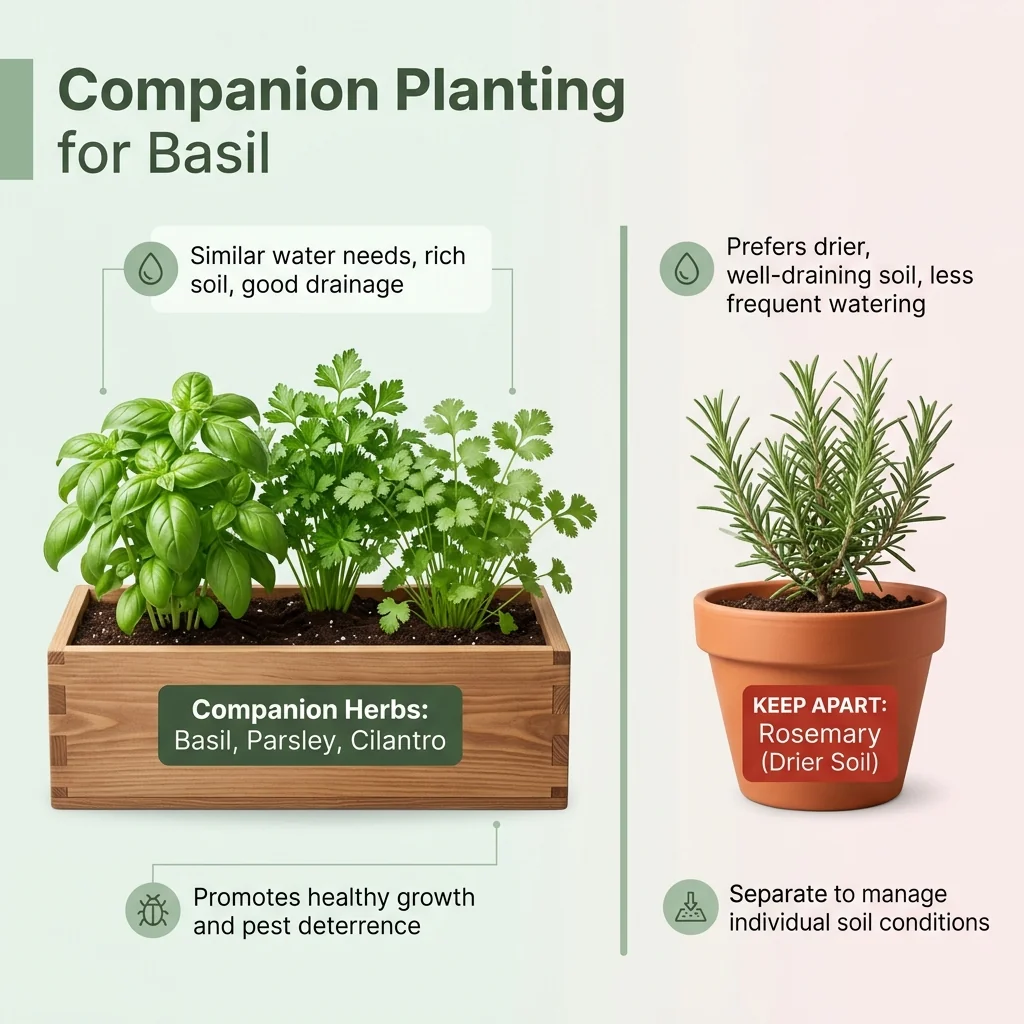
Can basil share a pot? Yes, with parsley, cilantro or chives
Basil grows happily with other thirsty herbs like parsley, cilantro, and dill, but clashes with drought-tolerant herbs. Here is what to plant with basil and what to skip.
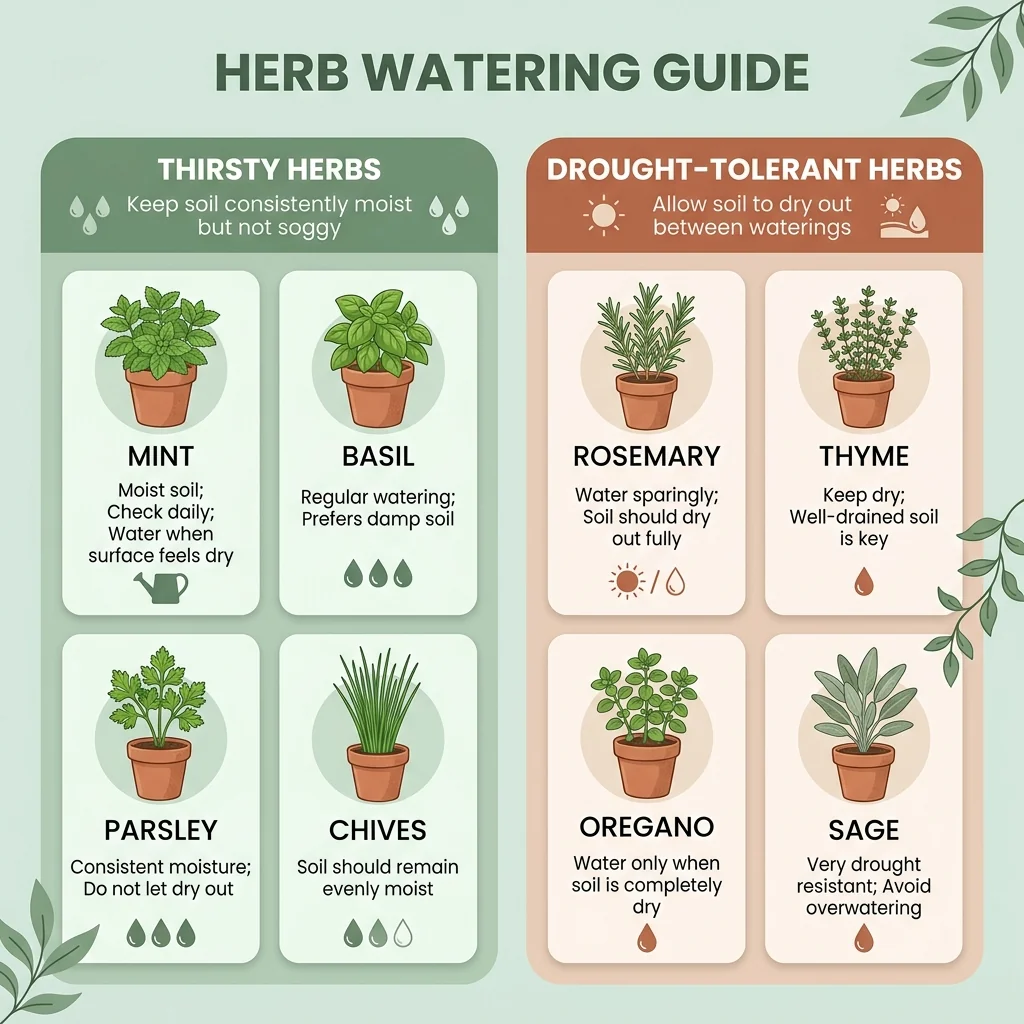
Watering a mixed herb collection: which pot to check first
How to water several potted herbs at once: which camp each herb belongs to, which pot to check first, and how to tell a dry wilt from a wet one.
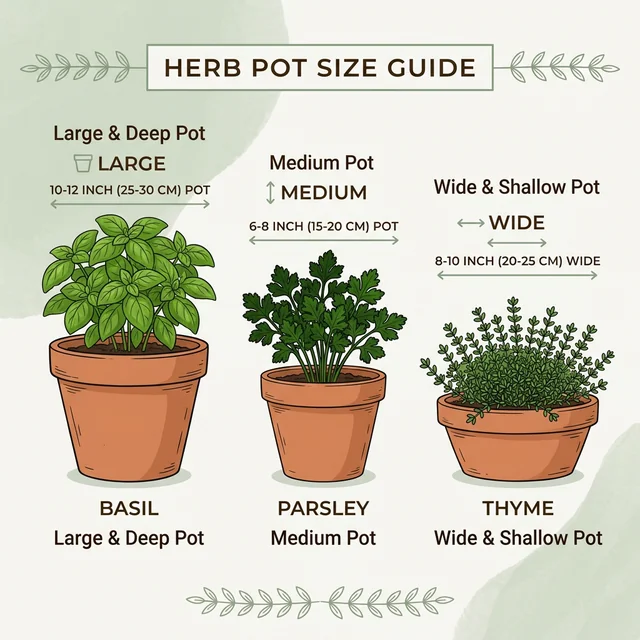
Herb pot size chart: basil, mint, parsley, thyme & chives
A practical herb pot size guide for the most common kitchen herbs, with simple size ranges that make container growing easier to read and maintain.