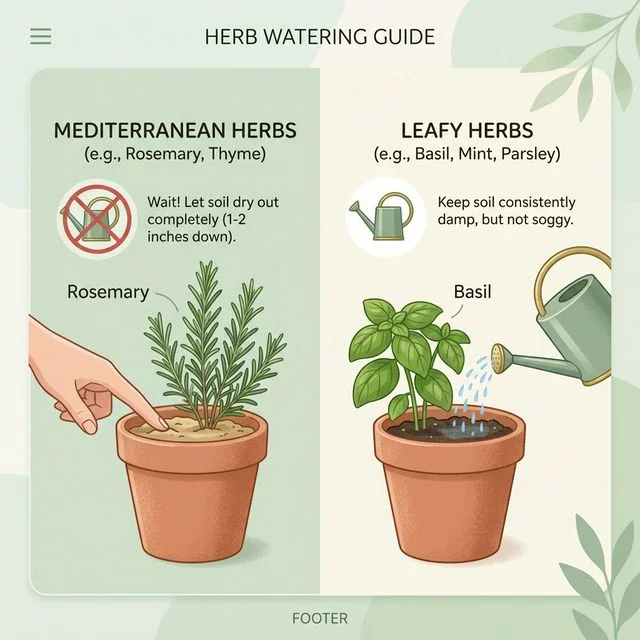
Watering guidelines by herb category
| Herb Category | Specific Examples | When to Water | Danger Zone |
|---|---|---|---|
| Mediterranean (Woody) | Rosemary, Thyme, Oregano, Sage | When the pot feels incredibly light and top 2 inches of soil are bone dry | Keeping the soil constantly moist |
| Leafy (Soft) | Basil, Parsley, Cilantro | When the top 1 inch is dry, but the lower soil feels slightly damp | Letting the pot dry out until the plant collapses |
| Moisture-Loving | Mint, Lemon Balm | When the very surface just begins to dry | Forgetting about it during a summer heatwave |
Most potted herbs should not be watered on a fixed number of days. Indoors, many herbs can go several days between waterings. On a sunny balcony, the same herb may need checking every day. The useful question is not “How often?” in the abstract. It is how quickly this specific pot is drying in this specific location.
The short answer is simple: check often, then water only when the active root zone is drying. Basil, parsley, and mint usually need a more even moisture pattern. Rosemary, thyme, and oregano usually want a drier cycle between full soakings. If you want the wider care framework, pair it with Potted Herb Care: Watering, Feeding, and Pruning Without Guesswork and the broader Small-Space Herb Gardening: Start Here for Apartments, Balconies, and Indoor Setups.
If you are growing entirely indoors, Indoor Herb Garden Setup for Apartments Without Outdoor Space helps explain why pots dry more slowly than people expect. If your herbs live outside, Balcony Herb Garden for Beginners: A Simple Container Setup That Actually Works and Best Herbs for a Sunny Balcony: Basil, Thyme, Rosemary, and Other Reliable Choices will make the drying pattern much easier to predict. If you are still choosing crops, Best Herbs for Small Spaces explains which herbs are naturally easier to manage in compact homes.
The fastest way to damage a container herb garden is to adopt a rigid calendar schedule. Water consumption changes with humidity, temperature, sunlight, pot size, soil structure, and the herb itself. Instead of memorizing a universal routine, you need to learn how to read the container.
Quick Answer
Check potted herbs every day if conditions are hot, windy, or unusually bright, but only water when the root zone is actually drying. Basil, parsley, and mint usually want more even moisture. Rosemary, thyme, and oregano usually want a drier cycle between full soakings.
In practice, indoor pots often need fewer waterings than balcony pots because there is less heat and airflow pulling moisture out of the mix. That is why a windowsill basil and a balcony basil do not share the same rhythm even when they are watered from the same can. If your indoor setup gets softer light than you expected, Can Herbs Grow Indoors Without Direct Sunlight? can help you separate slow drying from weak growth.
The Foundation: Soil and Pots Dictate the Schedule
Before you can establish a watering cadence, you must ensure your infrastructure isn’t setting you up for failure.
- Dense or unsuitable soil: garden or raised-bed soil can compact in a container and stay wet too long. Use a container mix whose structure fits the crop and irrigation method. Review Potting Mix vs. Raised Bed Soil for Herb Containers and Best Potting Mix for Potted Herbs.
- Mismatched pot: a small unglazed pot in sun may dry rapidly, while an oversized plastic container in shade may dry slowly. Measure the actual change instead of assigning a 12-hour or one-month promise. See Best Containers for Herbs.
If your soil and pots are correct, you are ready to master the three ways to check your soil moisture.
The 3 Ways to Check If Your Herbs Need Water
Throw away the calendar. Use these three methods instead.
1. The Calibrated Weight Test
Water is heavy. Dry potting mix is extremely light. This simple physical fact is the most powerful tool in your urban gardening arsenal.
- How to do it: After a thorough watering and complete drainage, lift a safely manageable pot or weigh it on a scale. Record that value. Compare later readings with a subsurface moisture check and plant needs. The pot, plant and growing mix contribute to weight, so calibrate each setup rather than copying a number.
- Limits: Some inexpensive probe meters infer moisture from electrical behavior and can be affected by contact, mix and salts. Pot weight estimates total water change but not its distribution, so neither tool should be used blindly.
2. The Finger Test (For Larger Containers)
If your container is too large or heavy to lift (like a massive balcony tub for a tomato or a highly established rosemary bush), use your finger.
- How to do it: Push your index finger down into the soil up to your second knuckle (about two inches deep).
- The result: If the soil feels cool, damp, and sticks to your skin, do not water. Walk away. If the soil feels warm, dusty, and falls off your finger easily, it is time to consider watering, depending on the plant.
3. Reading the Leaves (The Warning Sign)
Plants will physically tell you when they are struggling.
- Leafy herbs like basil will famously “faint” or dramatically wilt when they are entirely out of water. While you shouldn’t rely on this as your primary schedule (repeated fainting stresses the plant), giving a wilted basil plant a deep soak will usually revive it within four hours.
- Rosemary and other woody herbs can show subtle color, texture or wilt changes, but similar symptoms also occur with wet, damaged roots. Leaves are a warning to inspect, not a stand-alone watering meter.
Different Herbs Have Different Rules
Now that you know how to check the moisture level, you need to know what each specific herb actually prefers.
The Drier-Cycle Group
Rosemary, Thyme, Oregano, Sage, and Lavender. These herbs commonly perform best in a well-drained root zone and are vulnerable to persistent saturation.
- Starting rule: allow more dry-down than for basil, but do not impose “bone dry two inches down” on every pot. A young transplant, a shallow thyme bowl, and a mature rosemary in a large container have different active root zones.
The “Consistent Moisture” Group
Basil, Parsley, Cilantro, and Chives. These plants have wide, soft, lush leaves that sweat out a tremendous amount of water under hot grow lights or a sunny window.
- Starting rule: aim for more even moisture while preserving air-filled pore space. Water when the upper root zone is drying; coolness alone is not proof of moisture.
The Higher-Water-Use Group
Mint, Lemon Balm. Mint and lemon balm can use water quickly when they have a large canopy, strong light and active roots.
- Starting rule: maintain even moisture without a stagnant, saturated root zone. If a pot dries too quickly on a hot balcony, consider safer afternoon shade, more root volume or a tested sub-irrigated system.
How to Water Correctly
When it is finally time to water, you must do it properly. Repeatedly wetting only the surface can leave part of the root ball dry. However, the correct volume depends on pot size, existing moisture and whether the mix accepts water.
When an ordinary draining herb pot needs water, apply it slowly and evenly in passes until the root zone is rewetted and some drainage confirms a flow path. This reduces dry pockets; drainage and later dry-down help restore air-filled pore space.
Empty the saucer a few minutes later so the pot doesn’t sit in a puddle. Then, wait until the weight test (or finger test) tells you it is time to repeat the cycle.
If keeping up with this rhythm is the real problem — especially for moisture-loving basil, mint, and parsley, or whenever you travel — a sub-irrigated pot can hold the pattern for you. See Self-watering pots for herbs: worth it or more trouble? for which herbs suit them, and Best self-watering pots for herbs for specific picks.
Watering frequency by herb
For the exact rhythm of a single herb, use these crop-specific guides, or compare them all in the herb watering chart:
- How often to water basil
- How often to water mint
- How often to water parsley
- How often to water thyme
- How often to water rosemary
Related Guides
- Potted Herb Care
- Balcony Herb Garden for Beginners
- Best Containers Herbs
- Potting Mix Vs Raised Bed Soil Herbs
- Best Potting Mix Potted Herbs
Sources
Fix your soil and pots before worrying about water
How often you water is entirely dependent on the type of soil you use and the size of your pot. Read these first.
Common questions
How often should I water potted herbs?
There is no reliable universal number of days. Check the pot often, then water when the root zone is drying based on the herb, the container size, and how much heat, light, and wind the plant gets.
Should I water my herbs every day?
Usually no. On a hot balcony, small basil or mint pots may need a daily check and sometimes daily watering. Indoors, watering every day is much more likely to cause root stress than to help.
Do indoor herbs and balcony herbs need the same schedule?
No. Indoor herbs usually dry more slowly because they face less heat and wind, while balcony containers can swing from wet to dry much faster. The plant, pot size, and exposure matter more than the calendar.
What is the best way to tell when a herb pot needs water?
Lift the pot if you can. When it feels much lighter than it did right after a full soak, the mix has lost a lot of moisture. For larger containers, check the top inch or two with your finger instead of watering by habit.
Is it better to underwater or overwater?
Neither repeated drought nor saturation is a safe strategy. Mild dryness may be easier to correct in some established herbs, but severe wilting can cause lasting damage, while prolonged saturation raises root-disease risk. Diagnose the root zone before choosing a response.
Why does the water run straight through the pot instantly?
The mix may have pulled from the pot or become hard to rewet, but blocked channels and root congestion can also cause rapid drainage. Apply water slowly in passes and recheck the center. Bottom-water only long enough to rewet the mix, then drain fully; there is no universal 30-minute soak.
Related guides

Indoor herb garden setup for apartments without outdoor space
A practical apartment herb guide for people growing entirely indoors, with realistic advice on light, layout, containers, and everyday maintenance.
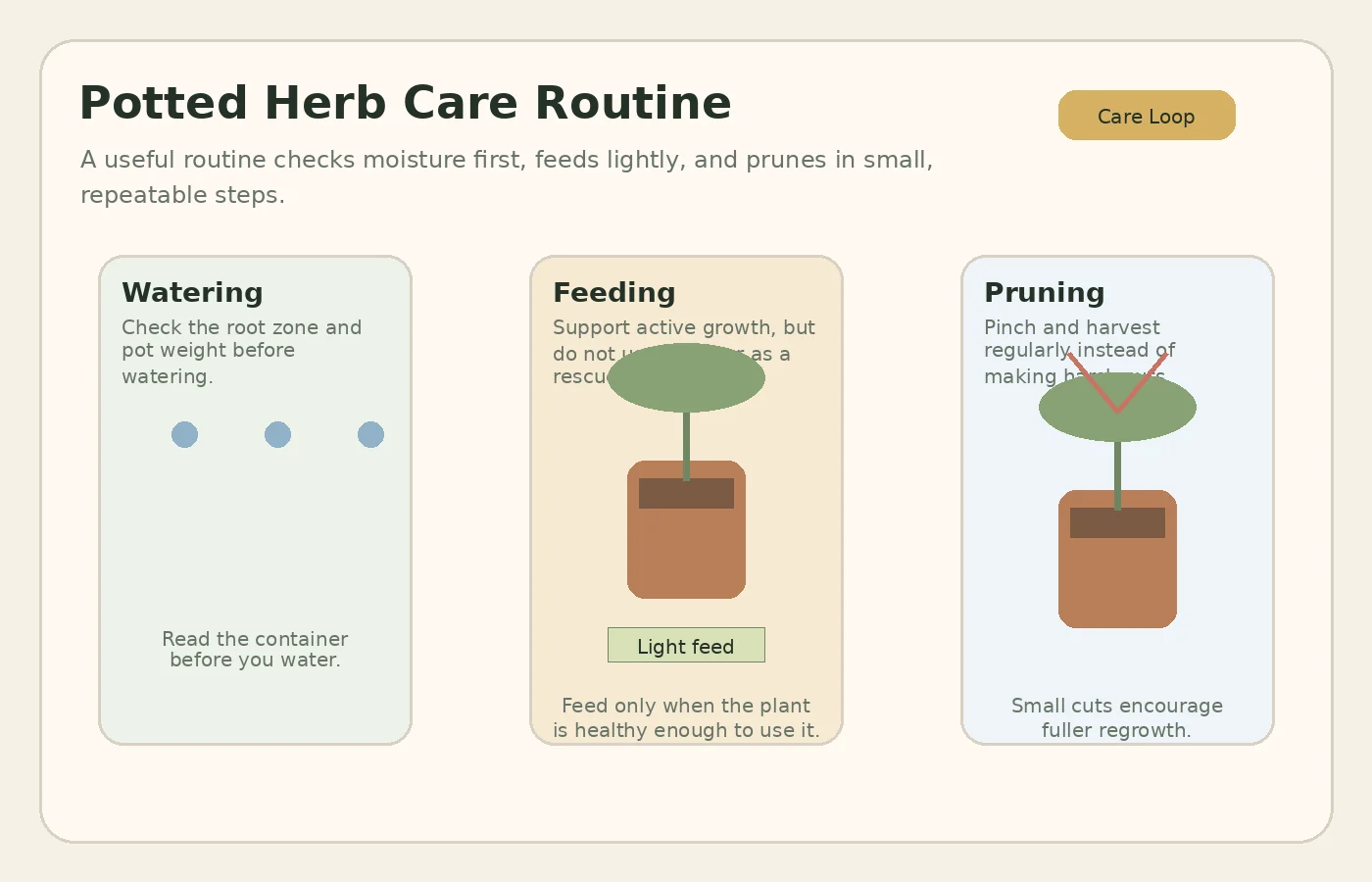
Potted herb care: watering, feeding, and pruning without guesswork
A practical guide to keeping basil, parsley, mint, thyme, and chives healthy by matching watering, feeding, and pruning to the setup.
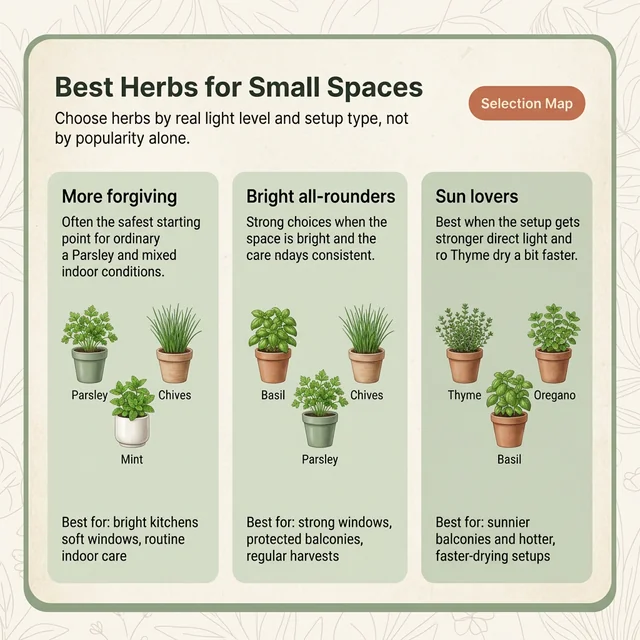
Best herbs for small spaces: what grows well in apartments, balconies, and windowsills
A practical guide to the herbs that actually perform well in compact homes, with selection logic for bright windows, balconies, and more forgiving low-space setups.