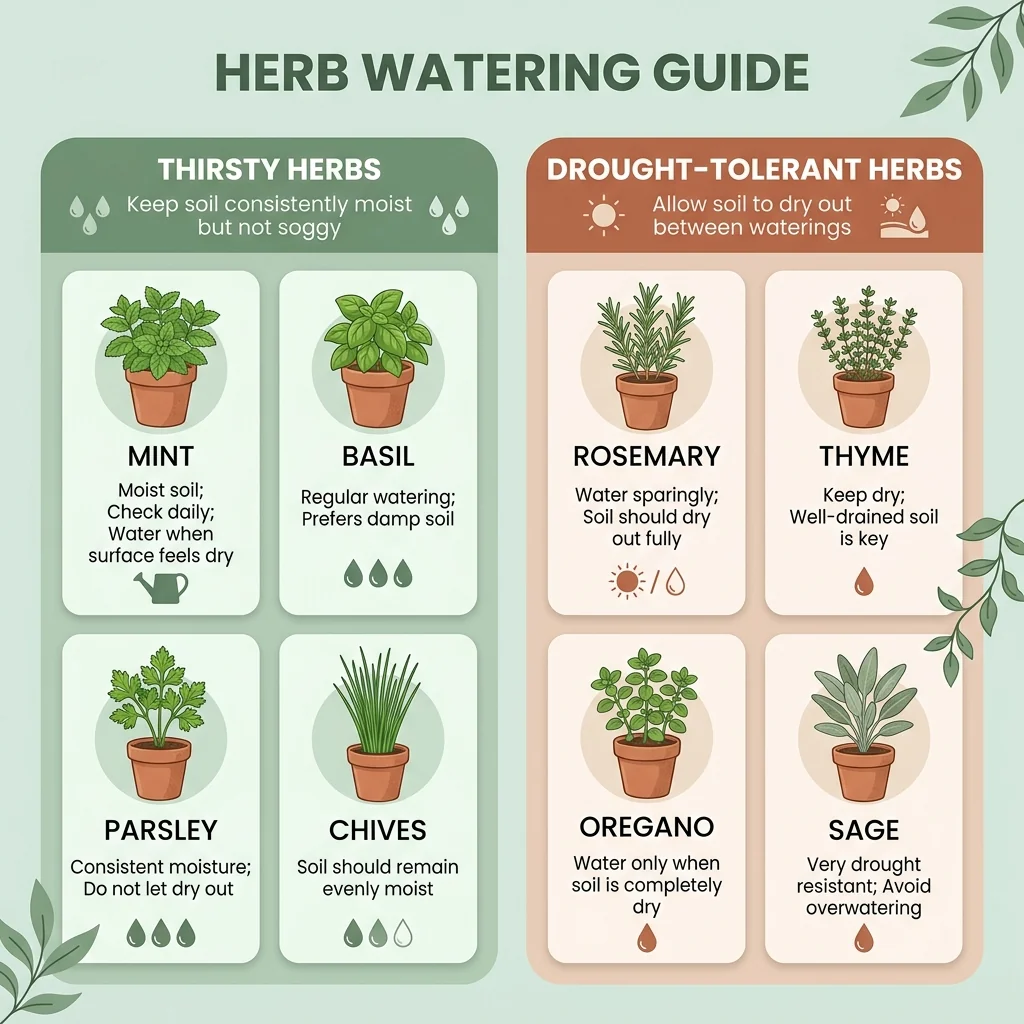
Which watering camp each herb belongs to
| Herb | Camp | Check before watering |
|---|---|---|
| Basil | Thirsty | Top inch dry; keep evenly moist |
| Mint | Thirsty | Surface starting to dry; keep moist |
| Parsley | Steady moisture | Top inch dry |
| Cilantro | Steady moisture | Top inch dry; keep cool |
| Chives | Moderate | Top inch dry |
| Thyme | Drought-tolerant | Soil dry; pot light |
| Oregano | Drought-tolerant | Soil dry |
| Rosemary | Drought-tolerant | Dry a couple of inches down |
| Sage | Drought-tolerant | Soil dry |
Watering several herbs at once comes down to three things: knowing which camp each one belongs to, checking the right pot first, and not drowning the dry-side herbs while you keep the thirsty ones going. Basil, mint, parsley, and cilantro usually reach their watering point sooner; established rosemary, thyme, oregano, and sage need a longer dry-down. The soil and the weight of the pot make the final call.
For how often to water and how deeply, herb by herb, use the main guide to how often to water potted herbs, which has the full frequency chart.
The two watering camps
One schedule does not fit all herbs. A moisture level that supports active basil growth can keep rosemary roots wet for too long, while a dry-down interval tolerated by thyme may leave mint wilted. These groups are useful starting points:
- Steady-moisture herbs: basil, mint, parsley, and cilantro. Check when the surface begins to dry; avoid repeatedly taking the entire root ball to bone dry.
- Dry-side herbs: rosemary, thyme, oregano, and sage. Allow more of the mix to dry, but do not confuse a drier preference with chronic underwatering.
- Middle group: chives and many young transplants. Let the upper layer dry while the lower root zone retains some moisture.
These labels apply to established plants. A fresh transplant has roots occupying only part of its pot and may need smaller, more localised watering until the roots spread. A root-bound nursery herb may dry much faster than the same species after repotting.
The 30-second check before watering any pot
Whichever camp a herb is in, check the pot itself before you pour. This takes about 30 seconds:
- Lift or tilt the pot. Compare its weight with the weight just after a thorough watering. A noticeably lighter pot has lost water, although a heavy ceramic container can make this signal harder to read.
- Probe below the decorative surface. Bark or perlite on top can look dry while the root zone remains moist. Check roughly 1 in (2–3 cm) down for steady-moisture herbs and deeper for established dry-side herbs.
- Look at the drainage path. If the surface is dry but the lower mix is saturated, more water will not solve wilting. Empty standing water from saucers and check that the hole is open.
- Water the whole root ball when it is ready. Apply water slowly until some drains out, then discard the drainage. A token splash repeatedly wets only the upper roots.
Iowa State Extension likewise recommends checking container media frequently and watering thoroughly rather than following a universal calendar. The right herb pot size makes that dry-down rhythm less erratic.
Check sooner or later depending on conditions
Check a pot sooner when several of these apply:
- the pot is small or root-bound;
- the container receives hot afternoon sun;
- wind moves across a balcony or open window;
- the plant has a large, actively growing canopy;
- the mix contains a high proportion of coarse, fast-draining material.
Check it later when the plant is in lower light, temperatures are cool, the pot is large for its root ball, or the mix remains wet several inches down. Unglazed terracotta can lose water through its walls; plastic and glazed containers generally retain it longer. Compare the actual dry-down time rather than assuming material alone decides the schedule.
Season matters indoors too. A windowsill herb may use less water during short winter days, while heating can dry the upper layer quickly. Check below the surface before concluding that the entire pot is dry.
Do not diagnose from wilt alone
A drooping herb can be dry, but it can also have a wet, oxygen-poor root zone. Check before adding water:
| Observation | More consistent with a dry root ball | More consistent with a persistently wet root ball |
|---|---|---|
| Pot weight | Noticeably light | Still heavy |
| Mix below surface | Dry or pulling from pot edge | Cool, dark, and wet |
| Response after correct watering | Usually regains turgor | Little improvement or continued decline |
| Other clues | Crisp edges, rapid dry-down | Yellowing, stalled growth, sour smell |
This is a triage table, not a disease diagnosis. If a pot stays heavy for many days, investigate drainage, mix structure, container size, and root condition before changing the calendar.
Group containers without forcing one schedule
Place herbs with similar moisture preferences near each other so the inspection route is easy, but test every pot before watering. Avoid planting thirsty basil and dry-side rosemary in the same small container: their root zones cannot be managed independently. If they already share a planter, prioritise drainage and watch the basil as the early dry signal without automatically soaking the rosemary side.
Record the check result for one week if the routine feels unpredictable. Note the date, pot weight or probe result, and weather—not just whether you watered. After two or three cycles, your own interval will be more useful than a generic number.
Per-herb watering guides
Use a crop-specific page when one pot needs troubleshooting rather than a fast comparison:
- How often to water basil
- How often to water mint
- How often to water parsley
- How often to water thyme
- How often to water rosemary
Sources and further reading
Per-herb watering guides
Use these crop-specific guides for the exact watering rhythm of each herb.
Common questions
Which herbs can share a watering routine?
Herbs in the same camp can. Basil, mint, parsley, and cilantro all want steady moisture, while rosemary, thyme, oregano, and sage want to dry further between waterings. Grouping pots by camp makes the inspection route easier, but each pot still needs its own check.
Which herbs need the most water?
Basil and mint usually need more consistent moisture than woody Mediterranean herbs; parsley and cilantro also perform poorly when repeatedly allowed to become bone dry. Container size and weather can still reverse the apparent order on a particular day.
Which herbs need the least water?
Established rosemary, thyme, oregano, and sage generally tolerate a drier interval. That does not mean leaving a newly planted or heat-stressed specimen dry for a week; inspect the root zone and water thoroughly when it has reached the appropriate dry-down point.
Is there one watering schedule for all herbs?
No. Grouping herbs by moisture preference is useful, but pot volume, drainage, weather, and root development still determine when each container is ready for water.
Related guides
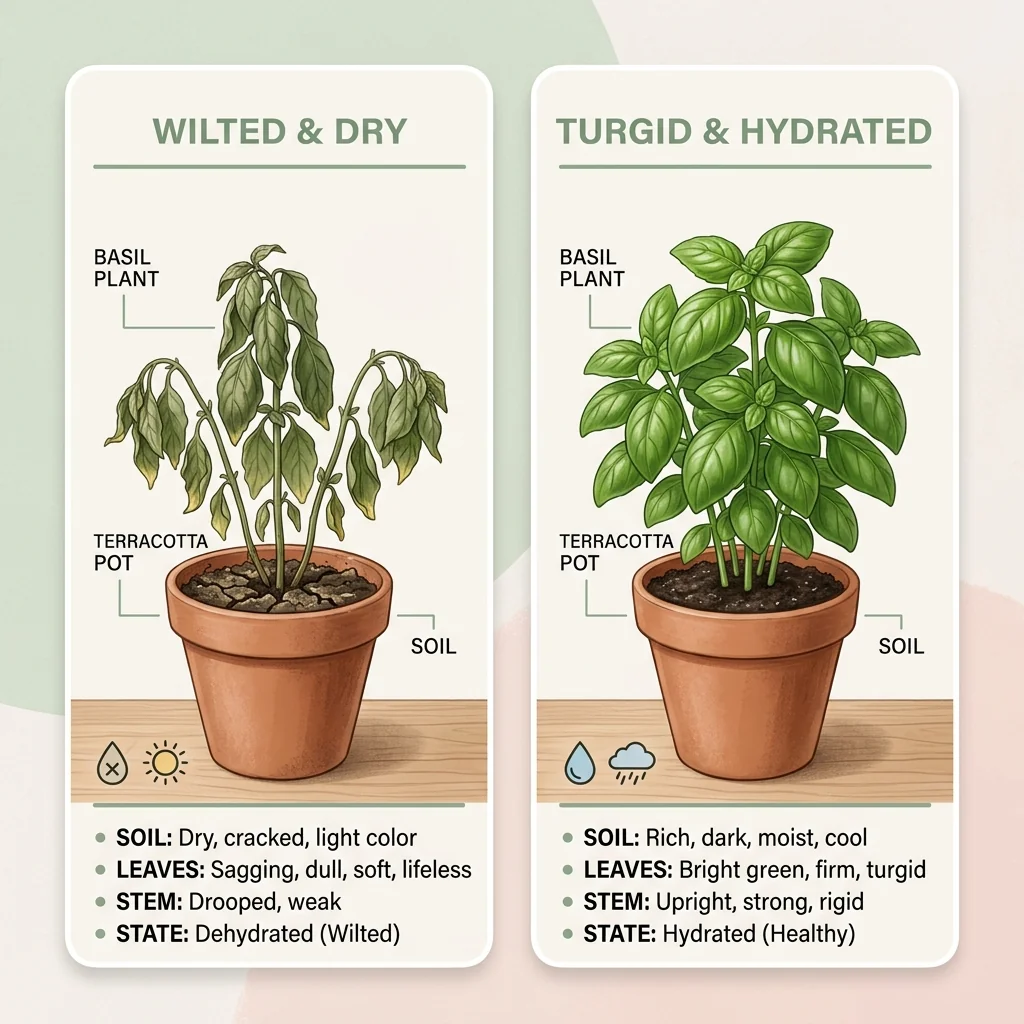
How often to water basil in pots: a 1–3 day check
Potted basil often needs water every one to three days, but the reliable trigger is a drying upper root zone plus a lighter pot—not a repeating alarm.
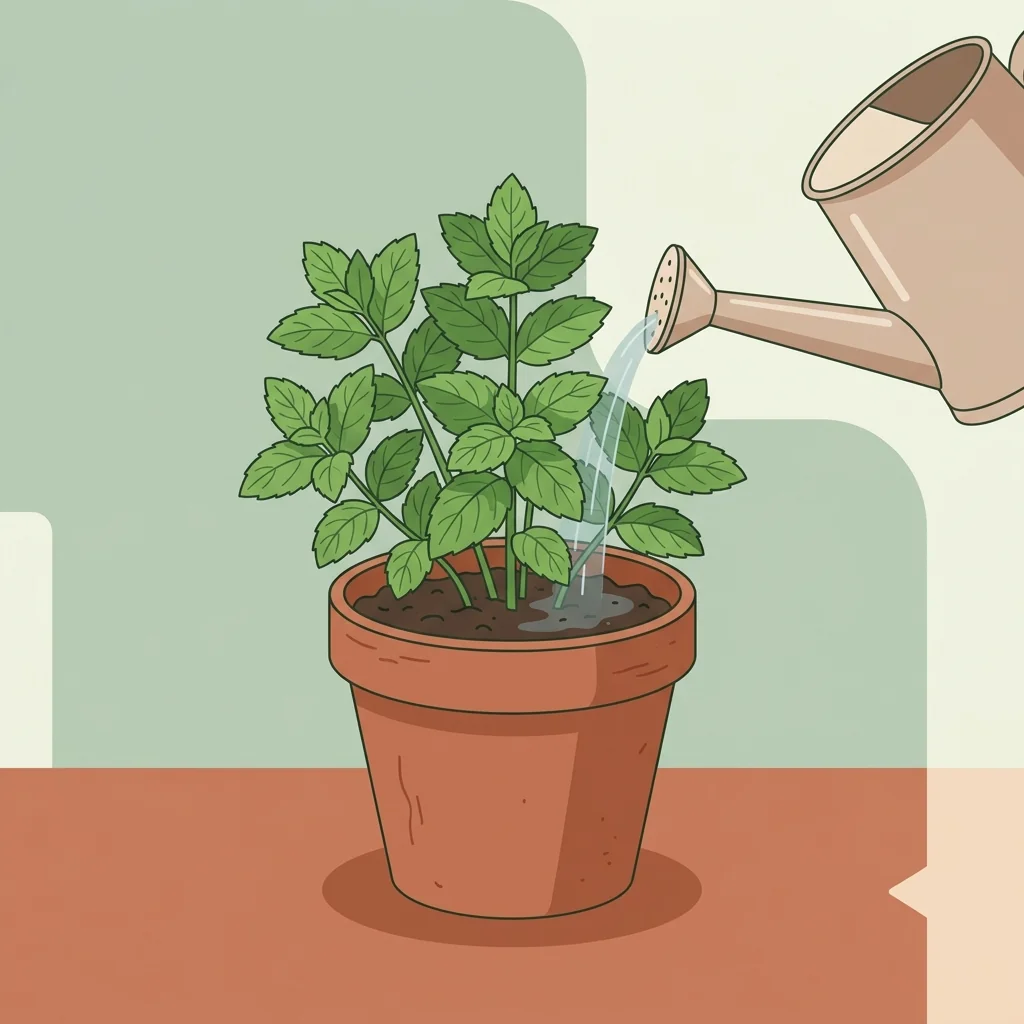
How often to water mint: every 1 to 3 days in a pot
Mint is thirstier than most herbs and sulks when it dries out. Keep the soil lightly and consistently moist, and it will grow as fast as you can pick it.
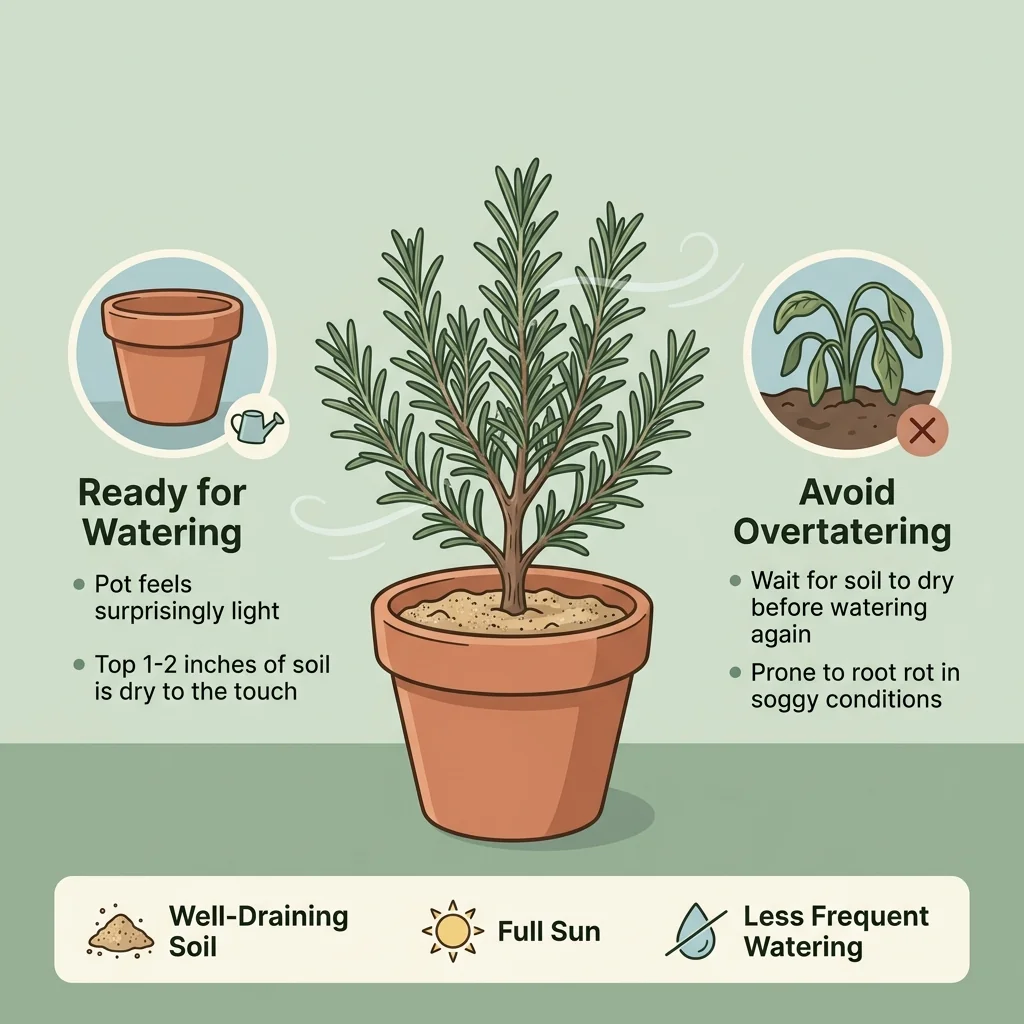
How often to water rosemary: every 1 to 2 weeks, not on a schedule
Rosemary kills more gardeners with kindness than neglect. Water it deeply but infrequently, only once the soil has dried, and it will thrive on the dry side.