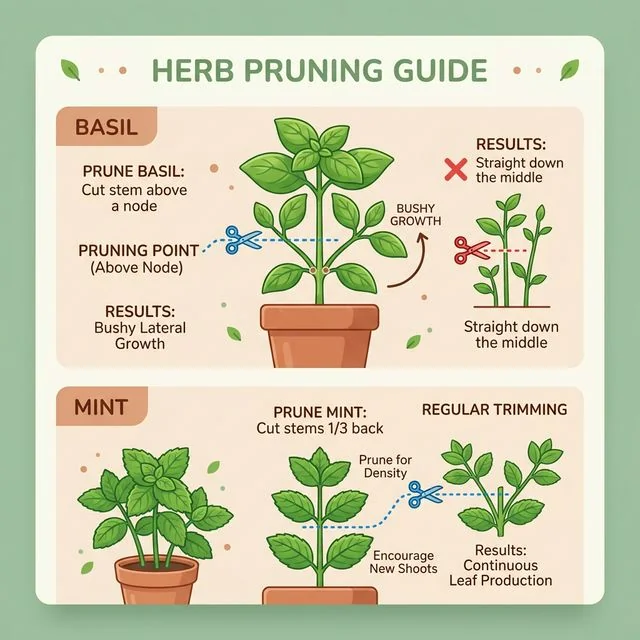
How to Prune Different Herb Structures
| Herb Type | Examples | Where to Cut | The Growth Goal |
|---|---|---|---|
| Stem-based (Nodes) | Basil, Mint, Oregano | Cut the main stem ¼ inch above a set of healthy leaves | Force the plant to split into two new branches |
| Clump-based (Crowns) | Parsley, Coriander | Cut the outermost, oldest stems completely down to the base | Encourage new shoots to emerge from the center |
| Grass-like | Chives | Cut everything 1-2 inches above the soil line like mowing a lawn | Allow a fresh flush of hollow spears to regrow |
When a beginner buys their first basil plant, they almost always harvest it the same way: by plucking the largest, oldest leaves off the sides of the stem. Within a month, the plant looks like a miniature palm tree—a tall, bare, wobbly stalk with a tiny tuft of leaves at the very top. Eventually, to the dismay of the gardener, it falls over and dies.
This happens because plucking individual leaves is exactly the opposite of how you should prune a stem-based herb.
If you want a dense, massive, bushy indoor garden, you have to be willing to chop the tops off your plants. This guide assumes you have already mastered the foundational care steps, such as proper light, adequate pot sizes, and proper nutrition. If your plants are actively dying, do not prune them; read Potted Herb Care: Watering, Feeding, and Pruning Without Guesswork and Do Potted Herbs Need Fertilizer? to fix the root cause first.
If your plants are healthy and growing, here is how to prune the four most common household herbs so they produce endless harvests.
Rule #1: Know Your Plant’s Architecture
You cannot prune a chive plant the same way you prune a basil plant. Herbs generally fall into three architectural categories:
- Stem-based herbs (Nodes): They grow tall on a central stalk. (Examples: Basil, Mint).
- Clump-based herbs (Crowns): They push new stems up from the center base near the soil. (Examples: Parsley, Cilantro).
- Grass-like herbs: They grow straight up in hollow tubes. (Example: Chives).
If you are mixing these plants in a single container as discussed in Best Herbs for Small Spaces: What Grows Well in Apartments, Balconies, and Windowsills, you must address each individual plant with the right technique.
1. Pruning Basil and Mint (Stem-Based)
Basil and mint respond dramatically to aggressive pruning. Their stems contain “nodes”—the horizontal intersections where a pair of leaves meet the main stem. Tucked directly in the “armpit” of those large leaves are two tiny, dormant buds.
Normally, the plant channels all its energy into growing the main stem taller. But if you cut the main stem off just above that node, the plant panics, activates those dormant buds, and shoots out two brand-new branches.
This process is called “topping.” If you cut one stem, you get two. If you cut those two, you get four. This is how you create a massive, bushy basil plant instead of a spindly stalk.
When to Prune Basil and Mint
- Early on: When the plant reaches about 6 inches tall and has three to four sets of true leaves, immediately cut the top set off. It feels scary, but it is necessary.
- For regular harvests: Always cut down to a lower, healthy node. Never just pluck the large side leaves. If you pluck the side leaves, you steal the plant’s solar panels without triggering new branching.
- To prevent flowering: If you see tiny flower buds forming at the top of a basil or mint stem, pinch them off immediately. Flowering alters the chemistry of the plant and makes the leaves taste incredibly bitter.
2. Pruning Parsley (Clump-Based)
Parsley does not have nodes on a main stem. It grows from a central “crown” just below the soil surface. The oldest, largest stems sit on the outside of the clump, while tiny, new growth pushes up from the dead center.
If you try to “top” a parsley plant by cutting it in half horizontally with scissors, the cut stems will simply die back and turn brown, exposing the plant to fungal disease.
When to Prune Parsley
- For regular harvests: Identify the largest, outermost stems. Follow them all the way down to the base of the plant. Snip them using clean scissors about 1 inch above the soil line.
- The Golden Rule: Leave the tiny, inner stems alone. They are the future of the plant. By removing the large outer umbrella leaves, you allow more light to hit the center of the crown, accelerating the growth of the next generation.
3. Pruning Chives (Grass-Based)
Chives are incredibly tough and grow from tiny underground bulbs. They multiply rapidly and can easily take over a small pot.
Because each spear of a chive is essentially a single leaf, you cannot prune them to branch like basil, and picking them selectively from the outside like parsley is tedious.
When to Prune Chives
- The “Lawnmower” Method: When the chives are about 6 to 8 inches tall, grab a handful of the spears. Take a pair of scissors and cut straight across, leaving about 2 inches of the plant sticking out of the soil.
- The Result: The cut tips will blunt and eventually turn brown, but within a few days, an entirely new flush of hollow green spears will push up rapidly from the bulbs below.
Pruning and Stress Recovery
Pruning is exactly like getting surgery. It forces the plant to heal a wound and expend massive amounts of energy to push out new growth.
Therefore, you should never prune an herb that is already fighting for its life. If your plant is suffering from chronic dehydration—or conversely, drowning in a swampy pot—cutting half its leaves off will likely finish it.
Always ensure your watering routine is dialed in. If you are struggling with this, refer to How Often Should You Water Potted Herbs? (Stop Guessing) to verify your technique before you start cutting. By providing a stable environment with the right water, high-quality soil, and strategic pruning, your indoor herb garden will produce yields that rival a traditional backyard plot.
Troubleshooting a leggy or stunted plant?
If your plant isn't growing well enough to prune, check these guides to fix your soil and fertilizer first.
Common questions
Should I pinch off the flowers on my basil?
Yes, absolutely. Once a basil plant flowers (called "bolting"), the leaves turn tough and bitter. Pinch off flower buds the second you see them form at the top of the stems.
If I cut the top off a mint plant, won't it die?
No. Mint is incredibly resilient. Cutting the top off will trigger the two dormant buds beneath the cut to sprout, creating two new branches instead of one.
How much of the plant can I cut at once?
As a general rule, never remove more than 30% of a plant's total foliage in a single pruning session. The plant needs those leaves to photosynthesize and recover.
Related guides
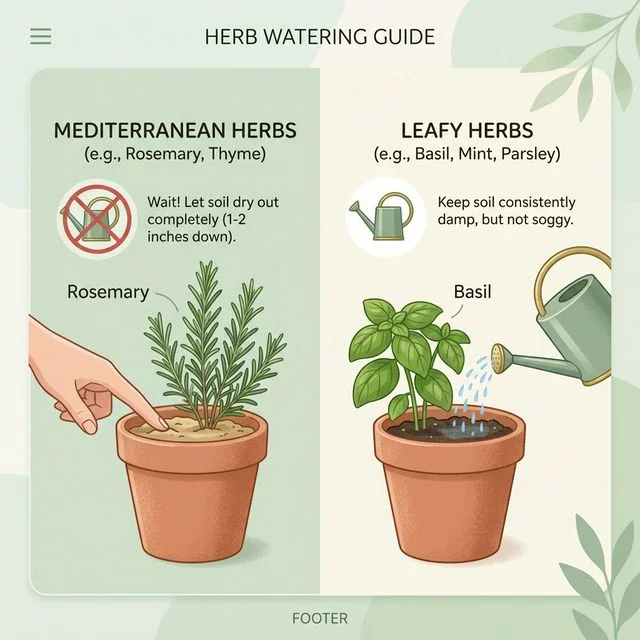
How Often Should You Water Potted Herbs? (Stop Guessing)
The most common way beginners kill potted herbs is by watering them on a strict calendar schedule. Throw away the calendar and learn the 'weight test' instead.
Potted Herb Care: Watering, Feeding, and Pruning Without Guesswork
A calm, science-based guide to keeping basil, parsley, mint, thyme, chives, and other potted herbs healthy without turning the routine into guesswork.
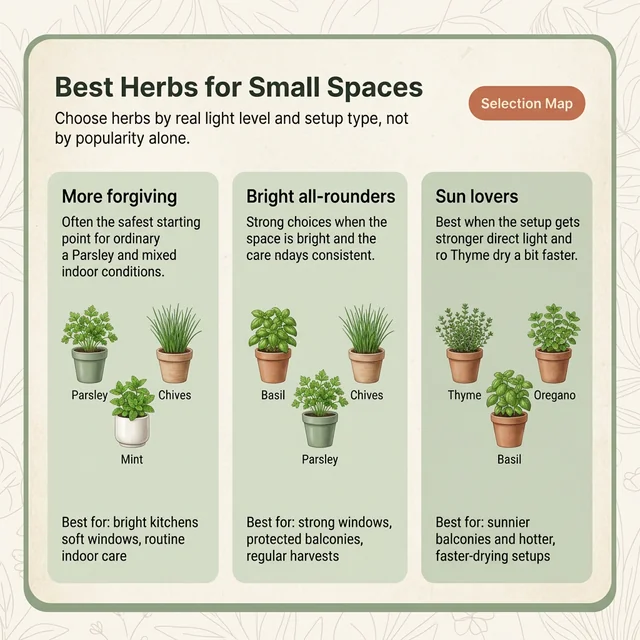
Best Herbs for Small Spaces: What Grows Well in Apartments, Balconies, and Windowsills
A practical guide to the herbs that actually perform well in compact homes, with selection logic for bright windows, balconies, and more forgiving low-space setups.