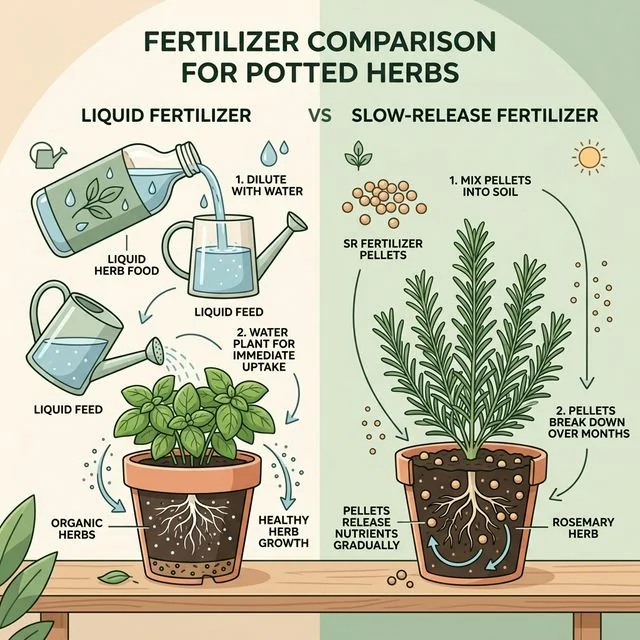
Liquid vs. Slow-Release Granular Fertilizer
| Feature | Liquid Fertilizer | Slow-Release (Granular) |
|---|---|---|
| Speed of Absorption | Immediate (bypasses soil breakdown) | Gradual (breaks down with watering) |
| Application Frequency | Usually every 1-2 weeks | Usually every 2-3 months |
| Risk of Root Burn | High (if not properly diluted) | Very Low (releases safely over time) |
| Best Used For | Correcting sudden nutrient deficiencies quickly | Establishing a hands-off, long-term feeding routine |
Most potted herbs do need fertilizer eventually. The useful question is not whether herbs in pots need feeding at all. It is when the original potting mix stops carrying the plant and how to add nutrients without creating a second problem. That distinction matters because many container herbs decline from weak feeding habits on one side and fertilizer burn on the other.
In a small container, nutrients run out, drainage changes over time, and dry roots react badly to strong feed. If the plant is already yellowing, wilting, or stalling, check Potted Herb Care: Watering, Feeding, and Pruning Without Guesswork, Best Potting Mix for Potted Herbs: What to Look For, and Common Problems With Potted Herbs: How to Diagnose Yellow Leaves, Wilting, and Weak Growth so you do not mistake setup stress for simple hunger.
There is a stubborn myth in the gardening world that “herbs thrive on neglect” and therefore never need fertilizer. While this might be true for a massive, established rosemary bush growing directly in the ground, it is false for an apartment balcony container garden.
A pot is a closed system. The plant only has access to whatever nutrients were included in the bag of potting soil you bought. When those nutrients are consumed by the roots—or flushed out the drainage holes every time you water—they are gone forever.
If you do not replace those missing nutrients, the plant will hit a wall. New growth will stall, the lower leaves will pale to a sickly yellow, and the plant will eventually succumb to stress. This is one of the leading causes behind the issues outlined in Common Problems With Potted Herbs: How to Diagnose Yellow Leaves, Wilting, and Weak Growth.
To keep an indoor herb garden thriving for months on end, you usually need to fertilize. The question is simply how to do it safely.
Quick Answer
Yes, potted herbs usually need fertilizer after the nutrients in the original potting mix are used up. In practical terms, that often means waiting about 4 to 6 weeks after potting into fresh mix, then feeding lightly based on the herb, the growth rate, and the product you are using.
For most container growers, the safer rule is small doses and honest observation. If the herb is actively growing, the mix drains well, and the plant is not stressed, a weak liquid feed or a slow-release product can help. If the pot is staying soggy, the herb is wilted, or the roots are already struggling, fix that first. You can pair feeding decisions with How Often Should You Water Potted Herbs? (Stop Guessing) so you are not treating every slowdown like a fertilizer problem.
Step 1: Check Your Soil Before You Feed
Before you grab a bottle of plant food, you need to understand your foundation.
If you recently potted your herbs using a premium mix suggested in Best Potting Mix for Potted Herbs: What to Look For, your plants are already eating. High-quality mixes (especially those containing worm castings or bat guano) act as a slow-release fertilizer out of the bag. Adding more fertilizer on top of this rich soil will cause “nutrient burn,” turning the leaf tips crispy and brown.
Wait at least four to six weeks before feeding a newly potted herb.
Furthermore, if your soil isn’t draining correctly, fertilizer will not save the plant. As discussed in Potting Mix vs. Raised Bed Soil for Herb Containers, roots sitting in dense, waterlogged mud cannot breathe or absorb nutrients. If the soil stays soggy for days, fix the drainage issue before adding chemicals.
Step 2: Choose Your Delivery Method
Once your plant has exhausted its initial soil nutrients (usually after a month or two of vigorous growth), you have two primary options: Liquid or Slow-Release. Once you know which delivery suits your routine, the label-first guide to fertilizer for herbs in pots shows how to pick a specific product from what its label says.
Option A: Liquid Fertilizers (Fast & Demanding)
Liquid fertilizers are either concentrated chemical salts or liquefied organic materials (like fish emulsion or kelp extract) that you mix directly into your watering can.
- How it works: Because the nutrients are entirely dissolved in water, the plant’s roots absorb them instantly.
- The Pros: If your basil leaves are turning pale yellow because they are starving for nitrogen, a dose of liquid fertilizer can trigger a green “bounce back” in less than 48 hours. It is highly responsive.
- The Cons: You have to remember to do it. Heavy, water-loving herbs like basil may require a diluted dose every second week. Furthermore, if you accidentally mix it too strong, you will violently damage the root system.
- How to use it safely: The golden rule of container gardening is to “feed weekly, weakly.” It is vastly safer to mix your liquid fertilizer at half the strength recommended on the bottle, and apply it twice as often.
Option B: Slow-Release Granular Pellets (Slow & Forgiving)
Slow-release fertilizers usually look like tiny, colored beads or small, compacted organic pellets. You sprinkle them on the top of the soil or mix them in when potting.
- How it works: The pellets feature a semi-permeable coating. Every time you pour water over them, they slowly dissolve, releasing a microscopic dose of fertilizer into the soil.
- The Pros: This is the ultimate “set it and forget it” method. One application can feed a potted thyme plant for an entire summer. Because it drips into the system slowly, the risk of chemical root burn is virtually zero.
- The Cons: It is rigid. If the plant suddenly suffers a severe nitrogen deficiency, pouring more slow-release pellets on top won’t solve the problem quickly enough, as they take days or weeks to break down.
- How to use it safely: Keep the pellets away from directly touching the main stem of the plant.
The Golden Rule: Never Fertilize a Thirsty Plant
This is the most critical mistake beginners make.
Imagine you haven’t had a drink of water in two days, and someone hands you an espresso shot. Your system would panic. Plants react exactly the same way to fertilizer.
If your herb is wilted, dry, and feather-light, do not apply fertilizer. As outlined in How Often Should You Water Potted Herbs? (Stop Guessing), you must give the dry plant a long, deep soak of plain water first.
Wait 24 hours. The plant’s cells will re-hydrate and the roots will plump up. Only then is it safe to administer your liquid fertilizer or water-in your slow-release granules.
Matching Fertilizer to the Herb
Not all herbs eat at the same pace. Read more about the broader care strategies in Potted Herb Care: Watering, Feeding, and Pruning Without Guesswork, but keep these nutrient rules in mind:
- Heavy Feeders (Basil, Parsley, Cilantro, Mint): These fast-growing, leafy herbs consume nitrogen rapidly. They do exceptionally well with a combination: a baseline of slow-release pellets in the soil, supplemented by a weak liquid dose during peak summer heat when they are exploding with growth.
- Light Feeders (Rosemary, Thyme, Oregano, Sage): These Mediterranean survivors are used to poor, rocky soil. They often only need a quarter-dose of liquid fertilizer every four weeks, or a single application of slow-release granules at the beginning of spring. Overfeeding them will result in weak, floppy stems and a severe loss of flavor.
Common fertilizing mistakes with potted herbs
- Feeding too early after repotting: Fresh potting mix often does the job for the first month or so. Adding more too soon raises the chance of fertilizer burn.
- Fertilizing a dry plant: Dry roots absorb concentrated feed harshly. Water first, wait for the plant to recover, and only then fertilize.
- Using fertilizer to solve every yellow leaf: Yellowing can come from soggy roots, poor light, or exhausted soil structure too. Check Common Problems With Potted Herbs: How to Diagnose Yellow Leaves, Wilting, and Weak Growth before assuming the answer is more feed.
Related Guides
Troubleshooting yellowing herbs? Read these
Yellow leaves aren't always a fertilizer issue. Check your soil type, pot size, and watering habits before adding chemicals to your plants.
Common questions
Can I just use my standard houseplant fertilizer on herbs?
Yes, but dilute it first. Many houseplant fertilizers are stronger than potted herbs need, so a half-strength mix is usually safer than following the full label rate.
How often should I fertilize potted herbs?
It depends on the herb, the potting mix, and the product. Liquid fertilizers are often applied every 1 to 2 weeks at weak strength, while slow-release products may last 2 to 3 months.
Why did the tips of my basil leaves turn brown and crispy after fertilizing?
This is "fertilizer burn." You likely applied too much concentrated nitrogen, or you applied it while the soil was dry, which caused the roots to uptake the chemical too rapidly.
Do I need to fertilize fresh potting mix?
Usually no. Fresh, high-quality potting mix often contains enough nutrients for the first 4 to 6 weeks, so feeding sooner can create salt buildup instead of better growth.
What is the best fertilizer for potted herbs indoors?
For most indoor herbs, a mild liquid fertilizer or a gentle slow-release product works well. The best choice is usually the one you can apply consistently without overfeeding the plant.
What NPK is best for herbs?
A balanced ratio such as 10-10-10 is a safe default for most herbs. Leafy herbs like basil and parsley appreciate slightly more nitrogen, so a mild nitrogen-forward organic like fish emulsion also works well, always at half strength to avoid burn.
Related guides
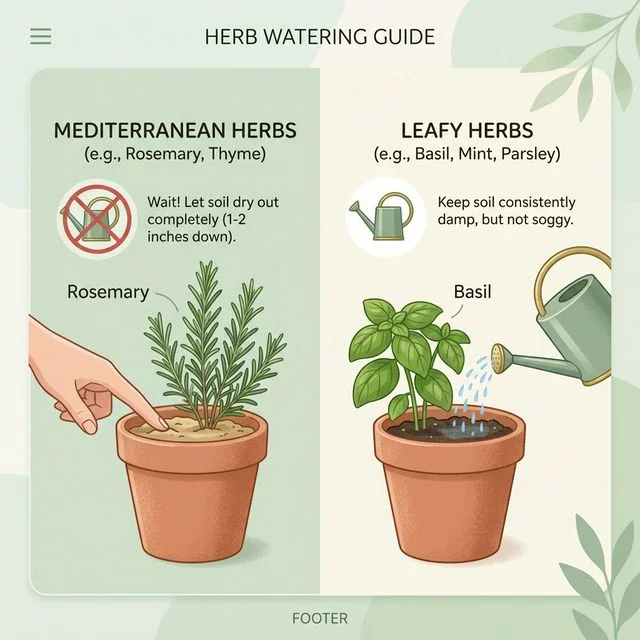
How often to water potted herbs: a by-herb chart
Most potted herbs should be checked often but watered only when the root zone is actually drying. Judge the pot instead of following a rigid calendar.
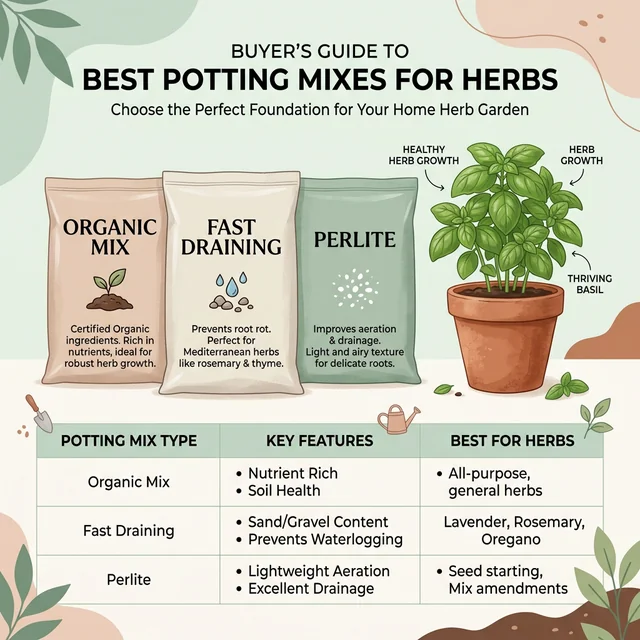
Best potting soil for potted herbs: how to pick the right mix
A practical buyer's guide to choosing potting mix for potted herbs, from richer blends for basil and parsley to faster-draining options for rosemary and thyme.
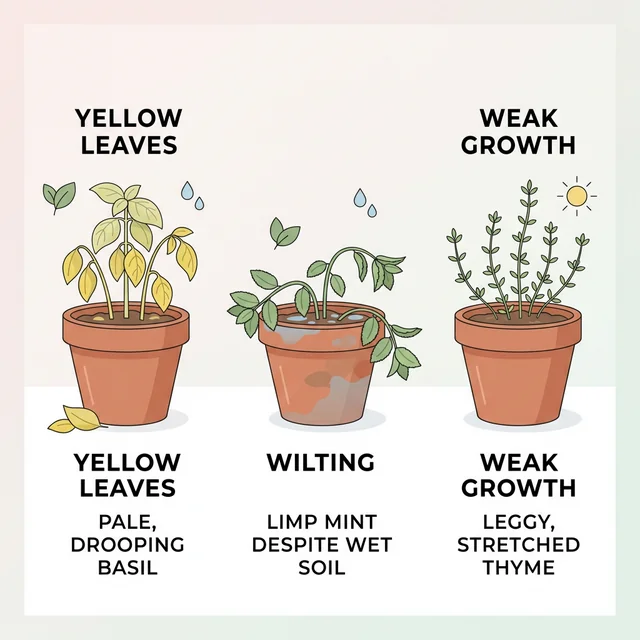
Common potted herb problems: yellow leaves, wilting, and weak growth
Common potted herb problems usually show up as yellow leaves, wilting, or weak growth, but the useful diagnosis starts with light, drainage, and root stress.