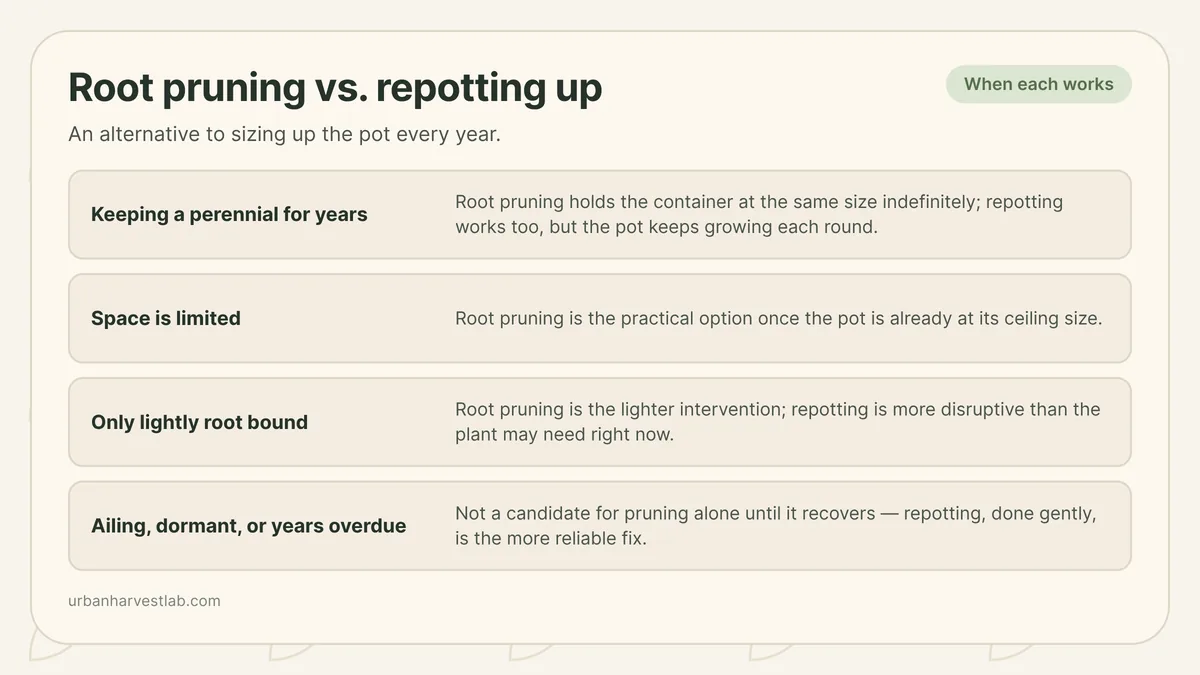
Root pruning vs. repotting into a bigger pot
| Situation | Root pruning | Repotting up |
|---|---|---|
| Herb is a perennial you plan to keep for years | Holds the container at the same size indefinitely | Works too, but the pot keeps growing with each round |
| Space is limited, such as a small balcony or a single windowsill | The practical option once the pot is already at its ceiling size | Not always possible if there is no room for a bigger container |
| Herb is only lightly root bound | A lighter intervention than a full repot | More disruptive than the plant may need right now |
| Herb is ailing, dormant, or has gone years without any soil refresh | Not a candidate for pruning alone until it recovers | The more reliable fix, done gently |
Root pruning lets you refresh a potted herb without moving it into a bigger container: loosen the root ball, cut back the dense layer of roots at the outer edge and bottom, and settle the plant back into the same pot with fresh mix. It is not the right move for every root-bound herb, but for a perennial you intend to keep for years in a fixed amount of space, it works as the alternative to sizing up every season. For the wider container-planning picture, Small-Space Herb Gardening covers the setup a herb like this lives in day to day.
Why prune roots instead of moving up a pot size
A container has a ceiling. Once a herb’s roots fill the available soil, the standard fix is a larger pot — Clemson HGIC recommends one 1 or 2 inches larger in diameter than the current pot — which buys more room but also means a bigger, heavier container to find space for, water, and eventually move again. That works fine the first few times. It stops working once the balcony rail, the windowsill, or the shelf runs out of space for anything larger.
Root pruning solves a different problem: it treats the crowding directly, by removing some of the root mass, rather than solving it by adding more soil volume around the roots that are already there. The herb goes back into the same pot it came out of, with fresh mix replacing what was removed. The ceiling stays exactly where it is, indefinitely, as long as the routine is repeated when the plant needs it again.
Signs a herb has reached that point
The signs that a herb needs attention are the same ones that flag a plant for a routine repot: a solid mass of roots circling the outside of the rootball, roots visible at or through the drainage holes, and a pot that dries out or needs watering far more often than it used to. Root bound herb signs walks through how to read each of those and rule out overwatering, which can mimic the same stalled growth — and treats the larger pot as the default fix, which is right for a plant that is still building size. Root pruning is the option once the pot has already reached the largest size the space allows and cannot go up again.
Which herbs actually need this
Not every herb reaches this point, and the ones that do are almost entirely perennials. Clemson HGIC’s own herb reference divides culinary herbs by life cycle: basil, cilantro, dill, and marjoram are annuals, finishing their life in one growing season regardless of pot size; rosemary and sage are perennial evergreen shrubs, and chives, mint, oregano, and thyme are herbaceous perennials that a grower typically keeps going for years. An annual herb is usually spent, bolted, or replaced before its roots ever fill a reasonably sized pot twice over, so root pruning rarely comes up for basil or dill. It is the multi-year perennials, kept in the same container season after season, that eventually run out of room and are worth pruning rather than perpetually upsizing.
Fast growers among the perennials tend to reach this point sooner. Mint is the fastest of these to fill a pot — Clemson HGIC’s herb reference describes it as vigorous enough to become invasive if it is not confined — so it reaches the point of needing intervention sooner than the woody herbs do. Slower, woody herbs like rosemary, thyme, and sage fill a pot less quickly, but respond to the same handling once they do.
How to root prune a potted herb
The technique borrows directly from the timing and handling rules Clemson HGIC publishes for repotting generally, applied to a plant staying in its current pot rather than moving to a larger one.
- Work in spring or summer, while the plant is actively growing. Clemson HGIC’s repotting guidance specifies doing this “only as needed during spring and summer while the plant is actively growing,” and advises against repotting “ailing or dormant plants or those beginning to flower.” A stressed, dormant, or flowering herb is not a good candidate until it recovers.
- Slide the plant out of its pot. Turn the container on its side and ease the rootball free rather than pulling on the stem, the same handling used for a routine repot.
- Loosen and score a tight rootball. Where roots have wrapped into a dense ring, Clemson HGIC’s instruction is to “score a tight rootball with a knife to loosen it” before doing anything else. This step alone frees up circling roots that would otherwise keep growing in the same tight pattern once replanted.
- Trim back the outer root mass. With the rootball loosened, cut away the dense outer shell of roots at the sides and base, taking the oldest, most tightly matted growth and leaving the looser interior roots intact. Clemson HGIC gives no depth to cut to for this step, so keep the trim light — lighter still on a herb that already looks thin or stressed.
- Refresh the soil and repot at the same depth. Add fresh potting mix to the bottom of the same pot, set the trimmed rootball back in, and backfill around the sides. Clemson HGIC’s caution about depth applies here as much as it does to a routine repot: do not add soil above the original level the rootball was sitting at.
- Water thoroughly. Clemson HGIC’s watering guidance is to water until it runs out of the bottom of the pot, then empty the saucer rather than letting the pot stand in it. The through-watering settles the fresh mix around the trimmed roots and closes any air pockets left by the cutting.
When to repot up instead
Root pruning is not always the better choice. A herb that is severely root bound, wilting between waterings, or has gone through several growing seasons without any attention to its roots is usually better served by moving into a genuinely larger pot first, then returning to the same-pot routine afterward. How to Repot Herbs Without Slowing Growth covers that full step-by-step process, including the gentle root handling that avoids transplant shock. If the plan is to size up, Herb Pot Size Guide has target diameters by herb so the next pot is not oversized for the roots that will fill it.
The two techniques are not exclusive. A perennial can move up a size once or twice while it is young, then switch to root pruning once it reaches a pot size that suits the space, holding that same container indefinitely from then on.
Aftercare after root pruning
Recovery looks the same as after any repot, because the underlying stress on the plant is the same: a portion of the root system has been cut and needs time to regrow before it can support the same amount of top growth it had before. Illinois Extension and Iowa State University Extension both cap a perennial herb at about one-third of its top growth removed at any one time — that ceiling, not Illinois’s separate instruction to cut back a lifted tender perennial so half the original plant remains, is what applies here, since a root-pruned herb is staying in its pot rather than being lifted for overwintering. A light trim within that one-third limit reduces how much water the reduced roots have to supply while they regrow. Keep the herb out of harsh, direct sun for a few days for the same reason. Hold off on fertilizing until new growth resumes — Illinois Extension’s rule for a plant that is not actively growing is to apply no fertiliser, and a root system that has just been cut is not taking one up.
Expect a short pause in visible growth rather than an immediate flush of new leaves. If the plant is still declining well beyond that initial pause, treat it as a wider watering or light problem rather than assuming the root pruning itself failed.
Sources
Diagnosing and repotting root-bound herbs
Root pruning only makes sense once you have confirmed the herb needs attention and decided against a bigger pot. These guides cover both of those steps.
Common questions
What is root pruning on a potted herb?
Root pruning means loosening a herb's root ball, trimming back the dense outer and bottom layer of roots, and repotting into fresh mix in the same size container rather than moving up to a larger pot.
Which herbs benefit most from root pruning?
Perennial herbs grown for multiple years, including rosemary, thyme, sage, oregano, mint, and chives, are the most likely candidates, because they are the ones that keep filling the same pot season after season. Annual herbs such as basil usually finish their life cycle before root pruning becomes relevant.
How do I know if a herb needs root pruning instead of a bigger pot?
Check for the signs of a root bound plant first, such as roots circling the rootball or growing out of the drainage holes. If the herb is otherwise healthy and you want to keep the same size pot, root pruning is the option; if you are ready to give it more room instead, Clemson HGIC's pot one or two inches larger in diameter is the more direct fix.
When is the best time to root prune a potted herb?
Clemson HGIC's repotting guidance recommends working only during spring or summer while the plant is actively growing, and skipping the process on plants that are ailing, dormant, or beginning to flower.
Related guides
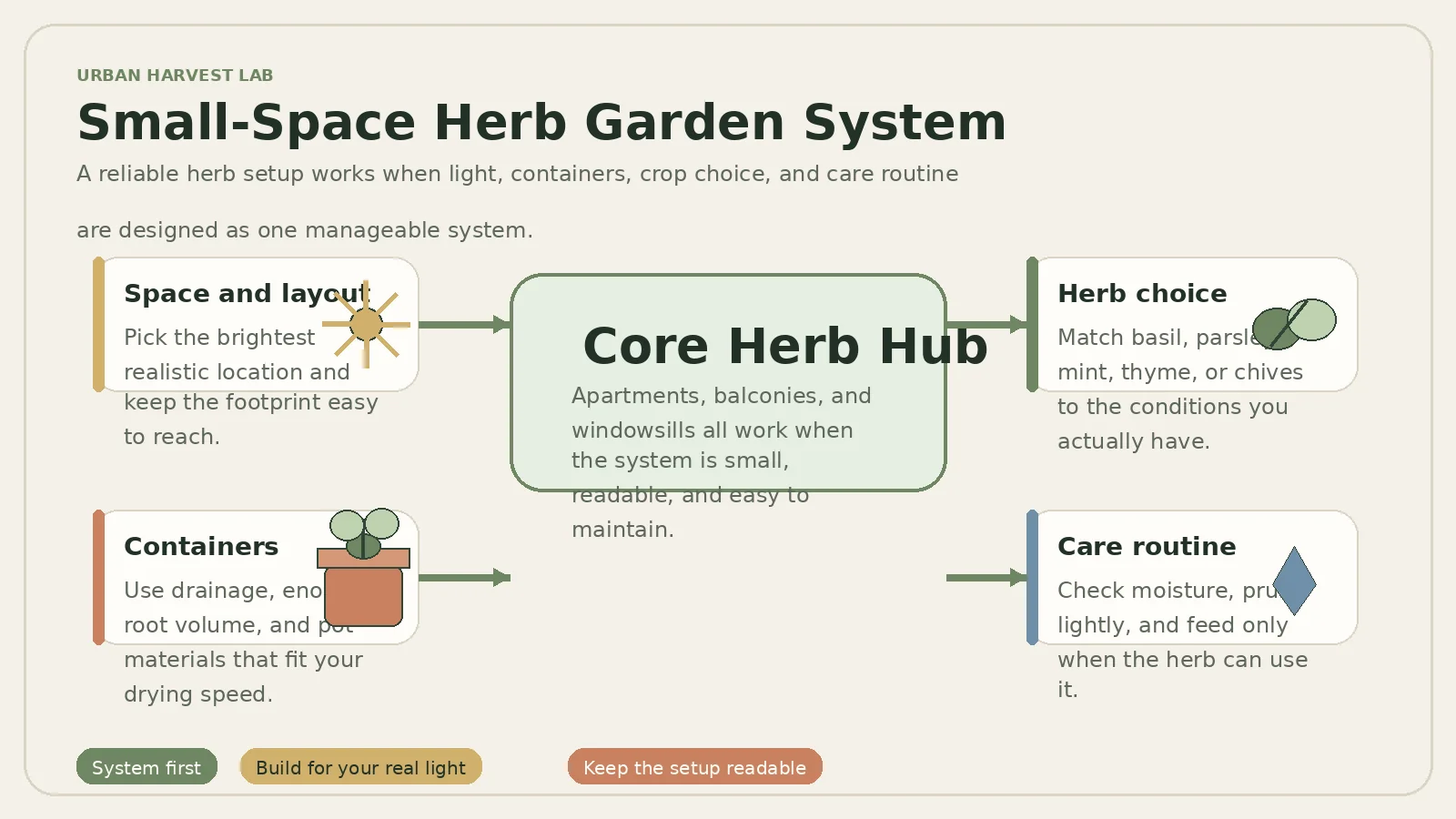
Small-space herb gardening: start here for apartments, balconies, and indoor setups
A navigation hub for apartment, balcony, and indoor herb gardening that connects the core setup, herb selection, light, container, and care guides in the right order.
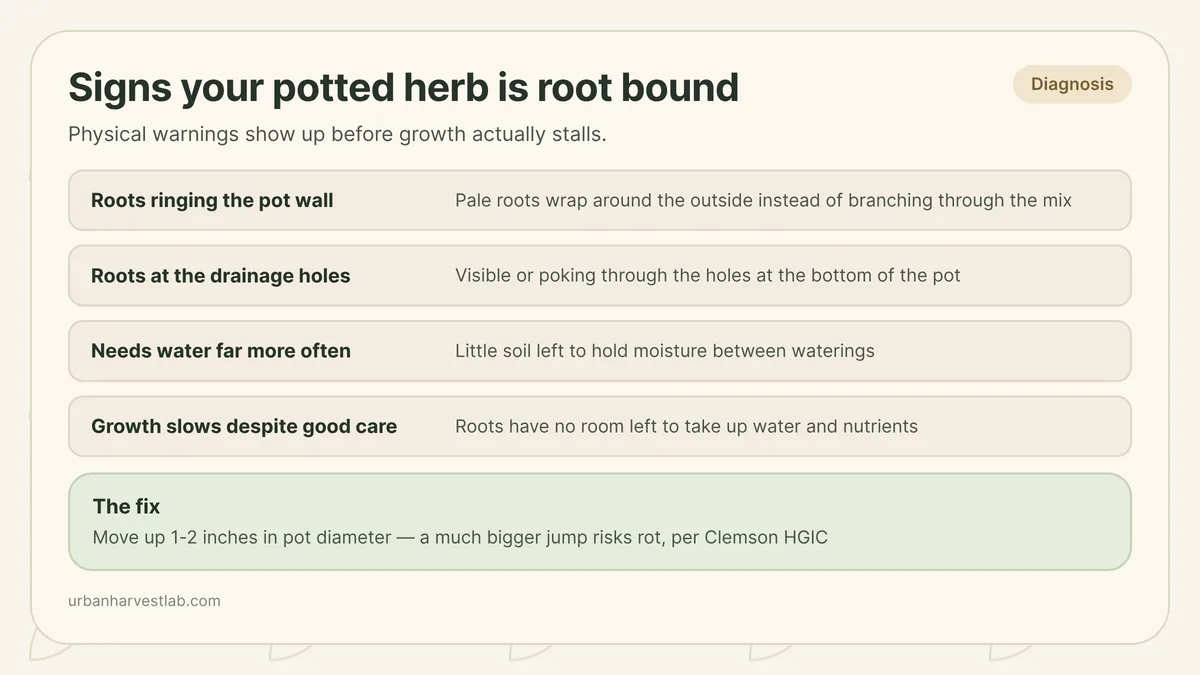
Signs your potted herb is root bound
A root bound herb gives off physical warnings before growth actually stalls. Here is what to look for, why the signs show up together, and how to repot without shocking the plant.
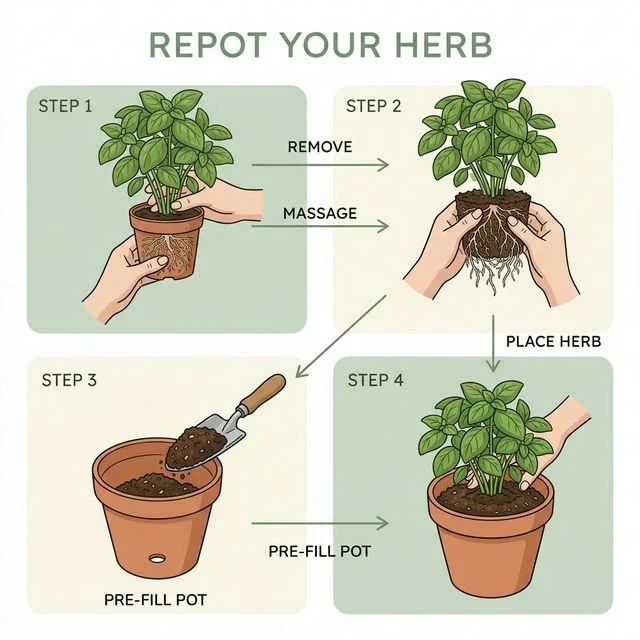
How to repot herbs without slowing growth
Moving an herb to a bigger pot should trigger a massive growth spurt. If your plants wilt and drop leaves after repotting, you are suffering from transplant shock. Here is how to upgrade your container without stressing the roots.