Small-space herb gardening is the practice of growing useful culinary herbs in the limited footprints real people actually have: apartment windowsills, compact balconies, bright kitchen corners, and a few carefully chosen containers instead of a full backyard plot. The goal is not to force a farm into a studio apartment. The goal is to build a herb system that fits the space, the light, and the amount of care you can realistically sustain each week.
That is why herb gardening works surprisingly well in apartments and balconies. Herbs do not need huge beds to be productive. What they do need is a setup that makes light, drainage, watering, and harvesting easier to manage. When those basics are aligned, a small herb garden can be productive, tidy, and genuinely useful for cooking.
This page is the hub for the full small-space herb gardening cluster. Use it as a map. If you are new, follow the sections in order. If you already know your weak point, jump straight to the guide that solves it.
Think of the cluster as a decision tree rather than a reading list. If your herbs keep stretching, the light guide matters more than another care checklist. If watering feels unpredictable, the container guide may solve more than a new schedule. If you have not chosen the herbs yet, crop selection should happen only after the footprint and location make sense. This hub keeps those decisions in the right order.
That approach is what makes herb gardening practical in compact homes. A balcony rail planter, a shelf under a grow light, and a sunny kitchen sill can all produce useful herbs, but they do not run on the same assumptions. The cluster helps you avoid generic advice and move instead toward decisions that match your exact setup, your real light, and your maintenance bandwidth.
It also gives you a clear next step at every stage, which is exactly what most beginners need more than another disconnected list of herb-growing tips for real homes.
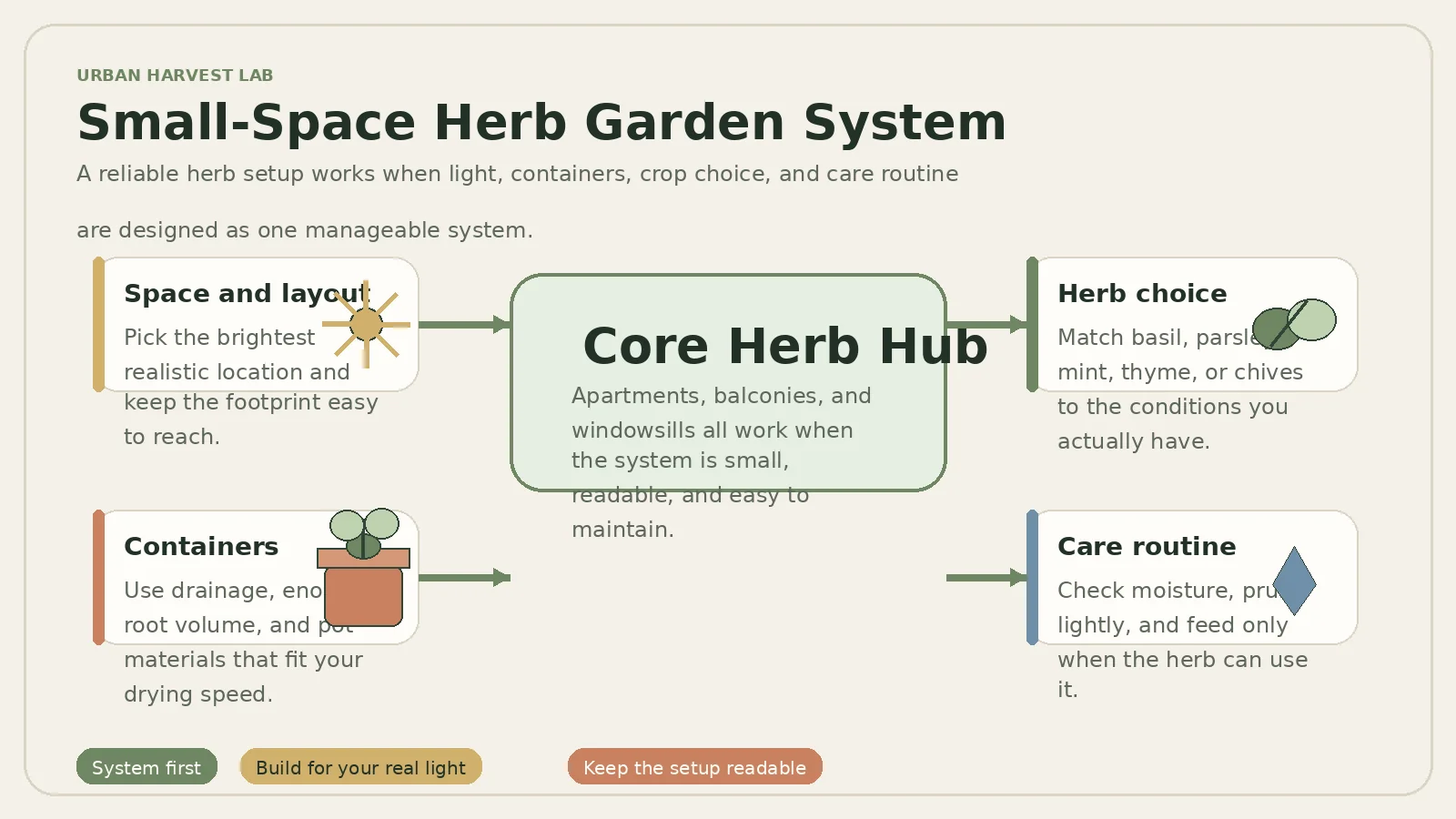
Start Here: Building Your Herb System
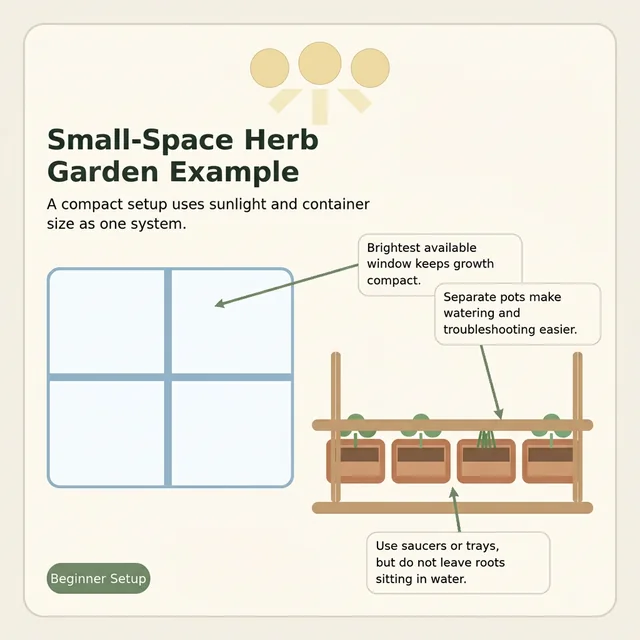
If you only read one guide first, make it the setup guide. Most herb problems begin before the first harvest because the system itself was never built around the space. A decorative pot without drainage, a dim window that looks brighter than it is, or a mixed planter full of herbs with different moisture needs can make the whole project harder than it has to be.
How to Set Up a Small-Space Herb Garden That Actually Works is the foundation for the cluster. It explains how to choose the location, set up containers, use the right potting mix, and avoid the common beginner mistakes that make herbs feel unreliable.
The reason this guide comes first is that it prevents false complexity. A herb garden in a small home should be simple enough that you can tell what is happening at a glance. If every pot dries differently, the plants are scattered across the apartment, and the light quality changes from one shelf to the next, routine care becomes a constant guessing game. A good setup compresses the problem into something manageable.
Use that guide when you need to answer questions like:
- Where should the herb garden actually live?
- Should you use one pot per herb or a shared planter?
- What basic supplies matter and what can wait?
Once that base system is clear, the rest of the cluster becomes easier to apply because you are not solving every variable at the same time.
This is also the stage where many growers should deliberately stay small. Three to five herbs in sensible containers usually teach more than a crowded collection of ten varieties. The cluster assumes you are building from a durable beginner system, not from impulse buying and trying to rescue the result later.
Choosing the Right Herbs for Small Spaces
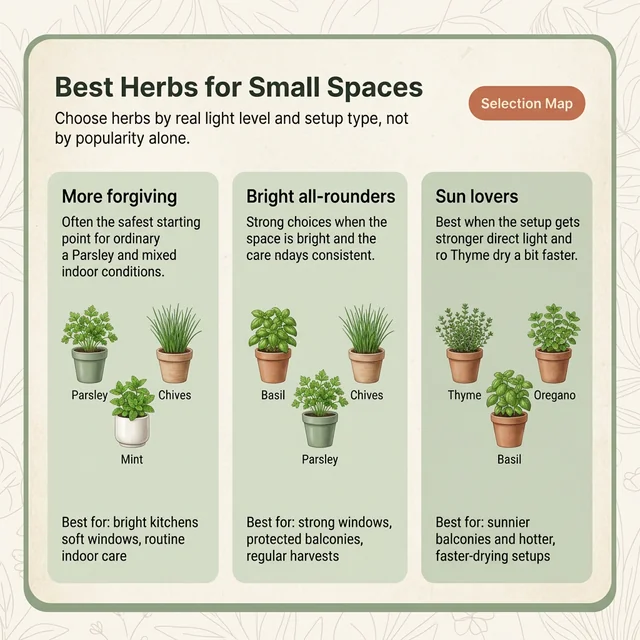
After the system is in place, the next decision is crop choice. Small-space gardening goes wrong when people choose herbs based only on what they like to eat rather than what their home can support. Basil is satisfying, but it is not the smartest first herb in every apartment. Mint is productive, but it should usually live in its own pot. Parsley and chives are often more forgiving than people expect.
Best Herbs for Small Spaces: What Grows Well in Apartments, Balconies, and Windowsills helps you match herbs to real-world conditions. It explains which herbs tend to do best indoors, which ones are stronger candidates for sunny balconies, and which crops are safer when your light is good but not ideal.
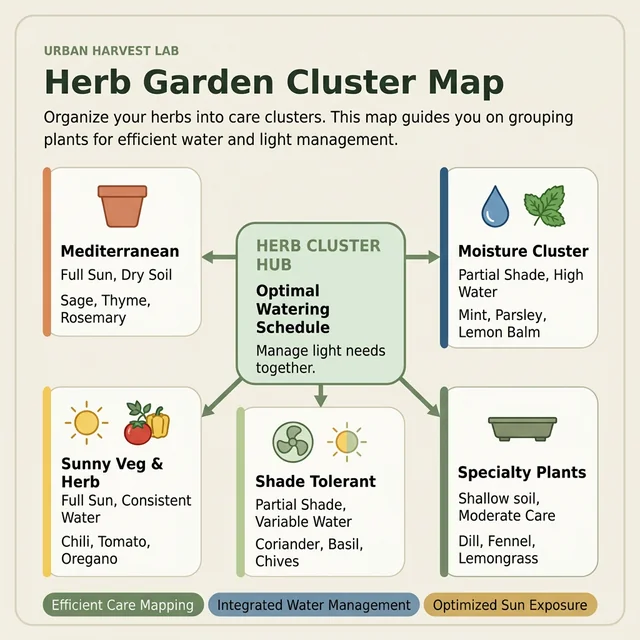
This matters because herbs are not interchangeable. Basil, parsley, thyme, mint, oregano, and chives all behave differently in containers and under different light levels. When beginners treat them as one category called herbs, they end up mixing thirsty leafy herbs with drier Mediterranean herbs in one planter and then wondering why no watering pattern seems right.
This guide is especially useful if you are asking:
- Which herbs grow best in apartments?
- Which herbs belong on a sunny balcony?
- Which herbs still make sense on a windowsill?
The practical pattern is simple: choose herbs that fit the site first, then build variety later.
Once you choose well, the rest of the system becomes calmer. Watering becomes easier to read, pruning becomes more rewarding, and you spend less time trying to make a high-light herb survive in a low-light corner that was never a good match.
Light: The Real Limiting Factor
In most small homes, light is the real constraint. People often assume watering or fertilizer is the reason herbs struggle, but weak light sits upstream of a long list of problems. Herbs stretch, pale out, regrow slowly after harvest, and stay wet longer when they do not receive enough usable light.
How Much Light Do Herbs Need? Realistic Sun and Grow Light Rules is the guide that clarifies this bottleneck. It explains why a room can feel bright to people and still be weak for basil, why balconies and windowsills behave differently, and when a grow light becomes the sensible next step rather than an unnecessary gadget.
Treat this guide as the reality check for the whole cluster. If you are not sure whether the problem is your routine or your location, review light before changing everything else.
Light also changes how you interpret other symptoms. A herb growing in poor light uses water more slowly, which can make a pot stay damp longer. That often leads people to think they are simply overwatering, when the deeper issue is that the plant is not getting enough energy to grow actively. That is why the light guide is not just about sun exposure. It is also a diagnostic guide for the rest of the system.
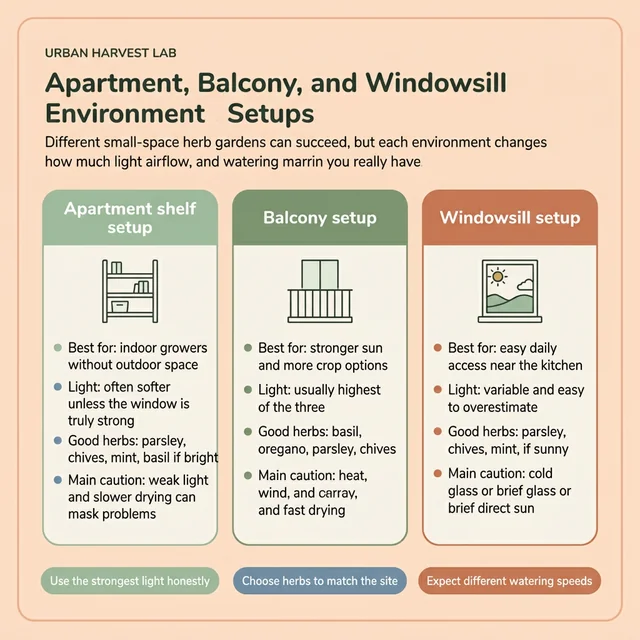
Containers and Setup
Container choice determines how forgiving your herb system feels. Tiny decorative pots may look efficient, but they usually dry too quickly, overheat more easily, and create more stress around watering. At the same time, the wrong large container in weak light can stay wet too long and push roots into trouble.
Best Containers for Herbs: Pot Size, Drainage, and Material Guide breaks down the main decisions that matter: pot size, drainage, material, and when one herb per pot is the cleaner long-term choice. This is where most beginners learn that drainage holes are not optional and that container design changes the whole care routine.
In small-space gardening, containers are not passive holders. They control how fast the mix dries, how hot the roots get, and how much margin for error you have on a busy day. That is why a slightly larger, well-drained pot often makes herb gardening feel easier immediately. It slows down the stress cycle enough that you can observe the plant instead of constantly reacting to it.
Use this guide when you need clarity on:
- how large herb containers should be
- whether terracotta or plastic makes more sense
- why drainage affects root health and watering accuracy
Containers are not a decorative side note. In a small-space garden, they are part of the growing system itself.
This section becomes especially important once you know your environment. A hot balcony, a cool windowsill, and a grow-light shelf may each call for a different container choice even when you are growing the same herb. The cluster is built to help you make those decisions with context instead of guesswork.
Care Routine for Healthy Herbs
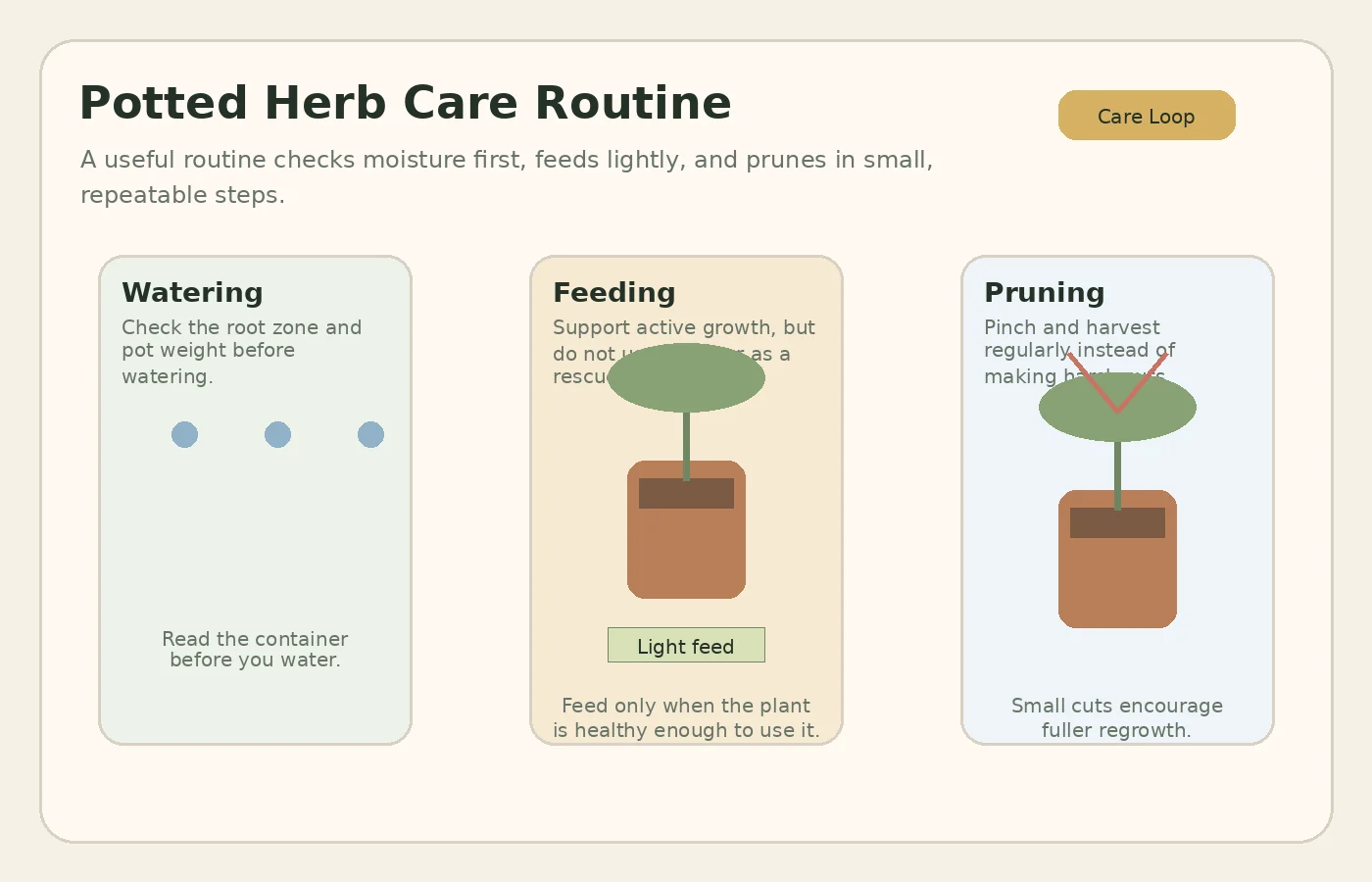
Once the herbs are in the right place and the containers are sensible, daily care becomes much simpler. Care is mostly about consistency, not intensity. Healthy potted herbs need a clear moisture-check habit, light pruning, and measured feeding rather than dramatic rescue moves every time a plant looks off for a day.
Potted Herb Care: Watering, Feeding, and Pruning Without Guesswork is the guide that turns the system into a routine. It explains how to water based on root-zone moisture instead of the calendar, how to think about feeding without overdoing it, and how to prune in a way that encourages fuller regrowth.
This is the care layer that keeps the whole cluster practical. If the setup guide builds the system, the care guide keeps the system stable week after week.
It also helps separate true care problems from setup problems. If the plant is weak because the light is poor or the pot stays wet too long, more fertilizer will not solve the issue. Good care begins with observation. The care guide gives you a repeatable rhythm that works with the rest of the cluster instead of fighting against it.
Common Problems
Troubleshooting is part of the cluster too, but it should not be the first place beginners start. Yellow leaves, wilting, slow growth, and leggy stems usually make more sense after you understand setup, herb choice, light, containers, and care. Otherwise every symptom feels random.
Start broad with Common Problems With Potted Herbs: How to Diagnose Yellow Leaves, Wilting, and Weak Growth. That guide helps you work backward through the usual system failures instead of guessing from the symptom alone. If the decline is specifically about basil yellowing indoors, the narrower follow-up is Why Are Basil Leaves Turning Yellow Indoors?. In most cases, the root cause still lives upstream in light, drainage, pot size, or watering behavior.
That is the bigger principle behind the cluster. Symptoms matter, but systems matter more. If you understand the setup pathway first, troubleshooting becomes a process of elimination instead of a series of random fixes. That usually leads to better outcomes and far less frustration.
It also keeps you from overcorrecting. Many herb growers respond to a symptom by changing three things at once: more water, more feed, and a new location. That makes the plant harder to read. The better strategy is to work backward through the roadmap and isolate the most likely constraint. The cluster is designed to support exactly that style of problem solving.
Small-Space Herb Gardening Roadmap
Beginners should not try to master everything at once. The easiest path is to move through the topic in a fixed order so each decision informs the next one.
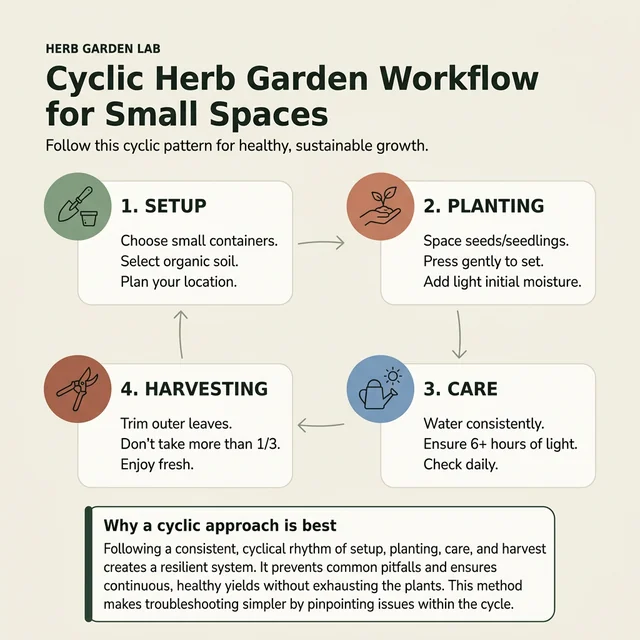
System
Start by building the basic herb setup. Choose the growing location, the container strategy, and the overall footprint. This is the stage where you stop treating the project like an idea and start treating it like a manageable system.
Herbs
Once the footprint is clear, choose herbs that actually match it. A bright balcony supports different crops than a softer kitchen window. This is the stage where you reduce frustration by matching plants to conditions rather than to wish lists.
Light
Next, confirm whether the chosen location delivers enough usable light. This step prevents a lot of misdiagnosis later. If the light is marginal, choose more forgiving herbs or add a grow light before the problem compounds.
Containers
With the site and crops in mind, refine the container plan. Pot size, drainage, and material affect how frequently you water and how stable the root zone stays. This is where the system becomes more forgiving.
Care
Finally, lock in the routine. Water according to root-zone moisture, prune to encourage regrowth, and feed only when the herb is healthy enough to benefit. Care should be the last layer, not the first guess.
Following the sequence of system, herbs, light, containers, and care keeps the learning curve clean. It also helps you identify where a problem actually starts when something goes wrong.
If you get stuck, go back one step rather than jumping ahead. A weak herb should send you back to light and crop fit before it sends you to fertilizer. A container that dries too fast should send you back to pot size and placement before it sends you to more frequent watering. The roadmap is meant to reduce noise as much as to provide direction.
Frequently Asked Questions
Can herbs really grow indoors?
Yes, many herbs can grow indoors if the light is strong enough and the container system is designed properly. Indoor herb gardens usually fail because the location is too dim or the watering pattern becomes inconsistent, not because herbs are impossible to grow inside.
What herbs grow best in apartments?
Parsley, chives, and mint are often among the safest apartment herbs because they can remain useful in bright but imperfect home conditions. Basil can also work well in apartments, but it usually needs more direct light than beginners expect. The full crop breakdown is in Best Herbs for Small Spaces: What Grows Well in Apartments, Balconies, and Windowsills.
How much sun do herbs need?
Most culinary herbs prefer strong light, and many perform best with a meaningful period of direct sun or a suitable grow light. Basil, thyme, and oregano usually want the strongest light. Parsley, chives, and mint can tolerate somewhat less, though they still grow better in genuinely bright conditions. The full explanation is in How Much Light Do Herbs Need? Realistic Sun and Grow Light Rules.
Can I grow herbs without a balcony?
Yes. A balcony is helpful, but it is not required. Many people build workable herb gardens on windowsills, bright kitchen counters near a window, or shelves supported by a grow light. The important part is not having outdoor space. It is designing the herb system around the light and footprint you actually have.
Related Guides
These five cornerstone guides form the core of the small-space herb gardening cluster:
- How to Set Up a Small-Space Herb Garden That Actually Works
- Best Herbs for Small Spaces: What Grows Well in Apartments, Balconies, and Windowsills
- How Much Light Do Herbs Need? Realistic Sun and Grow Light Rules
- Best Containers for Herbs: Pot Size, Drainage, and Material Guide
- Potted Herb Care: Watering, Feeding, and Pruning Without Guesswork
Together, they cover the full beginner path for apartments, balconies, and indoor herb setups.
If you want the shortest possible route through the cluster, read the setup guide first, then the herb-selection guide, then the light guide. After that, use the container and care guides to refine the system based on how your space actually behaves. That order gives you a practical foundation before you move into optimization.
If this topic is relevant to you, also read:
Use these related guides to move into setup decisions, troubleshooting, or the next logical beginner step.
- How to Set Up a Small-Space Herb Garden That Actually Works
- Best Herbs for Small Spaces: What Grows Well in Apartments, Balconies, and Windowsills
- How Much Light Do Herbs Need? Realistic Sun and Grow Light Rules
- Best Containers for Herbs: Pot Size, Drainage, and Material Guide
- Potted Herb Care: Watering, Feeding, and Pruning Without Guesswork
Related guides
How to Set Up a Small-Space Herb Garden That Actually Works
A calm, practical guide to starting a herb garden on a balcony, windowsill, or bright indoor corner without overbuying or overcomplicating the setup.
Best Herbs for Small Spaces: What Grows Well in Apartments, Balconies, and Windowsills
A practical guide to the herbs that actually perform well in compact homes, with selection logic for bright windows, balconies, and more forgiving low-space setups.
Potted Herb Care: Watering, Feeding, and Pruning Without Guesswork
A calm, science-based guide to keeping basil, parsley, mint, thyme, chives, and other potted herbs healthy without turning the routine into guesswork.