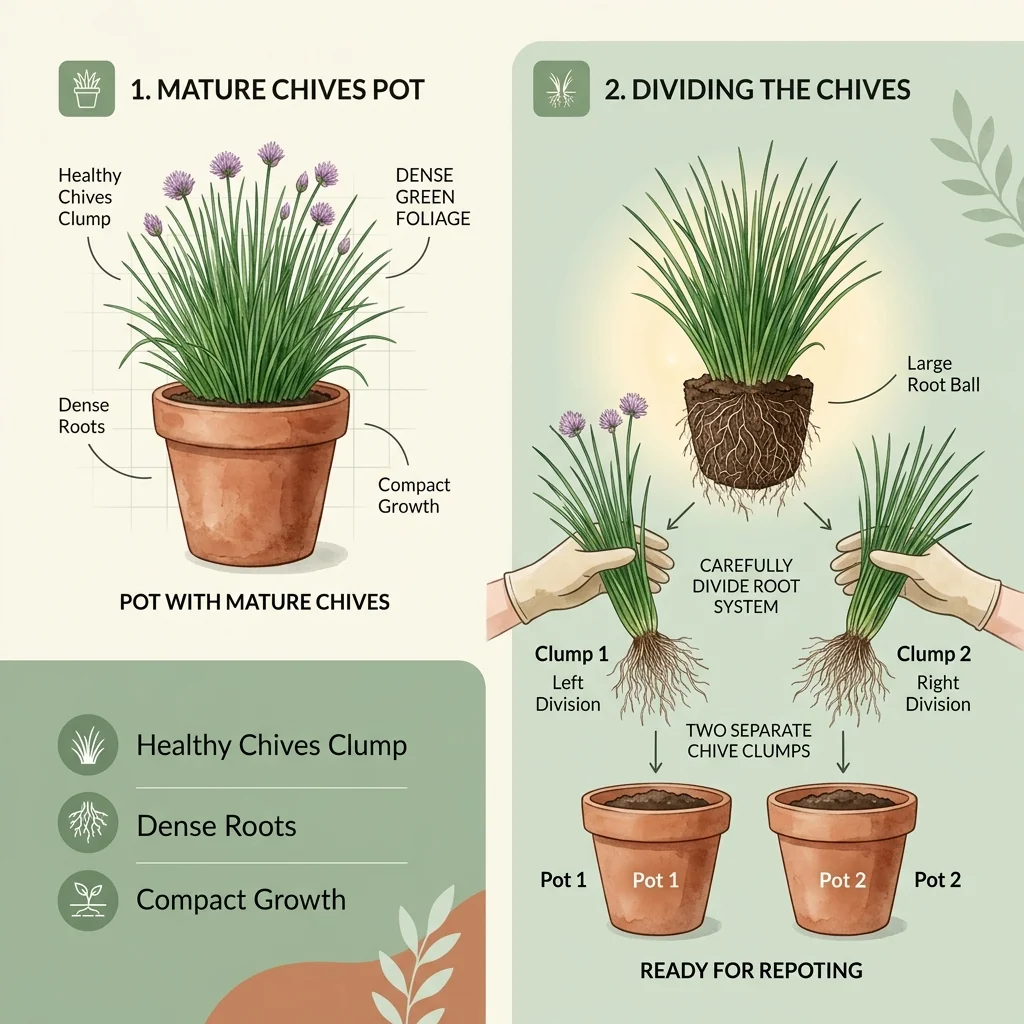
Chives pot size at a glance
| Container | Size | Best for |
|---|---|---|
| Minimum pot | 5-6 in wide and deep (13-15 cm) | One small chive clump |
| Ideal pot | 6-8 in wide and deep (15-20 cm) | One clump with room to bulk up |
| Mixed planter | Chives alongside other herbs | Compact, well-behaved companion |
Chives may be the best value-per-inch of any potted herb: a container just 6 inches (15 cm) wide and deep supports a clump that, divided every few years, turns into an endless supply of plants. They are the rare herb where the interesting question is not “how big a pot?” but “how many pots do I want?” — one starter clump becomes three within a couple of seasons. For where chives sit next to the herbs that do demand space, see the main herb pot size chart.
A bulb plant in disguise
Chives grow from a cluster of small bulbs, like miniature onions, with a mat of fine fibrous roots beneath. That anatomy explains everything about their container needs: no taproot means no depth requirement, and the bulb cluster thickens sideways slowly and politely, without mint’s running ambition. A 6-inch pot holds a productive clump; 6 to 8 inches gives it room to bulk up. It is also why chives behave so well in mixed planters — size the shared container for its most demanding occupant and chives will fit around it.
The multiplication economy
Here is how one purchase compounds. Year one: a single nursery clump in a 6-inch pot, snipped for the kitchen all season. A couple of springs later: the clump is dense and slightly congested in the middle, so it comes out of the pot and pulls apart by hand into three sections — the bulbs separate almost willingly. Each section goes into its own 6-inch pot with fresh mix, and within a month all three are cropping. Within a few years you are giving chive plants away. No other kitchen herb multiplies this cheaply, and it is the reason to divide on schedule rather than upsize: division renews vigour, an ever-bigger pot just postpones the congestion. The gentle technique is in how to repot herbs without slowing growth. How often to divide, by herb, is in dividing perennial herbs.
Moisture: the moderate middle
Chives are neither drought herbs like thyme nor water-hogs like basil; they like steady, moderate moisture. For the pot choice that means plastic or glazed ceramic (which hold water a little longer than terracotta) in that modest 6-inch size keeps them happy without daily attention. Keep the drainage holes clear — the fine root mass dislikes a waterlogged base. Options are compared in best containers for herbs.
Winter die-back is dormancy, not death
Chives are a hardy perennial. In cold months the spears yellow and the clump retreats to its bulbs, which alarms beginners into binning the pot — but it is a rest, not a decline, and the cold spell is actually good for the plant. Leave the pot somewhere cool, water sparingly, and fresh spears push up in spring. You can even lift a section, chill it briefly, and bring it onto a bright sill to “force” a winter supply.
Harvest hard, flower a little
Regular snipping is what keeps a compact pot productive: chives answer every cut with fresh spears, so frequent harvesting is care, not damage — technique in how to prune basil, mint, parsley, and chives. The pompom flowers are edible and loved by pollinators, and letting a few bloom costs nothing, but heavy flowering slows spear production; snip most flower stalks if the kitchen comes first. Day-to-day upkeep is covered in potted herb care.
Sources
More on growing chives in containers
These guides connect chives' compact pot size to dividing, harvesting, and general potted herb care.
Common questions
What size pot do chives need?
A pot about 6 inches (15 cm) wide and deep is enough for one chive clump. Their roots stay compact and fibrous, so they do not need the depth that parsley or basil require.
Can chives grow in a small pot?
Yes. Chives tolerate compact pots well, which is why they suit windowsills and mixed kitchen planters. Just divide the clump when it fills the pot.
How often should I divide potted chives?
Illinois Extension advises every 2 to 3 years and the RHS every three or four; divide sooner if the clump is dense and crowded in the centre. Lift it, pull it into smaller sections, and replant each section in fresh mix.
Can chives share a pot with other herbs?
Yes, chives are well behaved and mix easily with other herbs, as long as the shared pot is deep enough for any taproot herbs like parsley.
My potted chives died back in winter, are they dead?
Probably not. Chives are a hardy perennial and naturally die back to the roots in cold months, then regrow in spring. Keep the pot cool, water sparingly while dormant, and do not throw it out. You can even bring a clump indoors for a winter supply.
Do chives grow from bulbs, and does that change the pot?
Yes, chives grow from a cluster of small bulbs, which is why the clump thickens every season and divides so easily. It also means the pot never needs to be deep; the bulbs sit near the surface with a shallow mat of fibrous roots below.
Related guides
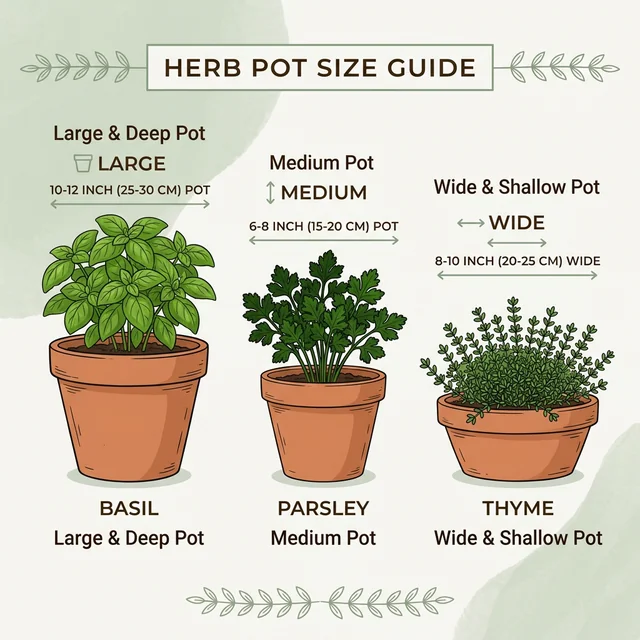
Herb pot size chart: basil, mint, parsley, thyme & chives
A practical herb pot size guide for the most common kitchen herbs, with simple size ranges that make container growing easier to read and maintain.
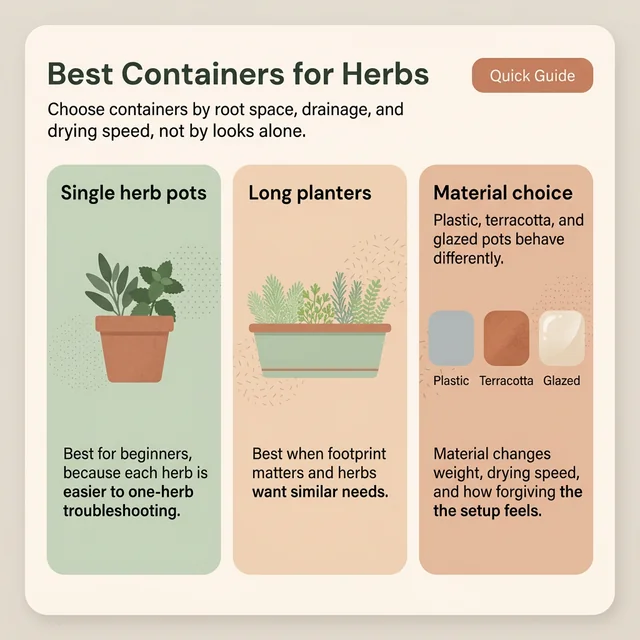
Best containers for herbs: drainage, pot size, and materials that work
A practical guide to herb containers that explains which pots work best, why drainage matters, and how material changes the way containers dry.
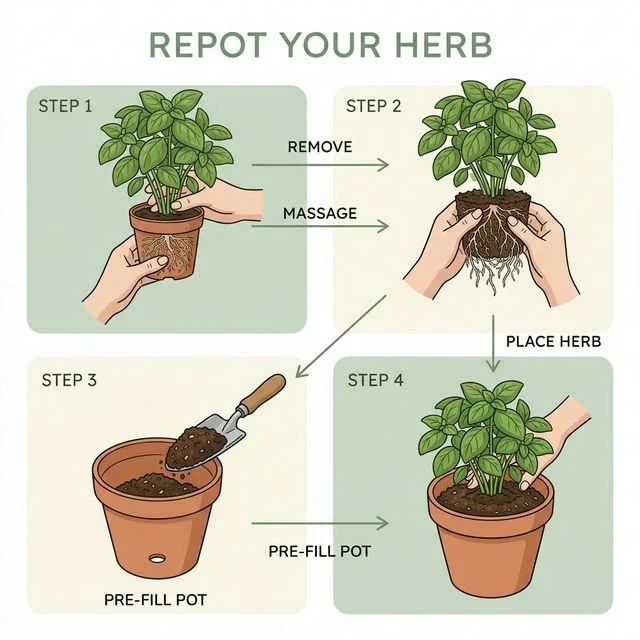
How to repot herbs without slowing growth
Moving an herb to a bigger pot should trigger a massive growth spurt. If your plants wilt and drop leaves after repotting, you are suffering from transplant shock. Here is how to upgrade your container without stressing the roots.