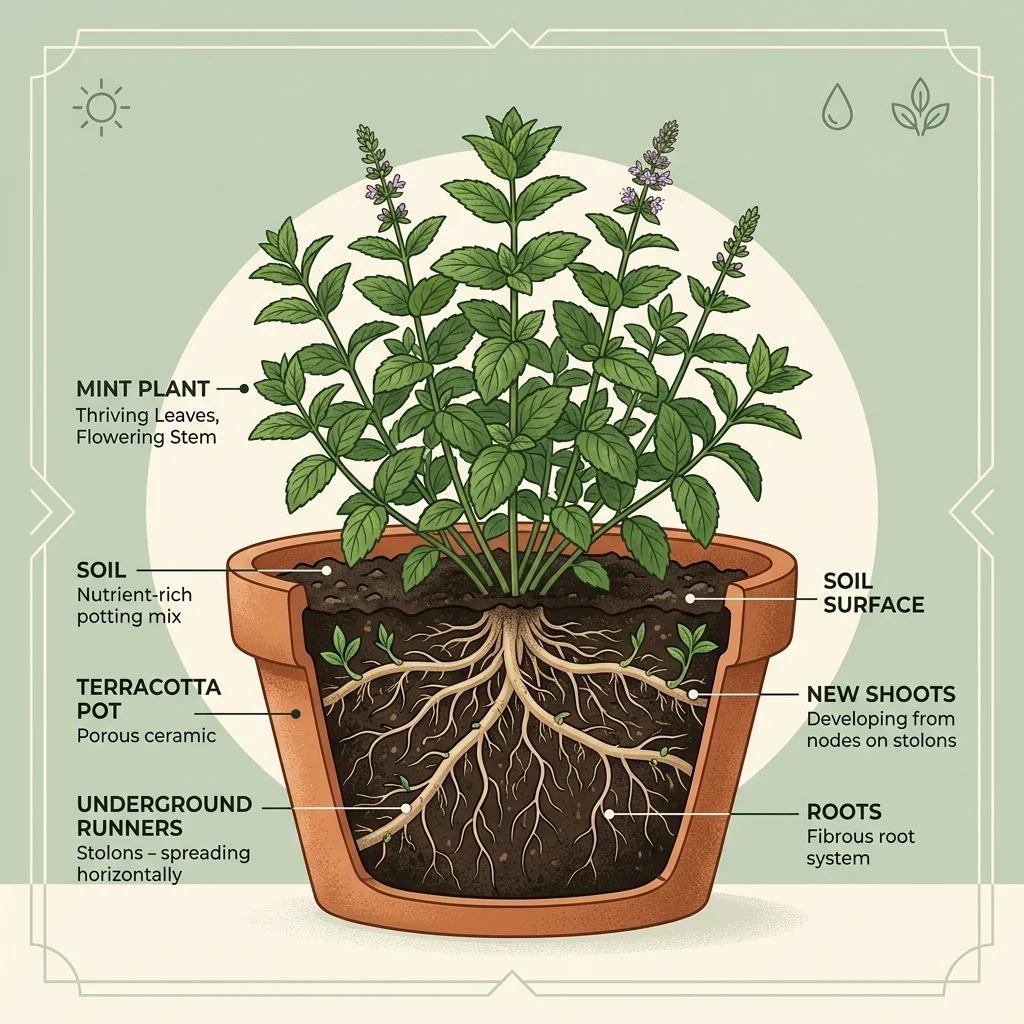
Mint pot size at a glance
| Container | Size | Best for |
|---|---|---|
| Minimum pot | 8 in wide, 8 in deep (20 x 20 cm) | One mint plant, kept trimmed |
| Ideal pot | 10-12 in wide, 8 in deep (25-30 x 20 cm) | One mint plant, long term |
| Shared planter | Not recommended | Mint crowds out neighbours; keep it separate |
With mint, the pot is less a home and more a fence. The plant spreads by underground runners (stolons) that root wherever they touch soil, so the first rule is not a measurement at all: give mint its own container. Once it has one, the size question is easy — about 8 to 12 inches (20 to 30 cm) wide and 8 inches (20 cm) deep for one plant. Where mint sits among the other herbs is on the main herb pot size chart.
Why sharing a planter always ends the same way
Mint’s runners travel horizontally just under the surface, sending up new shoots as they go. In a mixed planter that means a quiet takeover: slower herbs like parsley or thyme get undercut at the root level long before you see mint crowding them above ground. A shared bed just gives the runners more territory. There is no pruning schedule that beats this habit — separation does, which is why the answer to “can mint share a pot?” is a size recommendation of its own: one plant, one pot.
Wide beats deep for a runner
Because mint colonises sideways, width is the dimension that matters. A pot 10 to 12 inches across gives the runners a season of room; 8 inches of depth is plenty, since the root mat lives in the top layer. A tall, narrow pot wastes soil below the roots. On material, plastic or glazed ceramic suits mint’s love of steady moisture better than fast-drying terracotta — the opposite of the advice for Mediterranean herbs, as covered in best containers for herbs. Keep the soil lightly moist, never soggy; the rhythm is in how often to water mint.
A cautionary case: the window-box escape
Picture a spring window box planted generously: mint at one end, parsley in the middle, chives at the other. By July the parsley is thin and the “chives” end is sprouting round mint leaves. Lift the soil and the explanation is right there — white runners crossing the full length of the box a couple of inches down. The fix that autumn is the one that should have happened in spring: mint lifted into its own 10-inch pot beside the box, the runners pulled from the other herbs’ root zones, and everything recovers the following season. Every mixed planter with mint in it is this window box on a delay.
Containment: mint escapes even a “big enough” pot
Sizing the pot right is only half the job; the other half is stopping the escape routes. Runners will slip out through the drainage holes and root into whatever is below, and they will arch over the rim to root in a neighbouring pot. Two habits keep it contained: raise the pot on feet or stand it on a hard surface (paving, a tray) so exiting runners find nothing to root into, and trim anything that climbs over the edge, keeping mint a hand’s width from other pots. If you want mint in a garden bed, sink the whole pot into the ground with the rim above soil level so the container acts as a root barrier.
Renew it yearly instead of upsizing forever
Mint does not just outgrow a pot — it wears one out. After a season the centre of the clump goes woody and sparse while the edges stay vigorous, and roots start circling. Rather than moving to an ever-bigger container, divide mint every spring: lift it, pull the clump apart, discard the tired middle, and replant a healthy outer section in fresh mix, following how to repot herbs without slowing growth. The same 10-inch pot then lasts for years, and the spare divisions are free plants. Regular trimming between divisions keeps it bushy rather than leggy — technique in how to prune basil, mint, parsley, and chives.
Potting mint? Read these alongside
These guides connect mint's container size to watering, drainage, and keeping its roots from taking over.
Common questions
What size pot does mint need?
One mint plant does well in a pot about 8 to 12 inches (20 to 30 cm) wide and 8 inches (20 cm) deep. Mint spreads fast, so give it room and keep it in its own container.
Can mint share a pot with other herbs?
It is usually a bad idea. Mint sends out runners and will crowd out neighbours within a season. If you want mint near other herbs, plant it in its own pot beside them.
Does mint need a deep or wide pot?
Wide is more important than deep, because mint spreads sideways by runners. A wide pot around 8 inches deep gives it room while keeping the roots contained.
How do I stop mint taking over?
Grow it in a dedicated pot rather than a shared bed or planter, and trim it regularly. A standalone container is the simplest way to enjoy mint without it spreading everywhere.
Can mint escape through the drainage holes?
Yes. Mint runners will grow out of the drainage holes and root into any soil below, and also arch over the rim into nearby pots. Stand the pot on a hard surface or on feet, keep it away from other pots, and trim escaping runners.
How often should I divide potted mint?
About once a year, ideally in spring. The centre of a mint clump goes woody while the edges stay vigorous, so lift it, discard the tired middle, and replant a healthy outer section in fresh mix. That renews it without needing an ever-bigger pot.
Related guides
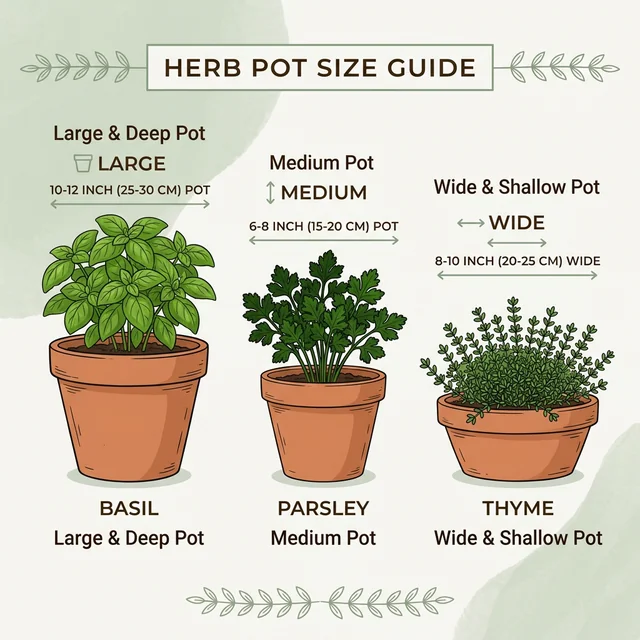
Herb pot size chart: basil, mint, parsley, thyme & chives
A practical herb pot size guide for the most common kitchen herbs, with simple size ranges that make container growing easier to read and maintain.
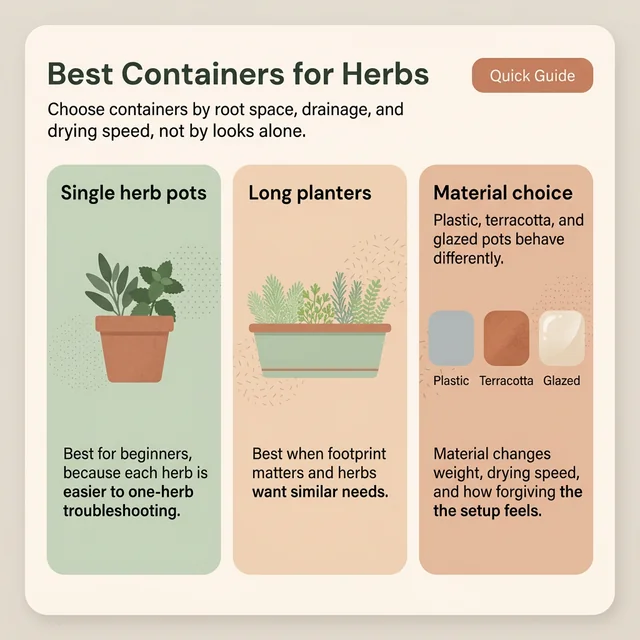
Best containers for herbs: drainage, pot size, and materials that work
A practical guide to herb containers that explains which pots work best, why drainage matters, and how material changes the way containers dry.
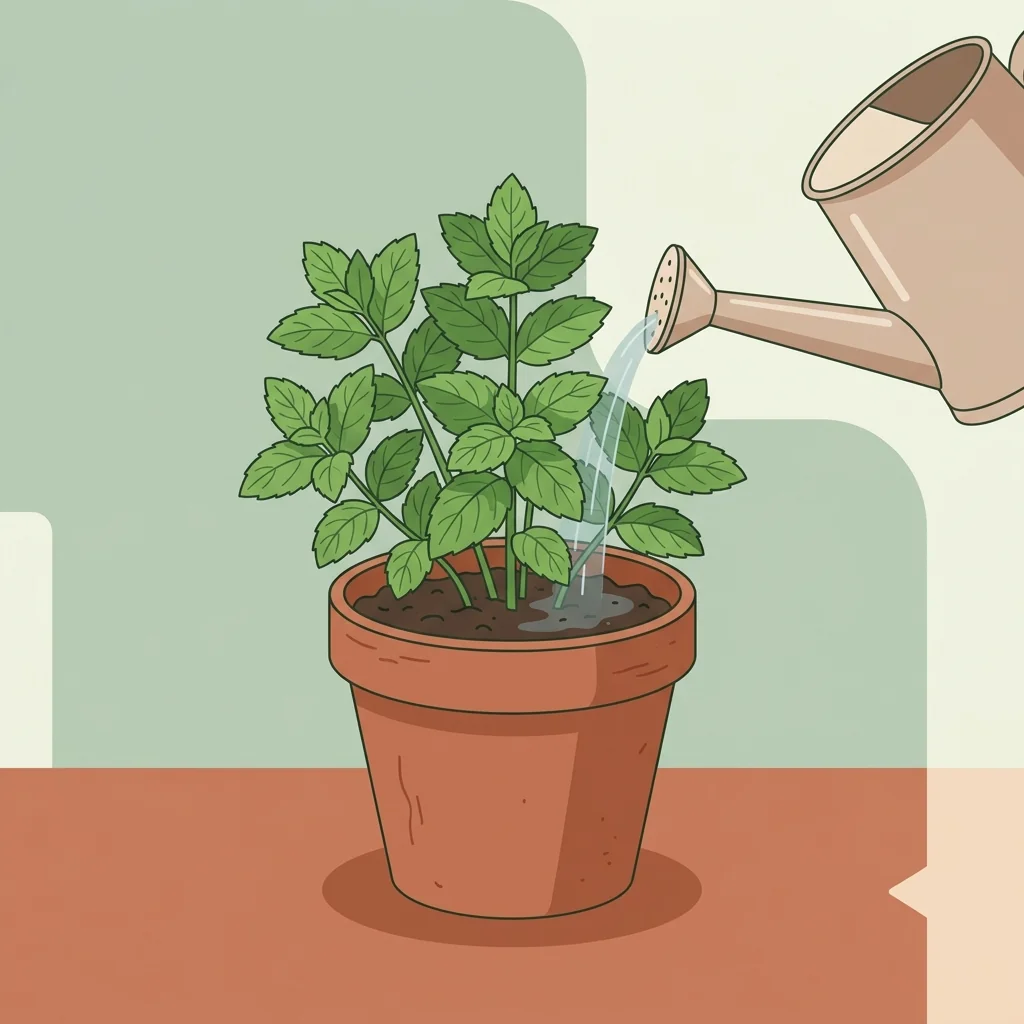
How often to water mint: every 1 to 3 days in a pot
Mint is thirstier than most herbs and sulks when it dries out. Keep the soil lightly and consistently moist, and it will grow as fast as you can pick it.