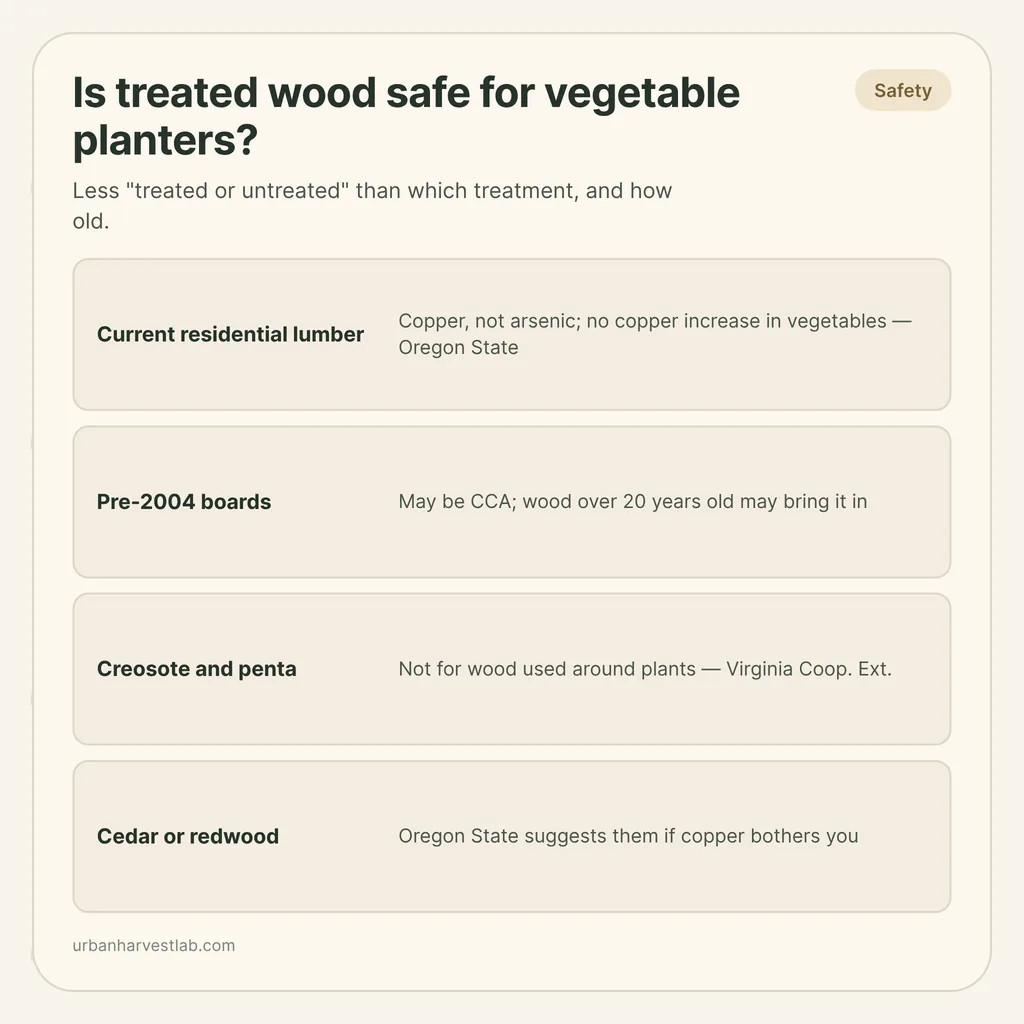
What the board is, and whether to put food next to it
| Board | What extension and EPA say | Verdict for a vegetable planter |
|---|---|---|
| Current residential lumber (copper azole, MCA, ACQ) | Iowa State considers modern pressure-treated lumber safe for vegetable gardens; Maryland calls MCA low in toxicity | Use it, ground-contact rated, with the precautions below |
| Lumber from before 2004, or of unknown age | Oregon State: lumber over 20 years old may be CCA; Iowa State does not recommend it | Skip it, or line it and test the soil |
| Railroad ties, utility poles | Oregon State: industrial preservatives, not intended for garden use | Do not use |
| Creosote or penta wood | Virginia Cooperative Extension: may be toxic to plants as well as harmful to people | Do not use |
| Cedar or redwood | Oregon State: more expensive but resist decay | Fine, no preservative question |
Lumber sold today for home use is treated with copper compounds, not arsenic, and the university tests that exist show no copper increase in the vegetables grown beside it. What is not safe is old or industrial wood: pre-2004 boards that may be CCA, railroad ties, utility poles, and anything treated with creosote or penta. So the decision is less “treated or untreated” than “which treatment, and how old is the board”.
For the wider question of which containers are fine to fill with soil, see food-safe containers for growing vegetables. Here the question is the lumber.
Read the board before you buy
Oregon State University Extension notes that all pressure-treated wood carries a label or end tag stating its intended end use, and that the preservative depends on that use. Lumber for home building gets a different treatment from railroad ties or utility poles. NPIC, the pesticide information center run by Oregon State with EPA, says some types of treated wood are not approved for use at home.
Two things to check on the tag:
- Residential use. Oregon State says to use only lumber treated with preservatives approved for residential use.
- Ground contact. Oregon State also says the lumber should be treated for “ground contact” applications. A planter holds wet soil against the wood all season, so that is the rating that matches the job.
Oregon State names copper azole (CA-C), micronized copper azole (MCA) and alkaline copper quaternary (ACQ) as the most common preservatives for lumber. It reports CA-C and ACQ are more common in western states for Douglas-fir, and MCA on southern pine in the east. EPA lists ACQ, borates, copper azole and others among the preservatives registered for residential lumber. Virginia Cooperative Extension recommends looking for ACQ or copper azole if you want treated wood for a plant container.
University of Maryland Extension describes MCA as not containing arsenic but containing copper, and considers it low in toxicity.
What the copper test found
Oregon State built four raised beds in a home garden, each about 4 by 10 feet from 2 by 12 lumber: two from untreated Douglas-fir and two from Douglas-fir pressure treated with copper azole to ground-contact specifications. The same vegetables and herbs went in each year, among them arugula, basil, beet, carrot, lettuce, radish, kale, pea, pepper, tomato and turnip. Soil was sampled within 1 inch of the edge, 3 to 4 inches from the wood, and in the center, and the crops were analyzed for copper. Four years of data had been collected at the time of writing.
| Question | Oregon State result |
|---|---|
| Does copper reach the soil? | Yes, but only within 1 inch of the bed edge; about 20 to 68 ppm above the untreated beds, varying by year |
| How high is that? | Within the natural range of copper in the local soils |
| Further from the wood (3-4 inches, bed center)? | No excess copper found |
| In the vegetables and herbs? | No increase in copper in any season |
Iowa State University Extension summarizes the research the same way: the copper increase is minimal, limited to about 1 inch from the wood, and does not increase uptake by vegetables, and it considers modern pressure-treated lumber safe for vegetable gardens.
Two limits are worth knowing. The Oregon State beds were 4 by 10 foot garden beds, not pots, and the study tested copper azole boards only; Oregon State says it will test other pressure-treated wood in future.
Old wood is the problem
CCA, chromated copper arsenate, was the arsenic-containing preservative. EPA says that in December 2003 manufacturers voluntarily discontinued CCA-treated wood products for homeowner uses. EPA does not require removal of existing structures made with it or the surrounding soil.
That makes age the practical test. Oregon State warns that reusing or salvaging lumber over 20 years old may bring CCA-treated lumber into your garden. On the risk to food, the sources are measured: Oregon State says there is no evidence that CCA-treated lumber increases arsenic accumulation in vegetables, but that manufacturers do not recommend it for this use. Iowa State says material produced before 2004 often contained arsenic-based preservatives and is not recommended for garden use. If an old board is already in your garden, Iowa State’s advice is a soil test, the best way to find out whether potentially toxic chemicals are present.
Creosote and penta are a separate case. Virginia Cooperative Extension says wood used around plants should not be treated with either; both may be toxic to plants as well as harmful to people. Railroad ties are the usual source: Iowa State says repurposed ties should not be used in gardens because they are treated with creosote, a known carcinogen. Shipping pallets raise their own questions, covered in pallet planter safety and the stamp codes.
Cut the exposure further
Even when the lumber is current, NPIC suggests a few cheap habits:
- Keep edibles away from the edge. NPIC says soil right next to treated wood is likely to hold more of the wood’s chemicals. In a narrow box that means planting toward the center.
- Wash soil off what you harvest. NPIC notes the soil can hold more preservative than the vegetables themselves.
- Seal or paint the wood. NPIC says a sealant or paint acts as a barrier against leaching; Maryland suggests exterior latex paint or a stain.
- Paint cut ends. Oregon State says to treat freshly cut ends with a wood preservative cut-end treatment.
- Wear gloves and a dust mask when sawing, and do not burn offcuts. NPIC and EPA both warn against burning treated wood because toxic chemicals can be released in the smoke.
A barrier between soil and wood is the other route. Maryland lists a heavy plastic liner, and Iowa State describes woven geotextile fabric that lets water drain while separating soil and roots from the lumber. Which one, and how to fit it without creating a bathtub, is worked through in lining a wooden planter. If you go the fabric route, you can browse woven landscape fabric on Amazon.
When another material is the better call
Oregon State’s own advice for gardeners who are not comfortable with the small amount of leached copper is to choose cedar or redwood, or use concrete blocks or stone. It adds that redwood and cedar are more expensive but resist decay. Maryland’s list of non-treated options also includes oak, black locust and bricks. University of Illinois Extension advises caution with treated lumber when growing food or when toddlers are around, and points to naturally decay-resistant wood.
Cost is the trade. University of Maryland Extension gives the following lifespans for a salad-table build: Western red cedar 12 to 15 years and MCA-treated lumber 15 to 20, with untreated spruce, pine or fir at 4 to 8 years. In Oregon State’s trial, after 6 years its untreated Douglas-fir boxes had severe decay on the inside lower half, with over half the cross section decayed, while the copper azole boxes were mostly intact.
A short way to decide:
- Buying new lumber: residential, ground-contact rated, and the precautions above. Cedar or redwood if the budget allows or the copper bothers you.
- Reusing old lumber or an unlabelled board: treat it as possibly CCA. Skip it for a food planter unless you line it and test the soil.
- Railroad ties, poles, creosote or penta: no.
- A small pot for herbs: the material question is easier to sidestep with a pot; see best containers for herbs.
Sources
- Oregon State University Extension: Pressure-treated wood for raised bed construction in Oregon (EM 9879)
- US EPA: Chromated arsenicals (CCA)
- US EPA: Overview of wood preservative chemicals
- NPIC: Home and garden use of treated wood
- Iowa State University Extension: Creating raised bed planters
- University of Maryland Extension: Safety of materials used for building raised beds
- University of Maryland Extension: Growing vegetables in containers and salad tables
- Virginia Cooperative Extension: Vegetable gardening in containers
- University of Illinois Extension: Container material choices
Wood, liners and food-safe containers
Decide on the lumber first, then on a liner, then check the rest of your containers.
Common questions
Is pressure-treated wood safe for vegetable planters?
Lumber treated with current residential preservatives such as copper azole is considered safe by Iowa State University Extension. Oregon State University found extra copper only within 1 inch of copper azole boards and no increase in copper in the vegetables and herbs grown in them. Oregon State tested copper azole boards sold for ground contact; it does not cover creosote, penta or old CCA lumber.
Is CCA lumber safe for a vegetable garden?
Not recommended. Oregon State University Extension says there is no evidence that CCA-treated lumber increases arsenic accumulation in vegetables, but manufacturers do not recommend it for this use. Iowa State University Extension says material made before 2004 often contained arsenic-based preservatives and is not recommended for garden use.
Can I use railroad ties or utility poles for a planter?
No. Oregon State University Extension says the industrial preservatives in railroad ties are not intended for garden or residential use. Iowa State University Extension adds that repurposed railroad ties are treated with creosote, a known carcinogen.
How long do treated planter boxes last compared with cedar?
University of Maryland Extension lists 12 to 15 years for Western red cedar and 15 to 20 years for micronized copper azole lumber in a salad-table build. Oregon State University reports that after 6 years its untreated Douglas-fir beds were badly decayed while the copper azole beds were mostly intact.
Related guides
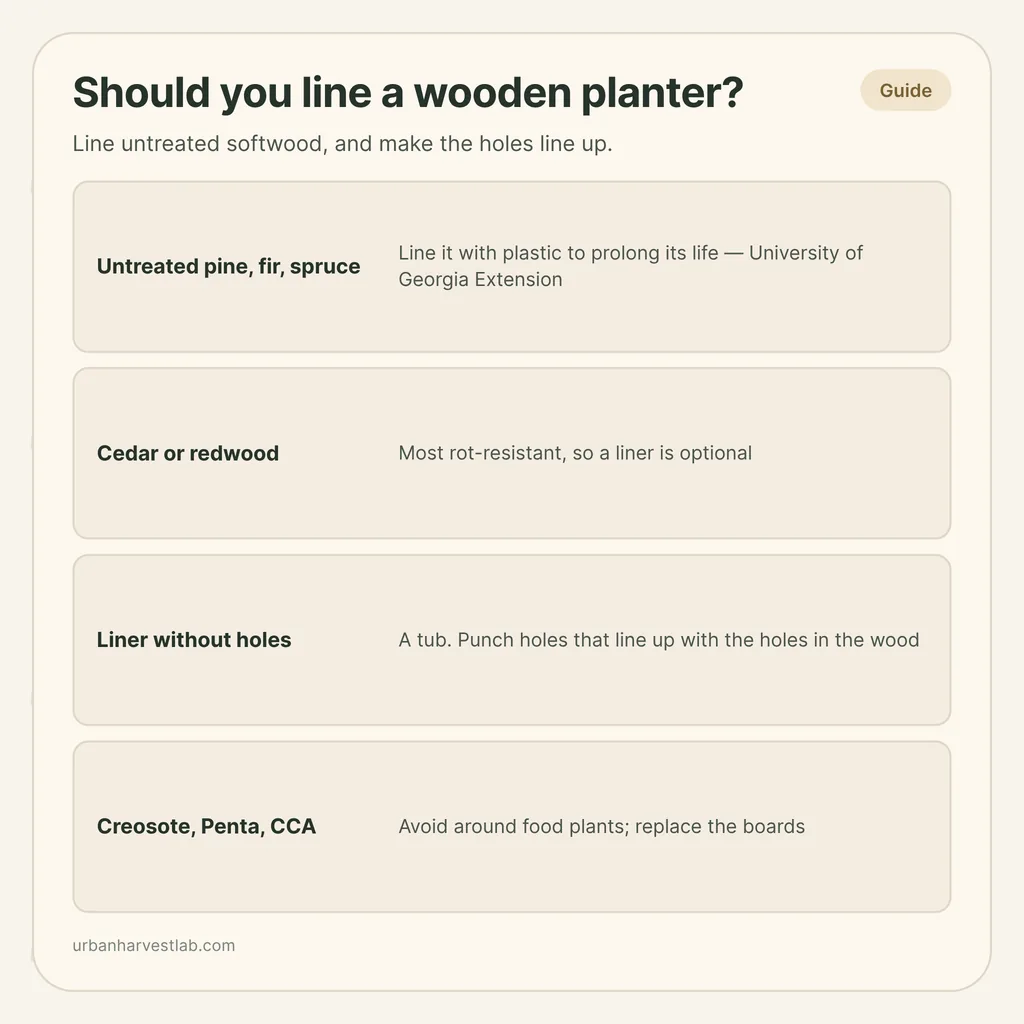
Should you line a wooden planter? Plastic, fabric, or nothing
A liner can stretch the life of a pine box or put a barrier between food roots and questionable lumber. Done badly, it turns the box into a bathtub. Here is how to decide, and how to fit one.
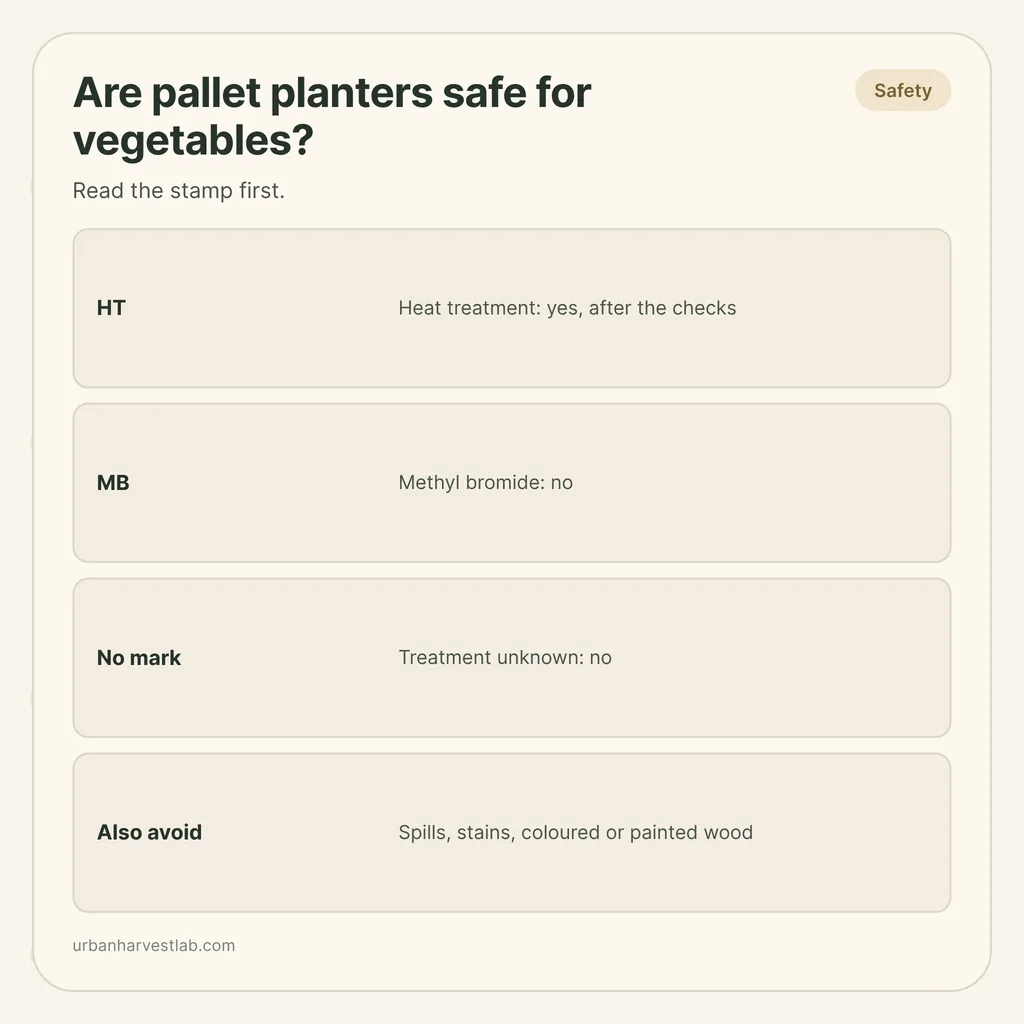
Are pallet planters safe for vegetables? How to read the stamp
A free pallet can become a herb wall, but only some of them belong near food. Here is how to read the stamp and when to walk away.
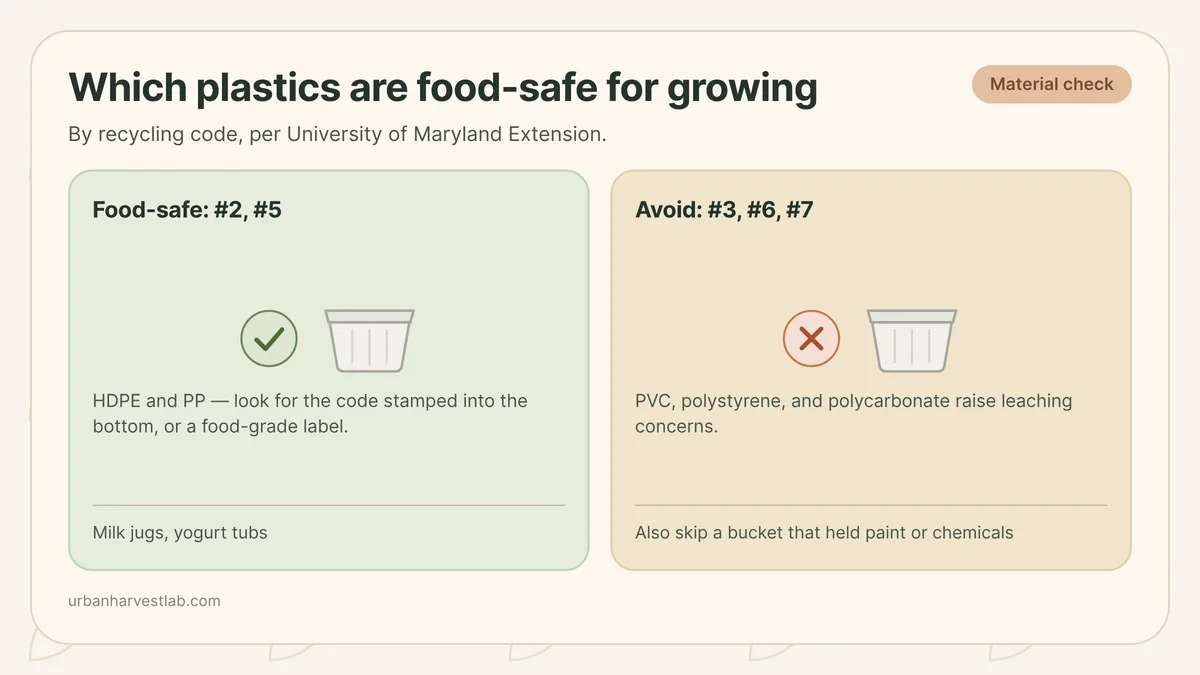
Food-safe containers for growing vegetables and herbs
A container's recycling code and its history both decide whether it's safe to grow food in -- and the two questions have different answers.