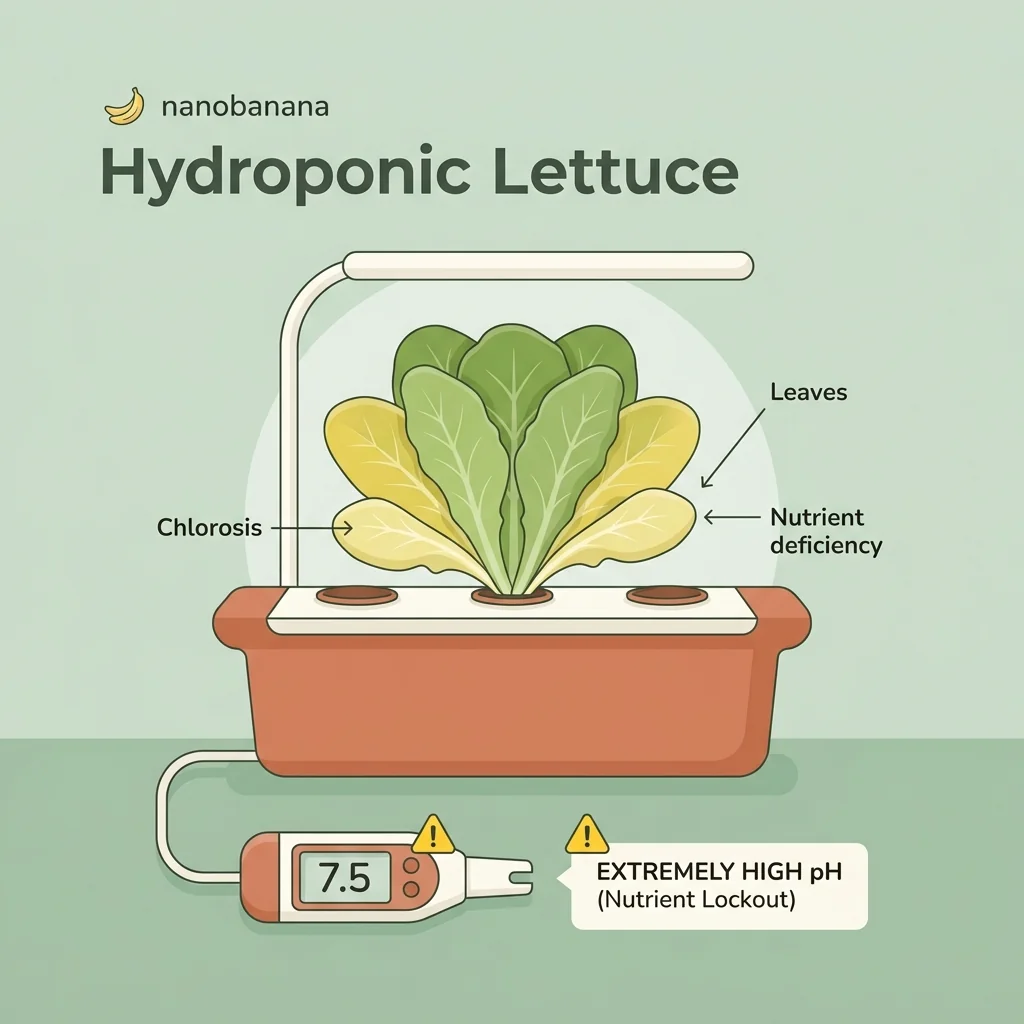
The Yellow Leaf Diagnostic Matrix
| Symptom Location | Most Likely Cause | The Fix |
|---|---|---|
| Entire plant is pale, sickly, and light yellow-green. | General Nutrient Starvation (Low EC) | Use an EC meter. If the EC is below 1.0, add more hydroponic nutrients to the reservoir. |
| Newest top leaves are bright yellow; leaf veins remain green. | Iron Lockout (High pH) | Use a pH meter. The pH is likely above 6.5. Use 'pH Down' to lower the reservoir to 5.8. |
| Oldest bottom leaves are turning completely yellow and dropping. | Nitrogen Deficiency | The plant has exhausted the Nitrogen in the water. Perform a full reservoir flush and nutrient replacement. |
| Yellow leaves accompanied by severe daytime wilting. | Root Rot (Pythium) | Inspect roots. If they are brown slime, immediately clean the system and increase oxygen/airstones. |
In soil gardening, a yellowing plant is usually the victim of overwatering. But in hydroponics—where the plant literally lives in a bucket of water—the rules are completely different.
If your hydroponic lettuce is losing its deep, vibrant green color and turning pale, sickly, or bright yellow, the diagnosis is almost always Starvation. The plant is failing to produce chlorophyll because it cannot access the necessary chemical building blocks.
However, beginner hydroponic growers often make a fatal mistake: they assume starvation means the reservoir is empty, so they pour in a massive dose of raw fertilizer. This often kills the plant instantly.
In hydroponics, starvation is rarely caused by a lack of food. It is caused by a chemical or biological blockade. Here is the exact, step-by-step framework to find the true cause of the yellowing.
Step 1: Check the pH (The Silent Killer)
If you only own one tool, it should be a reliable pH pen.
Before you check anything else, measure the pH of your reservoir. As explained in our Hydroponic EC and pH Basics guide, plant roots can only absorb specific minerals at specific pH ranges.
Lettuce requires a slightly acidic environment, ideally between 5.5 and 6.2.
If your pH has drifted upward to 7.0 or higher, the iron and manganese dissolved in your water undergo a chemical reaction that renders them permanently unavailable to the plant. This is called Nutrient Lockout. You could have a gallon of pure fertilizer in the bucket, but at a pH of 7.5, the plant will starve to death surrounded by food.
The Symptoms: Iron lockout usually presents as yellowing on the newest leaves at the top of the plant, while the veins of the leaves stubbornly remain green. The Fix: Use a commercial “pH Down” solution to gently lower the reservoir back to 5.8. Do not add more fertilizer.
Step 2: Check the EC (Actual Starvation)
If your pH is perfect, the next step is to check your Electrical Conductivity (EC) with a digital meter. This tells you exactly how much physical fertilizer is dissolved in the water.
Refer to the Hydroponic Lettuce EC Chart. A mature lettuce plant aggressively consumes nutrients. If you haven’t topped off the reservoir in two weeks, the plant may have literally eaten all the food.
The Symptoms: If your EC reads below 0.8, the plant is genuinely starving. A Nitrogen deficiency usually shows up as yellowing on the oldest, lowest leaves first, as the plant cannibalizes its old foliage to keep the new top leaves alive. The Fix: Do not just add random scoops of powder. It is time for a complete reset. Dump the old water and mix a brand new batch of nutrients following the manufacturer’s feeding schedule.
Step 3: Check the Roots (The Biological Blockade)
If your pH is 5.8 and your EC is a perfect 1.4, but the plant is still yellow and wilting, you have a physical hardware failure. The roots are broken.
Lift the net cup out of the reservoir and look underneath. Healthy hydroponic roots should look like bright white spaghetti and smell like a fresh rainstorm. If the roots look like brown, tangled slime and smell like a rotting swamp, you have Root Rot.
Root rot is caused by a lack of dissolved oxygen in the water, which allows anaerobic bacteria (Pythium) to attack and dissolve the root system. A plant with no roots cannot drink water or absorb nutrients, so the canopy turns yellow and collapses.
The Fix: Root rot is an emergency. You must completely empty the reservoir, sanitize it with bleach or hydrogen peroxide, and fundamentally upgrade your oxygen system. You likely need a stronger air pump or a larger airstone. Read Root Rot in Hydroponics: Prevention and Recovery for the full rescue protocol.
Step 4: Check the Water Temperature
The final, often overlooked variable is heat.
Lettuce is a cool-weather crop. If your grow room is hot, or if your powerful grow lights are radiating heat directly into a black plastic reservoir, the water temperature will spike.
When water temperatures rise above 75°F (24°C), the water’s ability to hold dissolved oxygen plummets. Warm, oxygen-starved water suffocates the roots, drastically slowing down nutrient uptake and leading to pale, stunted, yellow growth (and inevitably, the root rot mentioned above).
The Fix: Keep your reservoir between 65°F and 68°F. Use reflective tape on the outside of the bucket to bounce light away, or point a fan directly at the reservoir to cool it via evaporation.
Do not guess. Use your meters. By systematically checking pH, EC, roots, and temperature, you will quickly identify why your lettuce is yellow and precisely how to return it to a vibrant, healthy green.
Diagnosing other lettuce issues?
Is the plant turning yellow *and* dying at the very edges? Check these guides to differentiate between starvation and environmental burn.
Common questions
Should I add more fertilizer to fix the yellow leaves?
Only if your EC meter confirms the nutrient levels are low. If your EC is high and you add more fertilizer, you will cause toxic salt burn. Always check the pH first.
If I fix the reservoir, will the yellow leaves turn green again?
Often, yes! Unlike tip burn, general chlorosis from a mild Nitrogen or Iron deficiency can be reversed if caught early. The pale leaves will slowly deepen back to green over a few days.
Why are only the oldest, bottom leaves turning yellow?
This is a classic Nitrogen deficiency. Nitrogen is a mobile nutrient. When the plant runs out of it, it steals the Nitrogen from the oldest bottom leaves and moves it to the newest top leaves to keep growing.
Related guides
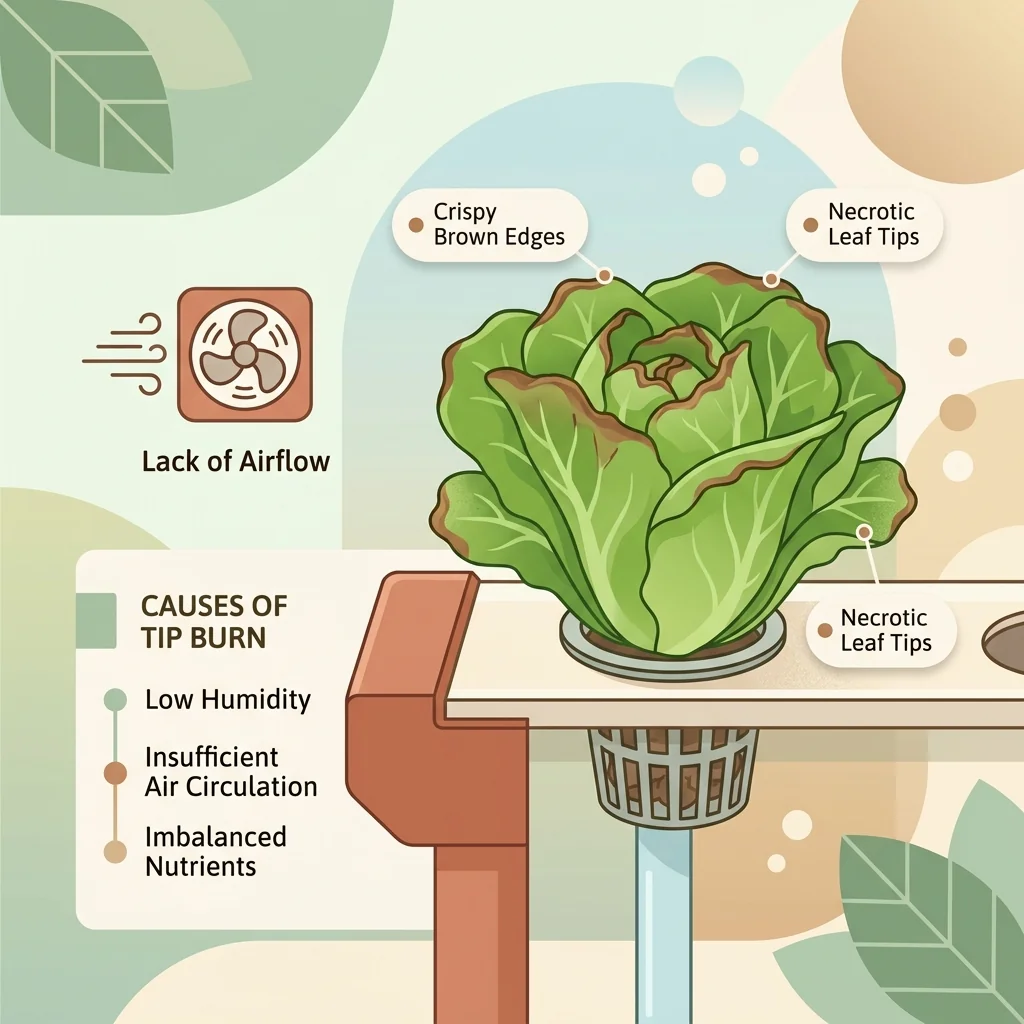
Hydroponic lettuce tip burn: causes, fixes, and what not to change
It is the most frustrating problem in indoor hydroponics: your lettuce looks perfect until the very edges of the youngest leaves turn brown and die. This is Tip Burn, and it is almost never caused by the nutrients in your reservoir.
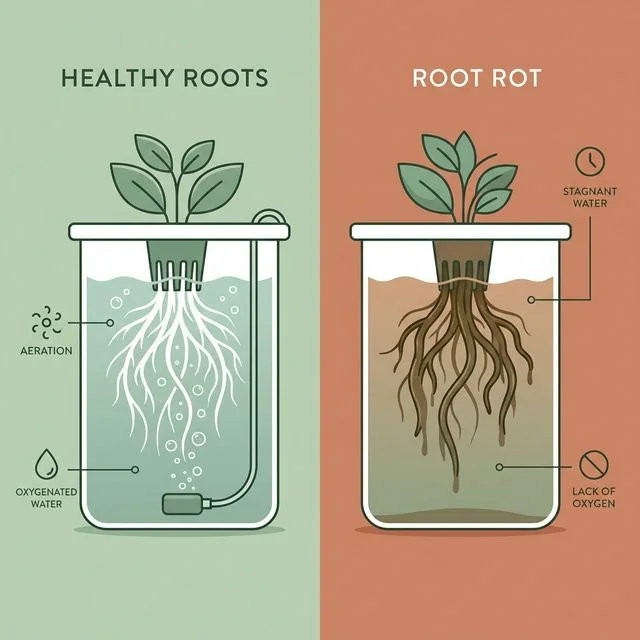
Hydroponic root rot: how to spot it early and stop it
Brown, slimy or swampy-smelling roots mean root rot. Catch it early and fix the conditions behind it — warm water, low oxygen and stagnant flow.
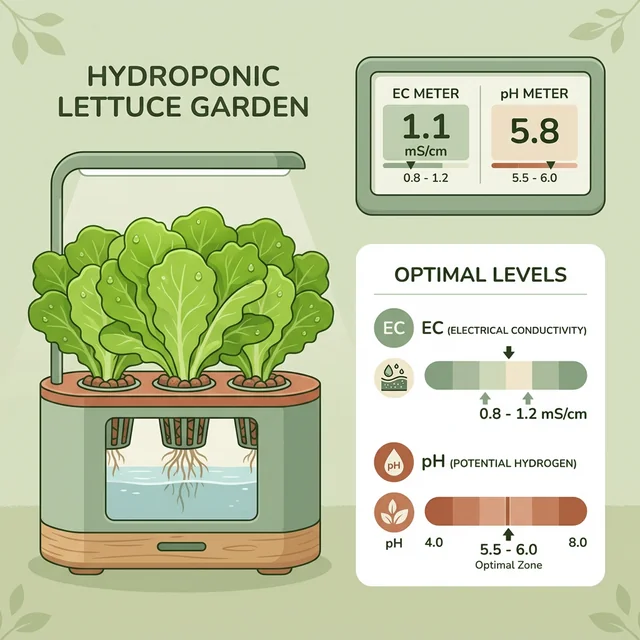
Hydroponic lettuce EC & pH chart: 0.8-1.2 and 5.5-6.0
Lettuce is the easiest crop to grow hydroponically, but it requires specific water chemistry. Use this beginner-friendly EC and pH guide to prevent tip burn and slow growth.