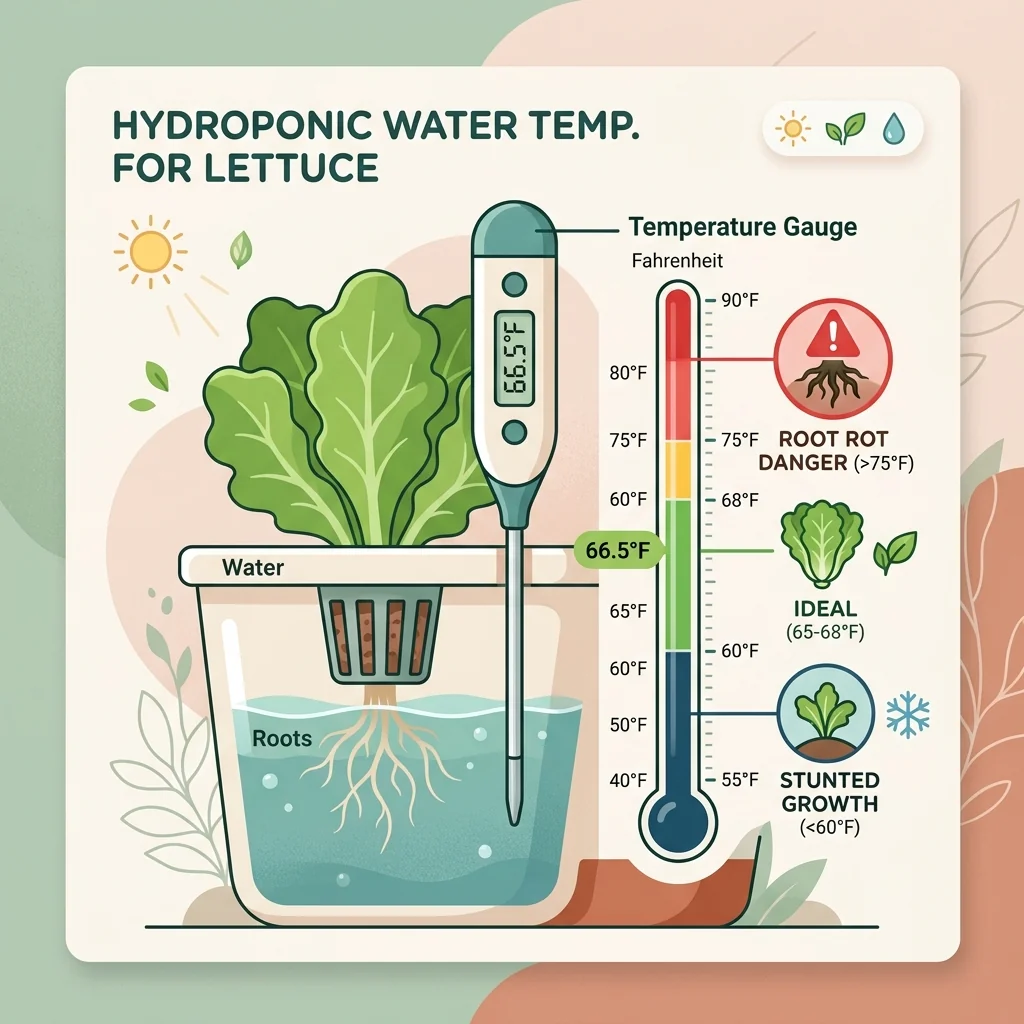
The Hydroponic Temperature Zones
| Temperature Range | Oxygen Capacity | Plant Reaction |
|---|---|---|
| Below 60°F (15°C) | Excellent | Metabolism plummets. The plant enters dormancy and stops drinking nutrients. Growth is severely stunted. |
| 65°F to 68°F (18°C to 20°C) | Ideal | The 'Goldilocks' zone. Maximum root respiration paired with aggressive metabolic growth. |
| 75°F to 85°F (24°C to 29°C) | 7.7 to 8.4 mg/L (USGS saturation) | Oxygen demand from roots and pathogens climbs faster than supply falls. Pythium thrives in warm, low-oxygen water, raising Root Rot risk. |
If you ask a beginner what the most important metric in hydroponics is, they will say “fertilizer.” If you ask an intermediate grower, they will say “pH.”
If you ask an expert, they will say “Water Temperature.”
In an indoor hydroponic system, temperature is the invisible hand that governs everything. It dictates whether your roots breathe or suffocate, whether your plants grow or stall, and whether your reservoir remains a clean nutrient bath or turns into a swamp of rotting biological waste.
Because lettuce is a cool-weather crop by nature, it is incredibly sensitive to a hot reservoir. Here is why the temperature of your water dictates your success, and how to keep it in the perfect zone.
The Physics of Dissolved Oxygen
The most critical function of a hydroponic reservoir is delivering oxygen to the roots. Without oxygen, the roots cannot physically metabolize the nutrients in the water.
You provide oxygen using an air pump and an airstone. But the amount of Dissolved Oxygen (DO) that the water can actually hold is dictated entirely by physics—specifically, by temperature.
Cold water holds more oxygen — but the difference is smaller than it sounds. USGS saturation data gives 9.1 mg/L at 68°F (20°C) and 7.9 mg/L at 81°F (27°C).
If your reservoir is sitting at a perfect 65°F (18°C), the water can hold a massive amount of dissolved oxygen. The roots breathe easily, the plant grows rapidly, and the high oxygen environment naturally suppresses bad anaerobic bacteria.
If your reservoir climbs to 80°F (27°C) because it is sitting in a hot room under blazing lights, the water holds somewhat less dissolved oxygen at saturation, not none. The bigger problem is that oxygen demand from roots, algae and bacteria rises at the same time supply drops, so a warm reservoir is running on a much thinner margin than a cool one. The roots can still suffocate, but it is demand outrunning resupply, not the water refusing to carry oxygen at all.
The Consequence of Heat: Root Rot
As detailed in Root Rot in Hydroponics: Prevention and Early Signs, a hot, oxygen-starved reservoir is the trigger for systemic failure.
When roots suffocate, they begin to die and decompose. Simultaneously, the warm water acts as an incubator for Pythium, the aggressive water mold responsible for root rot. Pythium thrives in hot, low-oxygen environments. It will attack the weakened roots, turning them into brown slime in a matter of days.
Once root rot sets in, the plant’s plumbing system is destroyed. You will see the canopy collapse, leading to Yellow Leaves and severe wilting.
The Danger of the Cold: Metabolic Stalling
If cold water holds more oxygen, shouldn’t you make the water as cold as possible? No.
Plants are living biological engines, and their metabolism is tied to temperature. If the water drops below 60°F (15°C), the plant assumes winter has arrived. Its metabolism slows to a crawl. Even though the water is rich in oxygen and nutrients, the plant physically stops drinking them.
This results in a perfectly healthy-looking plant that simply refuses to grow, leading to the frustrating scenario described in Hydroponic Lettuce Growing Slowly.
How to Maintain the “Goldilocks Zone” (65°F - 68°F)
The ideal temperature for hydroponic lettuce is 65°F to 68°F (18°C to 20°C). This precise range provides ample oxygen capacity while keeping the plant’s metabolism running at top speed.
For small home systems, achieving this without an expensive electronic water chiller requires environmental control:
- Reflect Light: If you use a black plastic bucket, it will absorb the heat from your grow lights like a solar panel. Wrap your bucket in reflective aluminum tape or paint it white.
- Cool the Ambient Room: The water will eventually match the temperature of the room it is in. Keep your grow tent or room well-ventilated with an exhaust fan.
- Move the Air Pump: Air pumps generate heat through mechanical friction. If your air pump is sitting inside a hot grow tent, it is pumping hot air directly into your water. Place the air pump outside the tent and run a long hose inward.
- The Ice Pack Trick: In a heatwave, take a clean plastic water bottle, fill it with water, freeze it solid, and float it in the reservoir. It acts as a sealed ice block, cooling the water without diluting your carefully balanced EC.
Heat causing other problems?
A hot reservoir almost guarantees other biological and chemical failures. Check these guides to diagnose systemic heat damage.
Common questions
Can I just add more airstones to hot water to increase oxygen?
Adding airstones helps, but past a point you are pushing against a lower saturation ceiling at warm temperatures, not against zero. The bigger problem with 85°F water is that oxygen demand from roots, algae and bacteria climbs faster than the saturation ceiling drops, so lowering the temperature reduces that demand as much as it restores capacity.
Should I put ice cubes in my reservoir to cool it down?
You can in an emergency, but ice cubes are made of pure water. When they melt, they will dilute your EC and potentially alter your pH. Using sealed, frozen water bottles as 'ice packs' is much safer.
Do I need to buy an expensive water chiller?
For a 50-gallon commercial setup, yes. For a 5-gallon home bucket, absolutely not. Keeping the ambient room cool and painting the bucket white to reflect light is usually enough.
Related guides
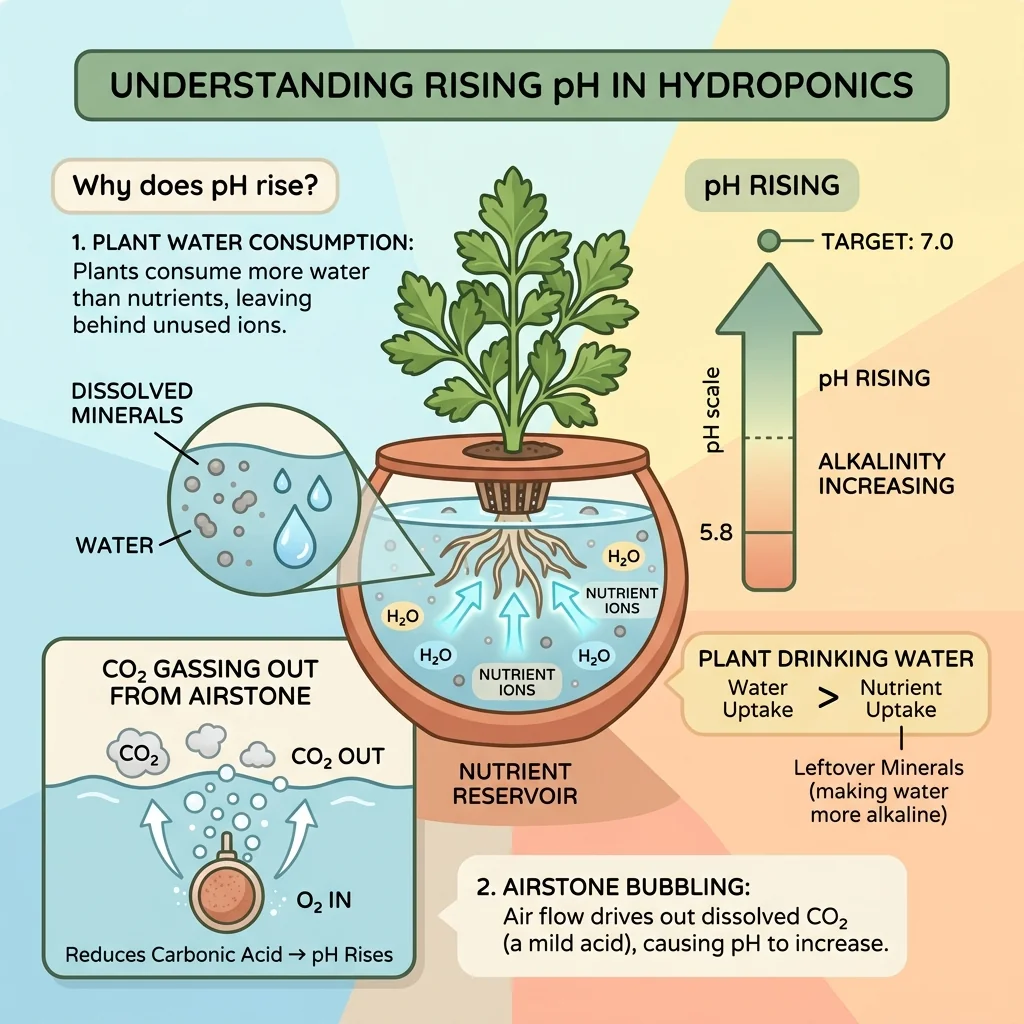
Why pH keeps rising in hydroponics (and how to stop it)
You balanced your hydroponic reservoir to a perfect 5.8 pH. Two days later, it has drifted back up to 6.8. This constant upward drift is the bane of hydroponic growers. Here is the chemistry behind why it happens and how to fix it.
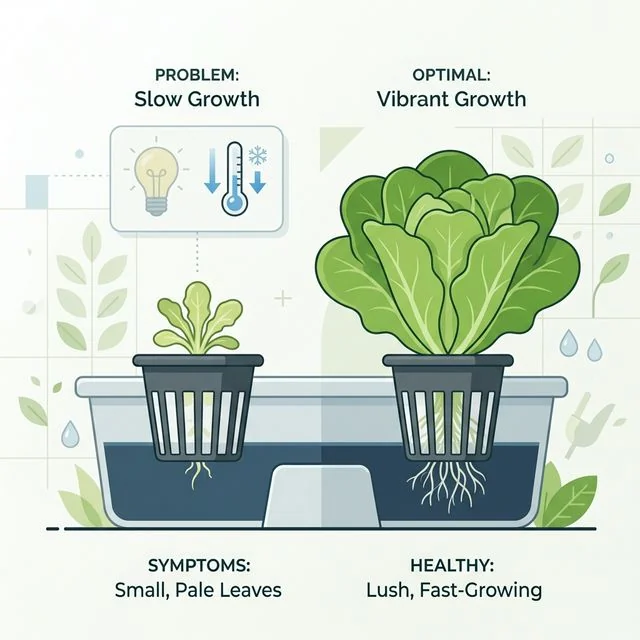
Hydroponic lettuce growing slowly? Check light, roots, and EC in order
Slow hydroponic lettuce is usually a systems problem, not a mystery deficiency. The goal is to find the bottleneck without overcorrecting five variables at once.
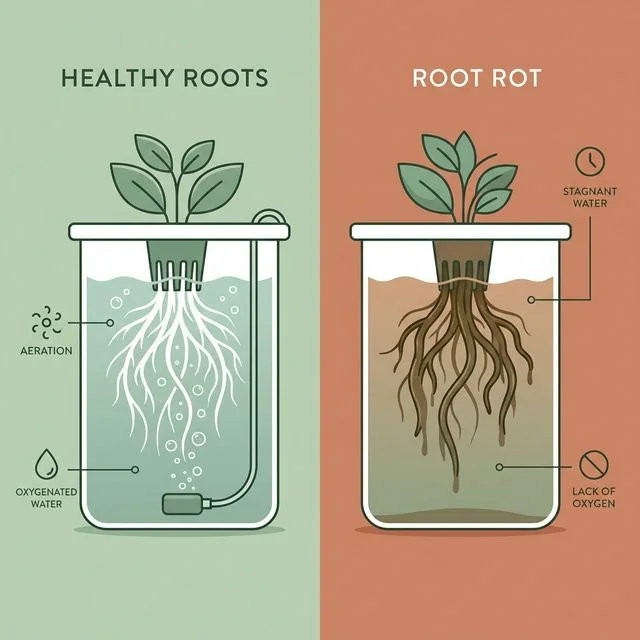
Hydroponic root rot: how to spot it early and stop it
Brown, slimy or swampy-smelling roots mean root rot. Catch it early and fix the conditions behind it — warm water, low oxygen and stagnant flow.