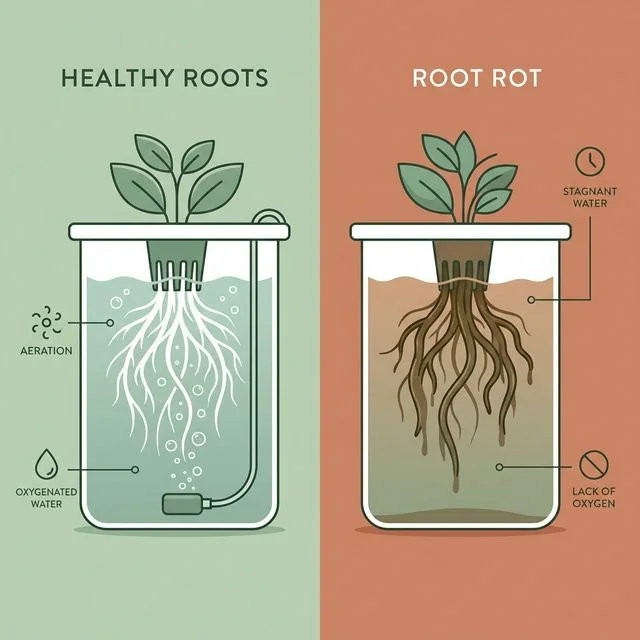
Healthy Roots vs. Root Rot
| Feature | Healthy Hydroponic Roots | Roots Suffering from Rot |
|---|---|---|
| Color | Bright white, pale cream, or light tan (if stained) | Dark brown, black, or greyish |
| Texture | Firm, crisp, and distinct strands | Mushy, slimy, and clumped together |
| Smell | Clean, slightly earthy, or odorless | Foul, sour, rotten egg, or swampy smell |
| Plant Growth | Vigorous, bright green leaves | Stalled growth, yellowing leaves, unexpected wilting |
Hydroponics is a miracle of modern indoor gardening. By suspending roots directly in highly oxygenated, nutrient-rich water, plants can grow significantly faster than they do in soil.
However, this incredible speed comes with a singular, devastating vulnerability. Because the roots are constantly submerged in a liquid reservoir, an imbalance in that water can destroy the entire root system in a matter of days. This destruction is almost always caused by a fungal condition known simply as “Root Rot.”
If you are just getting started with indoor setups, refer back to Hydroponic Nutrients, EC, and pH Basics to ensure your basic chemistry is correct before diagnosing disease.
Here is exactly what root rot is, how it happens, and what you can do about it.
What is Root Rot?
Root rot in hydroponics is primarily caused by water-borne pathogens, the most famous of which is Pythium. These pathogens exist practically everywhere in small, dormant amounts.
In a healthy hydroponic system, the plants are strong enough to ignore these pathogens. But when the environment in the reservoir shifts to favor the fungus rather than the plant, the pathogens wake up, multiply rapidly, and physically consume the root tissue.
As the fungi eat the roots, the roots turn to brown slime and lose their ability to absorb water or nutrients. The plant above the surface starves to death, often wilting dramatically even though it is literally sitting in water.
The Two Triggers of Root Rot
Why does the fungus suddenly attack? It almost always boils down to a lack of dissolved oxygen in the reservoir.
Plant roots need oxygen to survive. If they cannot breathe, they drown, the tissue begins to die, and the pathogens move in to eat the dead tissue. A lack of oxygen is triggered by two main factors:
1. High Water Temperatures
This is the number one cause of root rot for indoor growers. Cold water can hold a massive amount of dissolved oxygen. Warm water physically cannot.
- The Danger Zone: Once your hydroponic reservoir temperature creeps above 75°F (24°C), the water’s ability to hold oxygen plummets. Simultaneously, the warm environment massively accelerates the reproductive cycle of the Pythium fungus. This combination is lethal.
- The Solution: Keep your reservoirs out of direct sunlight. If you use strong grow lights, ensure they are placed at the correct distance to avoid superheating the water tank underneath.
2. Stagnant Water (Lack of Aeration)
Even if your water is cool, the plant will eventually consume all the oxygen immediately surrounding its roots if the water never moves.
- The Solution: Most active hydroponic systems use an air stone connected to an air pump (exactly like a fish tank) to constantly blast fresh oxygen into the water. If your air pump breaks, root rot will follow quickly.
- The “Kratky” Exception: If you are using the passive, un-pumped Kratky method described in Countertop Hydroponic Herbs and Greens for Beginners, you must leave an air gap of at least 2 inches between the water line and the net cup so the upper roots can breathe atmospheric air. If you fill a Kratky jar all the way to the top, the plant will drown.
Early Signs and Diagnosis
Because root rot happens underwater, many beginners don’t realize there is a problem until the top of the plant collapses. Here is how to catch it early.
- The Smell Test: Healthy hydroponic water smells like nothing, or slightly earthy. If you open your reservoir and are hit by a foul, sour, or “swampy” smell, rot is occurring.
- The Visual Check: Healthy roots are bright white and distinct. If they are turning dark brown and clumping together in a slimy mass, they are rotting.
- The Leaf Check: If your EC and pH are perfect (as defined in the Hydroponic Lettuce EC and pH Chart), but the plant is inexplicably turning yellow or growing incredibly slowly, lift the lid. A plant with rotting roots cannot drink fertilizer, meaning it will show signs of severe nutrient starvation. This is a common root cause behind the issues detailed in Why Is My Hydroponic Lettuce Growing So Slowly?.
Recovery Limits: When to Give Up
Many gardening forums are filled with complicated recipes involving bleach, enzymatic cleaners, and massive doses of hydrogen peroxide designed to “cure” root rot.
If you are running a massive, commercial farm, expensive chemical regimens might make sense. For a beginner growing a countertop basil plant, attempting to cure advanced root rot is a frustrating waste of time.
- If you catch it very early: (Only the tips of the roots are slightly brown/slimy, but the plant above looks healthy). You can try to save it. Completely dump the reservoir, gently rinse the roots under cool running tap water to wash away the slime, and refill the reservoir with fresh, cool water, a fresh batch of nutrients, and a completely sterilized air stone.
- If it is advanced: (The roots are a massive, foul-smelling brown clump and the plant is wilting). Throw the plant in the garbage. Do not try to save it. You will spend weeks battling the fungus only to have the plant die anyway.
The most important step after throwing away an infected plant is sterilization. You must scrub your entire hydroponic reservoir, pumps, and hoses with a heavy-duty cleaner or diluted bleach solution, and let it dry completely before starting a new crop. If you don’t sanitize the hardware, the Pythium spores will simply wait and immediately infect the next plant you place in the system.
Troubleshooting other hydroponic issues? Read these
Root rot often goes hand-in-hand with poor nutrient chemistry. Verify your EC and pH levels if your plants are struggling.
Common questions
Can you cure root rot with hydrogen peroxide?
You can suppress the early stages of root rot by adding a heavily diluted dose of food-grade hydrogen peroxide to the reservoir, but it is only a temporary fix. Unless you fix the water temperature or aeration issue, the rot will return.
Why are my roots slightly brown but they don't smell bad?
If you are using an organic hydroponic fertilizer (like liquid kelp or fish emulsion), it can permanently stain bright white roots a pale tan or light brown. If the roots are still firm and smell earthy (not like a sewer), they are likely healthy but stained.
Will root rot spread to my other plants?
Yes. Root rot is caused by waterborne pathogens like Pythium. If multiple plants share the same reservoir, the fungus will rapidly infect the entire system.
Related guides
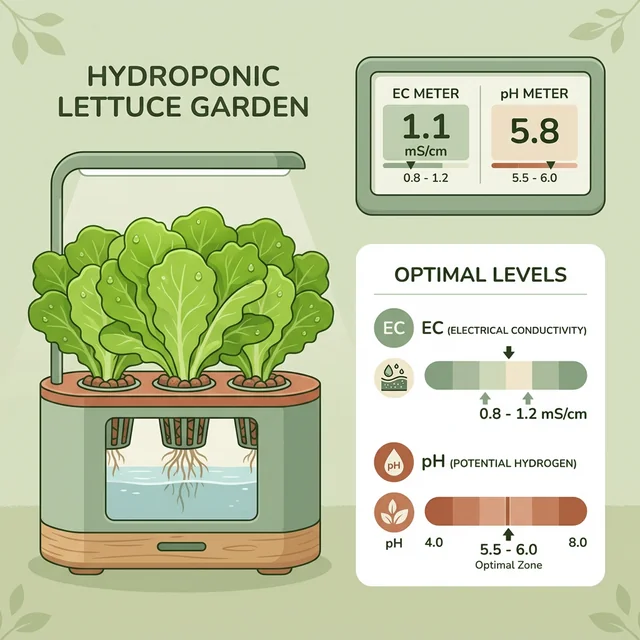
Hydroponic Lettuce EC and pH Chart for Beginners
Lettuce is the easiest crop to grow hydroponically, but it requires specific water chemistry. Use this beginner-friendly EC and pH guide to prevent tip burn and slow growth.
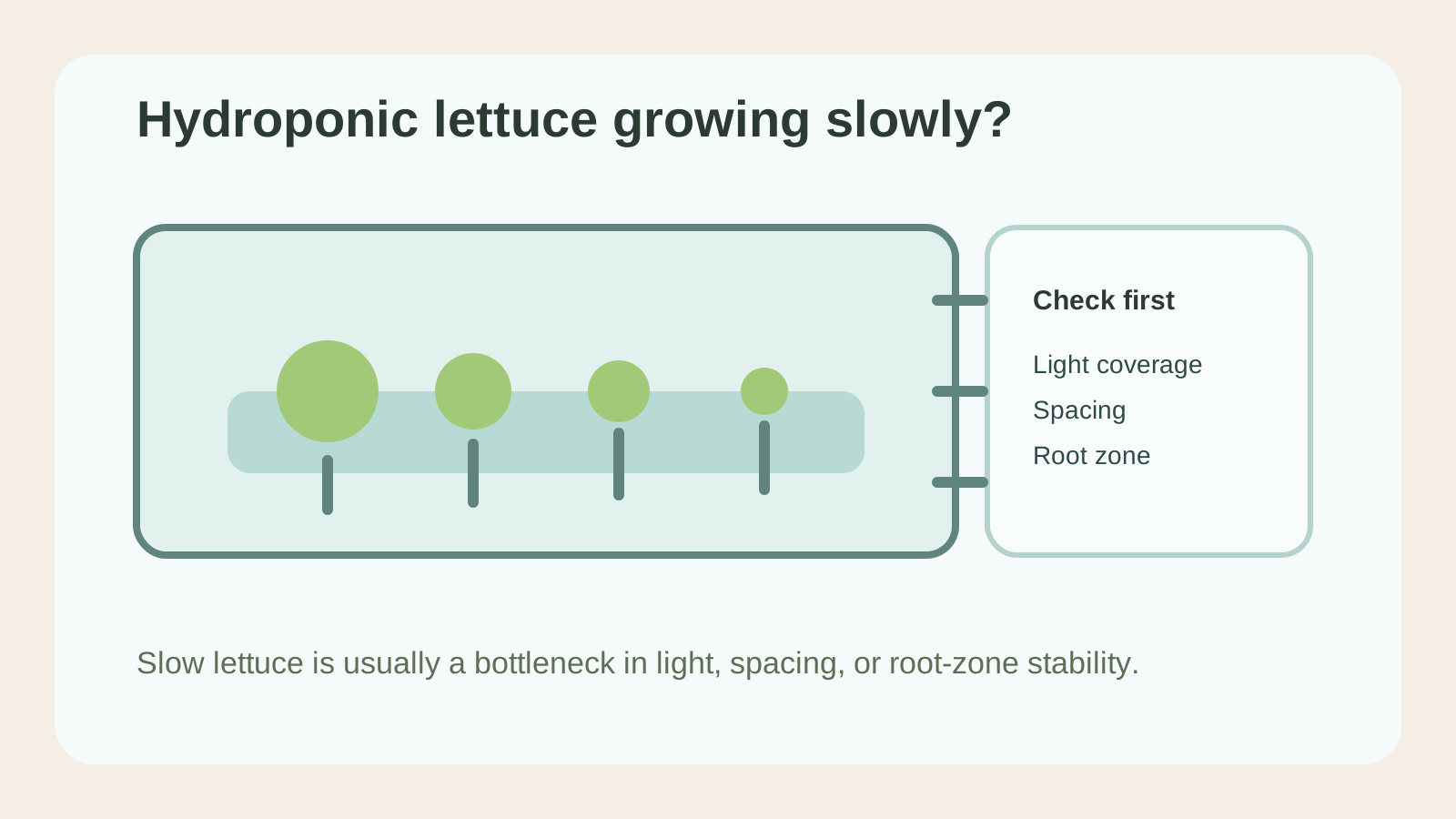
Hydroponic Lettuce Growing Slowly? How to Diagnose the Real Bottleneck
Slow hydroponic lettuce is usually a systems problem, not a mystery deficiency. The goal is to find the bottleneck without overcorrecting five variables at once.
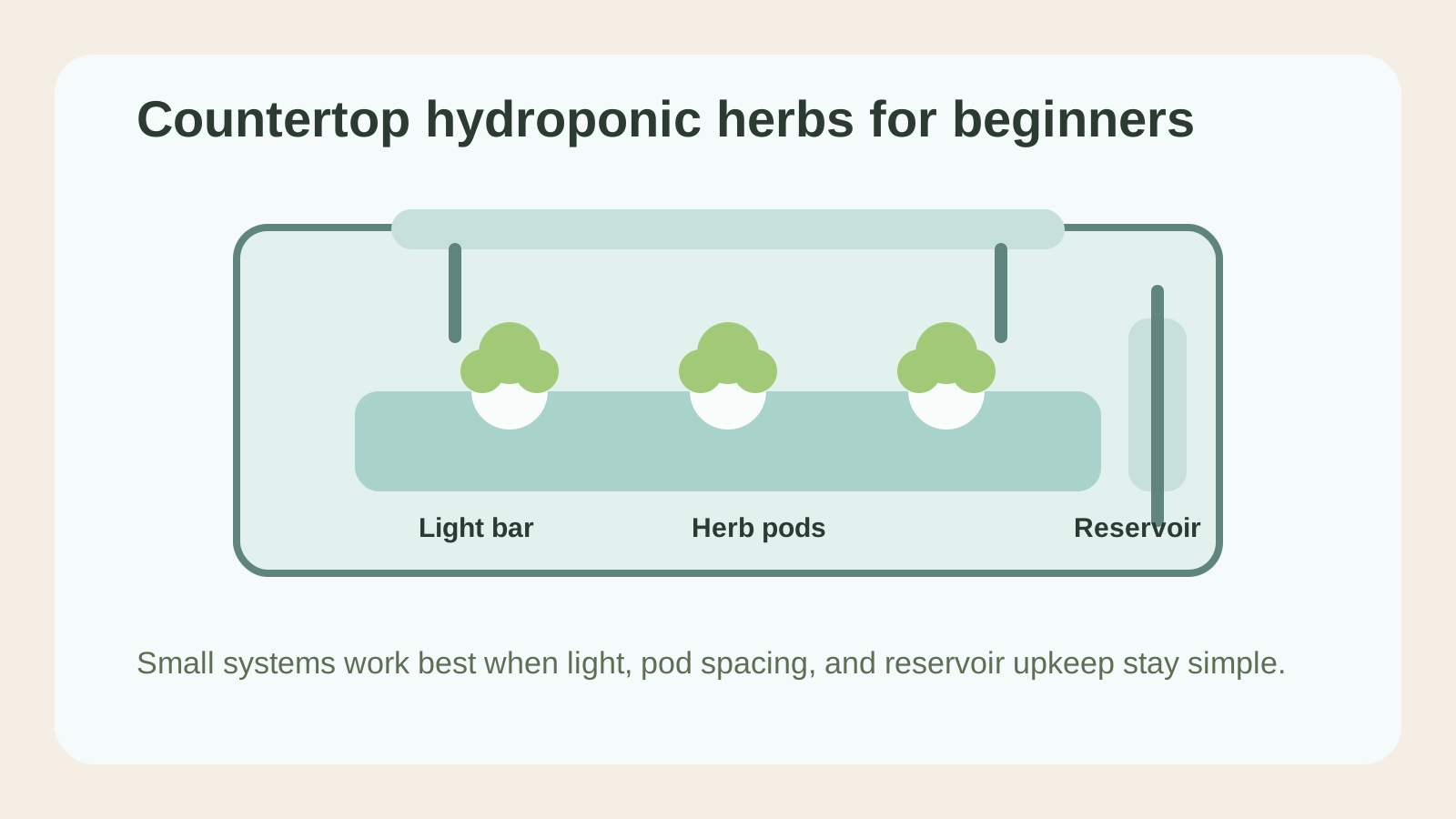
Countertop Hydroponic Herbs for Beginners: What to Buy and What to Ignore
Countertop hydroponic systems can work very well for herbs, but only if you treat them as small growing systems rather than decorative appliances.