
To sprout seeds in a jar, soak them 12 to 16 hours, drain, then rinse and drain them two to four times a day for three to six days, as Nebraska Extension describes. Raw sprouts are still a recognised food-safety risk, and children, older adults, pregnant women and people with weakened immune systems are advised to avoid them or cook them. Decide who will eat the jar before you start it.
Sprouts are not microgreens
A jar sprout is grown in water and darkness for a few days, and you eat all of it: the seed, the root and the shoot. A microgreen grows on a medium in light and is cut above the roots. University of Tennessee Extension describes sprout seed as fully submerged for the first 12 to 16 hours and grown without light, which is the reason sprouts sit in a higher risk class than microgreens. The microgreens food safety guide covers trays, seed and water for the tray method. Wheatgrass is a third thing again, grown in soil and juiced, and is compared in wheatgrass vs microgreens.
| Jar sprouts | Microgreens | |
|---|---|---|
| Grown in | Water, rinsed and drained | Medium such as soil or a pad |
| Light | Dark for most of the cycle | Light after the covered stage |
| What you eat | Seed, root and shoot | Stem and leaves, cut above the medium |
| Time | Three to six days (Nebraska Extension) | One to three weeks (Penn State Extension) |
What the food-safety agencies say
Read this before the method, because it decides whether the method is for you.
Nebraska Extension writes that “pathogenic bacteria, like Salmonella and E. coli O157:H7, can be present on seed and multiply very quickly in the warm, wet environment used to grow sprouts.” A jar is exactly that environment.
FDA’s advice on sprouts and pregnancy states: “Bacteria can get into sprout seeds through cracks in the shell before the sprouts are grown. Once this occurs, these bacteria are nearly impossible to wash out. Sprouts grown in the home are also risky if eaten raw.” It adds that bacteria in or on the seed “can grow to high levels during sprouting - even under clean conditions.”
University of Maine Cooperative Extension makes the same point about home growing: it “doesn’t increase safety”, because home sprouts can still meet bacteria from raw foods, pets and unwashed hands.
So a spotless jar and thorough rinsing lower some risks. They do not remove the one that arrives inside the seed.
Who should avoid raw sprouts
CDC’s consumer advice from a 2018 Salmonella outbreak linked to raw sprouts, now on its archive site (last reviewed January 2018), states: “Children, older adults, pregnant women, and people with weakened immune systems should avoid eating raw or lightly cooked sprouts of any kind (including alfalfa, clover, radish, and mung bean sprouts).” CDC lists cancer treatment, HIV/AIDS and diabetes among the conditions that weaken the immune system, and suggests asking food workers not to add raw or lightly cooked sprouts to your meal. The notice is old, but the advice still stands: FDA’s current page gives pregnant women the same instruction, and University of Maine Extension (2024) names the same groups.
FDA gives pregnant women the same instruction: avoid raw sprouts of any kind, and cook sprouts thoroughly, which “significantly reduces the risk of illness.”
Cooking
CDC says “Thoroughly cooking sprouts kills the harmful bacteria.” University of Maine Extension is stricter for the vulnerable groups: “All sprouts should be avoided by members of vulnerable populations including children, older adults, pregnant women, and people with weakened immune systems.” For everyone else it says sprouts “should be cooked thoroughly on high heat to kill any harmful bacteria.” Neither source describes a rinse, soak or home disinfection step as an equivalent. If anyone at your table is in a group above, Maine says to skip sprouts altogether, and CDC and FDA say to avoid them raw; the safest choice is to grow something else.
The jar method
Nebraska Extension says all you need is “a glass jar that you can cover with cheesecloth”, and a wide-mouth quart jar with a screw-on ring works. Its steps:
- Choose seed sold for sprouting. Nebraska Extension warns that seed sold for planting may have been treated with fungicides or insecticides. Penn State Extension likewise advises seed processed for sprouting or microgreens under food-safety standards. Nebraska lists alfalfa, broccoli, cabbage, kale, lentils, pea, radish and buckwheat as seeds people sprout.
- Clean the jar. Nebraska Extension soaks jars at least 5 minutes in a solution of three-quarters of a cup of plain, unscented bleach per gallon of water, then rinses with clean water and lets them dry.
- Treat the seed. Nebraska Extension describes soaking seed in undiluted vinegar for 15 minutes, or heating a 3% hydrogen peroxide solution to 140 °F and swirling the seed in it for 5 minutes, then rinsing in running tap water for 1 minute. This is Nebraska’s published step, not a guarantee. FDA’s statement above is the limit on what any seed treatment can promise.
- Soak. Fill the jar to a depth of half an inch to an inch of seed, cover with water plus one inch, and skim off floating seed, seed coats and debris, which Nebraska says “has been tied to most contamination events.” Then, following Nebraska Extension, soak in lukewarm water for 12 to 16 hours.
- Drain and rinse. Drain, rinse with lukewarm water and drain thoroughly. From here the seed does not sit in water again, because Nebraska notes that seed left in water ferments and spoils.
- Keep it dark. Cover with cheesecloth, lay the jar on its side, and keep it at 68-72 °F.
- Rinse two to four times a day for three to six days, depending on the seed and the length you want. Drain fully every time.
Soaking is a separate question for tray crops, and the seed soaking guide covers which tray crops need a soak at all.
Storing and spotting a bad batch
Nebraska Extension stores finished sprouts one to two weeks in sealed bags or jars in the refrigerator. University of Maine Extension says to keep sprouts at 40 °F or below and not to buy sprouts with an off odour or a slimy, mouldy or limp look. The same sight-and-smell check is a reasonable reason to discard a home batch. A clean look and smell is not proof of safety, since the agencies above describe contamination that rides in on the seed.
If you want the same crunch with lower risk
The tray method changes what you eat: stems and leaves cut above the medium, grown in light. That is the idea behind microgreens, and the beginner’s guide shows a first tray. Tray microgreens are lower risk than sprouts, not risk-free, and the food safety guide explains where the line sits.
Sources
- FDA: Fruits, veggies and juices (food safety for moms-to-be)
- CDC (archived, 2018): Salmonella Montevideo infections linked to raw sprouts, advice to consumers
- Nebraska Extension in Lancaster County: Growing edible sprouts at home
- University of Maine Cooperative Extension: Sprout safety
- University of Tennessee Extension W1261: Regulatory considerations for marketing sprouts, microgreens and baby greens
- Penn State Extension: The ABCs of microgreens
- Penn State Extension: Growing microgreens
Sprouts, microgreens and the safety gap between them
Sprouts and microgreens are grown differently and carry different risk. These pages cover the safety detail, the soaking rules and a first tray.
Common questions
How do you sprout seeds in a jar?
Nebraska Extension puts seed half an inch to an inch deep in a clean glass jar, covers it with water, skims off floating debris, soaks it 12 to 16 hours, then drains it. The jar sits on its side in the dark at 68-72 °F and is rinsed and drained two to four times a day for three to six days. Raw sprouts stay a food-safety risk however carefully this is done.
Does rinsing sprouts make them safe to eat raw?
No. FDA says bacteria that get into sprout seed through cracks in the shell are nearly impossible to wash out, and that if they are present they can grow to high levels during sprouting even under clean conditions. CDC's 2018 outbreak advice says thoroughly cooking sprouts kills the harmful bacteria.
Who should not eat raw sprouts?
CDC's 2018 outbreak advice says children, older adults, pregnant women and people with weakened immune systems should avoid eating raw or lightly cooked sprouts of any kind, including alfalfa, clover, radish and mung bean sprouts. University of Maine Extension (2024) goes further: all sprouts should be avoided by those groups.
Are sprouts the same as microgreens?
No. Sprouts are soaked and grown in the dark in a jar and eaten whole with the seed and root. Microgreens are grown in light on a medium and cut above it, which is why the two carry different food-safety risk.
Related guides
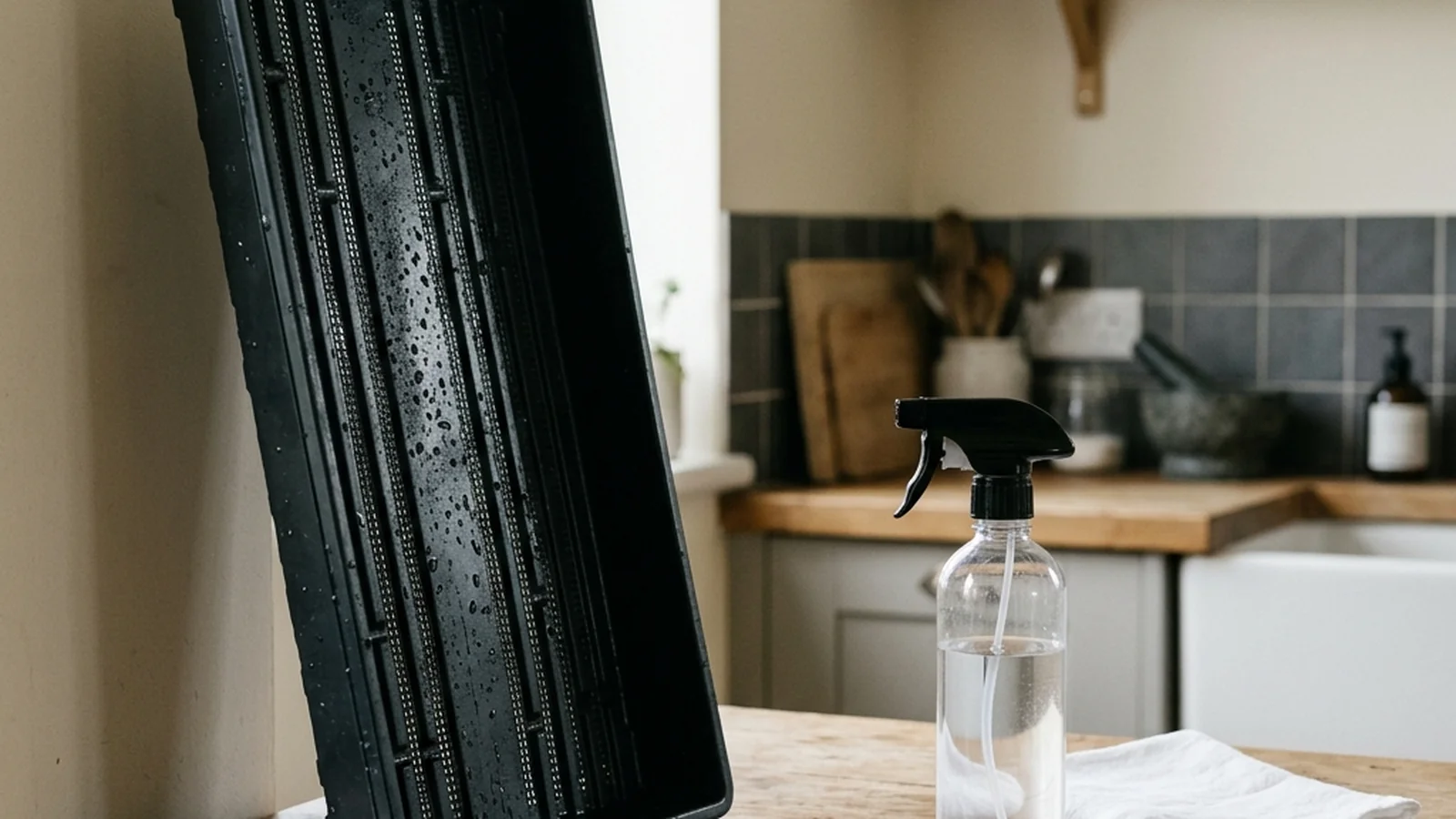
Microgreens food safety: sanitizing trays, seed, and water
Sprout recalls do not automatically make microgreens risky. The harvest method is what separates them, and one hydroponic setup can erase that gap.

Soaking microgreen seeds: which crops need it, and for how long
Soaking is not a step every crop needs. Two extension sources cover it — one general rule and one per-crop protocol — and they agree with each other.

Wheatgrass vs microgreens: what actually separates them
Same seed tray, same water, two very different harvests. The line between wheatgrass and microgreens comes down to one decision: are you eating the leaf, or juicing it?