
Wheatgrass vs microgreens, side by side
| Factor | Microgreens | Wheatgrass |
|---|---|---|
| Harvest stage | Cotyledon or first true leaf, roughly 1-4 in. tall | Grown past that stage into true cereal grass leaf |
| How it is used | Eaten whole, as a vegetable garnish or salad ingredient | Grown on and clipped for smoothies and juices, not eaten whole |
| Harvest tool | Knife or scissors, cut just above the growing medium | Juicer built to process fibrous grass leaf |
| Growing method | Tray, growing medium, light, water — same core method | Same tray method, grown longer before cutting |
| Crop examples | Broccoli, radish, sunflower, pea, wheat (young cut), quinoa | Wheat (and other cereal grasses) grown to grass stage |
Wheatgrass and microgreens are grown with the same tray technique, using seed, a growing medium, water, and light — the real difference is the stage at which you stop, and what you do with the leaf once you cut it. Microgreens are harvested young and eaten whole. Wheatgrass is grown longer, into true grass, and clipped for juices and smoothies rather than eaten. Everything else people ask about — equipment, batch size, kitchen use — follows from that one fork in the road, not from which one is “healthier.”
If you have not grown either yet, the beginner microgreens method covers the shared setup step by step; the focus here is where wheatgrass and microgreens split off from that same starting point.
The one fact that explains everything else
University of Tennessee Extension puts harvest at 1 to 4 in. tall, cut once one or two true leaves have formed; Penn State Extension and UC Master Gardeners of Sonoma County phrase the same window as 2 to 4 in. with true leaves just emerging, and note that most crops other than pea shoots follow this pattern. Purdue Extension states the rule in its plainest form — most crops except pea shoots are cut at 2 to 4 inches with true leaves just emerging — and names the exceptions in the same breath: pea shoots are cut much taller with two or more sets of true leaves, and lemongrass, wheatgrass and other grains grow tall before cutting. Wheatgrass is that exception. At that stage, the tissue is tender cotyledon and very young true leaf — soft enough to cut with scissors and eat straight away, no cooking or processing needed.
Wheatgrass skips past that window on purpose. It is grown from wheat seed using the same kind of tray, medium, and light setup, but the grower lets it keep growing well beyond the cotyledon stage, into leaf blades that look and behave like actual grass. That later stage is the point: what comes off the tray is grown on and clipped for smoothies and juices, not eaten as a salad leaf the way a microgreen is.
So the two are not competing versions of the same product. They are two different harvest decisions applied to a similar growing setup, aimed at two different outcomes: a vegetable you eat, and a grass you press for juice.
Same family, different stage — not two unrelated plants
It helps to be precise about where wheat sits in this picture, because a lot of comparison pages imply wheatgrass is some separate, exotic thing. It is not. Penn State Extension’s list of common microgreens crops includes pea, sunflower, barley, wheat, and quinoa alongside vegetable crops like broccoli and radish. That means wheat grown and cut young — at the same cotyledon stage as any other microgreens crop — is itself a microgreen, and shows up on trays the same way radish or broccoli does.
Wheatgrass is that same seed, grown with that same method, just carried further before the cut. There is no separate “wheatgrass seed” that differs biologically from microgreens-stage wheat seed in a way that matters to the grower. What changes is how long you let the tray run and what you plan to do with the result. Framing wheatgrass as “not a microgreen” is accurate for the harvested product, but framing it as unrelated to microgreens misses the more useful point: it is the same technique, aimed at a grass harvest instead of a vegetable harvest.
This also explains why a “best crops for wheatgrass vs microgreens” ranking is not really a separate decision. If you want tender, cut-and-eat greens, you are choosing among microgreens crops — and best microgreens for beginners is where that selection question actually gets answered, including wheat grown to that shorter stage. If you specifically want wheatgrass for juicing, you are choosing to grow wheat past that point, on purpose.
What each one needs at harvest time
Because the harvest goal is different, the equipment at the end of the tray is different too, even though the growing setup up to that point overlaps heavily.
Microgreens harvest with a clean, sharp knife or a pair of scissors, cutting just above the growing medium once the crop reaches its target height. The greens go straight into a bowl or a storage container — no further processing is required before eating. A full setup for growing microgreens at home, including trays, medium, and light, is covered in the microgreens supplies and setup guide, and proper post-cut handling — bagging, refrigeration, and washing right before use rather than before storage — is covered in the harvest and storage guide.
Wheatgrass harvest ends at a juicer, not a bowl. Because the leaf is grown to a fibrous, mature stage, a standard chef’s knife and a salad bowl are not the relevant tools — the leaf needs equipment built to press juice out of it.
Oregon State Extension’s wheatgrass method lays out that longer window step by step: soak wheat berries (hard red winter wheat seed) overnight for at least 12 hours, then rinse and drain every 8 to 12 hours until the seed sprouts. Spread the sprouted seed over damp potting soil in a container at least 2.5 to 3 in. deep, keep it at 70-75 °F away from direct light, and expect it actively growing by about the third day — at which point it moves into bright light and is clipped for smoothies and juices once established. Oregon State does not give a single days-to-harvest figure the way a microgreens table does; the method describes ongoing growth and repeat clipping rather than one cut date. Penn State Extension puts microgreens seed to harvest at 7 to 21 days depending on the crop, with fast brassicas such as broccoli and radish at 7 to 8 days, and University of Tennessee Extension gives 10 to 14 days under optimal conditions — a range Oregon State’s wheatgrass method has no equivalent to, since it is built around repeat clipping rather than a single cut.
Don’t confuse either one with sprouts
Wheatgrass and long-grown microgreens both get lumped in with sprouts in casual conversation, but University of Tennessee Extension’s regulatory guidance puts sprouts in a higher-risk category, and both wheatgrass and microgreens fall outside it: they are grown in a medium rather than submerged, and the cut product does not carry the seed or root the way a sprout does. The full picture is in the microgreens food safety guide.
Common mistakes
- Assuming wheatgrass and microgreens are unrelated categories. They share the same tray method; the difference is harvest stage and end use, not two disconnected techniques.
- Trying to eat wheatgrass leaf straight off the tray the way you would a microgreens garnish. Mature grass leaf is meant to be clipped and juiced, not chewed as a salad ingredient.
- Growing wheat to the wheatgrass stage when what you actually wanted was a tender, cut-and-eat green — in that case, cutting wheat early at the cotyledon stage, as a microgreen, gets you there faster.
- Repeating a specific nutrient or detox claim about wheatgrass juice because it is widely shared. Widely shared is not the same as sourced.
Choosing between them
Pick microgreens for a fast, cut-and-eat vegetable, using the beginner variety guide to choose a crop. Pick wheatgrass only if a juicer and a juicing habit are actually the goal, since the tray is the same but the equipment and timeline are not.
Sources
- Penn State Extension: The ABCs of Microgreens
- Penn State Extension: Growing Microgreens
- Penn State Extension: A Step-By-Step Guide for Growing Microgreens at Home
- University of Tennessee Extension W1261: Regulatory Considerations for Marketing Sprouts, Microgreens and Baby Greens
- UC Master Gardener Program of Sonoma County: Growing Microgreens
- Purdue Extension: Grow Microgreens at Home
- Oregon State University Extension: Directions for How to Grow a Wheatgrass Pet Pal
Choosing what to grow and how to use it
Pick a crop for your first tray, then learn the harvest and storage habits that apply whichever stage you grow to.
Common questions
Is wheatgrass a type of microgreen?
Not in the way the term is normally used. Both start from the same seed-tray technique, and wheat is one of the crops grown as a microgreen at the young, cotyledon-stage cut. But "wheatgrass" specifically refers to wheat grown past that stage into true grass leaf and juiced, not eaten whole, so the harvested product is not what anyone means by a microgreen.
Can you eat wheatgrass the way you eat microgreens, straight off the tray?
Not the mature leaf. Oregon State Extension's wheatgrass method takes the tray past the microgreens cut, into grass leaf grown to be clipped for smoothies and juices rather than eaten whole. Wheat grown and cut at the microgreens stage, while it is still tender cotyledon growth, can be eaten whole the same way other microgreens are.
Do wheatgrass and microgreens need different equipment?
The tray, growing medium, and watering setup are the same. The difference shows up at harvest: microgreens are cut with a knife or scissors into a bowl, while wheatgrass is grown to a taller stage and clipped for juicing, which calls for a juicer rather than a blade and bowl.
Is wheatgrass juice as nutritious as people claim?
The nutrient multiples and detox claims attached to wheatgrass juice are marketing figures with no extension or peer-reviewed source named when they are quoted. What is documented is how it is grown and that it is clipped for juice rather than eaten as a leaf: Oregon State Extension's method has it actively growing by about the third day after sprouting, kept at 70-75 F, and clipped once established.
Related guides
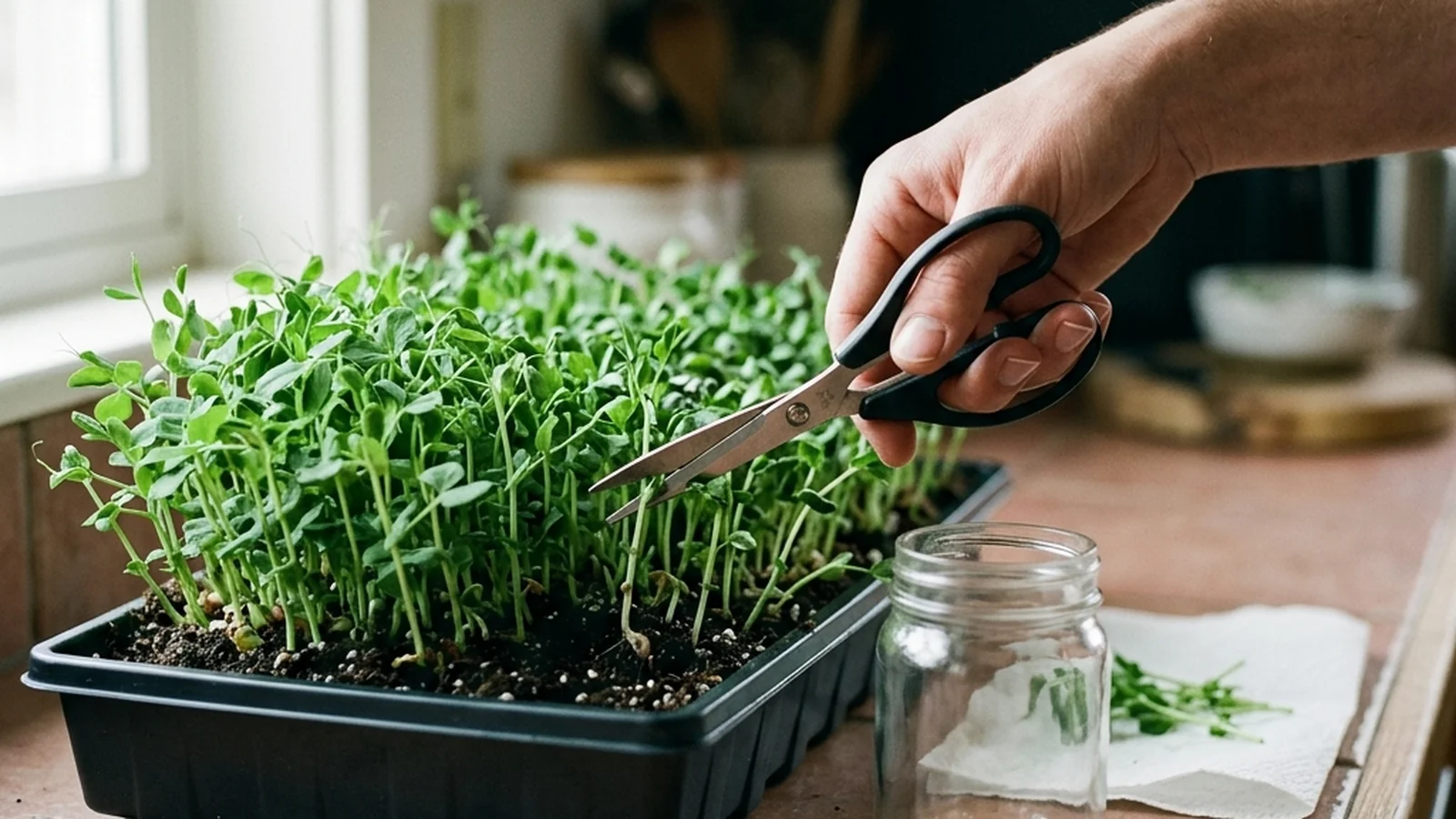
How to harvest and store microgreens safely
The cut and the fridge decide how long a tray lasts. Here is when to harvest, why you should not wash before storing, and what the shelf-life data actually shows.
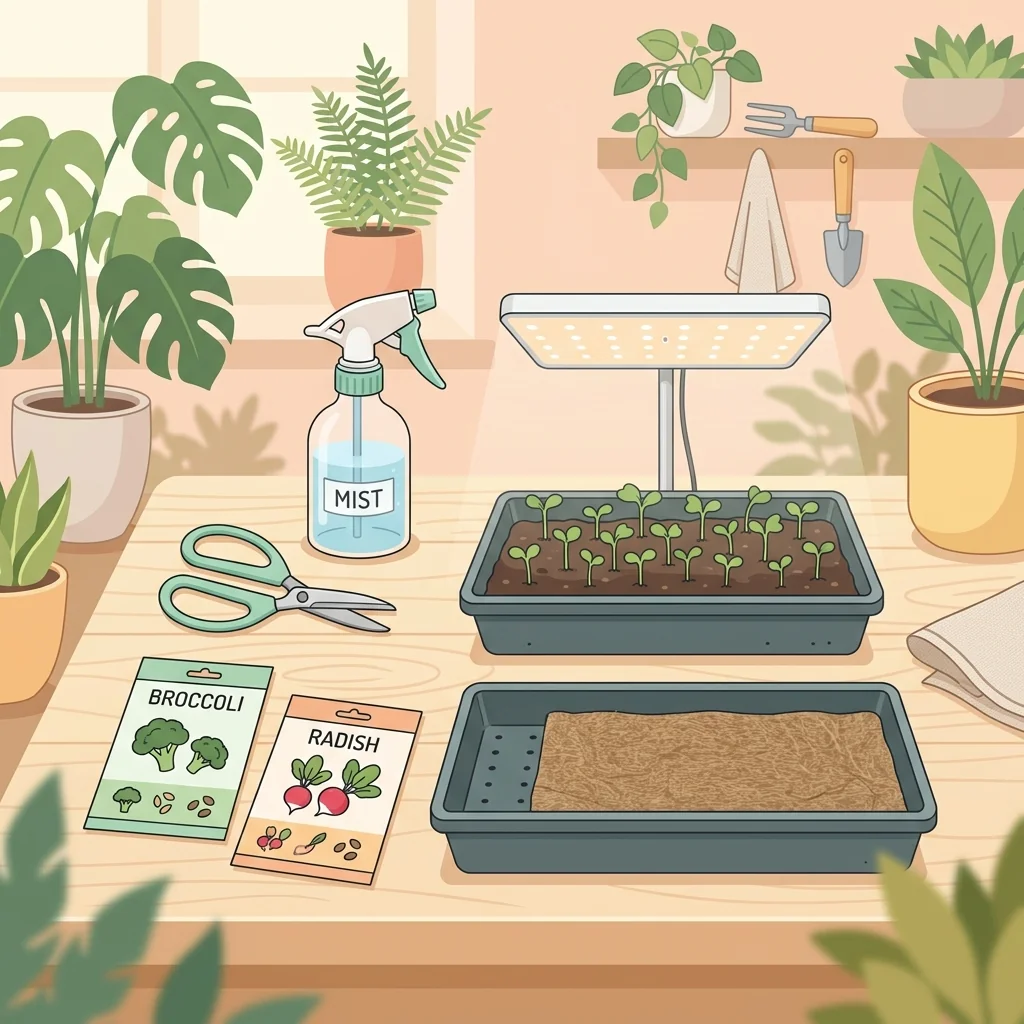
What do you need to grow microgreens? A short list
The microgreens supply list is short: tray, medium, seeds, spray bottle, light, scissors. Here is exactly what to get for your first setup and what not to waste money on.
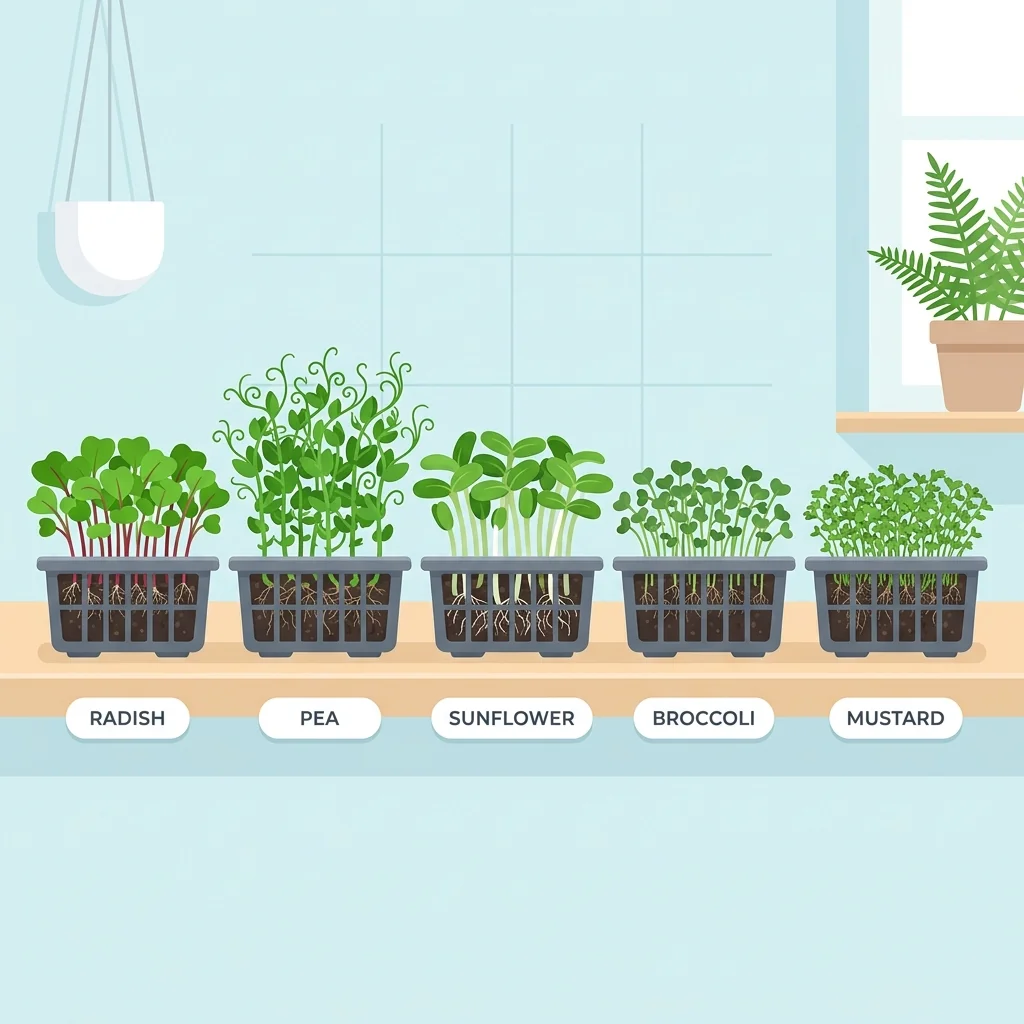
Best microgreens for beginners (fast and forgiving)
Start with microgreens that germinate fast and forgive mistakes. Radish, peas, sunflower, broccoli, and mustard are the easiest first trays, ready in about a week.