Troubleshoot the system before you change the inputs.
Symptoms
- The skin has turned green, either in patches or all over.
- The green sits on the side that faced the light or on tubers that were close to the soil surface.
- The tuber tastes bitter, or sprouts have started at the eyes.
Possible causes
- Tubers were near the surface of the pot or bag, or the soil settled and left them uncovered.
- Harvested potatoes were left in daylight or under bright indoor light.
- Stored warm or in light, which allows sprouting and greening.
Quick fixes
- Cut away every green-tinged part and the sprouts; if the green runs into the flesh, throw the tuber away.
- Move the rest of the harvest somewhere dark, cool and dry.
- Next season, keep soil over the tubers and add more as the plant grows.
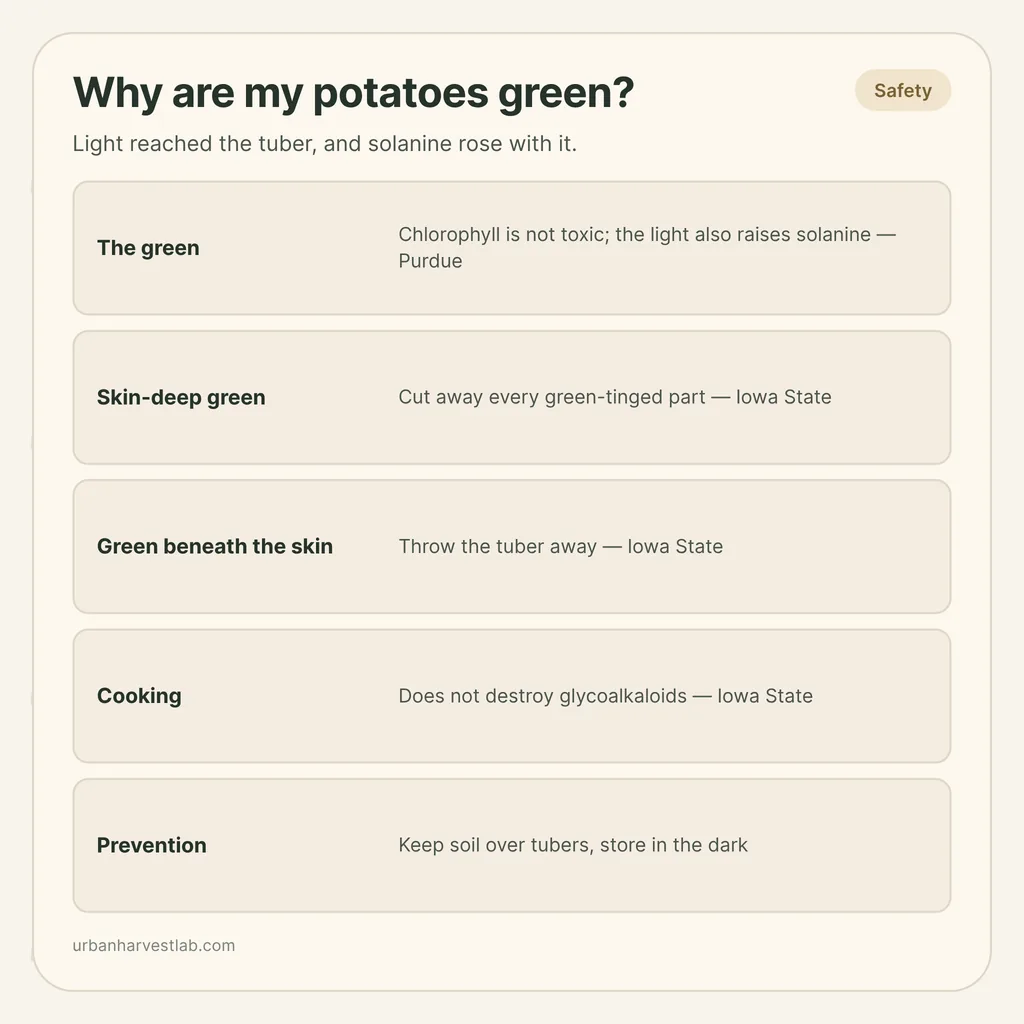
Potatoes turn green because light reached the tuber. The green is chlorophyll, which is harmless, but the same light also drives up solanine, and that is the part to take seriously. Skin-deep green can be cut away. Green that runs into the flesh means the potato goes in the bin. If the tubers came from a pot, the fix for next time is deeper cover, as set out in the grow bag potato guide.
What the green actually is
Purdue Extension is direct about the split. Chlorophyll is not toxic. The problem is that light also triggers the tuber to make more solanine, a colourless alkaloid, and Purdue says the amount rises with the length of exposure and the intensity of the light. So the green works as a warning light: it shows you where the tuber has been lit, and solanine is climbing in the same place.
Potatoes make two related compounds, solanine and chaconine. Iowa State Extension lists the places they are most concentrated: leaves, flowers, sprouts, green skin and the area around the eyes, with the lowest concentration in the flesh. Oregon State Extension puts numbers on it. A normal potato that has not been lit averages 12-20 milligrams per kilogram of glycoalkaloids, a green tuber 250-280, and green skin on its own 1,500-2,200. Purdue and ISU explain that solanine is concentrated in the skin, so removing the green removes most of it.
Trim it or throw it out
Look at how far the green goes before you reach for a knife.
| What you see | What the sources say |
|---|---|
| Firm tuber, green only in the skin | Iowa State: can be eaten once the entire green-tinged area is cut away |
| Small sprouts at the eyes, tuber still firm | Iowa State and Purdue: remove the sprouts before cooking |
| Green running beneath the skin | Iowa State: throw the tuber away |
| Pronounced greening, or damage | Oregon State: must not be eaten |
Purdue says the highest concentration of solanine is in the skin, so removing the green portion removes most of the toxin. Iowa State puts it the same way: peeling and cutting out the green eliminates most of it, but if the greening goes deeper into the tuber, throw it away. Its wording on the deep case is blunt: do not eat tubers that are green beneath the skin.
Oregon State adds one wrinkle that matters for homegrown harvests. Smaller, immature tubers carry more glycoalkaloids than large ones, because the compounds concentrate in the skin and a small tuber is mostly skin. Peeling slightly green potatoes brings the level down to a safer one, Oregon State says, especially in small immature tubers, so greening in a small tuber deserves extra caution.
Taste is a second check. Iowa State says high glycoalkaloid concentrations give potatoes an unpleasant, bitter taste, and can lead to headaches, vomiting and other digestive issues. Oregon State lists abdominal pain, diarrhea and vomiting among the effects of low levels, and says a burning sensation in the throat and mouth can appear at higher ones.
Cooking does not fix it
It is tempting to boil a doubtful potato and call it safe. The sources close that door. Iowa State says cooking does not destroy glycoalkaloid compounds. Oregon State says glycoalkaloids are heat stable and that boiling and microwaving have a negligible effect on content. Decide at the chopping board, not at the stove.
Why homegrown potatoes go green
Purdue gives the two routes: tubers growing too close to the soil surface, and tubers stored where even low light reaches them. In a container the first one is a filling problem. Oregon State says potatoes with minimal soil cover during the growing season tend to have higher glycoalkaloid concentrations than deeply covered ones, and that good hilling keeps tubers out of the light.
Container growing makes this easy to do right, because hilling is the whole method. University of New Hampshire Extension tells growers to keep adding soil to the container as the plant grows, leaving about six inches of foliage exposed. The grow bag guide walks through the sizes and the hilling schedule. If you open a bag and find tubers pressed against the side or sitting at the top of the fill with their shoulders showing, those are the ones to inspect first.
Harvest day matters too. UNH advises moving freshly dug potatoes to dry in an area out of the light to avoid greening. A tarp of potatoes left in the sun while you sort the rest is exactly how a clean harvest turns green. The same warning applies to anything you display: Oregon State notes that potatoes exposed to sunlight at farmers markets increase in glycoalkaloid content.
Keeping the rest of the harvest from turning
Purdue’s two fixes are mulching in the garden and storing harvested potatoes in complete darkness. Iowa State gives a storage range of 45-50 °F in a cool, dark, dry, well-ventilated place, and says not to store potatoes in the fridge. Oregon State gives 41-46 °F, in the dark, for long storage. The two ranges differ slightly, and both come with darkness. The full storage routine, including what not to keep potatoes next to, belongs with storing onions, garlic and potatoes.
When the foliage dies back and it is time to dig, timing a container harvest explains why potatoes are a different call from fruiting crops.
Sources
- Purdue Extension: Shining a light on why potatoes turn green
- Iowa State University Extension and Outreach AnswerLine: Sprouting or greening potatoes, keep or toss?
- Oregon State University Extension: Glycoalkaloids in potato tubers, how to control tuber greening (EM 9407)
- University of New Hampshire Extension: What is the best way to grow potatoes in containers?
Growing and keeping potatoes in containers
Keep tubers covered while they grow and in the dark afterwards.
Common questions
Are green potatoes safe to eat?
It depends how far the green goes. Iowa State Extension says potatoes that are firm and show only skin-deep greening can be eaten once all the green-tinged parts are cut away, and that tubers green beneath the skin should be thrown away. Oregon State Extension says potatoes with pronounced greening or damage must not be eaten.
Does cooking remove solanine?
No. Iowa State Extension says cooking does not destroy glycoalkaloid compounds, and Oregon State Extension says they are heat stable and that boiling and microwaving have a negligible effect on the content.
Why are my homegrown potatoes green?
Light reached them. Purdue Extension says potatoes turn green when they grow too close to the soil surface or are stored under even low light. Oregon State Extension adds that tubers with minimal soil cover tend to carry more glycoalkaloids than deeply covered ones.
How do I stop potatoes turning green?
Keep them covered with soil while they grow, as Oregon State Extension recommends with good hilling, and keep harvested tubers in the dark. Purdue Extension names mulching in the garden and storing in complete darkness.
Related guides
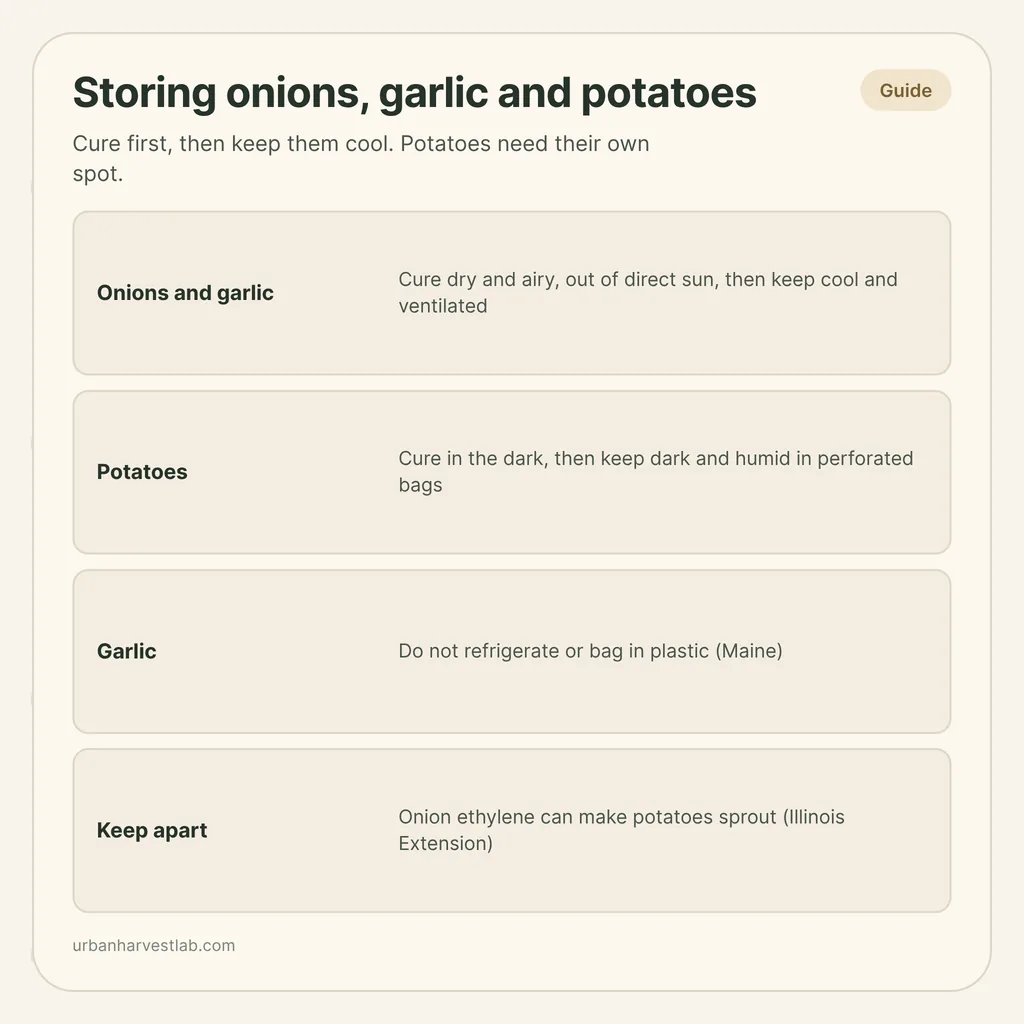
Storing onions, garlic and potatoes at home after harvest
Onions and garlic keep dry and airy, potatoes keep dark and humid, and onions near potatoes is a bad pairing. Curing times, temperatures and a small-space layout from extension sources.
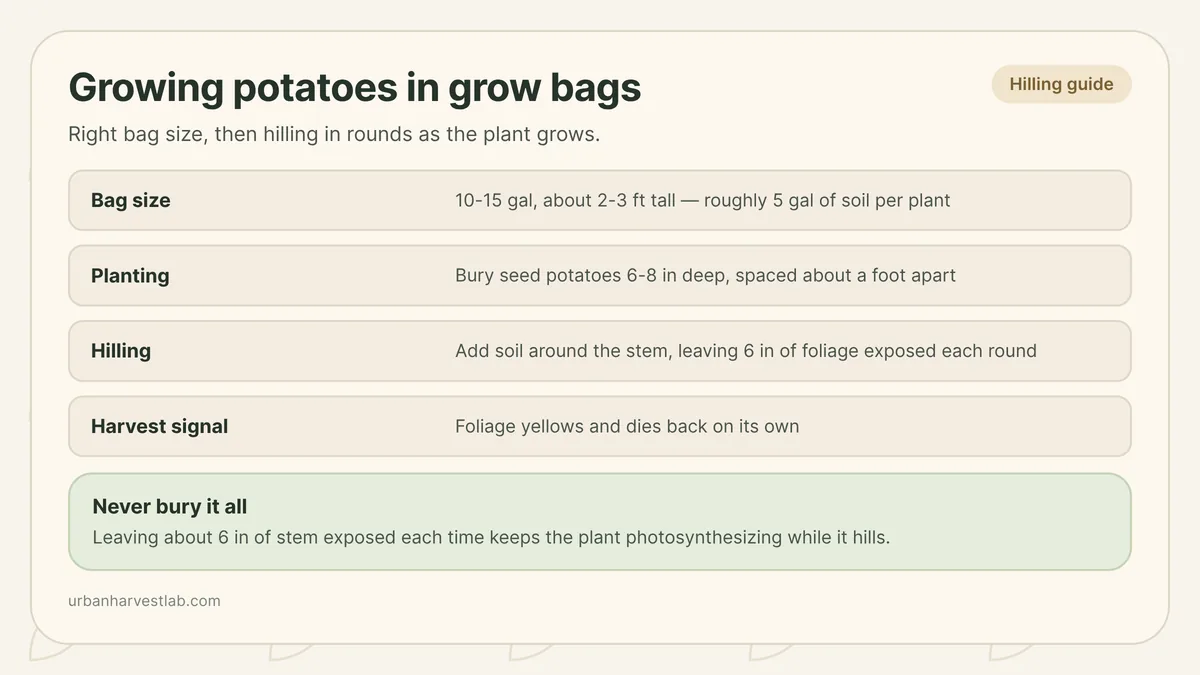
Growing potatoes in grow bags: size, planting depth, and hilling
A grow bag turns potato growing into a container job with one extra step: adding soil around the stem as the plant grows so more tubers can form along it.
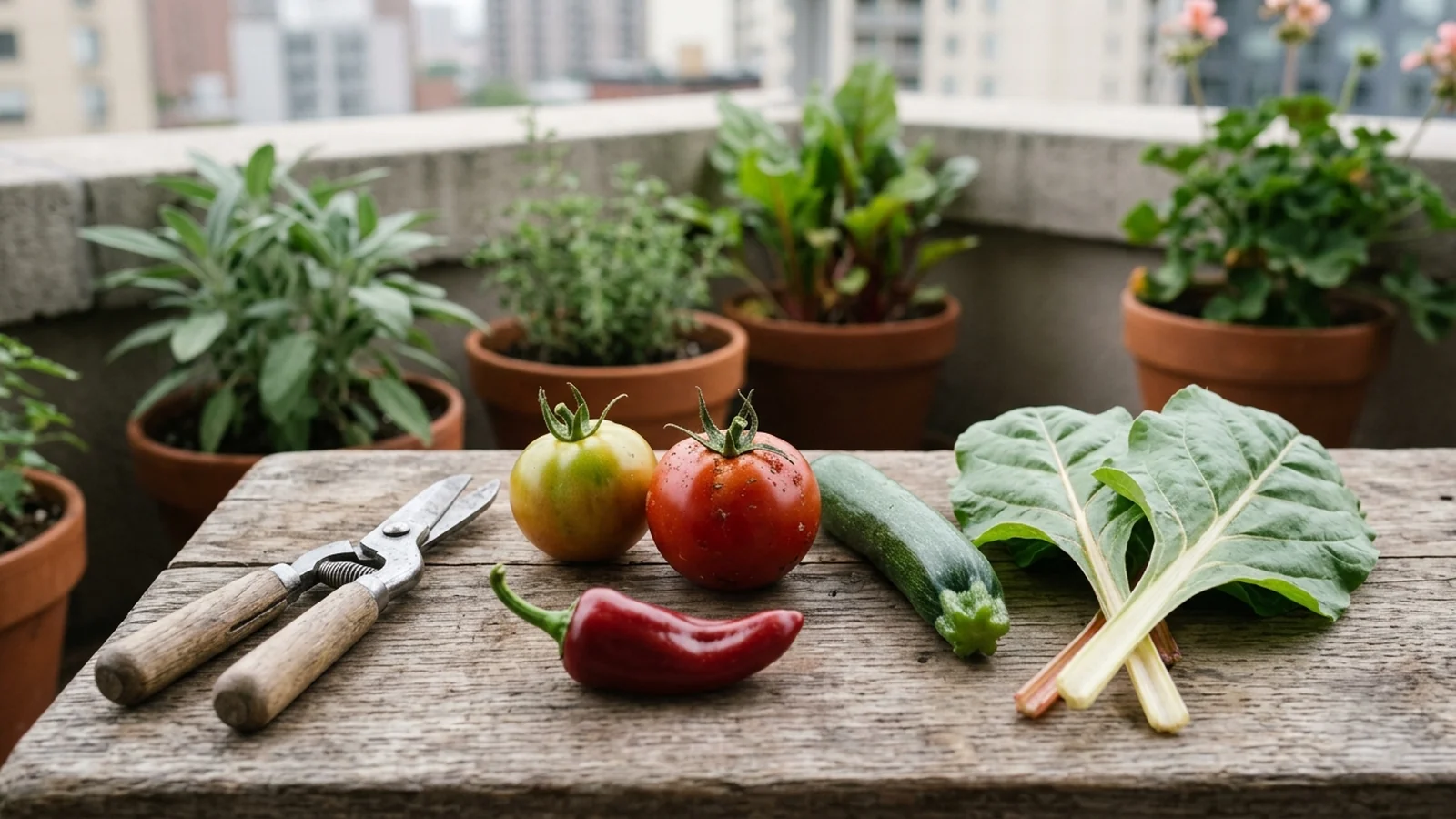
When container vegetables are ripe, crop by crop
A tomato tells you it's ready with color and give. A zucchini tells you with size and how easily it lets go. The signal is different for every crop, and waiting costs more when the plant only has a pot's worth of reserve behind it.