Troubleshoot the system before you change the inputs.
Symptoms
- Tan to brown, rough, corky patches on the skin, raised, level with the surface or sunken.
- In worse cases, dark pits in the tuber surface.
- The leaves and stems look normal; the marks show up at harvest.
Possible causes
- Soil or potting mix with a pH above about 5.5, often after lime, wood ash or manure.
- Dry soil while the young tubers were forming.
- Seed tubers or soil already carrying the bacterium, including grocery-store potatoes used as seed.
- A susceptible variety, such as a thin-skinned white or yellow one.
Quick fixes
- Peel the harvest before cooking and use the scabby tubers first.
- Do not save them for seed.
- Next season, start with certified seed, skip lime and ash, test the pH and keep the mix evenly moist from the time tubers start to form.
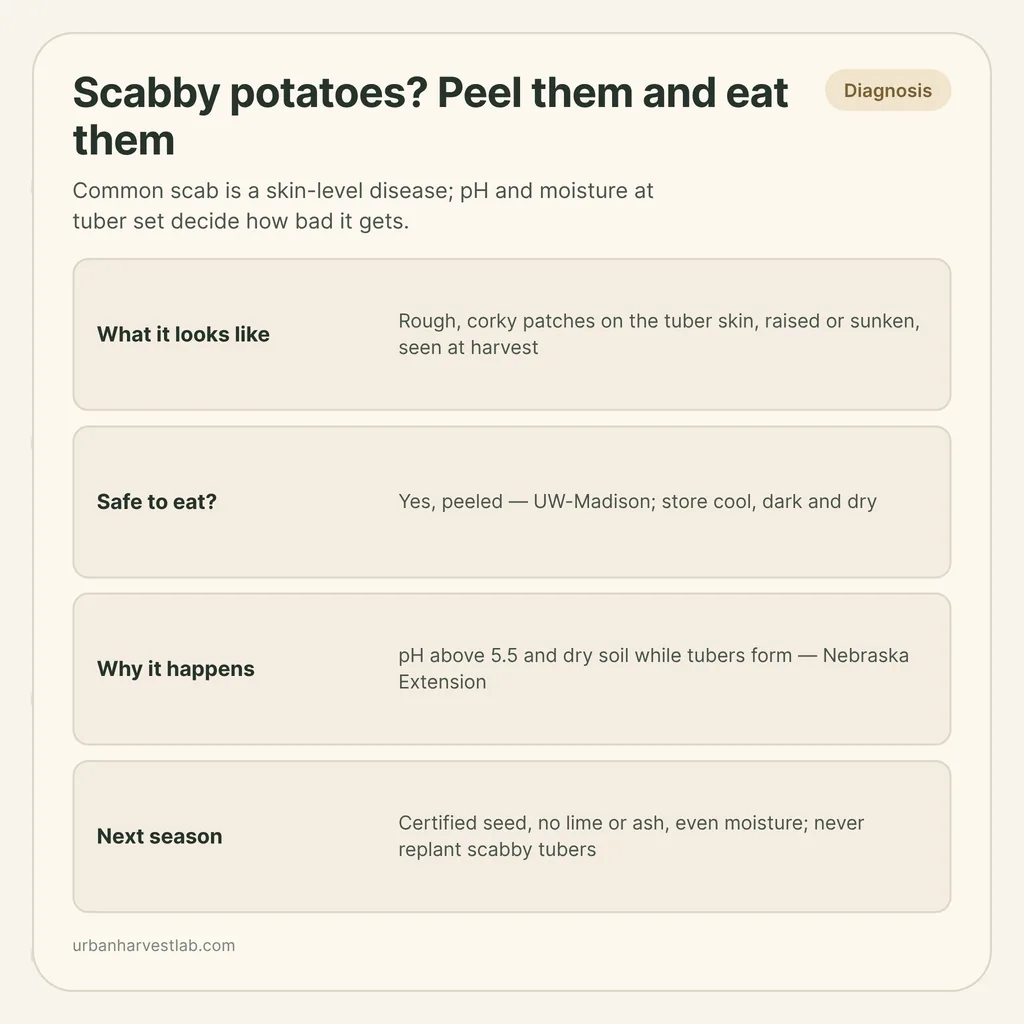
Rough, corky patches on homegrown potatoes are common scab, a skin-level disease caused by a soil bacterium. University of Alaska Fairbanks Cooperative Extension says potatoes with scab are safe to eat, and UW-Madison says they only need peeling. What decides how bad it gets is pH and moisture while the tubers are first forming.
If the leaves looked fine all summer and the damage only appeared when you tipped out the bag, that fits. Wisconsin’s plant disease clinic describes scab symptoms as typically evident at harvest, as raised or slightly sunken rough, corky patches on the surface. A green skin is a different problem with a different cause, covered in green potatoes.
What scab looks like
UW Extension says symptoms of common scab appear only on the tubers. Nebraska Extension describes roughly circular, raised, tan to brown corky lesions of varying size scattered across the skin. They may be raised or warty, level with the surface, or sunken. Severe infections form dark pits that can be as deep as a quarter inch.
Not every rough potato has common scab. Wisconsin’s extension bulletin separates it from powdery scab, a different disease that also hits roots and causes galls on them. North Dakota State notes that telling the two apart by eye can be difficult. If you find galls on the roots as well as marks on the tubers, treat it as a different problem; a diagnostic lab can confirm which one you have.
Why it happens
The bacterium, Streptomyces scabies, lives in many soils. Nebraska Extension says it primarily invades lenticels, the pores in the tuber skin, and that infection begins when tubers are initially being formed. North Dakota State says tubers are most susceptible during the first three to four weeks after tuber initiation, and that early infection can lead to deeper lesions. Nebraska adds that the earlier a tuber is infected, the larger the lesion tends to be.
Three things push scab along.
High pH. Nebraska Extension says common scab is most severe in soils with a pH above 5.5, and UW-Madison says scab tends not to develop below 5.2. Nebraska also notes a less common form that occurs below pH 5.5, so a low pH reduces the odds without removing them. Lime, ashes and manure raise pH. Nebraska names “lime, ashes, fresh barnyard manure, and especially poultry manure” as materials that can make soil alkaline. If you want to know where your mix sits, container soil pH explains how to read and move it, and a basic kit makes the check easy: browse soil pH test kits on Amazon.
Dry soil at tuber set. Nebraska Extension says scab can be reduced by keeping the soil reasonably wet for several weeks while the young tubers begin to grow. North Dakota State reports that holding soil moisture at 80 to 85 percent through tuber initiation, until tubers are 1 to 1.5 inches in size, reduces scab, with infection favored when moisture falls below 65 to 70 percent. Those percentages are field-soil figures from commercial work; a bag has no equivalent gauge, so the practical reading is simply not to let it dry out while tubers form. Nebraska cautions that wet soil may help other rotting pathogens infect the vine and tubers, so aim for evenly moist rather than soaked. Potatoes in grow bags covers watering and hilling through the season.
Warm soil. Nebraska gives 68 to 72°F as the optimum temperature for infection, although the pathogen can attack tubers from 50 to 88°F. You cannot do much about this on a sunny balcony, which is one more reason to control the other two.
Variety and seed
Susceptibility varies a lot. UW-Madison says thin-skinned varieties tend to be more severely affected. Nebraska says white-skinned varieties are highly susceptible, many red-skinned ones somewhat susceptible and most russets tolerant or only slightly susceptible. In Nebraska’s variety table, Yukon Gold is rated susceptible and Goldrush resistant. UW-Madison names Norland, Russet Burbank and Superior as having at least moderate resistance. Ratings come from field conditions elsewhere, so treat them as a starting point.
Seed matters too. UW-Madison says the bacterium can be introduced into garden soil when infected tubers are used as seed, and recommends certified, scab-free seed potatoes. Alaska’s extension service warns that planting grocery-store potatoes risks introducing scab. Fresh mix for each crop is the simplest way to avoid carrying it over in a bag; Nebraska recommends rotating away from root crops in a garden, but a pot lets you swap the soil.
What to do with this harvest
- Eat them, peeled. UW-Madison says infected potatoes need only be peeled before use.
- Store them cool, dark and dry. UW-Madison says this reduces the chance that scabby areas become infected by soft rot bacteria that can totally decay tubers. Use the scabby ones first.
- Do not save any as seed. Nebraska says not to save garden tubers or use table stock as seed.
- Expect no further spread. Nebraska says the lesion does not develop further after the potatoes are dug.
Scab usually hurts looks more than yield. Wisconsin’s bulletin says common scab does not normally affect total yield but often significantly affects tuber appearance.
Next season
- Start with certified seed potatoes.
- Choose a variety rated more resistant.
- Skip lime, wood ash and manure in the mix, and check the pH.
- Keep the bag evenly moist from the time tubers start forming.
- Use fresh mix rather than the soil from a scabby crop.
North Dakota State is frank that no known method provides complete and consistent control, so the aim is fewer and shallower lesions, not a guarantee.
Sources
- University of Nebraska-Lincoln Extension: G1940, Common Scab of Potatoes
- NDSU Potato Extension: Common Scab
- University of Wisconsin-Madison Extension: Potato Scab (D0083)
- University of Wisconsin Extension: Potato Disorders, Common Scab and Powdery Scab (A3833)
- University of Alaska Fairbanks Cooperative Extension: Potato Scab
More on growing and troubleshooting potatoes
Grow-bag basics, green tubers and the pH of a container mix.
Common questions
Are scabby potatoes safe to eat?
The University of Alaska Fairbanks Cooperative Extension says potatoes with scab are safe to eat, and UW-Madison says they are still edible and need only be peeled before use. Scab is a skin disease, so cut away any soft or rotting spots separately.
What causes scab on potatoes grown in a bag or pot?
A soil bacterium, Streptomyces scabies, enters the pores of young tubers. Nebraska Extension says it is most severe above pH 5.5, and North Dakota State and Nebraska both point to dry soil while tubers are first forming.
Can I stop scab once the potatoes have it?
Not on those tubers. Nebraska Extension notes the lesion does not develop further after the potatoes are dug, so the useful changes are for the next crop.
Can I plant scabby potatoes next year?
Nebraska Extension advises against saving garden tubers or using table stock as seed, and the University of Alaska Fairbanks warns that planting grocery-store potatoes risks introducing scab. Buy certified seed instead.
Related guides
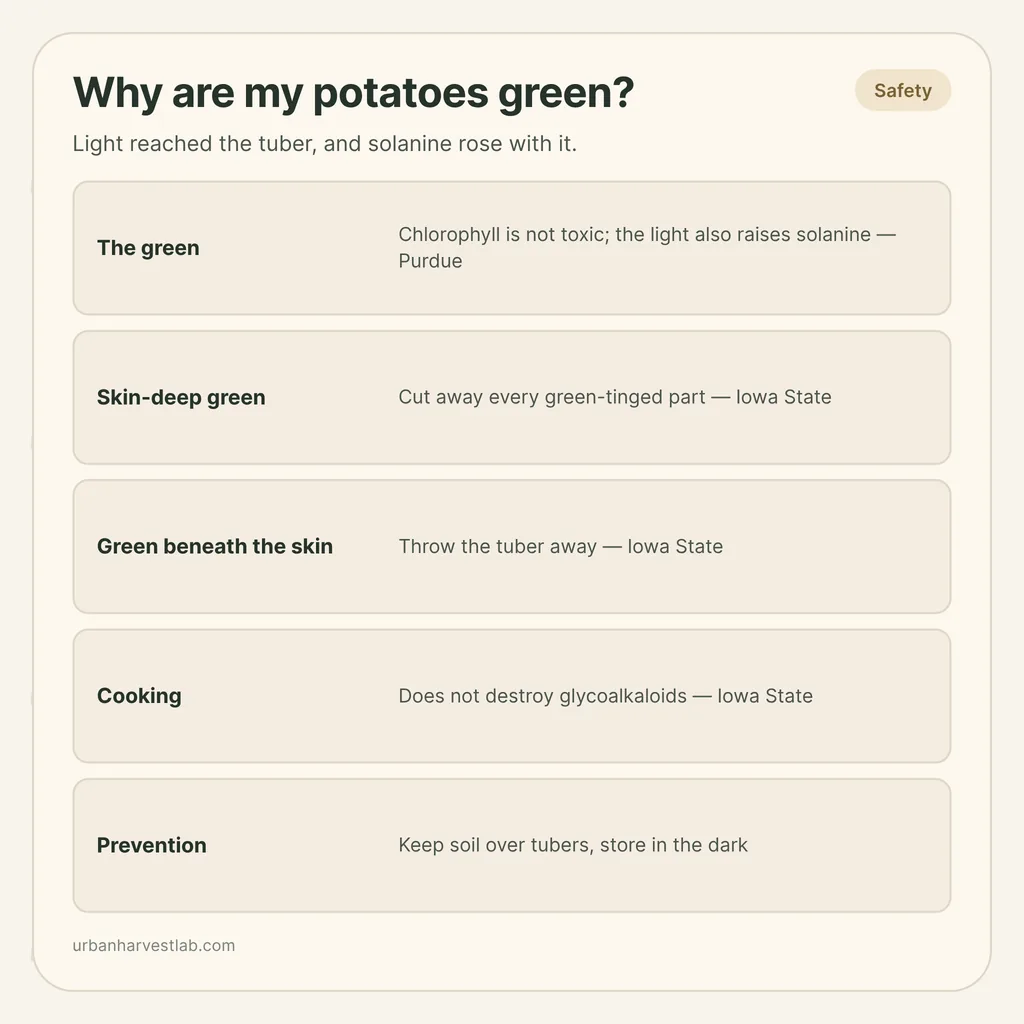
Why are my potatoes green? Light, solanine and what to do with them
Green on a potato is chlorophyll from light exposure, and solanine rises alongside it. Here is how to judge a green tuber, what to cut or throw out, and how to stop it next time.
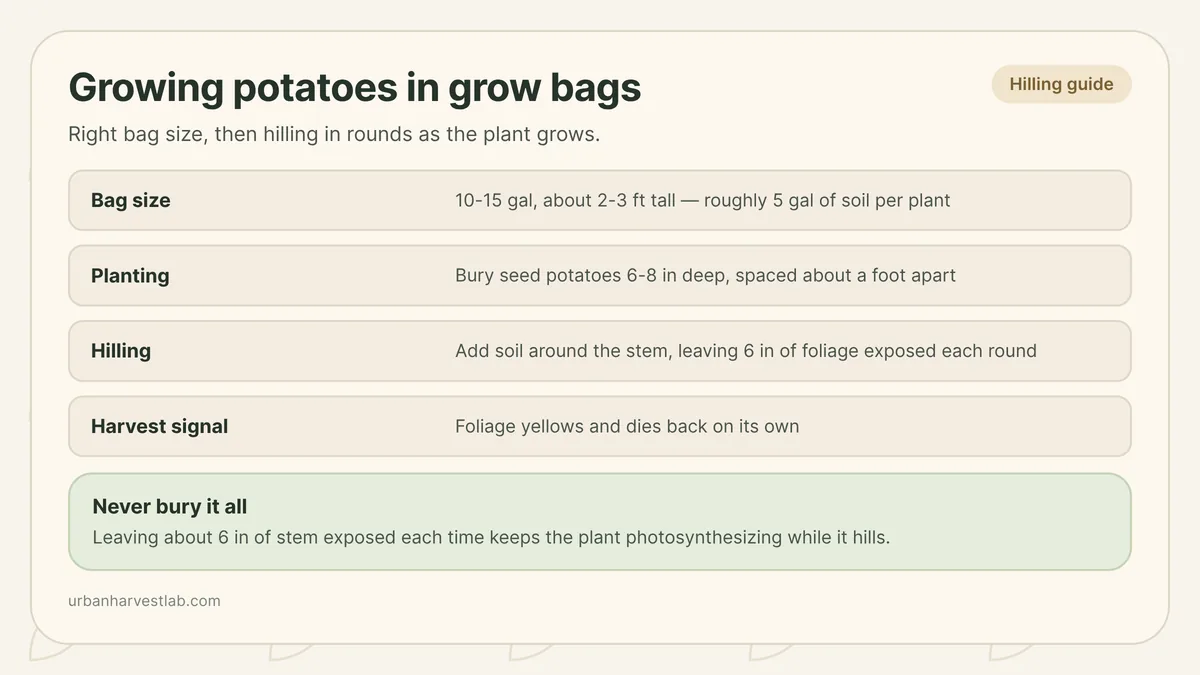
Growing potatoes in grow bags: size, planting depth, and hilling
A grow bag turns potato growing into a container job with one extra step: adding soil around the stem as the plant grows so more tubers can form along it.
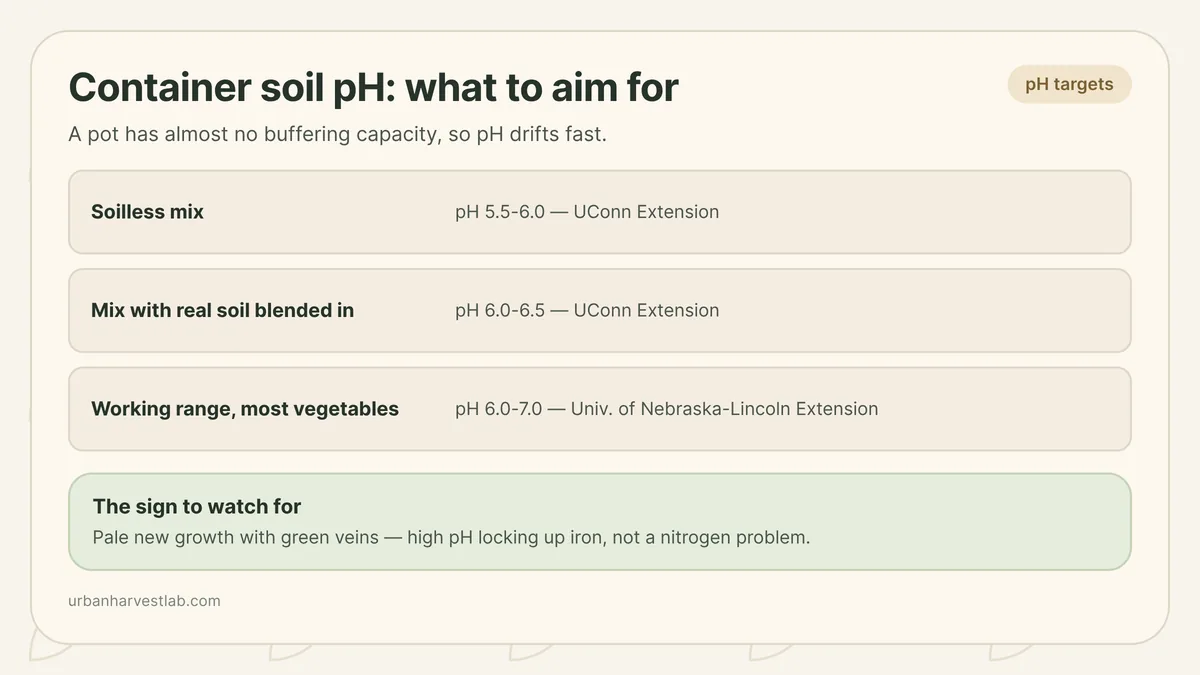
Container soil pH: when it matters and how to fix it
A container's small volume has almost none of the buffering capacity open ground has, so pH drifts faster and matters sooner. Here is when to test, what to aim for, and how to move it.