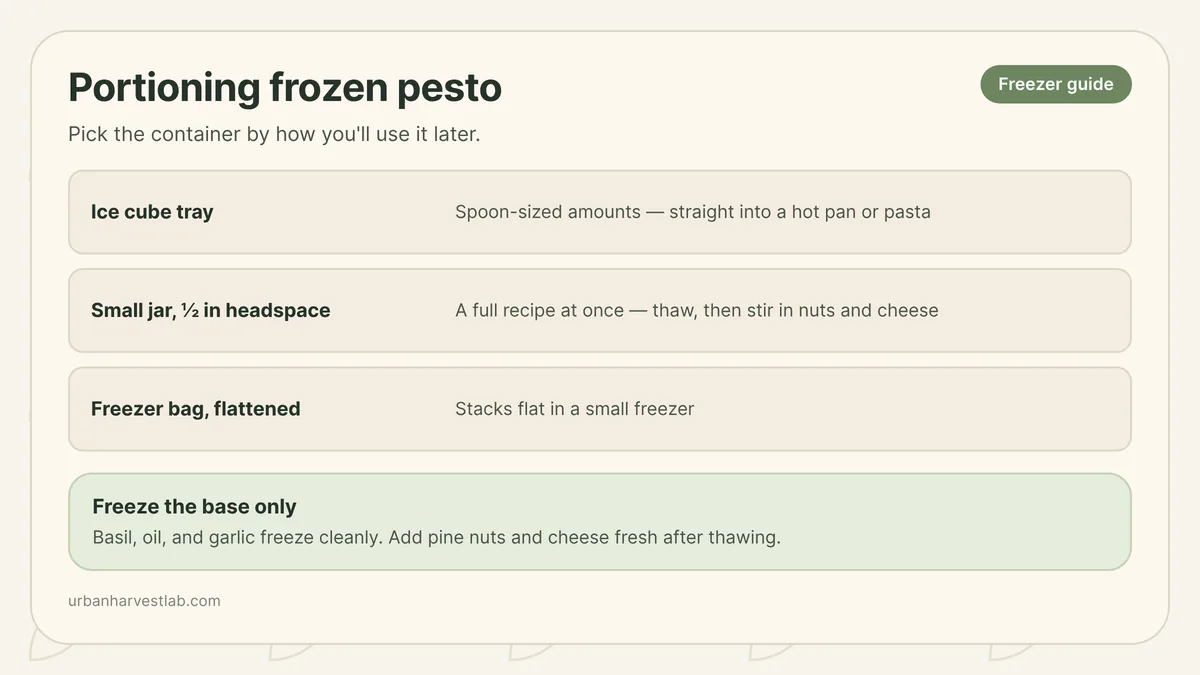
Portioning frozen pesto
| Portion | Best for | How to use |
|---|---|---|
| Ice cube tray | Spoon-sized amounts for one dish | Pop a cube straight into a hot pan or bowl of pasta |
| Small jar, ½ in headspace | A full recipe at once | Thaw in the fridge, then stir in nuts and cheese |
| Freezer bag, flattened | Stacking flat in a small freezer | Snap off a portion or thaw the whole bag |
Freeze a big basil harvest as pesto by leaving the pine nuts and hard cheese out of the batch that goes into the freezer, then stirring both in fresh once it thaws. The oil, basil, and garlic base freezes cleanly for months. The nuts and cheese do not.
That is a different job from keeping a small bunch of basil alive on the counter, which how to store fresh basil so it lasts covers. This is about the point where a plant, or a farmers-market bag, hands you more basil than a week of cooking can use, and turning that volume into pesto is the fastest way to lock the flavor in before it declines. If basil is one part of a wider small-space setup, the small-space herb gardening hub connects the harvest, storage, and preservation guides in the order most people actually need them.
Cut hard, then process fast
A basil plant that has bolted into a big flush of leaves is not a plant to trim gently. Illinois Extension found that annual herbs like basil tolerate removing 50 to 75 percent of their growth in one pass and recovering, unlike a woody perennial such as rosemary or thyme, which needs a much lighter cut. Take stems just above a leaf pair, the same cut point Penn State Extension recommends for herbs headed into the freezer generally, leaving 4 to 6 inches (10 to 15 cm) of stem below the cut for later growth. Pruning basil, mint, parsley, and chives without stunting growth covers where to make that cut on other herbs too.
Harvest earlier in the day, before heat builds, and process the same day if you can manage it. Basil bruises and blackens with handling and heat, the same vulnerability that makes short-term counter storage a race against time. Pesto sidesteps that race by using the volume up immediately instead of trying to keep it fresh.
Blanch first, or blend straight away
Plain frozen herbs benefit from a step most home cooks skip. Penn State Extension’s method blanches briefly, then plunges the herbs immediately into ice water to stop the cooking. Applied to basil headed for a food processor rather than a freezer bag, that same brief blanch and shock slows the enzymatic browning that would otherwise turn a frozen pesto a dull olive rather than the bright green it started as. Penn State’s instruction is a brief blanch followed immediately by ice water; the point of the ice water is to stop the leaves cooking, not to hold them at a specific time.
Blending straight from raw, unblanched leaves also works and is what most pesto recipes assume. Skipping the blanch trades a slightly greener freezer result for one less step, which is a fair trade if a large batch needs to get done quickly.
Build the base without the nuts and cheese
Blend basil, olive oil, garlic, and salt into a smooth paste, and stop there. Leave the pine nuts and the Parmesan or pecorino out of the portion headed for the freezer. Nuts carry more fat than the rest of the mixture, and fat that goes through a freeze-thaw cycle is prone to turning rancid or picking up a stale, cardboard-like flavor well before the basil itself would show any decline. Hard cheese has the opposite problem: its texture breaks down in the freezer, turning grainy and separating instead of melting smoothly into a warm sauce. Freezing the oil-basil-garlic base and adding both ingredients fresh after thawing sidesteps both failure modes.
If a batch is headed for the fridge rather than the freezer, adding the nuts and cheese at the time of blending is fine, but the fridge window itself is short: Penn State Extension gives fresh herbs held in oil only 2 to 4 days refrigerated, since oil is a low-oxygen environment and both garlic and basil are low-acid — exactly the condition Clostridium botulinum needs to grow. Herb-infused oil safety covers the full storage rules. This substitution is specifically a freezer workaround, not a rule for pesto in general.
Portion before you freeze, not after
Decide how the pesto will be used before deciding how to freeze it. Freezing herbs in ice cube trays covers the cube-portioning technique in detail: trays give a spoon-sized dose that suits tossing one or two cubes into a pan of pasta or a pot of soup, and once solid, the cubes transfer cleanly into a labeled bag. For a full recipe’s worth in one go, small jars or freezer bags work better. Leave about a half inch (1.25 cm) of space at the top of a jar, per Penn State Extension, so the pesto has room to expand as it freezes, and press plastic wrap or a thin film of oil directly onto the surface before sealing, which cuts down on the air contact that drives browning.
A flattened, sealed freezer bag also stacks flat, which matters more than it sounds like it should once a big harvest has produced more portions than a chest freezer’s shelves were built for.
Thawing and finishing
Move a portion from the freezer to the fridge the night before. For a faster thaw, put the sealed container in cold water rather than leaving it on the counter. A single cube softens far faster than a full jar, so plan around whichever portion size the earlier step used. Once it has softened, stir in freshly grated Parmesan or pecorino and whole or lightly toasted pine nuts, then taste for salt; freezing tends to mute seasoning slightly. Thawed pesto separates a little, with the oil rising to the top, and a quick stir brings it back together. Use it the same way as fresh pesto: tossed with hot pasta, spread under chicken skin before roasting, spooned into a bowl of soup, or thinned with a little pasta water to loosen it into a sauce.
Do not refreeze a batch that already had nuts and cheese stirred into it and then went unused. That combination is exactly the one this method is built to avoid putting through the freezer twice.
How long it keeps
UGA Extension gives frozen herbs a quality window of about 3 to 6 months, and a basil-oil-garlic pesto base follows that same range. Toward the end of it, expect a gradual fade in flavor rather than a sudden cliff. Label each container with the date it was made, and work through the oldest portions first.
When to toss a batch
Discard a portion that smells off, shows visible mold, or has ice crystals fused solidly through the container rather than a light frost across the top, which usually points to a thaw-and-refreeze somewhere along the way. A shift to a duller, more olive-brown green after long storage is a quality issue rather than a safety one on its own, and does not by itself mean the batch is unsafe. Freezer burn, a dry, pale patch where a portion sat exposed to air, is the same story: it makes that corner taste stale and worth trimming away, not a sign the rest of the jar has gone bad. Smell and appearance together are the better check than color alone, and a batch that fails either test is not worth risking on a plate of pasta.
Sources
If you are freezing a basil harvest, also read
These guides cover freezing herbs in general, portioning basil into cubes, and storing a smaller harvest fresh instead.
Common questions
Can you freeze pesto with pine nuts and cheese already in it?
You can, but many cooks leave both out of the batch that goes into the freezer. Pine nuts carry more fat than the basil, oil, and garlic base, and fat that goes through a freeze and thaw cycle is prone to turning rancid or picking up a stale flavor. Hard cheese has the opposite problem: its texture, not its flavor, breaks down in the freezer and turns grainy instead of melting smoothly. Blending a base of basil, oil, garlic, and salt, freezing that, and stirring in fresh pine nuts and grated cheese after thawing avoids both problems.
Do you need to blanch basil before freezing it as pesto?
It is not required, but it helps. Penn State Extension's method for freezing herbs generally calls for a brief blanch followed immediately by a plunge into ice water to stop the cooking. Applied to basil headed into a food processor rather than a freezer bag, the same brief blanch and shock slows the browning that otherwise dulls a frozen pesto's bright green color.
How long does frozen basil pesto keep?
UGA Extension puts frozen herbs at about 3 to 6 months for quality, and a basil-oil-garlic pesto base follows the same window rather than needing its own figure. Keep it in a well-sealed, freezer-safe container, portioned into amounts you will use in one go, and lean toward the earlier end of that range if your freezer sees a lot of door-opening.
What is the best way to portion pesto for the freezer?
Ice cube trays work well for spoon-sized portions to drop into a pan or a bowl of pasta. Small jars or freezer bags suit a full recipe at once. Leave about a half inch (1.25 cm) of space at the top of a jar, per Penn State Extension, to leave room for the pesto to expand as it freezes, and press plastic wrap or a thin layer of oil onto the surface before sealing to limit air contact.
Related guides
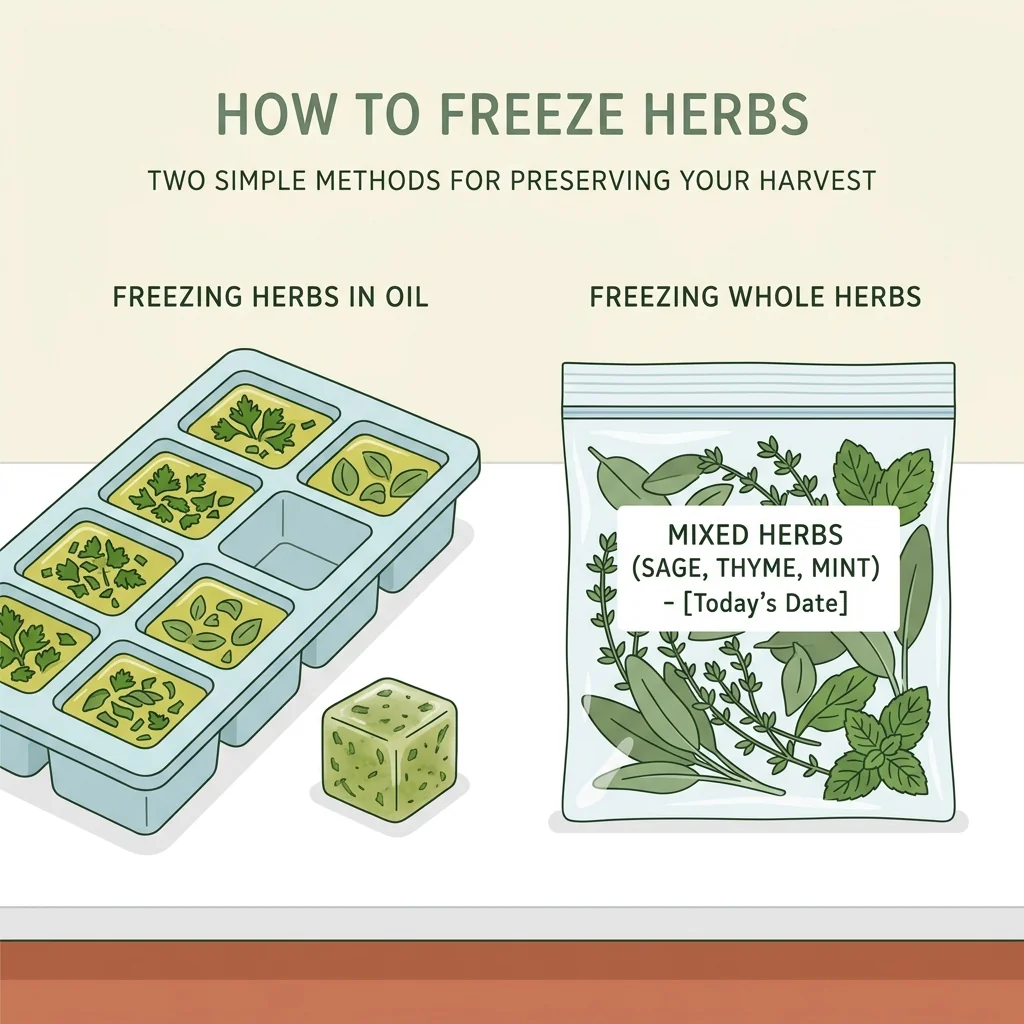
How to freeze herbs without losing flavor
Freezing beats drying for soft herbs. Chopped into oil-filled ice cube trays or frozen whole, basil and parsley keep far more of their fresh flavor.
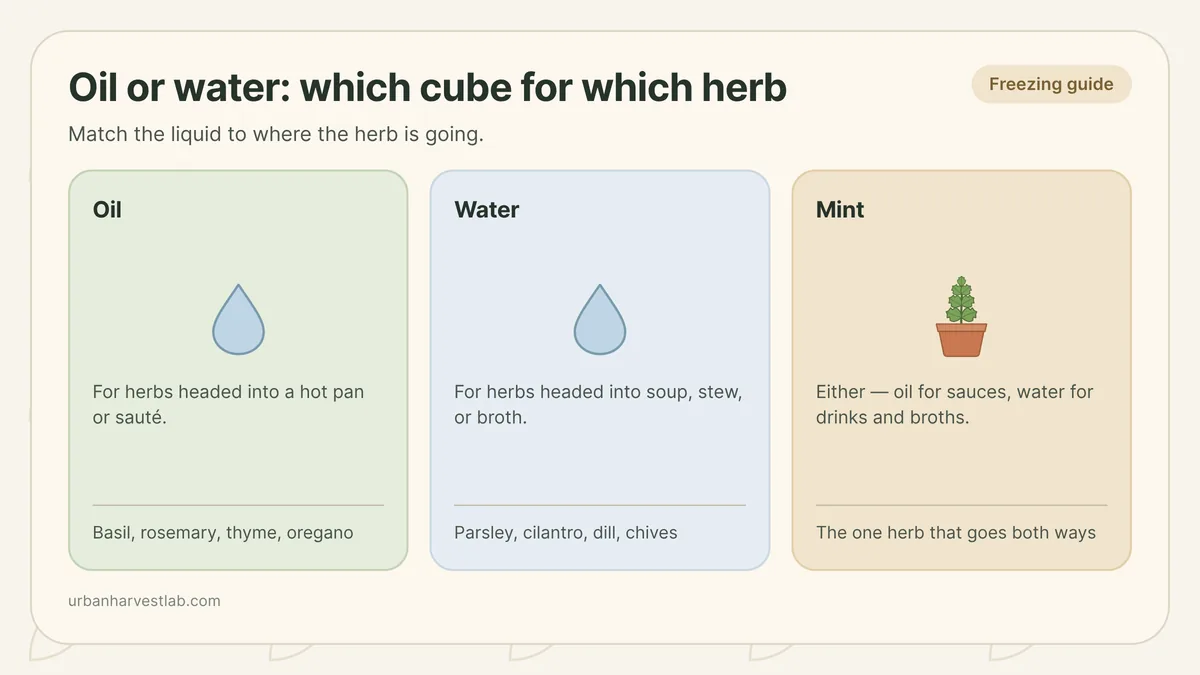
Freeze herbs in ice cube trays: oil or water, by herb
An ice-cube tray turns a fistful of chopped herb into pre-portioned cooking cubes. The details that decide whether it works are how much herb per well, oil or water, and how long you can trust the result.
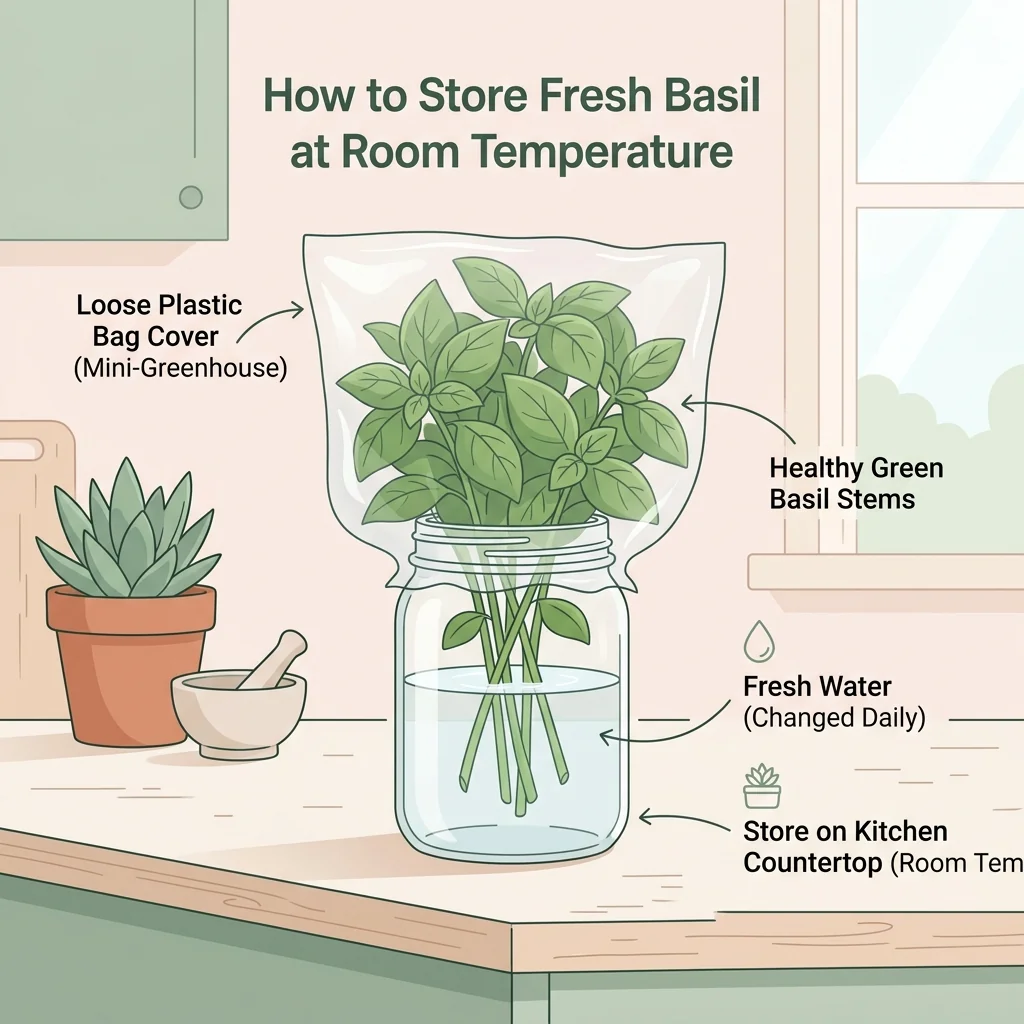
How to store fresh basil so it lasts
Basil is cold-sensitive, but storage also depends on whether it is a rooted plant, cut stems, or loose leaves. Use this test-and-inspect method.