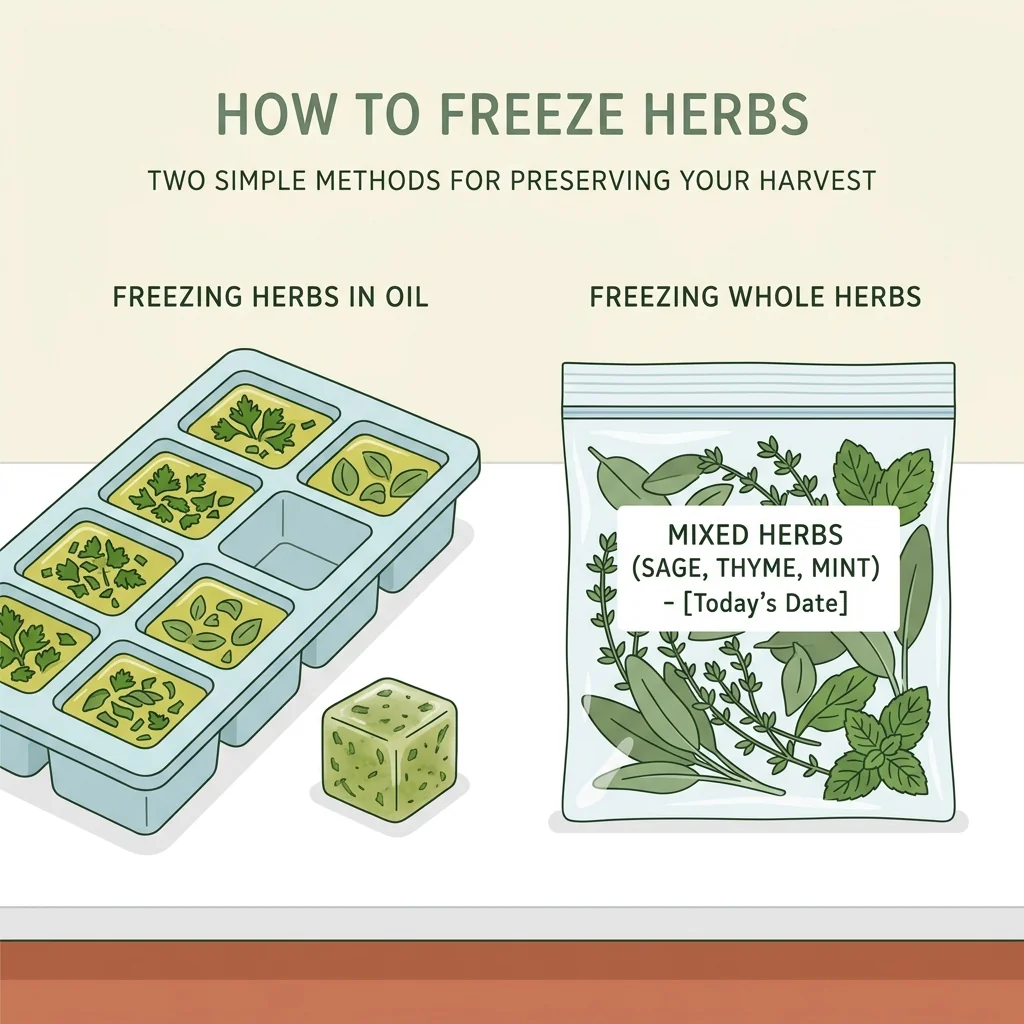
Two ways to freeze herbs
| Method | Best for | How to use |
|---|---|---|
| Ice cube tray with oil | Basil, parsley, mixed soft herbs | Drop a cube into pans, sauces, soups |
| Ice cube tray with water | Parsley, cilantro, chives | Add to soups and stews |
| Whole on a tray, then bagged | Sprigs and leaves for cooking | Crumble straight into hot dishes |
For soft herbs, freezing beats drying every time. As a quick answer: chop soft herbs into ice cube trays, top with olive oil or water, freeze, then bag the cubes. Basil, parsley, chives, and cilantro keep far more of their fresh flavour this way than they ever would dried.
Why freeze instead of dry?
Soft, high-moisture herbs lose most of their aroma when dried and often turn brown and hay-like. Freezing captures their flavour close to fresh. The trade-off is texture: frozen herbs soften and darken once thawed, so they are best used in cooking rather than as a fresh garnish. Hardy herbs like rosemary and thyme can be frozen too, though they also dry well.
Method 1: the ice cube tray (best all-rounder)
- Wash and dry the herbs, then chop them.
- Pack the chopped herbs into the wells of an ice cube tray, about two-thirds full.
- Top each well with olive oil (great for basil and cooking herbs) or water.
- Freeze until solid, then pop the cubes into a labelled freezer bag.
Drop a cube straight into a hot pan, sauce, or soup. The oil version is especially good for basil headed for pasta and sautes.
Method 2: freezing whole
For herbs you will crumble into cooked dishes, lay clean, dry sprigs or leaves in a single layer on a tray, freeze until solid, then transfer to a bag. They keep for months and crumble easily straight from frozen.
Tips for the best results
- Start dry. Pat herbs dry before freezing so they do not clump into ice.
- Label and date bags; frozen herbs are best within about six months.
- Use from frozen. Do not thaw first, just add them to the pan.
The six-month suggestion is a quality target, not a universal safety deadline. Freezer temperature, packaging, air exposure, and power interruptions affect quality. Follow your freezer and food-safety guidance, and discard packages with signs of thawing abuse, leakage, or spoilage.
Freeze at harvest time
The best time to freeze is right after harvesting, when flavour is at its peak. Harvesting little and often also keeps plants producing, as covered in how to harvest herbs so they keep growing. For fresh short-term storage instead, see how to store fresh basil.
The important oil-and-herb safety rule
Fresh herbs in oil are a low-oxygen mixture and must not be treated as a shelf-stable pantry product. Fill the tray and freeze it promptly. Keep the cubes frozen until they go directly into cooking; do not store homemade fresh-herb oil at room temperature. The National Center for Home Food Preservation advises against inventing home-canning processes for flavored oils because a safe process has not been established for arbitrary recipes.
If you want portions without oil, freeze chopped herbs with water or freeze dry leaves on a tray before bagging. These methods also make the intended use easier to label.
A safer preparation workflow
- Select sound herbs and discard decayed or animal-contaminated leaves.
- Wash hands, utensils, trays, and work surfaces. Rinse herbs under running water; do not use soap.
- Remove excess surface water with a clean spinner or towels.
- Portion, cover, and freeze promptly. Once solid, transfer cubes to a freezer-grade container with as little trapped air as practical.
- Label the herb, liquid, and date. Keep raw herb portions separate from items that could leak meat juices.
Do not taste a questionable batch to decide whether it is safe. Odor and appearance cannot identify every foodborne hazard.
Measure what works for your cooking
Standardize each well—for example, one tablespoon of chopped herb—so recipes are repeatable. Record whether the cubes contain oil or water and which dish they suit. Freezing preserves convenience and much of the aroma, but it does not keep the crisp structure of fresh leaves. Use frozen basil in sauces, soups, and cooked dishes; choose fresh leaves for garnishes where texture matters.
Sources
If you are preserving herbs, also read
These guides cover drying hardy herbs, storing fresh basil, and harvesting so plants keep producing.
Common questions
How do you freeze herbs without losing flavor?
Chop the herbs, pack them into ice cube tray wells, top with olive oil or water, and freeze. Once solid, pop the cubes into a labelled freezer bag. This locks in flavour far better than drying soft herbs.
Which herbs freeze best?
Soft, high-moisture herbs freeze best, basil, parsley, chives, cilantro, dill, and mint. Hardy herbs like rosemary and thyme can be frozen too, but they also dry well.
Can you freeze herbs whole?
Yes. Lay clean, dry sprigs or leaves on a tray, freeze until solid, then transfer to a bag. This works well for herbs you will crumble straight into cooked dishes.
Are frozen herbs as good as fresh?
For cooking, nearly. They keep most of their flavour but lose their crisp texture and bright colour, so use them in soups, sauces, and cooked dishes rather than as a fresh garnish.
Related guides
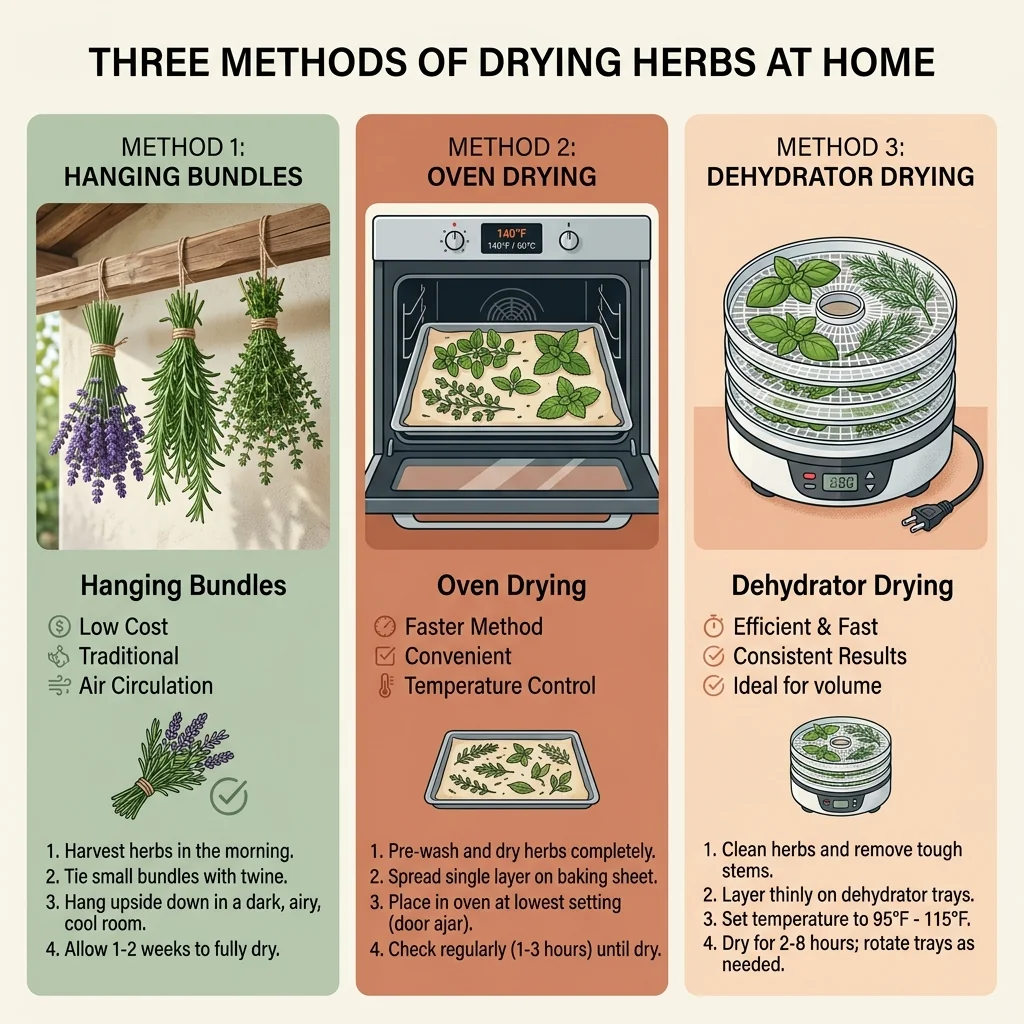
How to dry herbs at home (air, oven, dehydrator)
Drying is the best way to preserve woody herbs like rosemary, thyme, and oregano. Here are three methods, the temperatures to use, and which herbs to skip.
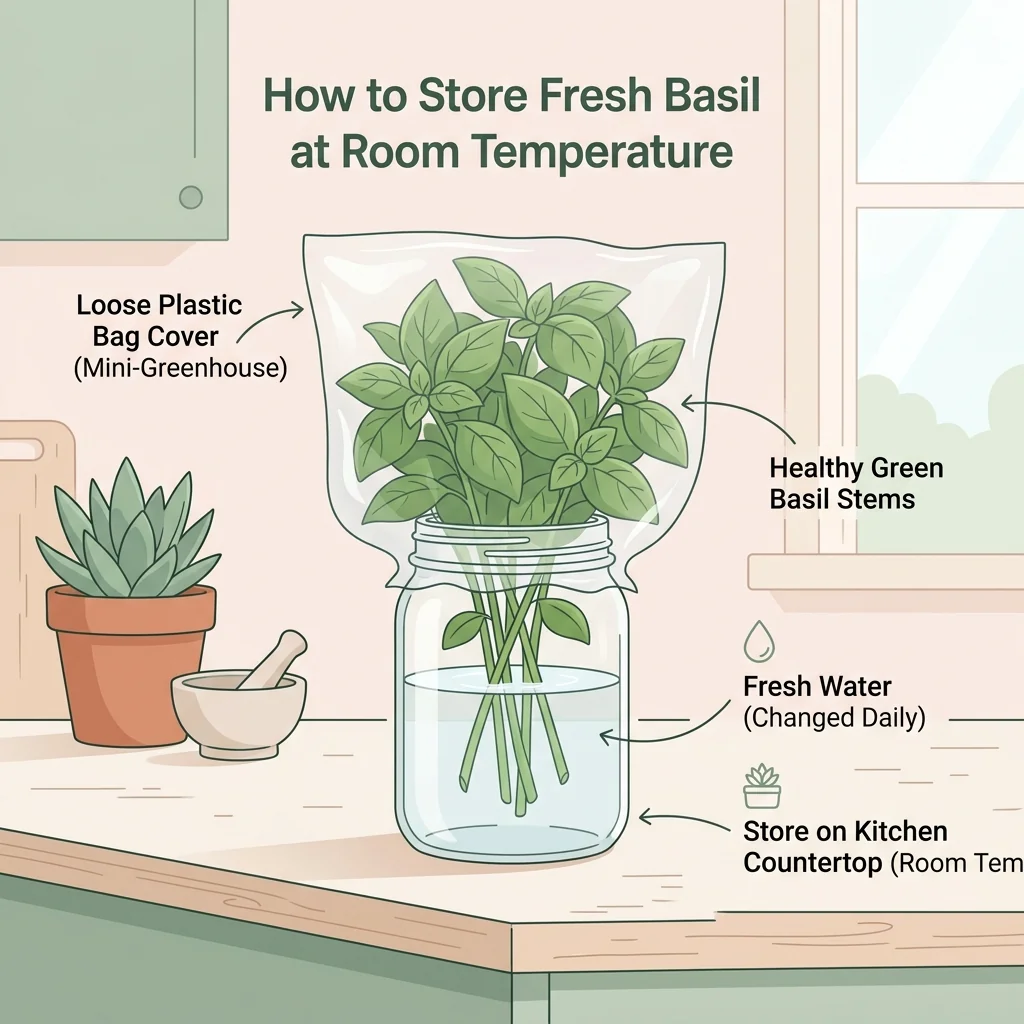
How to store fresh basil so it lasts
Basil is cold-sensitive, but storage also depends on whether it is a rooted plant, cut stems, or loose leaves. Use this test-and-inspect method.
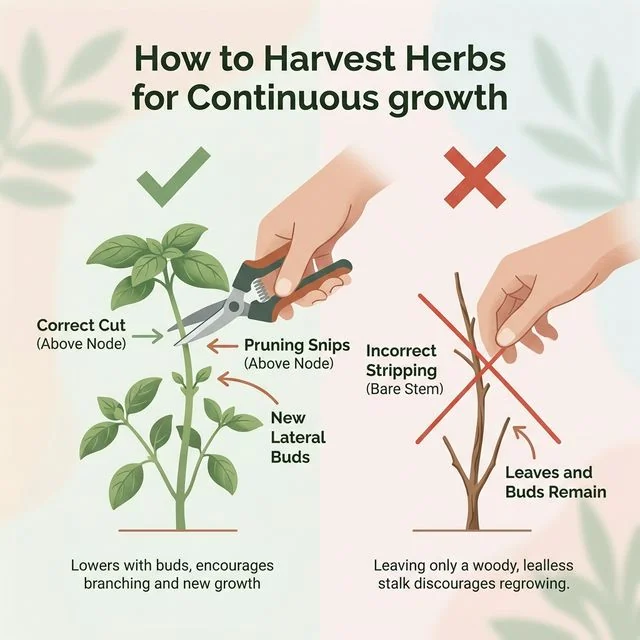
How to harvest basil, mint, parsley, and chives so they keep growing
The fastest way to destroy an indoor herb plant is to harvest it incorrectly. If you just pull random leaves off the stem, the plant will eventually go bald and die. Here is the exact botanical method to harvest your herbs so they yield endlessly.