Oil or water, by herb
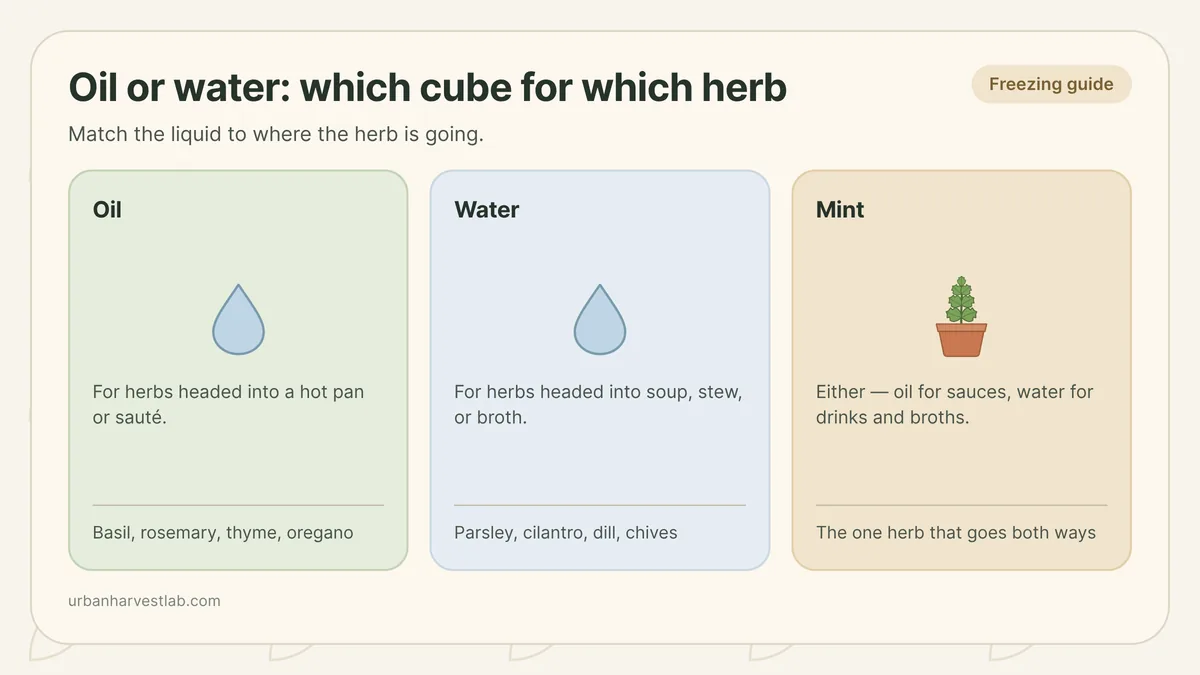
| Herb | Better liquid | Typical use |
|---|---|---|
| Basil | Oil | Pasta sauces, sautes, pan dishes |
| Rosemary, thyme, oregano | Oil | Roasts, sautes, pan dishes |
| Parsley, cilantro, dill | Water | Soups, stews, broths |
| Chives | Water | Soups, egg dishes, sauces without added oil |
| Mint | Either | Oil for sauces, water for drinks and broths |
A frozen herb cube is chopped herb packed into an ice-cube-tray well and topped with either oil or water, then frozen solid and bagged. The method itself takes minutes; what decides whether the result is worth freezer space is how much herb goes in each well, whether you top it with oil or water, and how long the finished cubes actually keep their flavor. For the wider picture of preserving a herb harvest, including freezing whole sprigs and drying, how to freeze herbs without losing flavor covers that ground. Here, the focus stays on getting the ice-cube-tray method itself right.
How much herb per well
Penn State Extension’s figure for a standard ice-cube-tray well is about one tablespoon of chopped herb. That is enough to flavor a single serving of soup, a small pan sauce, or a scoop of rice, and it means you are not guessing a portion mid-recipe. Chop the herb before packing it in rather than pushing in whole leaves, which trap air pockets and freeze unevenly.
Filling several trays at once goes faster with Penn State’s bulk ratio instead: one-third to one-half cup of oil blended with two cups of chopped herb, spooned into the wells rather than drizzled over herb already packed in. It is the same finished cube with less fiddly pouring, and it scales cleanly when you have more herb on hand than trays to fill in one sitting.
Oil or water: which cube for which herb
Both liquids do the same basic job of excluding air and holding the chopped herb in a solid block, but they are not interchangeable across every herb and every use.
Oil carries fat-soluble flavor well and goes straight from freezer to hot pan, which makes it the better fit for herbs you cook into a sauté, a pasta sauce, or anything else that already starts with oil in the pan. Basil, rosemary, thyme, and oregano all hold up well this way. Basil darkens once frozen either way, so choose oil for where the cube is going rather than for how it will look.
Water is the simpler choice for herbs headed into a broth, soup, or stew, where liquid is going into the pot regardless. Parsley, cilantro, dill, and chives freeze cleanly in water and melt straight into a simmering pot without adding fat to the dish. Water is also the better call when you want the herb in a dish that should not pick up extra oil at all, such as a lentil soup or a poached-egg breakfast.
Mint sits in both camps depending on where it is going. A mint-oil cube works into a pan sauce for lamb or into melted butter for vegetables, while a mint-water cube dissolves cleanly into a pot of stock or thaws into a cold drink without leaving an oil slick on top. If a recipe could go either way, water is the more neutral default, since it does not commit the dish to a particular fat.
The method, step by step
- Harvest at the right time. Cut stems just above a leaf or a leaf pair, leaving about 4 to 6 inches (10-15 cm) of stem so the plant can regrow, and harvest in mid-morning once the dew has dried, per Penn State Extension. The cutting technique itself, and why it matters for regrowth, is covered in how to harvest herbs so they keep growing; if timing by herb is the question, when to harvest herbs: a calendar walks through that separately.
- Wash and dry the leaves. Rinse them and pat dry; leftover water dilutes an oil cube and adds extra ice to a water one.
- Chop. A fine or medium chop, depending on the dish you are freezing the herb for.
- Blanch, only if you want to hold color longer. Penn State’s method blanches the herb briefly, then immediately plunges it into ice water to stop the cooking. This step is optional for the ice-cube method; most cooks skip it and freeze the herb raw.
- Pack the wells. About a tablespoon of chopped herb per well is the standard fill.
- Top with oil or water, based on the herb and the dish it is headed for.
- Freeze until solid, then pop the cubes out and transfer them to a freezer bag, pressing out air and leaving about half an inch (roughly 1.25 cm) of space before sealing, per Penn State’s guidance.
- Label the bag with the herb, the liquid used, and the date.
How long frozen herb cubes actually last
University of Georgia Extension puts frozen herbs at about three to six months before quality drops. That range describes flavor and color, not a safety cutoff: a cube kept solidly frozen past six months is not unsafe to use, it simply tastes less like the fresh herb it started as.
Freezer conditions do more to move that window than the herb itself does. A standalone chest freezer that holds a steady temperature keeps flavor and color closer to the six-month end; a freezer compartment built into a fridge, which warms slightly every time the fridge door opens, tends to push cubes toward the three-month end instead. Packing cubes into a rigid container rather than a loose bag also limits the freezer burn that comes from cubes rattling against each other and picking up surface ice.
Whatever the date on the bag says, treat a cube that shows freezer burn, an off odor, or a partial thaw-and-refreeze as one to discard rather than use.
Using the cubes
Drop a cube straight from the freezer into a hot pan, a simmering pot, or a blender for a sauce, rather than thawing it first. An oil cube softens and melts almost immediately in a hot pan; a water cube needs a minute or two of simmering to dissolve fully into a soup or stew. Either way, frozen herb loses its raw crunch on thawing, so keep fresh leaves for garnishes and save the cubes for cooked dishes.
The oil-cube safety point worth knowing
Penn State Extension describes the hazard plainly: oil is a low-oxygen environment and fresh herbs are low-acid, which is exactly the condition Clostridium botulinum needs to grow — and an oil-topped cube is, for the short stretch before it is used, fresh herb suspended in oil. Freezing the cubes solid and keeping them frozen removes that risk. What matters is what happens after they leave the freezer: use oil cubes straight from frozen into hot cooking, and do not let a thawed cube sit at room temperature to soften first. A thawed oil cube is fresh herb in oil, and Penn State Extension gives fresh herbs in oil only 2 to 4 days refrigerated — so thaw one only into the pan, not onto the counter. Herb-infused oil safety covers the storage rules for oil that is not going into the freezer.
The short version
- About a tablespoon of chopped herb per well, topped with oil or water.
- Oil for herbs headed into a hot pan; water for herbs headed into a pot of liquid.
- Cubes hold their quality for roughly three to six months in a labeled, air-pressed bag.
- Use straight from frozen; do not thaw oil cubes and leave them at room temperature.
Sources
Preserving more of the harvest
These guides cover the wider freezing method, harvest technique that keeps a plant productive, and drying as an alternative for hardy herbs.
Common questions
How much herb goes in each ice cube well?
About a tablespoon of chopped herb per well, according to Penn State Extension. That is enough to flavor one serving of soup, a small pan sauce, or a scoop of rice without measuring mid-recipe. If you are filling many trays at once, Penn State also gives a bulk ratio: one-third to one-half cup of oil blended with two cups of chopped herb, then spooned into the wells.
Should I use oil or water to freeze herb cubes?
Oil works best for herbs you cook into a pan dish anyway, such as basil, rosemary, thyme, and oregano. Water is the simpler choice for herbs headed into a soup, stew, or broth, such as parsley, cilantro, dill, and chives, since you are adding liquid to the pot regardless.
How long do frozen herb cubes last?
University of Georgia Extension gives about three to six months for frozen herb quality. That range describes flavor and color, not a safety cutoff. A cube kept solidly frozen past that window will not be dangerous, it will simply taste less like the fresh herb it started as. Label every bag with the herb, the liquid, and the date so you can judge age at a glance.
Do I need to blanch herbs before freezing them in ice cube trays?
Penn State Extension's method blanches the herb briefly, then immediately plunges it into ice water to stop the cooking. Most cooks skip it for ice-cube freezing and freeze the herb raw.
Related guides
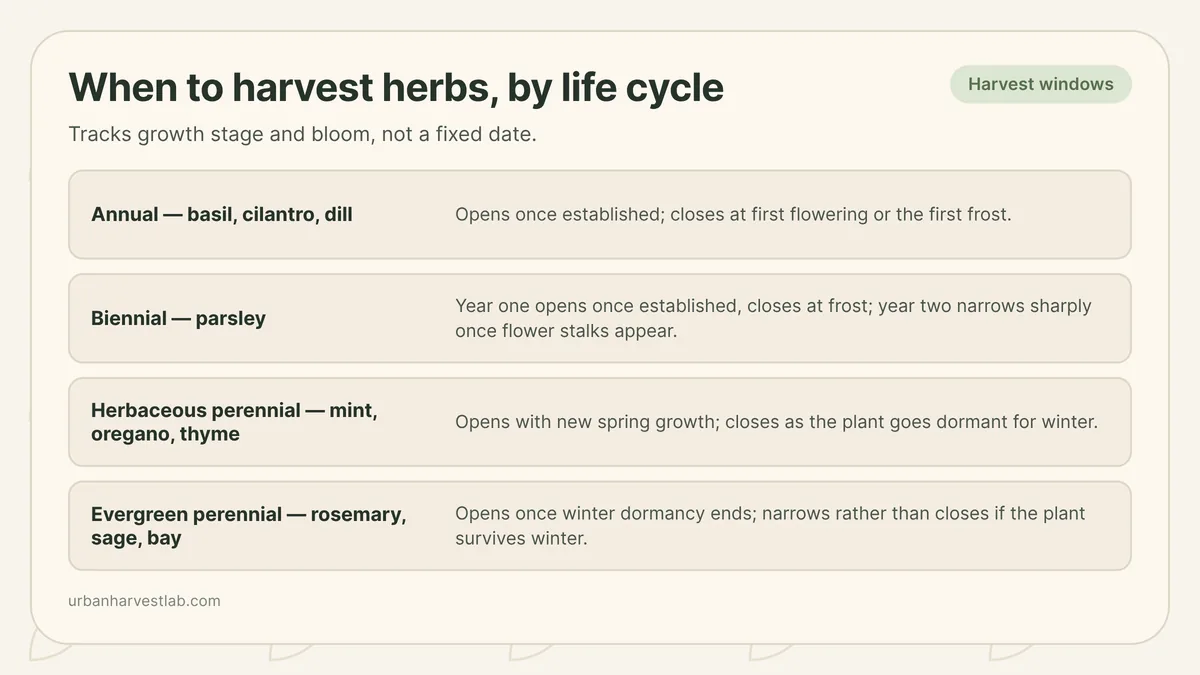
When to harvest herbs: a calendar by life cycle and season
Herb harvest timing is not one fixed date. It follows the plant's life cycle and how close it is to flowering, and that window opens and closes differently for annuals, biennials, and perennials.
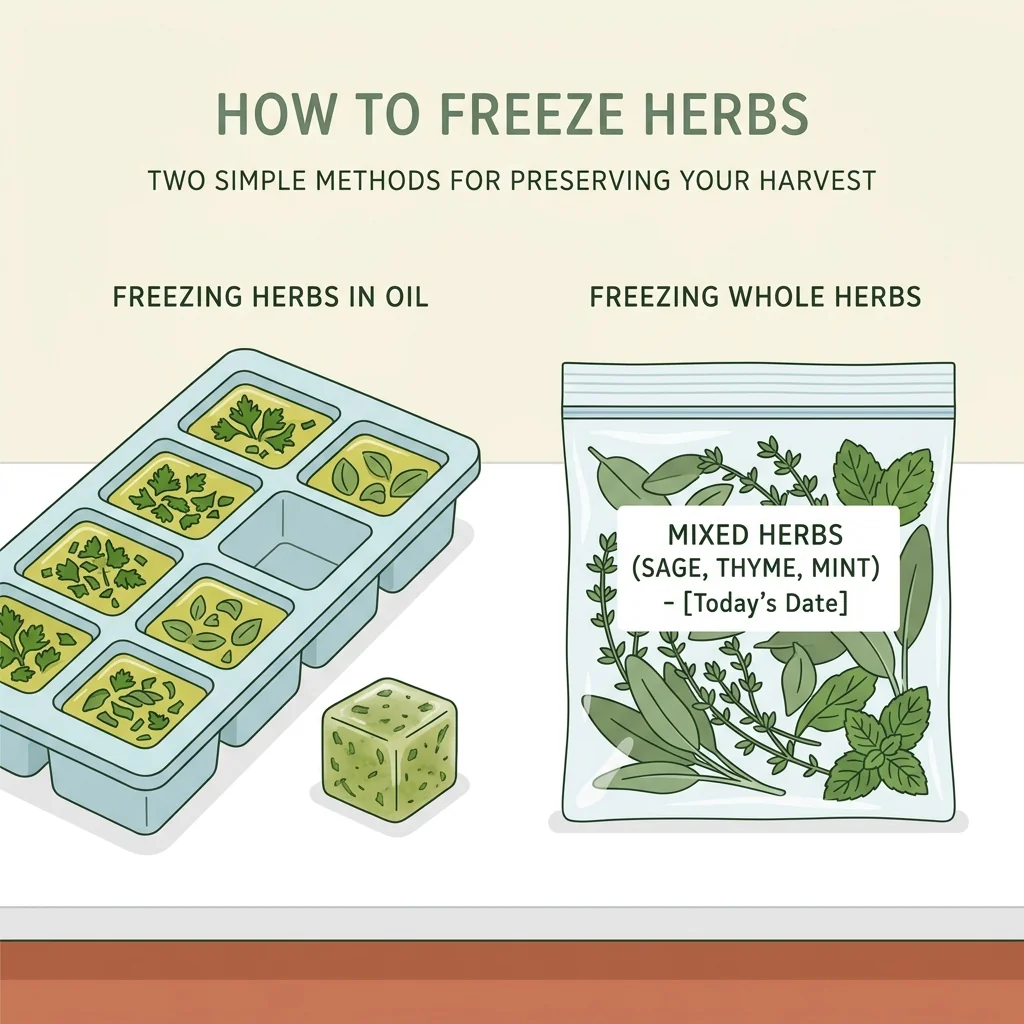
How to freeze herbs without losing flavor
Freezing beats drying for soft herbs. Chopped into oil-filled ice cube trays or frozen whole, basil and parsley keep far more of their fresh flavor.
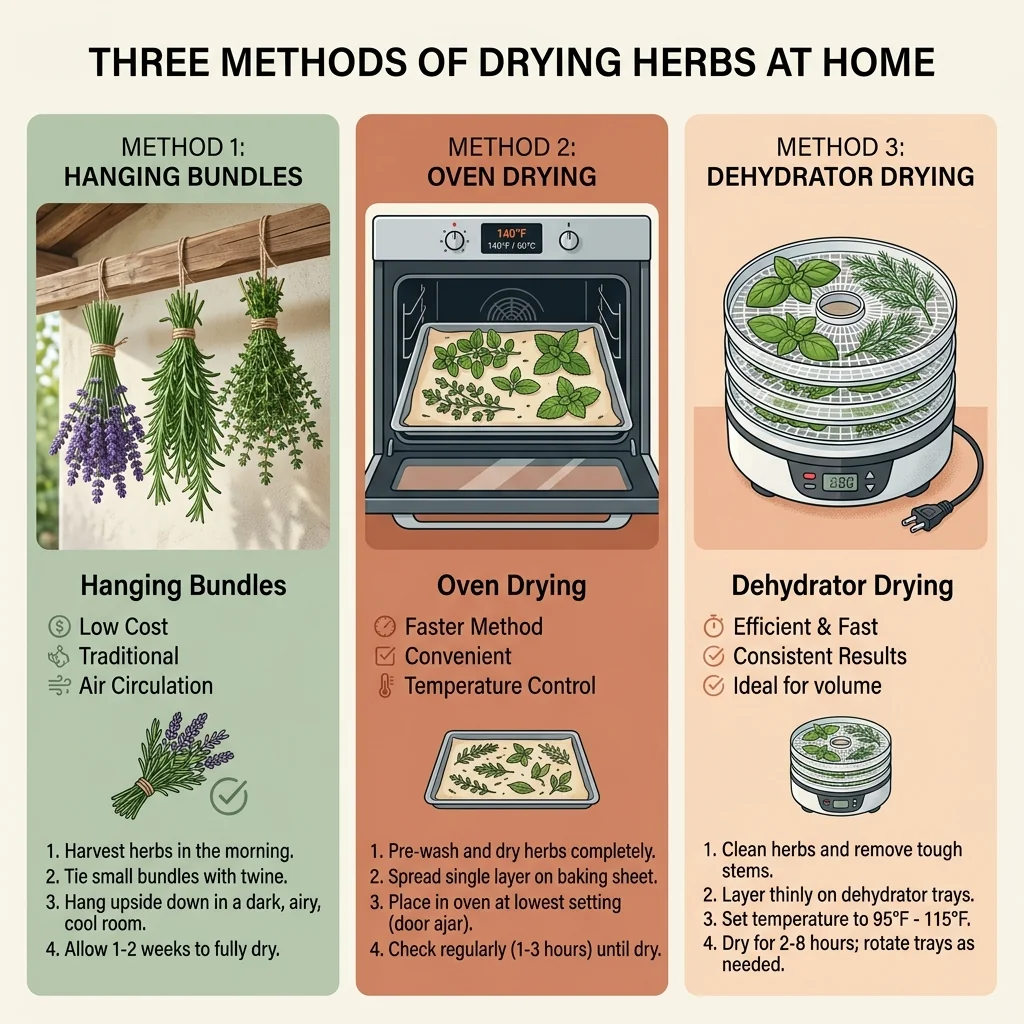
How to dry herbs at home (air, oven, dehydrator)
Drying is the best way to preserve woody herbs like rosemary, thyme, and oregano. Here are three methods, the temperatures to use, and which herbs to skip.