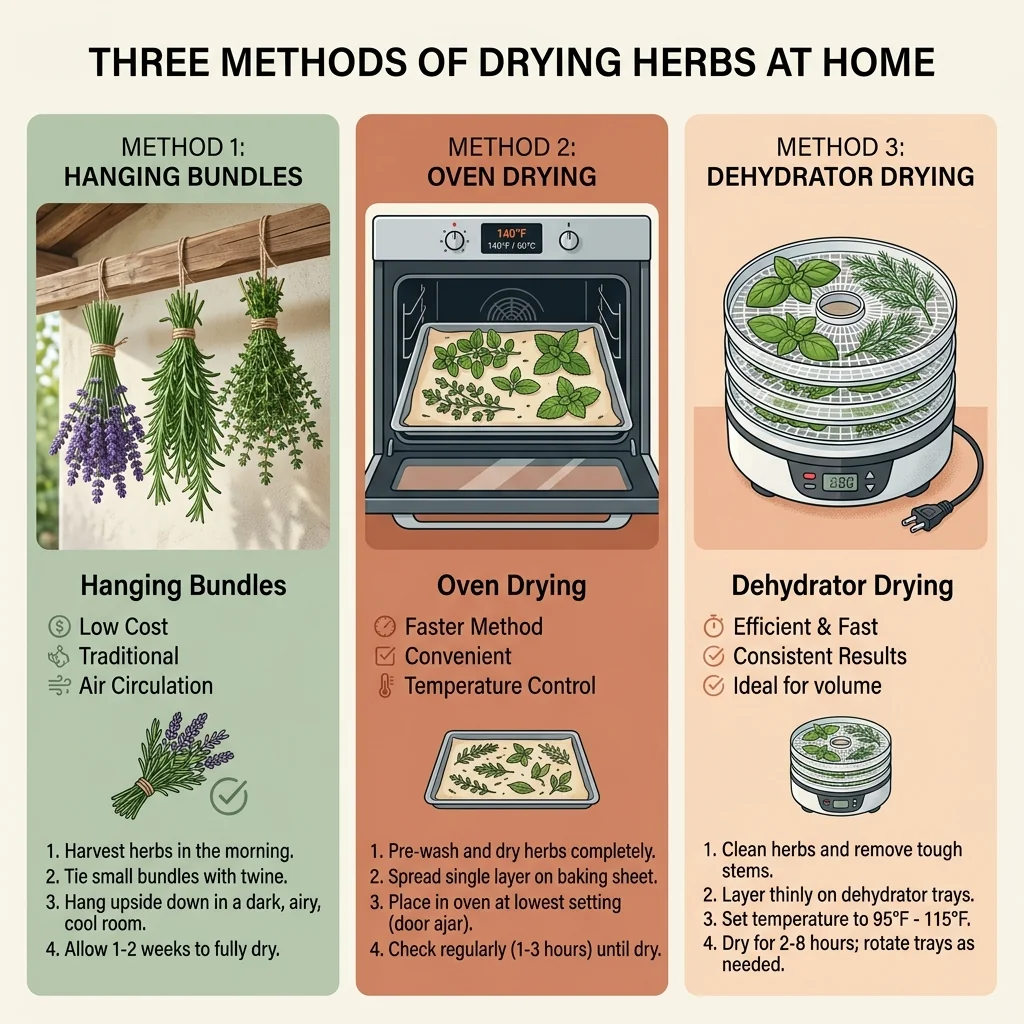
Three ways to dry herbs
| Method | Temperature / setting | Time |
|---|---|---|
| Air-drying (bundles) | Warm, dark, airy room | 1-2 weeks |
| Dehydrator | 95-115°F (35-46°C) | 2-6 hours |
| Oven | Only a safe, manufacturer-approved low setting | Check frequently; appliance-dependent |
Drying is the classic way to preserve a herb harvest, but it suits some herbs far better than others. As a quick answer: dry hardy herbs like rosemary, thyme, oregano, sage, and bay; freeze soft herbs like basil and parsley instead. Whatever method you use, dry low and slow and store airtight.
Which herbs to dry (and which not to)
- Dry these (hardy, low moisture): rosemary, thyme, oregano, sage, bay, marjoram. They dry well and keep much of their flavour.
- These can be dried but may taste different: basil, parsley, chives, cilantro, dill. Tender leaves can dry successfully, especially in a dehydrator, although freezing is often preferred for a fresher flavor in cooked dishes.
Method 1: air-drying
The simplest method and the gentlest on flavour. Gather small bundles, tie the stems, and hang them upside down in a warm, dark, airy spot (a cupboard or pantry works). Keep bundles small so air moves through them. They are ready in one to two weeks, when the leaves are brittle and crumble.
Method 2: dehydrator
The fastest reliable method. Lay leaves in a single layer and run the dehydrator at 95 to 115°F (35 to 46°C) for a few hours until crisp. Low heat protects the aromatic oils that give herbs their punch.
Method 3: oven
Use an oven only when its manual permits stable, safe operation at a sufficiently low temperature. Do not prop the door open if the manufacturer does not instruct you to do so, and never leave the appliance unattended. Because many ovens run hotter than recommended dehydrator temperatures, a dehydrator is the more controllable choice. Spread leaves in one layer and check frequently without relying on a universal finish time.
Storing dried herbs
Store dried herbs in airtight jars, away from light and heat (not above the stove). Keep the leaves whole and crush them only as you cook; whole leaves hold their aroma far longer than pre-ground ones.
Harvest at the right time
Herbs dry best when harvested just before they flower, in the morning after the dew dries. Harvesting this way also keeps plants productive, as covered in how to harvest herbs so they keep growing.
Prepare and test the herbs
Start with sound leaves and discard moldy, decayed, or animal-contaminated material. Rinse under cool running water when cleaning is needed, shake off water, and blot or spin the leaves dry. Extra surface moisture slows drying and can make a dense bundle unsafe to store.
Finished leaves should be crisp and crumble readily; stems should break rather than bend. Cool the herbs before packing because warm material can create condensation. Check the closed jar over the next day for fogging or softness. If either appears, return the batch to the dehydrator; do not leave damp herbs sealed at room temperature.
Label the container with herb and drying date. Store it in a cool, dark, dry place and inspect it before each use. Discard the whole container if you see mold or detect an off odor. Storage time is a quality question, but complete drying and protection from moisture are the safety-critical steps.
Keep the method reproducible
Record herb, leaf size, pretreatment, appliance setting, tray position, start time, and final time. Household humidity, leaf thickness, load, and appliance accuracy all affect drying, so the ranges above are checkpoints rather than guarantees. When in doubt, follow the current instructions for your dehydrator and an evidence-based home-preservation source.
Sources
If you are preserving herbs, also read
These guides cover freezing soft herbs, storing fresh basil, and harvesting so plants keep producing.
Common questions
What is the best way to dry herbs at home?
Air-dry sturdy, low-moisture herbs in small bundles or use a dehydrator, commonly at 95 to 115°F (35 to 46°C) according to official preservation guidance. Use an oven only if its manual permits safe operation at the required low temperature; never prop the door against manufacturer instructions.
Which herbs should you dry and which should you freeze?
Rosemary, thyme, oregano, sage, and bay are well suited to drying. Basil, parsley, chives, cilantro, and dill can also be dried, but freezing is often chosen when a fresher flavor is the priority.
How long do air-dried herbs take?
Usually one to two weeks, depending on humidity. They are ready when the leaves are brittle and crumble easily; any flexibility means there is still moisture left.
How do you store dried herbs?
In airtight jars, away from light and heat. Keep leaves whole and crush them only when you cook, which preserves the aroma far longer.
Related guides
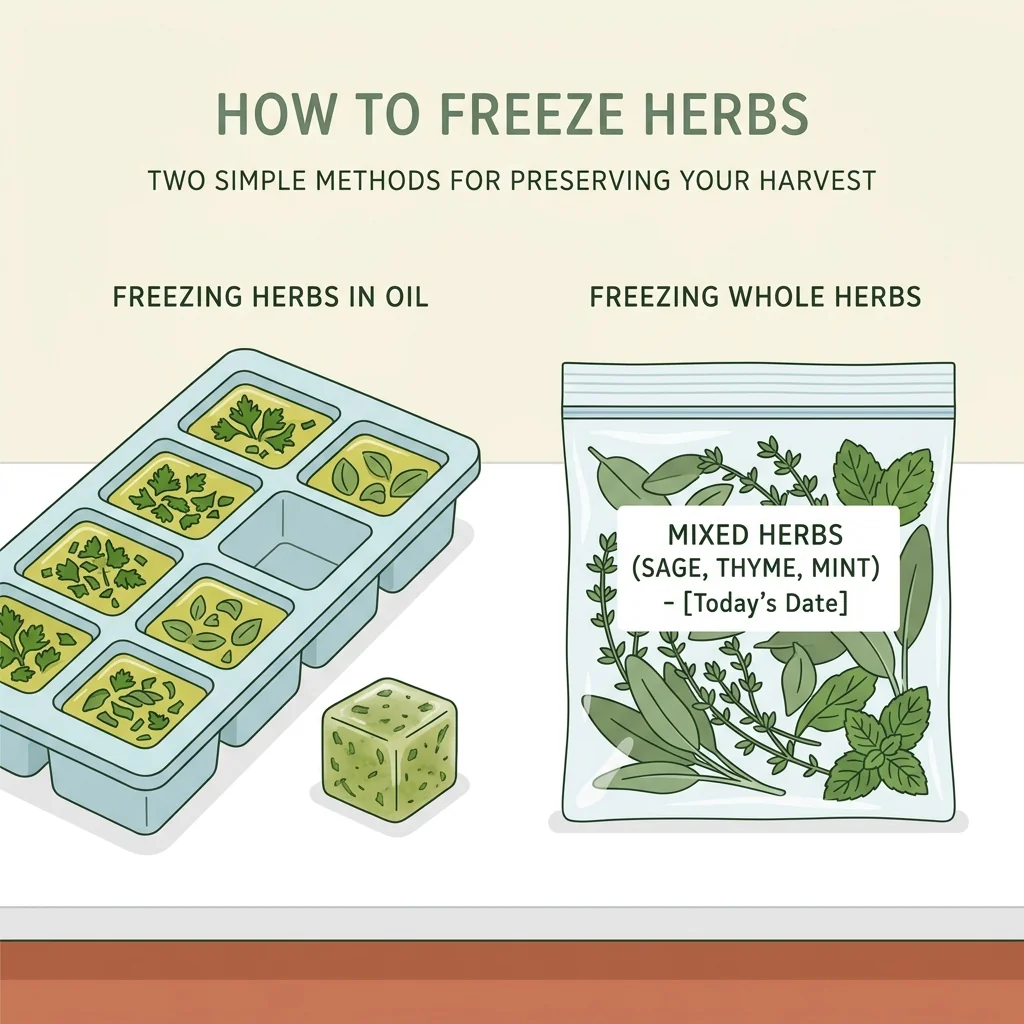
How to freeze herbs without losing flavor
Freezing beats drying for soft herbs. Chopped into oil-filled ice cube trays or frozen whole, basil and parsley keep far more of their fresh flavor.
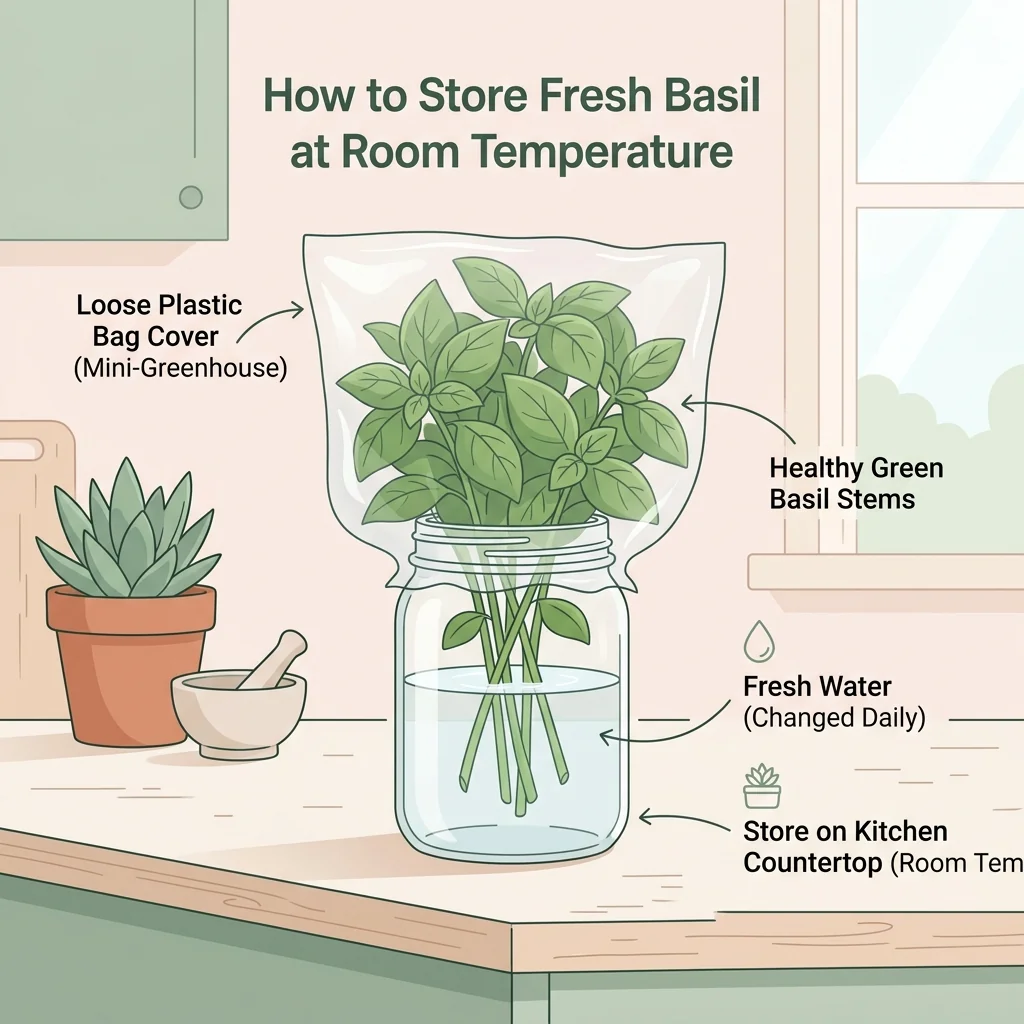
How to store fresh basil so it lasts
Basil is cold-sensitive, but storage also depends on whether it is a rooted plant, cut stems, or loose leaves. Use this test-and-inspect method.
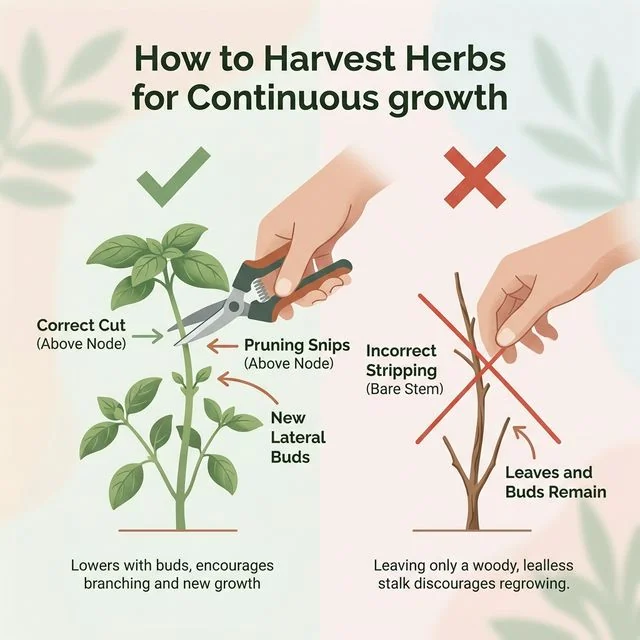
How to harvest basil, mint, parsley, and chives so they keep growing
The fastest way to destroy an indoor herb plant is to harvest it incorrectly. If you just pull random leaves off the stem, the plant will eventually go bald and die. Here is the exact botanical method to harvest your herbs so they yield endlessly.