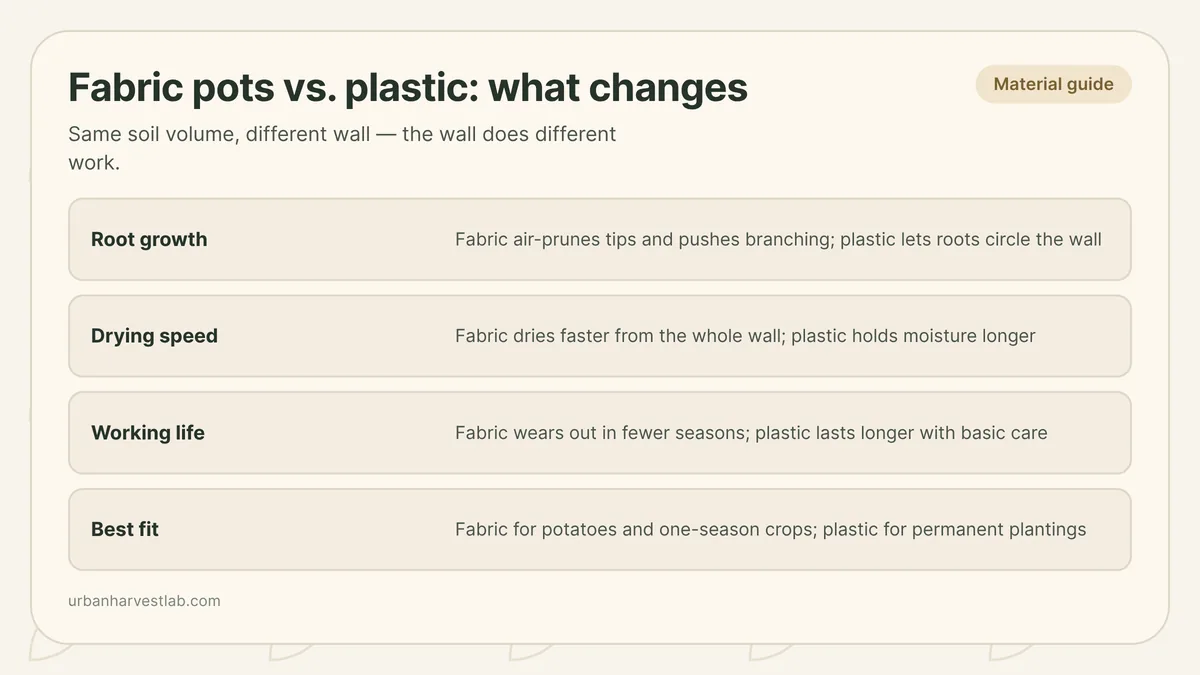
Fabric pots vs. plastic comes down to two things: what happens at the root tip, and how often you are willing to water. A fabric pot’s wall is porous enough to let air reach a growing root, which stops that root from circling the way it does inside a solid plastic wall — but the same porous wall lets moisture escape faster, so a fabric pot dries out sooner and typically needs replacing sooner than a well-made plastic one.
Both containers can hold the exact same volume of the exact same mix and still produce two different root systems and two different watering routines, because the wall is doing different work in each. For how pot volume itself scales by crop, the best containers for herbs hub covers sizing across materials — what follows is about what changes when you keep the volume the same and swap the wall.
What happens at the root tip
A plastic pot has a continuous, solid wall. A root growing outward through the mix eventually reaches that wall and has nowhere else to go, so it turns and follows the inside curve of the pot. Left in the same container long enough, more roots do the same thing, and they stack into the dense, circling mass gardeners find wrapped around the outside of a rootball when a plant has been pot-bound for a while. Once a root has set that habit, it does not uncurl itself after the plant is moved to a bigger container.
A fabric pot’s wall is not a single solid surface. It is a woven or non-woven fabric, full of continuous, tiny pores. When a root tip reaches that wall, it is exposed to air on the other side of it rather than blocked by a hard barrier. Air exposure checks the tip’s growth — a process usually called air pruning — so instead of turning and circling, the plant responds by branching further back from the wall. Fabric’s porosity is documented by University of Illinois Extension; no extension service in this research has published a fabric-versus-plastic measurement of the resulting root architecture, so treat air pruning as the mechanism growers and grow-bag manufacturers describe rather than a measured outcome.
This is the main reason growers reach for fabric bags for anything they plan to repot only once, or not at all: a plant that has spent its life air-pruning at the edge rarely needs the same aggressive root disturbance at transplant time that a tightly circled plastic-grown rootball does.
Fabric dries out faster — plan the watering around it
University of Illinois Extension groups fabric with clay and terracotta as porous materials, noting that porous containers dry out faster than non-porous ones such as plastic and glazed ceramic. The mechanism is straightforward: in a plastic pot, water can only leave through the bottom drainage holes or by evaporating off the small patch of soil exposed at the surface, so the bulk of the root zone stays moist for a long stretch between waterings. In a fabric pot, the entire side wall is also doing that job, so the mix loses water from every direction at once and the same soil volume runs dry sooner. Illinois separately notes that dark-coloured and metal containers absorb more heat, which heats the root zone and can damage plants — most fabric grow bags and most plastic nursery pots are both black, so colour and sun exposure drive root-zone heat here more than which of the two materials you pick.
That is not automatically a problem. Faster drying suits a crop that dislikes sitting wet, and it gives you an earlier, more visible warning sign — the fabric itself darkens with moisture and lightens as it dries, so you can often judge watering need by looking at the pot rather than digging a finger in. The cost is frequency: expect to check a fabric pot more often than the same-sized plastic one, particularly in a hot spot, in a smaller container, or with a fast-growing, thirsty crop. If your routine already struggles to keep up with a plastic pot’s schedule, switching the same crop into fabric adds watering load rather than removing it.
Which one lasts longer
Plastic and fabric part ways again once you look past a single season. A rigid plastic pot, kept out of hard impacts, holds its shape and its wall integrity through repeated reuse with very little maintenance; aged, UV-degraded plastic is the exception, since it can turn brittle enough to crack in a hard freeze. Fabric pots wear differently: the material abrades wherever it rubs against a hard edge, sunlight breaks down the fibers over time, and a stitched seam is a weak point that can let go under the weight of wet soil, especially once a bag has been dragged, folded for storage, and unfolded again more than a few times. A fabric bag’s failure mode is usually one of those three — worn thin at a friction point, faded and weakened by UV, or split at a seam — while a plastic pot’s is more often a crack from an impact or from age-related brittleness in cold weather.
That tradeoff is not a reason to avoid fabric outright. A bag that only needs to survive one growing season, get emptied, and get folded flat for winter storage is a very different use case from a permanent planter that stays outdoors, full, through every season of the year — and the second case is where plastic’s longer working life actually pays for itself.
Weight, shape, and tipping risk
University of Illinois Extension also notes that plastic, resin, and fiberglass containers are lighter than options like glazed ceramic, but that lighter weight makes them more prone to tipping once a plant grows tall and top-heavy, particularly outdoors in wind. Illinois does not compare fabric here, but the shapes differ: most fabric bags are wider at the base relative to their height than a tall plastic nursery pot, which keeps the center of gravity low even before you account for the fact that a soil-filled fabric bag has no rigid form to catch a gust of wind sideways. Neither material is heavy the way a glazed or terracotta pot is, so if tipping is a real concern for a tall plant in an exposed spot, weight low in the container (or a wider base) matters more than which of the two you choose.
A quick side-by-side
| Property | Fabric pot | Plastic pot |
|---|---|---|
| Root behavior at the wall | Air-pruned tip; encourages branching | No air exchange; tip follows the wall and circles |
| Drying speed | Faster — the whole wall loses moisture | Slower — water leaves mainly through drainage holes |
| Watering frequency | Higher, especially in heat or a smaller bag | Lower for the same soil volume |
| Typical working life | Fewer seasons; abrades, UV-degrades, can tear at seams | More seasons with basic care |
| Weight and stability | Light; low, wide profile resists tipping | Light; can tip once a plant is tall and top-heavy |
| Storage between seasons | Folds flat | Needs stackable, rigid storage space |
When a fabric grow bag is the better call
Fabric earns its keep on crops where you want a lot of root volume without buying a large, permanent container, and where you are comfortable repotting or replacing the bag on a seasonal cycle rather than keeping the same pot for years. Growing potatoes is the clearest example: a fabric grow bag lets you fold the sides down at planting and raise them as you hill soil around the developing tubers, then simply unzip or upend the bag at harvest instead of digging into a rigid pot. The guide to growing potatoes in grow bags covers bag size and depth for that use case directly, since the volume and hilling routine for potatoes is its own topic separate from material.
Fabric also suits anyone short on storage: emptied and rinsed, a fabric bag folds down to a fraction of the space a stack of rigid pots needs, which matters if containers spend the off-season in a closet or a shed rather than sitting outdoors.
Where plastic still wins
A permanent planting that lives in the same spot year-round is usually better served by plastic: a plant you do not intend to repot every season is not gaining much from the air-pruning effect once its root system has already filled the space it has. Plastic is also the easier material to keep clean between uses, since a rigid surface can be scrubbed and disinfected without the fabric holding onto residue in its weave.
Food safety is worth a separate check if the container is holding anything edible. University of Maryland Extension identifies recycling codes #2 (HDPE) and #5 (PP) as food-safe plastics, and advises avoiding #3 (PVC), #6 (polystyrene), and #7 (polycarbonate), a distinction that has nothing to do with fabric versus plastic and everything to do with which plastic. Most purpose-made grow bags and planting pots are not the concern here; a repurposed bucket that once held paint or chemicals is, regardless of its recycling code.
Porous unglazed clay against plastic is a related but separate material question — the plastic vs. terracotta comparison for herbs walks through the same drying-speed logic applied to a rigid clay wall instead of a woven one. And weighing a glazed ceramic pot against unglazed clay, the glazed vs. terracotta pots guide covers how a glaze changes that same porosity question again.
Sources
Comparing pot materials?
See how fabric and plastic size up against terracotta and glazed ceramic, and where a fabric grow bag earns its keep.
Common questions
Do fabric pots really stop roots from circling?
The mechanism is real (air at the wall checks the root tip), but no extension source has measured the resulting root mass against a plastic pot's. A plant left long enough in either material can still become root-bound once it has filled the space available.
Why does a fabric pot need more water than a plastic one the same size?
In practice, check a fabric pot a day or two sooner than you would the same plastic pot, and more often again in a hot, windy, or sunny spot where the extra wall area drying out compounds with heat.
Do fabric pots last as long as plastic pots?
It depends on how it is used. A fabric bag stored folded and dry indoors over winter can last for years; one left planted outdoors year-round wears at friction points, fades under UV, and can split at a seam far sooner. A well-made plastic pot kept out of hard impacts holds up with less maintenance either way.
Can I use a fabric pot for anything I would use a plastic pot for?
Mostly, but not identically. A fabric pot works well for a crop you want to repot less often, or one you are growing for a single season and can replace the bag afterward. A permanent planting that stays outdoors year-round, or a spot where you want to control exactly how often you water, still leans toward plastic.
Related guides
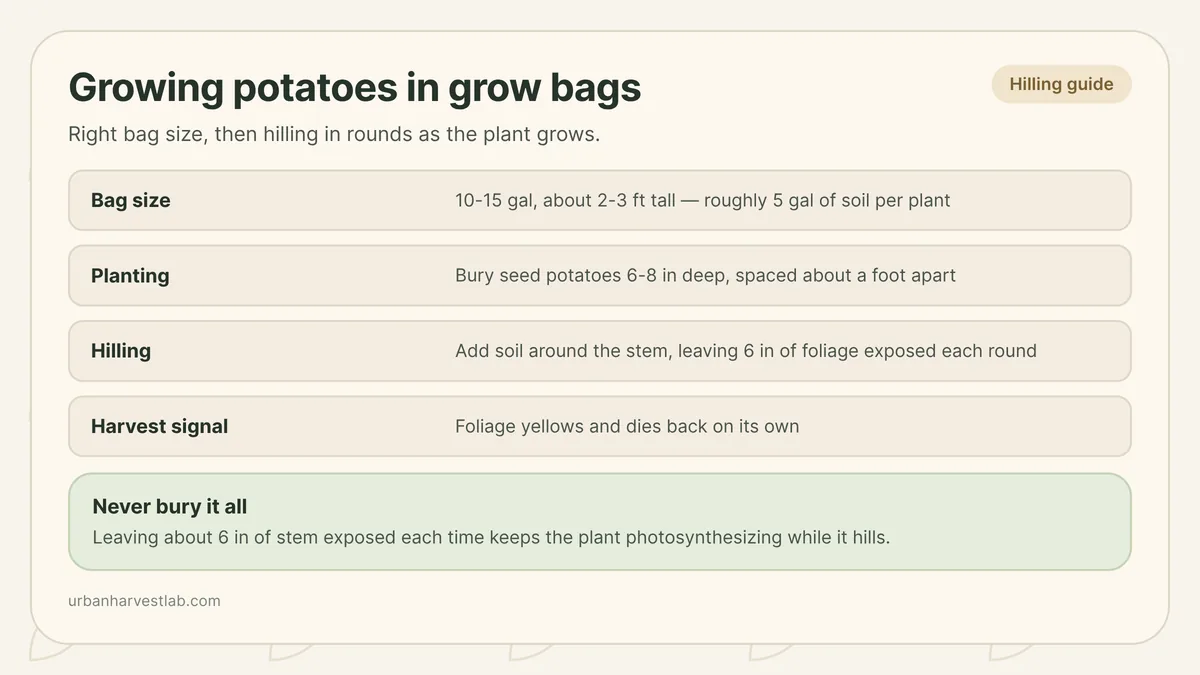
Growing potatoes in grow bags: size, planting depth, and hilling
A grow bag turns potato growing into a container job with one extra step: adding soil around the stem as the plant grows so more tubers can form along it.
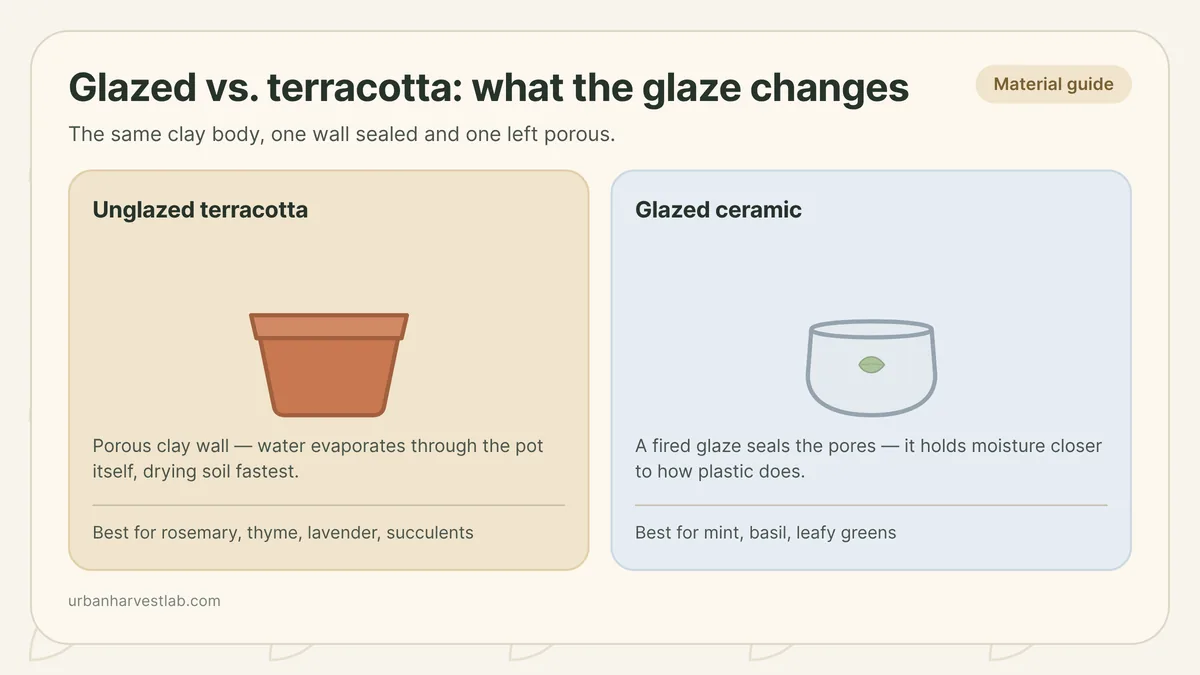
Glazed vs. terracotta pots: what the glaze actually changes
Two pots can look nearly identical and behave completely differently once you fill them with soil. The glaze on one of them is the whole difference, and it changes drying speed, weight, and winter risk all at once.
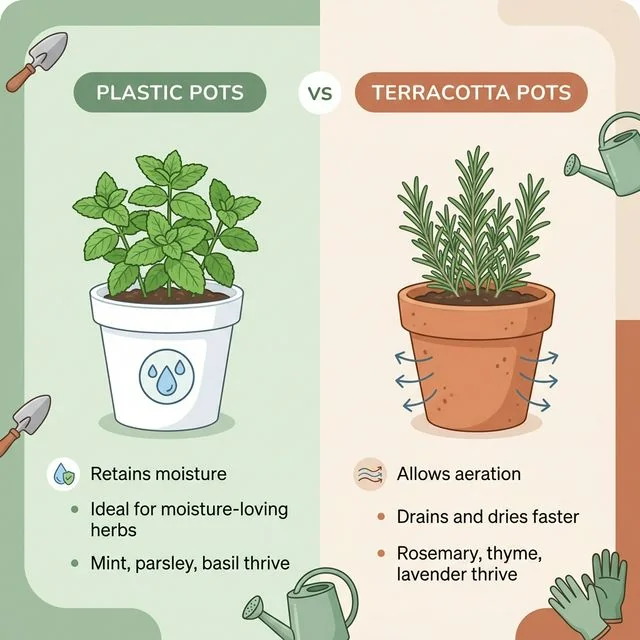
Plastic vs. terracotta pots for herbs: which makes care easier?
The material of your pot dictates how fast your soil dries out. If you put a thirsty mint plant in unglazed terracotta, you will be watering every single day. If you put rot-prone rosemary in a plastic pot, you must be extremely careful.