Glazed ceramic vs. unglazed terracotta
| Trait | Unglazed terracotta | Glazed ceramic |
|---|---|---|
| Wall | Porous fired clay, no coating | Same clay body, sealed with a fired glaze |
| How water leaves the pot | Through the wall itself, plus soil surface and drainage holes | Mainly through soil surface and drainage holes, like plastic |
| Dry-down speed | Fastest of the common materials | Slower; closer to plastic than to raw terracotta |
| Weight | Heavy | Heavy, similar or slightly more with glaze |
| Winter risk outdoors | Absorbs water into the clay, which expands as it freezes | Less water uptake into the wall, but glaze can still chip or the pot can crack if water pools inside and freezes |
| Best fit | Rosemary, thyme, oregano, sage, lavender, succulents, anything prone to rot in wet soil | Mint, basil, leafy greens, anything that wants steadier moisture between waterings |
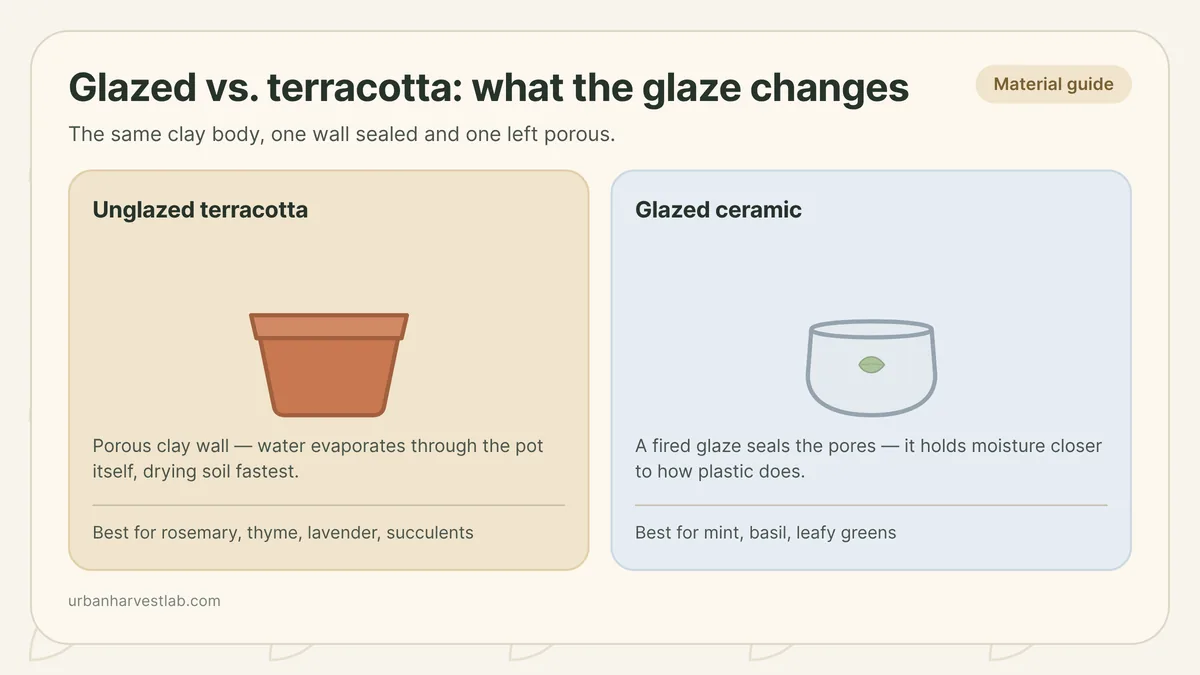
Unglazed terracotta is porous clay, so water travels through the pot wall itself and evaporates on the outside, drying the soil faster than a sealed container does. Glazed ceramic has that same clay body coated in a fired glaze that closes the pores, so it holds moisture closer to how a plastic pot does. Which one is “better” depends entirely on what you are growing in it: the same porosity that saves a rot-prone herb can leave a thirsty one gasping by afternoon.
Both are common choices once you have already ruled out a cheap plastic nursery pot, and the container guide for herbs covers that first decision if you have not made it yet. This one is about the two ceramic options specifically.
Why the same clay dries at two different speeds
Terracotta is fired clay, and unglazed terracotta stays that way: a network of tiny, connected pores runs all the way through the wall. University of Illinois Extension describes porous materials like clay and terracotta as drying out faster than non-porous ones such as plastic or glazed ceramic, because water in the soil can move outward through the pore network and evaporate directly from the pot’s outer surface. That evaporation happens continuously, all around the pot, not just from the soil surface at the top. Illinois separately notes that dark-coloured and metal containers absorb more heat, warming the root zone — worth weighing for glaze specifically, since a dark glaze compounds slower drying with a hotter root zone in full sun, while raw terracotta is light-coloured by default.
A glaze changes that by adding a thin, glassy layer fused onto the clay during a second firing. Once that coating is intact and covers the surface, the underlying clay’s porosity stops mattering for water movement, because the water has no path through to the pores it would otherwise pass through. A glazed pot loses moisture the way a plastic one does: from the exposed soil surface, and out through the drainage holes when you water past field capacity. That is a meaningfully slower process than evaporating through the entire wall.
The visible tell is the white, crusty buildup that shows up on unglazed terracotta over time, as water wicks outward and evaporates, leaving behind the mineral salts it was carrying. Glazed pots do not build up that crust in the same way, because there is no exposed porous surface for the water to travel through. Salt buildup in herb pots covers the cause and the fix in full.
When the faster drying is the point
Plants that resent constantly moist soil are the clearest case for unglazed terracotta. Rosemary, thyme, oregano, sage, and lavender are all Mediterranean natives that evolved in fast-draining, often gravelly soil, and a pot that dries between waterings mimics that background far better than one that stays damp. The plastic vs. terracotta comparison for herbs goes deeper on exactly which herbs land on which side of this line.
The same logic extends past herbs to succulents and anything you have previously lost to root rot rather than to drought. If your habit runs toward generous, frequent watering, unglazed terracotta gives you a built-in margin: excess moisture has somewhere to go besides sitting around the roots.
When it works against you
The flip side is just as real. Basil, mint, parsley, and most leafy greens want soil that stays evenly moist, and a pot that dries out through its own wall on top of normal transpiration can push the watering interval down sharply in hot weather. For those plants, glazed ceramic’s slower, plastic-like drying is the easier pattern to manage, especially if you cannot check on pots every day.
If the actual goal is stretching the interval between waterings even further, a glazed pot alone will not get you there the way a reservoir does. Self-watering containers hold a supply of water below the root zone and wick it upward as the soil dries, which is a different mechanism than simply sealing the pot wall, and worth a look if daily watering is the actual complaint.
The freeze-crack difference
The same porosity that speeds up drying also has a downside once temperatures drop below freezing. Unglazed terracotta absorbs water directly into the clay itself, and water expands as it freezes. A pot that has taken on moisture through its wall and then freezes solid outdoors is absorbing that expansion inside the material, not just inside the soil, which is why a saturated unglazed pot left outdoors through a hard freeze is at real risk.
A glaze reduces how much water the clay body takes on in the first place, since the sealed surface blocks the pore network the same way it blocks evaporation. That does not make a glazed pot immune: if the glaze is thin, chipped, or does not fully cover the pot, or if water pools inside the container and freezes as a solid mass, a glazed pot can still crack. Plastic containers do not take on water into the material at all, which is part of why they tend to be the safer default left outside through a hard winter. If you are keeping any ceramic container outdoors, sink the pot into the ground and cover it with 6 to 12 inches of mulch, per Colorado State University Extension and University of Illinois Extension, or cluster pots together with the largest on the outside, which Colorado State University Extension’s PlantTalk program recommends — either reduces how cold the root zone and the pot wall actually get.
Weight and handling
Neither ceramic option is light. Both unglazed and glazed pots are considerably heavier than plastic, resin, or fiberglass containers of the same size, which cuts both ways: University of Illinois Extension notes that the lighter materials are easier to move but more prone to tipping once a plant gets tall or top-heavy, while a heavy ceramic pot is more stable outdoors in wind but harder to shift once it is planted and watered. A large glazed pot filled with wet potting mix is one of the heavier things you will move in a season, and dragging it across a hard patio surface is a common way to chip the glaze right where you need it most, along the base.
If you expect to be moving a container seasonally, for winter storage or simply to chase the light around a balcony, weigh that against the drying-speed decision rather than treating it as an afterthought. A pot you cannot lift on your own by October is a pot that stays outdoors whether or not the material can handle it.
Fabric pots: a third porous option
Unglazed terracotta is not the only material that dries through its own wall. Fabric grow bags are porous in a different way, letting air and moisture pass through a woven or non-woven textile rather than through fired clay, and they trade weight and winter durability for a different set of tradeoffs. The fabric pots vs. plastic comparison covers where that material lands next to the two options here.
Choosing between the two
Start from the plant, not the pot. If it is Mediterranean, drought-tolerant, or something you have previously overwatered, unglazed terracotta’s faster dry-down is doing you a favor. If it is a thirsty annual herb or a leafy green that wilts the moment the soil surface dries, a glazed pot’s slower, more plastic-like behavior buys you a bigger margin between waterings. Either way, make sure the pot actually has drainage holes: some glazed and decorative ceramic pots are sold as cachepots without any, meant to hide a plain nursery pot rather than to grow in directly, and neither the glaze nor the clay underneath it substitutes for a hole at the bottom.
Sources
Comparing pot materials
More angles on the same decision: plastic against unglazed terracotta for herbs specifically, fabric against rigid plastic, and the container basics and self-watering trade-off that apply across materials.
Common questions
Is glazed ceramic the same as terracotta?
No. Glazed ceramic is often the same fired clay body as terracotta, but with a glassy coating baked onto the surface that seals the pores. That seal is what makes a glazed pot dry down more like plastic than like a raw terracotta pot.
Do glazed pots dry out as slowly as plastic?
Close to it. Both are effectively sealed at the wall, so water leaves mainly through the soil surface and any drainage holes rather than through the container material. Wall thickness, glaze coverage, pot shape, and drainage still change the details, so do not assume two sealed pots behave identically.
Why does my terracotta pot have a white crust but my glazed one does not?
That crust is mineral salt left behind as water wicks through the porous clay wall and evaporates on the outside. A glazed pot has no exposed porous surface for that water to travel through, so it does not develop the same buildup. Salt buildup in herb pots explains the cause and the fix in full.
Can I leave glazed pots outside all winter?
A sealed glaze is less likely to take on water the way raw terracotta does, but any ceramic pot can still crack if water pools inside it and freezes, or if the glaze is thin or already chipped. Emptying standing water and moving vulnerable pots somewhere sheltered is safer than assuming the glaze makes a pot freeze-proof.
Related guides
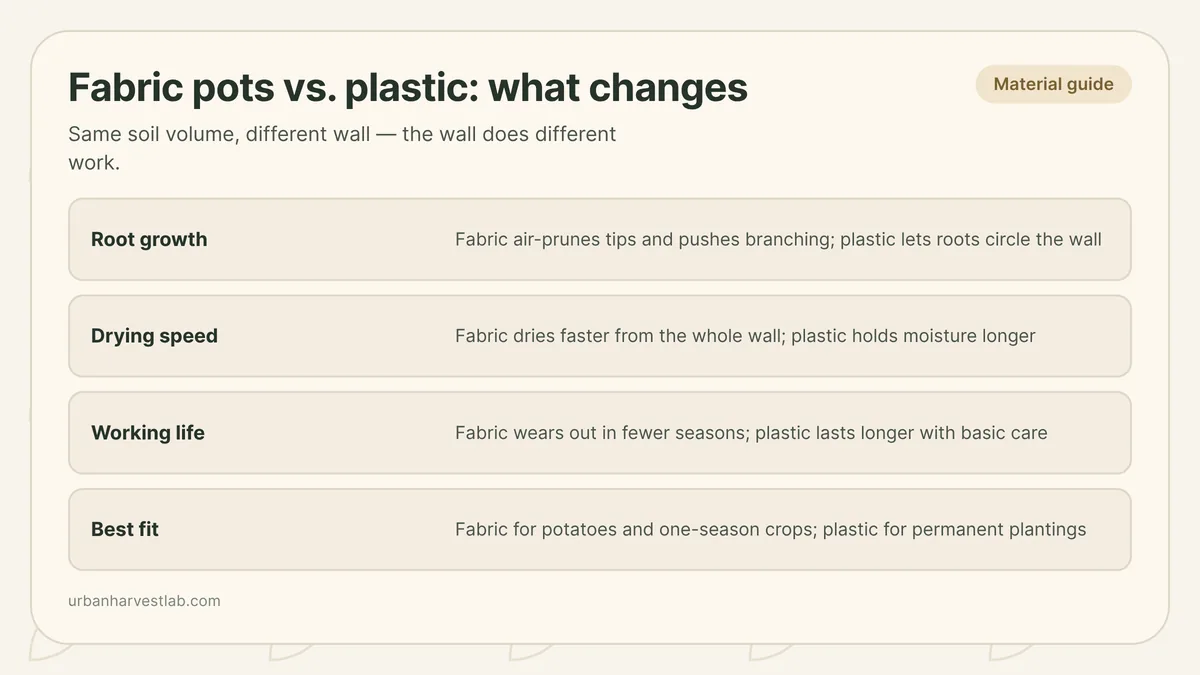
Fabric pots vs. plastic: what the wall material actually changes
A fabric pot and a plastic pot can hold the same soil volume and still grow different root systems, because the wall itself does different work.
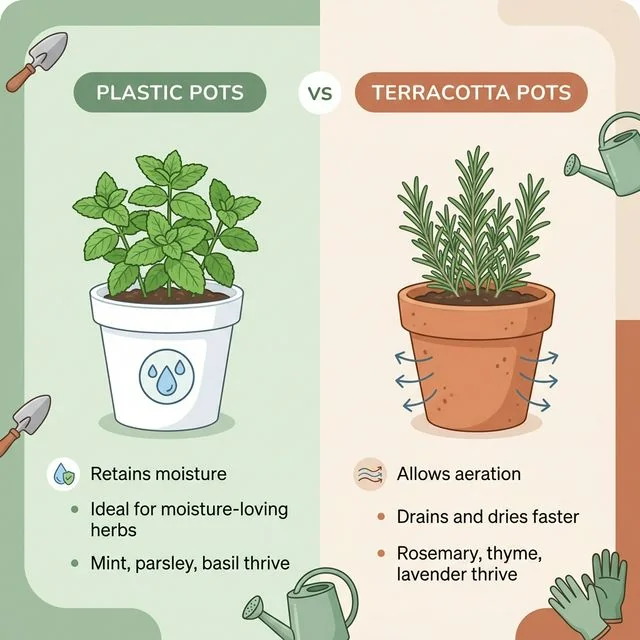
Plastic vs. terracotta pots for herbs: which makes care easier?
The material of your pot dictates how fast your soil dries out. If you put a thirsty mint plant in unglazed terracotta, you will be watering every single day. If you put rot-prone rosemary in a plastic pot, you must be extremely careful.
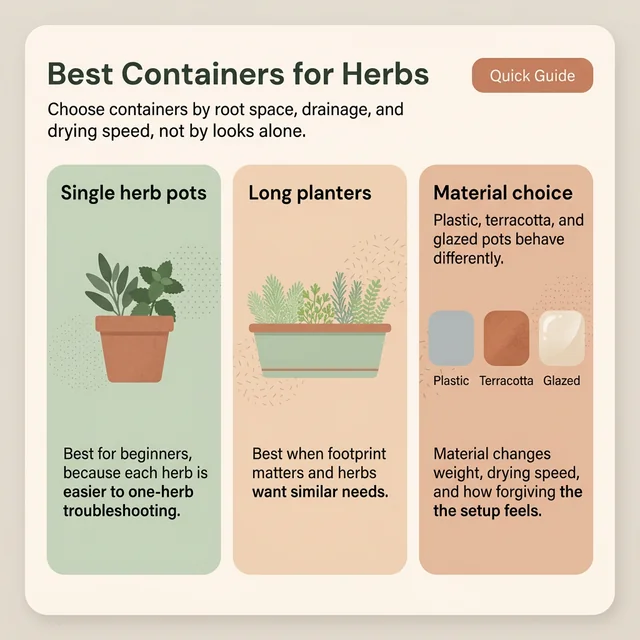
Best containers for herbs: drainage, pot size, and materials that work
A practical guide to herb containers that explains which pots work best, why drainage matters, and how material changes the way containers dry.