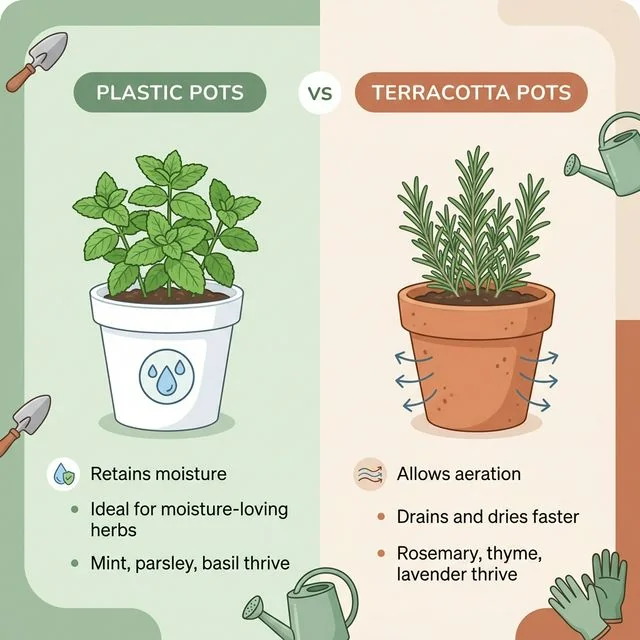
Plastic vs. Terracotta Herb Guide
| Material Characteristic | Unglazed Terracotta | Plastic (or Glazed Ceramic) |
|---|---|---|
| Water Retention | Very Low (Dries out fast) | Very High (Retains moisture for days) |
| Weight | Heavy (Hard to knock over) | Lightweight (Easy to move) |
| Root aeration | Can dry faster through the wall; mix pore space still matters | Depends on drainage, mix structure and moisture |
| Temperature | Cooler (Evaporative cooling protects roots from heat) | Warmer (Traps heat, especially dark plastic in the sun) |
| Best Herbs | Rosemary, Thyme, Oregano, Sage, Lavender | Basil, Mint, Parsley, Cilantro, Chives |
When browsing a garden center, beginners almost exclusively choose their pots based on aesthetics. A sleek white plastic pot might match a modern kitchen, while a weathered terracotta pot looks beautiful on a rustic patio.
However, as outlined in our primary Best Containers for Herbs Hub, the material of a pot is not just a decorative choice—it is a critical mechanical decision. The walls of your container actively intervene in your watering schedule.
Material changes dry-down, weight, and heat behavior, but it does not dictate success by itself. Pot volume, drainage, growing mix, roots, weather, and watering technique remain decisive.
Editorial note: Retailer links here are untracked shopping references; Urban Harvest Lab does not currently receive a commission from them. They are examples for comparison, and no specific pot was hands-on tested.
The Physics of Plastic Pots
Whether you buy a heavy-duty resin planter or a cheap nursery cup, all plastic and fiberglass pots share one mechanical feature: They are completely impermeable.
When you water a plastic pot, the water has only three ways out:
- It is consumed by the plant’s roots.
- It drains out the bottom holes.
- It slowly evaporates upward out of the tiny surface area of soil exposed to the air.
Because the sides of the pot do not breathe, the soil in the middle and bottom of the container stays moist for an incredibly long time.
Why Use Plastic?
Plastic is lightweight, often inexpensive, and easy to clean. It can be a useful choice for higher-water-use, fast-growing herbs when the container has open drainage.
Herbs like Basil, Mint, Parsley, and Cilantro have massive root systems that rapidly suck up water to support their large, leafy canopies. If these plants dry out completely, they wilt dramatically (see Why Is My Basil Wilting Indoors?).
A plastic pot may slow dry-down, but no fixed 5-to-7-day interval is safe across homes. Check moisture below the surface and pot weight before watering. Use an appropriate, well-aerated mix such as those discussed in Best Potting Mix for Potted Herbs.
Glazed ceramic often loses much of unglazed clay’s side-wall evaporation, but glaze coverage, drainage, shape, and any inner pot still matter.
The Mechanics of Unglazed Terracotta
Unglazed terracotta (fired clay) is one of the oldest planting materials in human history. Mechanically, it is diametrically opposed to plastic.
Unglazed terracotta is porous and can move moisture toward the outer wall, where it evaporates. Root-zone oxygen still depends on pore space in the mix, water content, roots, and open drainage; the wall does not pull a guaranteed oxygen supply through saturated media.
Why Use Terracotta?
Terracotta is heavy, fragile, and aesthetically classic. Its faster dry-down can suit drought-tolerant Mediterranean herbs in some homes and climates.
Herbs such as rosemary, thyme, oregano, and sage commonly prefer a well-drained root zone. Prolonged saturation raises root-disease risk, but there is no universal three-day death threshold.
Unglazed terracotta can shorten dry-down after watering, but it cannot compensate for a blocked hole, oversized container, or dense mix. After heavy rain, verify drainage and subsurface moisture rather than treating the material as overwatering insurance.
Additionally, the evaporation of water through the clay creates an evaporative cooling effect, which keeps the root zone significantly cooler than a black plastic pot baking in the afternoon sun.
The Tragic Mismatches
Understanding these mechanics makes it incredibly easy to diagnose why certain plants fail for beginners.
Fast-drying mint: A small terracotta pot in summer may dry too quickly for mint, but the result depends on exposure, wind, pot size, and mix. A larger plastic or self-watering pot may reduce watering frequency after a monitored trial.
Slow-drying rosemary: A small rosemary transplant in a very large, dense, plastic-contained root zone may remain wet too long. Rosemary can grow in plastic when volume, mix, and drainage are managed; material alone is not the diagnosis.
Do not fight the nature of your herbs. Learn how often they want to drink, and buy a house built of the right material to support them.
Get the right pot for each herb
Match the material to the herb and watering gets far easier:
- Thirsty herbs (basil, mint, parsley): a plastic or self-watering pot holds moisture so you are not watering twice a day. Browse plastic and self-watering herb pots on Amazon.
- Mediterranean herbs (rosemary, thyme, oregano, sage): unglazed terracotta may speed drying, but it does not prevent rot. Browse unglazed terracotta pots on Amazon.
For specific picks by feature, see best containers for herbs and best self-watering pots for herbs.
How this comparison was made
This is a material-and-care comparison based on extension guidance and observable container behavior, not a laboratory product test. Compare drainage, wet weight, wall porosity, stability, saucer fit, and the measured time your own mix takes to dry. Recheck after a seasonal or location change.
Sources
Considering other container types?
Explore our specialized guides on sub-irrigated planters and how pot depth affects different plant root systems.
Common questions
Why is there a white, crusty buildup on the outside of my terracotta pot?
That is called efflorescence. As the porous clay wicks moisture out of the soil and evaporates it, it leaves behind the heavy mineral salts contained in your fertilizer and tap water. It is harmless, but you can scrub it off with a stiff brush and vinegar if you dislike the look.
Can I paint my terracotta pots?
Paint or sealant can reduce side-wall evaporation, but the result depends on product, coverage, pot, and drainage. Use a coating labeled for the material and intended location, and do not assume the finished pot behaves exactly like plastic.
Are glazed ceramic pots the same as terracotta?
Glaze commonly reduces side-wall evaporation, but coverage, wall thickness, drainage holes, shape, and any inner nursery pot still affect dry-down. A glazed pot should not be assumed to match every plastic container exactly.
Related guides
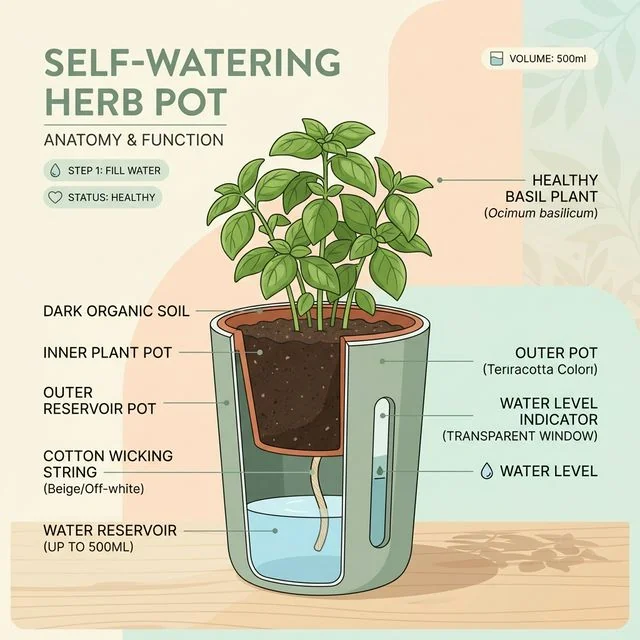
Self-watering pots for herbs: worth it or more trouble?
Self-watering pots sound like the holy grail for busy gardeners. While they are fantastic for moisture-loving herbs like mint, they can quickly turn into a swamp of rotting roots for drought-tolerant plants like rosemary.
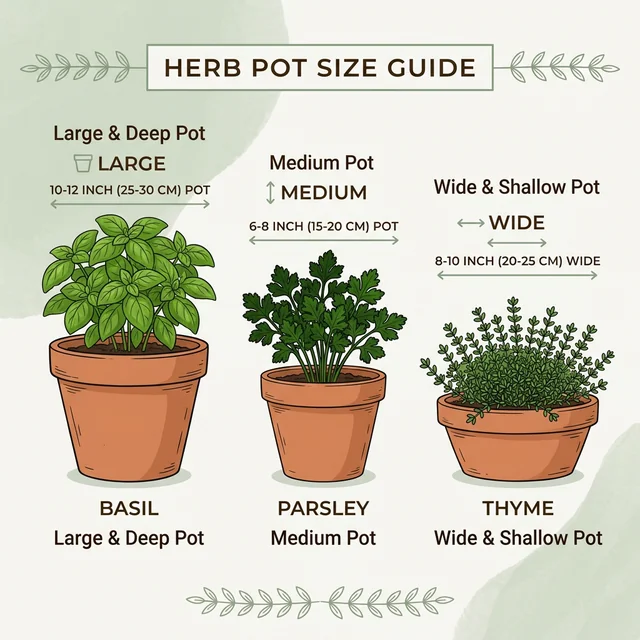
Herb pot size chart: basil, mint, parsley, thyme & chives
A practical herb pot size guide for the most common kitchen herbs, with simple size ranges that make container growing easier to read and maintain.
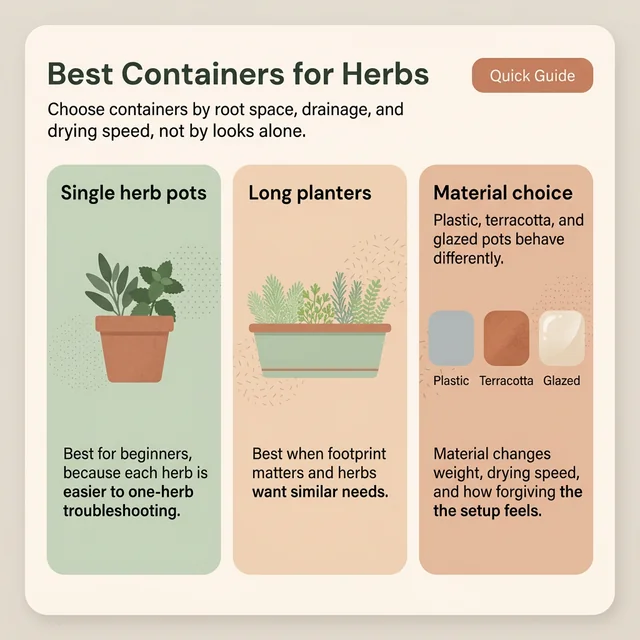
Best containers for herbs: drainage, pot size, and materials that work
A practical guide to herb containers that explains which pots work best, why drainage matters, and how material changes the way containers dry.