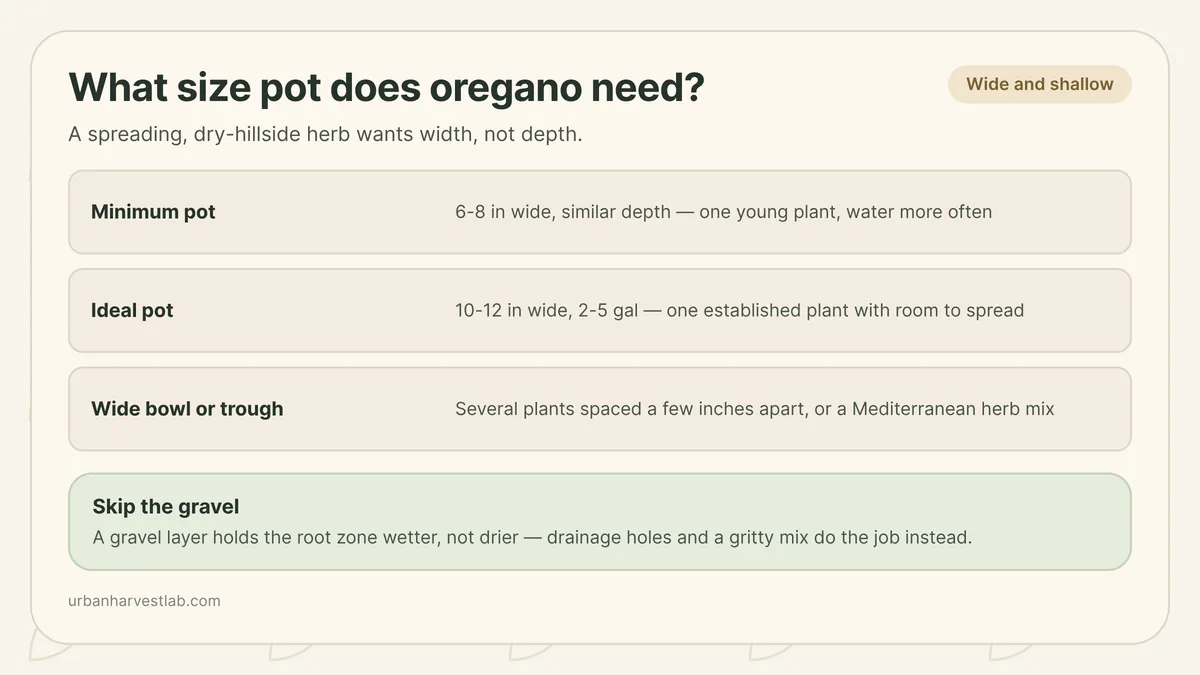
Oregano pot size at a glance
| Container | Size | Best for |
|---|---|---|
| Minimum pot | 6-8 in wide, similar depth | One young plant, expect more frequent watering |
| Ideal pot | 10-12 in wide, 2-5 gal | One established plant with room to spread |
| Wide bowl or trough | Plants spaced several inches apart | Several oregano plants, or a Mediterranean herb mix |
Oregano wants width more than it wants depth. A pot around 10 to 12 inches wide, holding roughly 2 to 5 gallons of mix, suits one established plant far better than a deep, narrow container of the same volume. University of Maryland Extension groups oregano with the smaller culinary herbs — basil, cilantro, thyme, mint, tarragon, and marjoram — that grow well in that 2 to 5 gallon range, and its place on the main herb pot size chart sits closer to thyme than to a taprooted herb like parsley.
A spreading, dry-hillside root system sets the shape
Oregano grows the way it does on a rocky Mediterranean slope: low, wide, and rooted just under the surface rather than driving straight down. In a garden bed it spreads by short rhizomes and self-layers where a stem touches soil, gradually widening its own footprint. A pot should copy that shape. Illinois Extension distinguishes shorter “azalea” pots, which it says suit plants with minimal roots such as herbs, from taller “standard” pots, which it treats as the safer default for vegetables — oregano’s shallow, spreading habit is squarely the azalea case. Depth mostly goes to waste on a plant that uses the top few inches of soil and the space around the crown, while width gives the spreading habit somewhere to go before it needs dividing. That is the opposite of a carrot-shaped taproot herb, where the container has to go deep to avoid cramping the root.
The volume that works, translated into a real pot
University of Maryland Extension’s container list is the one source with a figure specific to oregano, and it puts the herb in a 2 to 5 gallon bucket alongside the other compact, well-behaved kitchen herbs. Texas A&M AgriLife Extension gives a broader, undifferentiated rule for the same category — pots from 6 to 10 inches are satisfactory for parsley and herbs in general — which lands at the low end of Maryland’s range rather than contradicting it. Using the University of Illinois Extension’s own diameter-to-volume conversion for straight-sided round pots, roughly 10 inches across holds about 3 gallons and 12 inches holds about 5, which is where the 2 to 5 gallon figure turns into a shopping decision: a 10 to 12 inch pot covers the range comfortably for one plant, while a 6 to 8 inch pot works as a starter size that will need watering more often.
Width over depth, in practice
Two pots holding the identical volume of mix do not treat oregano the same way. A tall, narrow 2-gallon pot puts most of that soil below where the roots ever reach. With no roots down there pulling moisture out, that lower layer only loses water the slow way, seeping up and off the surface, so it sits wet for weeks after the top has dried and the plant has already asked for its next watering. A wide, shallow-to-medium bowl holding the same 2 gallons spreads that soil across more surface area, so it dries at a rate that matches how the plant actually grows. Pick the bowl or the wide trough over the tall cylinder whenever both are on offer at the same volume.
Drainage decides more than the exact dimensions
Oregano’s dry-between-waterings routine only works if the pot lets water leave. Texas A&M AgriLife Extension’s 2009 container-gardening publication still recommends a layer of coarse gravel at the bottom of the pot to improve drainage, and that recommendation is common enough to show up on plenty of garden shelves. Washington State University Extension’s research on layered growing media contradicts it directly: water will not move from a fine potting mix into a coarser material underneath it until the finer layer is fully saturated, so a gravel layer creates a perched water table that holds extra moisture right where the roots sit, rather than draining it away. For a herb this prone to root rot in soggy soil, the fix is drainage holes and a uniform, gritty mix run straight to the bottom of the pot — not a gravel layer that works against the goal it is meant to serve.
Terracotta earns its keep with a dry-loving herb
Container material changes how fast that mix dries between waterings. University of Illinois Extension notes that porous materials such as terracotta lose moisture faster than non-porous plastic or glazed ceramic, while dark-colored and metal containers absorb more heat and can warm the root zone. For a plant that wants to dry out and stay on the cooler, leaner side, that faster-drying, breathable wall is an advantage rather than a drawback — the opposite of the calculation for a thirsty herb like basil. A sub-irrigated or self-watering pot works against that same dry interval, keeping the mix more consistently moist than oregano wants; self-watering pots for herbs covers the trade-off in full. The full material trade-offs, including weight and tipping risk with a wide, top-heavy bowl, are in plastic vs. terracotta pots for herbs.
One wide bowl for the whole dry-herb crew
Because oregano lands in the same 2 to 5 gallon, wide-and-shallow range as its usual companions, it can share a container with thyme, which wants the same wide, shallow shape in a smaller pot — 6 to 8 inches across is enough for one thyme plant — and young rosemary, before rosemary needs its own larger container as it matures. A shared bowl works for a season or two, but oregano’s rhizomes and self-layering will crowd its neighbors, so plan on lifting and dividing it rather than treating the arrangement as permanent; herbs you can plant together covers matching moisture needs across a shared planter in full.
Sizing up as a hardy perennial ages in its pot
Oregano is a perennial that can live in the same container for years, and a container root system is far less cold-hardy than one growing in open ground, since a pot has none of the soil’s buffering mass against a hard freeze. The University of Illinois Extension’s general rule for any perennial left in a pot outdoors over winter is to treat it as one to two hardiness zones less cold-hardy than it would be in the ground, and to insulate accordingly by burying the container to its rim or mulching six to twelve inches deep over the crown. Colorado State University Extension adds clustering pots together against a wall as a further way to buffer the cold. A wider, larger pot holds a bigger buffer of insulating soil around the roots than a small one, which is one more reason a mature plant benefits from moving up in size rather than staying in the pot it started in. Moist mix also freezes more slowly than dry mix, so winter soil moisture is worth checking even while the plant is dormant.
Signs it is time to move up
An oregano plant that dries out within a day of watering, that has stopped putting out new stems, or that is visibly crowding the rim and rooting into the drainage holes has outgrown its container. Move it into the next size up using how to repot herbs without slowing growth, and once the pot is right, the day-to-day question becomes when to water it — covered in how often to water oregano.
Sources
- University of Maryland Extension: Growing Vegetables in Containers and Salad Tables
- University of Illinois Extension: How to Grow Fruits, Vegetables, Herbs in Container Gardens
- Texas A&M AgriLife Extension E-545: Vegetable Gardening in Containers
- Washington State University Extension: The Myth of Drainage Material in Container Plantings
- University of Illinois Extension: Overwintering Potted Plants
- Colorado State University Extension, PlantTalk Colorado — Overwintering Container Plants
Pairing oregano's pot with the rest of its care
These guides connect oregano's container size to its watering rhythm, its material choice, and what to do once it fills the pot.
Common questions
What size pot does oregano need?
University of Maryland Extension puts oregano in its 2 to 5 gallon smaller-herb group, and on Illinois Extension's diameter-to-volume table that is roughly a 10 to 12 inch round pot. Width matters more than extra depth for its spreading, shallow root habit.
Does oregano need a deep pot?
No. Oregano spreads outward more than it grows downward, so a wide, shallow-to-medium pot suits it better than a deep, narrow one. Extra depth mostly adds soil the roots do not reach, and that unused layer stays wet longer, which raises the risk of rot.
Can several oregano plants share one pot?
Yes, and a wide planter is a good way to do it. Give each plant several inches of its own space, and consider combining oregano with thyme or rosemary, which want the same size range and the same free-draining, dry-between-waterings routine.
Does adding gravel to the bottom of an oregano pot improve drainage?
No. Washington State University Extension research on layered container media shows that a gravel layer creates a perched water table, holding the root zone wetter rather than drier than potting mix run straight to the bottom of the pot. Drainage holes and a coarse, fast-draining mix do the job gravel cannot.
Related guides
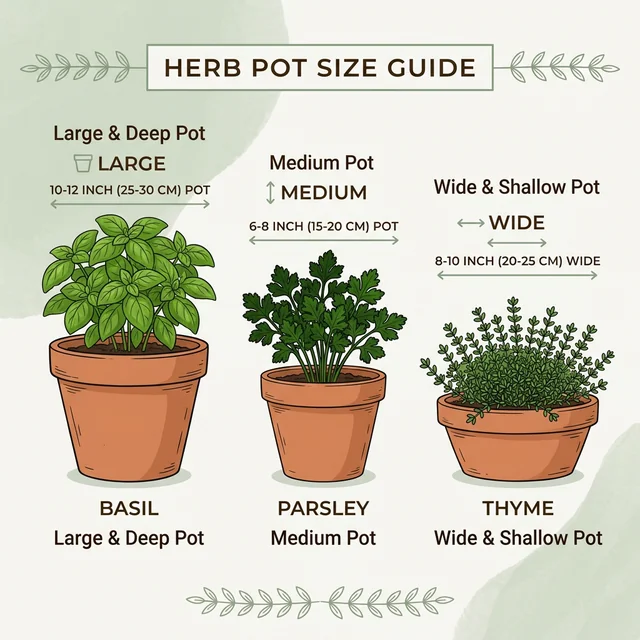
Herb pot size chart: basil, mint, parsley, thyme & chives
A practical herb pot size guide for the most common kitchen herbs, with simple size ranges that make container growing easier to read and maintain.
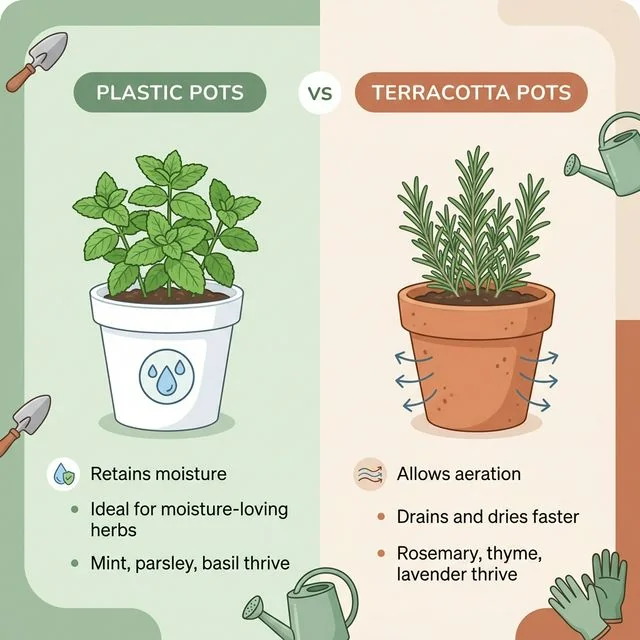
Plastic vs. terracotta pots for herbs: which makes care easier?
The material of your pot dictates how fast your soil dries out. If you put a thirsty mint plant in unglazed terracotta, you will be watering every single day. If you put rot-prone rosemary in a plastic pot, you must be extremely careful.
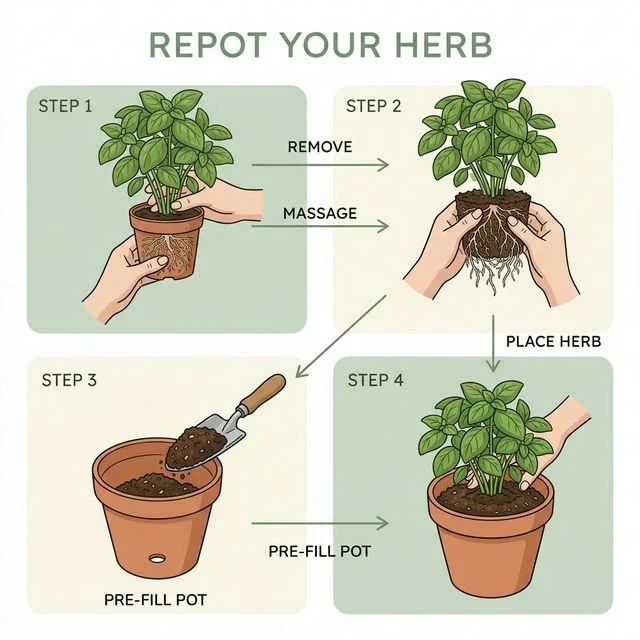
How to repot herbs without slowing growth
Moving an herb to a bigger pot should trigger a massive growth spurt. If your plants wilt and drop leaves after repotting, you are suffering from transplant shock. Here is how to upgrade your container without stressing the roots.