Example fixture types to compare before buying a herb grow light
| Product | Power | Coverage | Best for | Notes |
|---|---|---|---|---|
| Compact bar light | 20 to 30 W | One narrow shelf | Kitchen herbs and seedlings | Low visual bulk and easy mounting |
| Small panel LED | 35 to 60 W | One tray or medium shelf | Dense herb canopies | Useful when coverage is square rather than linear |
| Clip-on spotlight | 10 to 20 W | One or two pots | Supplemental lighting | Works best when you only need to help a single plant cluster |
| Integrated countertop kit light | Varies | Built into the unit | Hydroponic herbs | Convenient, but coverage is limited to the kit footprint |
Buying a grow light for herbs is less about chasing the most powerful fixture and more about choosing a light that matches the way you actually want to grow. Many disappointing setups come from buying a fixture that is technically impressive but physically wrong for the shelf, countertop, or room.
Start with the footprint
Before comparing brands, measure the growing area. Is it one shelf, one countertop hydroponic unit, or a dedicated rack? A narrow shelf often needs a bar-style fixture more than a square panel. A cluster of individual pots may be better served by a compact panel or a pair of small fixtures rather than one oversized lamp.
Think about crop density
Sparse herb setups need different coverage than dense basil or lettuce plantings. If the canopy will be packed tightly, evenness matters. Uneven light leads to inconsistent growth and a constant need to rotate pots.
Match the light to the routine
A light that is hard to mount, visually intrusive, or annoying to live with often becomes an abandoned light. Editorially, that matters. The best option on paper is not the best option if it makes a kitchen or living space difficult to use.
Questions that matter more than product hype
Ask:
- How large is the real growing footprint?
- Does the fixture shape match that footprint?
- How high can the light realistically hang?
- Will the setup be used for seedlings, leafy herbs, or mixed crops?
Those answers should drive the recommendation before affiliate links or product rankings appear.
Use this guide with the rest of the topic
Pair this guide with how many hours grow lights should run for herbs and grow light distance for seedlings so you are not making a fixture decision in isolation.
If you are setting up an indoor herb system, also read
These guides connect lighting decisions to herb care, hydroponic systems, and common stress symptoms.
Common questions
Do herbs need full-spectrum grow lights?
Full-spectrum LEDs are generally the most practical choice because they are easy to live with indoors and suitable for a broad range of herb crops.
Is a stronger grow light always better for herbs?
No. Oversized fixtures can create glare, stress, and wasted power if the growing footprint is small.
Related guides
How Many Hours Should Grow Lights Run for Herbs?
A longer light schedule is not always a better one. Herbs need enough daily light, but they also benefit from a stable dark period and realistic fixture placement.
Countertop Hydroponic Herbs for Beginners: What to Buy and What to Ignore
Countertop hydroponic systems can work very well for herbs, but only if you treat them as small growing systems rather than decorative appliances.
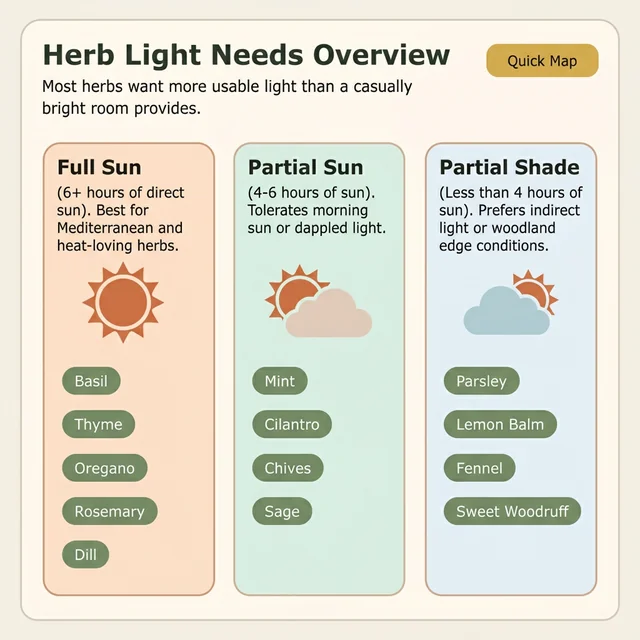
How Much Light Do Herbs Need? Realistic Sun and Grow Light Rules
A practical guide to herb light needs for real homes, with clear rules for sunny windows, balconies, dimmer apartments, and beginner grow light setups.