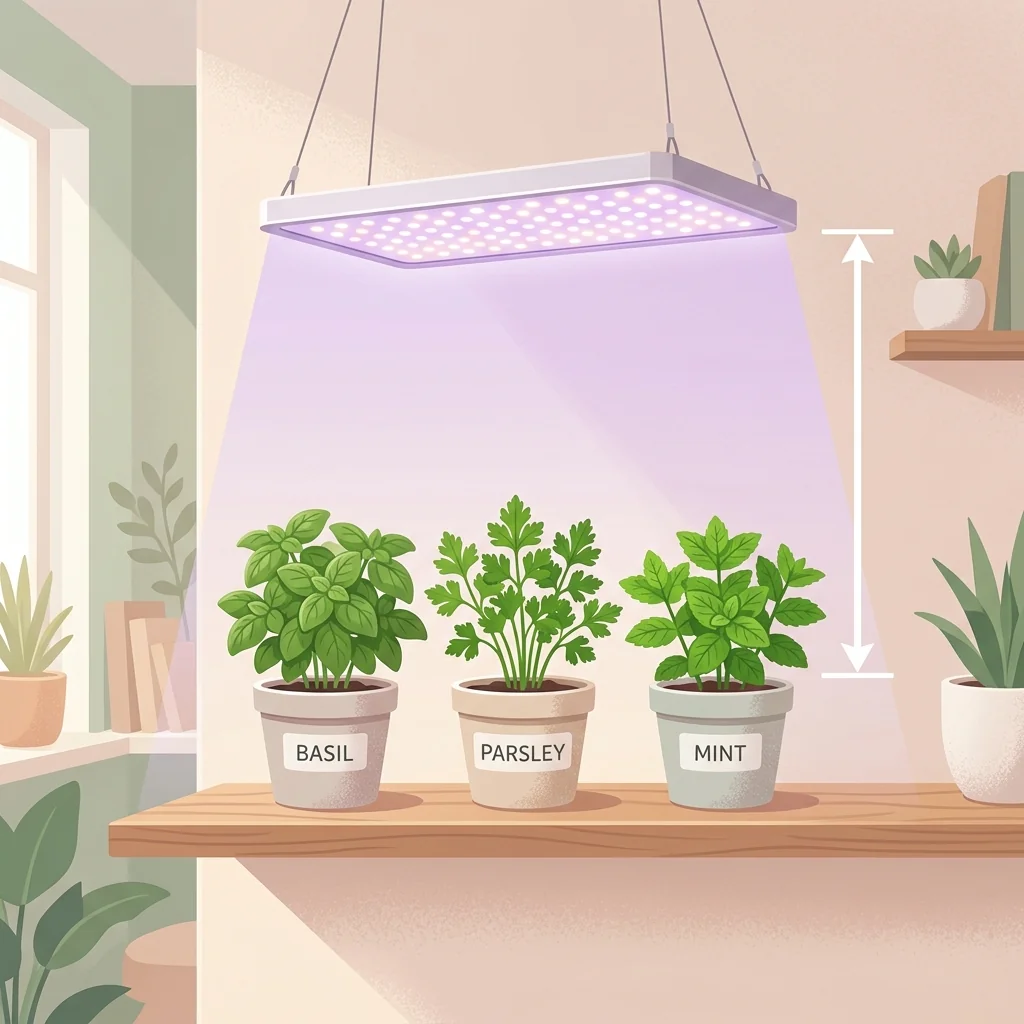
Indoor herb grow-light setup at a glance
| Setting | Target | Note |
|---|---|---|
| Light type | Full-spectrum LED | Efficient, low heat, replaces sun |
| Daily hours | 12-16 hours | Use a timer; herbs need darkness too |
| Distance (small LED) | 6-12 in above plants | Raise as plants grow |
| Sign of too little light | Leggy, pale, stretching | Closer, longer, or stronger light |
An electric grow light can support herbs without a useful window, but only if it supplies adequate intensity across the planted footprint. “Full spectrum,” a fixed distance, and a long timer are not a guarantee. Start with the crop, measure the shelf, and verify new growth. The broader requirement is covered in how much light do herbs need.
Step 1: Choose the light
A white LED can be practical at home, but fixture geometry matters as much as spectrum wording. A bar suits a row; a panel suits a deeper rectangle; a clip-on is credible only for the small area it actually covers. Prefer published input power, a PPFD map at a stated height, safe certification, and a replaceable timer. Selection logic is covered in best grow lights for herbs.
Step 2: Set the distance
Begin at the manufacturer’s crop recommendation or mapped height. Measure from the top of the canopy and sample centre plus corners. Too little delivered light can produce stretching; excessive intensity or heat can bleach, curl, or dry new growth. Raise the fixture as herbs grow so the measured plane remains consistent. Use grow light distance for seedlings for the full measurement workflow.
Step 3: Run it on a timer
Use a consistent light/dark schedule. Twelve to sixteen hours is a common starting window for many indoor herb setups, not a universal target. Intensity and duration combine into DLI, so adding hours is not equivalent to fixing a dark corner. A plug-in timer makes the chosen schedule repeatable. See how many hours should grow lights run for herbs.
Step 4: Fix leggy growth early
Stretched growth often means that delivered light is insufficient, especially when plants at the footprint edge lean inward. Check the map before lowering the fixture. High temperature, crowding, delayed pruning, and crop genetics can also lengthen internodes. Make one change and judge the next set of leaves; old stems will not become shorter.
Build the rest of the system
Light cannot rescue a saturated root zone or an undersized pot. Use draining containers, a structural potting mix, and enough space between canopies for air movement. Group herbs by height so one tall basil does not force the fixture too far from low thyme.
Place water below the electrical connection and route cables with a drip loop. Keep drivers ventilated and respect mounting clearances. Do not suspend a fixture from improvised adhesive above edible plants.
Commission the setup for seven days
Record these before changing anything:
| Item | What to record | Failure signal |
|---|---|---|
| Footprint | Planted length and width | Edge plants outside mapped coverage |
| Fixture | Actual watts, height, dimmer | Marketing watt used instead of input power |
| Schedule | On/off time | Timer resets or light leaks into dark period |
| Canopy | Centre and corner readings | Large hotspot or dark edge |
| Environment | Day/night temperature | Heat rises after fixture installation |
| Plant | Same-angle photo of new growth | New leaves stretch, bleach, or curl |
After seven days, adjust the limiting variable only. If centre plants are compact and edges stretch, coverage is the problem. If every plant stretches, intensity or daily dose may be low. If foliage bleaches only below the centre, investigate a hotspot before extending hours.
Budget energy and replacement
Calculate energy from actual watts: watts ÷ 1,000 × hours × days. A 40 W fixture at 14 hours for 30 days uses 16.8 kWh before fans or controllers. Keep the receipt, warranty, and one baseline measurement so declining output or a failed timer can be diagnosed rather than guessed.
No window? No problem
A windowless shelf can grow herbs when the installed light, temperature, airflow, root zone, and schedule meet the crop’s needs. It is a controlled system, not proof that any LED replaces any window. For crop selection in low natural light, see can herbs grow indoors without direct sunlight.
Sources and further reading
Dial in your grow-light setup with these
These guides cover how many hours to run, how far to hang the light, and which light to buy.
Common questions
Can you grow herbs indoors with just a grow light?
Yes, if the fixture delivers the crop's required intensity and daily light across the whole canopy. A “full-spectrum” label or bright-looking room is not enough evidence by itself.
How many hours a day should a grow light be on for herbs?
About 12 to 16 hours a day. Herbs need a daily dark period, so do not run lights 24 hours. A plug-in timer makes this automatic and is the single best upgrade for consistent indoor herbs.
How far should a grow light be from herbs?
Use the manufacturer's map or clearance as a starting point and measure from canopy height. Fixture optics and power vary too much for one universal LED distance.
Why are my herbs leggy under a grow light?
Leggy, stretched growth means the light is too weak, too far away, or on too few hours a day. Move the light closer, increase the daily hours toward 16, or use a stronger full-spectrum light.
Related guides
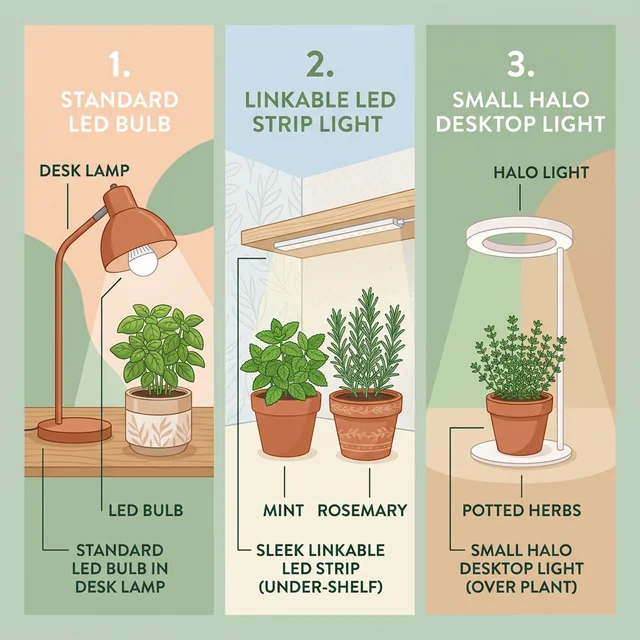
Best grow lights for herbs: what actually matters before you buy
Most indoor herbs don't need a massive, expensive grow tent light. Here is how to choose the right LED bulbs, strips, or halos for your real apartment setup.
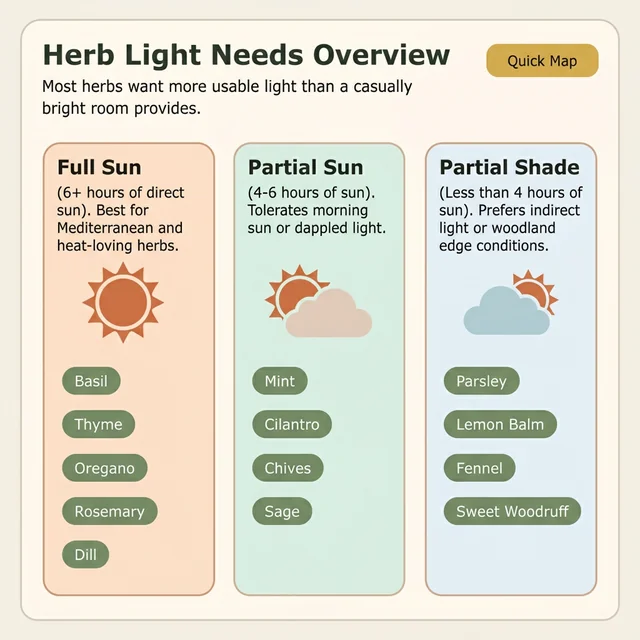
How much light do herbs need? 6+ hours of sun
A practical guide to how much light herbs need, including a quick answer for direct sun, indoor windows, and grow light setups that actually support growth.
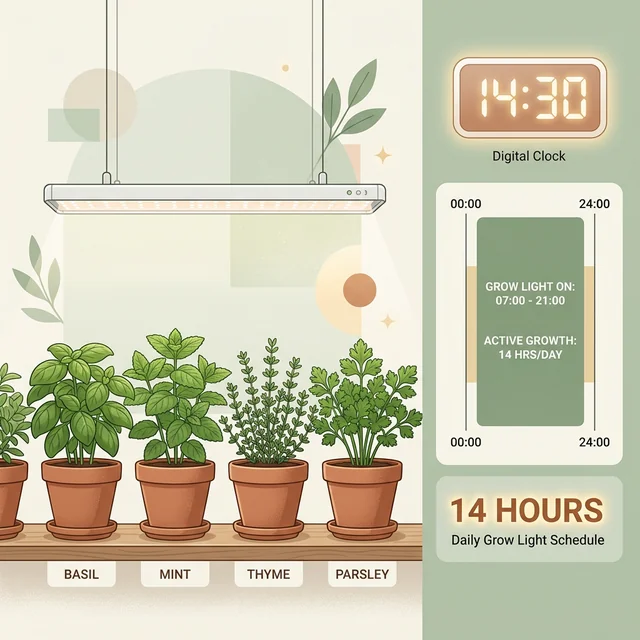
How many hours should grow lights run for herbs? 12-16
Most herb grow lights should run about 12 to 16 hours per day, but intensity, distance, and a stable dark period matter as much as the timer itself.