Troubleshoot the system before you change the inputs.
Symptoms
- A layer of bubbles builds up on the reservoir surface instead of popping as it forms
- Foam collects around the air stone, return pipe or pump outlet
- The foam is tan or brown, or sits with a slick or an odor
- Foam appeared right after a clean, a refill or a new bottle of nutrients
Possible causes
- Dissolved organic matter from dead or sloughing roots, plant debris or accumulated root exudates
- Detergent or soap left on the tank, lid, tubing or air stone after cleaning
- A nutrient product that foams on its own when shaken or agitated
- Strong agitation from a splashing return line, a tall drop, or an oversized air stone
Quick fixes
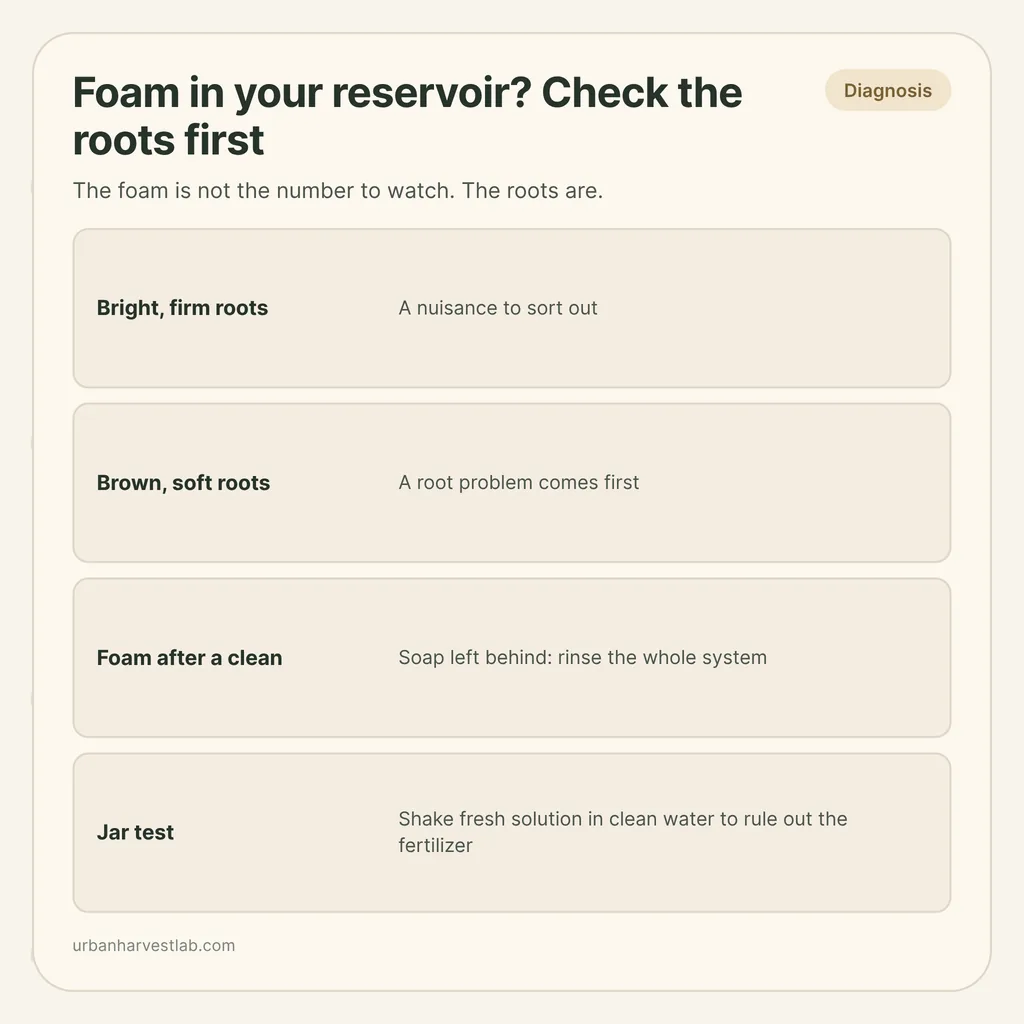
- Inspect the roots first: bright and firm is a nuisance, brown and soft needs the root rot checks
- Mix a small fresh batch in a clean jar, shake it, and see whether it foams without any plant matter present
- Remove floating debris and dead roots, then replace the solution if the roots are damaged
- Rinse tank, tubing and air stone thoroughly after cleaning so no soap film remains
- Lower the drop height or the splash where the return line meets the surface
Foam that stays on a hydroponic reservoir means something in the water is lowering its surface tension while air is being mixed in. EPA Tasmania names two sources of foam in water: organic matter released by decay, and detergents. In a reservoir those mean dead roots and debris, or soap left from cleaning. A fertilizer that foams on its own is worth ruling out with a jar test. The foam is not the number to watch. The roots are.
Start with the roots. Lift one net pot and look. If the roots are bright, firm and odorless, the foam is a nuisance to sort out. If they are brown, soft or slimy, foam is a side effect of a bigger problem, and the hydroponic root rot guide is where to go next. For staining that looks alarming but is not rot, see brown roots in hydroponics.
Why water foams
The extension guides that cover small hydroponic systems, among them Cornell, University of Kentucky, Virginia Tech, University of New Hampshire and University of Florida, describe foam rafts, foam boards and foam plugs.
A government account of why water foams in general is the closest explanation. EPA Tasmania says the release of dissolved organic matter from the decay of plant and animal material is the primary source of naturally occurring foams, and that the compounds lower the surface tension of water the way soap does. It lists the natural surfactants as fatty acids from plant lipids, lignins from wood and bits of protein. It adds that detergents, shampoos and weedkillers can also produce foam, and that foam from man-made compounds tends to stay white and break down quickly, while natural foams turn brownish as they age. The agency is describing rivers, lakes and the sea, where flow or wind does the agitating. A reservoir with an air stone or a splashing return line has its own agitation, so the same logic is a reasonable starting point. It is a starting point, not a measured result for hydroponics.
Where the organic matter in a reservoir comes from
Plant roots release organic compounds into the solution around them. A 2006 peer-reviewed study in Scientia Horticulturae, from Seoul National University, grew lettuce in reused nutrient solution for 90 days and found that roots exude numerous organic acids, which accumulated in the solution. In the same study, pure organic acids at 25 to 200 micromolar inhibited lettuce growth, and the authors called them phytotoxic. The paper did not measure foam, and it should not be read as proof that foam signals that buildup. It does show that an old, reused solution is not just water and fertilizer.
Add to that anything physically in the tank: sloughing root tissue, fallen leaves, seed husks, dead algae. Dying roots are decaying plant material, which is the source EPA Tasmania names first, so foam plus brown roots deserves a root diagnosis first. Old solution has had more time to collect all of it. Oklahoma State University Extension suggests replacing the nutrient solution completely every two weeks, and University of Kentucky describes a full or partial replacement every 3 to 4 weeks. Both intervals are for crop health, not foam, but a reservoir that is overdue is the likeliest place for debris to build up. The routine is in when to change hydroponic nutrient solution.
The other two causes to rule out
Soap left behind. University of Minnesota Extension’s sequence for cleaning is to wash with detergent and warm water, rinse with potable water, then sanitize, and after a full change-out it says to scrub the container with soap and water and rinse well. Foam that appears right after a clean points to an incomplete rinse. Check the places a rinse misses: the underside of the lid, the inside of tubing, pump housings and the air stone. How to clean a small hydroponic system walks through the routine.
A fertilizer that foams by itself. This is the cheapest test and it removes the plant from the question. Mix a small batch of the same fertilizer into clean water in a jar at the label strength, put the lid on, shake, and watch. If it foams with no roots, no tank and no air stone involved, the reservoir is not the problem. The label or the manufacturer is where to ask about that product.
A short sequence that sorts it out
- Check the roots and the smell. Brown, soft or sour means treat it as a root problem first.
- Skim floating debris and pull any dead root material.
- Run the jar test with fresh solution and clean water.
- If the foam appeared after cleaning, drain, rinse the whole system well and refill. White foam soon after a clean fits detergent residue.
- If the solution is old or the roots are damaged, replace it.
Do not reach for an additive while any of that is unresolved. Lowering the drop or splash where the return line meets the surface reduces agitation without stopping aeration, and roots in standing solution depend on dissolved oxygen, as dissolved oxygen in small systems explains.
Foam versus algae
Green tint, slime on walls and clogged lines mean light is reaching the water, and that is a different problem with its own fix in the algae guide. Foam without any green is the case covered here. The two can show up together in a neglected tank, and the cleaning that answers one helps the other.
Sources
- EPA Tasmania, Foam and Foam Lines
- Lee, Lee and Lee (2006), Accumulation of phytotoxic organic acids in reused nutrient solution during hydroponic cultivation of lettuce, Scientia Horticulturae
- Oklahoma State University Extension, Electrical Conductivity and pH Guide for Hydroponics
- University of Kentucky CCD, Hydroponic Lettuce Production in Controlled Environments
- University of Minnesota Extension, Small-scale hydroponics
Reservoir health and root checks
Foam is a symptom. These guides cover the conditions and routines that decide whether it matters.
Common questions
Why is there foam in my hydroponic reservoir?
Persistent foam needs two things: a compound that lowers the surface tension of the water, and agitation that mixes in air. EPA Tasmania names decaying plant and animal matter and man-made detergents as the sources of foam in natural waters. In a reservoir that translates to dead root tissue, accumulated root exudates, or soap left on a tank after cleaning. A fertilizer that foams by itself is another possibility to rule out with a jar test.
Is foam in a hydroponic system bad for plants?
The foam itself is not the measurement to trust. EPA Tasmania describes naturally occurring foam in waterways as generally non-toxic and short-lived, but that finding is about rivers and lakes, not hydroponics. Look at the roots instead: bright, firm roots with no odor are a different situation from brown, soft roots.
Can I add antifoam or hydrogen peroxide to stop it?
University of Minnesota Extension treats hydrogen peroxide products as between-crop sanitizers dosed by their label, not as something to add to a tank with plants in it. Find the cause, rinse out any detergent, and replace the solution.
Related guides
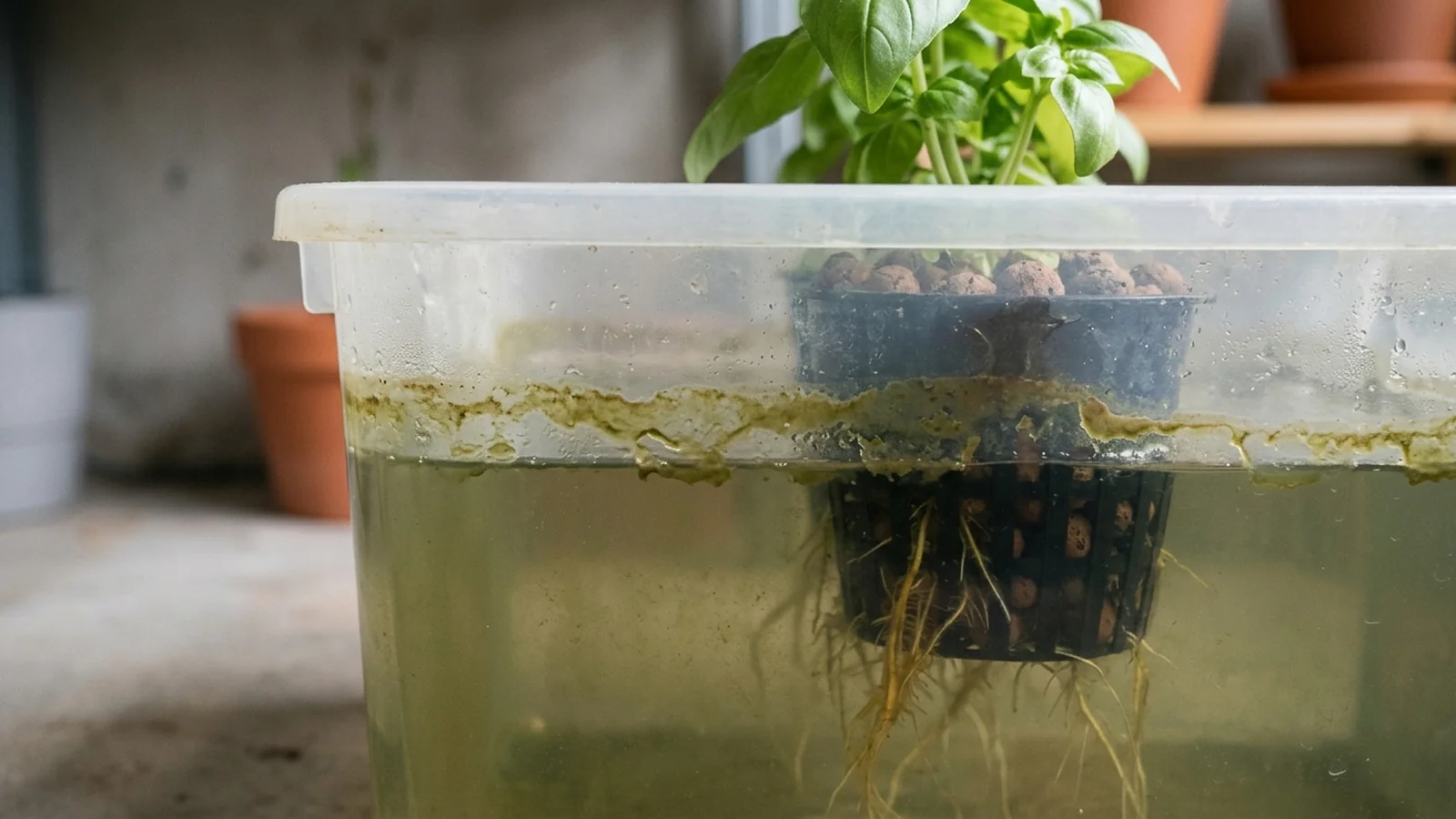
Algae in a hydroponic reservoir: why it grows and how to stop it
Algae needs light, water, and nutrients, and a hydroponic reservoir hands it all three. Block the light and the outbreak stops feeding itself.
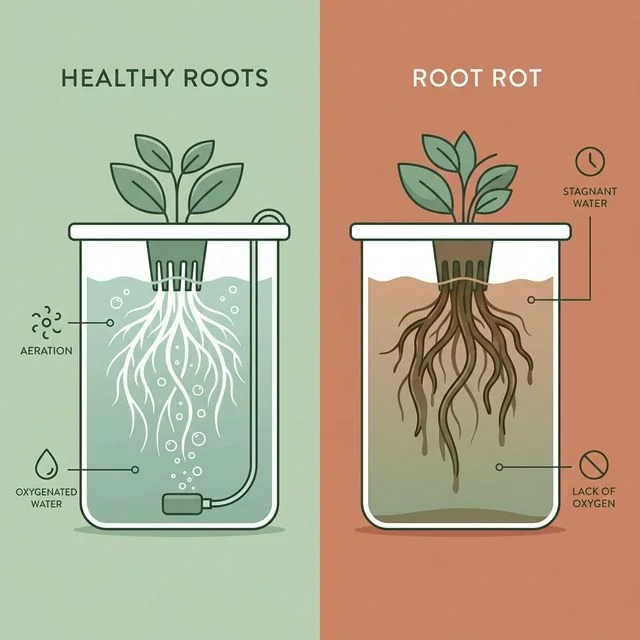
Hydroponic root rot: how to spot it early and stop it
Brown, slimy or swampy-smelling roots mean root rot. Catch it early and fix the conditions behind it — warm water, low oxygen and stagnant flow.
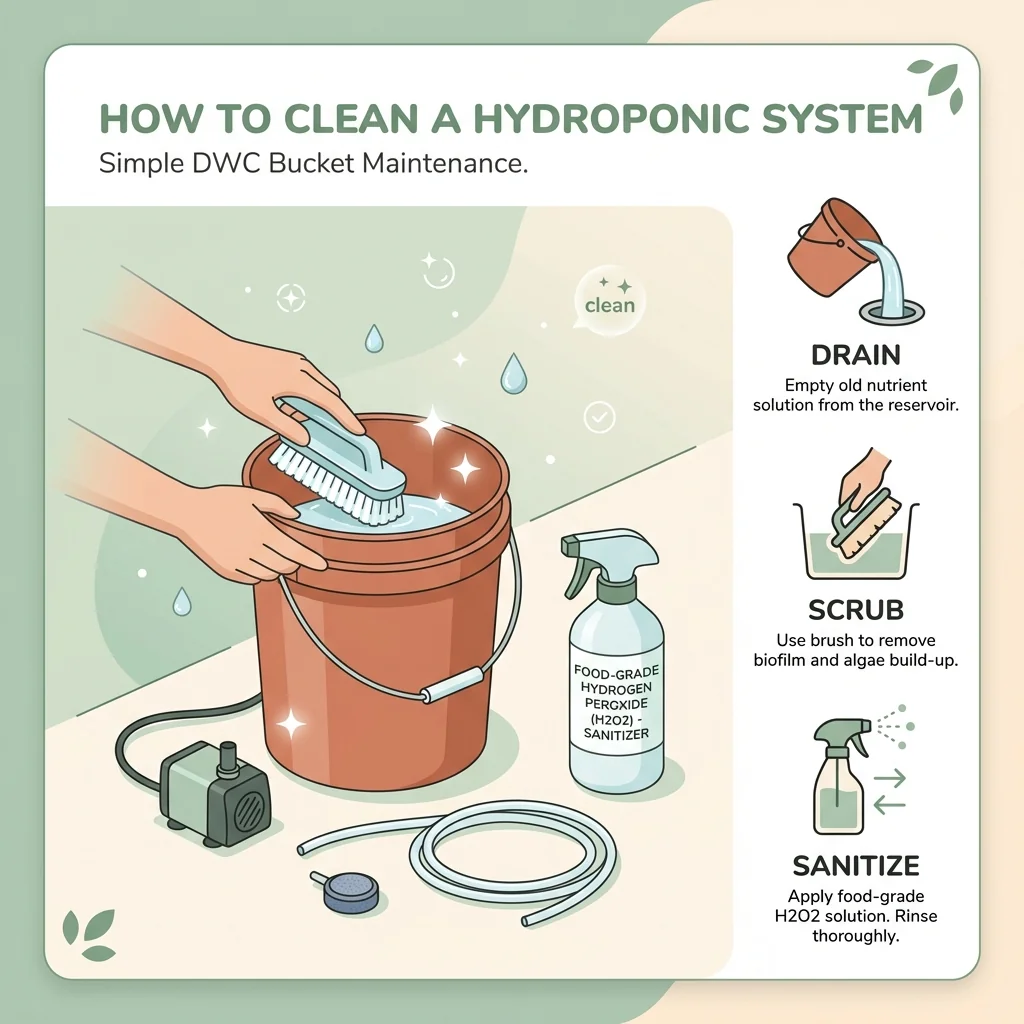
How to clean a small hydroponic system
A small hydroponic setup does not need constant chemical intervention. But between harvest cycles, a rigorous deep-clean is non-negotiable to prevent algae, mineral scaling, and deadly root rot spores from infecting your next crop. Here is the ultimate guide to system hygiene.