Troubleshoot the system before you change the inputs.
Symptoms
- The nutrient solution has a green or brown tint, or the reservoir water looks cloudy in a way it did not a week ago
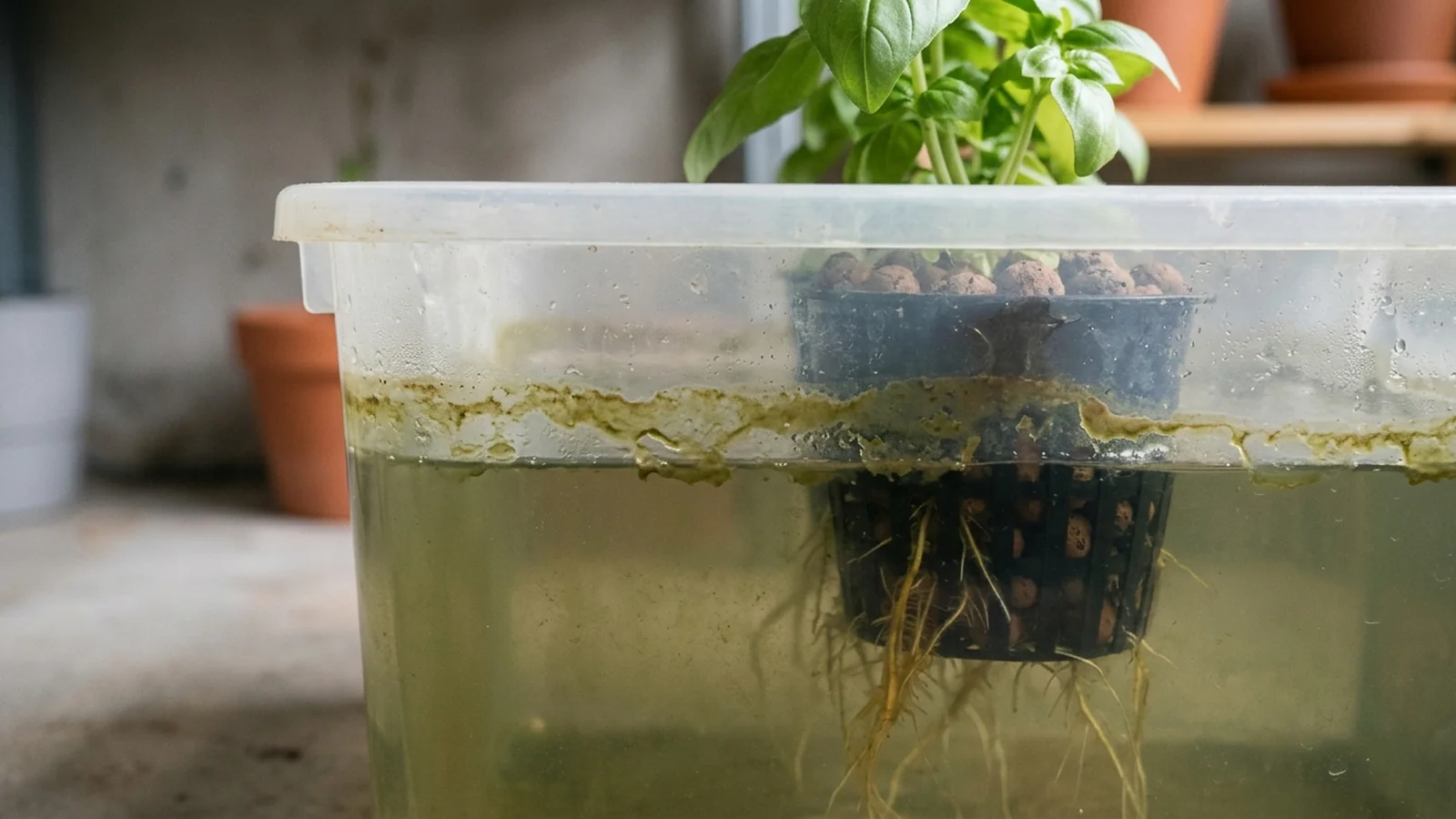
- A slimy green film coats the inside of the reservoir walls, the net pots, or the tubing where you can see it
- Drip emitters, airstones, or the pump intake screen run slower than they did, or clog outright
- A visible green fringe grows around net pots or grow media at the waterline, where light and moisture meet
Possible causes
- Light reaching the nutrient solution through a clear or translucent reservoir, tote, or tubing
- Gaps around net pots, an open reservoir lid, or grow lights positioned to spill onto the water surface
- A nutrient concentration higher than the crop needs, which feeds algae along with the plant
- A reservoir that has gone a long stretch without a full drain and wipe-down, letting an early film build into a visible bloom
Quick fixes
- Wrap or paint every light-transmitting surface opaque: the reservoir, any exposed tubing, and net pots that let light through around the stem
- Add or replace the reservoir lid so it seals against the rim rather than resting loosely on top
- Wipe or scrub visible film off walls, tubing, and net pots with a brush before it sheds into the plumbing
- Check your EC against the target for your crop rather than running it high on the assumption that more is safer
- If algae has already reached the pump intake or airstones, plan a full reservoir sanitizing pass rather than spot-cleaning around a dirty system
Green water, slimy tubing, or a fringe of growth around your net pots means light is getting to the nutrient solution. Algae needs light, water, and dissolved nutrients, and a hydroponic reservoir already hands it two of the three — so blocking light is the fix that actually works, not a stronger sanitizer or a bigger dose of nutrients.
If you are setting up a system for the first time, start with hydroponic nutrient, EC, and pH basics for the reservoir fundamentals. If your roots already look brown or slimy rather than just your reservoir walls, that is a separate diagnosis — see brown roots in hydroponics: staining vs. root rot.
Why algae shows up in a hydroponic reservoir at all
Algae is not a disease that infects a system from outside. It is a photosynthetic organism, and like your crop it grows wherever its three requirements are met at once. A recirculating hydroponic reservoir is, from algae’s point of view, an unusually good habitat: it holds standing water, that water carries dissolved fertilizer, and the University of New Hampshire puts home hydroponic run times at 14 to 18 hours a day under a grow light. Cornell’s hydroponic lettuce program describes algae control in commercial systems the same way — solution tanks, input and output pipes, and other wet equipment need to be kept shaded, because algae flourish specifically in places that are wet and well-lit at the same time.
That framing matters because it tells you where an outbreak will and will not start. A reservoir that is opaque on every side but has clear vinyl tubing running from the pump will still grow algae inside that tubing, because the light path runs through the tube wall, not the tank wall. A net pot with a gap around the stem lets light down onto the water surface even when the main reservoir is sealed. The first job in stopping algae is finding every point where light reaches standing water, not just checking whether the main tank looks dark.
Over-fertilizing adds a second lever. The University of Minnesota Extension’s hydroponics program notes that running a nutrient concentration higher than a crop needs promotes algae growth on roots and inside NFT channels, because the excess dissolved nutrient feeds the algae along with the plant. If your reservoir keeps greening up despite a solid light-blocking setup, check your EC against the target for whatever you are growing rather than assuming a stronger solution is simply safer.
What algae actually does to a hydroponic crop
Algae does not attack a plant directly the way a fungal pathogen does. Cornell’s assessment is that algae does not harm the crop directly, but it can weaken plants and open the door to disease — a secondary effect rather than a direct one. The mechanism is straightforward: algae is competing with your crop’s roots for the same dissolved nutrients in a shared reservoir, and a thick mat of it creates a wet, organic surface that other organisms can colonize. Dissolved oxygen is a separate, related pressure on the same roots — see dissolved oxygen in small hydroponic systems for what actually drains it.
The more immediate practical damage is mechanical. The University of Minnesota Extension notes that algae growth clogs tubing and plugs pump intakes, the same failure mode caused by precipitated nutrients and hard-water mineral buildup. A drip system with a partially clogged emitter delivers less solution than you think it does, and a pump straining against a blocked intake screen is a slow path toward a burned-out pump rather than a sudden failure you would notice right away.
This is also why algae and root rot show up in the same conversation so often, without one causing the other. Both problems trace back to a reservoir that has gone too long without attention — algae from unblocked light and rich water, root rot from warm, low-oxygen conditions. The University of Minnesota Extension notes that a warmer solution both evaporates faster and supports more algal and bacterial growth, which is why a warm reservoir needs its solution changed more often than a cool one. If your roots themselves have turned brown or mushy rather than just your tank walls, that diagnosis and its fixes live on the hydroponic root rot prevention guide, not here.
Block the light, not just the algae
Once you know algae needs light to reach standing, nutrient-rich water, the fix follows directly: reduce light penetration with opaque materials and a lid on the reservoir, as the University of Minnesota Extension’s guidance for small-scale systems puts it. In practice that means working through every surface the solution touches, not just the tank.
- The reservoir itself. A translucent tote or bucket needs to be painted, wrapped, or swapped for an opaque one. Black paint, duct tape, or a layer of foil-backed insulation on the outside all block the same light.
- The lid. A loose-fitting or clear lid defeats the purpose of an opaque tank. The lid needs to seal against the rim, and it needs to be opaque itself — a clear acrylic cover still lets light straight down onto the water.
- Net pots and grow-media gaps. Light spills onto the surface anywhere a net pot does not fully cover its hole, or where grow media has settled away from the pot’s rim. Foam collars, extra clay pebbles, or a layer of reflective tape around the pot’s base close that gap.
- Tubing. Clear vinyl line is one of the most commonly missed light paths, because the tank it feeds can be fully opaque while the tubing carrying solution back to it runs exposed under a grow light. Wrap it, route it out of the light path, or replace it with opaque tubing.
- Grow light position. Confirm the fixture is aimed at the canopy, not spilling past the edges of the tray onto exposed reservoir surface.
None of this needs to happen with a specialized product. The point is opacity, not a particular material — anything that reliably blocks light works, and the four points above are the ones an outbreak most often traces back to when the main tank already looks dark.
Cleaning up an existing outbreak
Blocking light stops new algae growth, but it does not remove what has already colonized your tubing and reservoir walls. For a light film you catch early, scrubbing the visible growth off with a brush during your next water change, combined with closing the light paths above, is usually enough to keep it from coming back. The University of Minnesota Extension’s mid-cycle guidance is the same: a high-powered spray, or a scrub brush and warm water.
UMN is explicit that bleach should not be used during a growing cycle — it can damage plants if it is not fully rinsed out — so the full drain-and-sanitize pass belongs between crops. Once algae has reached the pump intake, airstones, or drip emitters, spot-cleaning stops being reliable, and the system needs that full pass rather than a wipe-down around a dirty reservoir. When you drain the old solution, the University of Minnesota Extension and the University of New Hampshire both ask growers not to pour it down the drain — its nitrogen and phosphorus promote algal growth in streams, rivers and bays — and to use it on a garden bed or lawn instead. That full protocol — what to sanitize with, how long to run it, and how to rinse it out safely before the next crop — is covered in sanitizing a hydroponic system between crops and in how to clean a small hydroponic system. Treat those as the next step once light-blocking and spot-cleaning are not keeping pace with growth, rather than reaching for a stronger sanitizer as the first response.
Sources
Reservoir hygiene and root health
Algae is a light and hygiene problem. If roots already look affected, or you need a full between-crop reset, these guides go deeper.
Common questions
What causes algae in a hydroponic system?
Algae needs light, water and dissolved nutrients to grow, and a nutrient solution already supplies the water and the nutrients. Light is the missing piece, and it usually reaches the solution through a clear tote, a translucent tube, or a gap around a net pot rather than through the main reservoir wall.
Does algae hurt my plants?
Not directly in most cases. Algae competes with roots for dissolved nutrients, clogs tubing and pump intakes, and creates a wet organic surface that other pathogens can colonize, which is why an algae problem often precedes a root problem rather than causing one outright.
Will a lid on the reservoir stop algae?
A tight, opaque lid removes one of the main light paths into the solution, which helps. It will not stop growth on its own if the tote itself is clear or if tubing and net pot gaps still let light through, so treat the lid as one part of a full light-blocking check.
Can I just add more nutrients to outcompete the algae?
No. Algae photosynthesises just like your crop, and it uses the same dissolved nutrients. Running a stronger solution than the crop calls for feeds algae along with the plant instead of starving it out.
Is a little algae in the reservoir a big deal?
A thin film that you catch early is mostly a hygiene issue you can wipe away. Left alone it thickens, sheds into the plumbing, and turns into a clogged pump intake or airstone, so treat the first green tint as the point to act, not a threshold to wait past.
Related guides
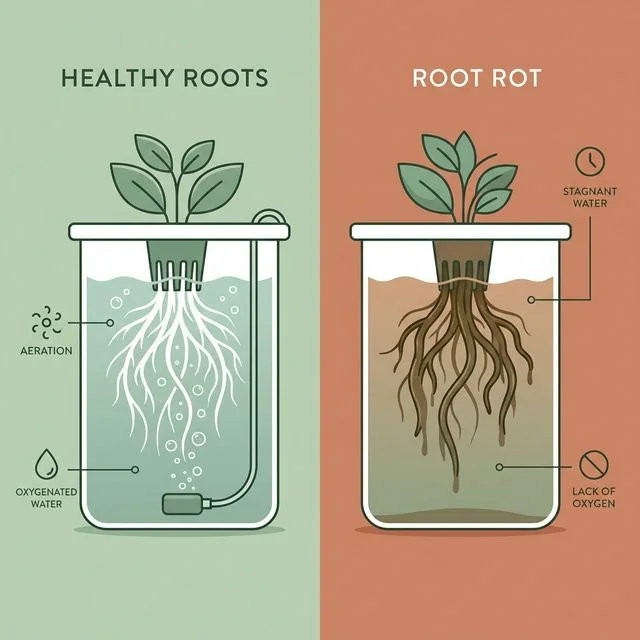
Hydroponic root rot: how to spot it early and stop it
Brown, slimy or swampy-smelling roots mean root rot. Catch it early and fix the conditions behind it — warm water, low oxygen and stagnant flow.
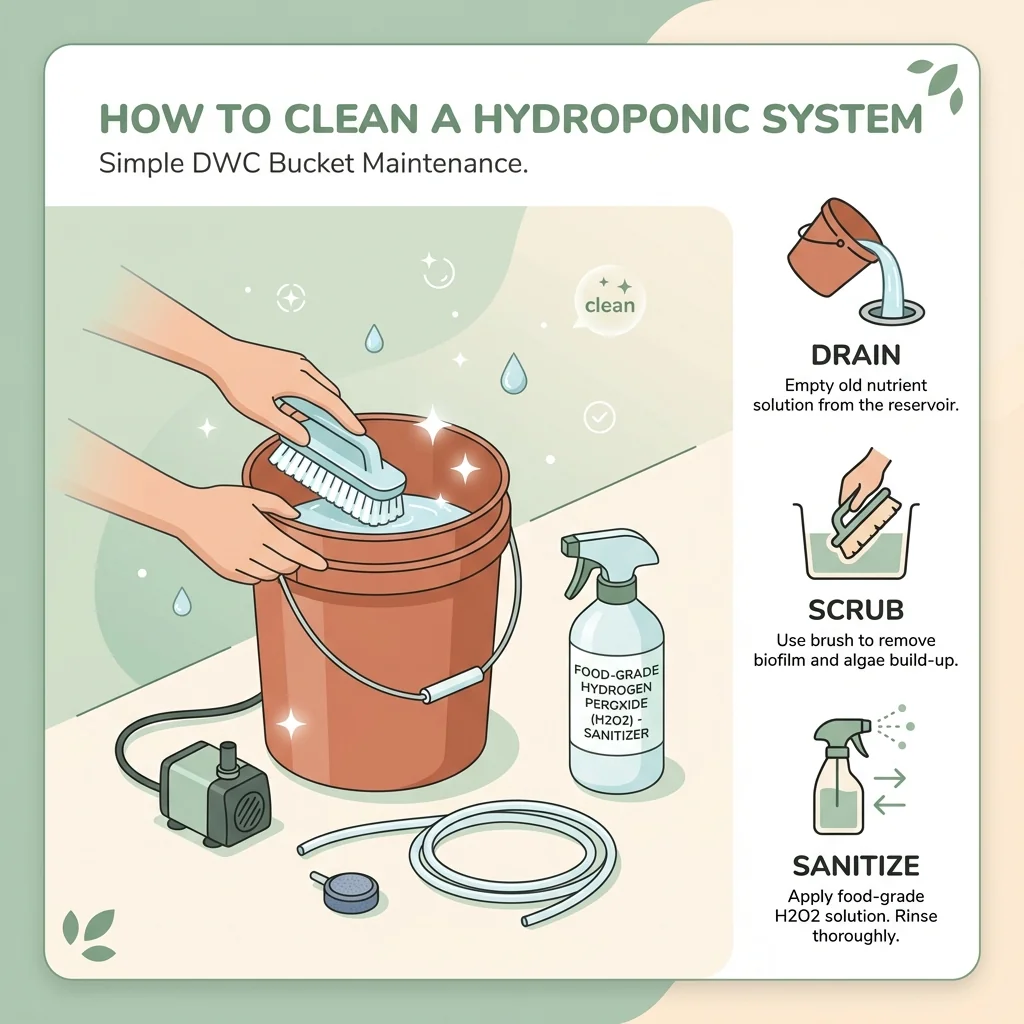
How to clean a small hydroponic system
A small hydroponic setup does not need constant chemical intervention. But between harvest cycles, a rigorous deep-clean is non-negotiable to prevent algae, mineral scaling, and deadly root rot spores from infecting your next crop. Here is the ultimate guide to system hygiene.
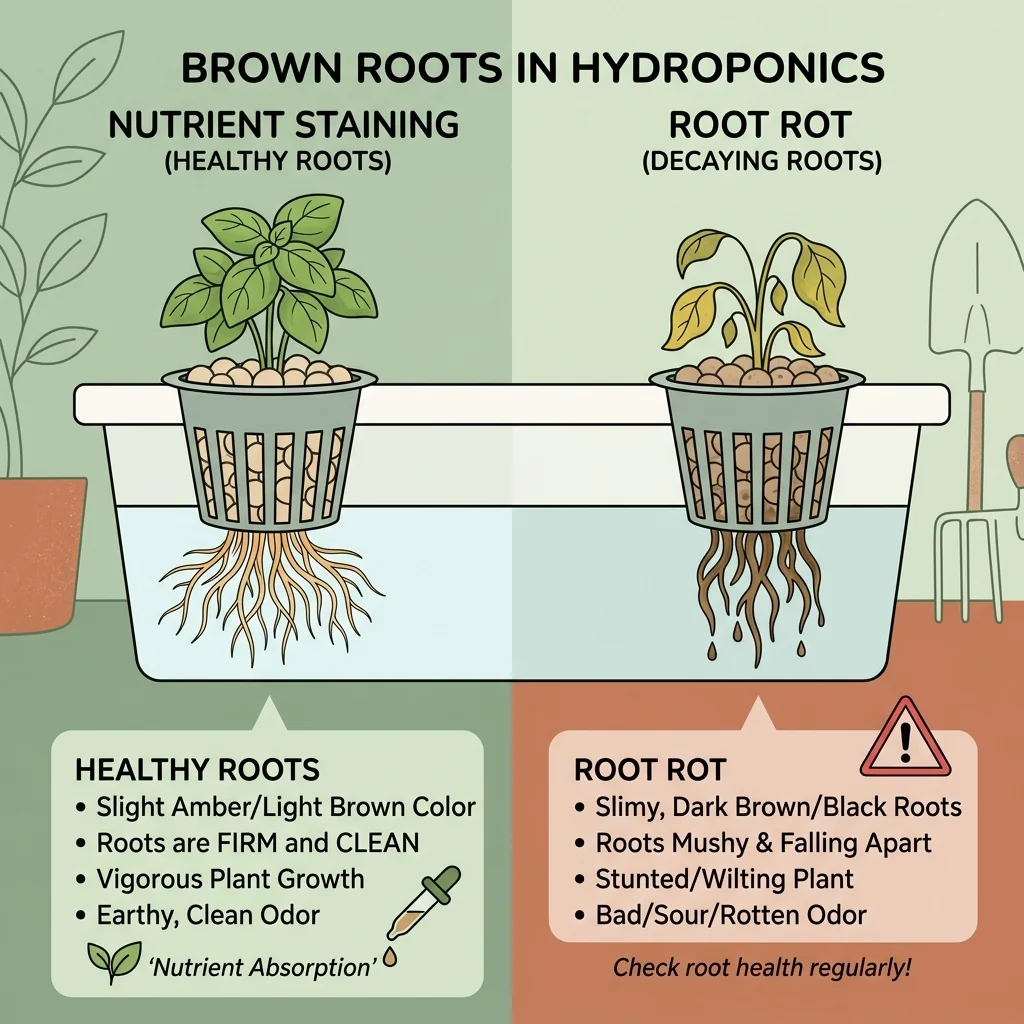
Brown roots in hydroponics: staining vs. root rot
Finding brown roots in your hydroponic reservoir can cause instant panic. But before you dump your nutrients, you need to know: is it a harmless stain or a fatal infection? Here is how to diagnose the difference in seconds.